Contemporary Craft in Houston

Some time ago, I discovered the Houston Center for Contemporary Craft (HCCC) located in Houston’s Museum District. The HCCC focuses on arts and crafts made from clay, fiber, glass, metal, wood or found/recycled materials. In addition to a variety of exhibitions, they have an Artist Residency program. When you visit the museum, you can see that each artist has their own workspace for perfecting their craft.

When I visited the museum, the Contemporary Handweavers of Houston (CHH) was holding its Artisan Market. Occupying the large display rooms were booths of textiles, jewelry, rugs, clothing and yarn. Weavers were working on large looms and spinners with their whirring wheels were scattered around the rooms.

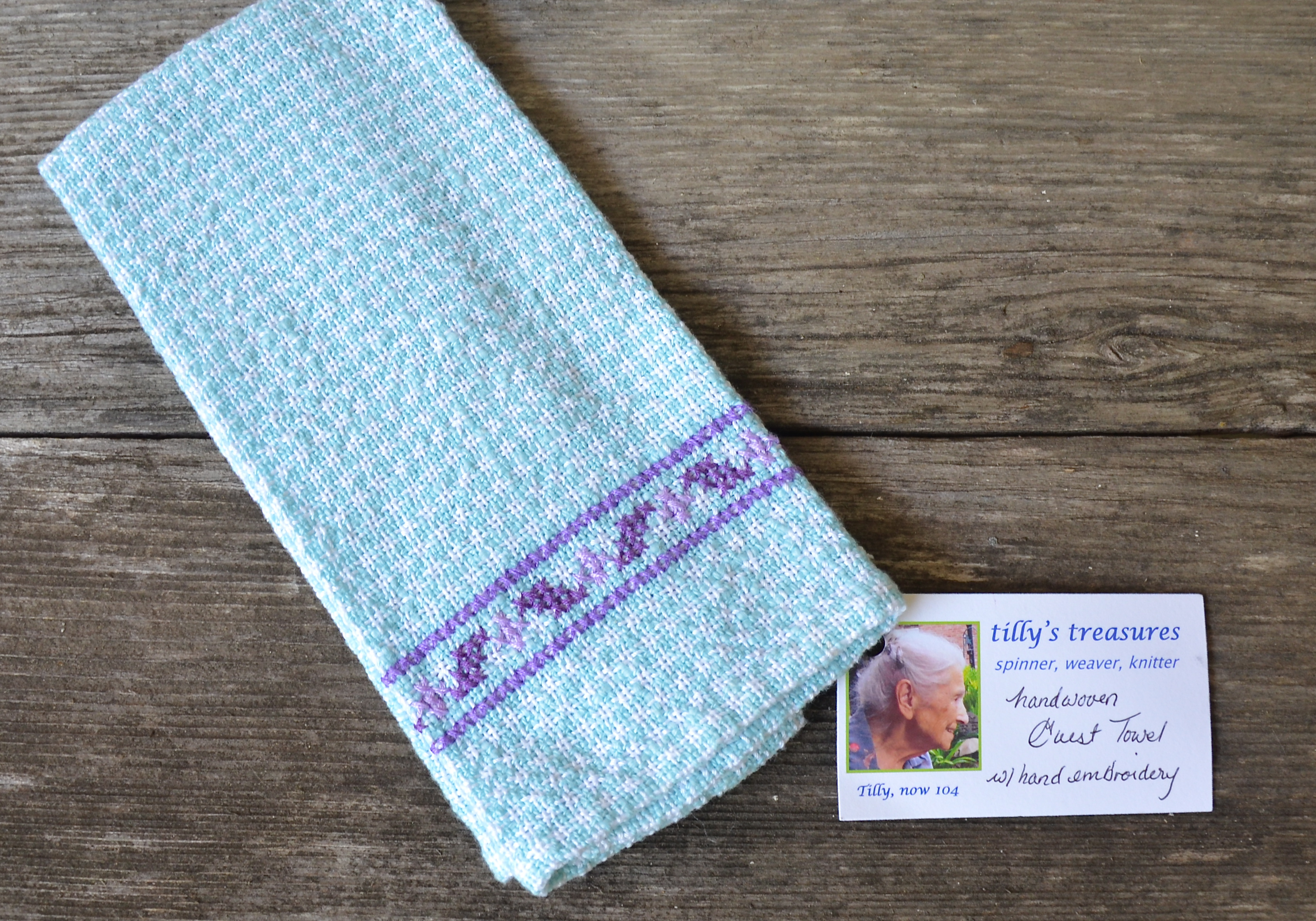
I had to bring this small guest towel home only because it was handwoven and embroidered by 104 year old Tilly Marchwinski. Mrs. Marchwinski was not present but it seemed that everyone there knew her. They told me that she never missed the show but was a little under the weather that day.
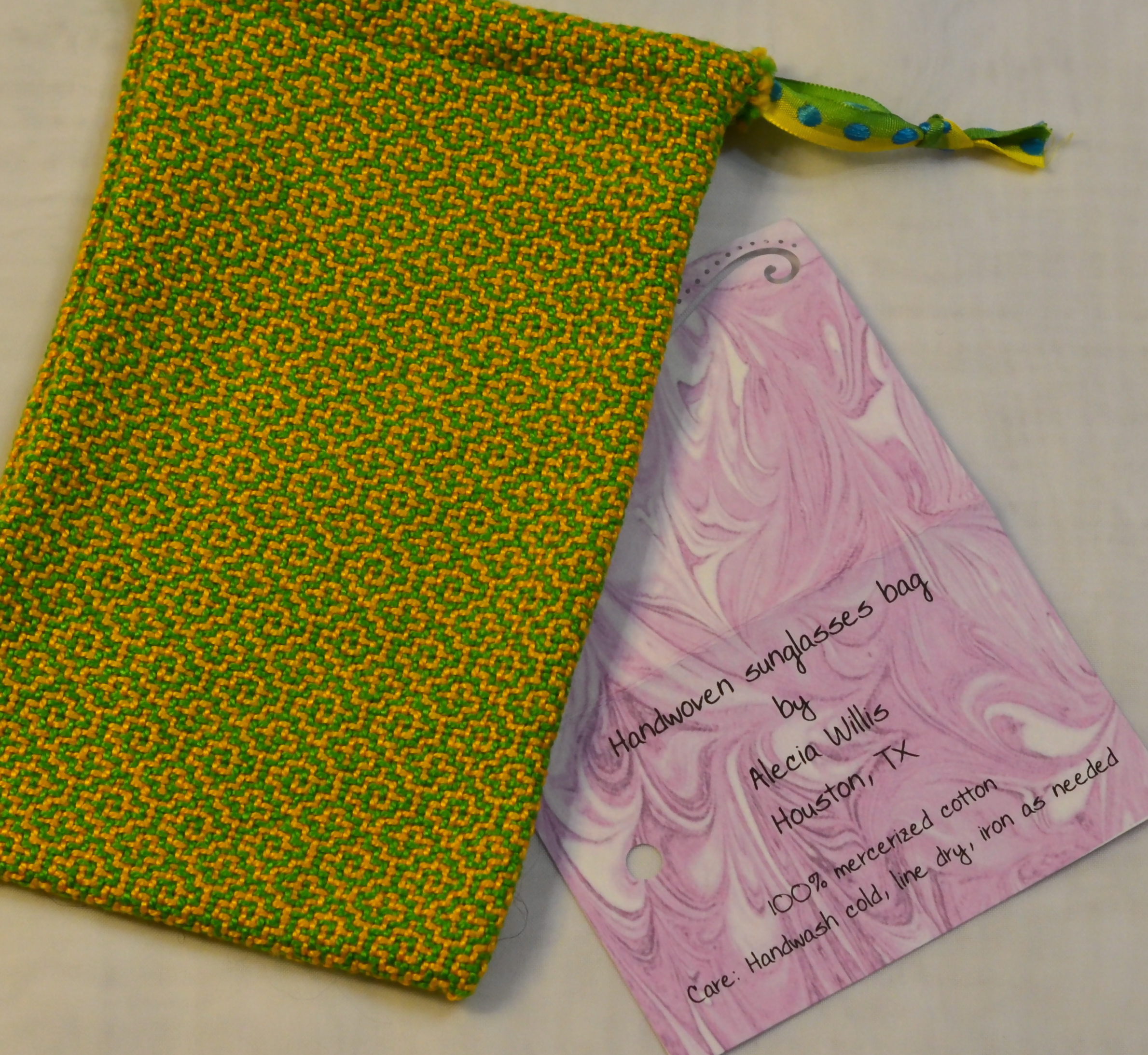
This next item was the perfect sunglasses case. I loved both the vibrant colors and the texture produced by the swirling pattern.
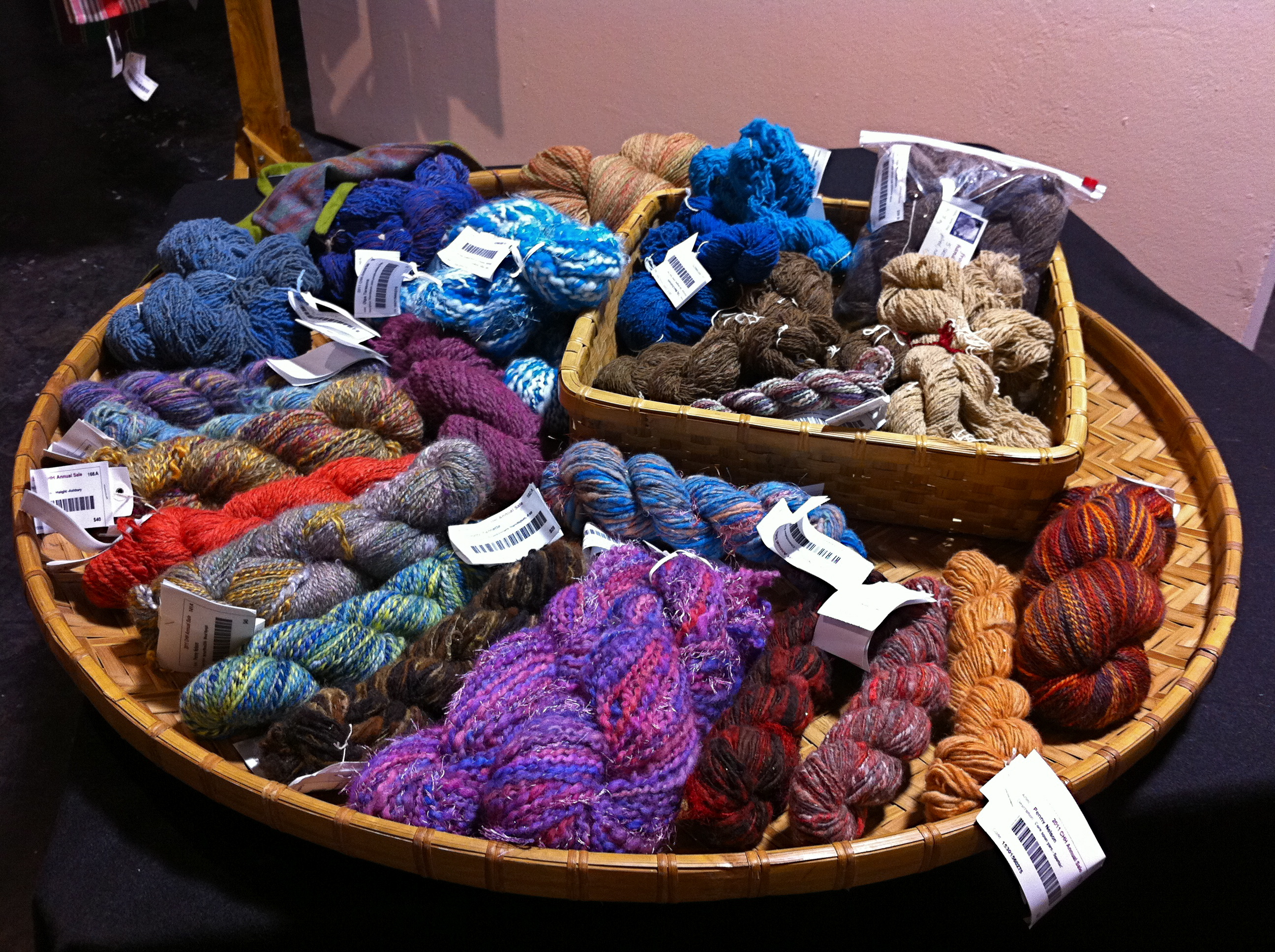
This large basket was filled with handspun, hand dyed yarns.
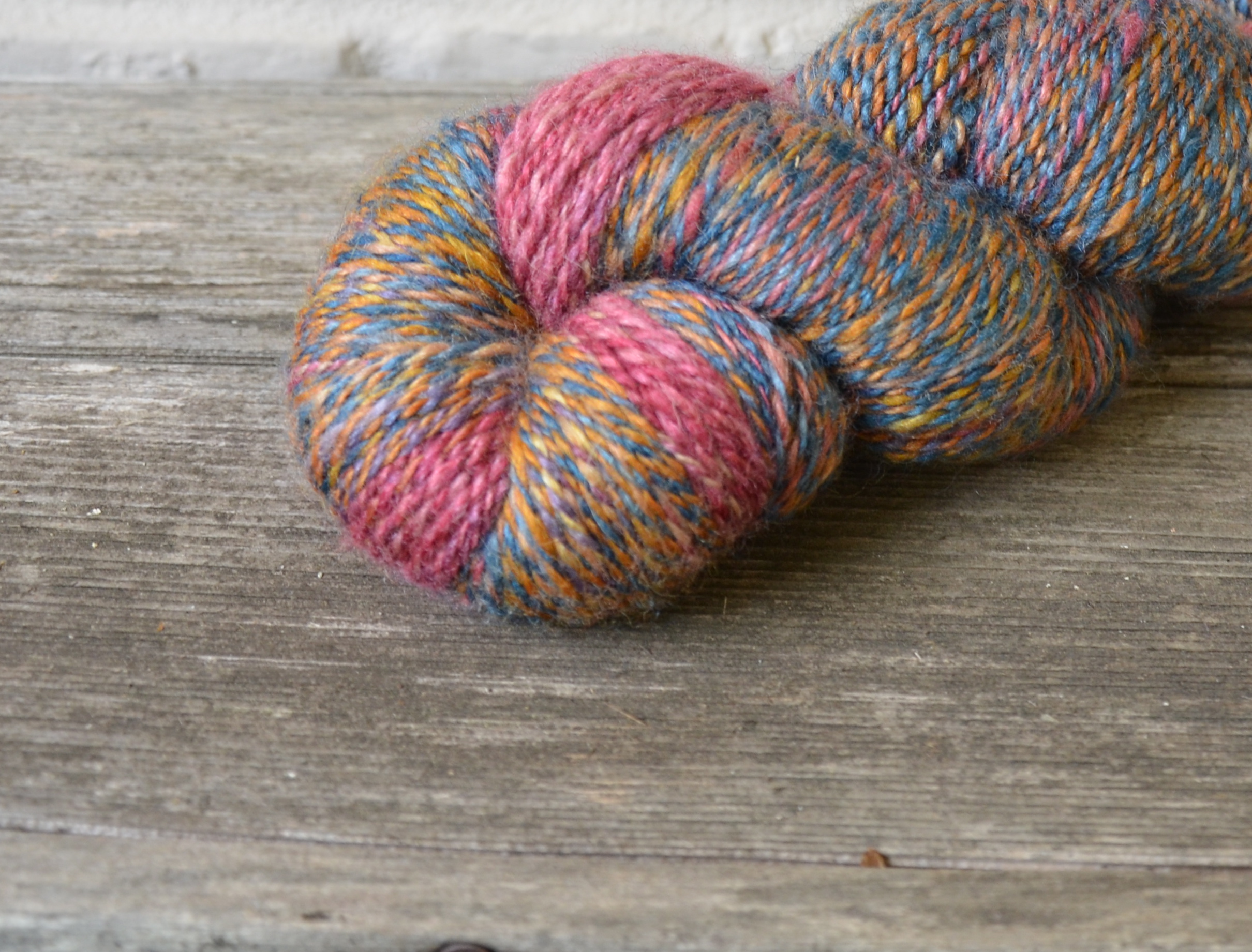
This hank of yarn was handspun by Peggy Barnette of Sky Loom Weavers. Fiber contents – 80% BFL Wool, 20% Silk, 2 ply.
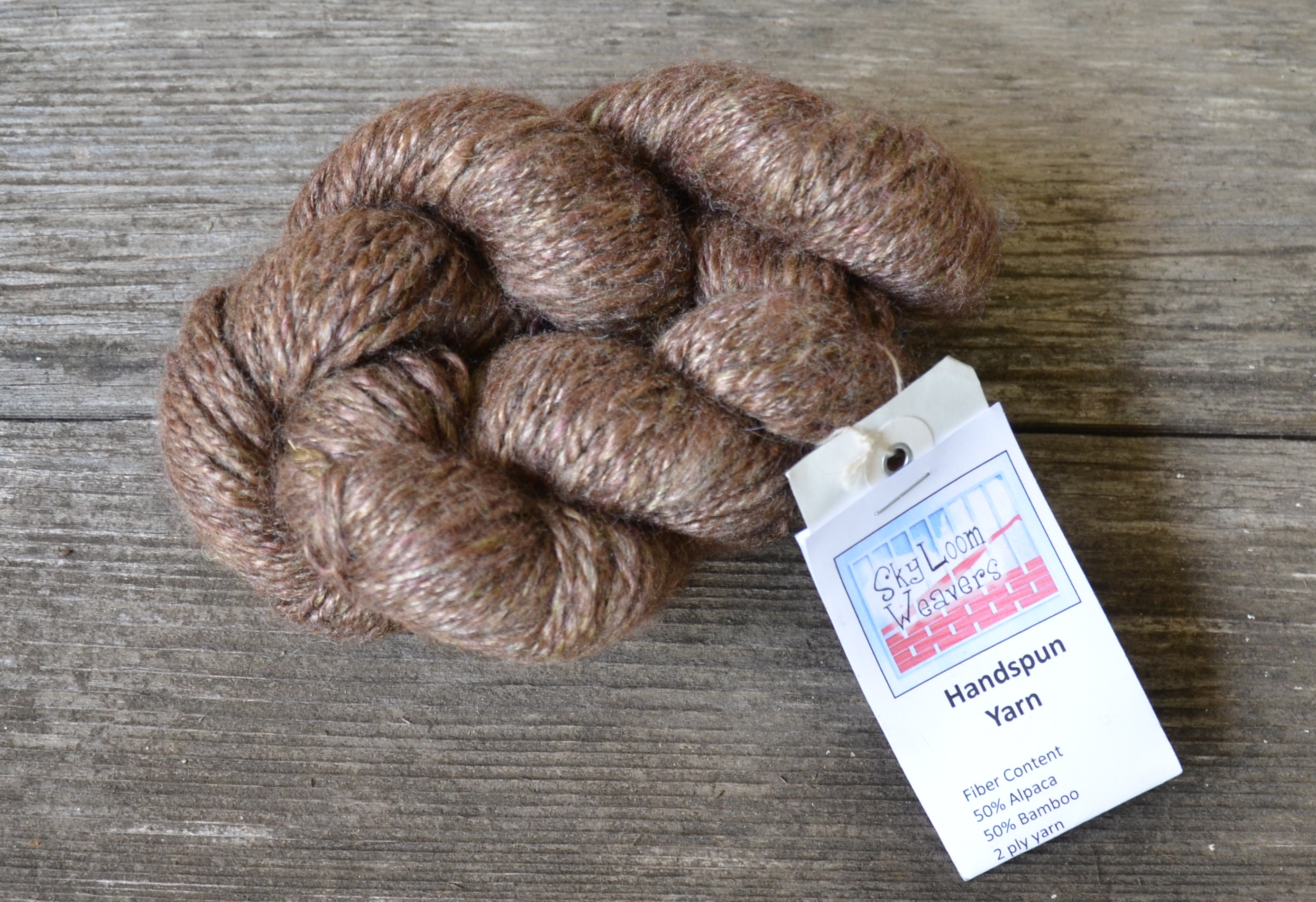
Normally I am drawn to rich, vibrant colors but I couldn’t resist the sheen of this soft brown yarn called “Chocolate Mint.” It is a 2 ply yarn spun from 50% Alpaca, 50% Bamboo by Penny Nelson also of Sky Loom Weavers.
Follow these links to learn more about the HCCC and the CHH. According to their website, the next CHH Artisan Market will be held on September 6-8, 2012 at the HCCC.

More Reasons Why I ❤ NY

Here are more pictures from our trip to New York City. Besides the huge skyscrapers and art deco buildings, sculptures and other architectural details caught my eye. Here is a random sampling of some of them.

Who can resist Times Square? With its energy and buzz, it's quintessential New York and a people-watching paradise.
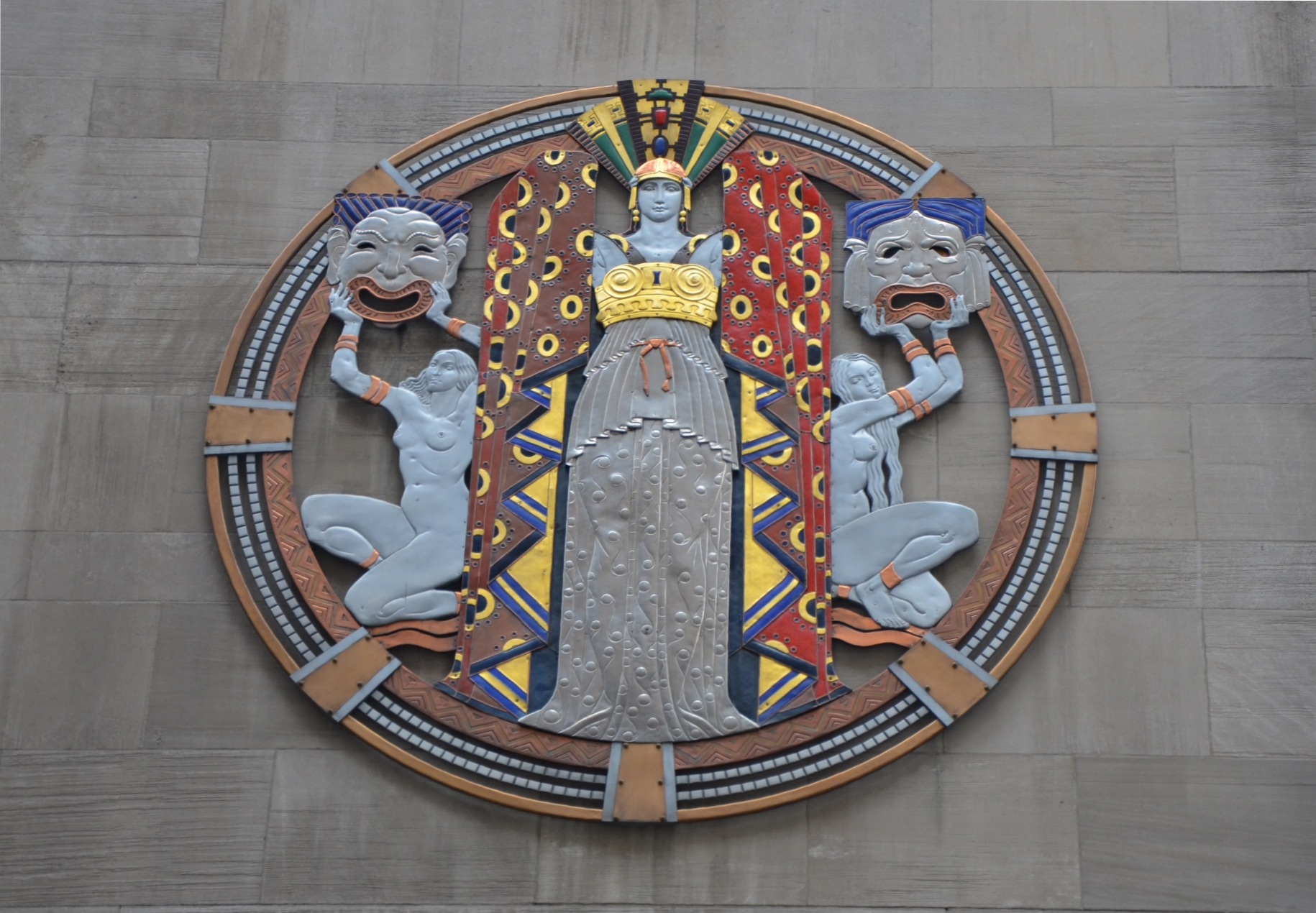
On the 50th Street side of Radio City Music Hall, there are three large plaques that represent the main activities inside - "Dance, Drama and Song." This one is "Drama."
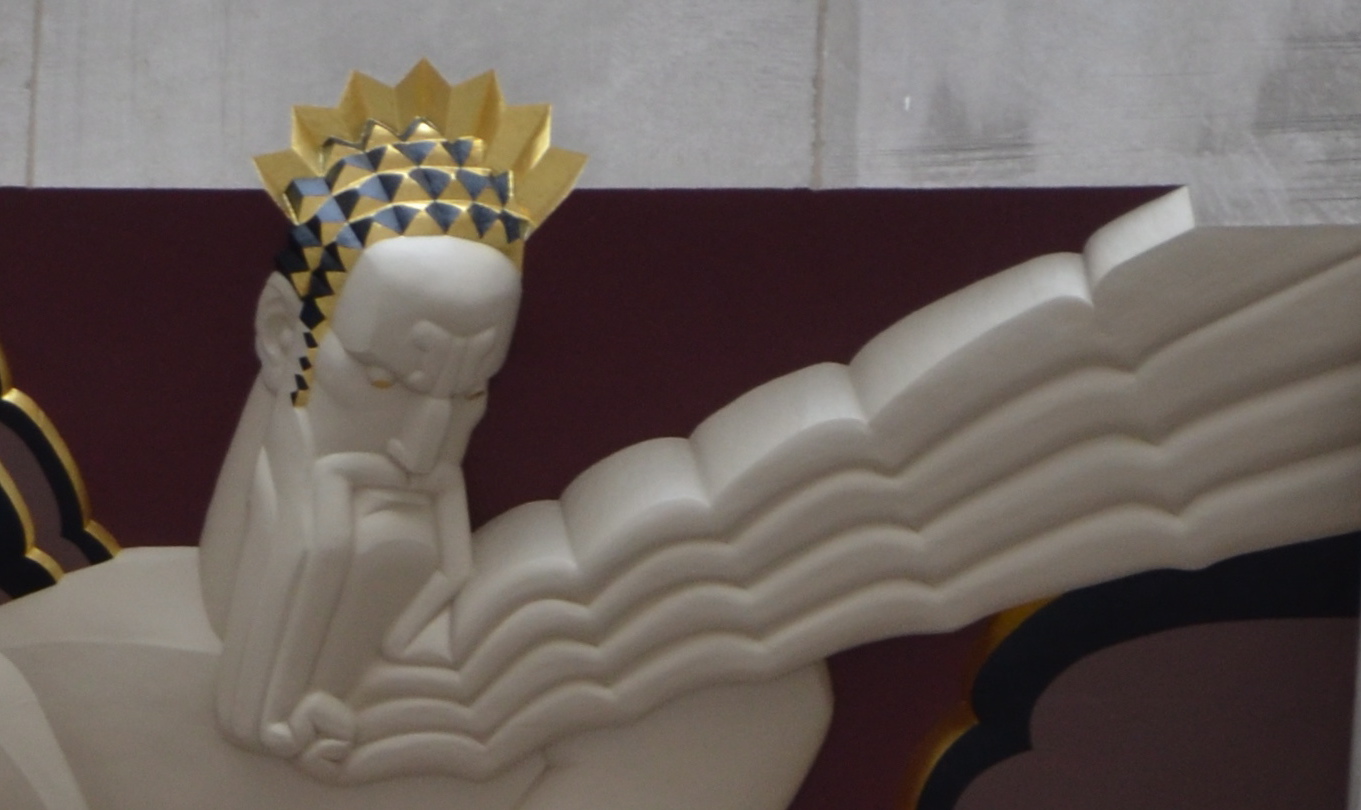
At 30 Rockefeller Plaza, directly in front of the famous ice-skating rink, is "Wisdom" (1933).
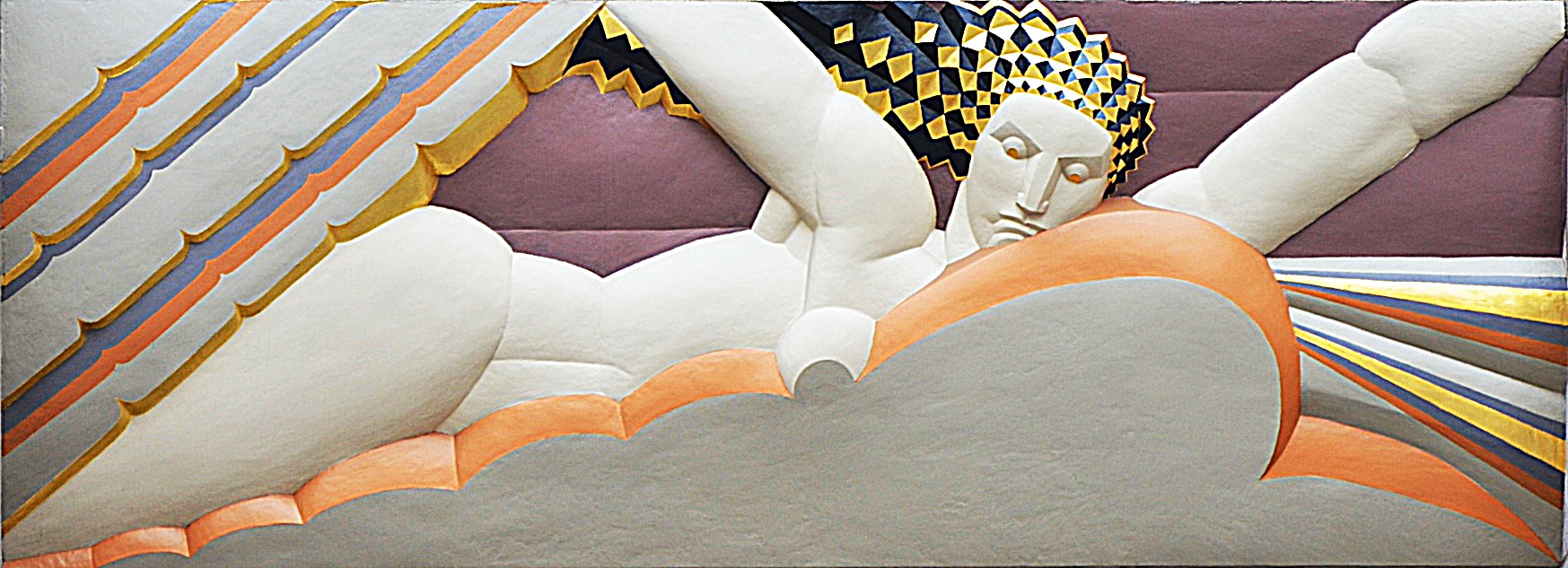
Flanking "Wisdom" are "Sound and Light" (1933). These stylized panels represent new technologies of the times - radio (sound) and television (light). This one is "Light."
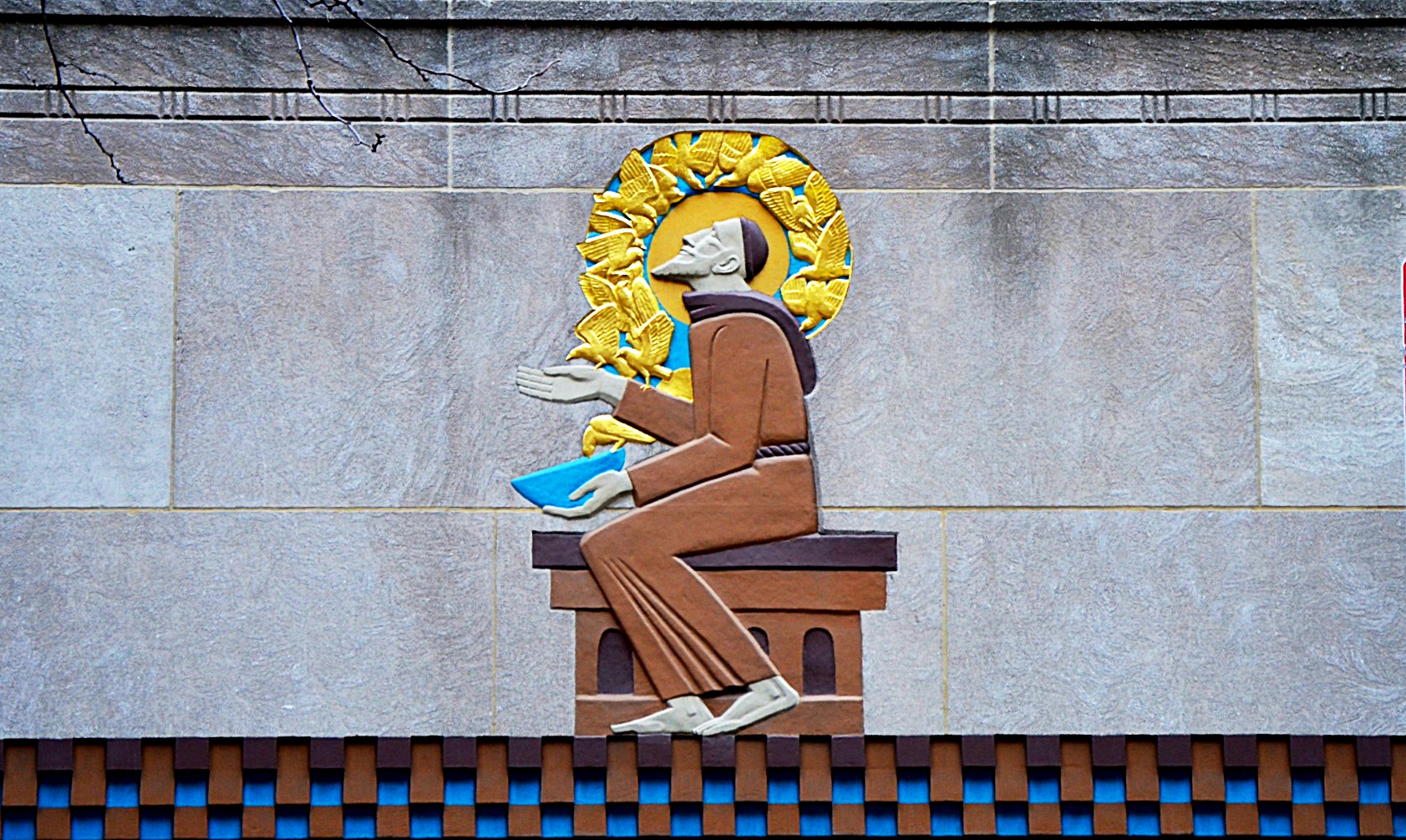
"Saint Francis of Assisi with Birds" (1937) sits above a building entrance on 50th Street.
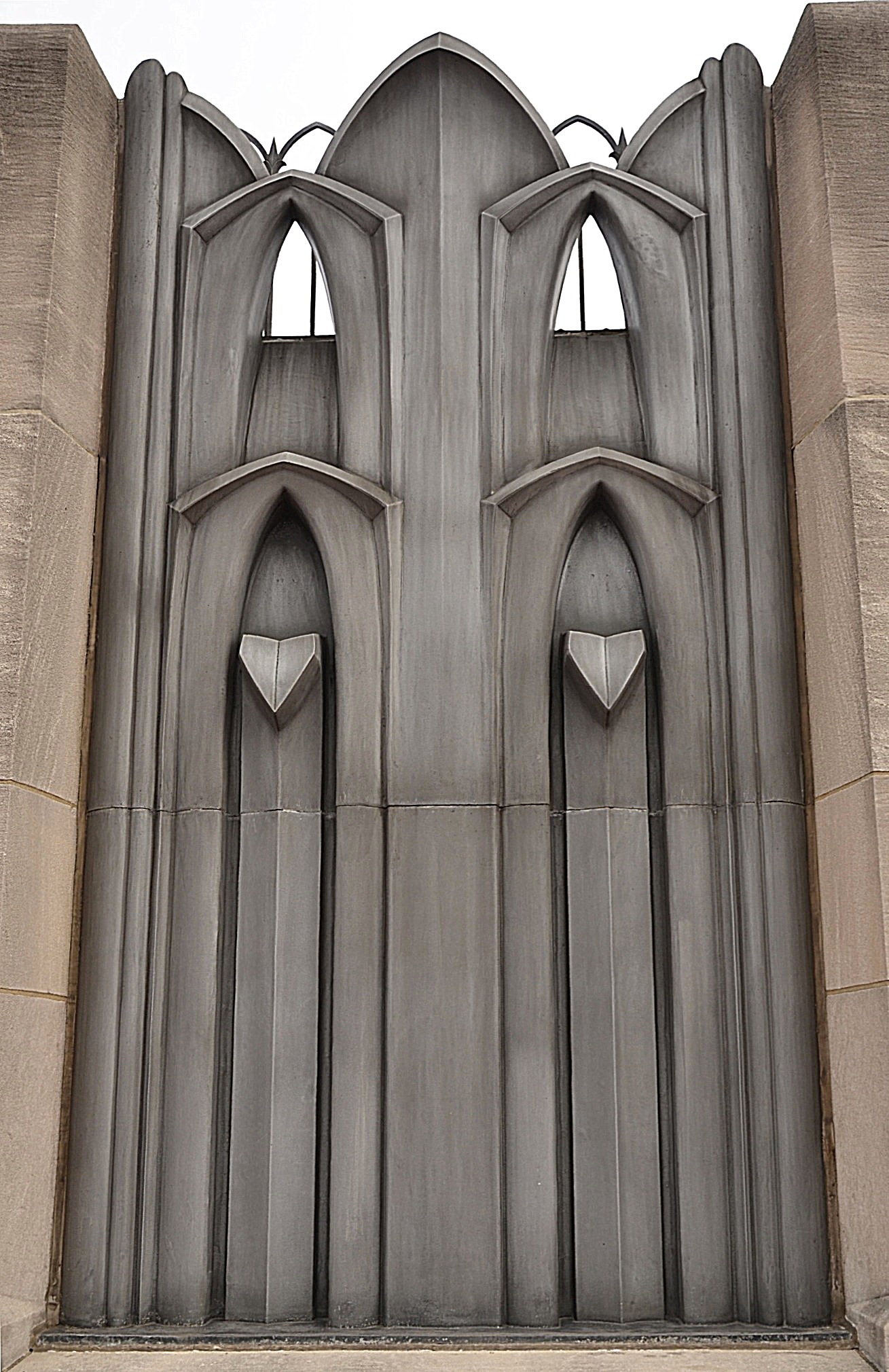
At the viewing area at the "top of the rock" you can see these large metal panels up close. I halfway expected to see the bat signal floating up in the sky over "Gotham City."
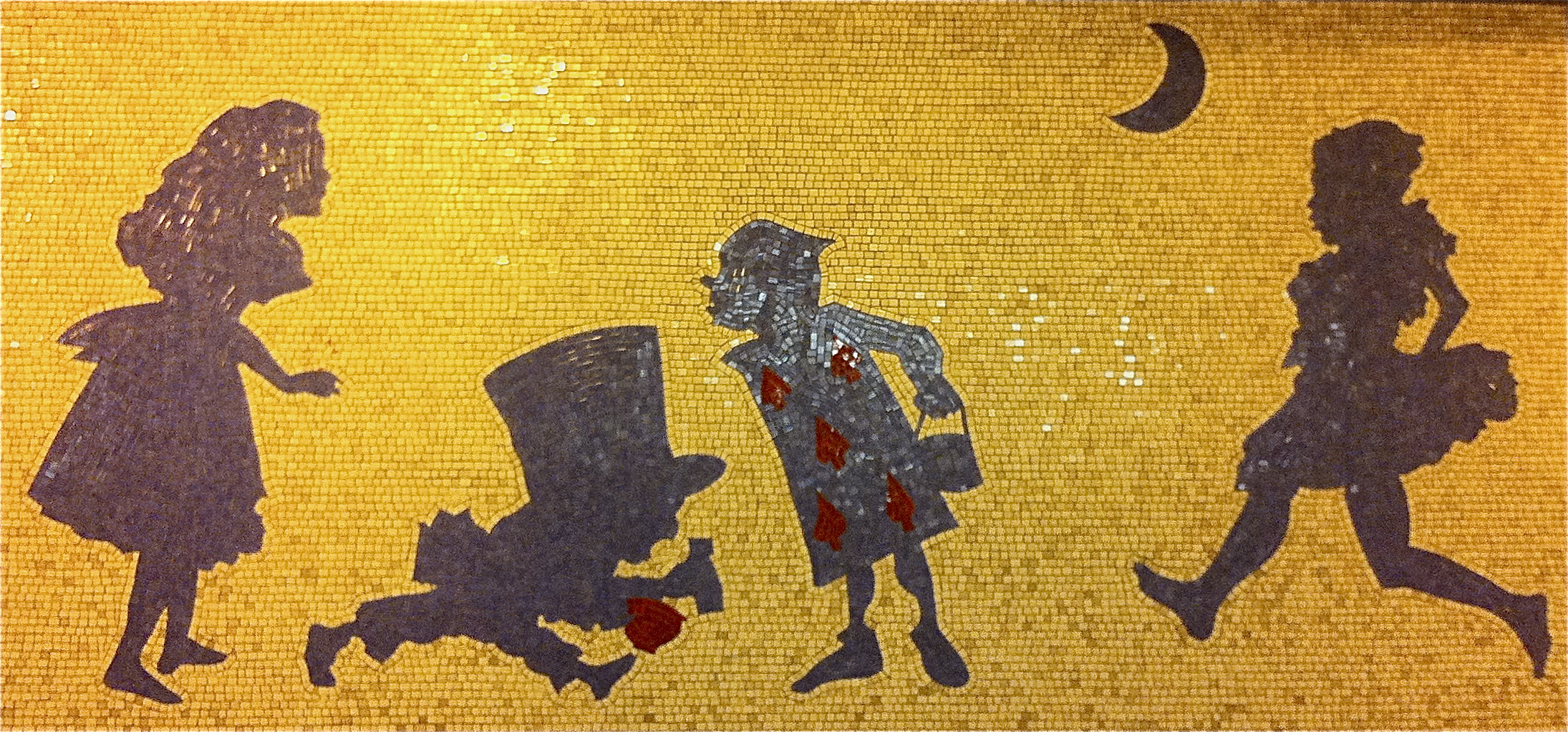
This tiled panel was appropriately located at the 50th Street subway stop near the Theater District. It is part of the "Alice: The Way Out" tile work by Liliana Porter (1994).
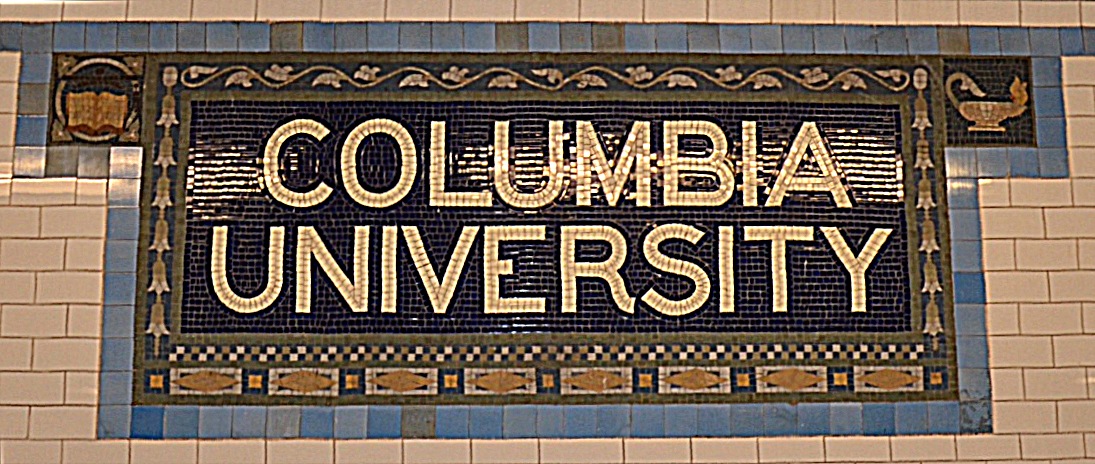
Subway stops are labeled by colorful tile mosaics, like this one at the 116th Street-Columbia University stop.
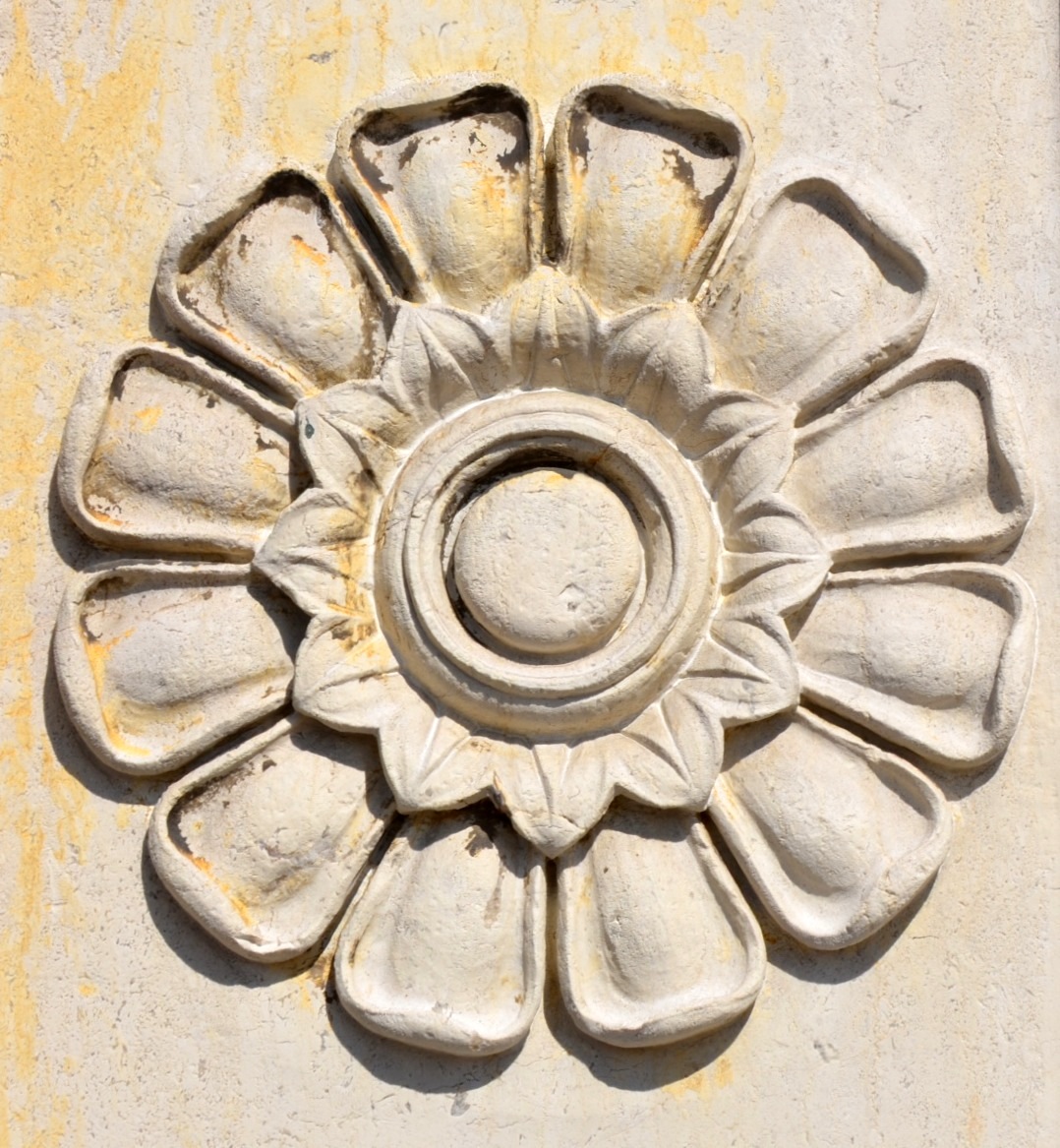
A stone rosette adorns either side of the entrance to Low Memorial Library, a National Historic Landmark, on the Columbia University campus.

To learn more about some of the artwork, try these links: Rockefeller Center, NYC Subway Art Guide.

 NY.

I ❤ NY

I bravely spent 5 days of Spring Break in New York City with two teenagers. We saw the typical touristy sights, but oh, what sights to see! These are some of the images I was able to capture.

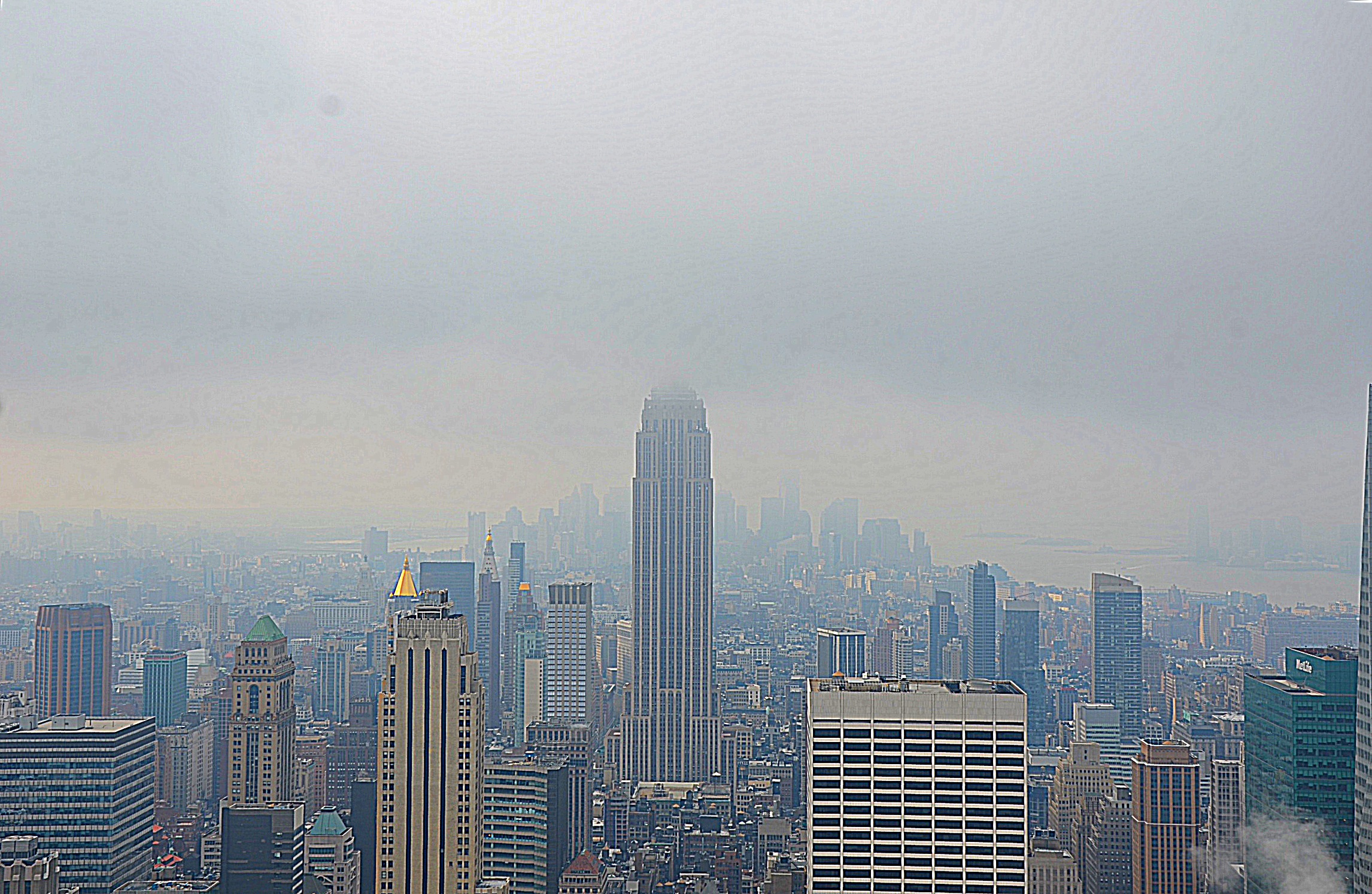
Manhattan skyline from the top of the Rockefeller Center. I touched up the photograph a bit to better see the outlines of the buildings in the Financial District (in the background).
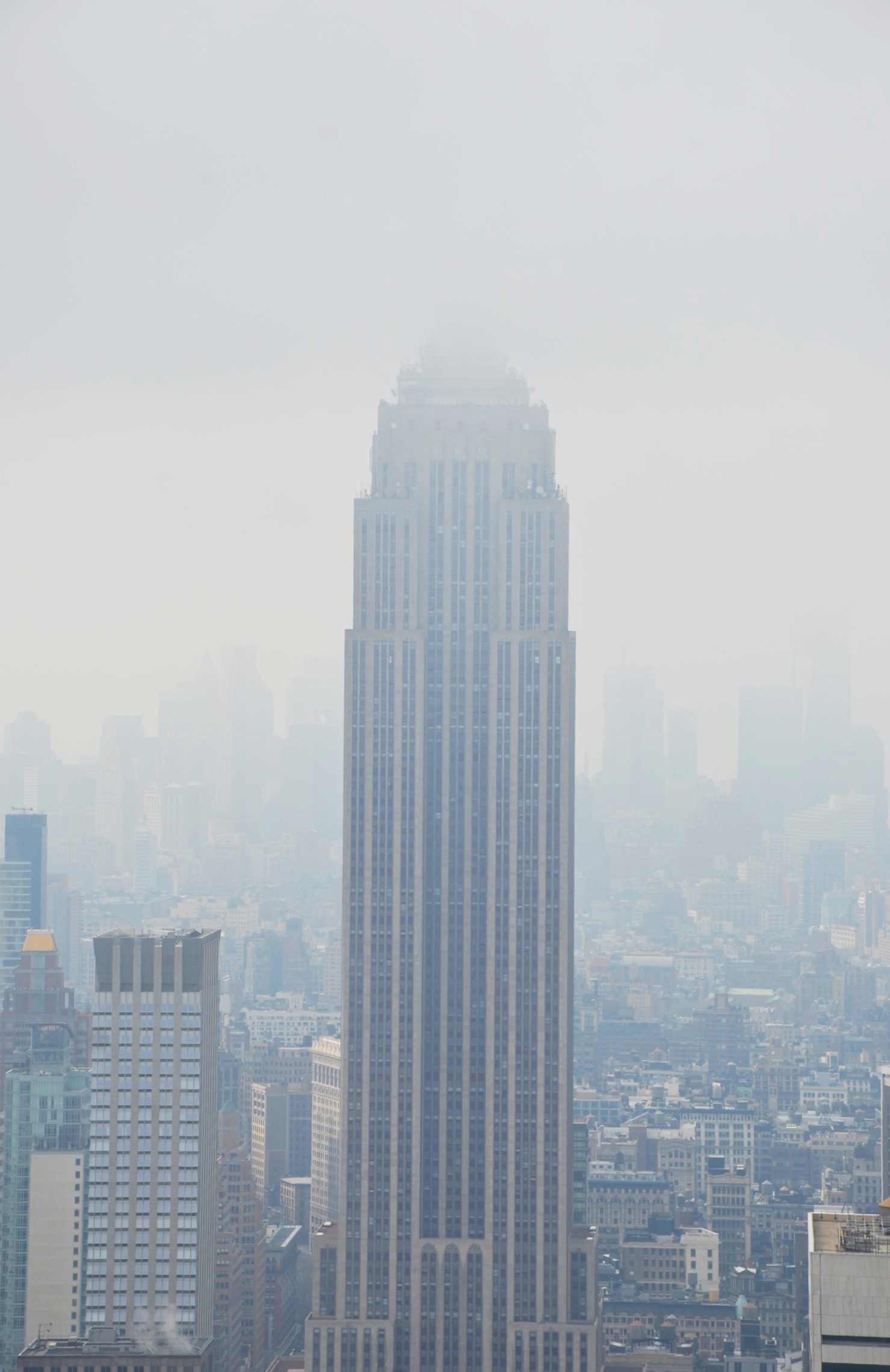
The top of the Empire State Building looks mysterious. Of course, it's just hidden behind the smog.
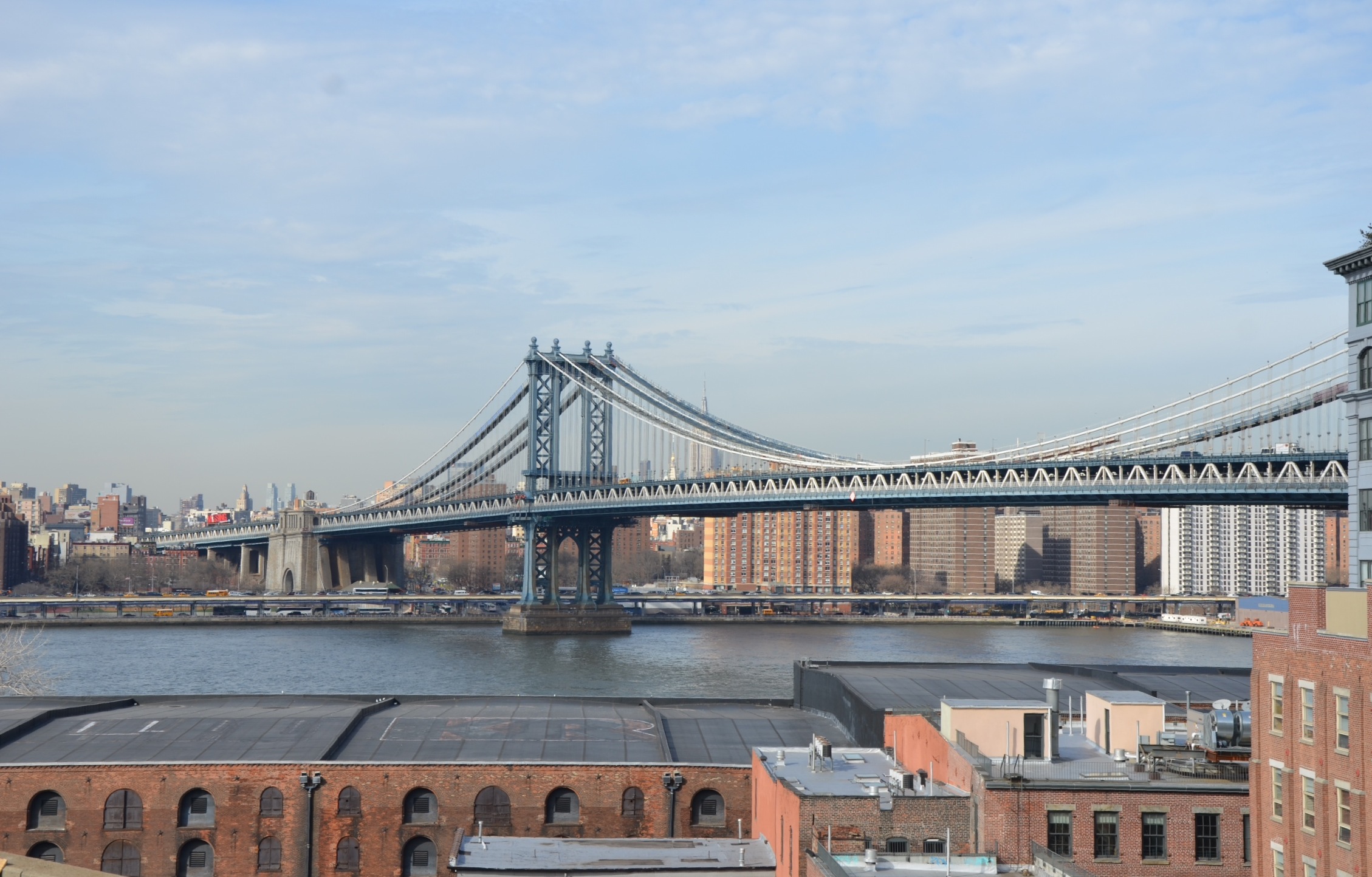
View of the Manhattan Bridge from the Brooklyn Bridge.
Walking across the Brooklyn Bridge toward Manhattan.
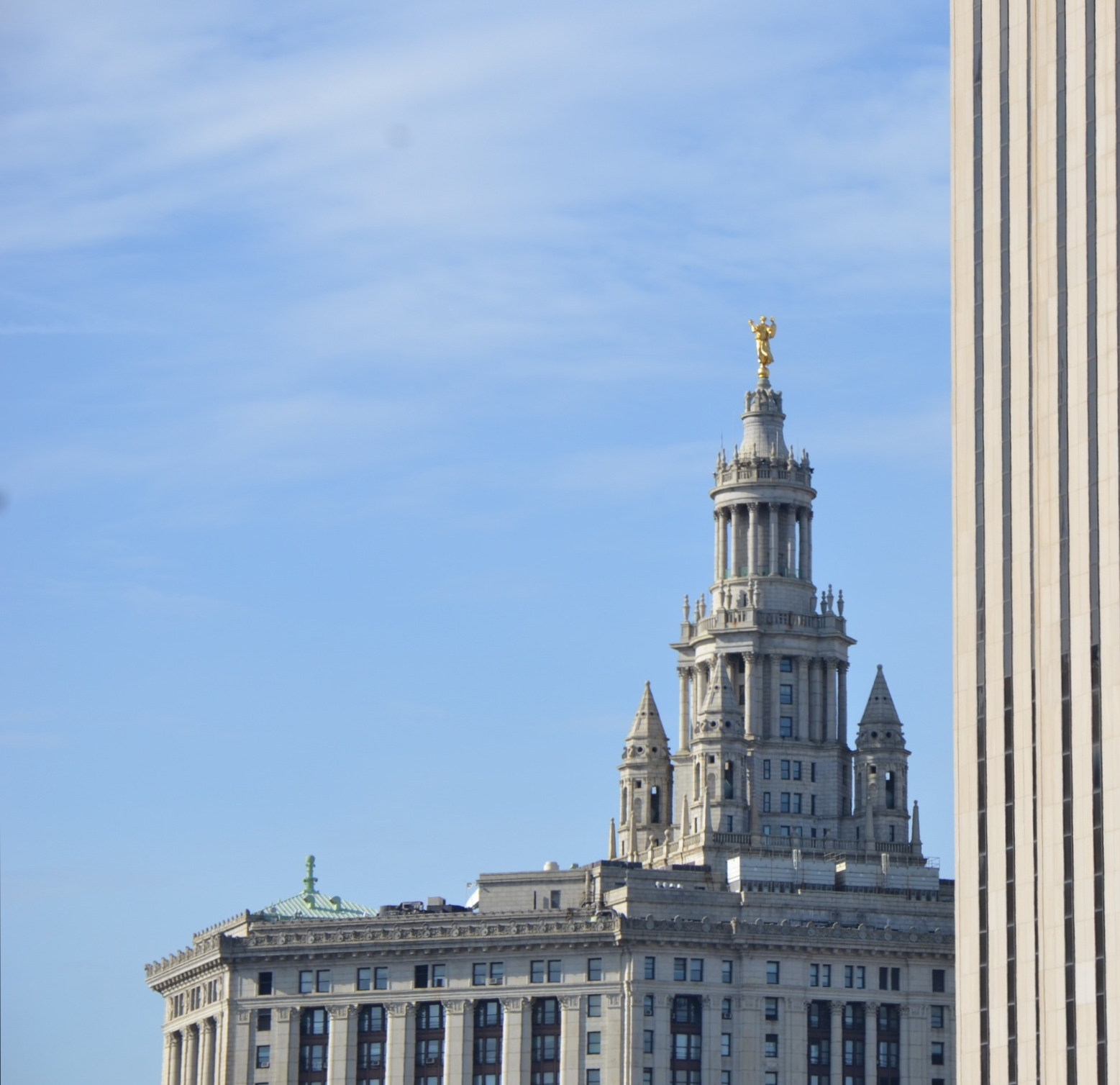
Spire of the Manhattan Municipal Building as seen from the Brooklyn Bridge.
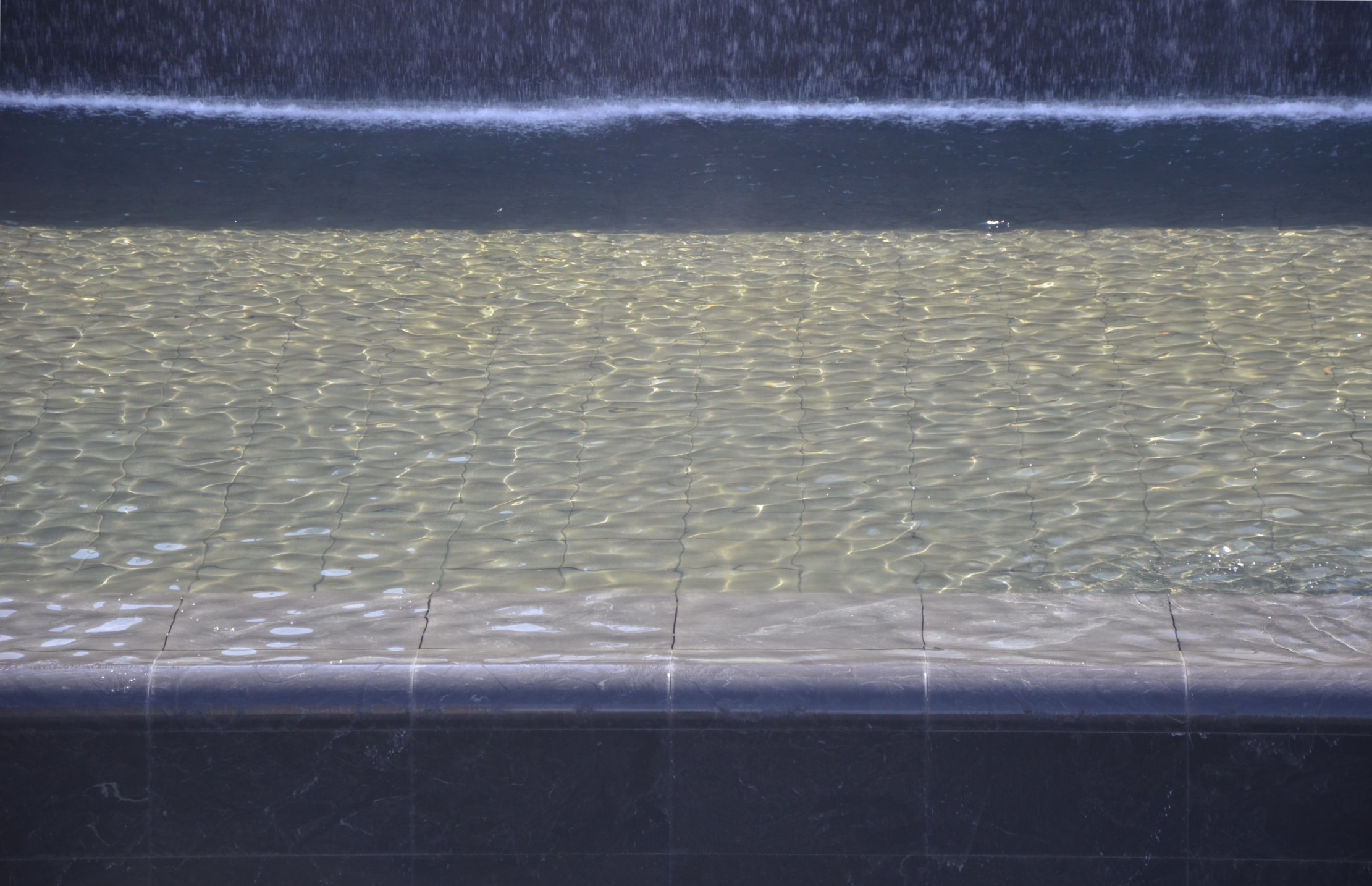
One of the reflecting pools at the 9/11 Memorial.
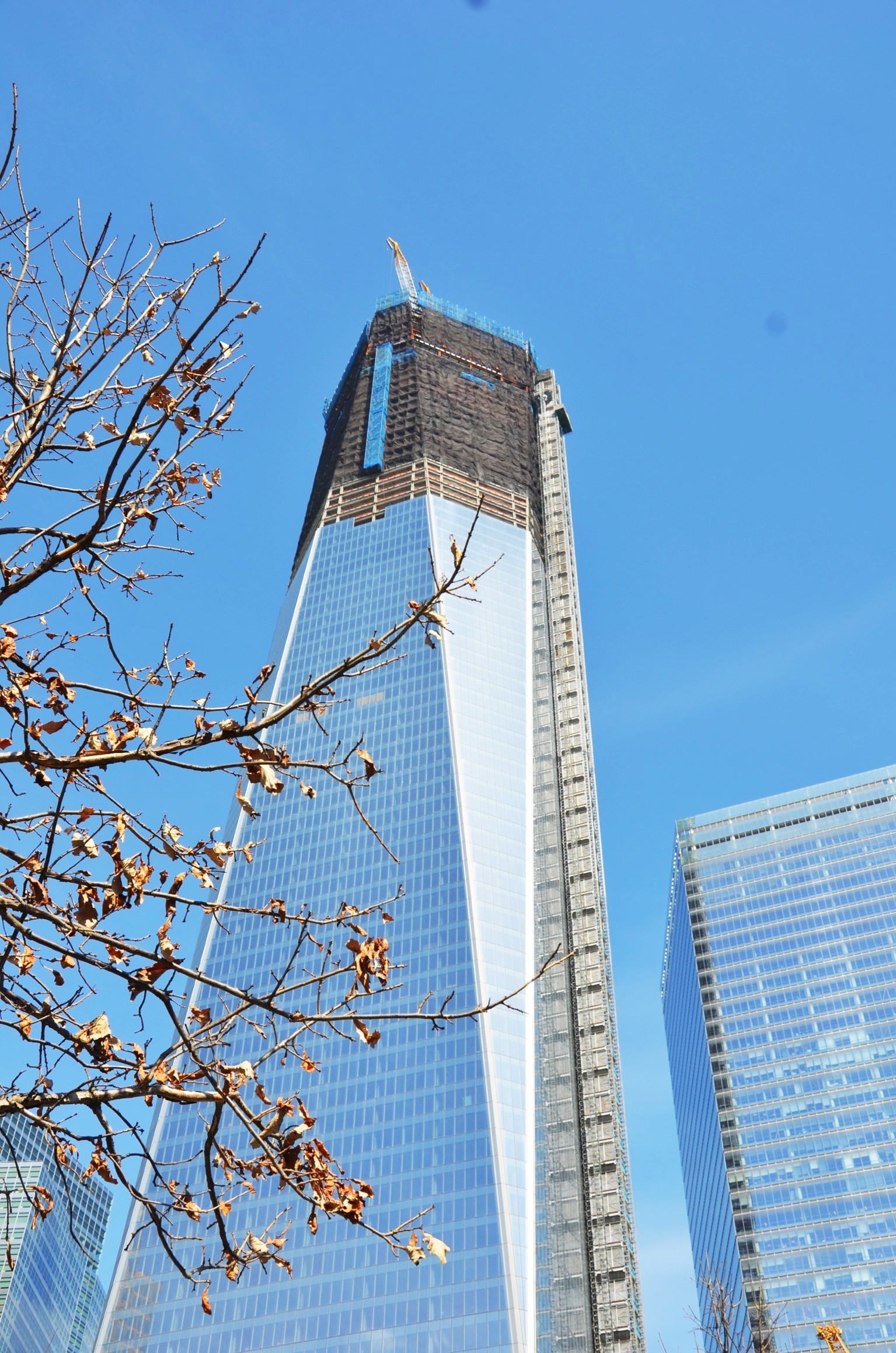
Construction in progress at 1 World Trade Center.
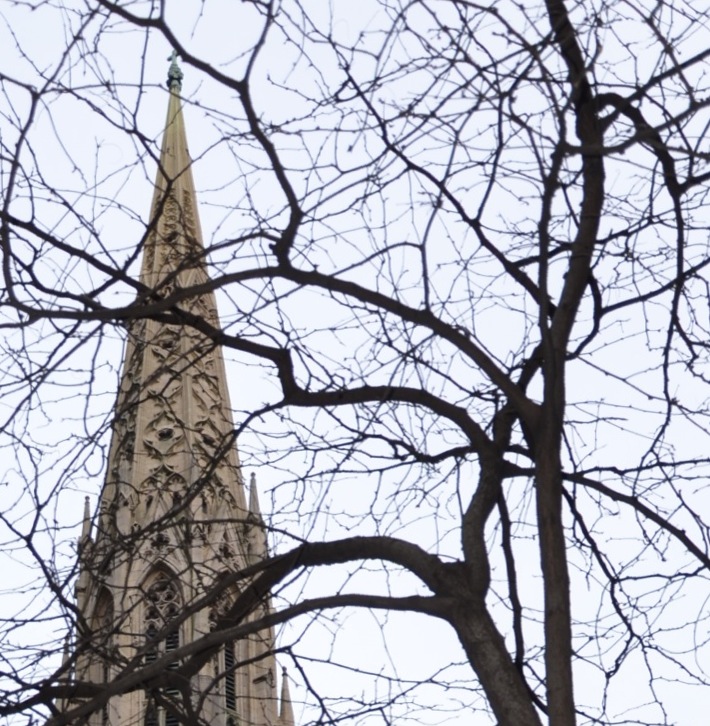
One of the spires of St. Patrick's Cathedral.
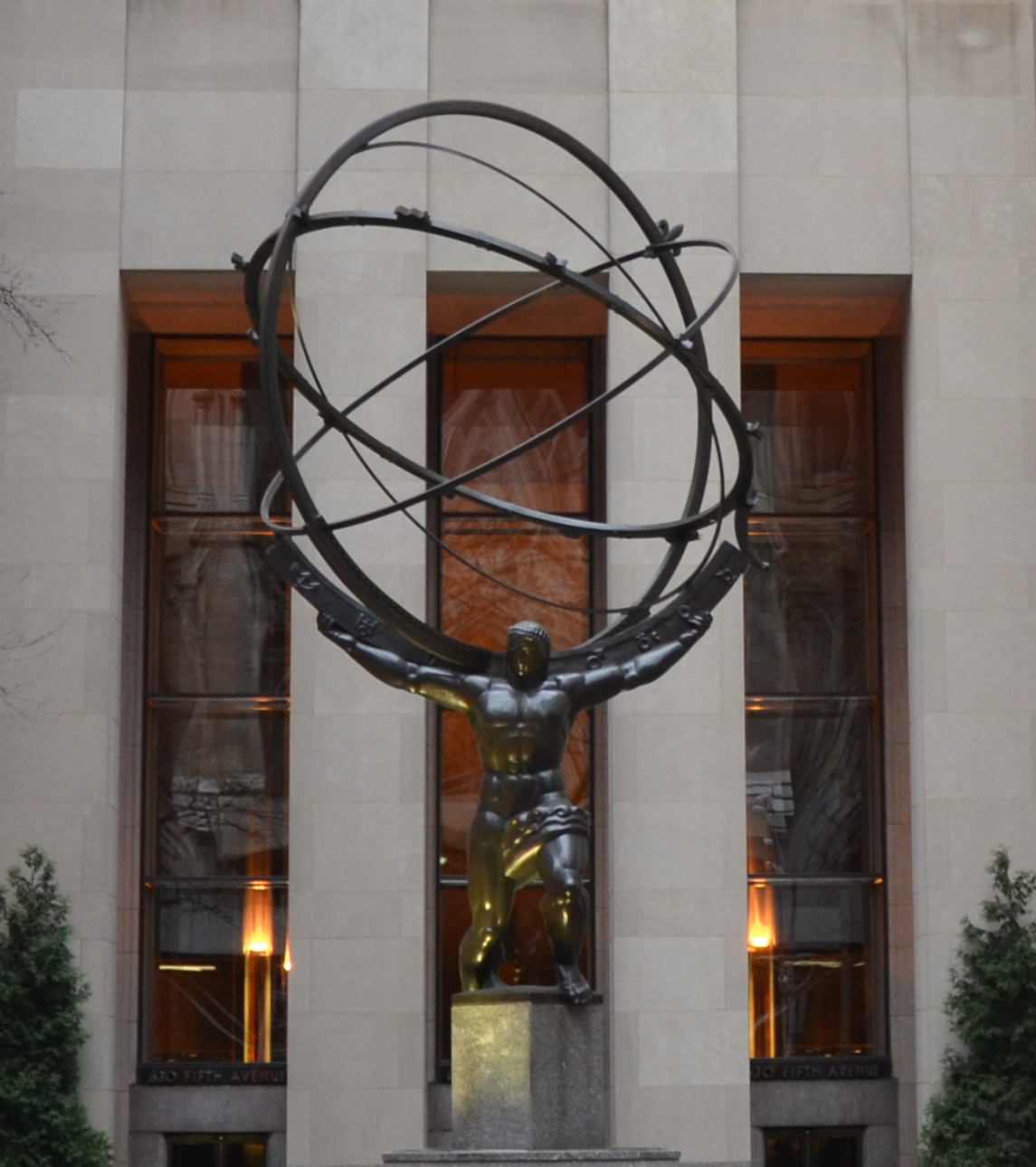
The iconic bronze statue of Atlas in front of the Rockefeller Center.
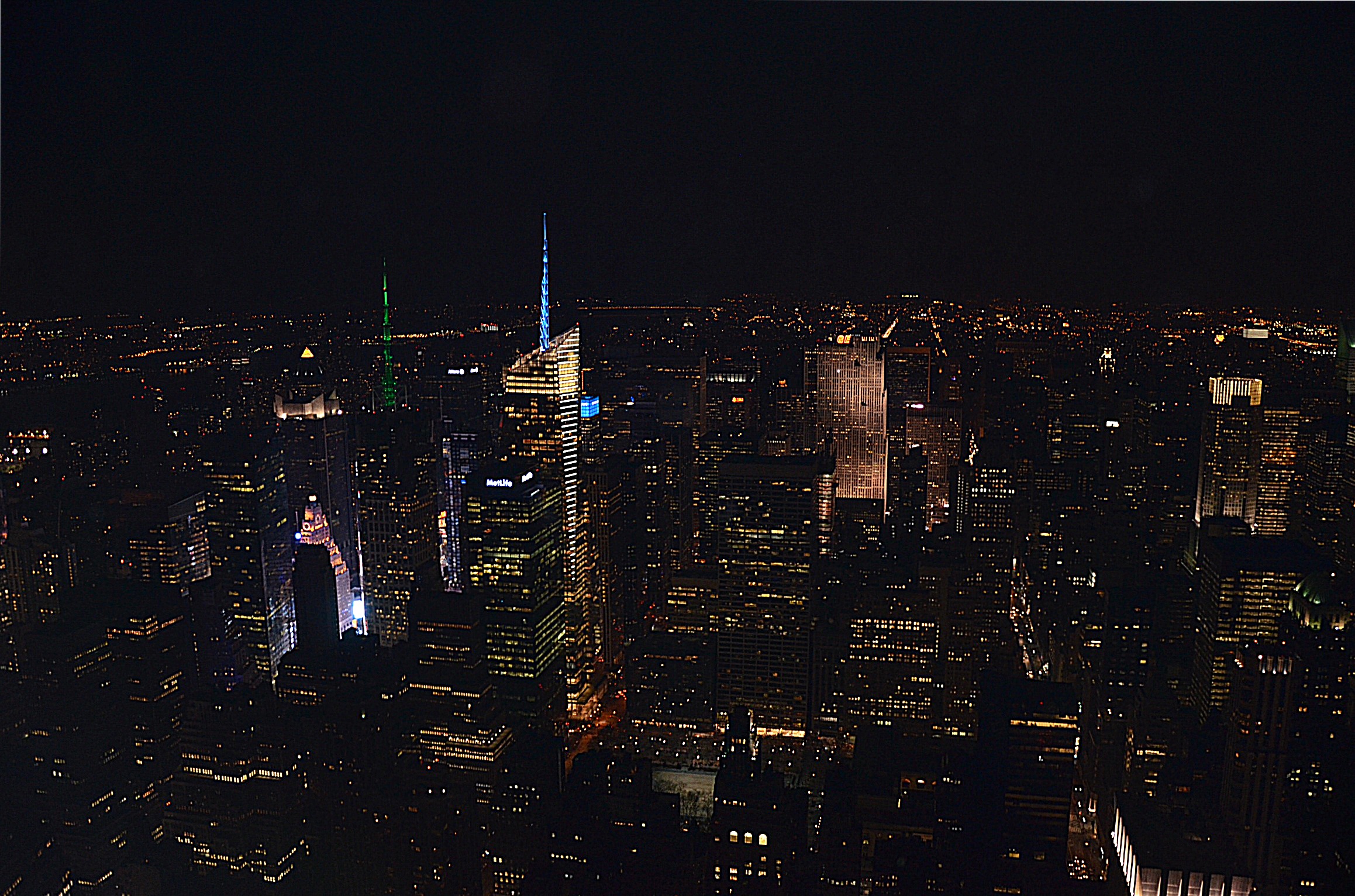
View of the city lights at night. Taken from the top of the Empire State Building.

 NY.

Japanese Yarns In The Garment District

A few days ago, I was in New York City and took the opportunity to visit Habu Textiles. I dragged two teenagers through the Garment District in search of 135 W. 29th Street. The entrance is nondescript and if you’re not looking for it, you’ll probably walk right past it. Habu Textiles is located on the 8th floor, which is somehow fitting since the Japanese word for “ha 八” means “8.”

The showroom is quite small but filled with exquisite yarns spun in Japan. The fibers used in the yarns range from wool and silk to bamboo, stainless steel, and cotton so fine it feels like paper. While the showroom itself seems small, it is actually part of a larger room that houses the weaving studio. Beyond the free-standing sheet rock walls of the showroom, I could hear the whirring of looms in the background. I had to fight the urge to pull back the curtains marked “employees only” and take a peek. Thankfully, they were kind enough to let me take pictures of the yarns which I can now share with you.

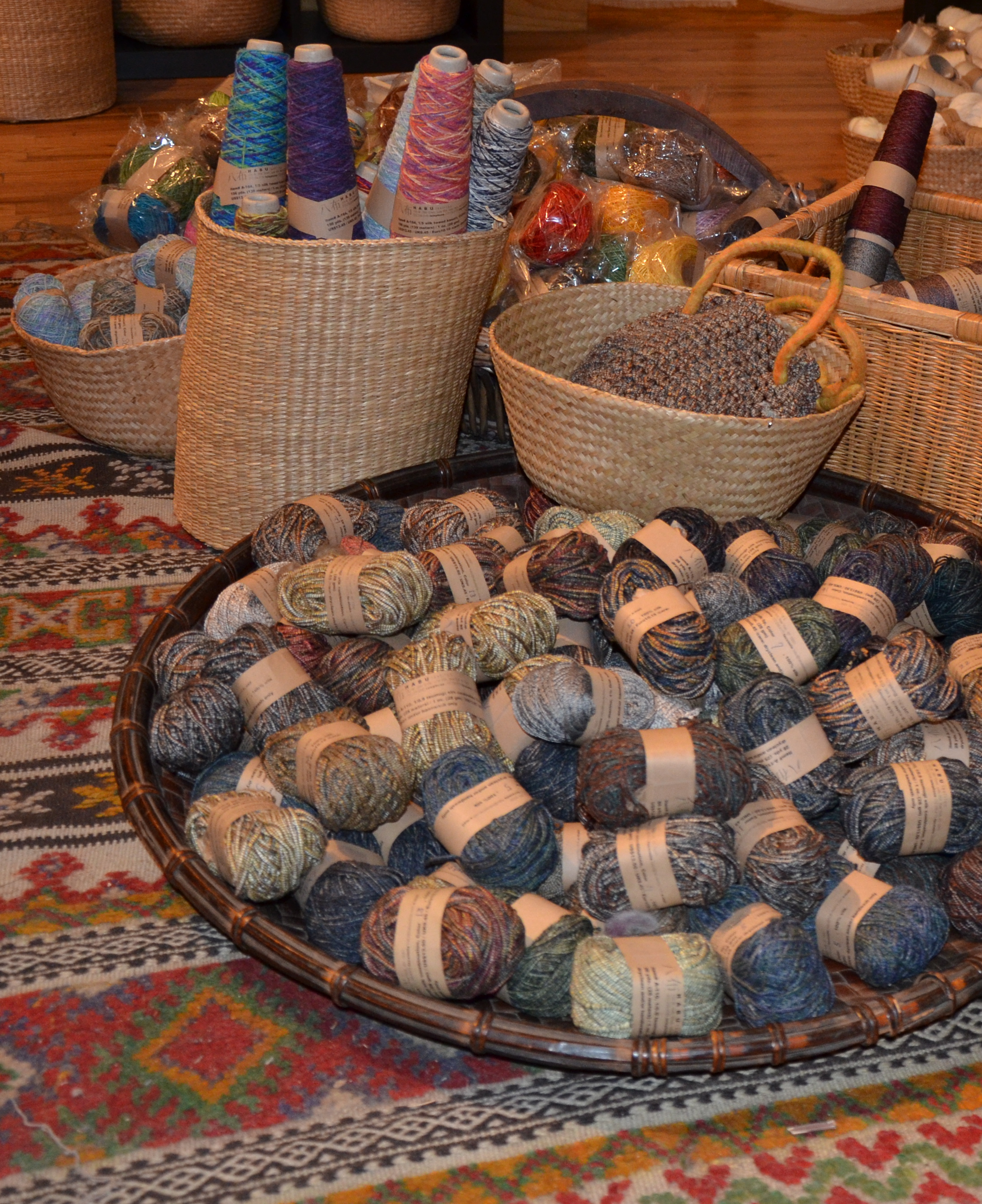
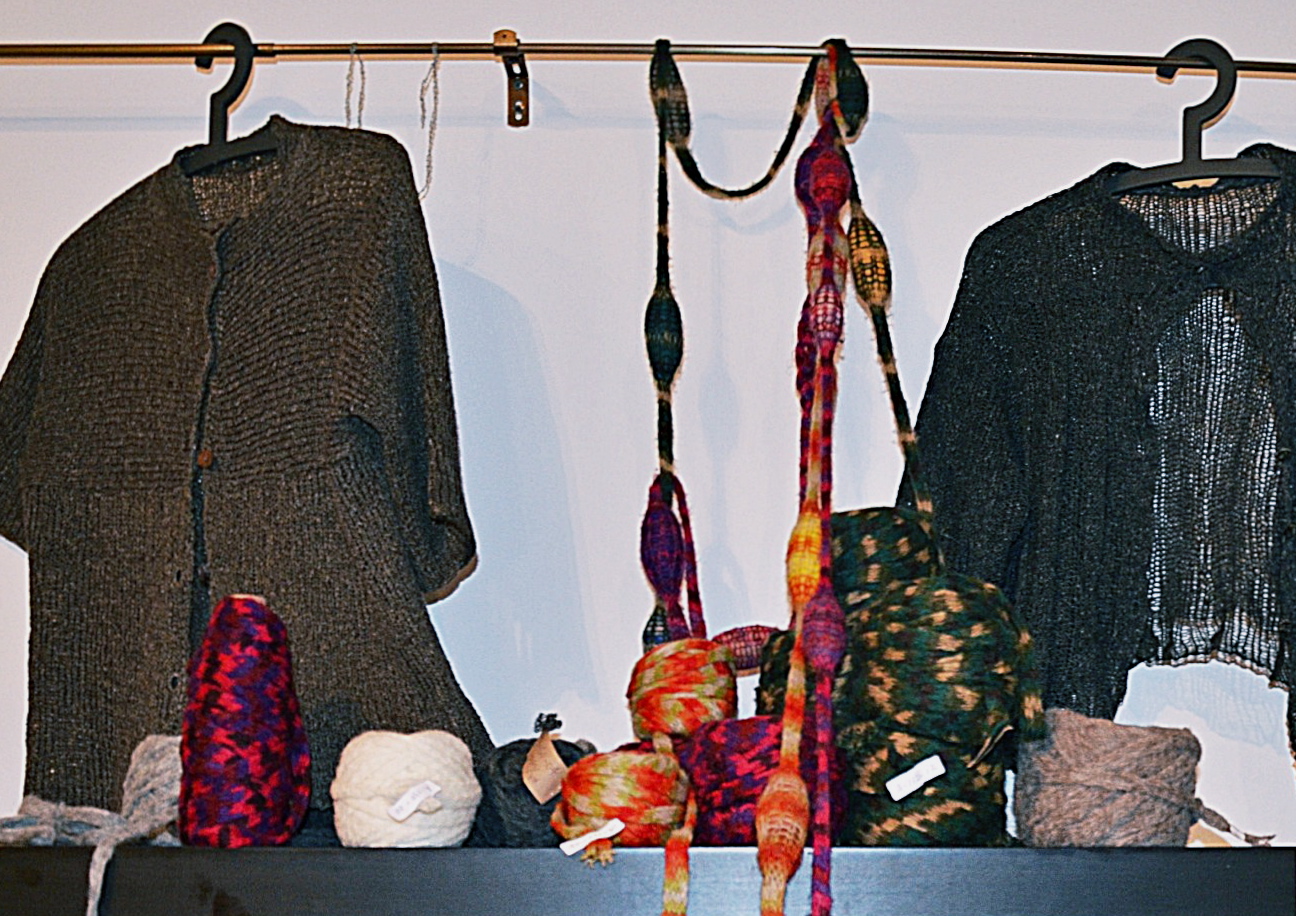
There were baskets filled with yarn throughout the showroom. In the large basket in the foreground is Wrapped Tsumugi Silk (100% Silk). This yarn is a silk wrapped in silk. According to the Habu Textiles website, it is created using a traditional cord-making method.
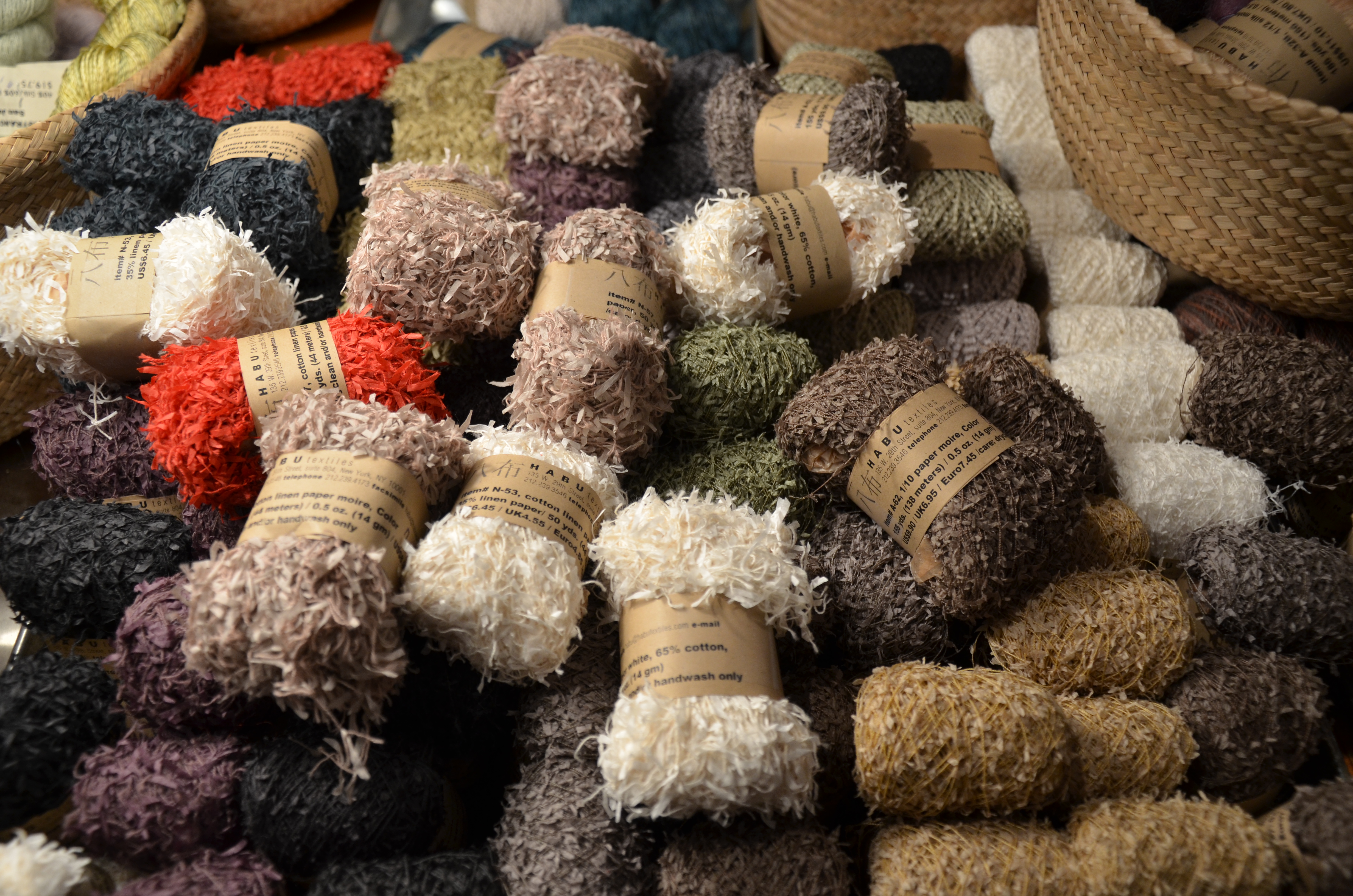
Cotton Linen Paper Moire (65% Cotton, 35% Linen). This lace/fingering weight yarn is exquisitely delicate. It feels like fine paper.
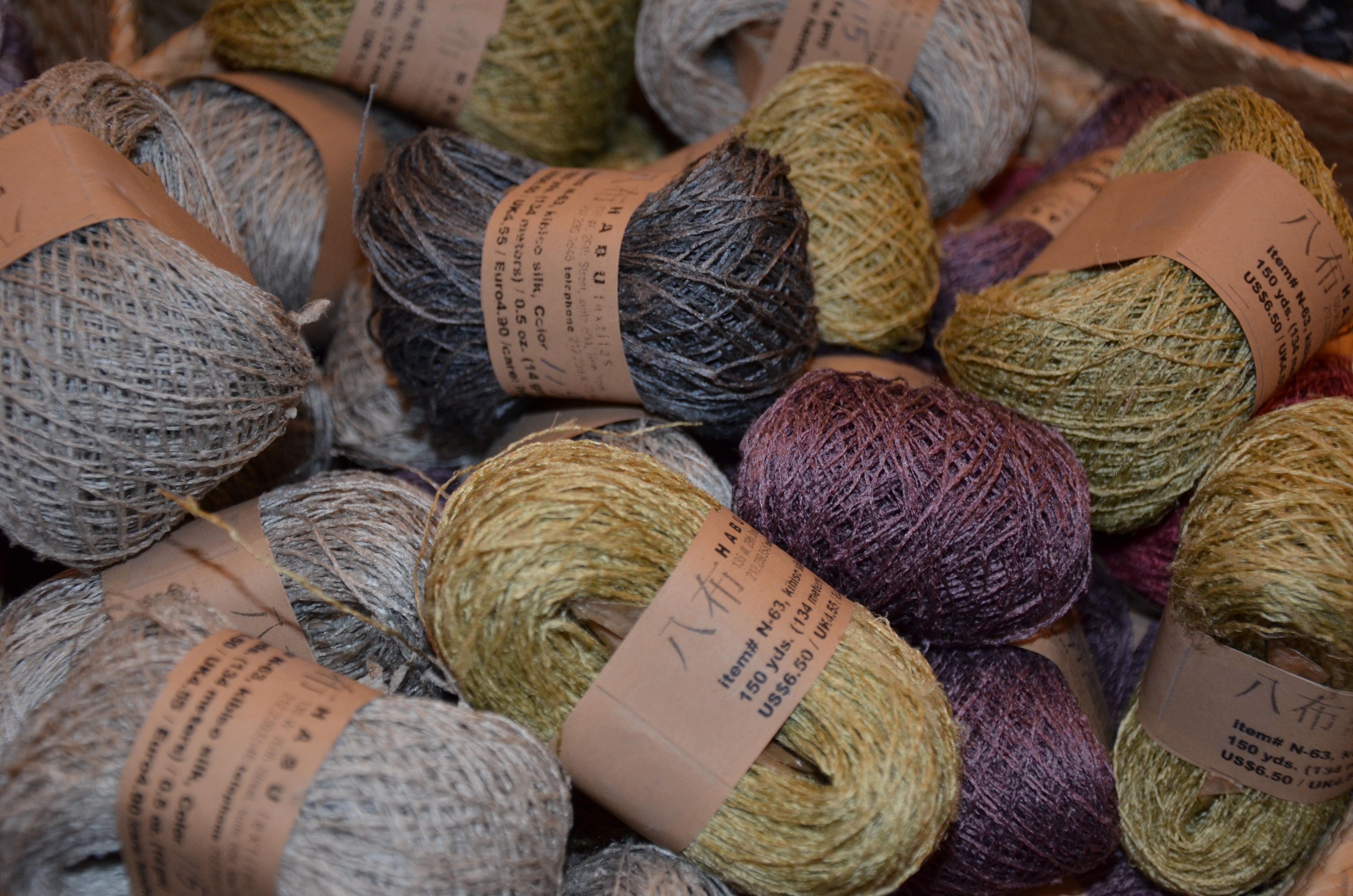
This Kibiso Silk (100% Silk) is made from "waste" silk. It's a slightly rougher silk but with silk's sheen and strength.
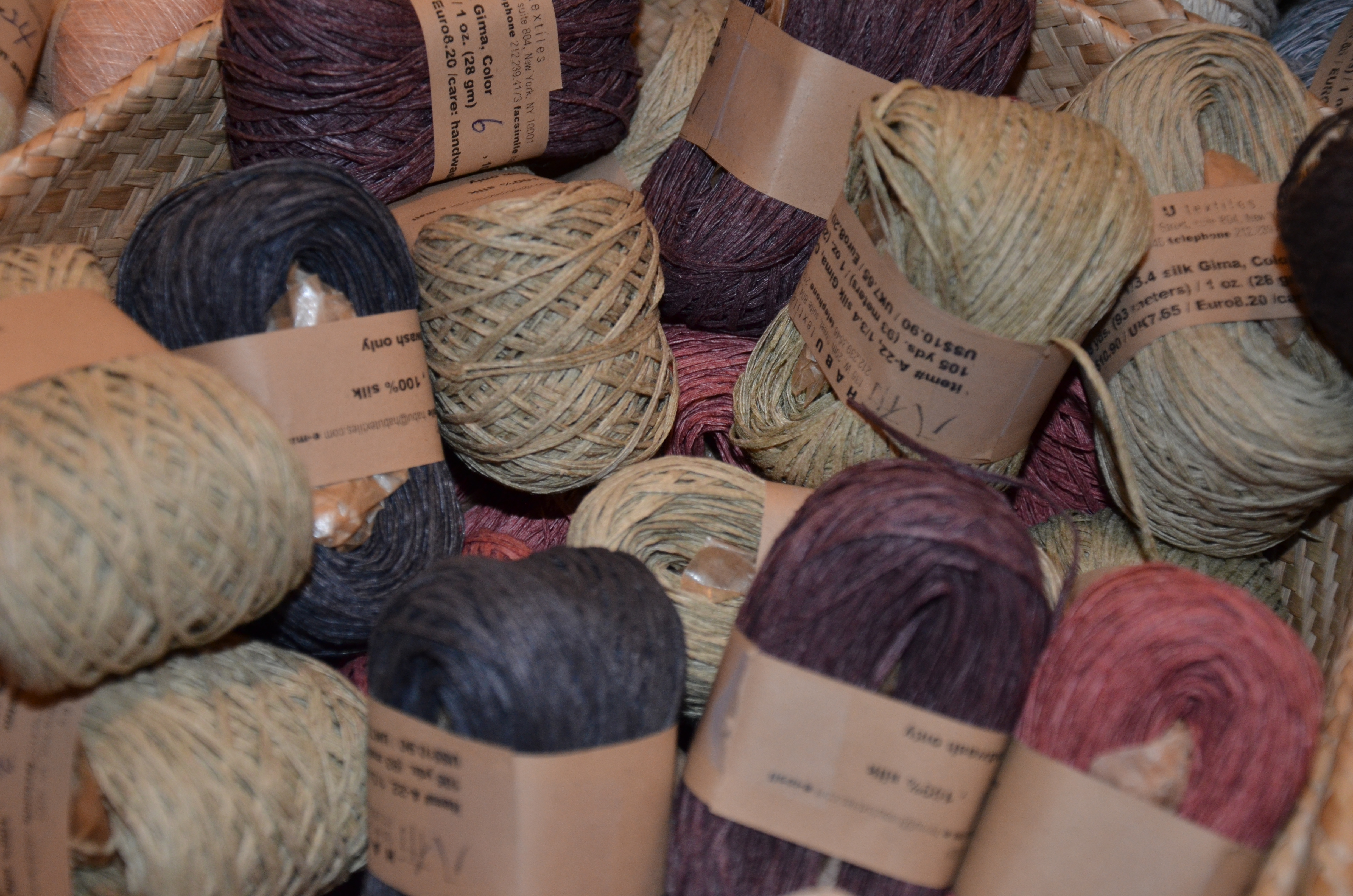
Silk Gima (100% Silk). Gima means "fake linen" in Japanese. This yarn feels like linen but is made entirely of silk.
This "chunky" Alpaca Knitted Yarn (68% Mohair, 32% Nylon) is interesting to look at up close. It is actually a narrow knitted tube. You can knit this knitted yarn with large needles or fill the tube with roving (as shown) to create interesting looks.
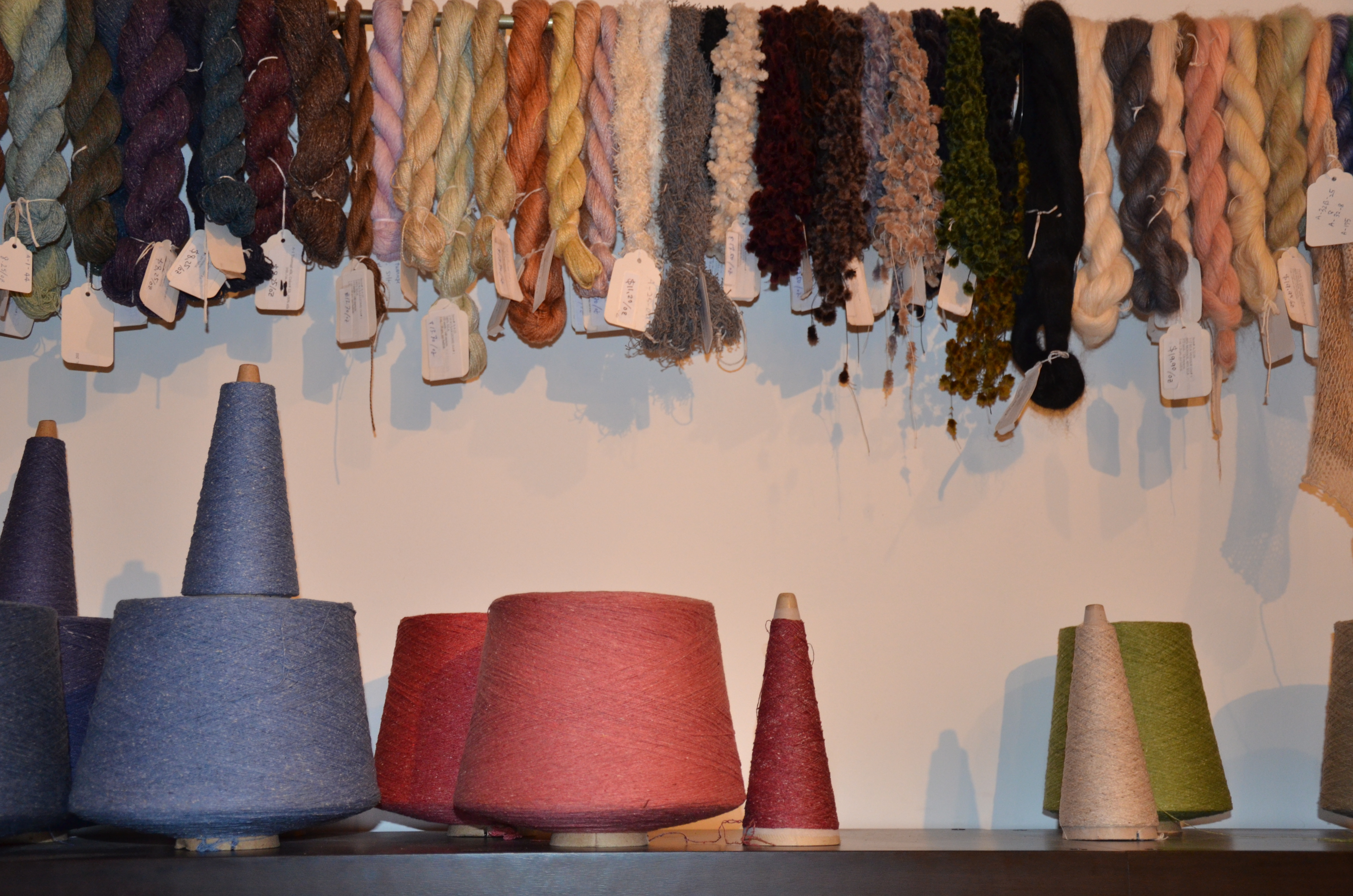
There were shelves full of this thread-like yarn around the showroom.

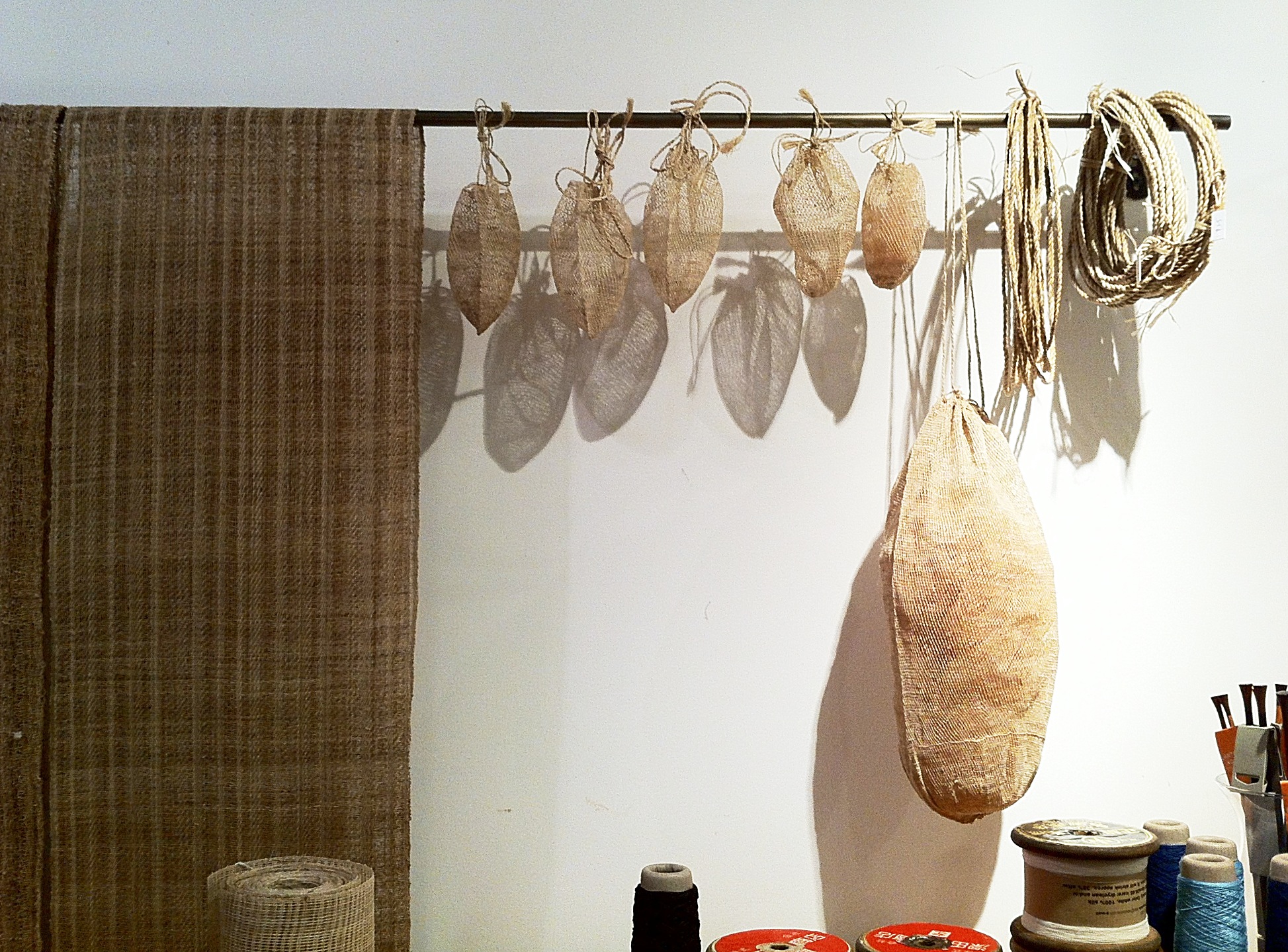
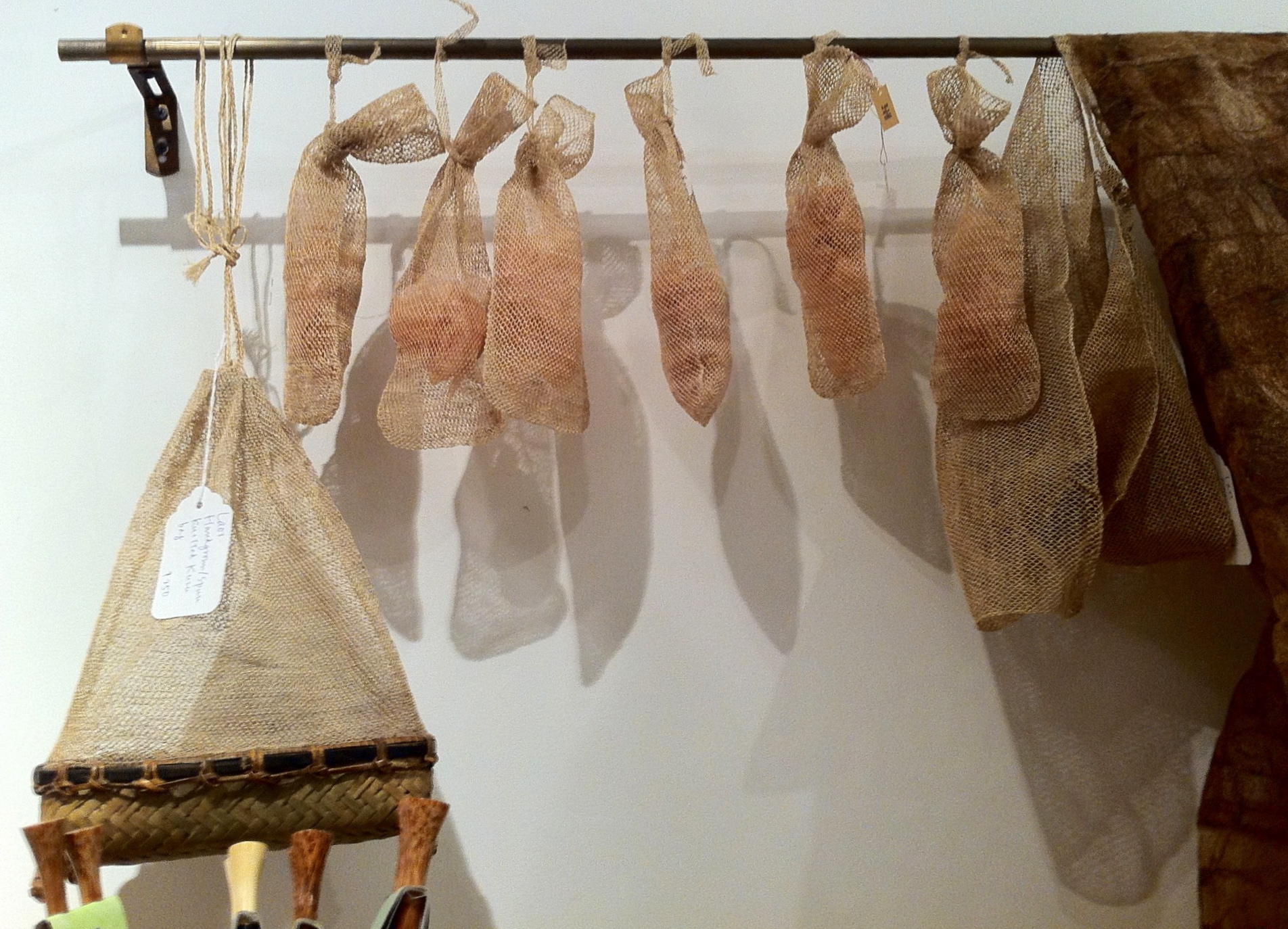
Besides yarns, Habu Textiles offers woven fabrics also made from natural materials such as silk and pineapple fiber. The fibers originate from China, France, Japan, Laos and the United States. These two displays caught my attention. The knotted bags and ropes are made in Laos.

You can learn more about and buy these fabulous yarns and textiles at the Habu Textiles website.

Knit Napa Shawl

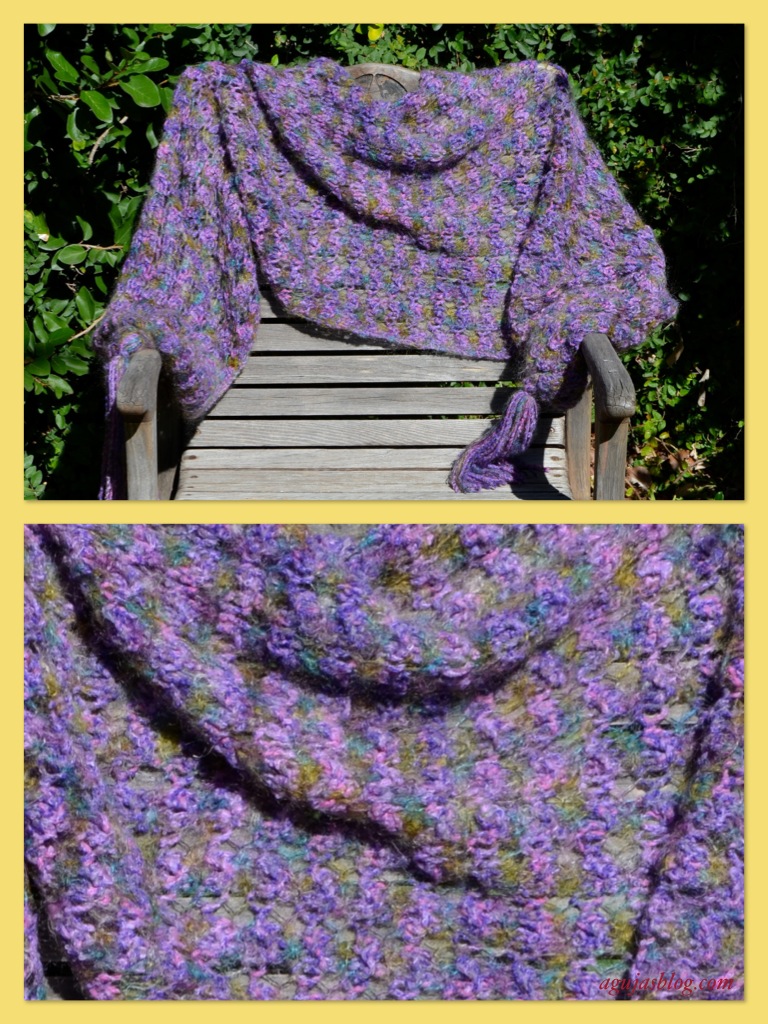
The reverse lace stitch of this shawl gives it a nice drape. The pattern is in the Comforts, Throws, Shawls & Scarves booklet by Colinette. The pattern calls for Colinette’s Prism and Mohair but I substituted yarns. I used Portrait by Artful Yarns (#112) and Stampata Super Chunky by Sirdar (#782).