Fårö is sparsely populated. The summer tourists were gone and the locals were not to be seen. We had the narrow roads all to ourselves.
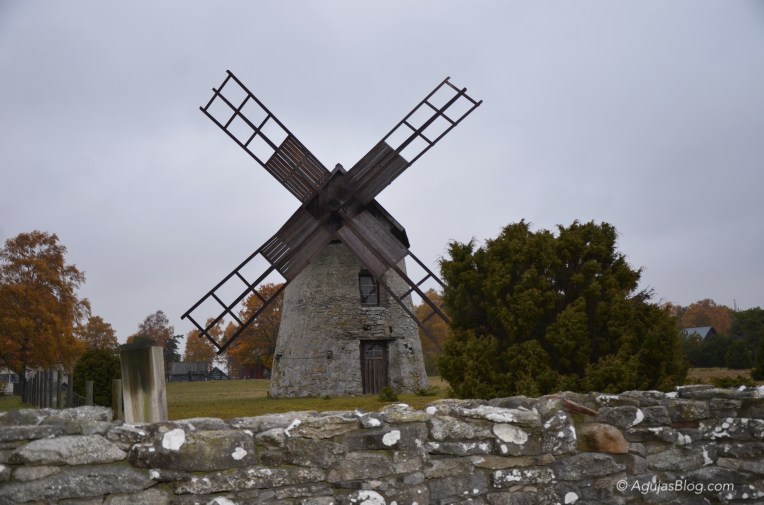
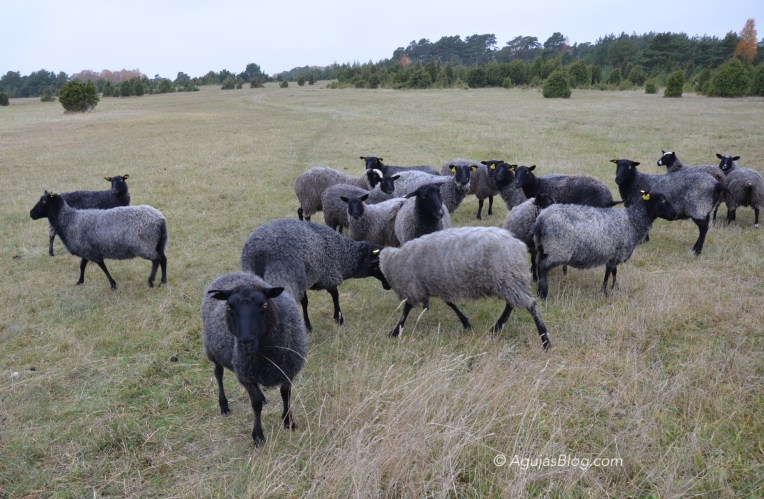
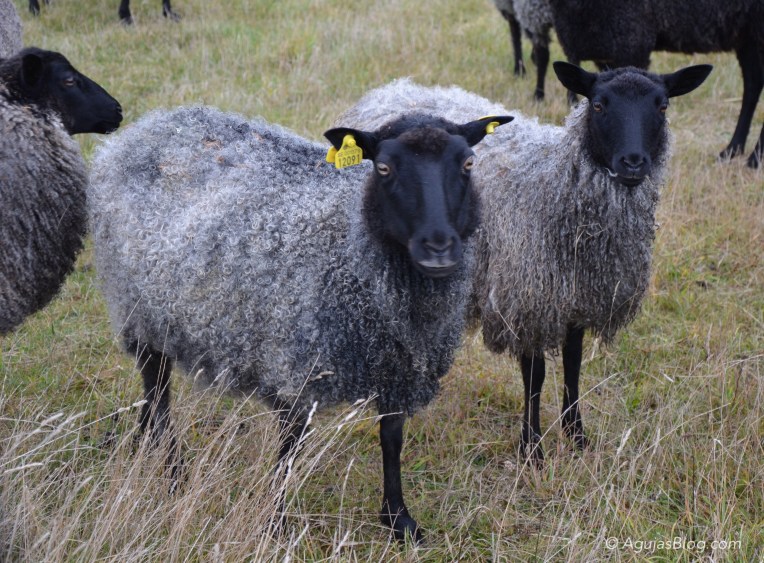
I was on a quest to find Gotland sheep and Fårö satisfied. Along an empty road, behind a fence on a large pasture of land, I spotted them.
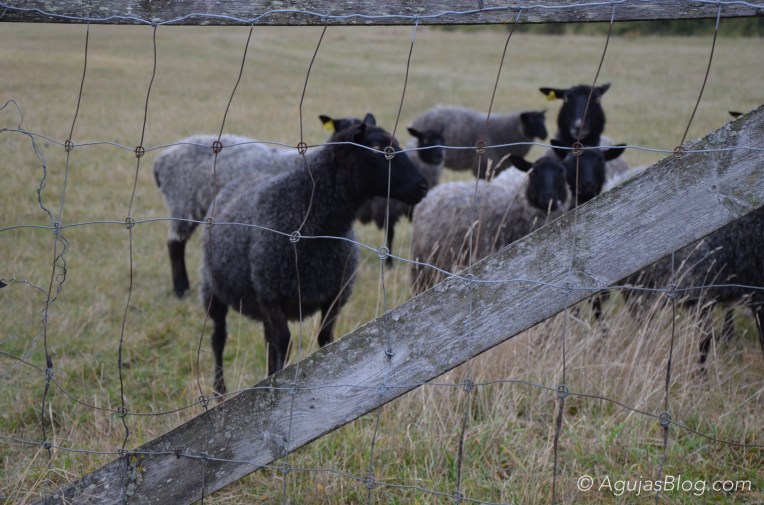
This fella’ (or gal) on the left was quite curious and walked over to me. Meanwhile, the two behind him were playing around butting heads.
As he got closer, I found his eyes to be quite interesting. Rather than round pupils, his were like horizontal slits. I had never noticed! Apparently this is quite typical for sheep. From a little research on the web, I found an article that explains how the shape of an animals’ pupils affects how well they can control light entering the eye.
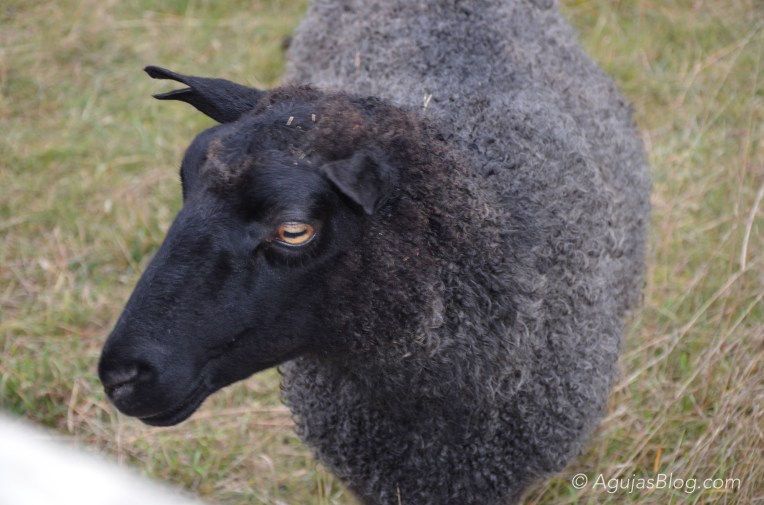
… horizontally elongated pupils are nearly always found in grazing animals, which have eyes on the sides of their heads. They are also very likely to be prey animals such as sheep and goats. (Source)
As we continued driving along, we pulled over to take a look at a Gotland farm. This farmhouse at Bondans was built in 1783. There was a visitor’s stand that provided the history of the farm. I snapped a picture of it so that I would remember the details and have transcribed parts of it here.
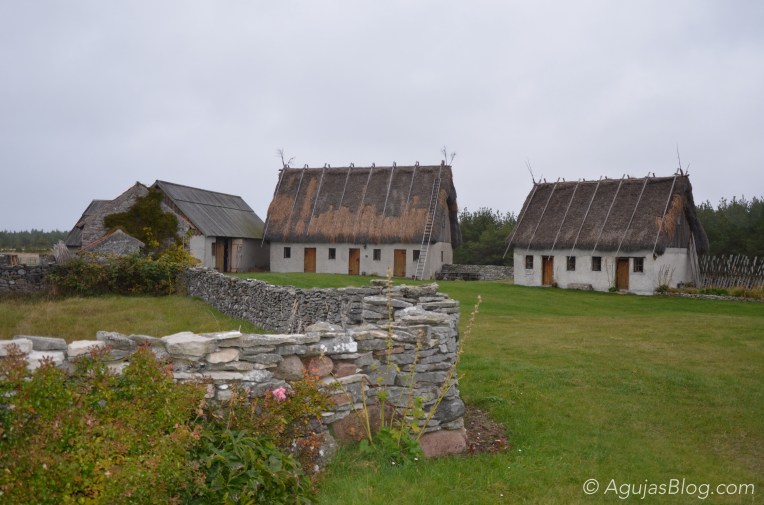
In bygone days, farms were largely self-sufficient. Stone was used to build houses and fences. The forests provided firewood and timber. Clothes were made from wool and linen. The people on the farm lived off their fields and animals, hunting and fishing.
The farmhouse is a ‘parhus’ – a traditional laterally inverted structure with a hall mid-front, backed by a small parlor, both flanked by a large room on each side. Other farm buildings include a cow-shed thatched with sedge, a barn with a threshing mill, a row of outhouses, a store with a goose shed, a cellar and flax-drying shed, where there is a kiln used to roast malt for beer. (Sign posted by the County Administrative Board of Gotland)
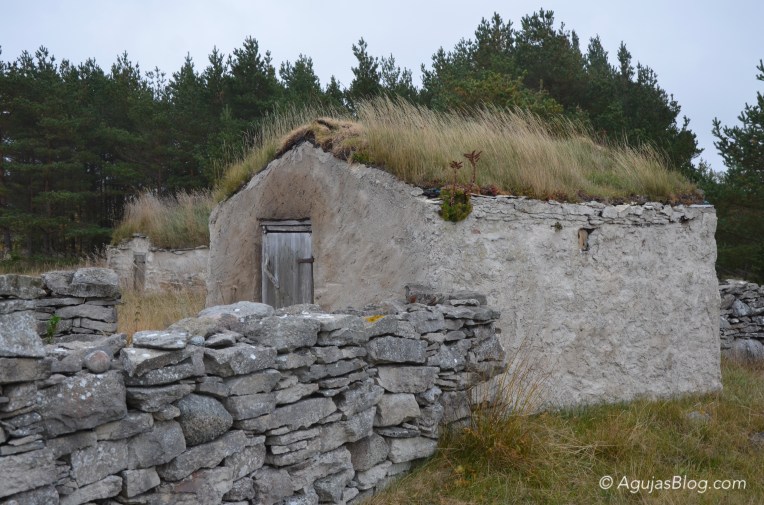
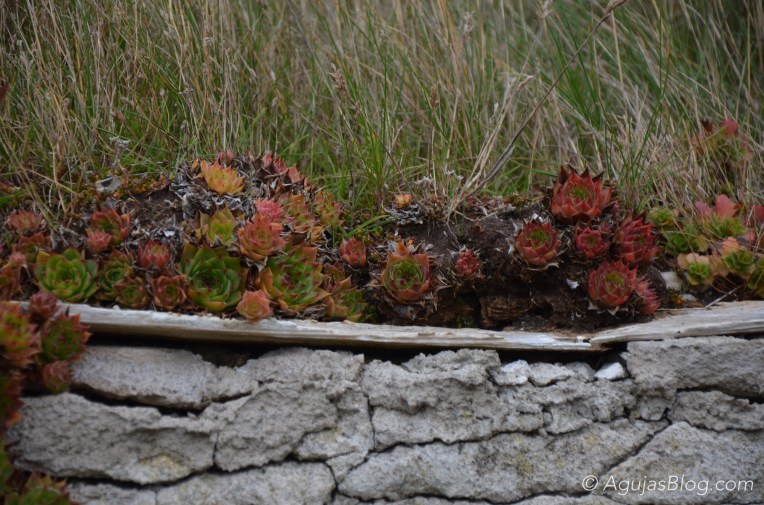
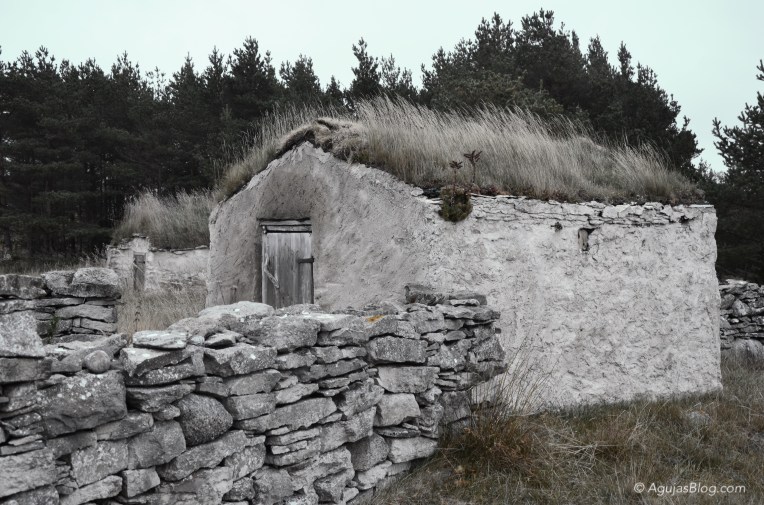
Even back then, these farmers were planting green roofs, which help with insulation.
When wood became scarce in the eighteenth century, the state granted twenty years’ tax relief to those who built houses of stone. In the stone houses that were subsequently built, the walls were no longer of finely hewn stone but of dry-walled stone, plastered both inside and outside. (Sign posted by the County Administrative Board of Gotland)
I found this little structure to be so quaint and wondered what it would look like in black and white.
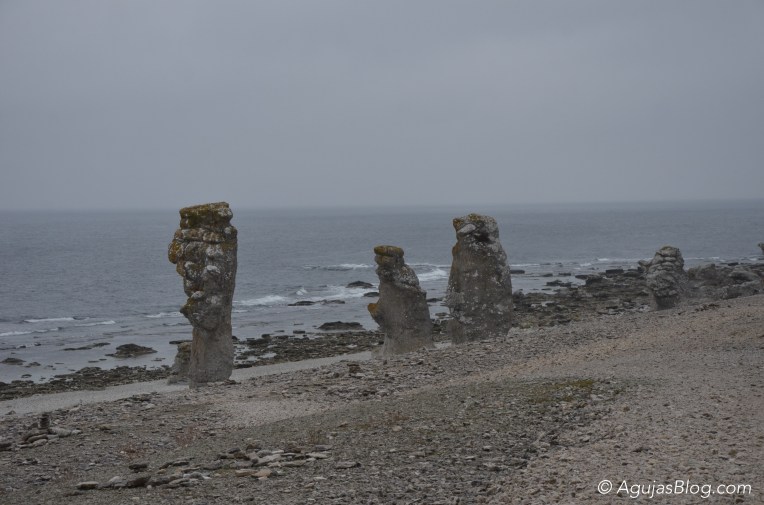
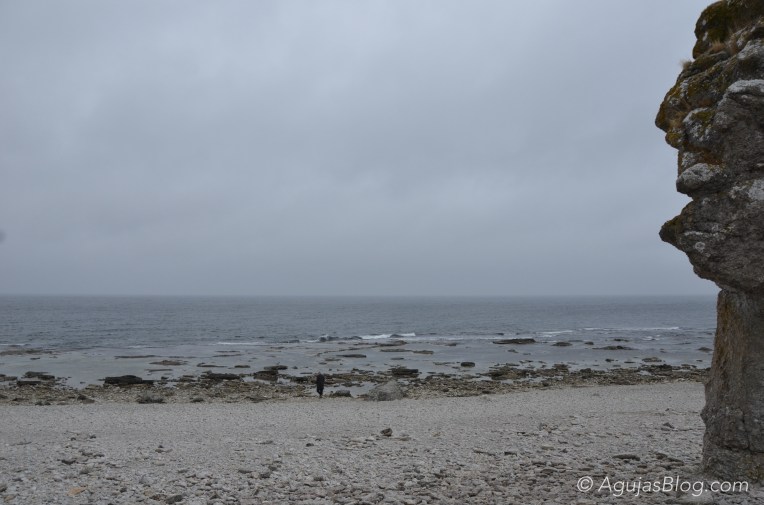
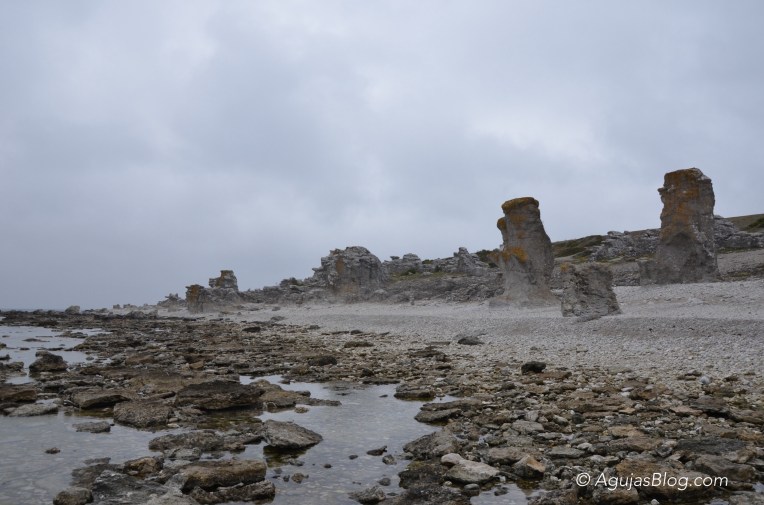
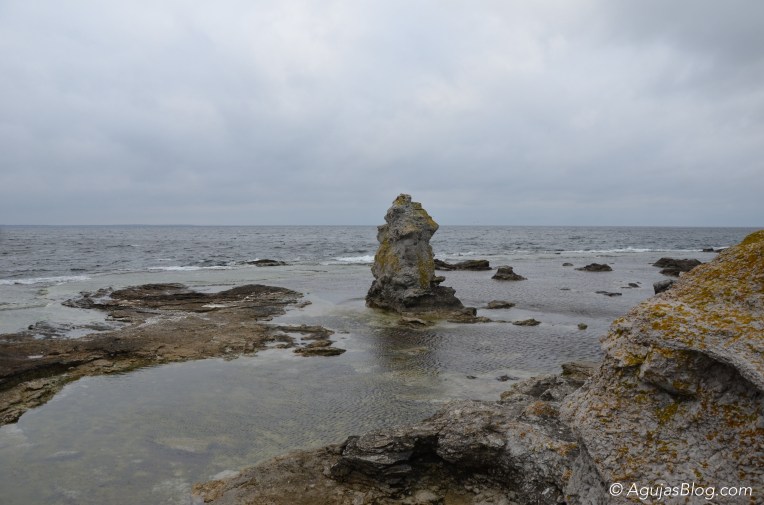
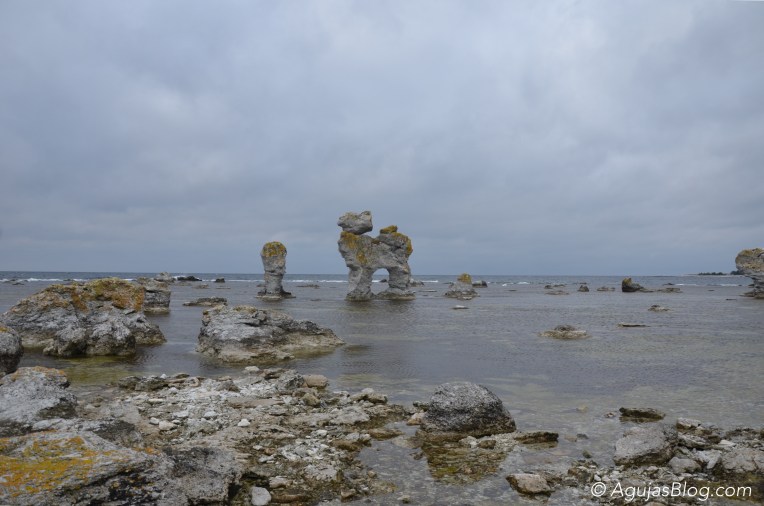
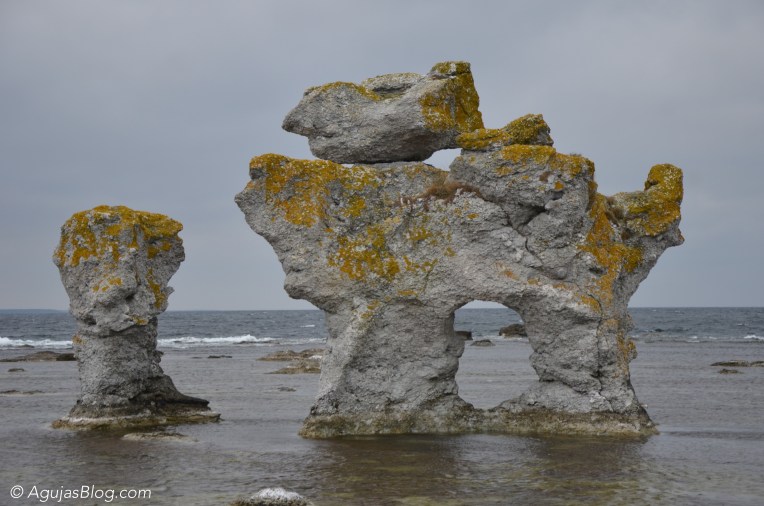
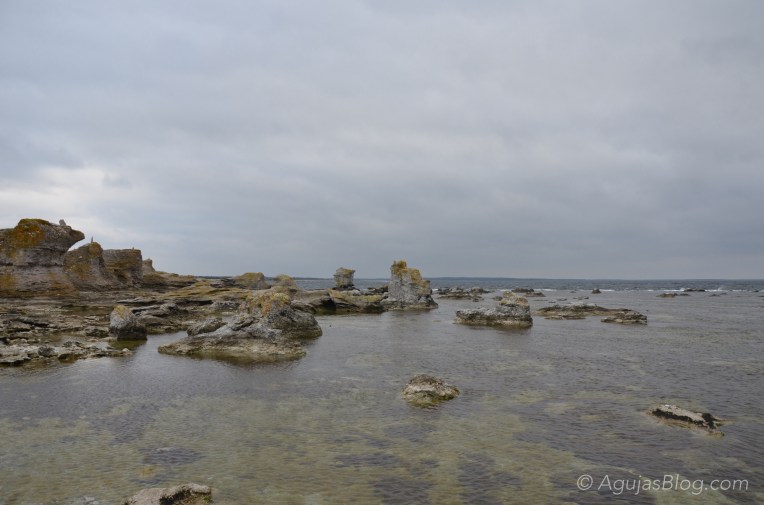
On the Langhammar Nature Preserve, before we reached the rock-covered beaches and giant rauks, we crossed an area with lush green vegetation.
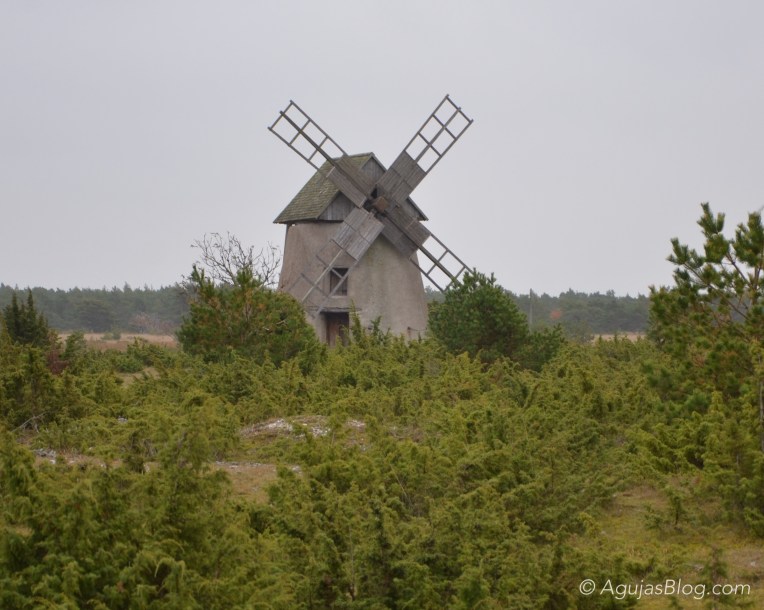
The vegetation at Langhammar and in the areas to the south have been strongly affected by long-term sheep-grazing. The south end of the reserve could almost be described as “discontinuous savanna”; pine groves alternate with barren, heath-like tracts of alvar, and smaller areas of somewhat more luxuriant wet meadows. In the central part of Langhammar, the rocky ground is largely covered by low, crouching juniper bushes, which have been stunted by sheep and the wind. (Sign at Langhammars Nature Reserve posted by the County Administrative Board of Gotland)
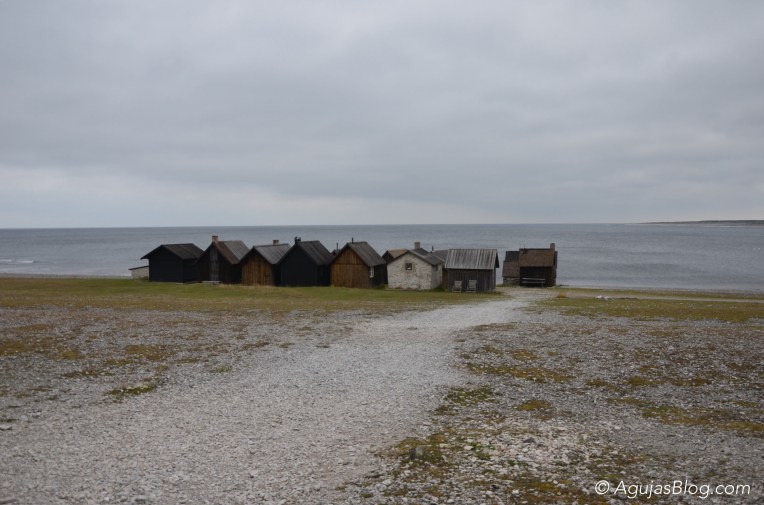
The Helgumannen fishing village is located on the Digerhuvud Nature Reserve. The cottages were all shuttered for the coming winter.
Near the Gamla Hamn Nature Reserve, we followed signs pointing to S:t Olof’s Kyrka. Instead of a building, we found only the foundation of the church which dates back to the Medieval period.
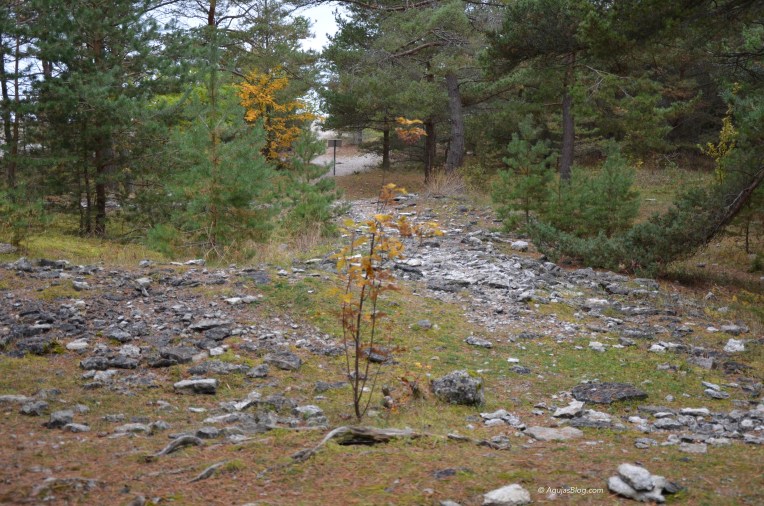
According to tradition, Gotland was converted to Christianity by the saintly Norwegian King Olof. In front of you there are the foundations of a small wooden chapel called St. Olof’s Church. The chapel is surrounded by a circular churchyard. (Sign posted by the County Administrative Board of Gotland)
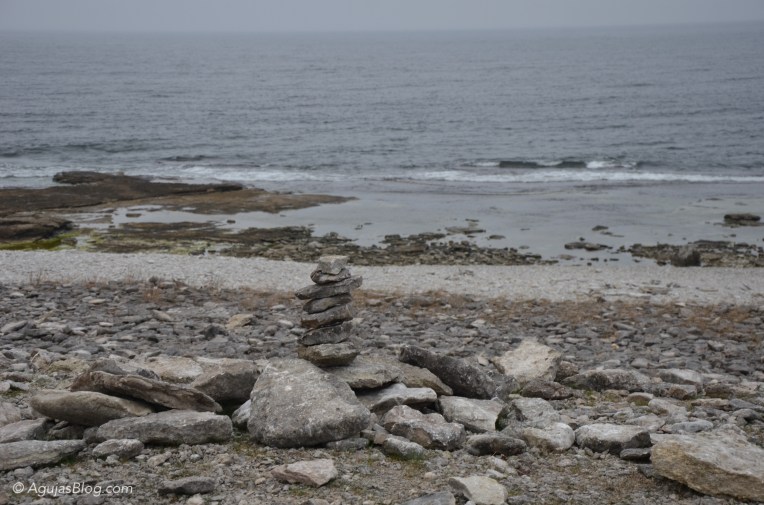
We didn’t see them but near the shore there is apparently a burial ground with various graves dating back to Medieval times. From the endless gray skies and chill from the wind, I can only imagine what it might have been like during the Ice Age, or to see Viking ships arriving at the harbor. We were only on Fårö for a few hours but I will remember it forever.