Tesoros del Camino

My husband, the pilgrim, returned from a long walk of 863 kilometers across northern Spain. He walked westward from the Spanish-French border to the Atlantic Ocean. He followed the Camino De Santiago (the Way of St. James), a pilgrimage that has been walked by thousands before him since medieval times.

This was his trip, not mine, so I cannot write about its spiritual significance or the physical endurance required to make the trip. That is his story to tell, or not, in his own time. What I can relay are snippets of experiences and sights that he shared with me along the way.

The first day was the hardest. It was an uphill climb through ankle-deep mud in the pouring rain and winds that blew horizontally along the path. He told me that there were crosses and makeshift memorials covered in stones marking the places where pilgrims had started and ended their walks.

On his way from Roncesvalles to Burguete, he walked through the Sorginaritzaga Forest. Before entering, he came across a sign written in four languages. The caption read “Brujería” or “Witchcraft.”

The Sorginaritzaga forest, whose meaning is “oakwood of witches,” was where some of the most well-known witches’ covens of the XVI century were held, …

As he walked through the forest, he came across the White Cross placed there to protect the pilgrims from witches.
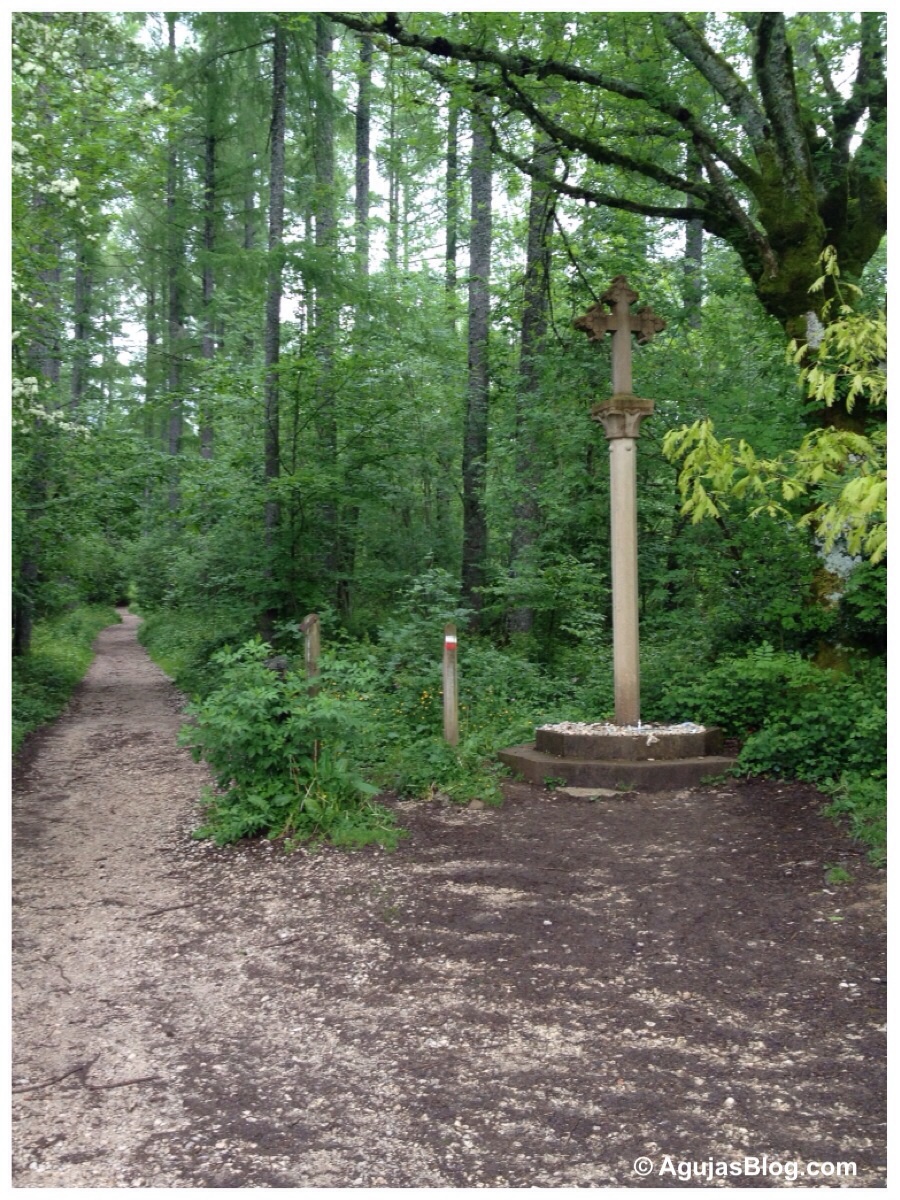
Sorginaritzaga Forest

Despite this ominous beginning, he found time to send me photos of the countryside and of sheep grazing in the fields. He spotted this flock of sheep near the Basque town of Zubiri.
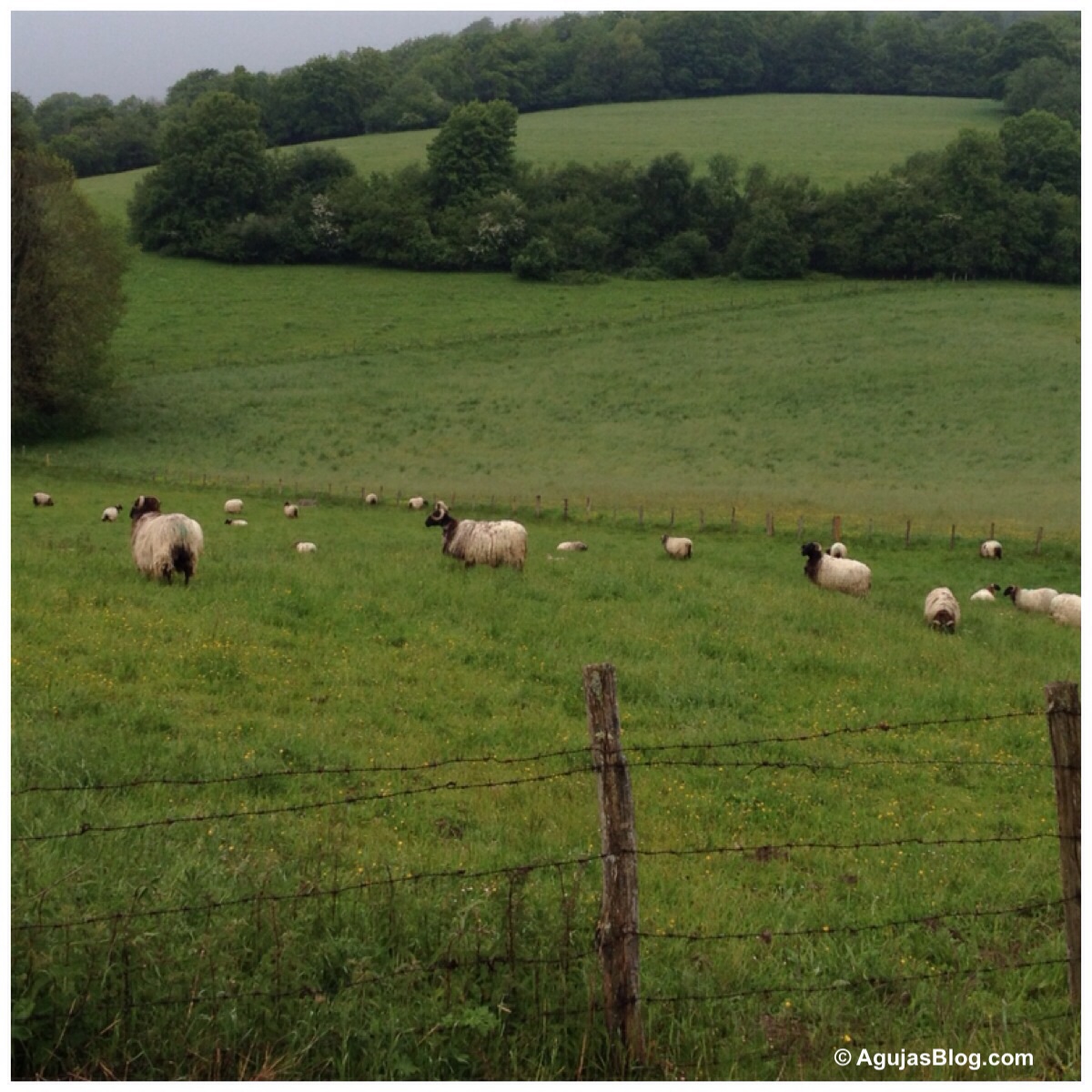
Near Zubiri

He told me these were Manech sheep. They are black-faced free roaming sheep known for their milk and from which “ossau-iraty” cheese is made.
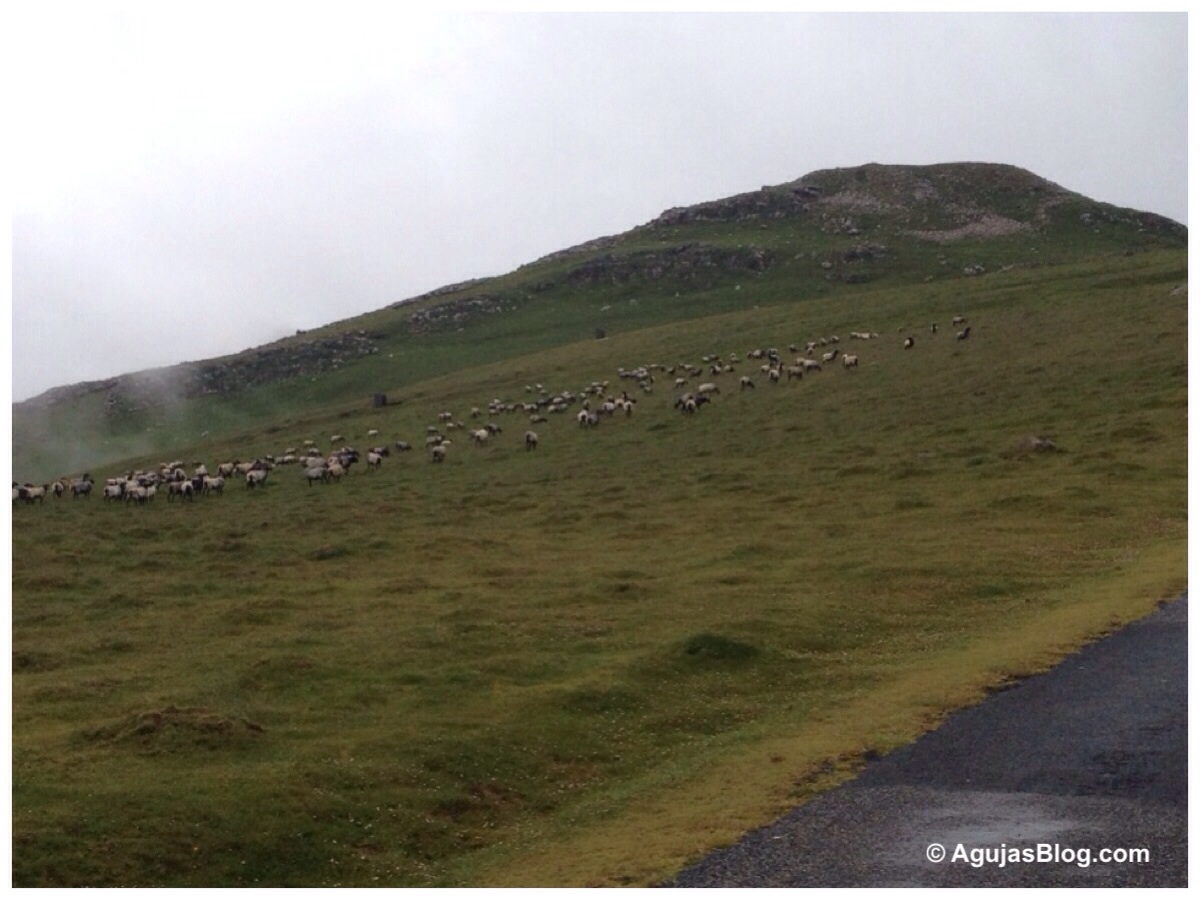
Manech Sheep

He even snapped photos of some of the yarn stores he happened to spot in the towns he came across. Mercería Nhilos is in Nájera; Lanas Lany in León.
Along the way, pilgrims stay in albergues. The albergues provide a bed and usually a meal, sometimes a community dinner or a light breakfast. Curfews are strict so as not to disturb the weary pilgrims. The bunk beds shown below are in a pilgrim’s shelter attached to a local church in Belorado. The albergue was run by German nuns. The bed was free although a contribution of 5€ to the nun’s fund was recommended.

Another albergue was at St. Mary’s Nunnery in the city of Carrión de los Condes. According to my husband, one nun will tend to your feet with an extensive first aid kit and all the patience in the world. That evening, they held a pilgrim’s mass with a blessing of the feet followed by a community dinner and some singing and entertainment for the weary travelers. The following day would consist of a brutal 20-mile walk in desert-like conditions.

Within 58 kilometers of Santiago de Compostela, my pilgrim made it up the side of a mountain in the province of Galicia where this stone marker is located.
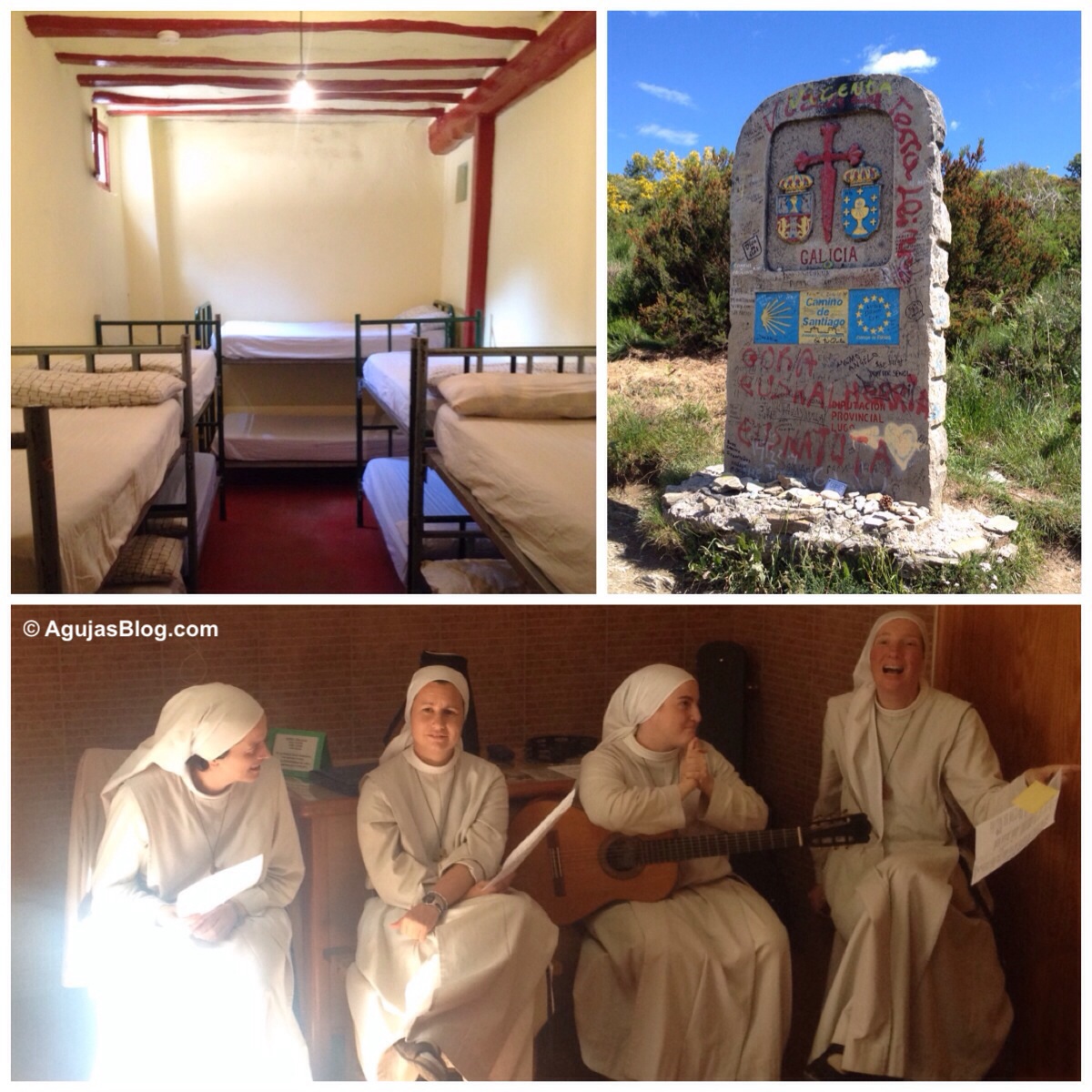
El Camino Collage Summer 2014

This albergue was situated near Itero de la Vega in a medieval structure run by an Italian religious fraternity. The simple refuge had no electricity, only candles to light the way.
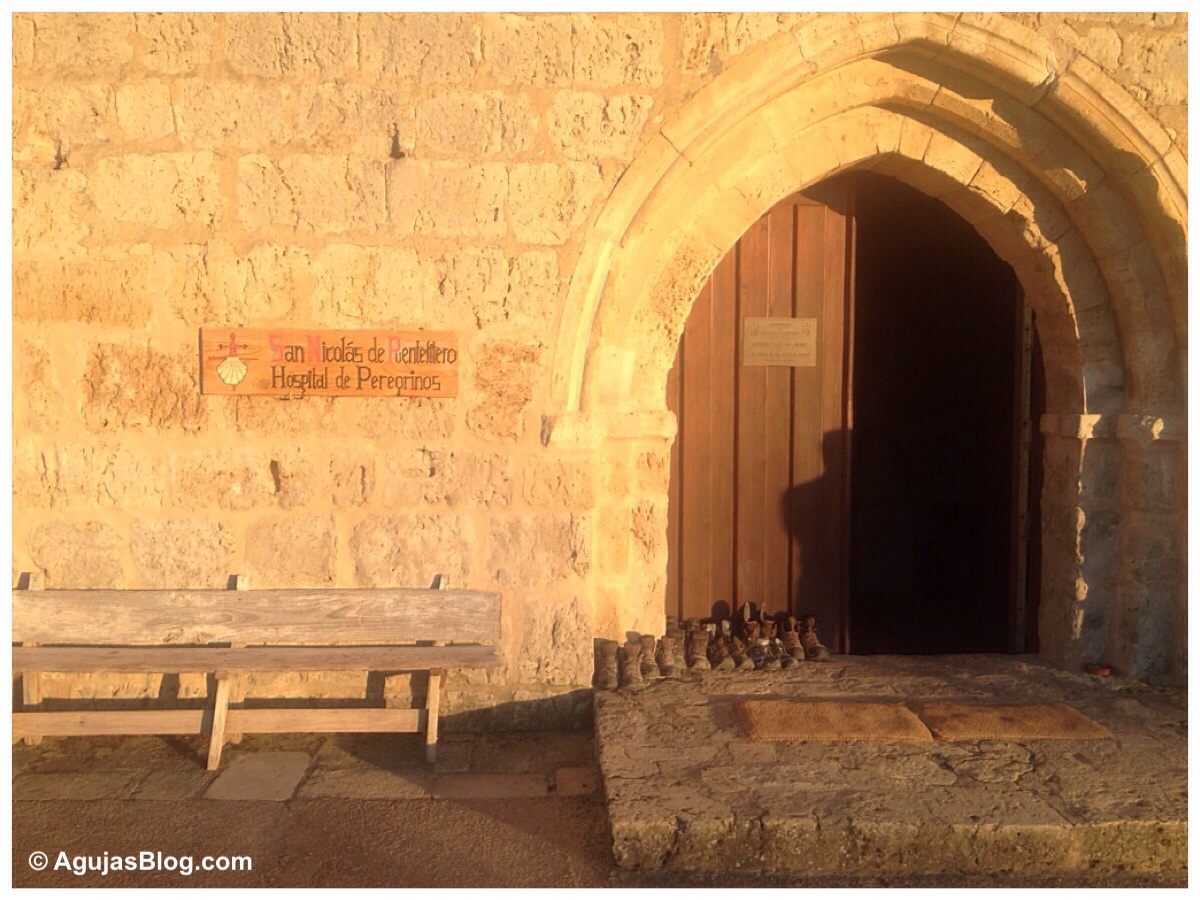
Albergue San Nicolás

In Burgos, he had a clear view of the magnificent cathedral.
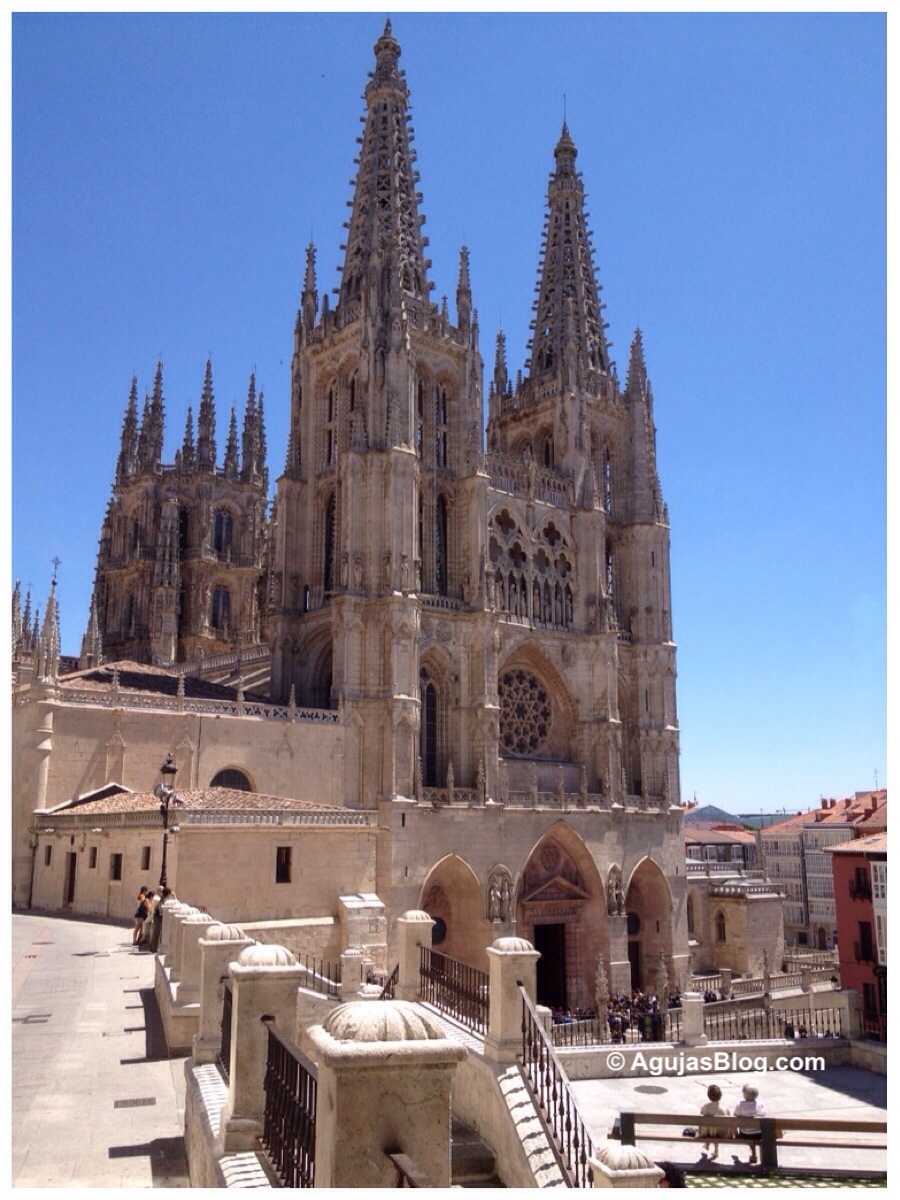
Burgos Cathedral

Halfway between León and Santiago de Compostela, he stayed in the town of Vega de Valcarce, population 800. It was there he spotted this statue of an old woman knitting.
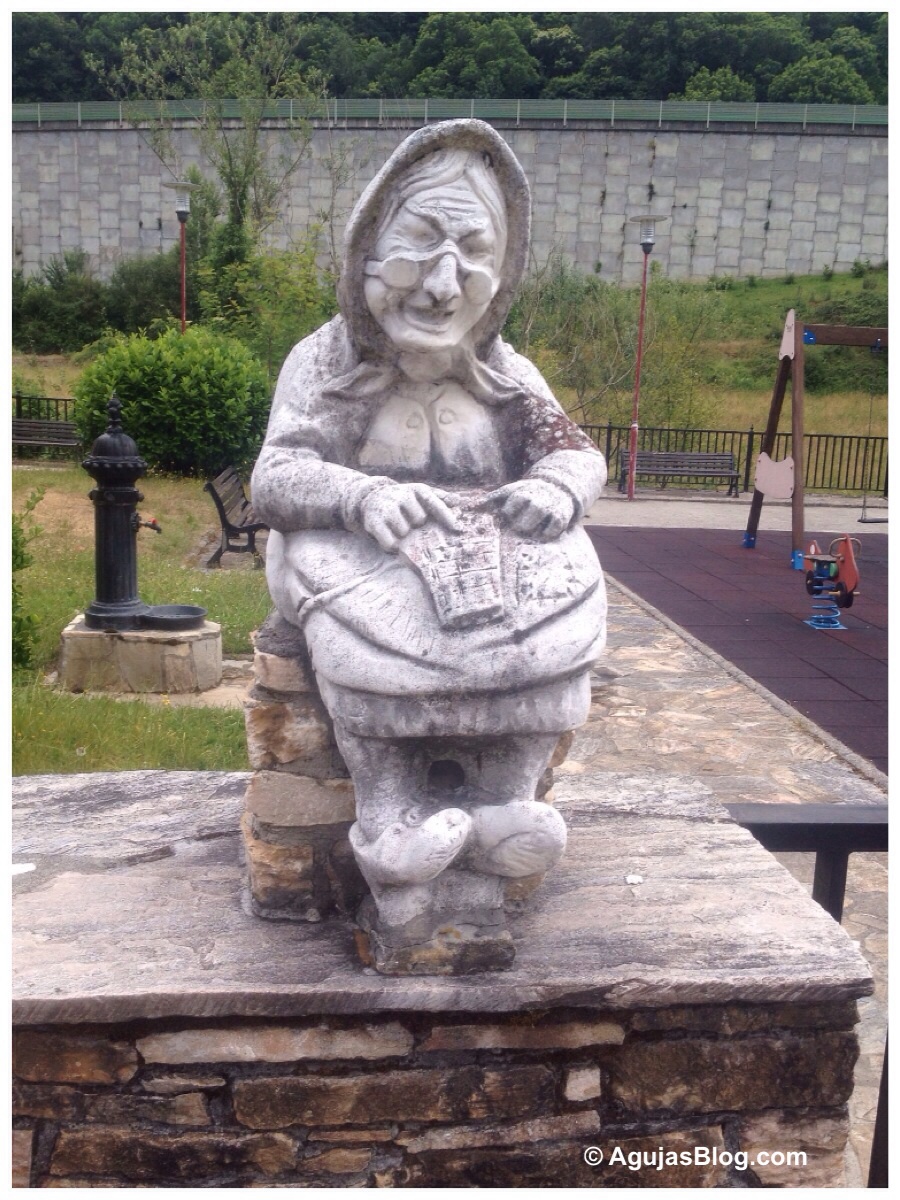
Statue @ Vega De Valcarce

From Ezcaray, arriving precisely on my birthday, he shipped this exquisite blanket woven with 73% mohair and 27% wool from Mantas Ezcaray.
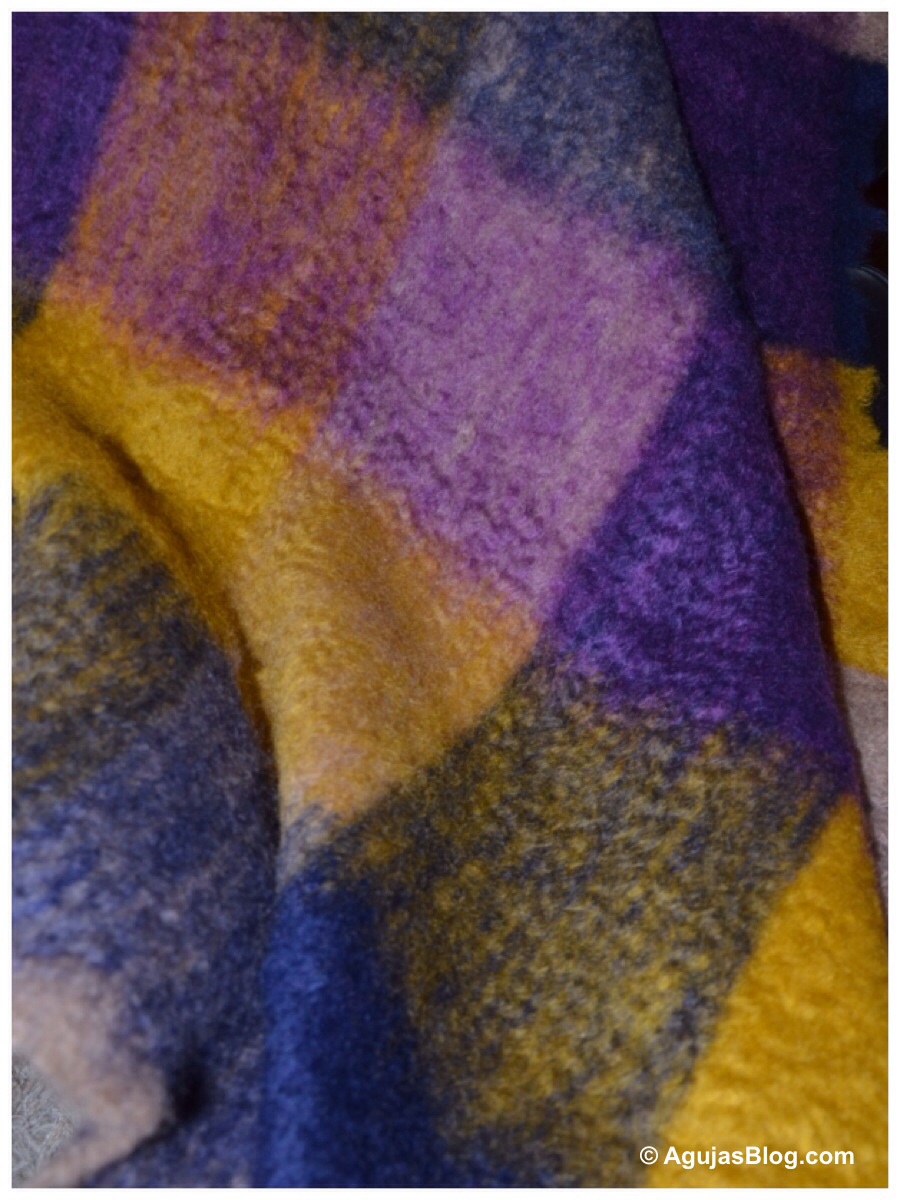
Mantas Ezcaray

When he returned – a little sunburned, a bit achy – he came bearing gifts. For the boys, beautiful picture books about the Camino de Santiago and a myriad of stories, both funny and painful. For me, this book, Tejeduría Tradicional Galicia, or roughly translated, Traditional Weaving of Galicia. To complement this gift came a bookmarker knit by a local artisan made from a linen yarn spun from locally cultivated flax.
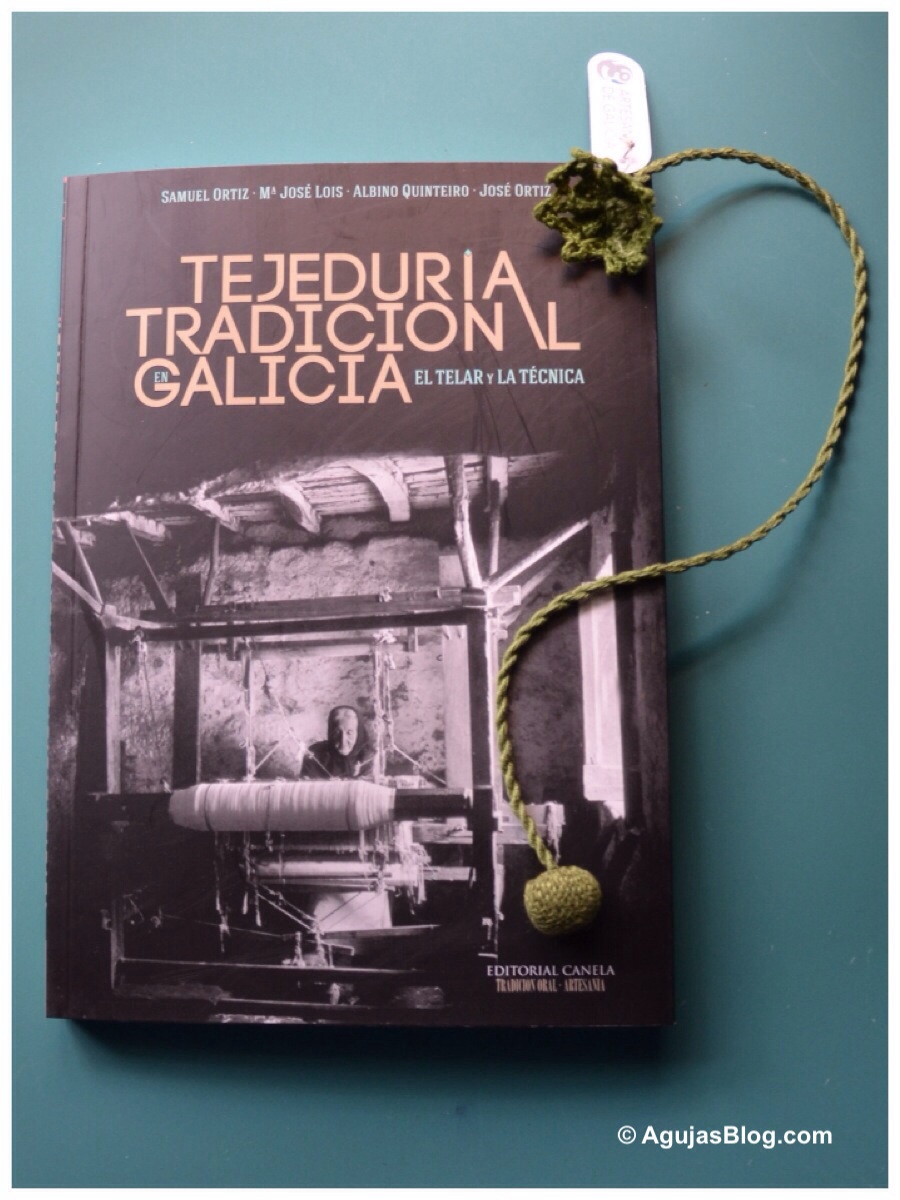
Tejedería Tradicional Galicia

We hope our boys make this journey some day. Perhaps my pilgrim and I will travel it together.

Three Days in Bogotá – Día Tres

It seemed fitting to share photos of our visit to La Catedral de Sal on a holy weekend. We visited on our third day in Bogotá. The cathedral is an old salt mine that has been converted into a Catholic Church 200 meters below ground. Mass is held on Sundays at noon.

Inside the mines, long vacuous tunnels show the routes miners took when the mine was active. At different points, you can look over the edges of seemingly bottomless cliffs. As you enter the mines, the tunnels have been converted into the Stations of the Cross depicting  the path that Jesus took to his crucifixion. Regardless of one’s belief system, I think it’s a beautiful representation of a spiritual journey. Each station is hand carved out of the halite and incorporates symbolic properties of the salt and the mines into each stop.

You can even pay a small additional fee and be a miner for the day. They provide hard hats and pick axes and you spend 30-45 minutes experiencing the mine through the eyes of a miner. We passed on this part. The thought of crawling through narrow, low caves made me catch my breath!
We did not get to spend any time in the city of Zipaquira which looked like a vibrant but quaint colonial town. On the way back to the city, we enjoyed the gorgeous views of the mountains and the lush countryside. We passed green fields dotted with grazing cattle and greenhouses nurturing the flora and fauna of Colombia. What a wonderful way to cap off our three days.

The best way to view these is by clicking on the first photo (twice). This will enlarge them and allow you to read the commentary. Hint: You may have to scroll down a bit to see the comments.

Three Days in Bogotá – Día Dos

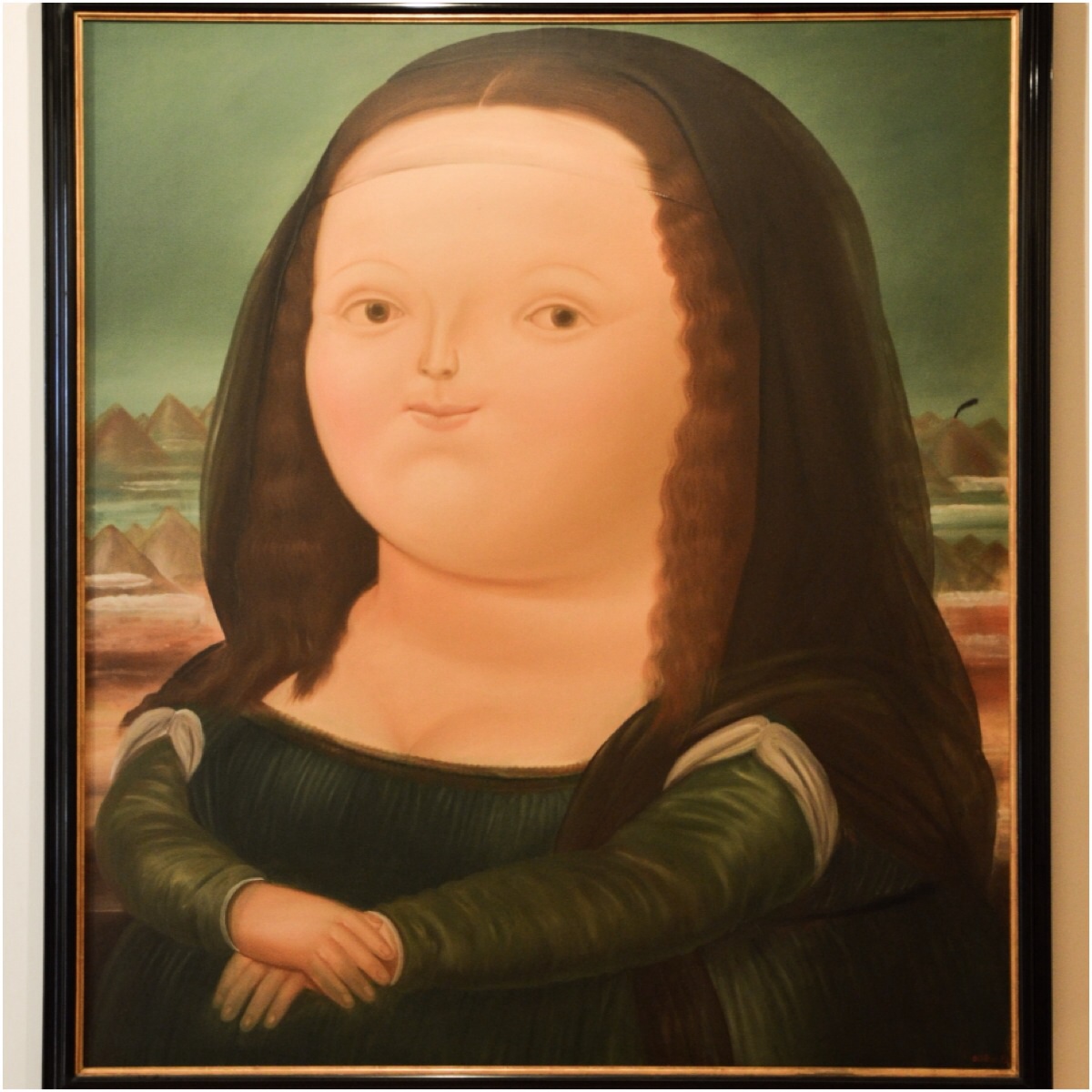
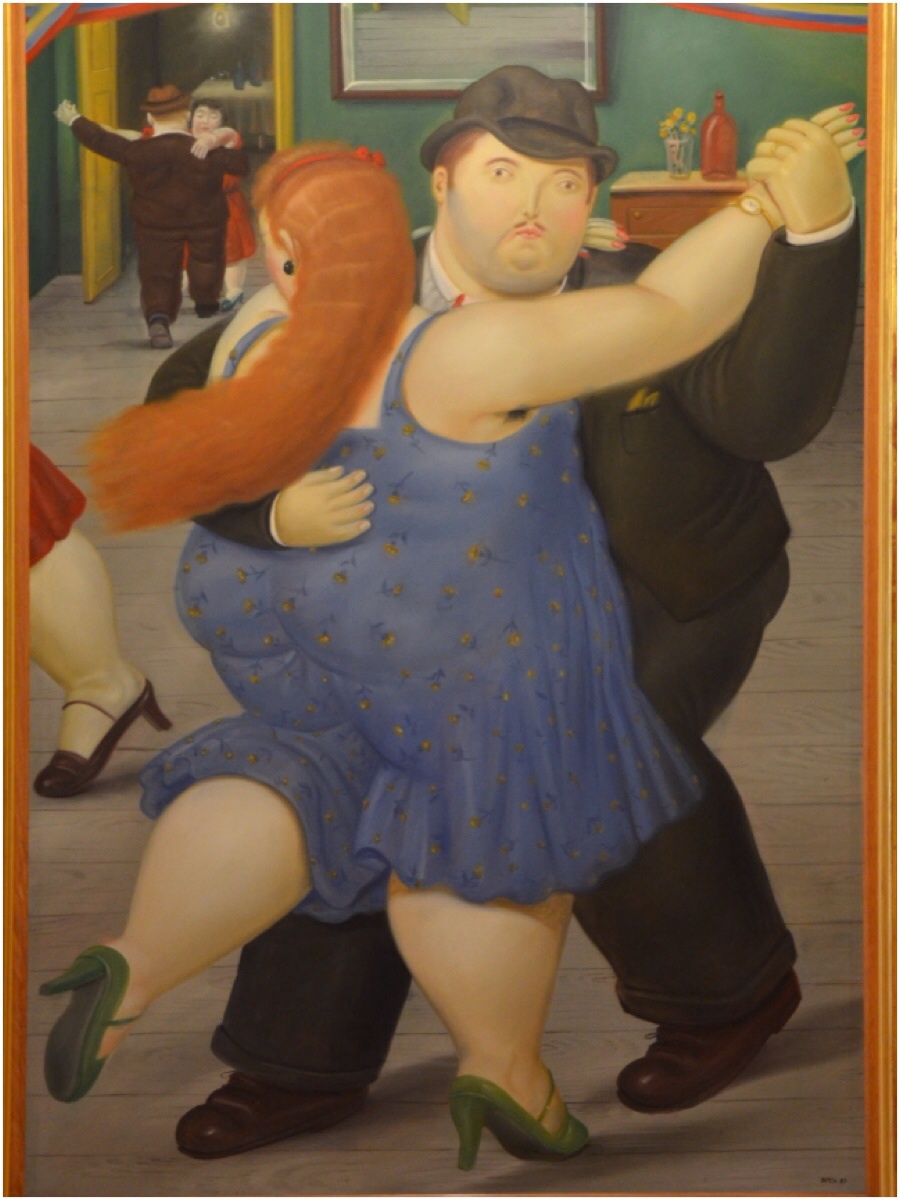
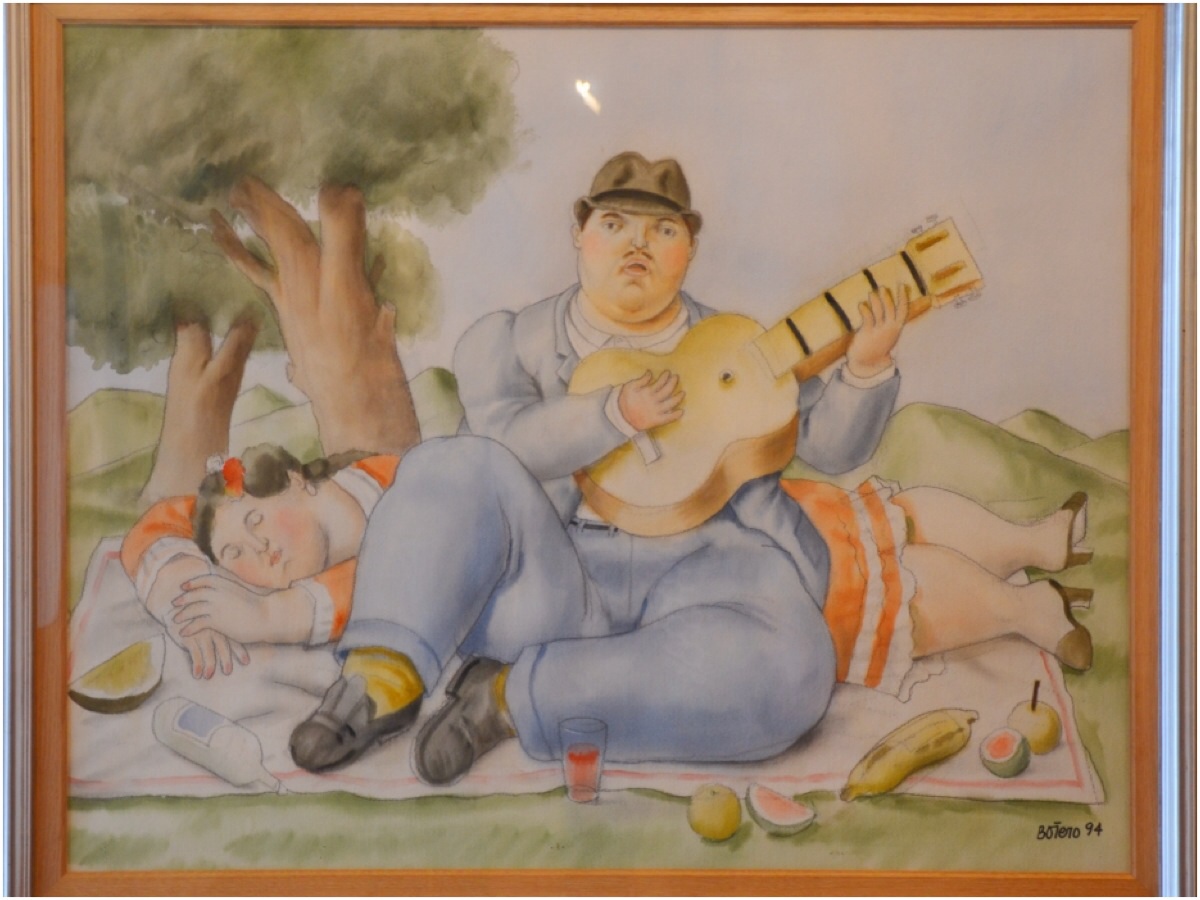
The highlight of our second day in Bogotá was a visit to the Museo Botero. Fernando Botero’s paintings and sculptures are characterized by disproportionately large people and objects. I felt as if I was looking at the portrayals through a different lens. They made me smile.

Museo Botero - Monalisa

Museo Botero - Pareja Bailando

Museo Botero - Concierto Campestre

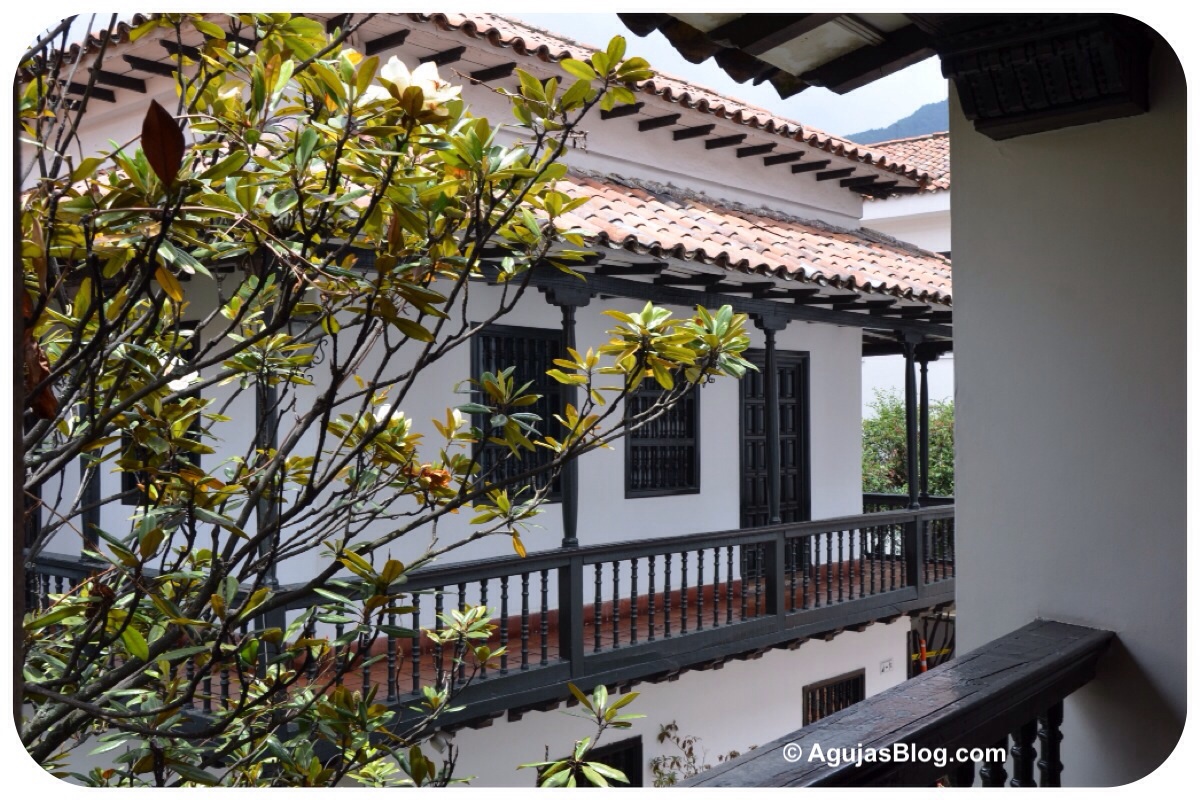
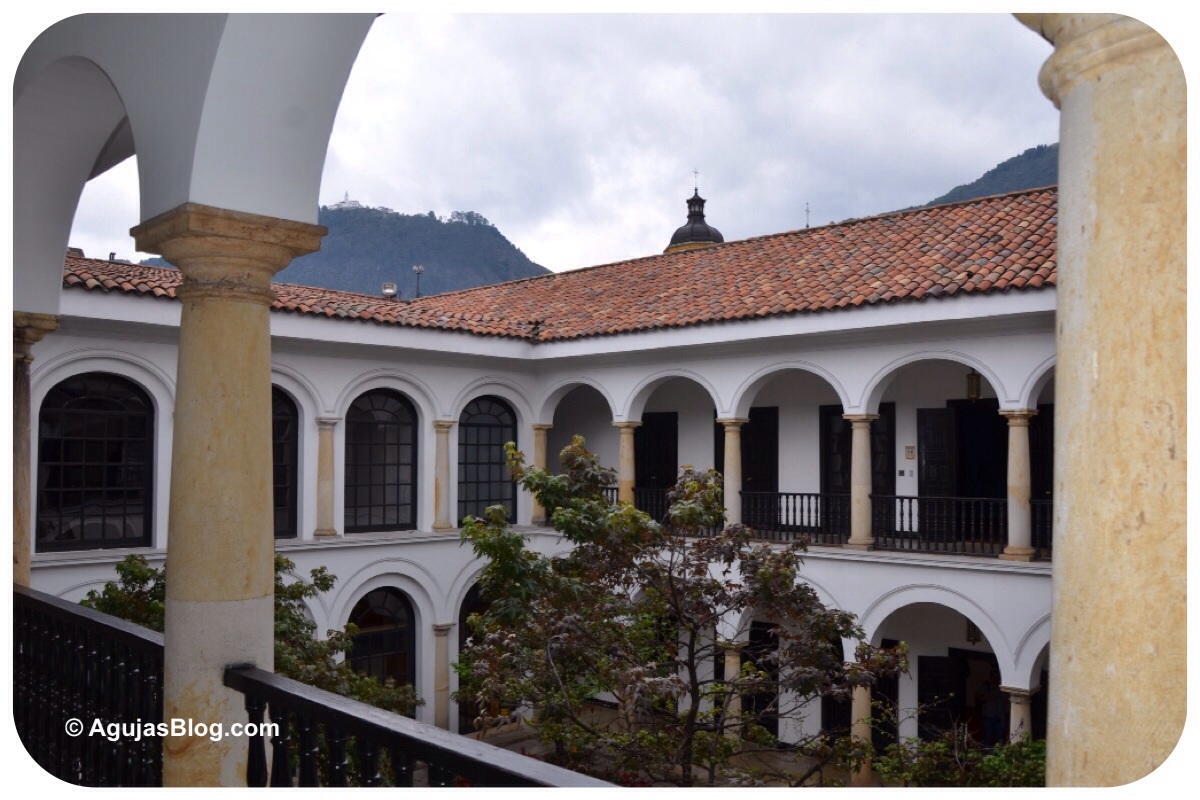
The museum is located inside a roomy house built in the early 1700s for the local archbishops. It has wide verandas and beautiful gardens with views of the nearby mountains.

Museo Botero - Casa 1

Museo Botero - Casa 2

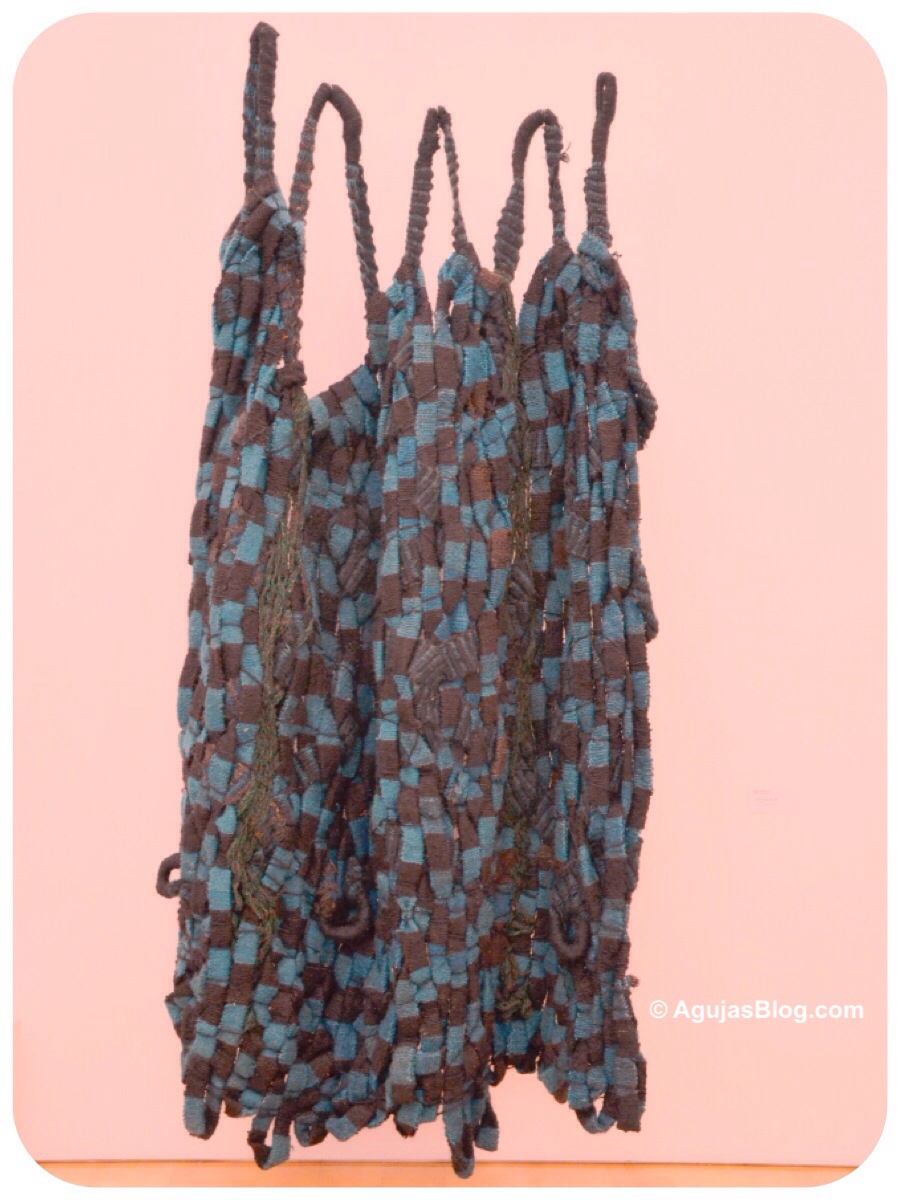
The museum also has a collection of art by international and local artists. This large textile was another favorite. It is the work of Olga de Amaral, a textile artist from Bogotá.

Museo Botero - Muro Tejido No. 98

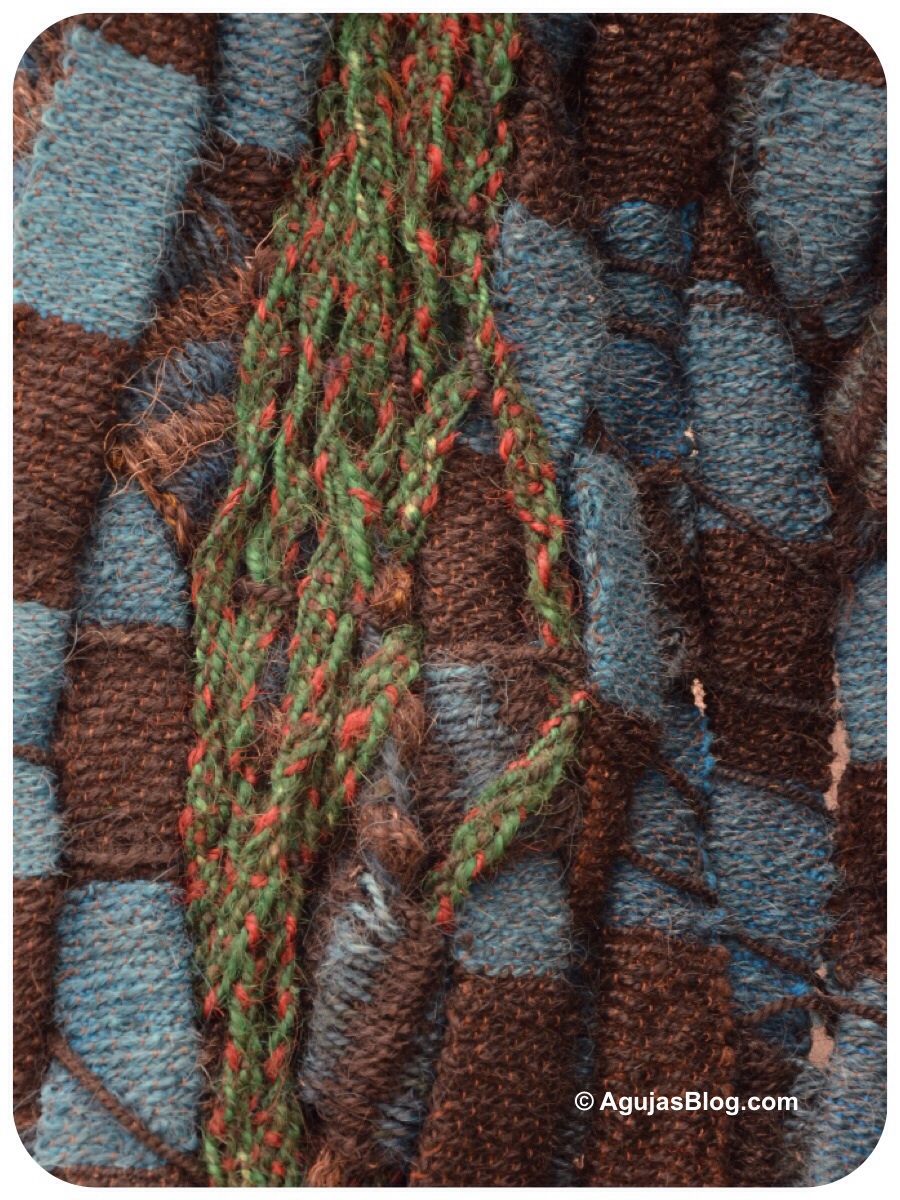
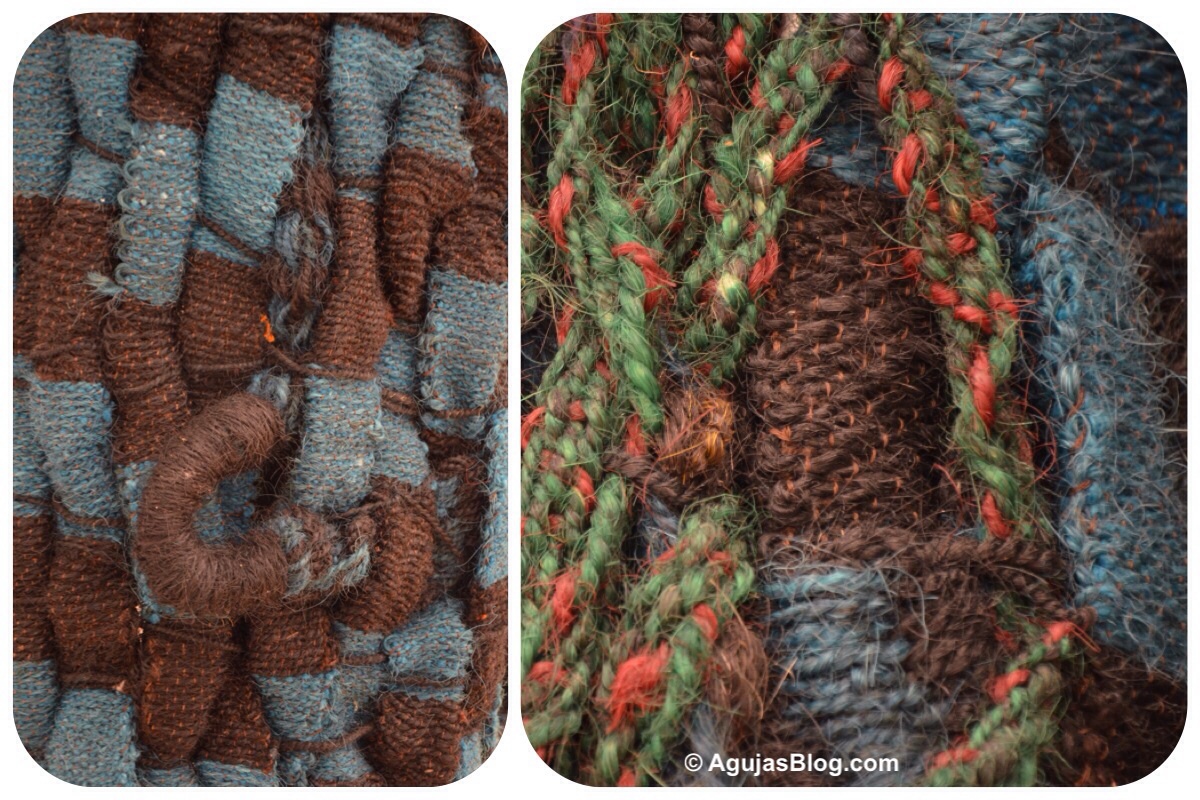
The tapestry is called Muro tejido No. 98 (Ca. 1972), made from animal and vegetable fibers.

Museo Botero - Muro Tejido No. 98 a

Museo Botero - Muro Tejido No. 98 b

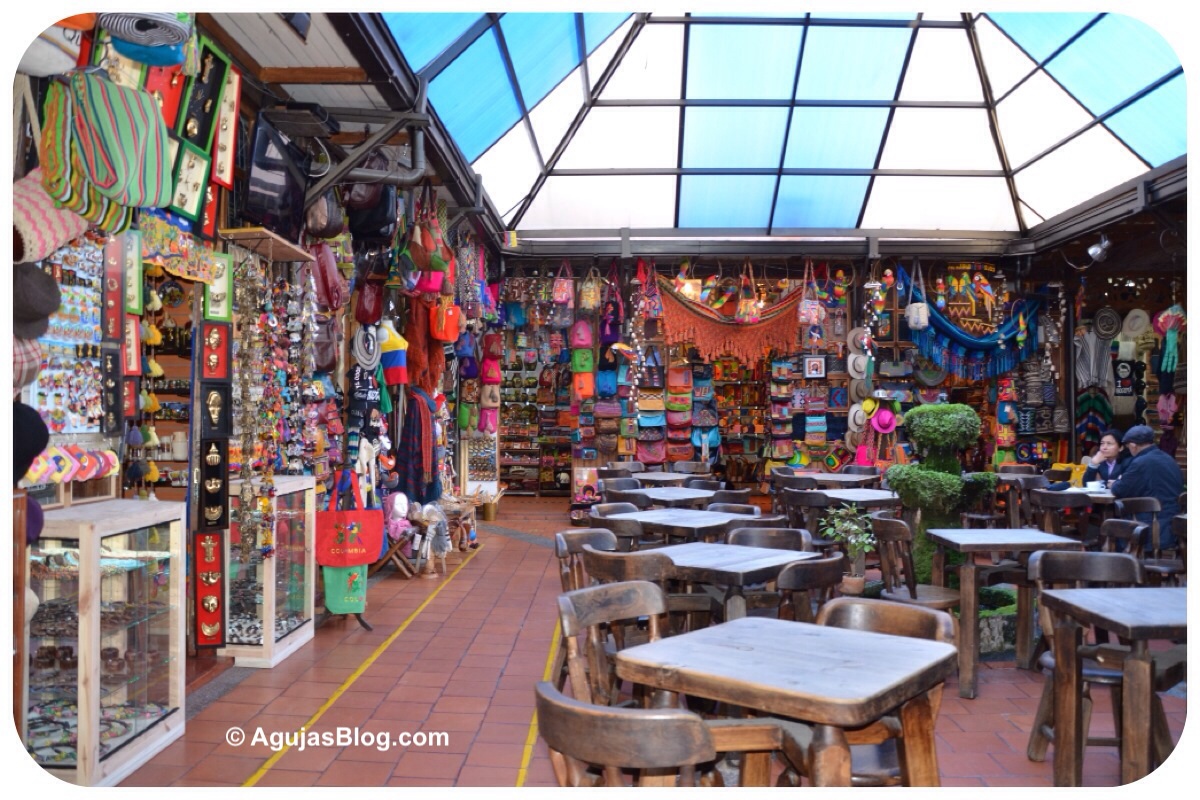
Our last stop was all about shopping! The Galería Artesanal de Colombia had countless tienditas (little stores) full of local arts and crafts

Galería Artesanal de Colombia

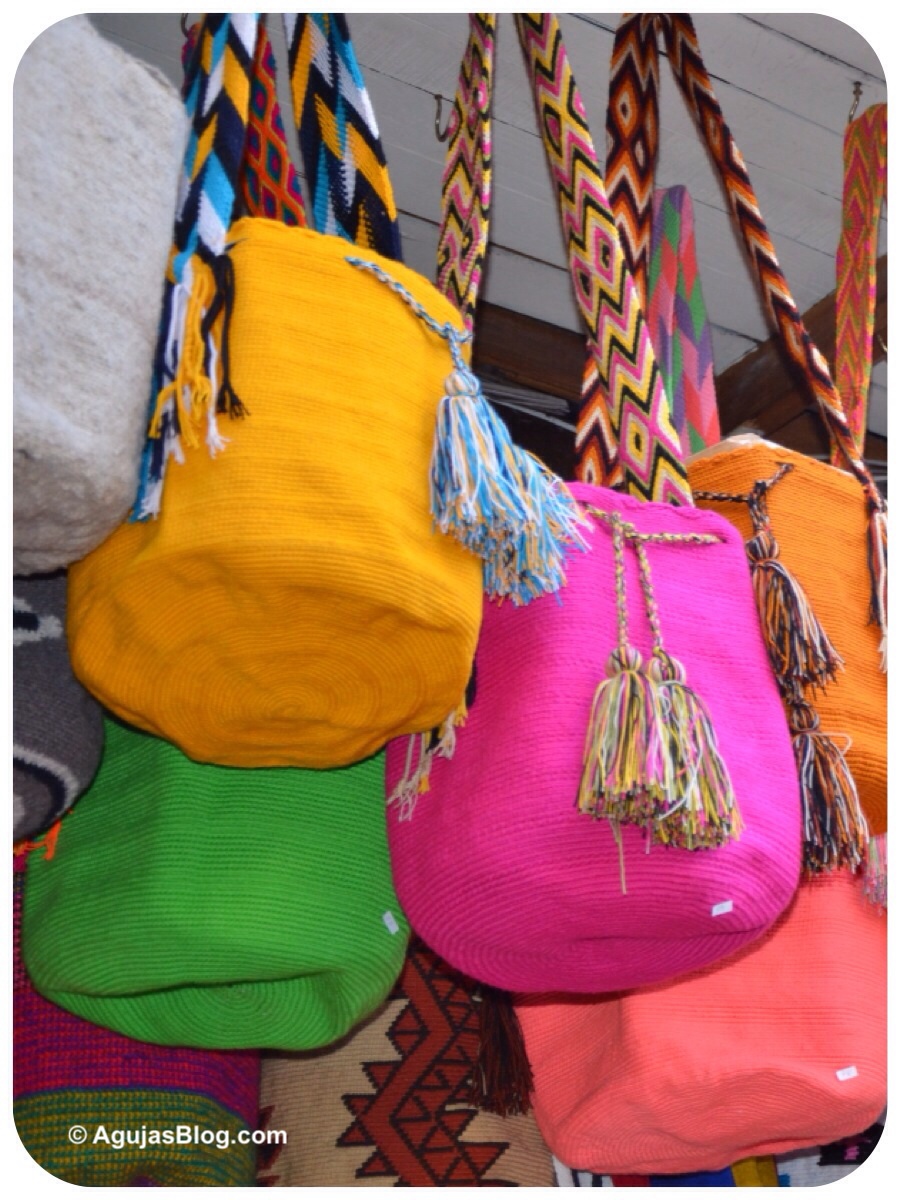
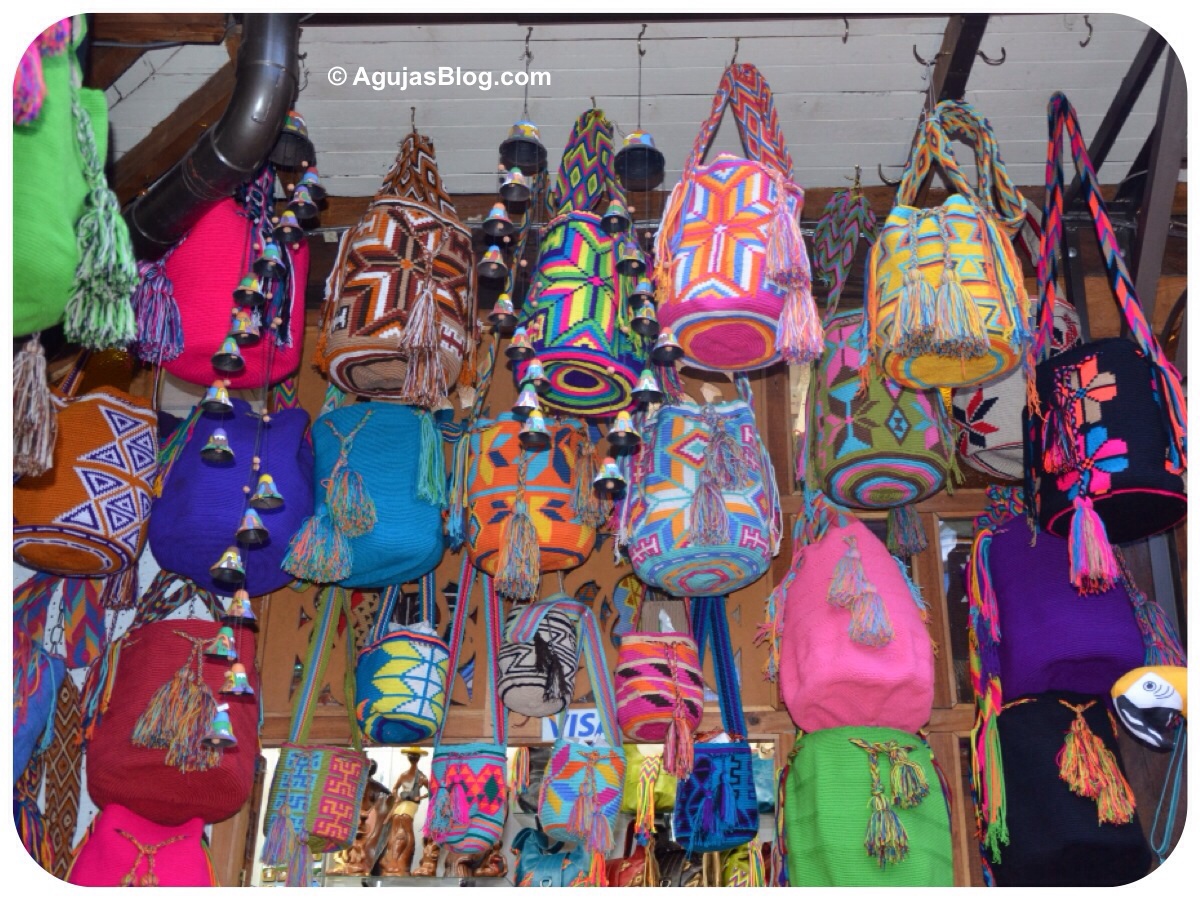
I fell in love with these exquisite crochet bags handmade by Wayúu women. The bags are crocheted with cotton thread and come in vibrant colors and interesting designs, each unique to the woman who made it. Multiple threads are woven together to make the straps.

Bolsos Wayuu 1

As young Wayuu women come of age, they learn to weave and crochet Wayuu Mochila bags. According to legend, the tradition comes from “Wale´kerü”, a spider that taught the women how to weave their creative drawings into the Mochila bags. Each design incorporated into every Mochila bag is unique to the weaver, telling a story through the bag’s colors, patterns and shapes. (Source)

Bolsos Wayuu 2

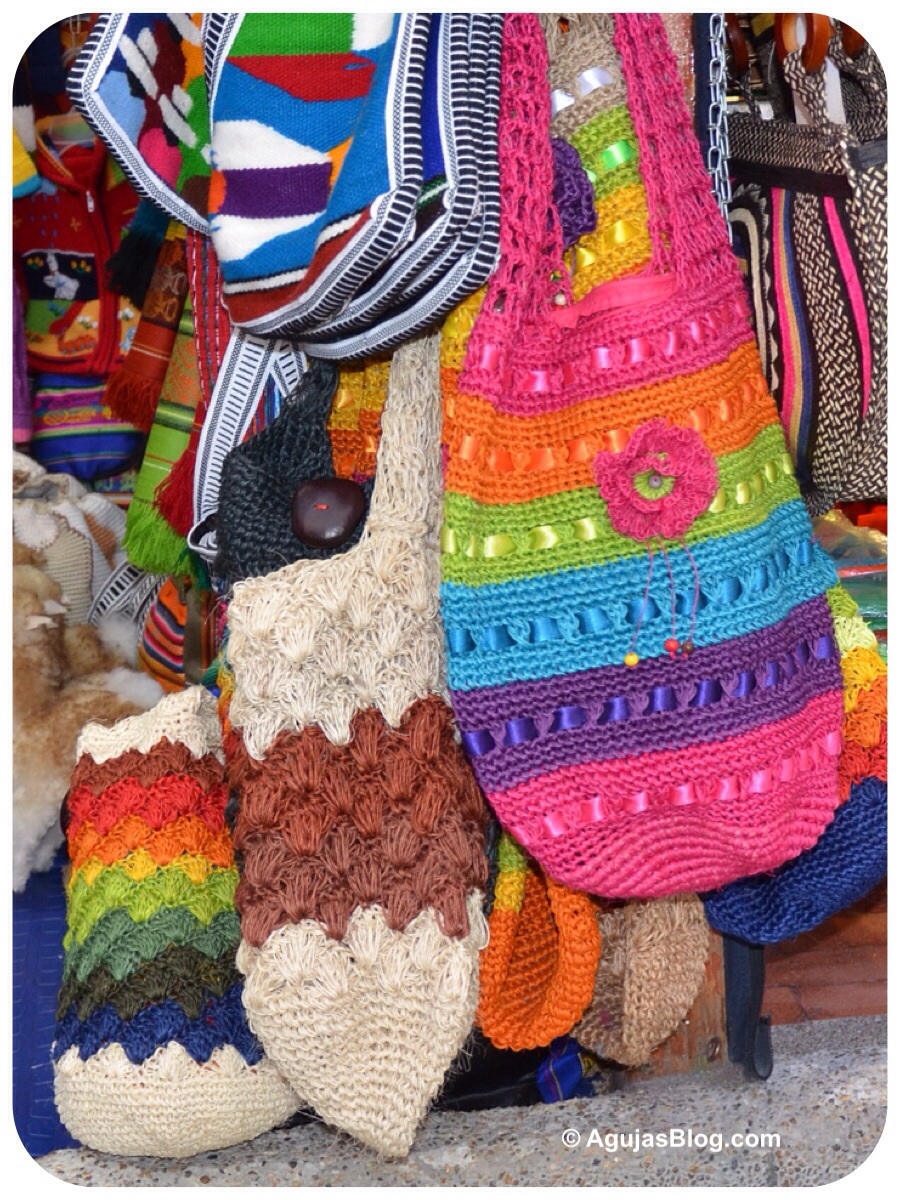
Along the long aisles of hammocks, baskets, bracelets and hats, there were more crocheted bags.

Colombian Crochet Bags

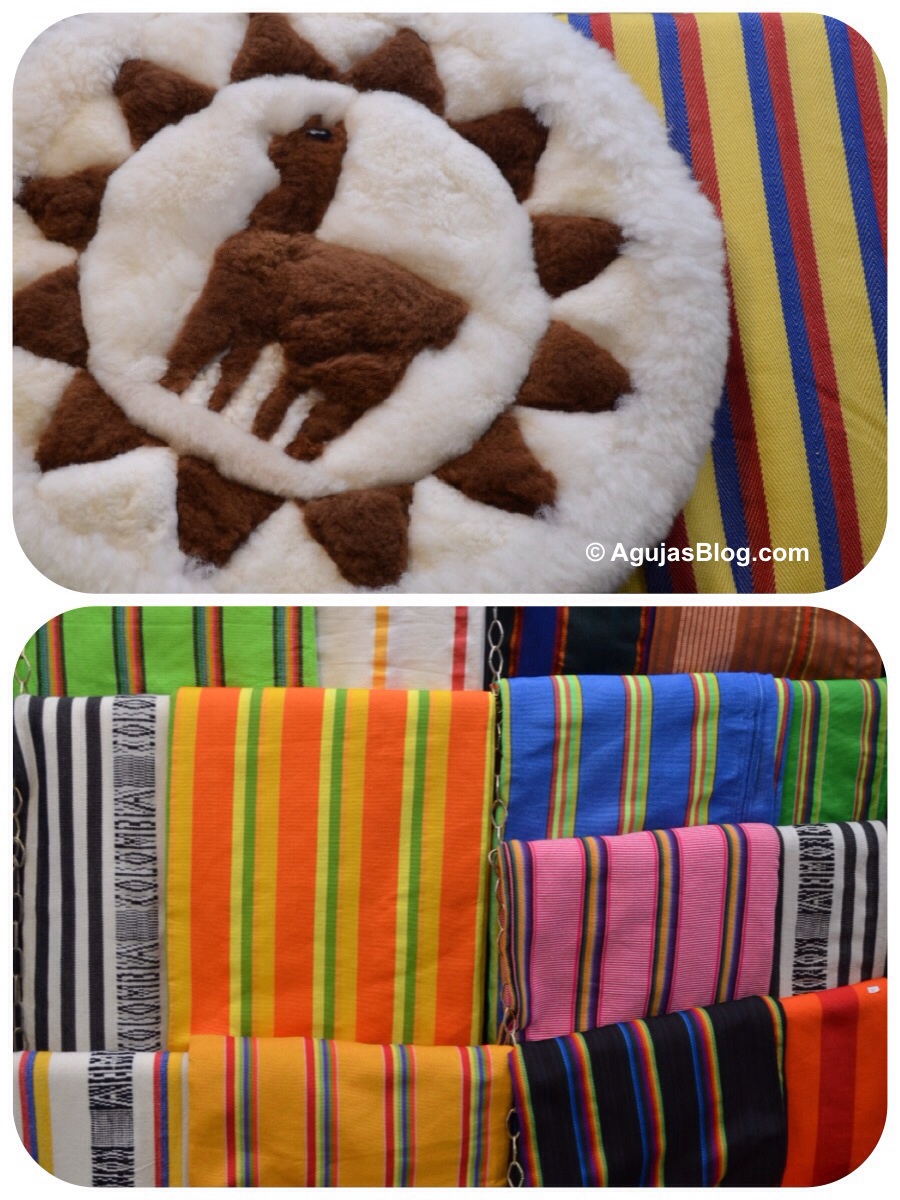
There were also textiles woven in bright colors.

Colombian Textiles

By the end of the day, my head was spinnng, possibly due to the explosion of color, or the altitude! Another amazing day in Bogotá.

A Totally Frivolous Post

It was time for a manicure so I walked into a nail salon near the apartment. The place was tiny. It only had room for 5 seats and they were always occupied.

What drew me in was the clientele – all young ladies mostly in their twenties. The manicurists were laughing and talking as they bent over their intricate work. Every now and then they argued. Their voices grew louder and more demanding. Scowls were all too common. One of the younger girls was a bit clumsy, always managing to trip over someone’s foot or bumping someone’s arm just as they were about to paint a nail. She got the brunt of it.

At first, all I wanted was a new color. Then I started paying attention to the other customers. The colors went far beyond those of the rainbow. One lady was carefully applying bright purple sequins on someone’s nail with a toothpick. Another sprinkled glitter from a brush. Yet another painted tiny designs on each nail guided by a picture in a book. They were like artists mixing nail colors together, consulting with each other, choosing just the right sequin or ornament from trays and trays of shiny baubles. I was hooked.

I had fun trying new designs. Like putting on a new persona in a faraway land. Besides, I like the look of pretty nails while hands are clicking away on knitting needles.

This slideshow requires JavaScript.

The Stars Above

It was my last weekend in Beijing. There were only a couple of sights left on my list and this was my last opportunity. Unfortunately, the air quality was not in my favor. The AQI had vacillated between “Unhealthy” and “Very Unhealthy” since Friday. One could almost touch the air, it was so thick.

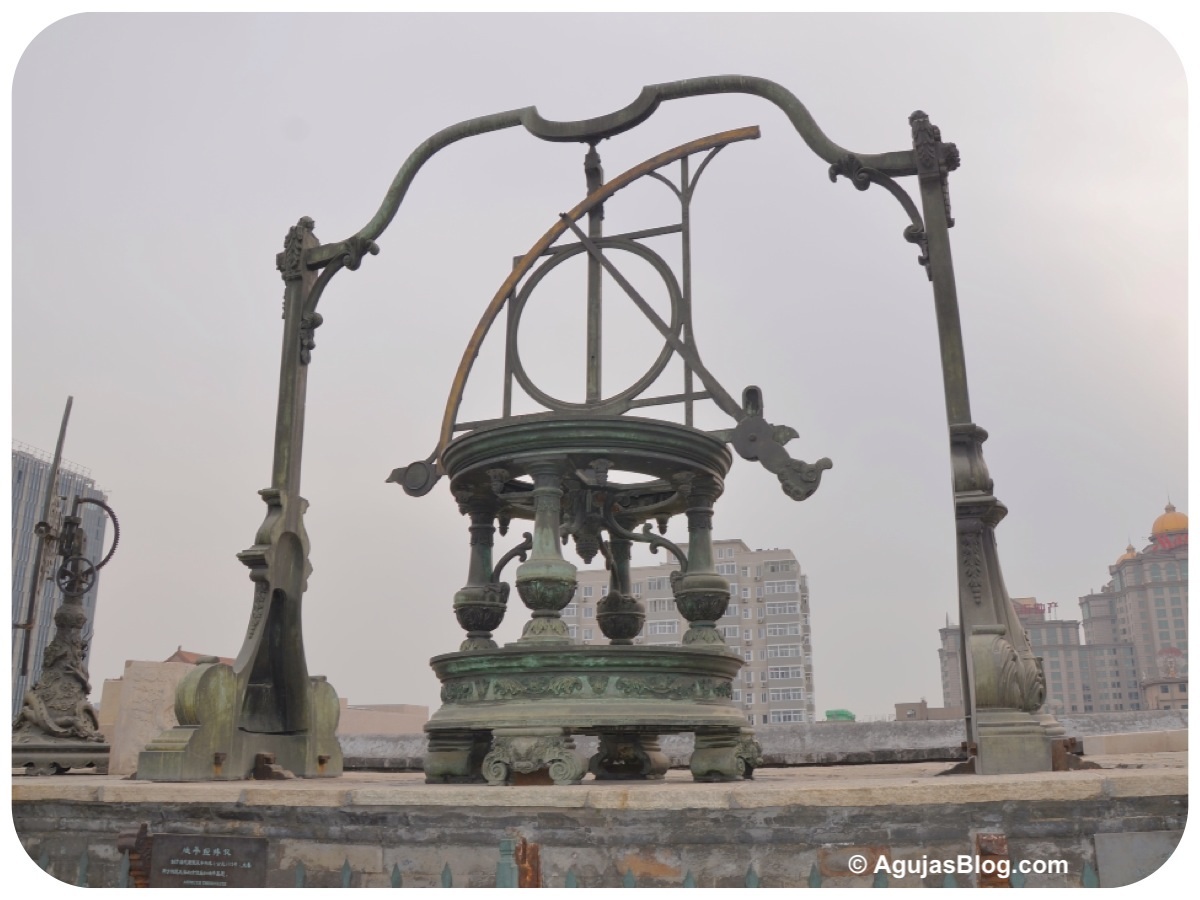
Azimuth Theodolite

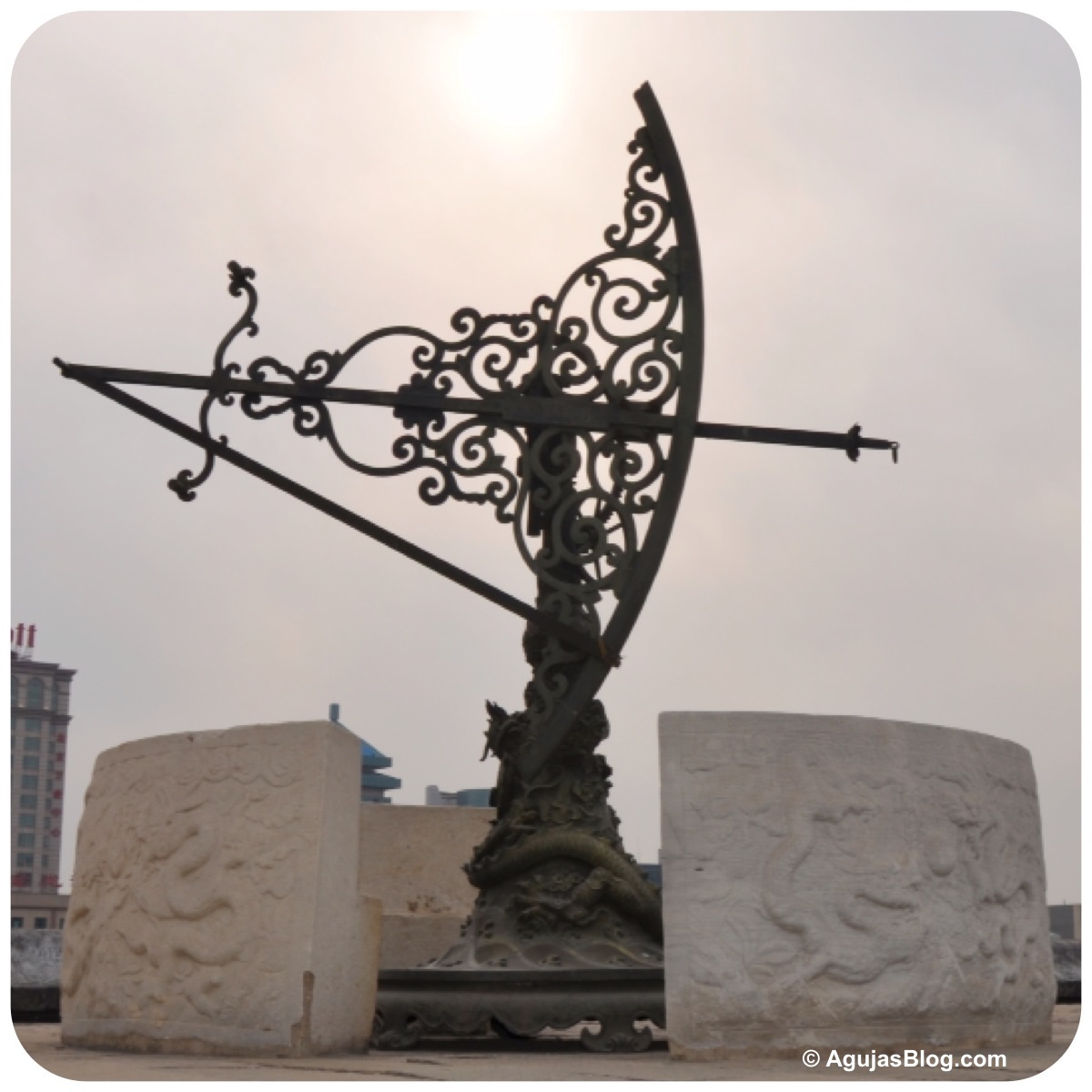
On the daily commute, we would pass by the star-gazing equipment at the Ancient Observatory. This was my destination.

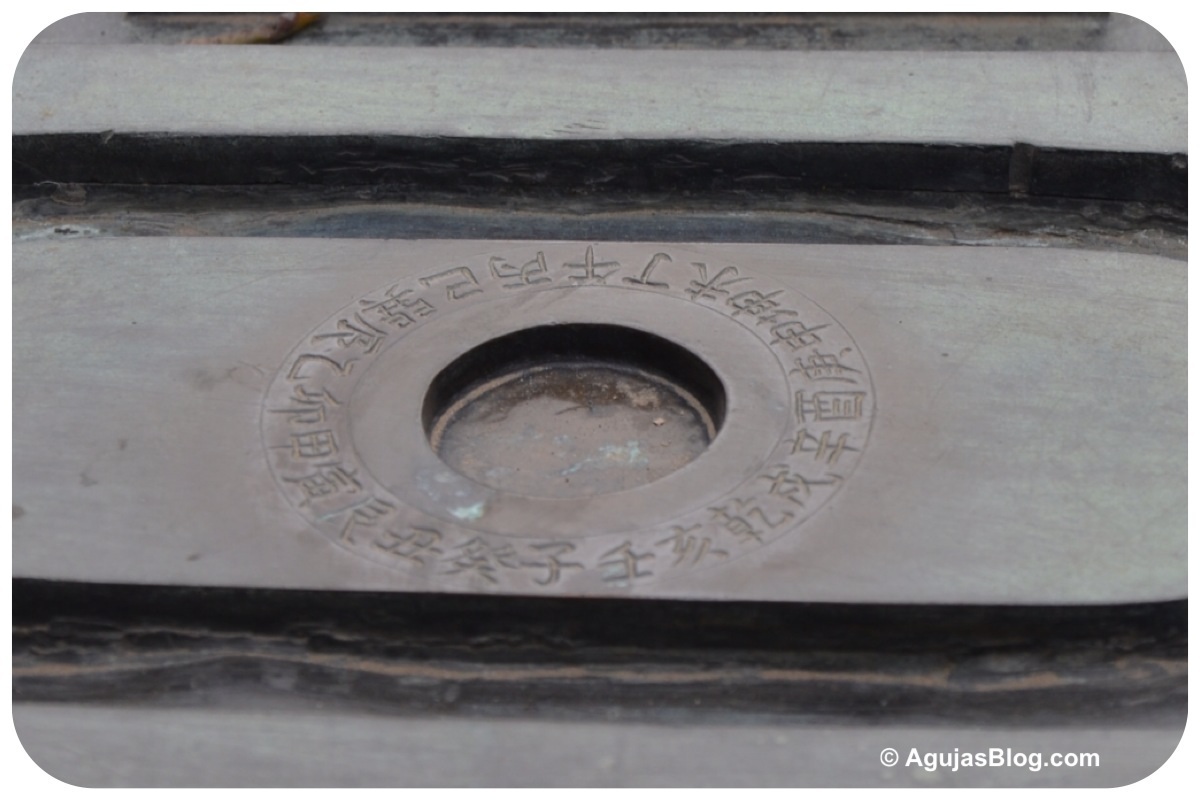
According to the brochure, the Beijing Ancient Observatory was built in 1442 during the Ming Dynasty.

Sextant

As I walked around the grounds, I felt both sadness and anticipation. I would miss this city.

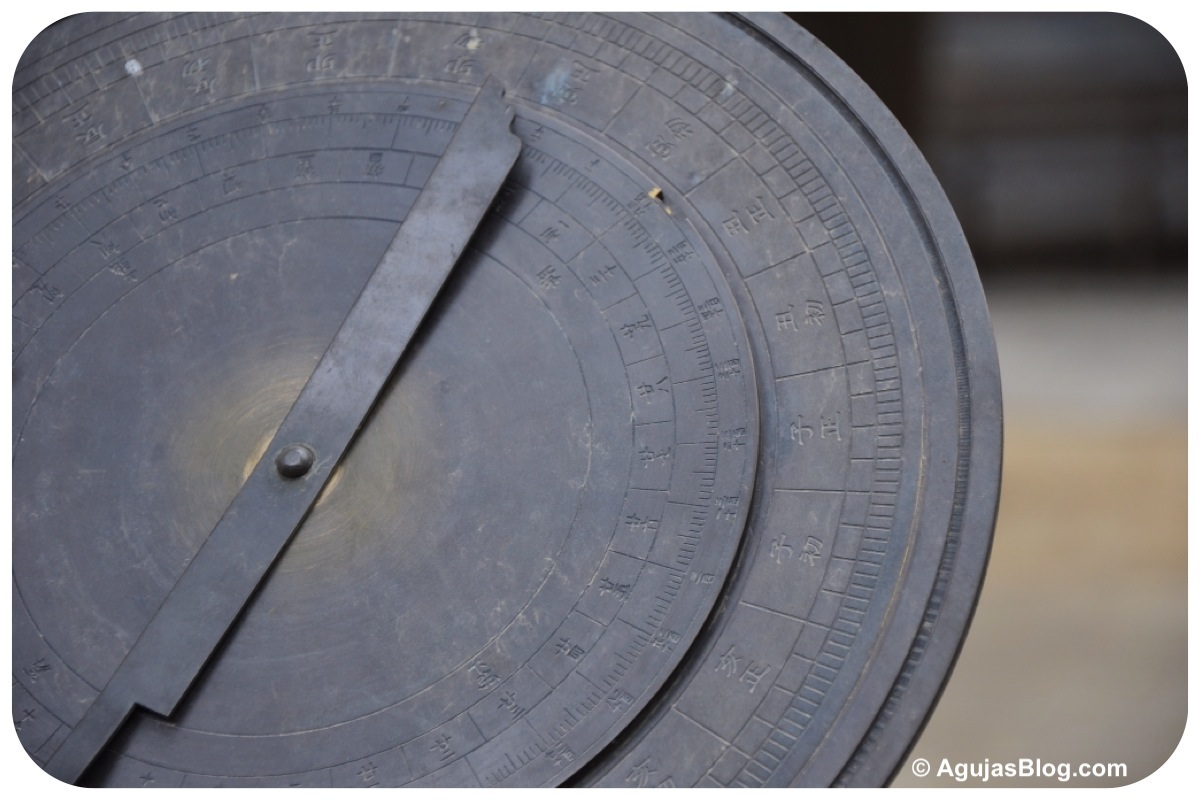
Sundial - Detail

I would miss its history and its splendor, but most of all I would miss my new colleagues and friends.

During those last two weeks, every time I said good-bye to someone, it was with the knowledge that I might never see them again.

Chinese Moondial

Even though my sadness was tempered with the anticipation of being home with my family and friends, it would be hard leaving.

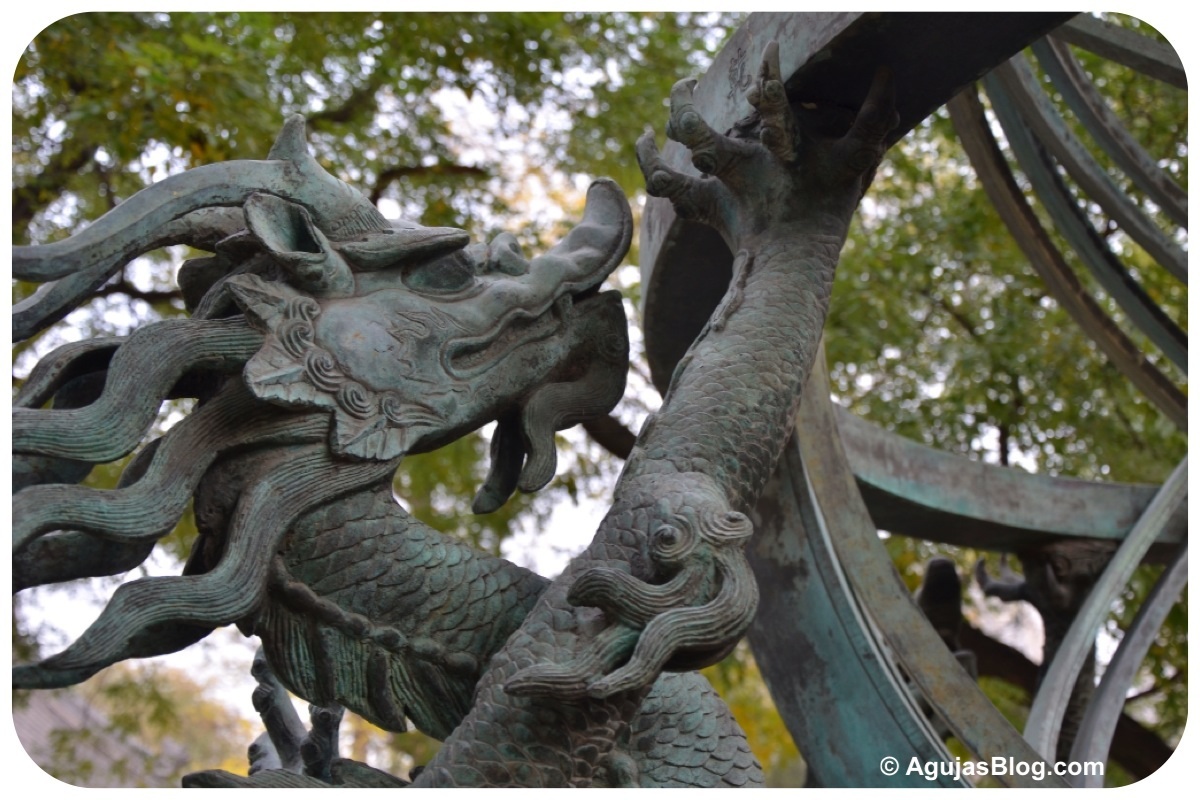
Armilla Sphere Replica - Dragon Detail (facing right)

My only comfort was that the stars above would somehow guide us back together someday.

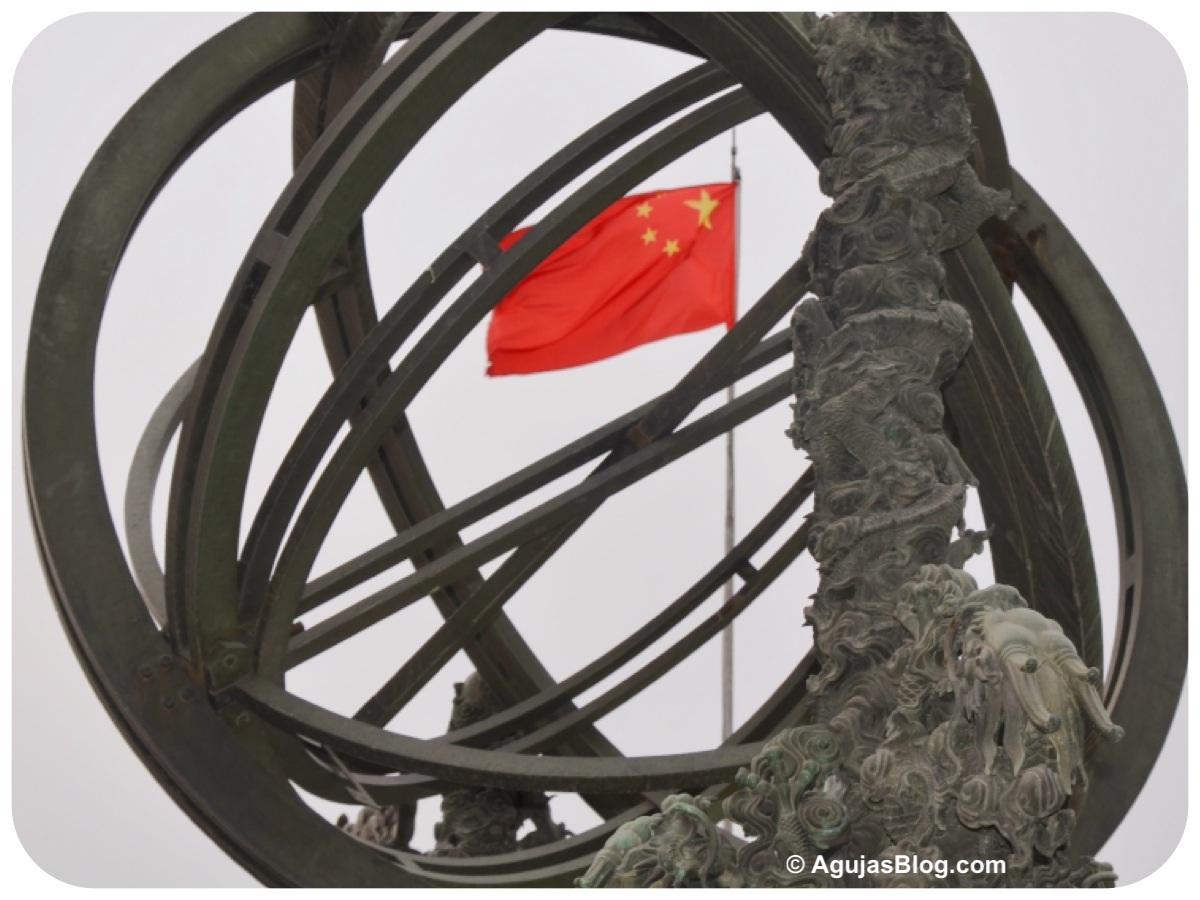
Armillary

Zaìjiàn. 在见。