Three Days in Bogotá – Día Uno

This was our first visit to Colombia and now I know where all the beautiful people come from. The capitol is nestled in a valley surrounded by mountains. The vegetation is rich and green and vibrant with colorful flowers. The people are charming and open and beautiful inside and out. Here is a recap of three wonderful days in Bogotá.

Day One

We walked through the cobblestoned streets of the historic La Calendaria district. At its center is Plaza Bolívar anchored at one end by the Cathedral of Bogotá. The Cathedral was built in the early 1800s (source) and has seen better days. But the church and the plaza were still the heart of the city pulsing with people and activity.
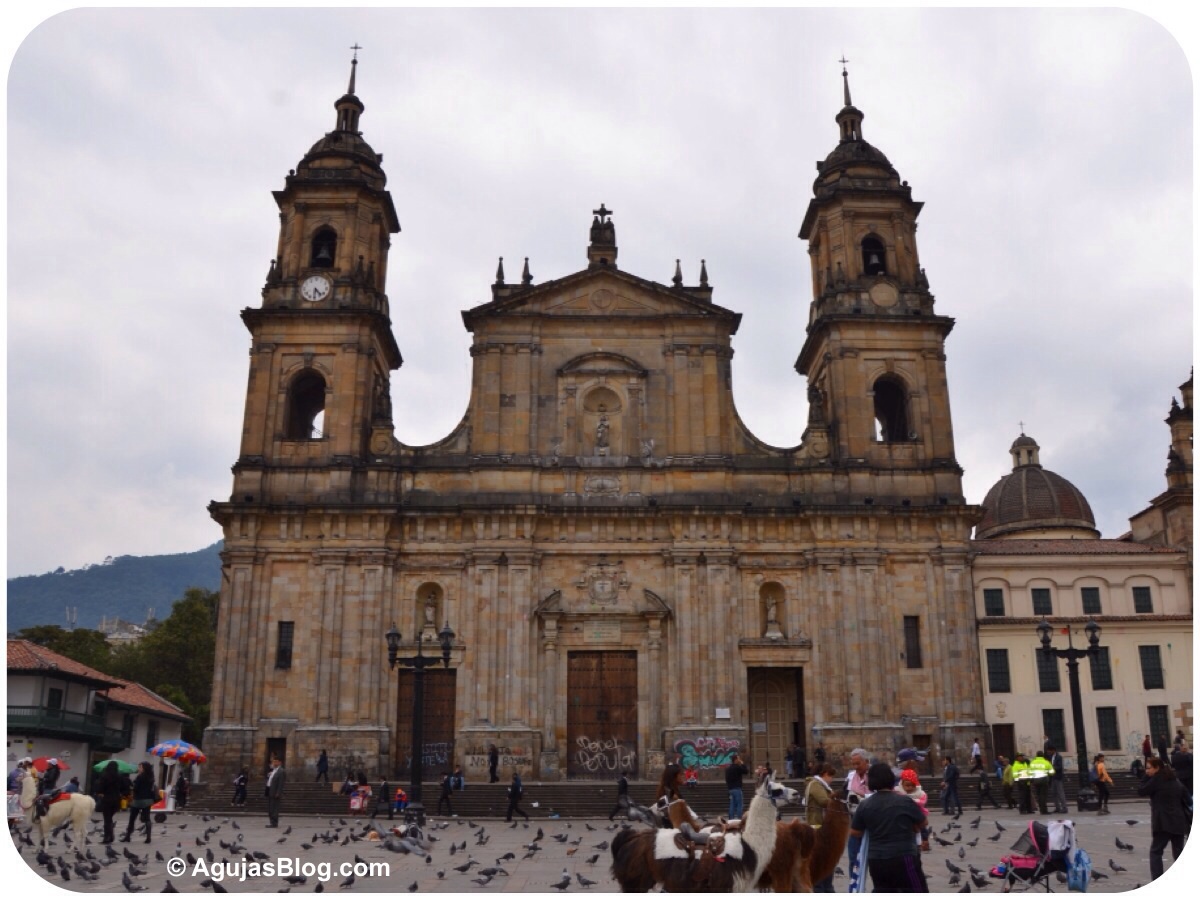
Cathedral of Bogotá

The plaza was taken over by pigeons, hundreds of them. People were buying dried kernels of corn from the street vendors and feeding them. For a moment, I had the sensation that I was in the middle of a Hitchcock movie.
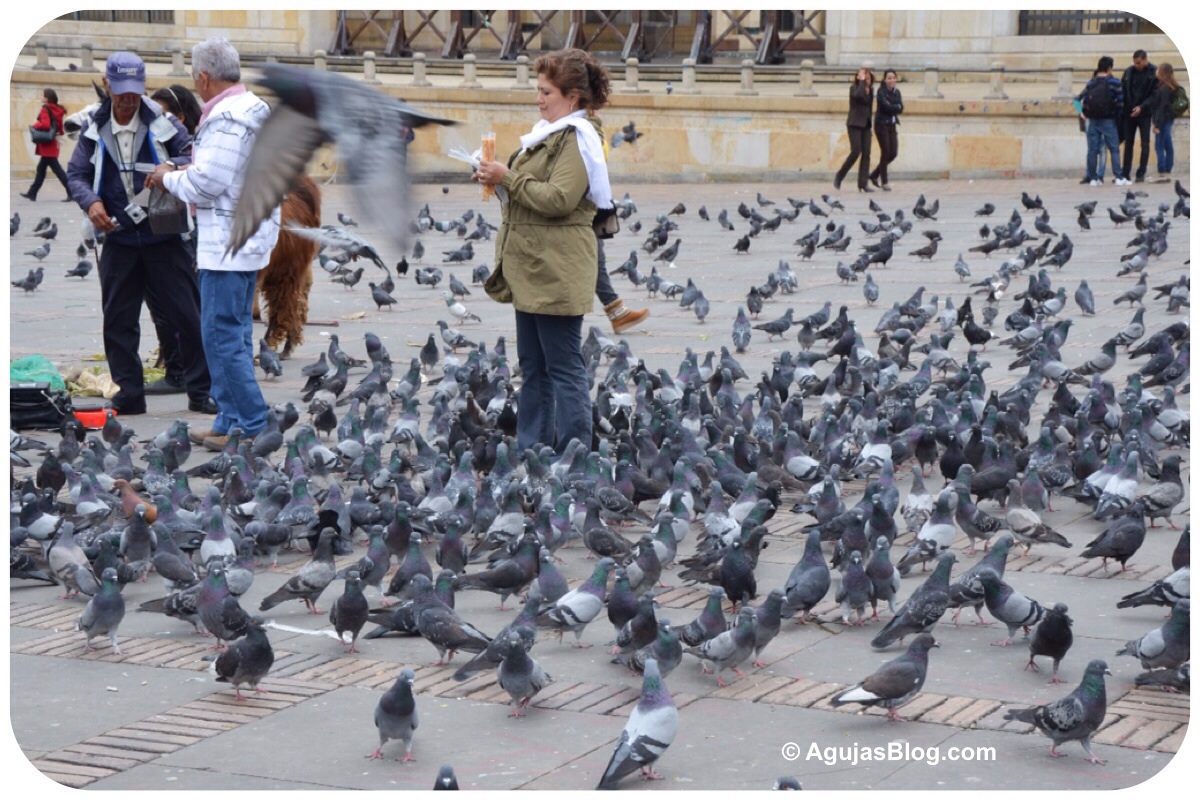
Birds at Plaza de Bolívar

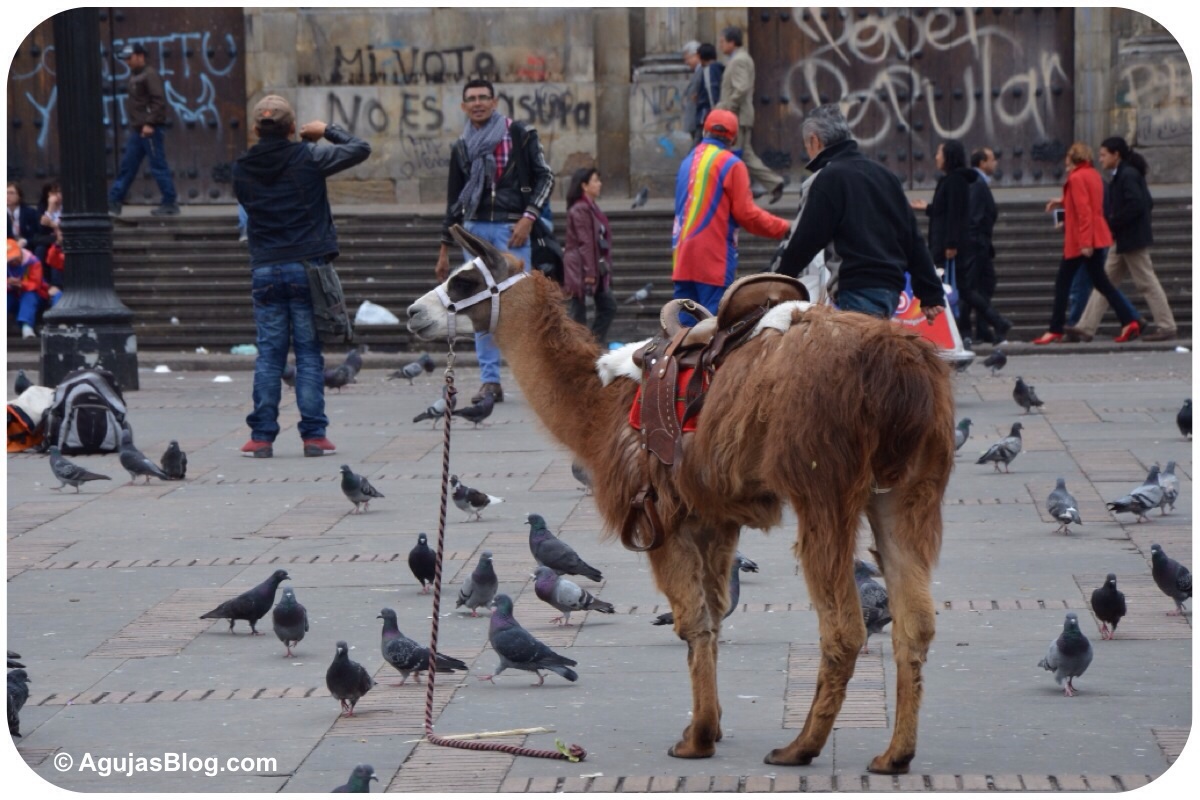
And what’s a plaza without llamas!

Llamas at Plaza de Bolívar

Close to Plaza Bolívar is a very small restaurant called “La Puerta Falsa” (The Fake Door) that has been around since 1816 (source). The first thing that draws you in is the window featuring trays full of these.
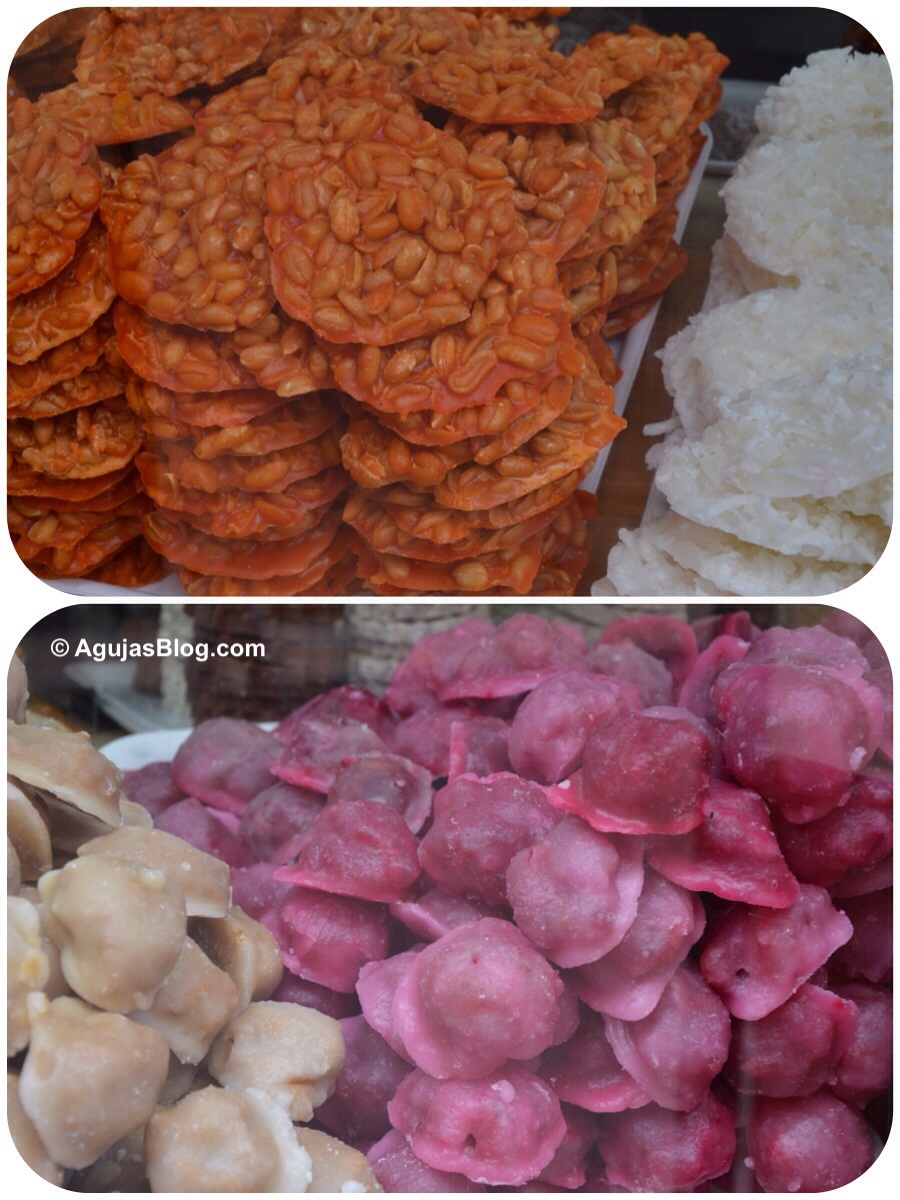
Dulces de Colombia

The ones on top are cocadas de arequipe con cacahuates y cocadas blancas (coconut with dulce de leche and peanuts and sugared coconut). The goodies at the bottom are called Marquesas. They are filled with fruits such as guanábana and moro (sour sop and mulberries).

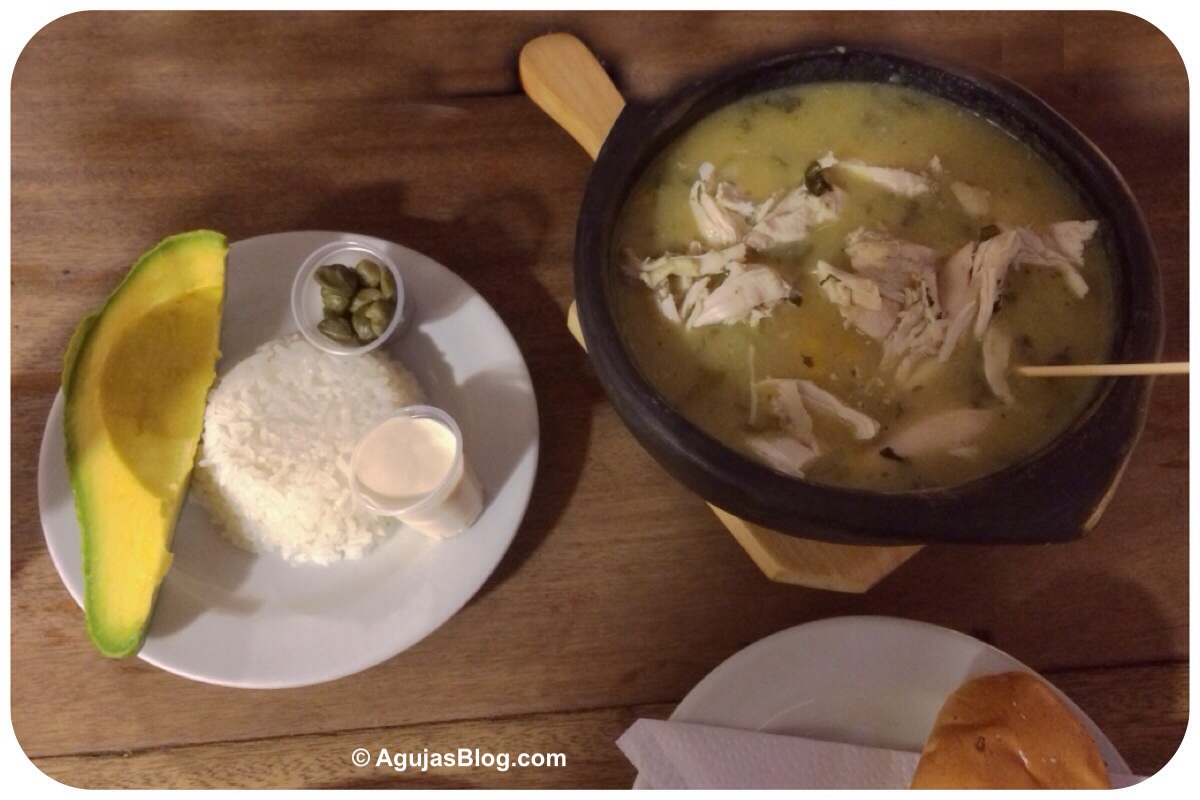
Inside the tiny restaurant, we had a typical Colombian meal of tamales and ajiaco. The tamale was filled with a delicious mixture of cornmeal, chicken, chick peas and carrots all wrapped and tied inside large green banana leaves. To accompany it I had a glass of fresh mulberry juice. My husband had the Ajiaco Santafereño, a thick soup of chicken, yellow potatoes and corn. It was accompanied by rice, avocado slices, crema fresca (fresh cream) and capers.
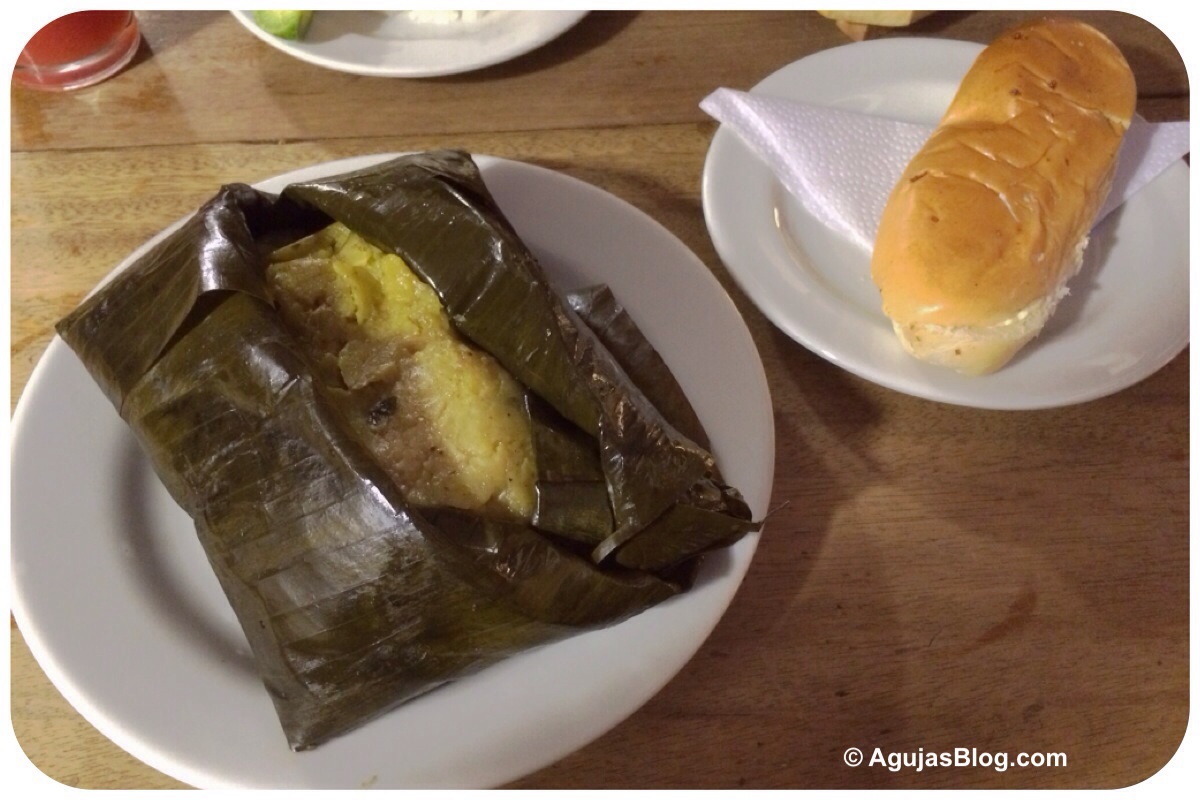
Tamale Santafereño

Ajiaco Santafereńo

It so happens that “La Puerta Falsa” was featured in an episode of Parts Unknown with Anthony Bourdain. Watch Anthony enjoy a steaming tamale.


Our next stop was el Cerro Monserrate, a mountain in the center of the city. One can hike up or take either a train or cable car. We chose the teleférico (cable car). The cable car took us over the funicular rails below.
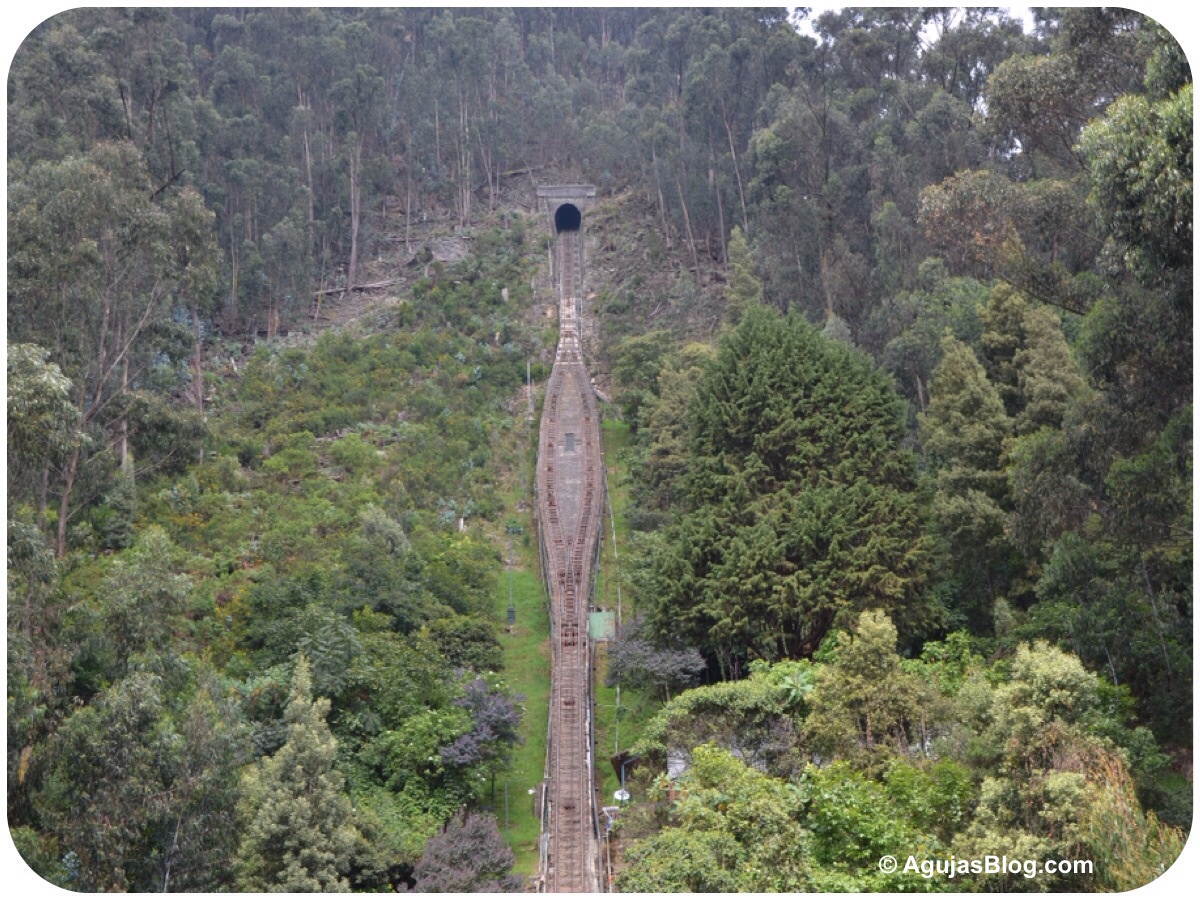
Ruta de Funicular

Once up the mountain, from 3,170 meters above sea level, there was this incredible view of Bogotá. The city stretched farther than I could see, possibly due to the smog. According to Colombia’s Official Travel Guide, the city has over 10 million people.
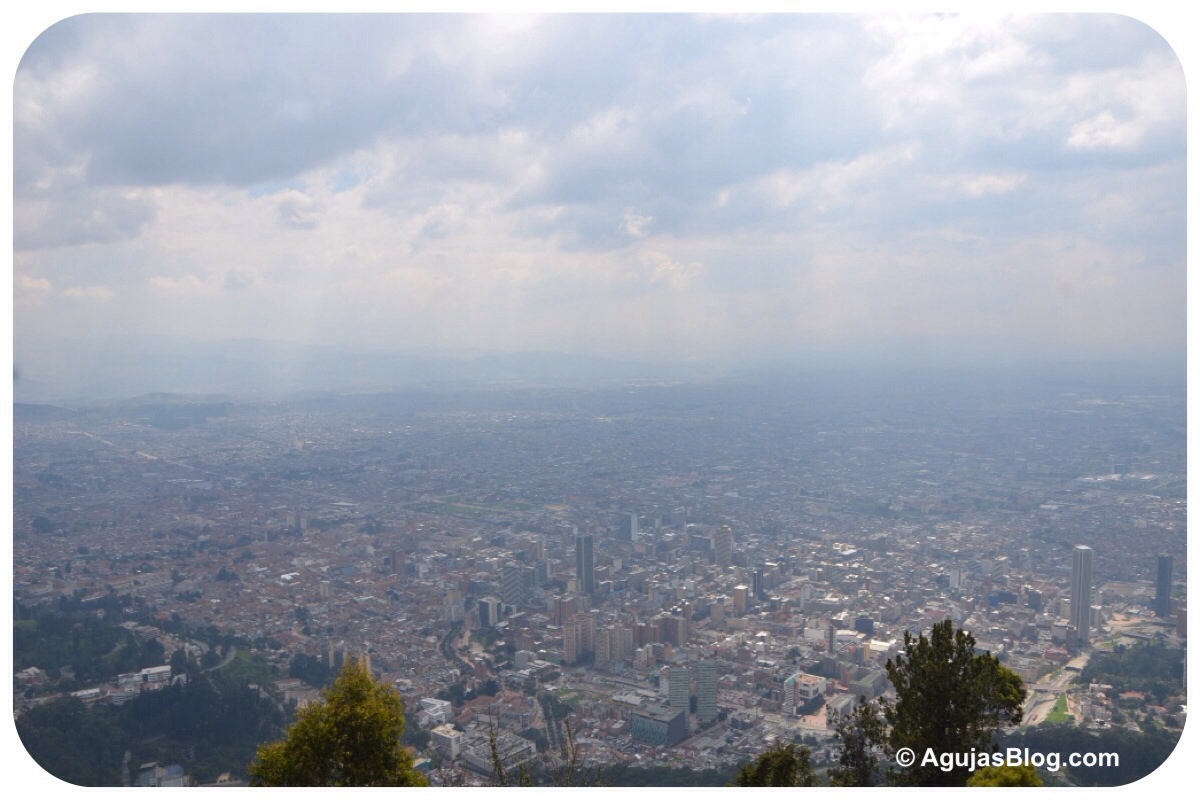
Bogotá from Monserrate Peak

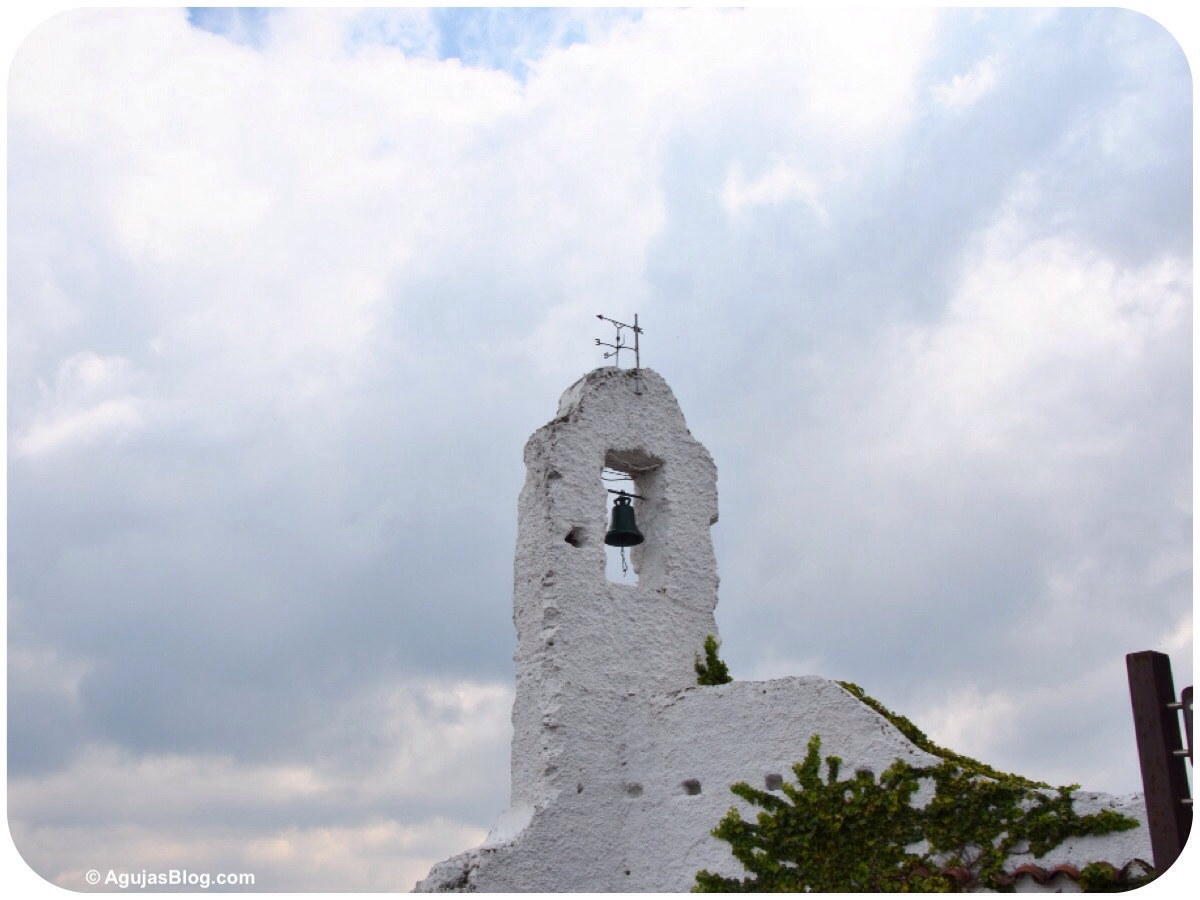
Bell at Monserrate Peak

The Museo de Oro (Gold Museum) featured pre-Colombian art hammered out of gold.
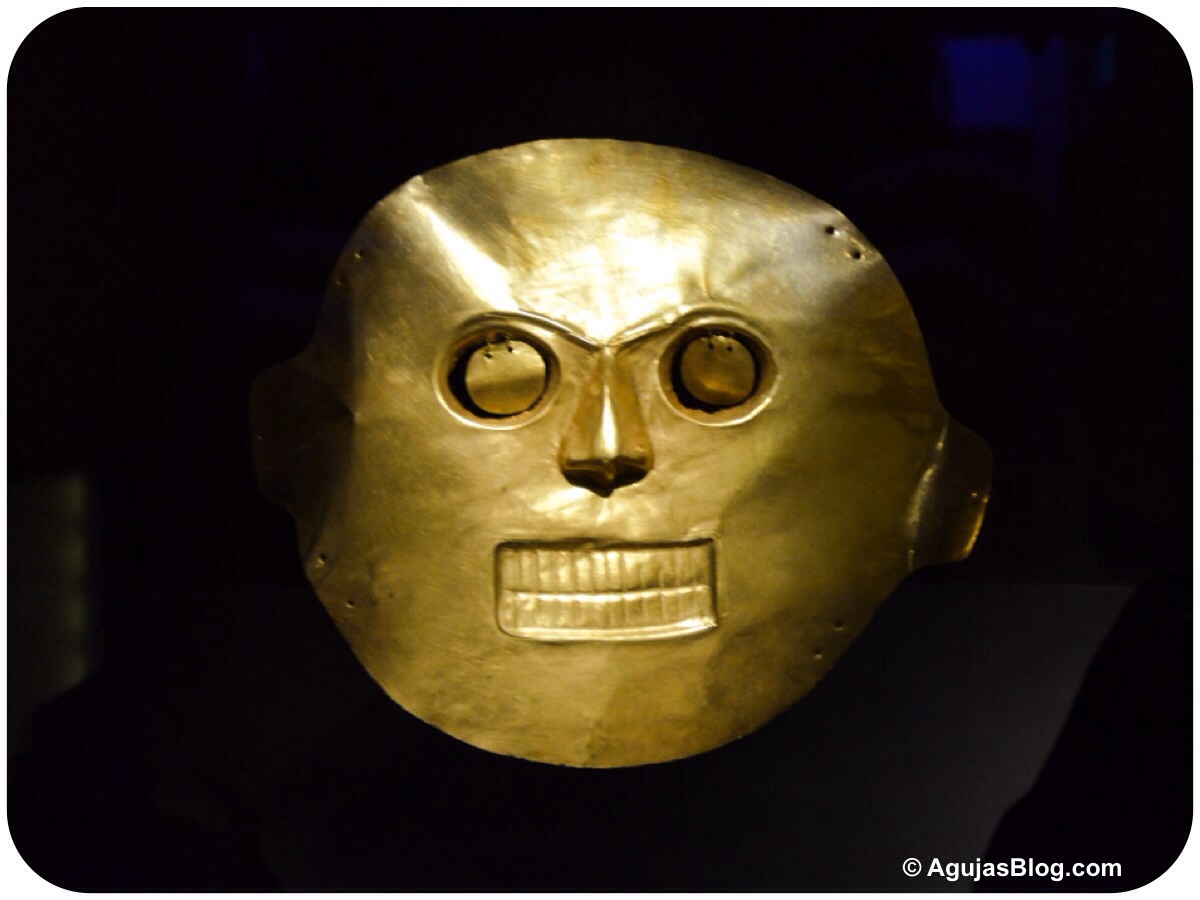
Museo de Oro - Gold Funeral Mask

Gold funeral masks…made of the sacred metal…immortalized the chieftains with their symbolic power.
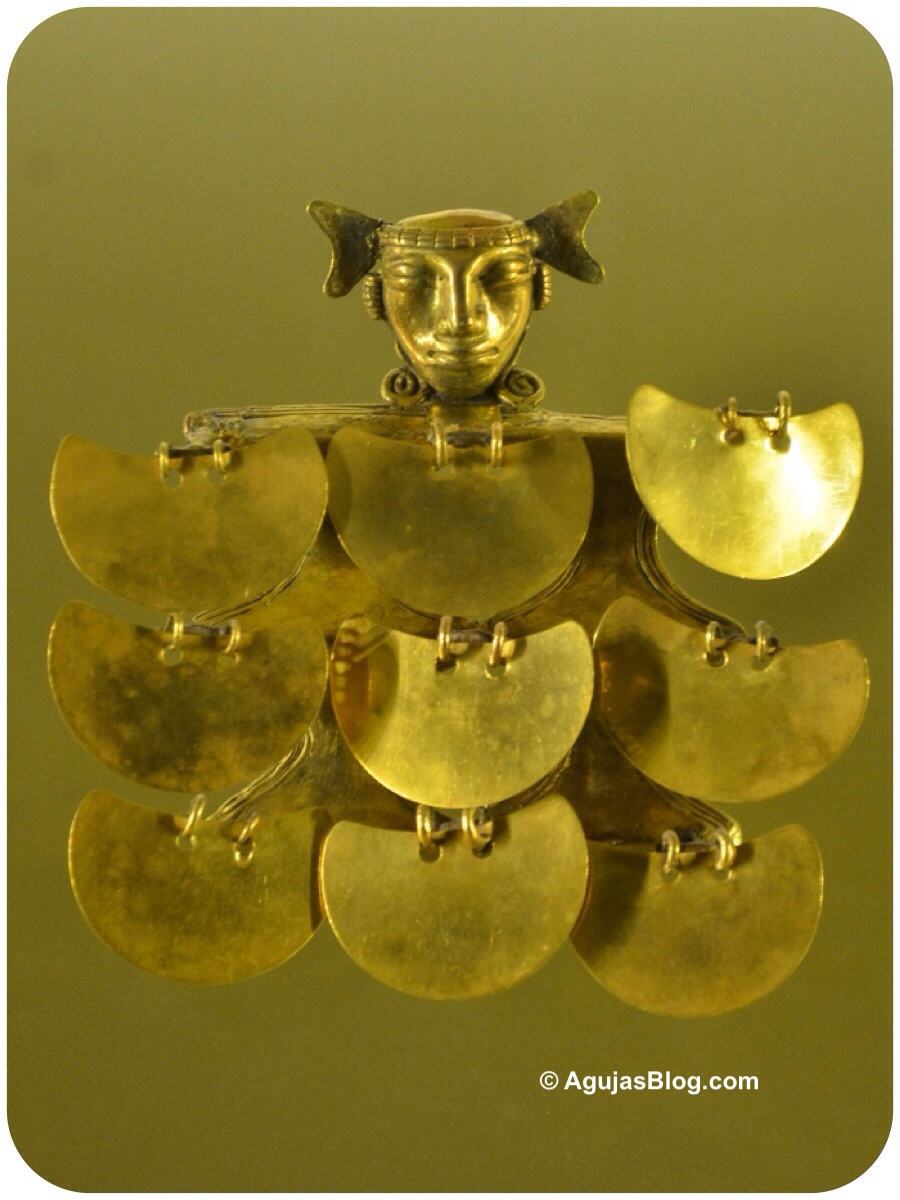
Museo de Oro - Gold Ceremonial Ornaments

During ceremonies, the hanging plates on ornaments twinkled in the light and gave off metallic sounds…
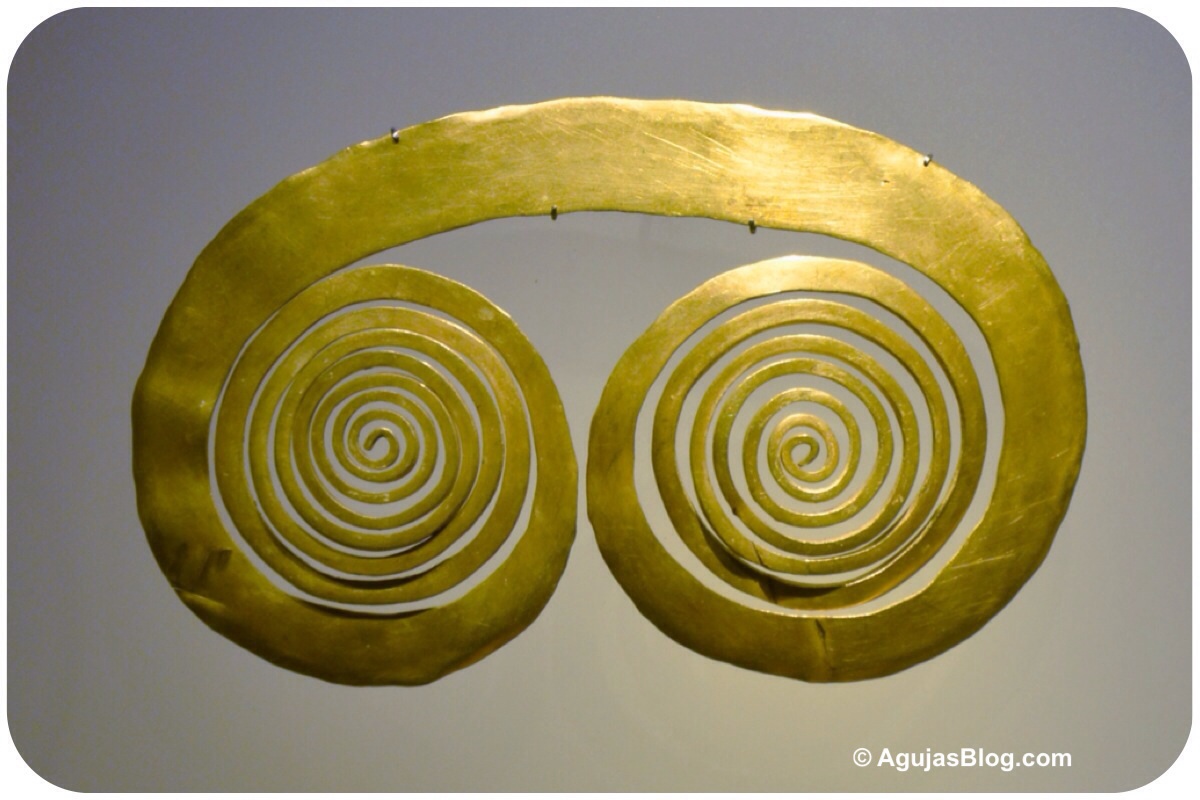
Museo de Oro - Circular Symbol of Time

Time was conceived as being cyclical or like a spiral…

As I turned a corner to the next exhibit room, I saw this.
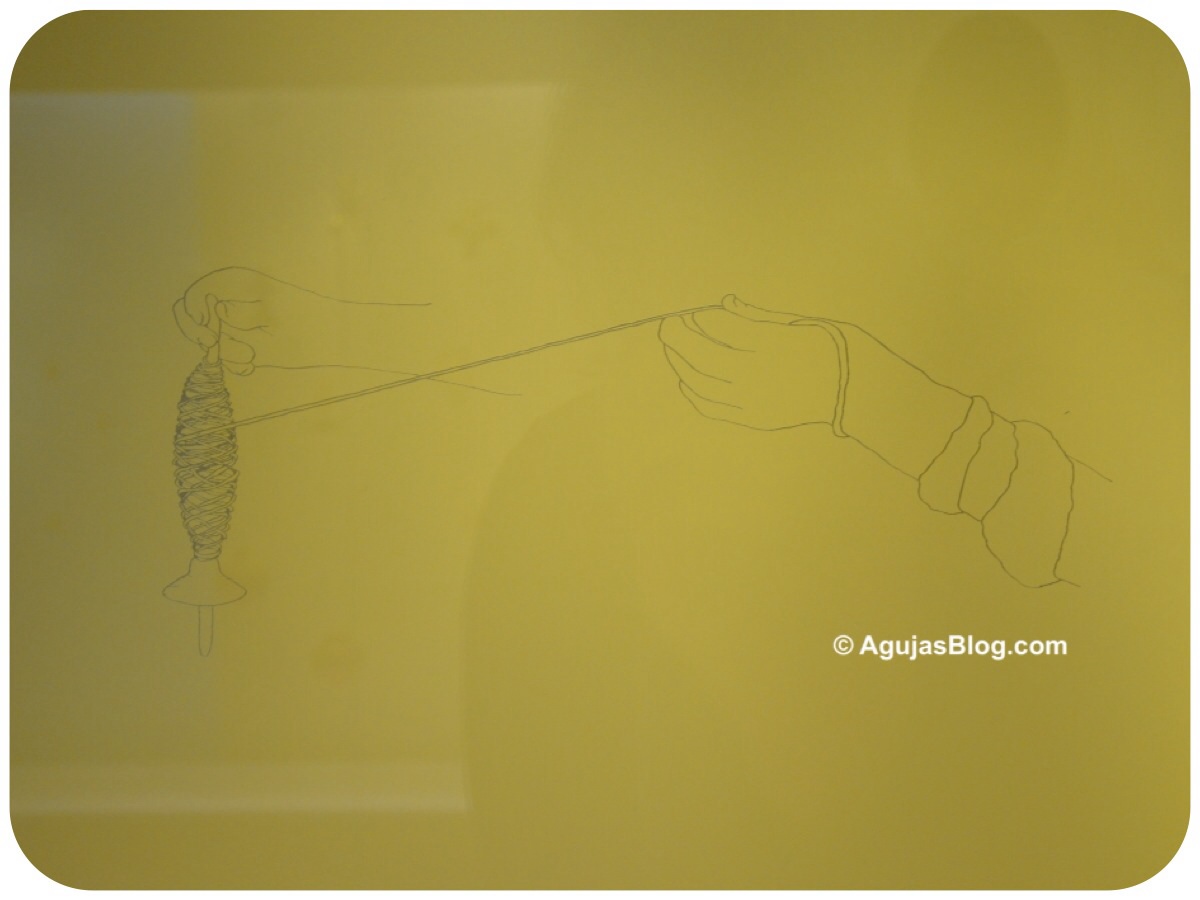
Museo de Oro - Spinning Exhibit

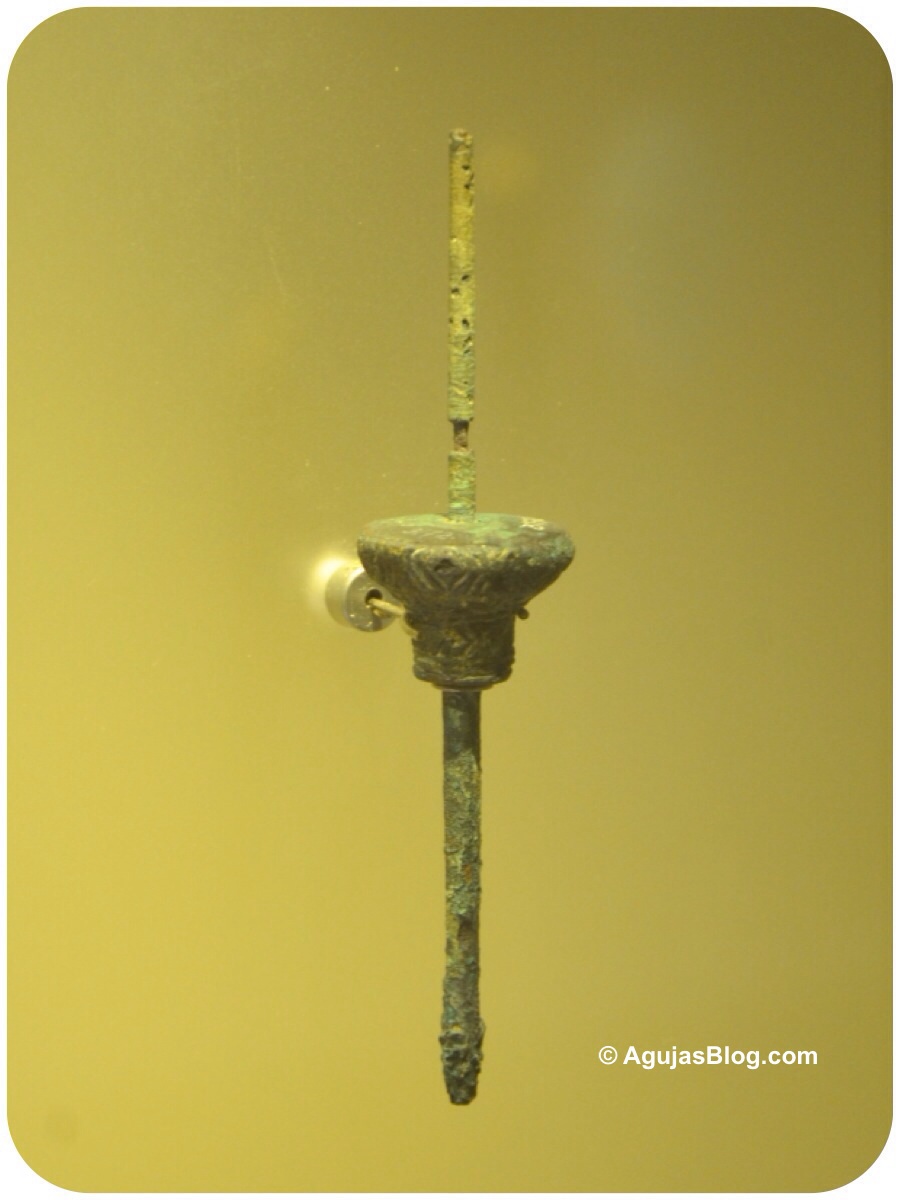
Museo de Oro - Spindle Whorl 1

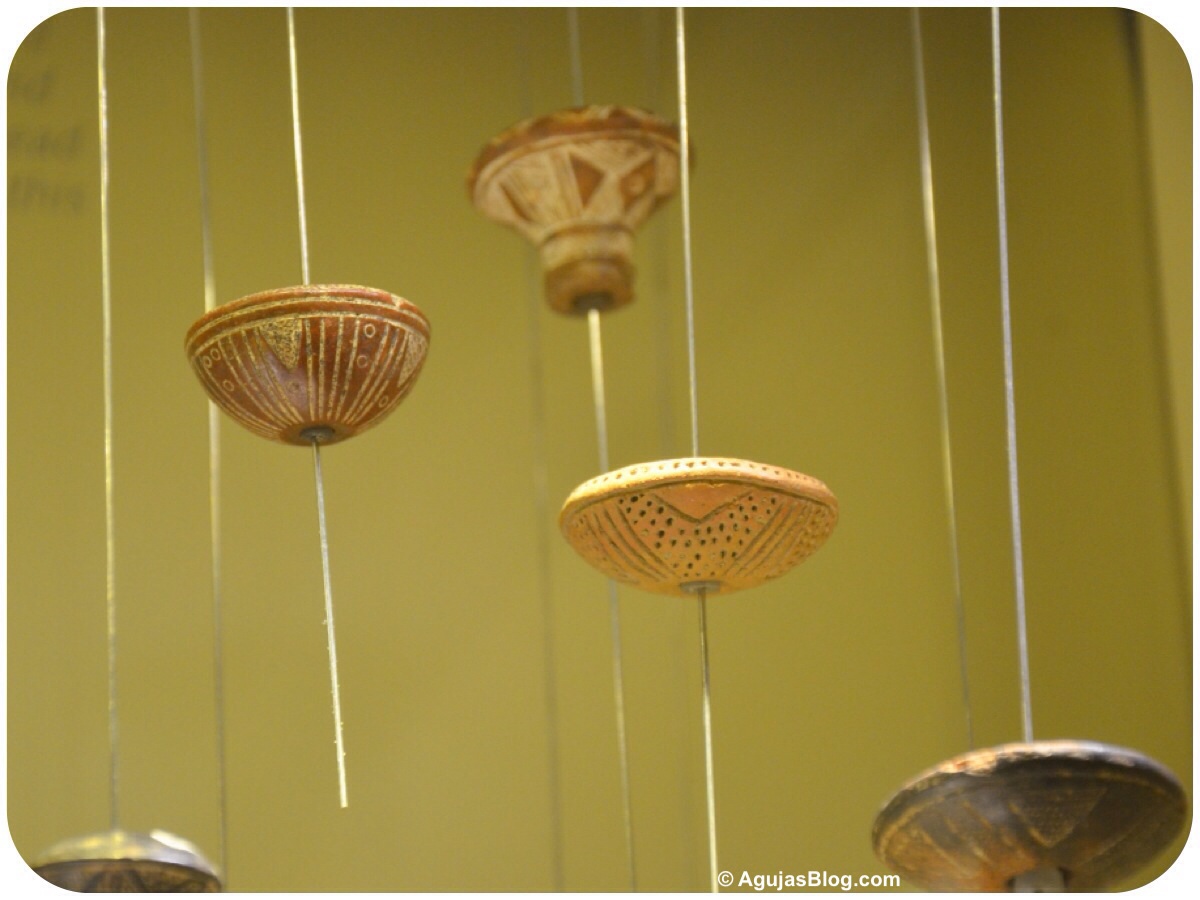
The spindle whorls that were used for spinning were fitted to the end of the stick which the cotton thread was rolled around. Fabrics from this region were noted for their fine quality.
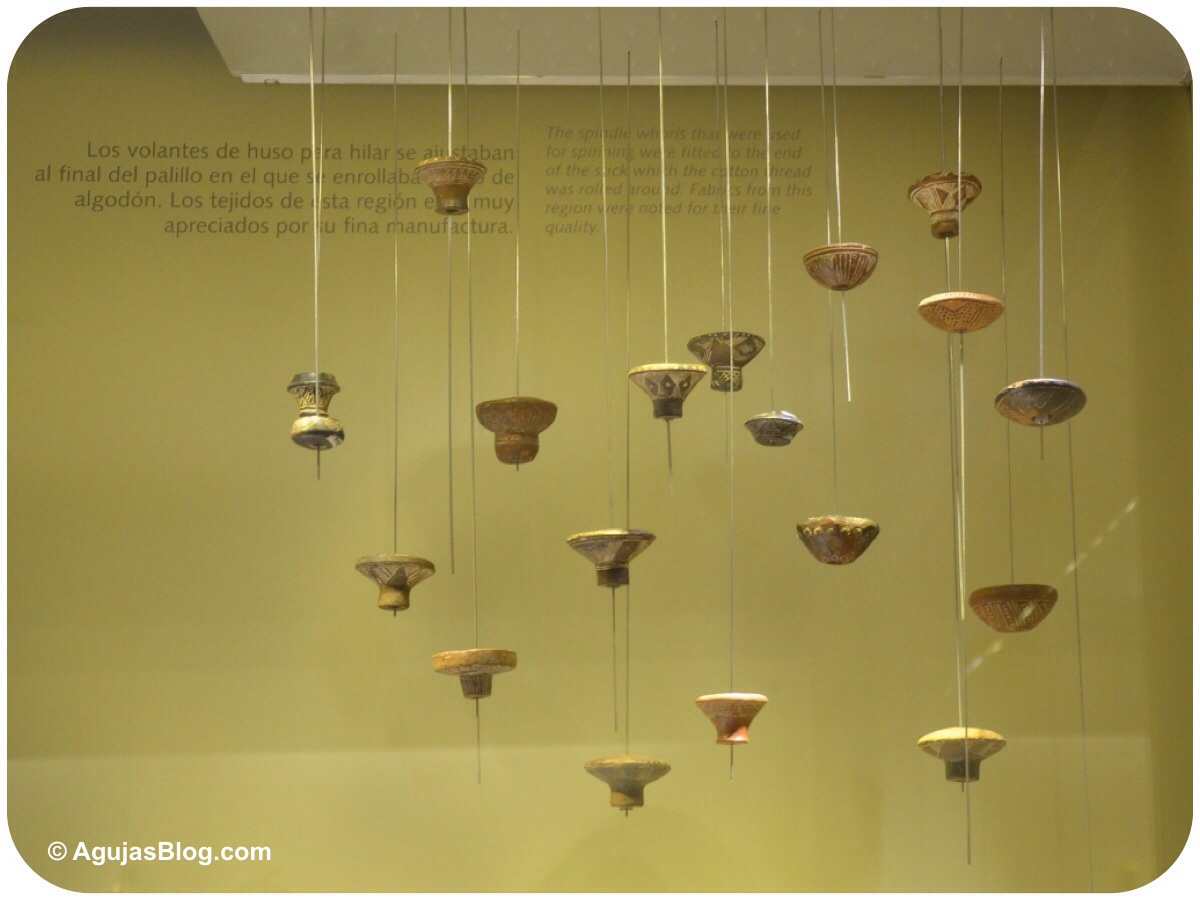
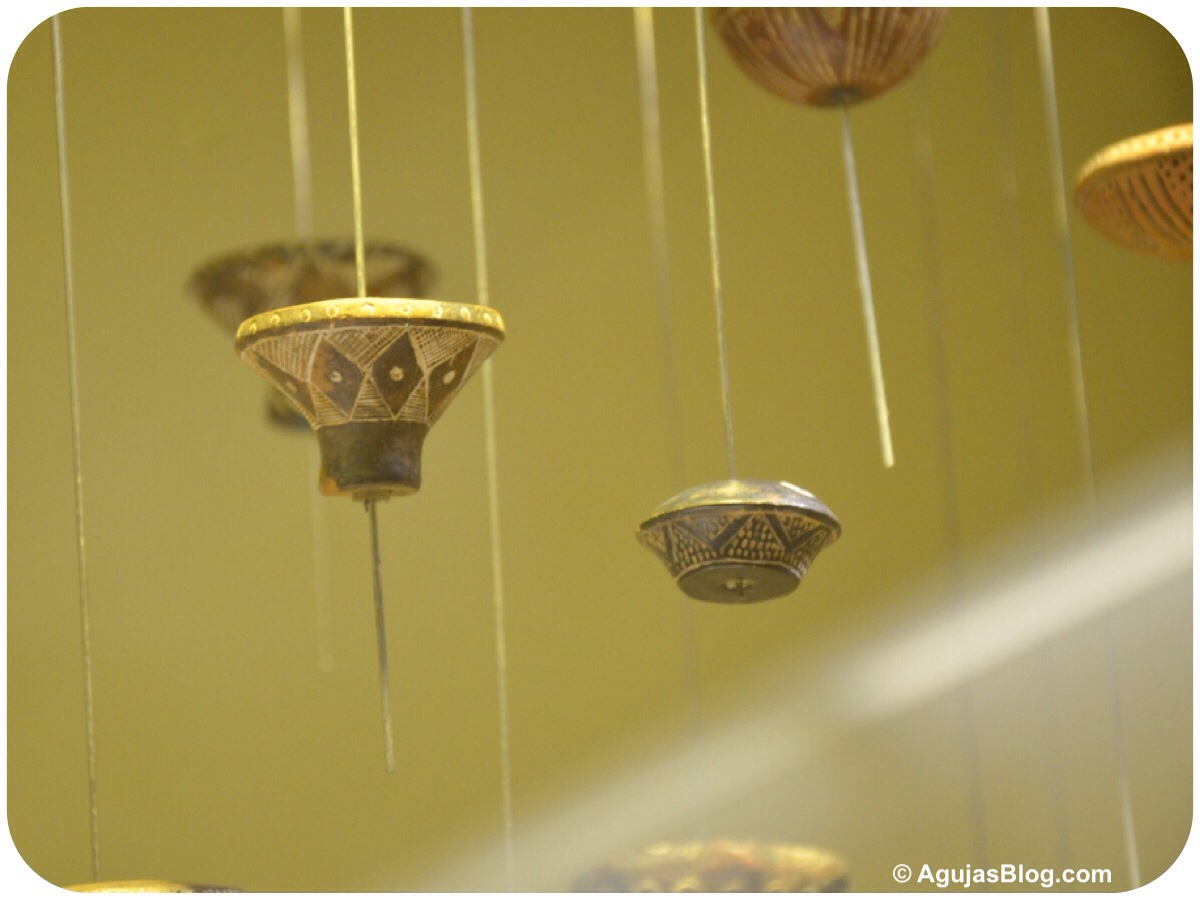
Museo de Oro - Spindle Whorl 2

Museo de Oro - Spindle Whorl 3

Museo de Oro - Spindle Whorl 4

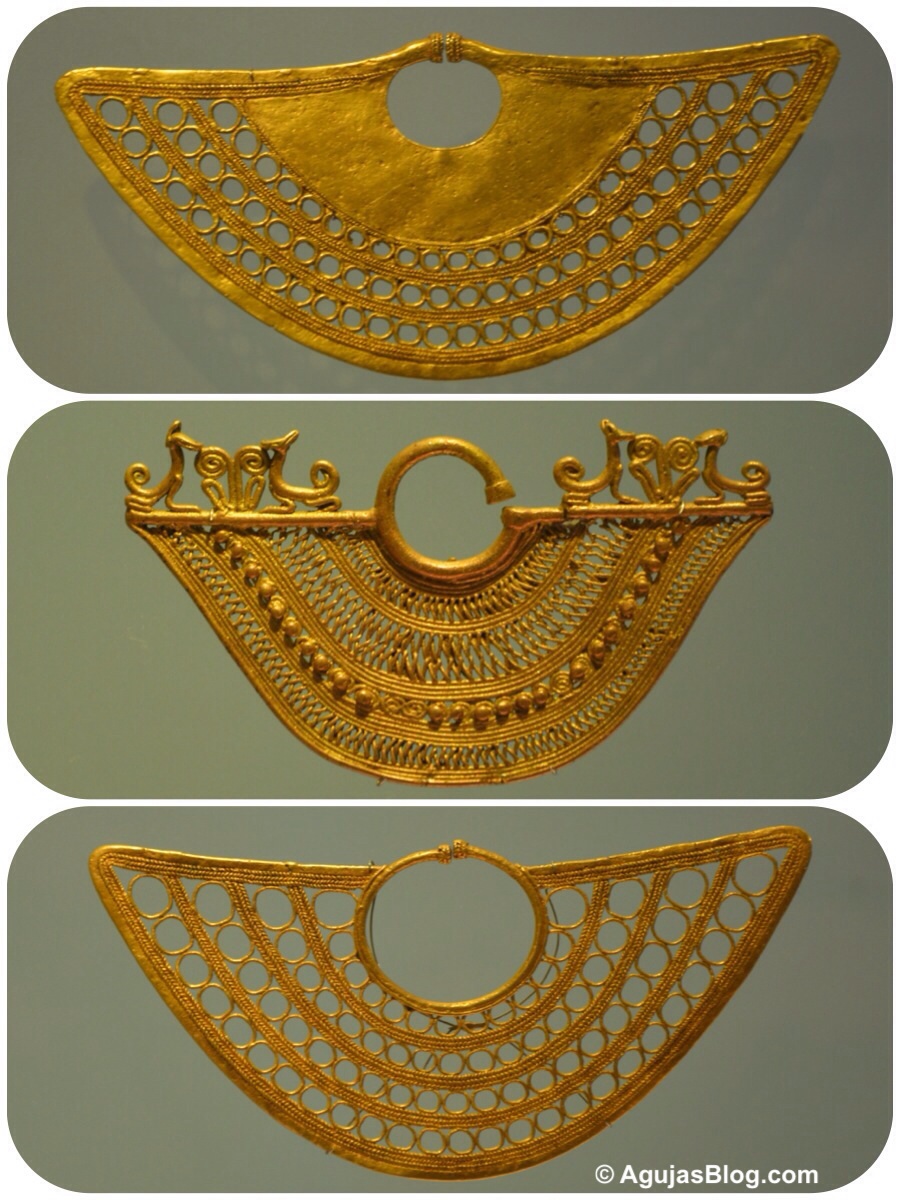
Like a metaphor, the weave notion can be seen in the filigree work in earrings…and in other objects… [200 a.C – 1000 d.C]
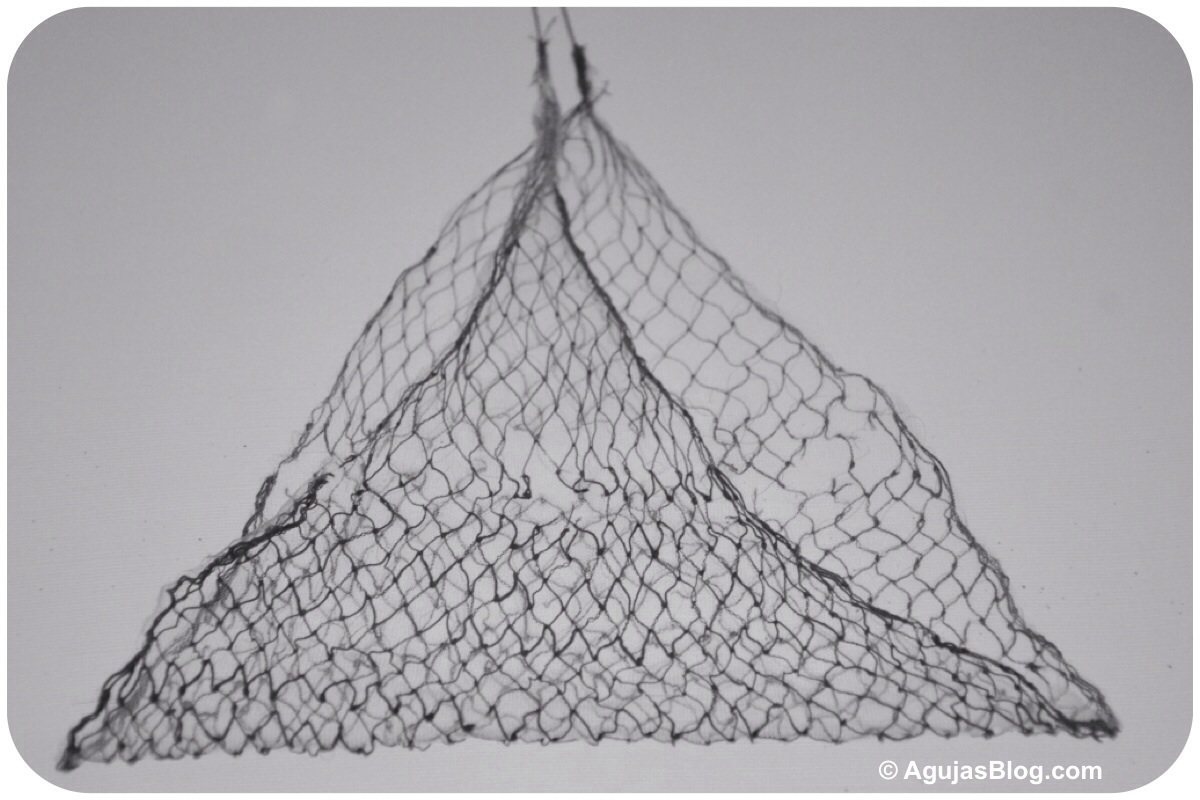
Museo de Oro - Woven Net

Museo de Oro - Filigree Earring Detail

Cotton and sisal were spun using spindles that were driven by engraved stone whorls…
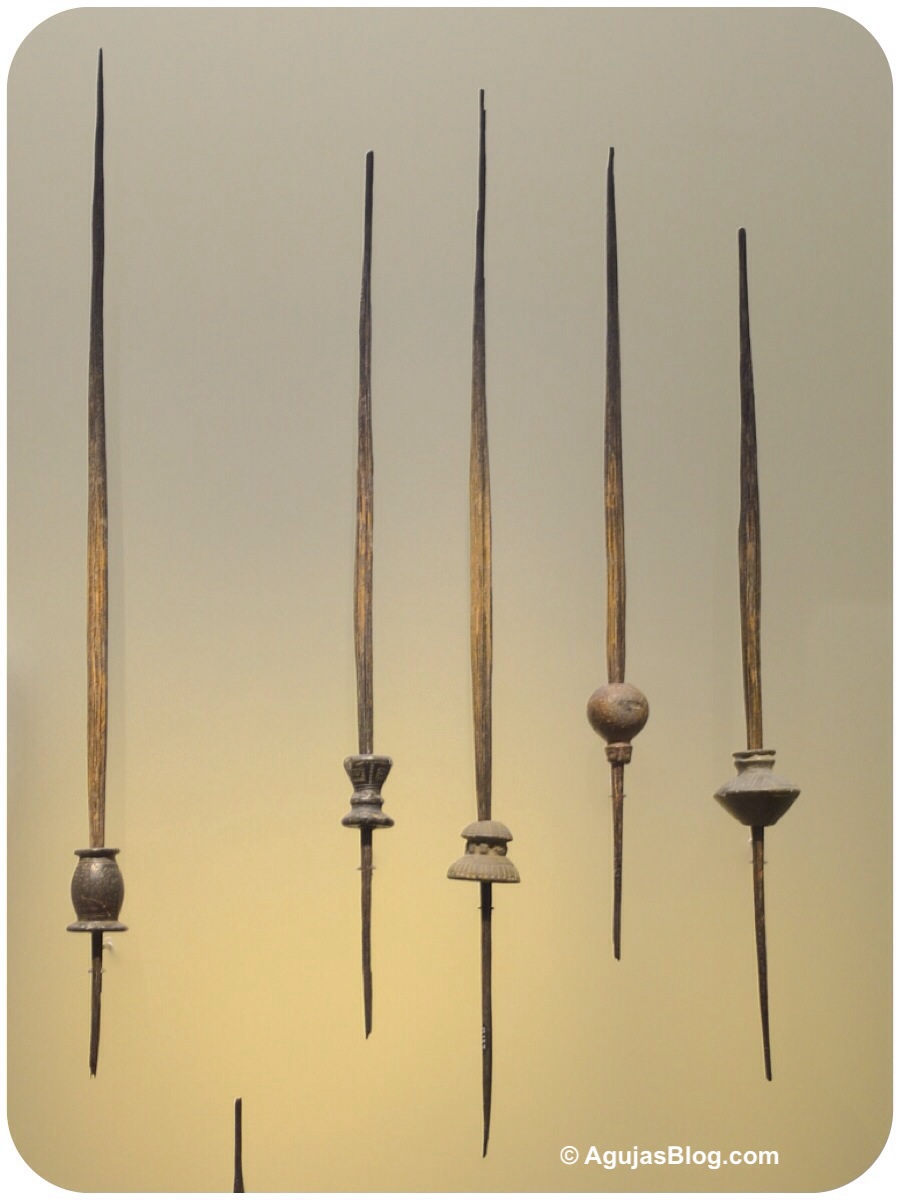
Museo de Oro - Engraved Stone Whorls

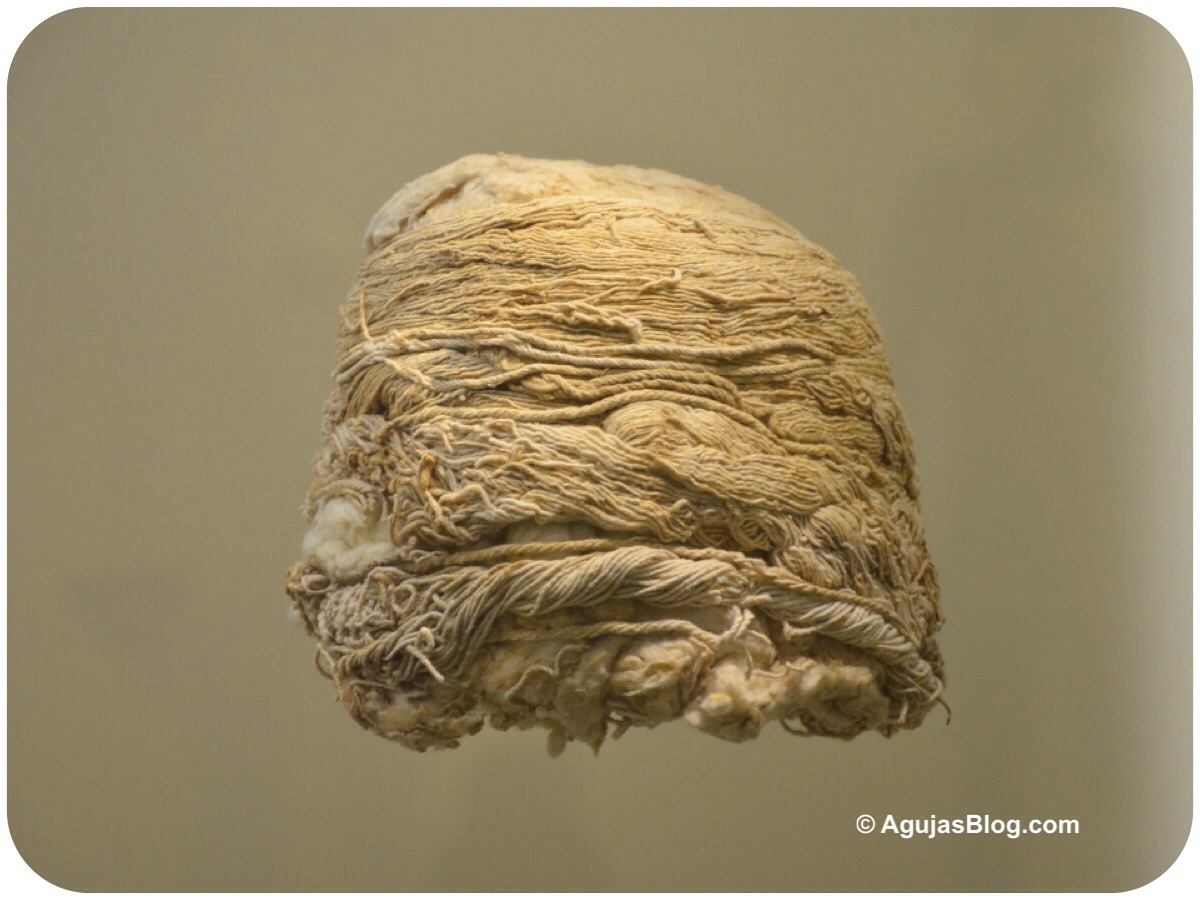
Museo de Oro - Spun Cotton

…and the resulting thread was used for making blankets, caps, bags and nets. [600 d.C – 1600 d.C]
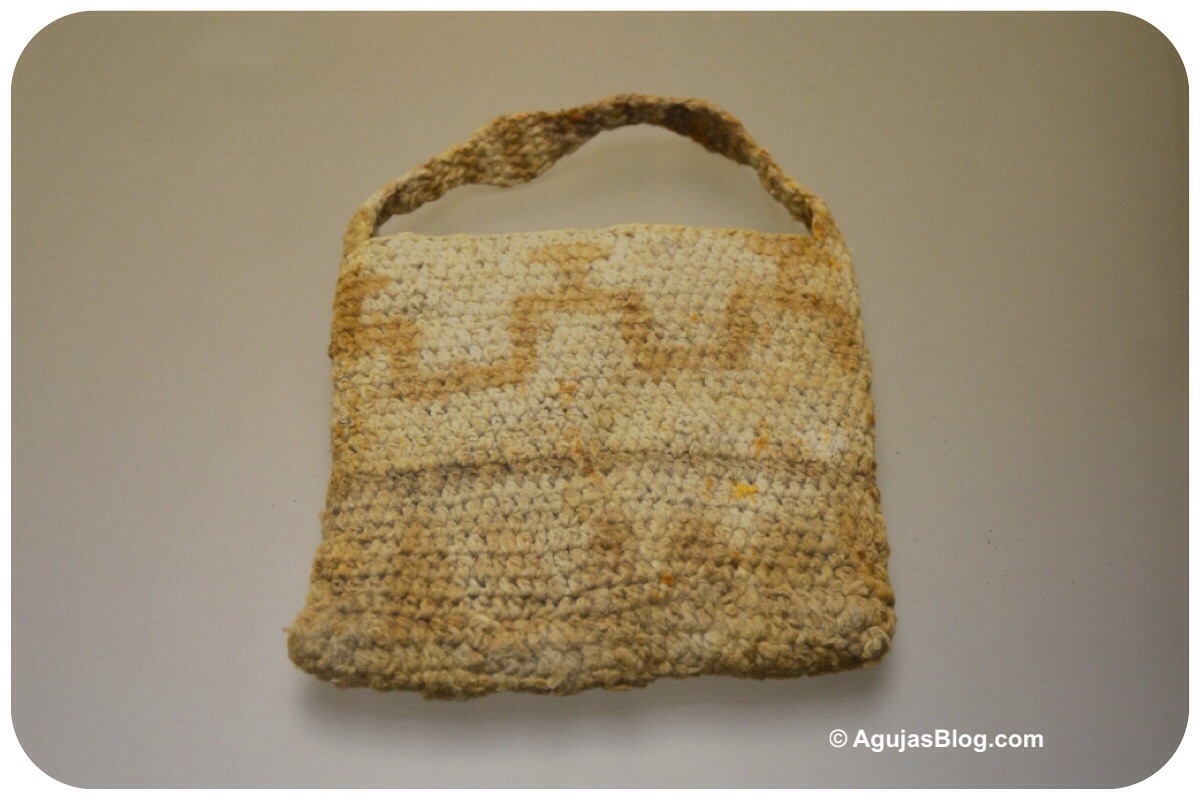
Museo de Oro - Crochet Bag

We ended Day One with a fantastic dinner at Andrés Carne de Res. We went to the city center location; the original is in the suburb of Chia. I can’t tell you more about it because no retelling will do it justice. It’s the sort of place you simply have to experience, like Bogotá.
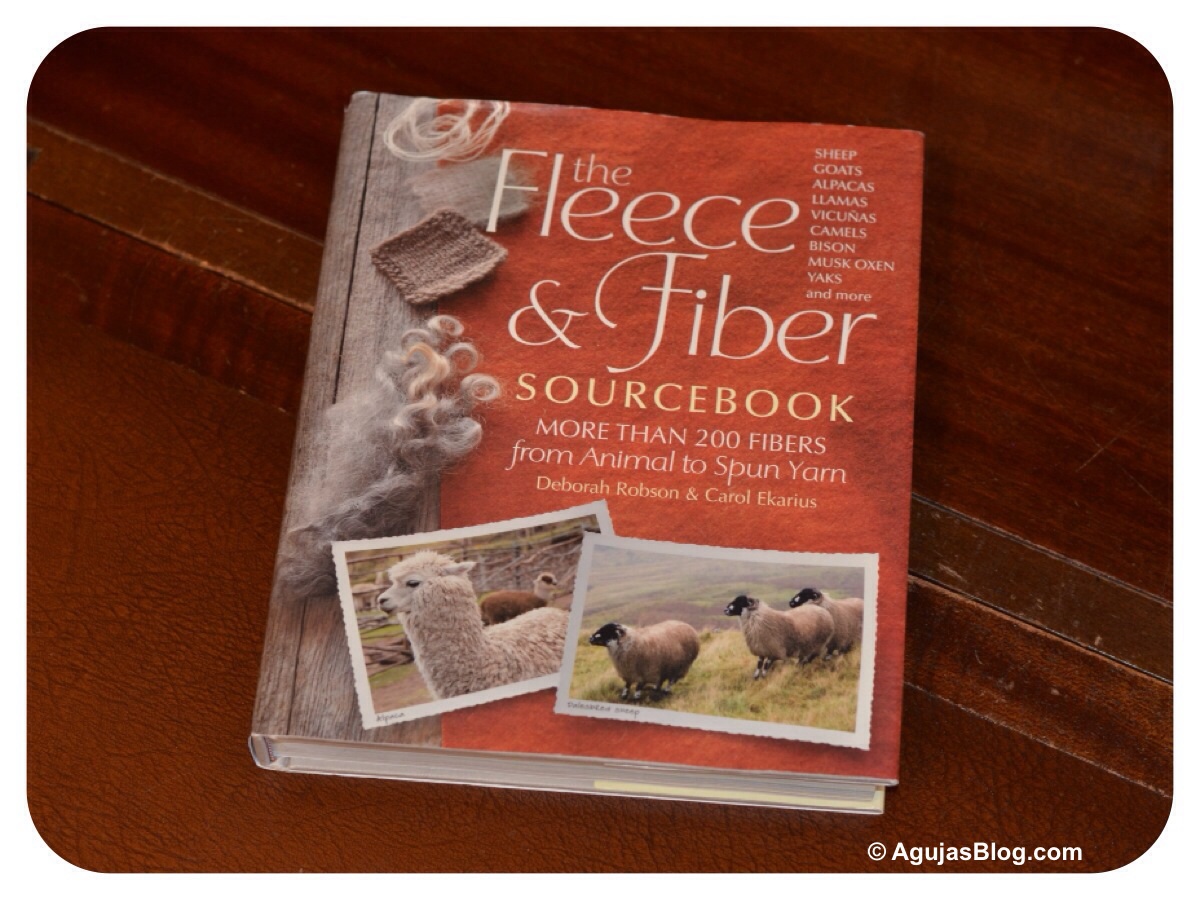
My Knitting Library

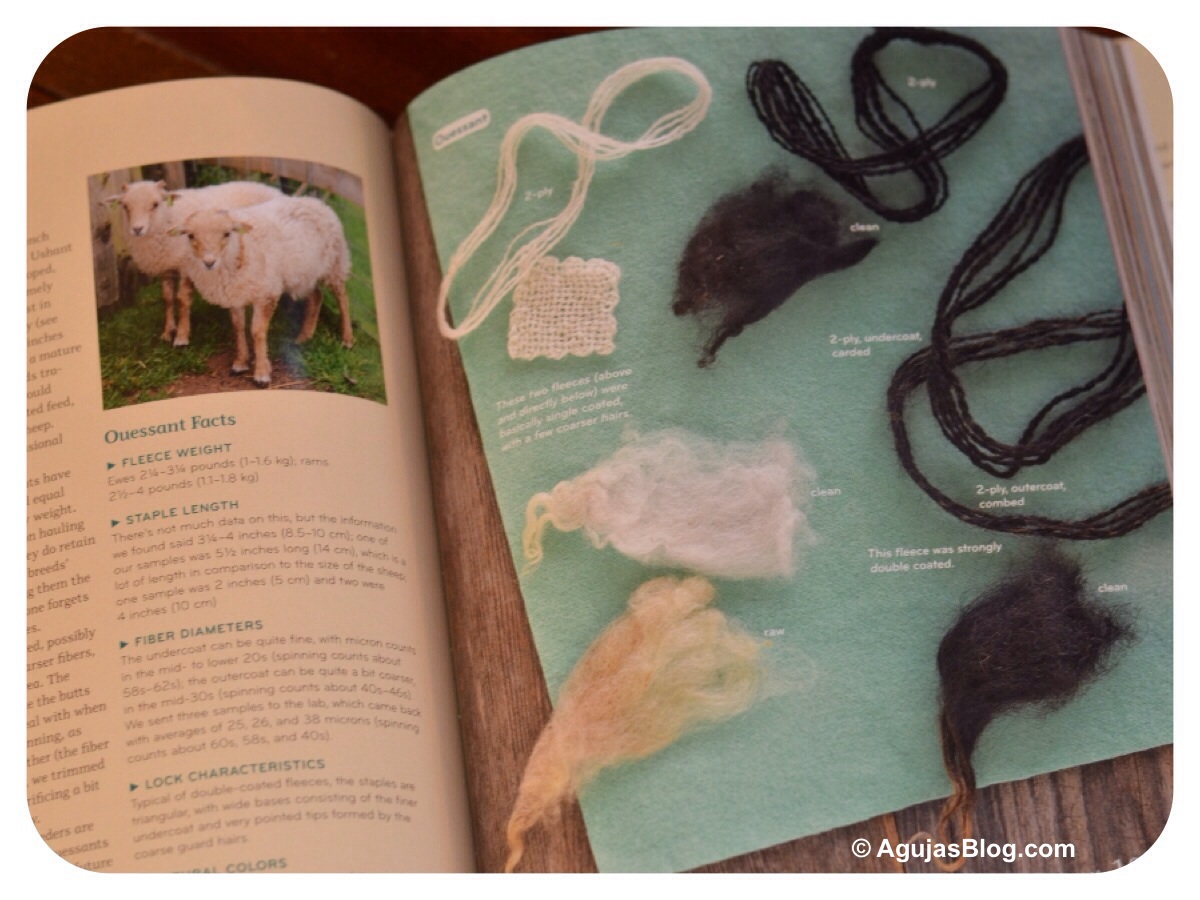
This was an early holiday gift from friends. They know me so well! I had paged through the Fleece & Fiber Sourcebook at the bookstore and became engrossed with the back story of all those wonderful fibers. Now I can read it anytime!
Fleece & Fiber Sourcebook

Fleece & Fiber Sourcebook -Sample

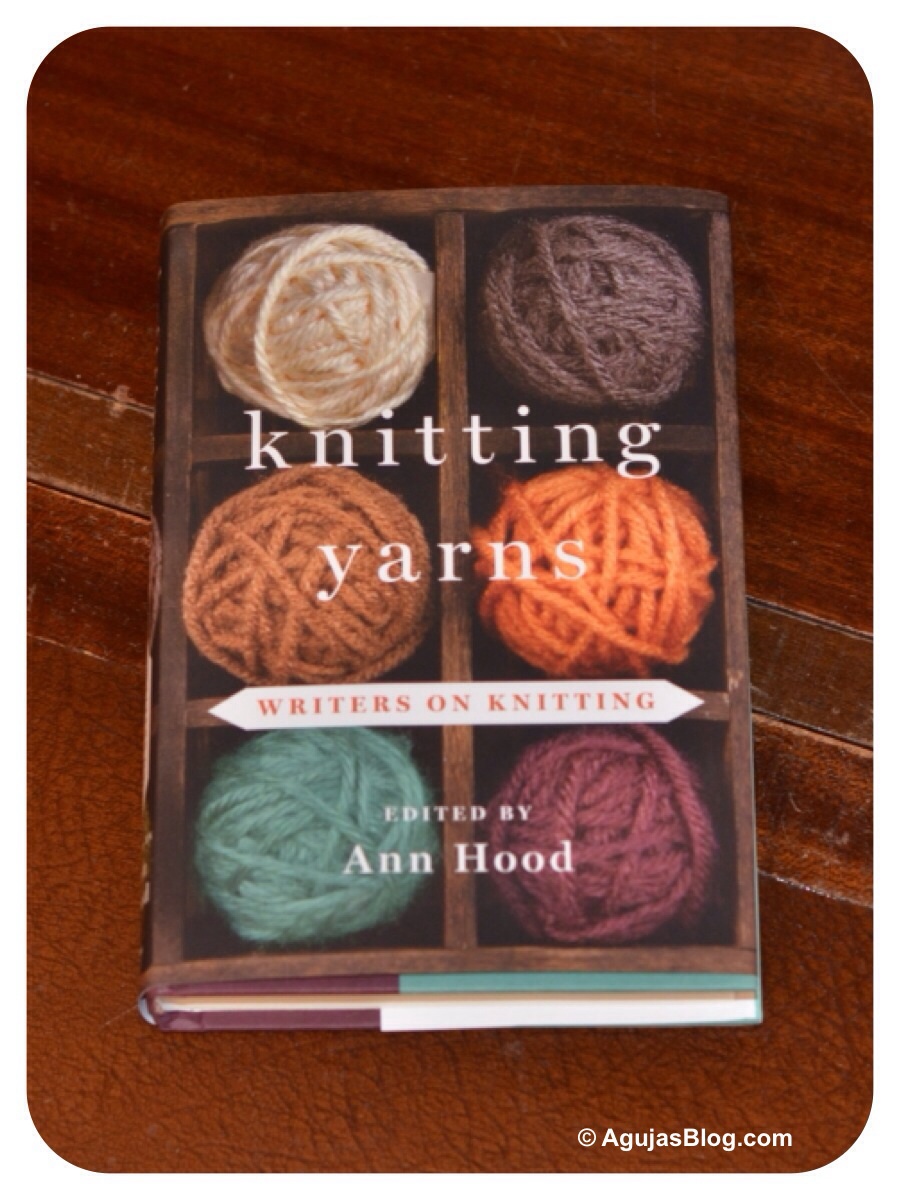
Just in time for the holiday break, there is this collection of stories about knitting. If it wasn’t so warm out (you know, Texas) I would kindle a fire in the fireplace and start reading now.

Knitting Yarns

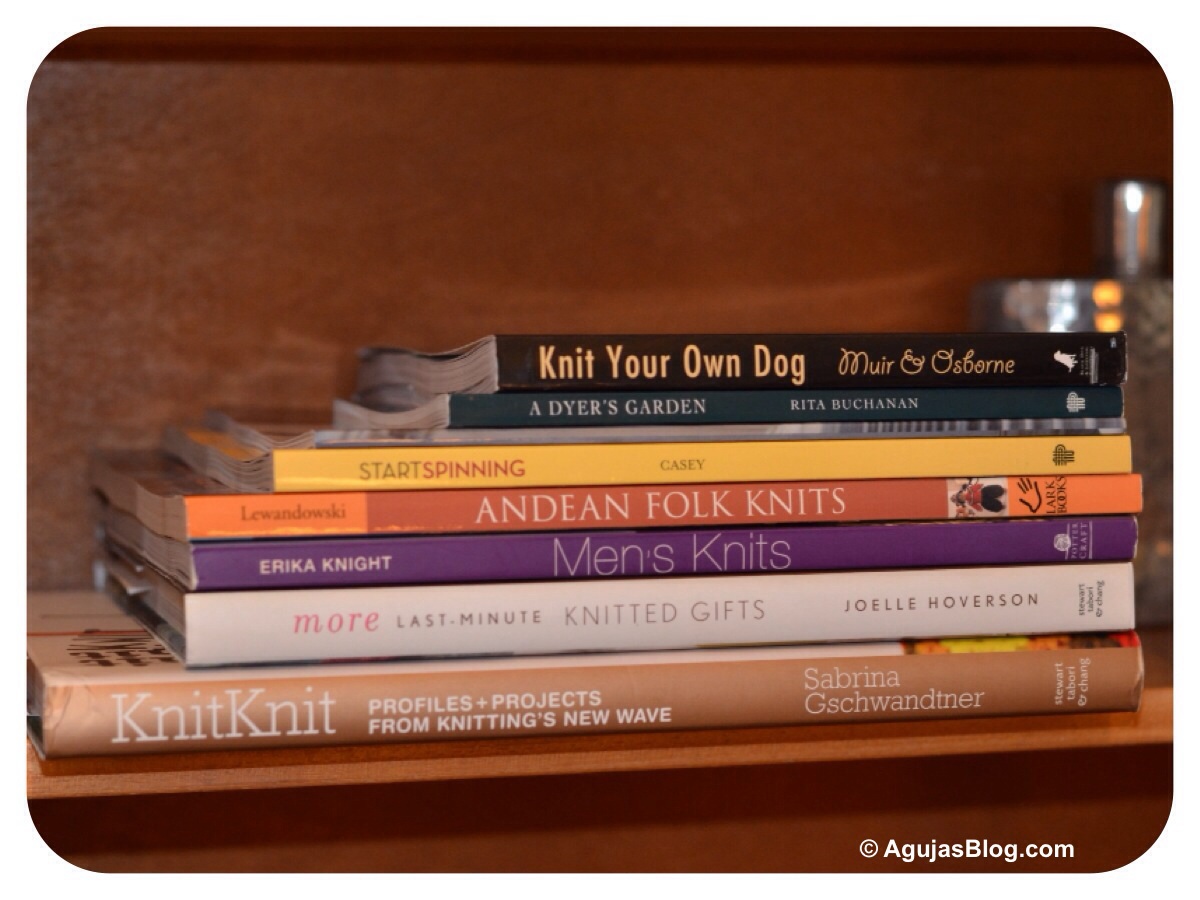
This made me think of other knitting books I’ve collected. There aren’t that many but each one has a purpose – spinning, dyeing, intricate color work, knitting art, and gift ideas.

Knitting Books

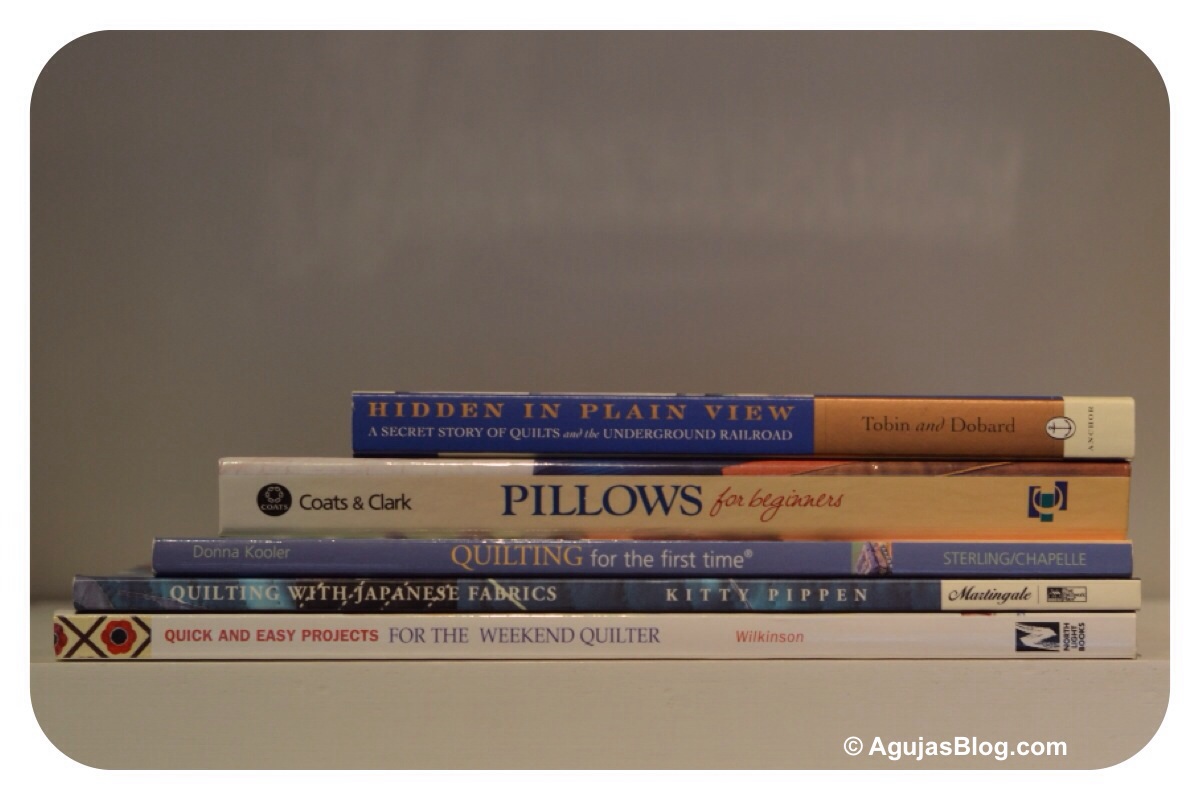
I also realized I had a few quilting books from prior attempts. Quilting with Japanese Fabrics has photos and instructions for stunning silk quilts. I picked up Hidden in Plain View during a trip to Gettysburg. I found it fascinating how quilt patterns were used as signs on the Underground Railroad.

Quilting and Sewing Books

What’s in your knitting library? Any favorites you recommend?

Weaving in Ancient China

After a three-month stint in Beijing, I went home for a month. It’s funny how being away makes you appreciate every little thing. Of course there is family – my husband, sons, my mom, brothers and sisters, friends and colleagues. Then there are blue skies, clean air, the sound of quiet, driving my car, air conditioning, clean bathrooms, ice …

A month later, I am back in Beijing. It’s different this time. While it is still a fabulous adventure, it was much tougher leaving home. The first time, there was the mystery of Asia and the challenge of the new business venture. We still have challenging work to do but I miss the rhythms of home.

While here, I continue to explore the city. My first free day, I went to the Summer Palace. It is 20 subway stops from where I stay and took almost an hour to get there.

Summer Palace 1

The property is huge like most everything else here. It covers an area of 2.9 square kilometers (720 acres), most of which are bodies of water. It is kept immaculately groomed and landscaped. I walked for five hours straight that day, up and down steep stairs and around the lake.

Summer Palace 2

I enjoyed …
The walk.
Being out in the fresh air on a cool day.
The rich vegetation of the gardens.
The earthy smell of the pine trees.
Seeing families camping on the grounds, having picnics and taking naps.
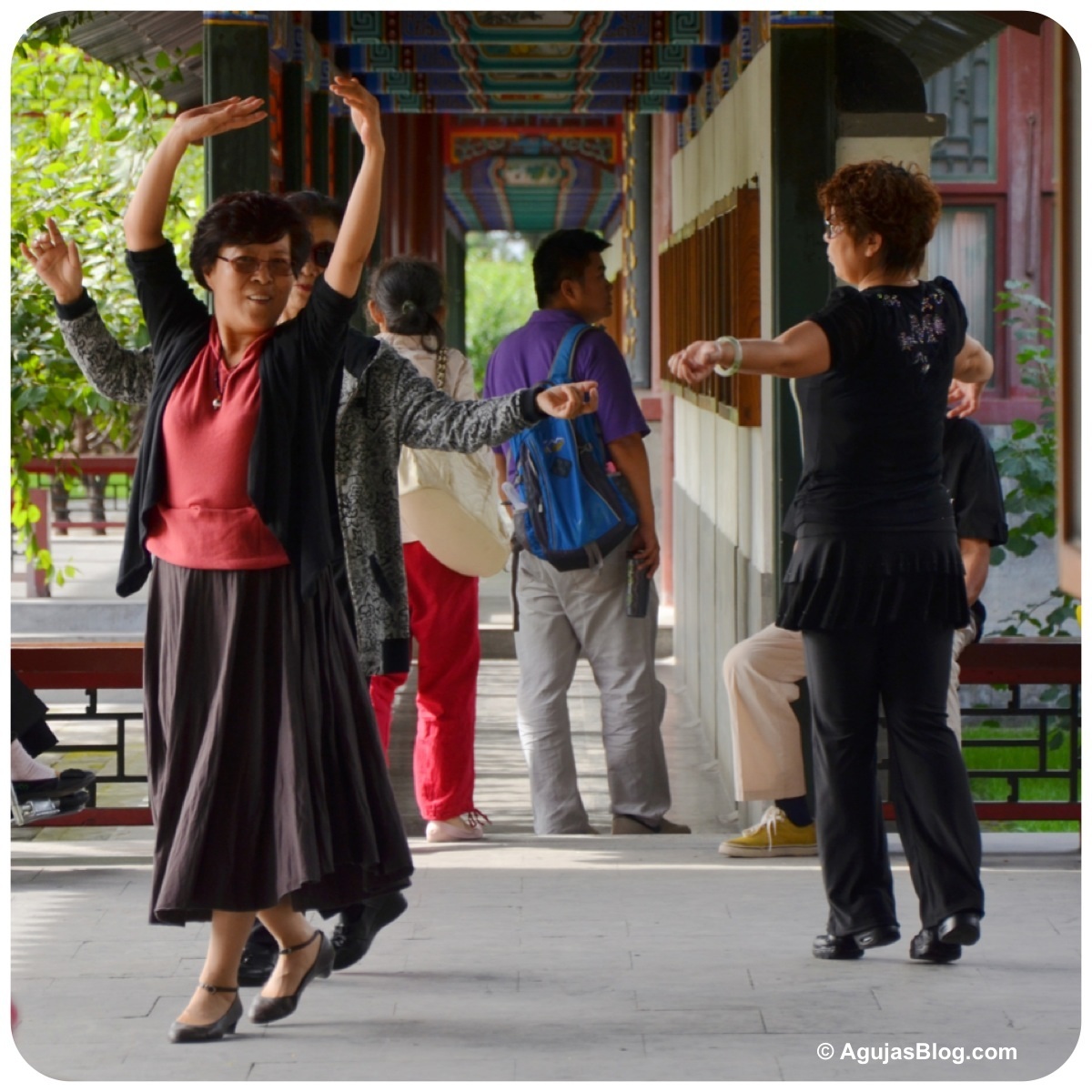
Watching ladies dancing under gazebos.
Listening to an old man playing his flute by the lake.

Summer Palace 4

Summer Palace 5

Summer Palace 8

Summer Palace 6

Summer Palace 7

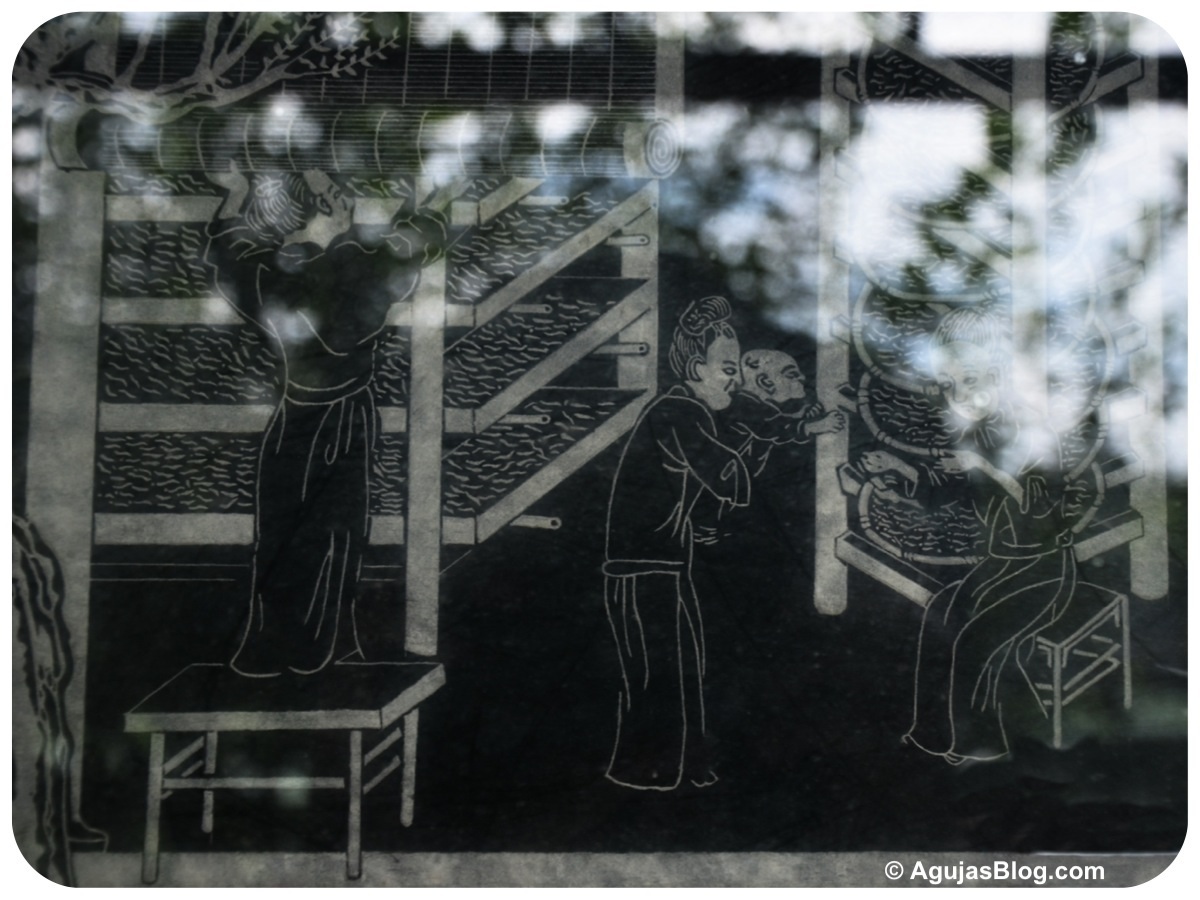
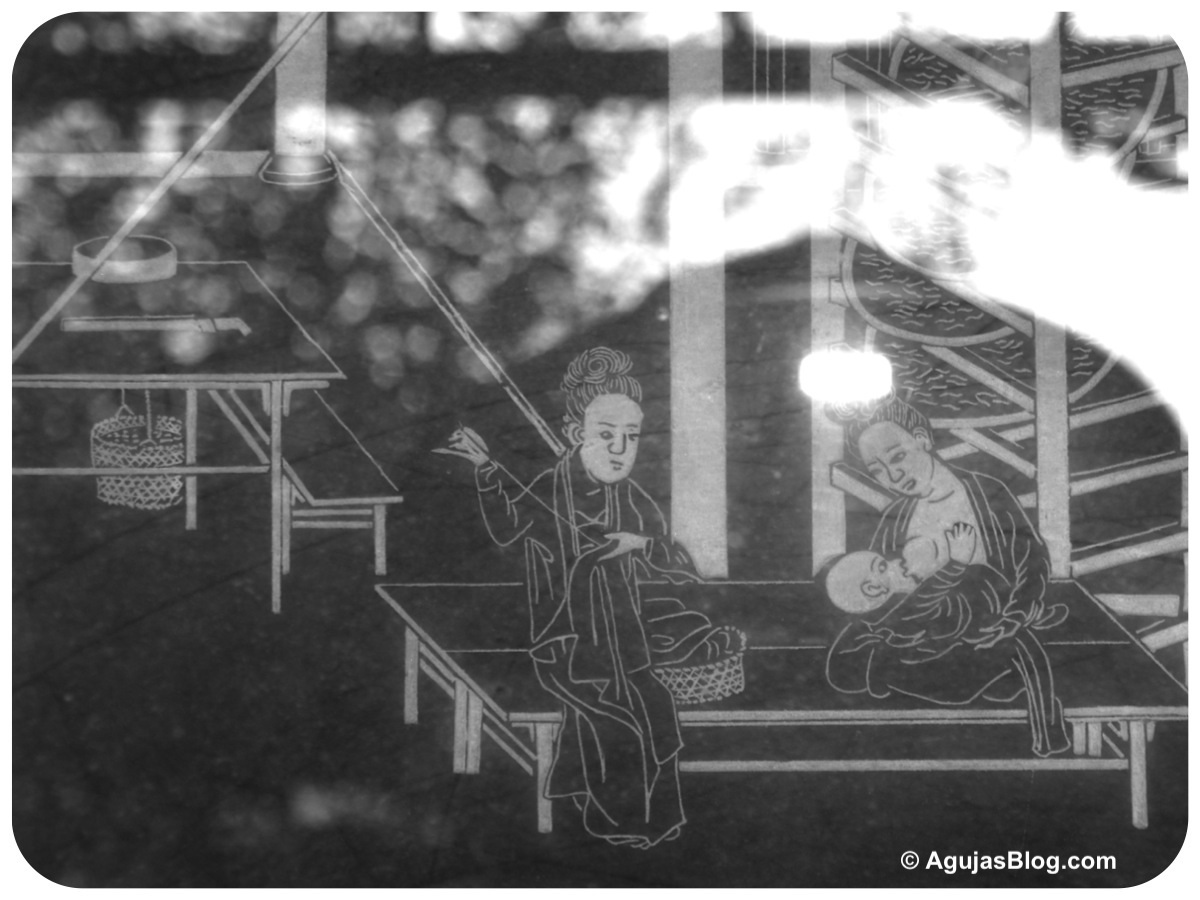
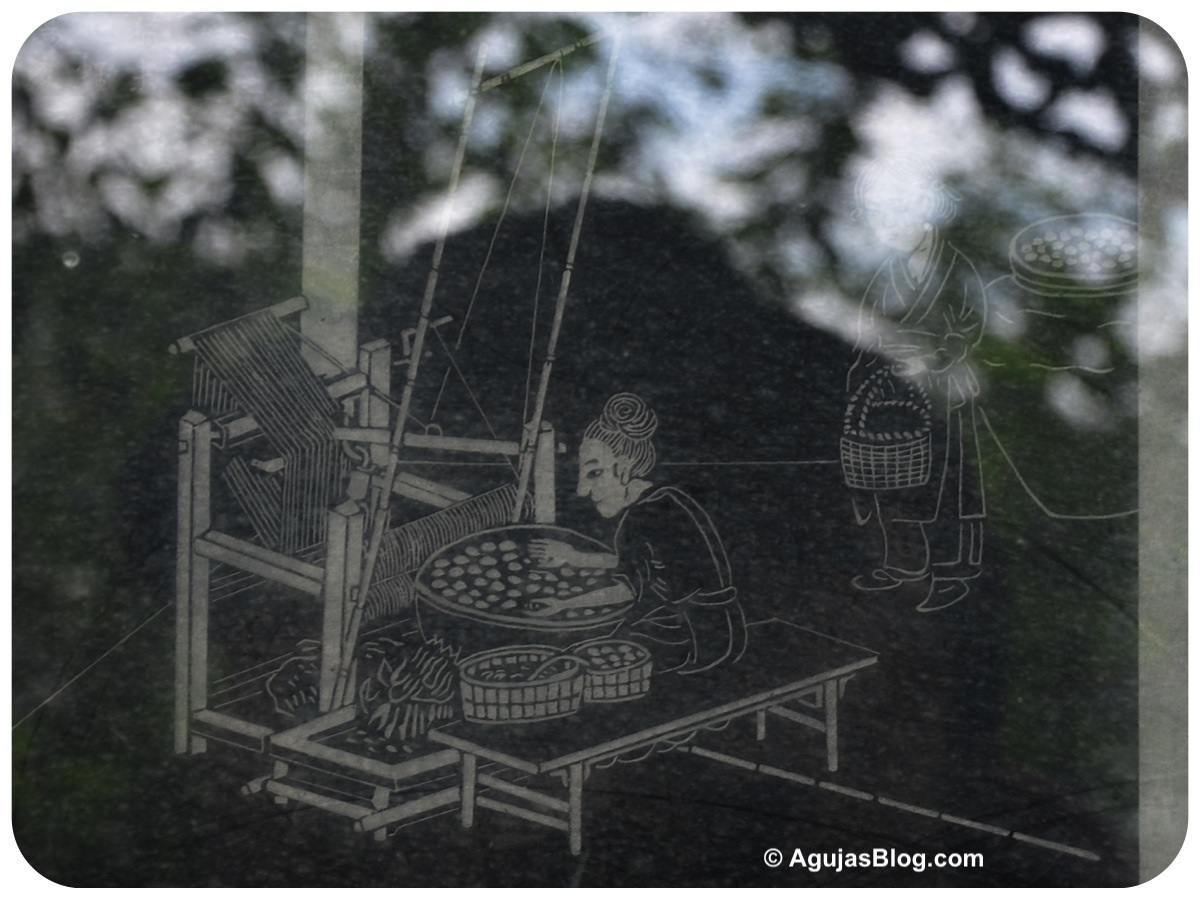
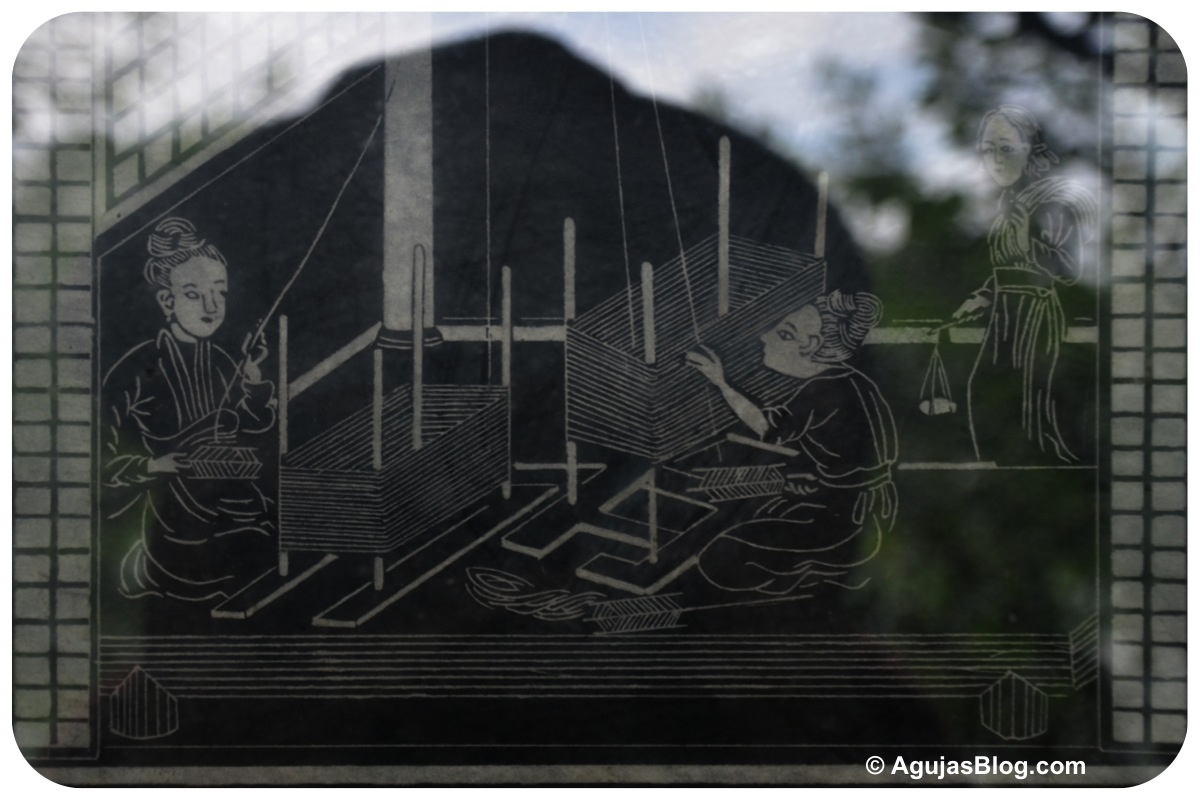
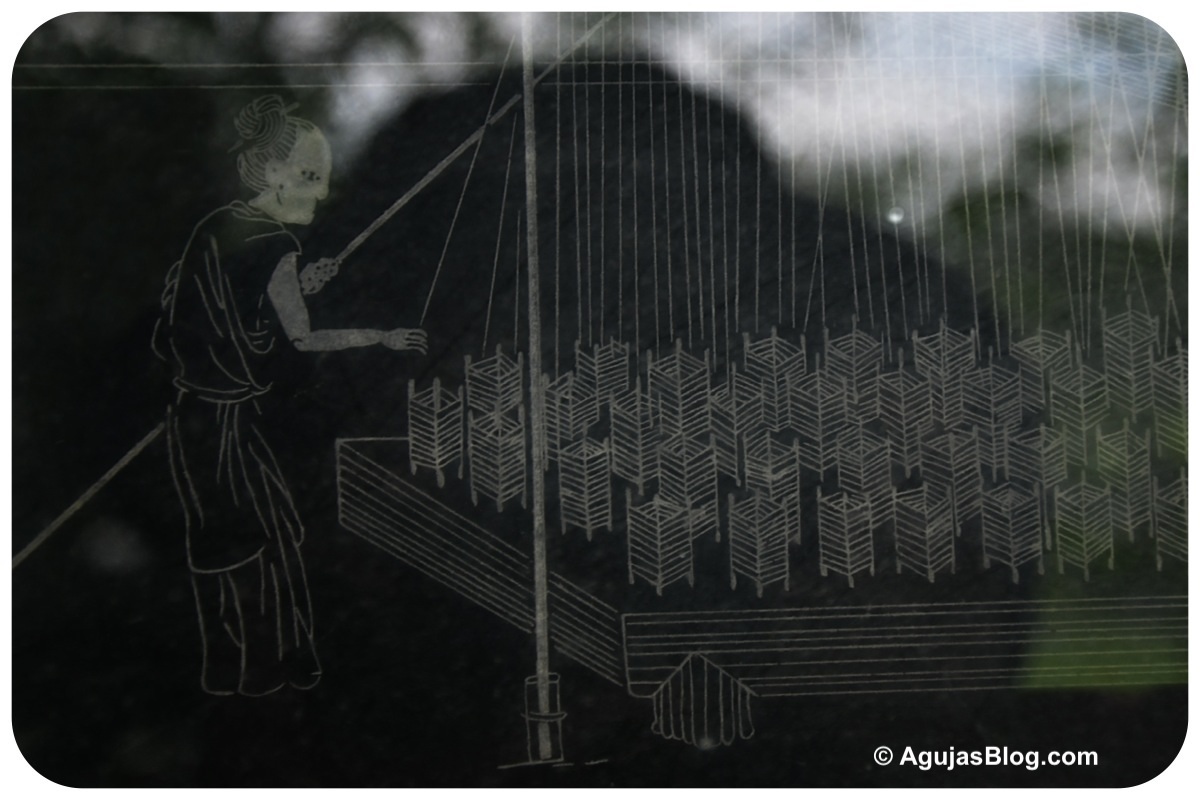
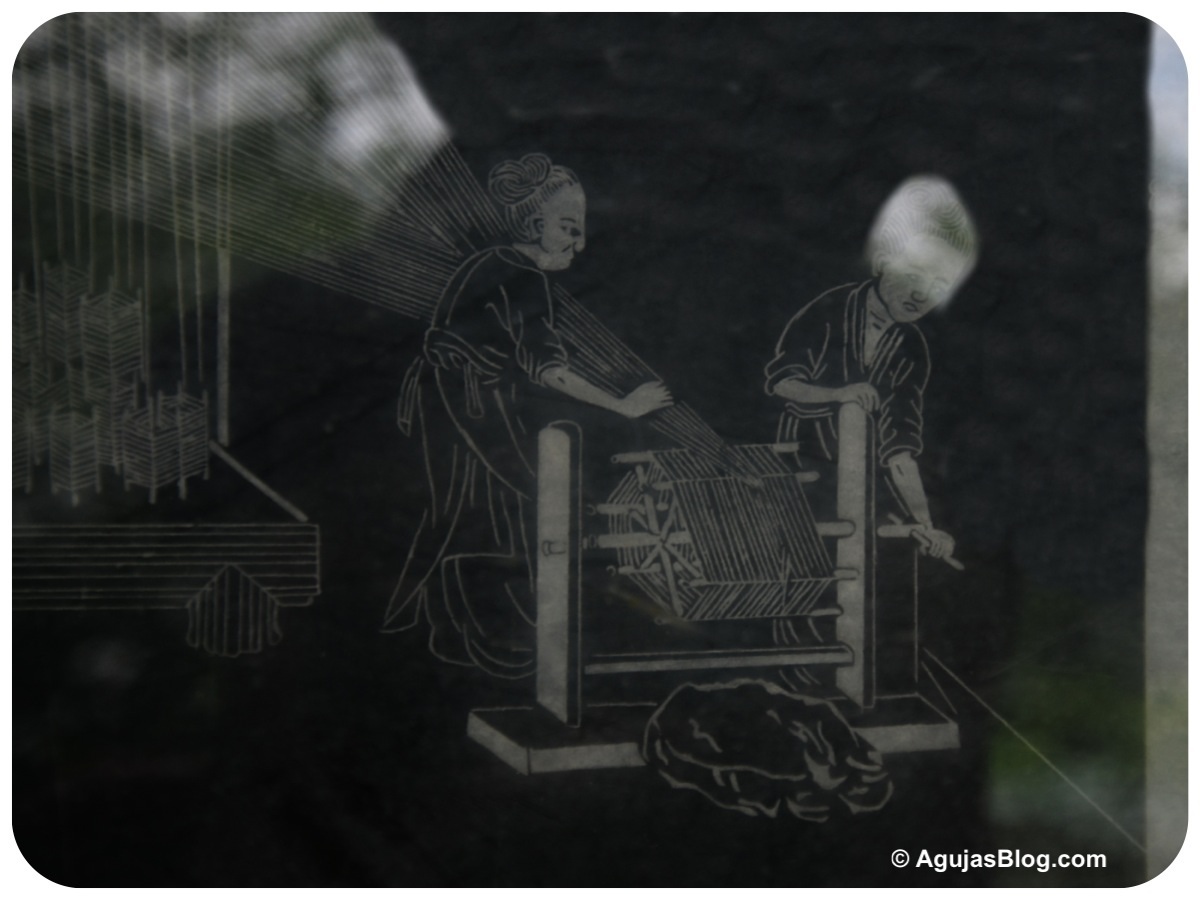
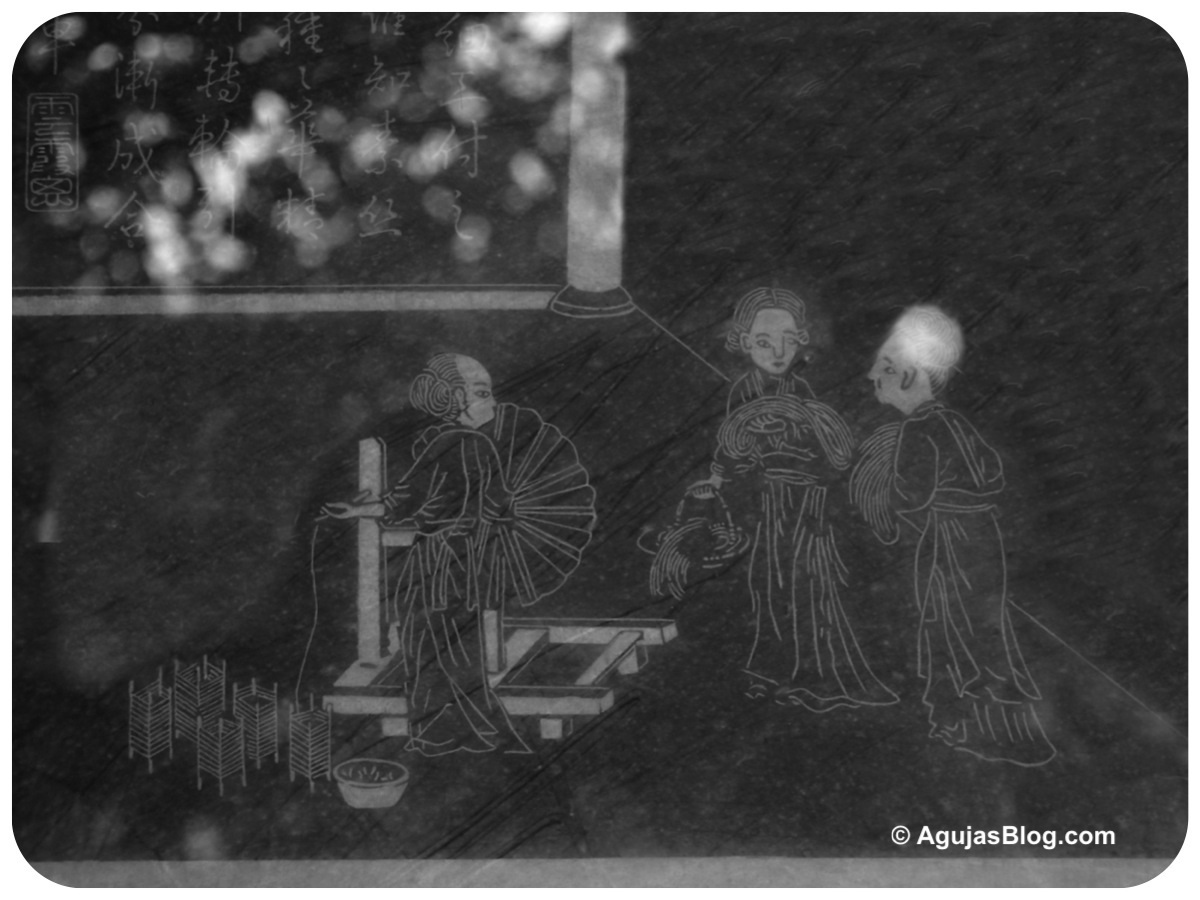
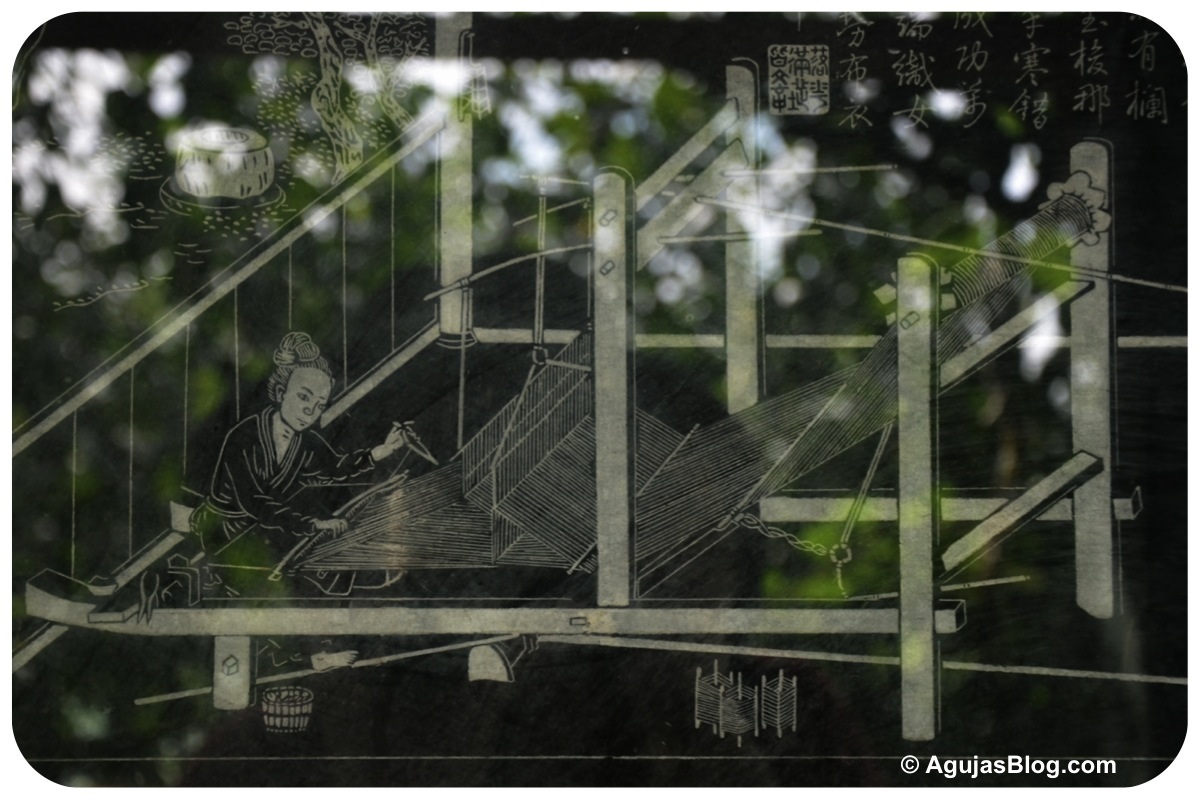
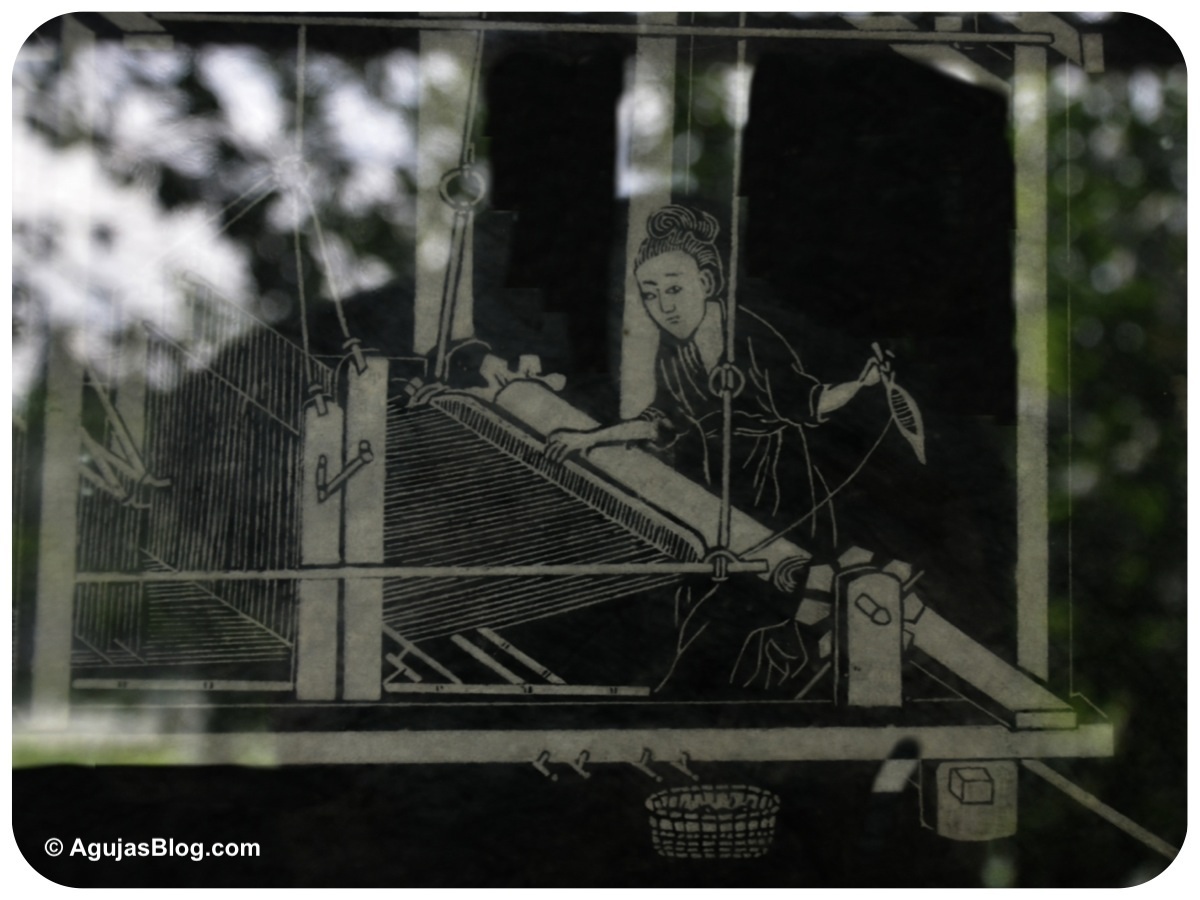
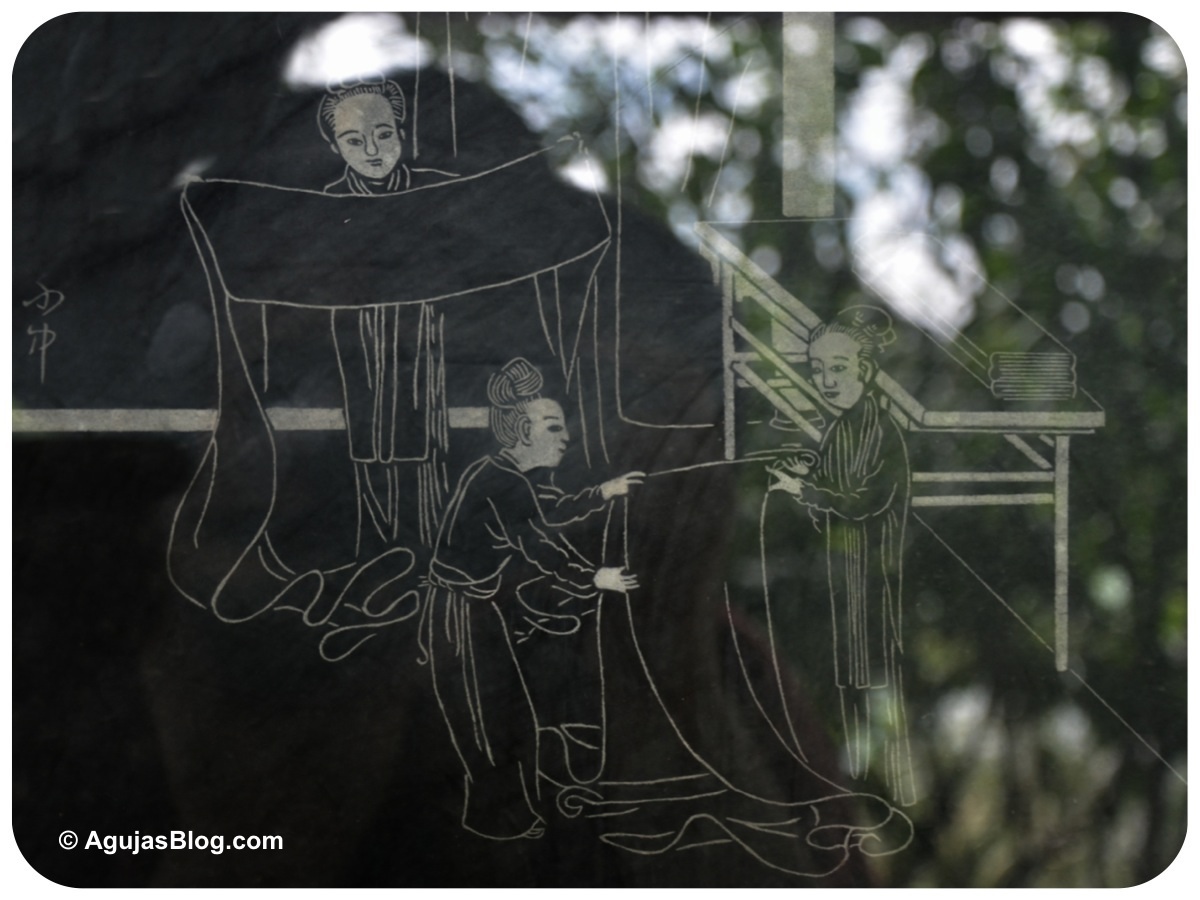
Along the corridor of the Studio of the Jade River (Yuhe Zhai), there was a series of stone carvings. According to the placard, the original scenes were painted on woven silk by the painter Cheng Qi during the Yuan Dynasty (mid-1700s). The scenes portray men farming and women weaving in ancient China. I selected the ones showing women’s work.

The stone carvings were framed and the bright day cast reflections on the glass.

Farming and Weaving 1
Farming and Weaving 2

Farming and Weaving 3

Farming and Weaving 4

Farming and Weaving 5

Farming and Weaving 6

Farming and Weaving 7

Farming and Weaving 8

Farming and Weaving 9

Farming and Weaving 10

It was a beautiful day but there is still no place like home.

Gifts from Southeast Asia

My wonderful, amazing, sweet, gorgeous husband not only took photos of places that would interest me during his trip, he also brought back a few mementos.

Woven Baskets 1
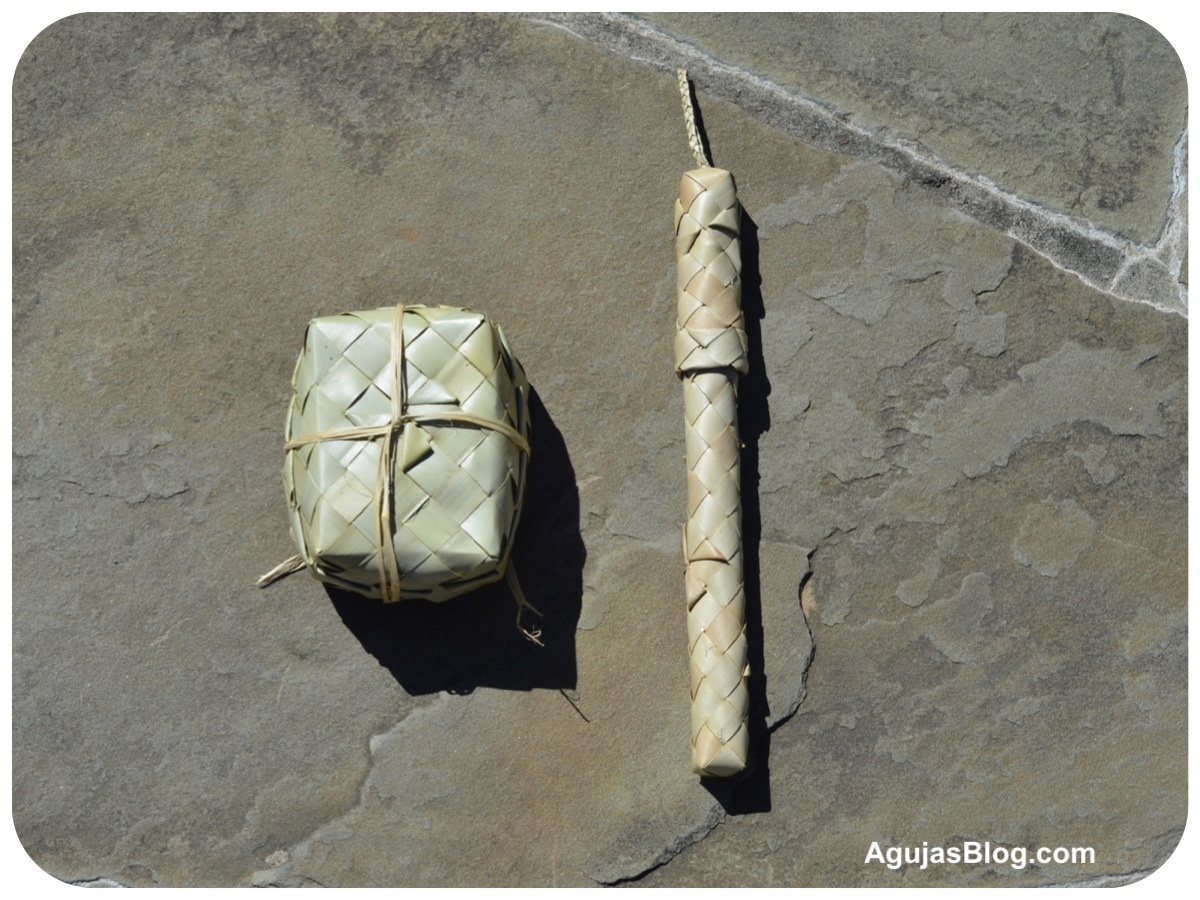
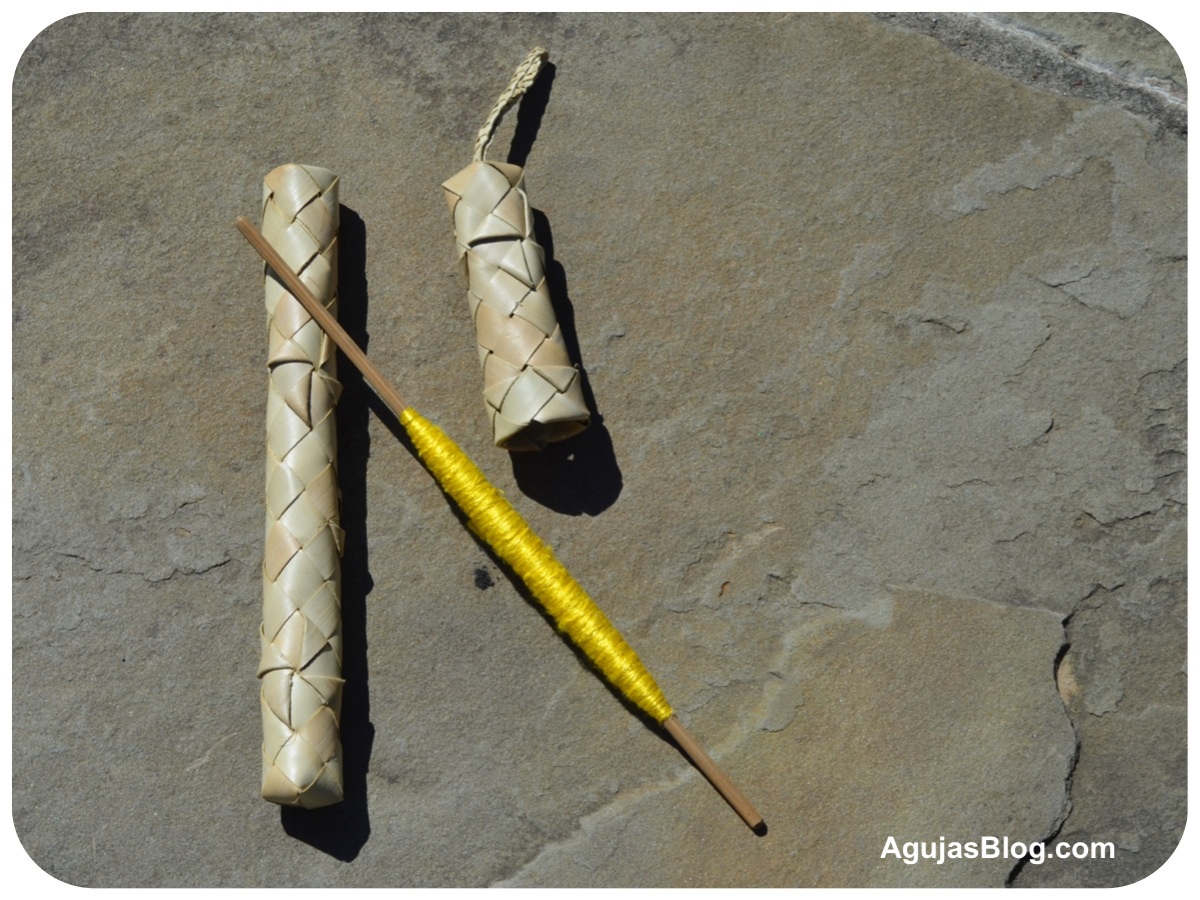
The woven tube contains a sample of raw yellow silk. He picked up this souvenir at the Institute for Khmer Traditional Textiles (IKTT) in Siem Reap, Cambodia.

Raw Silk 2
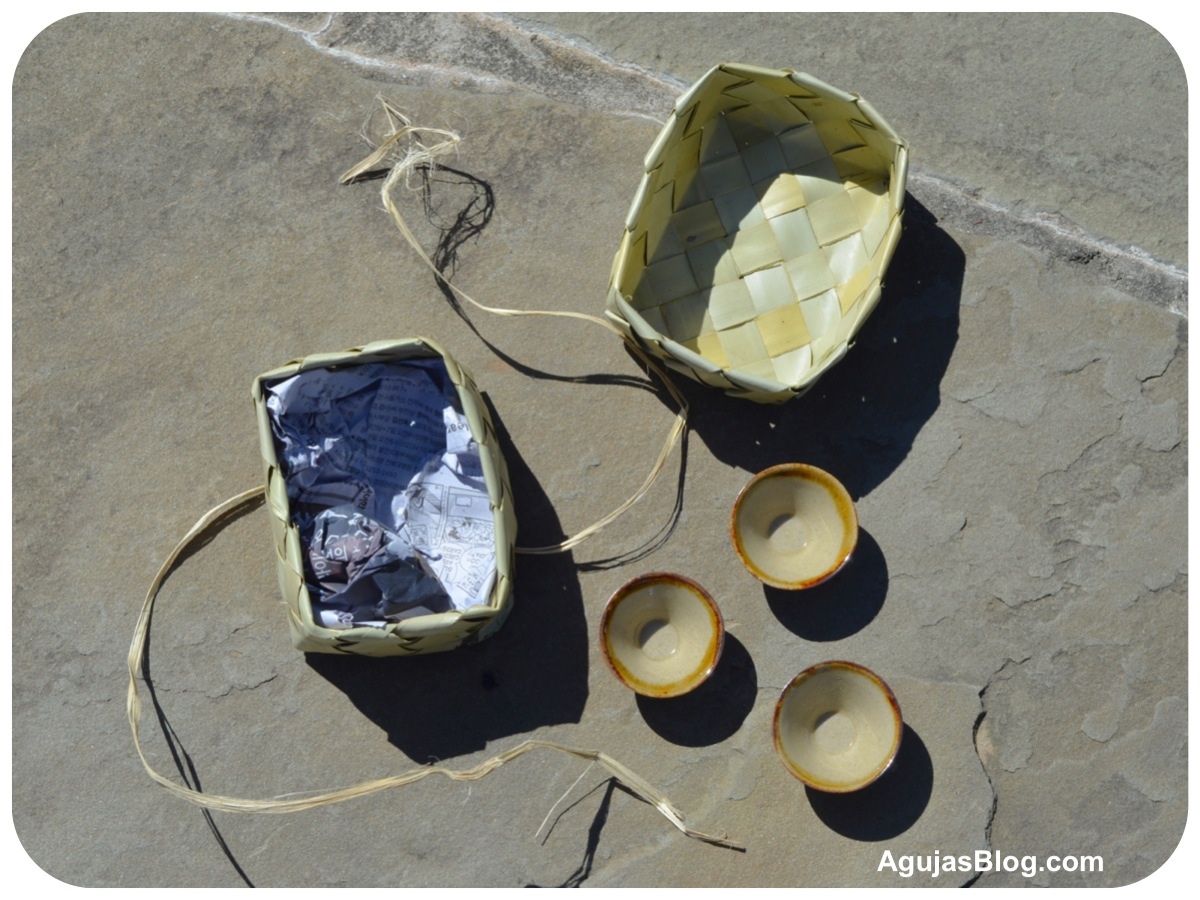
The small woven box contained these small pottery bowls. These came from a ceramics factory in Chiangmai, Thailand.

Small Pottery 3
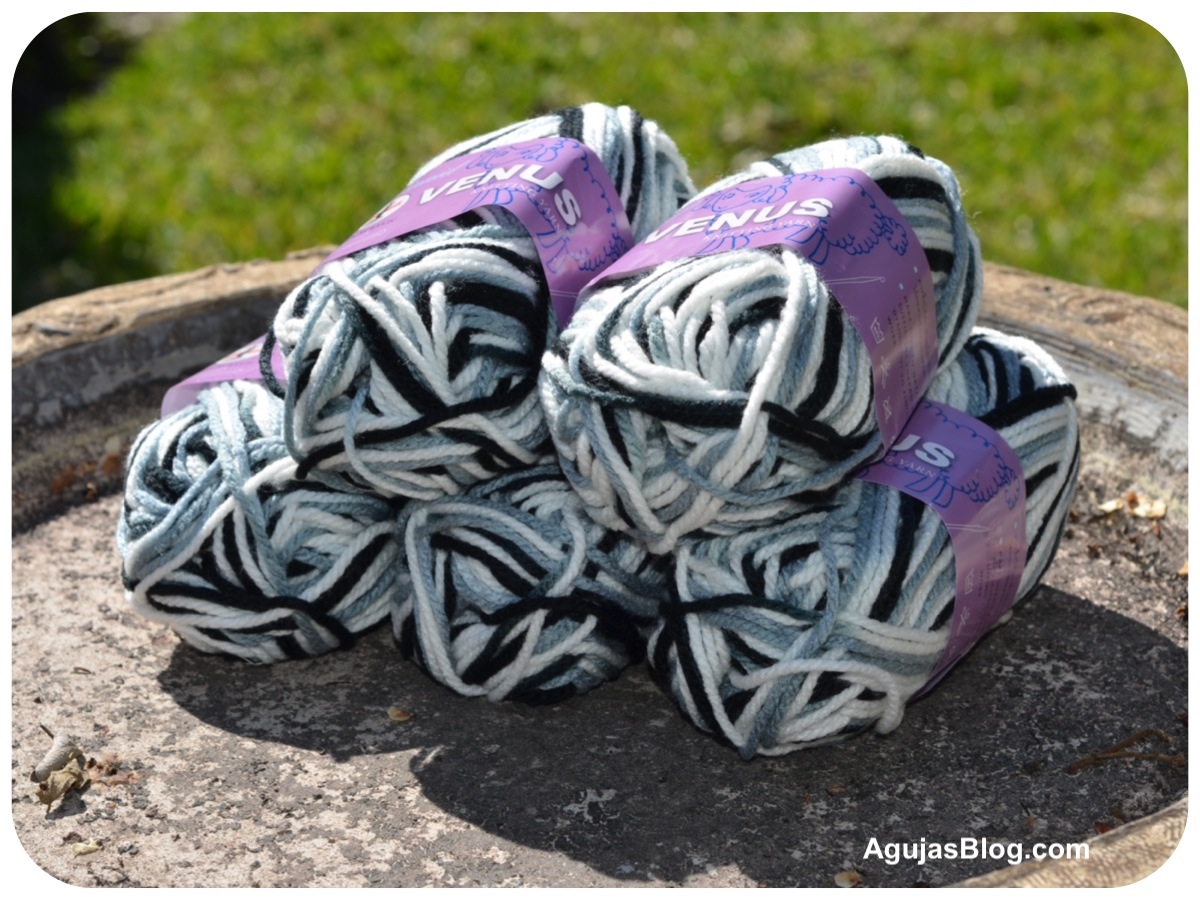
This yarn is made in Thailand. My husband found a yarn shop in the Farong District, the old part of Bangkok. The original Mandarin Oriental Hotel is located in the Farong District. Around this area are countless craftsmen specializing in silk, silver, gems, antiquities and other items.

Yarn Made in Thailand 4
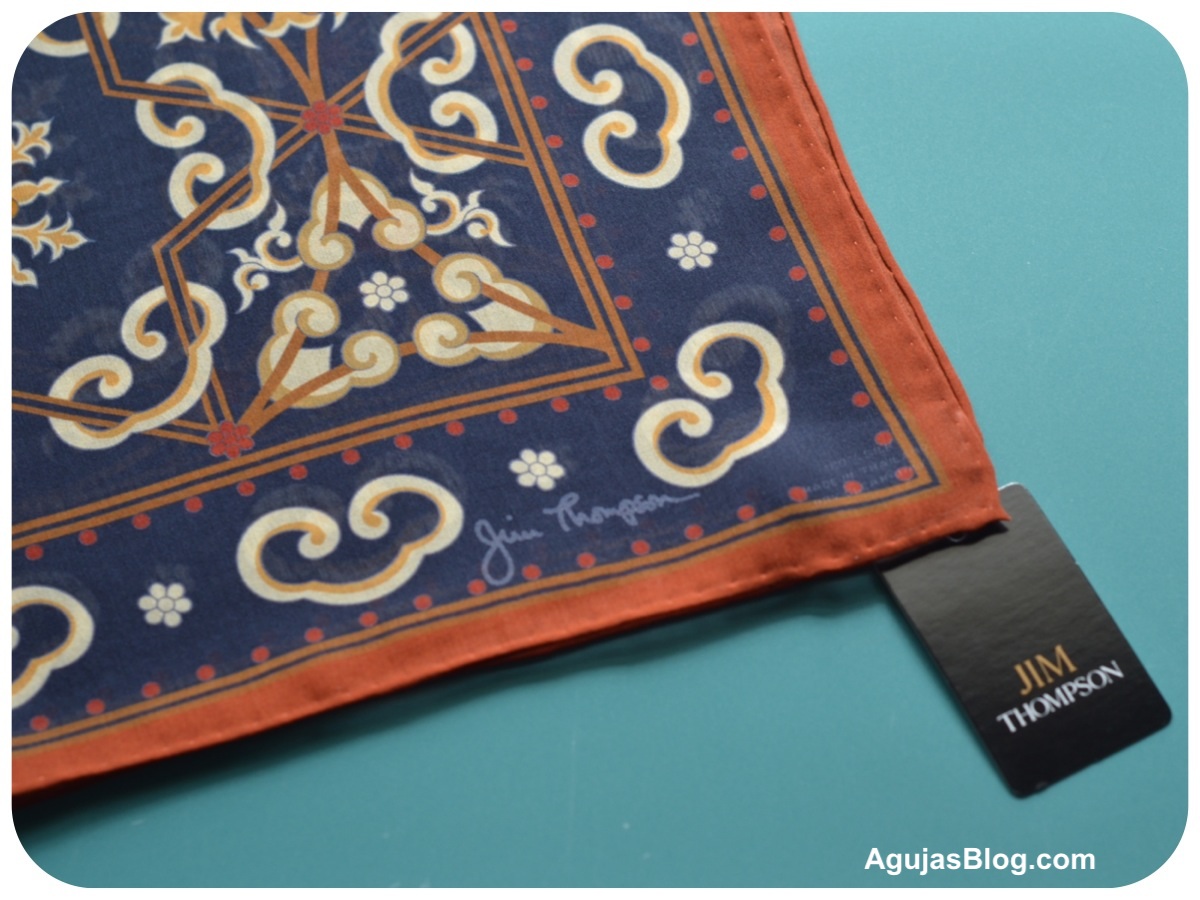
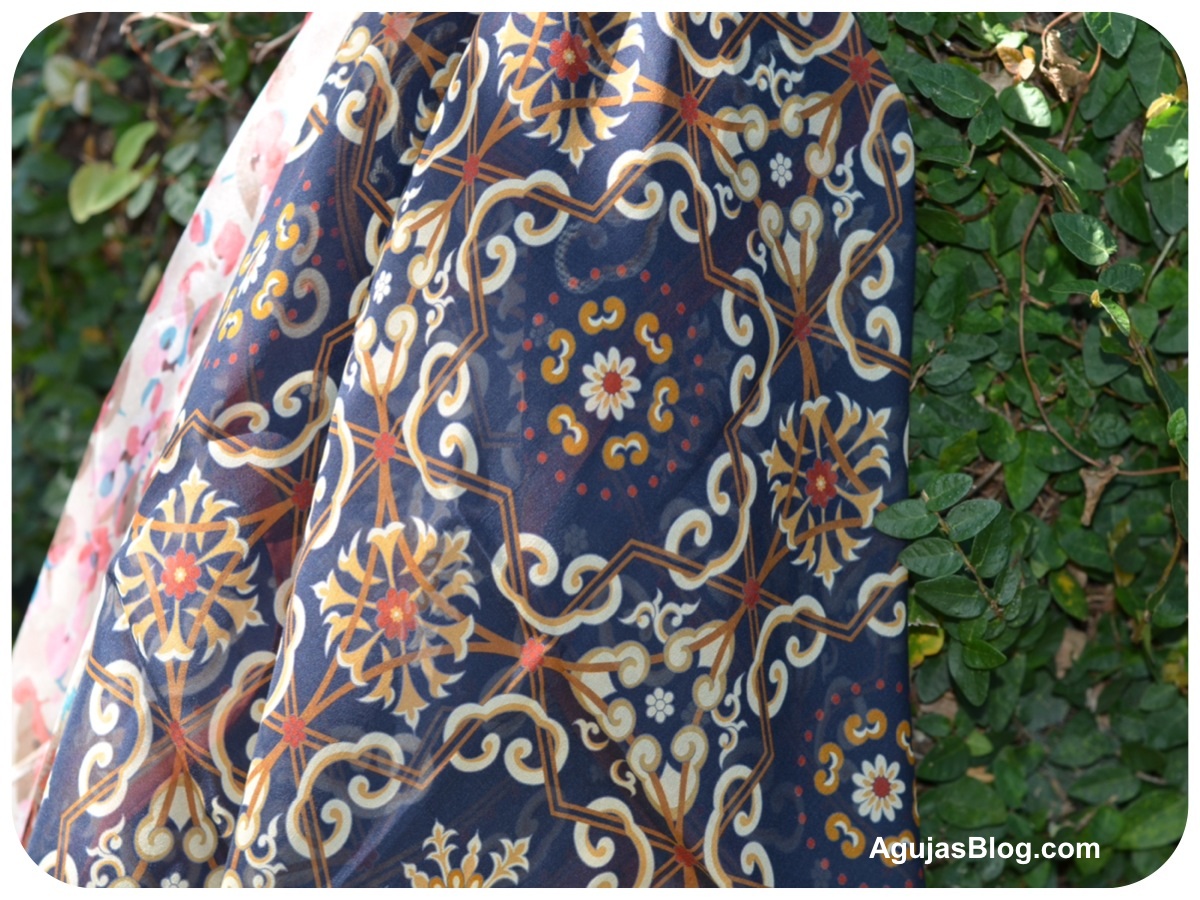
This is a beautiful silk scarf from the museum shop at the Jim Thompson House in Bangkok.

Jim Thompson Silk Scarf 5 Silk Scarf from Bangkok 6
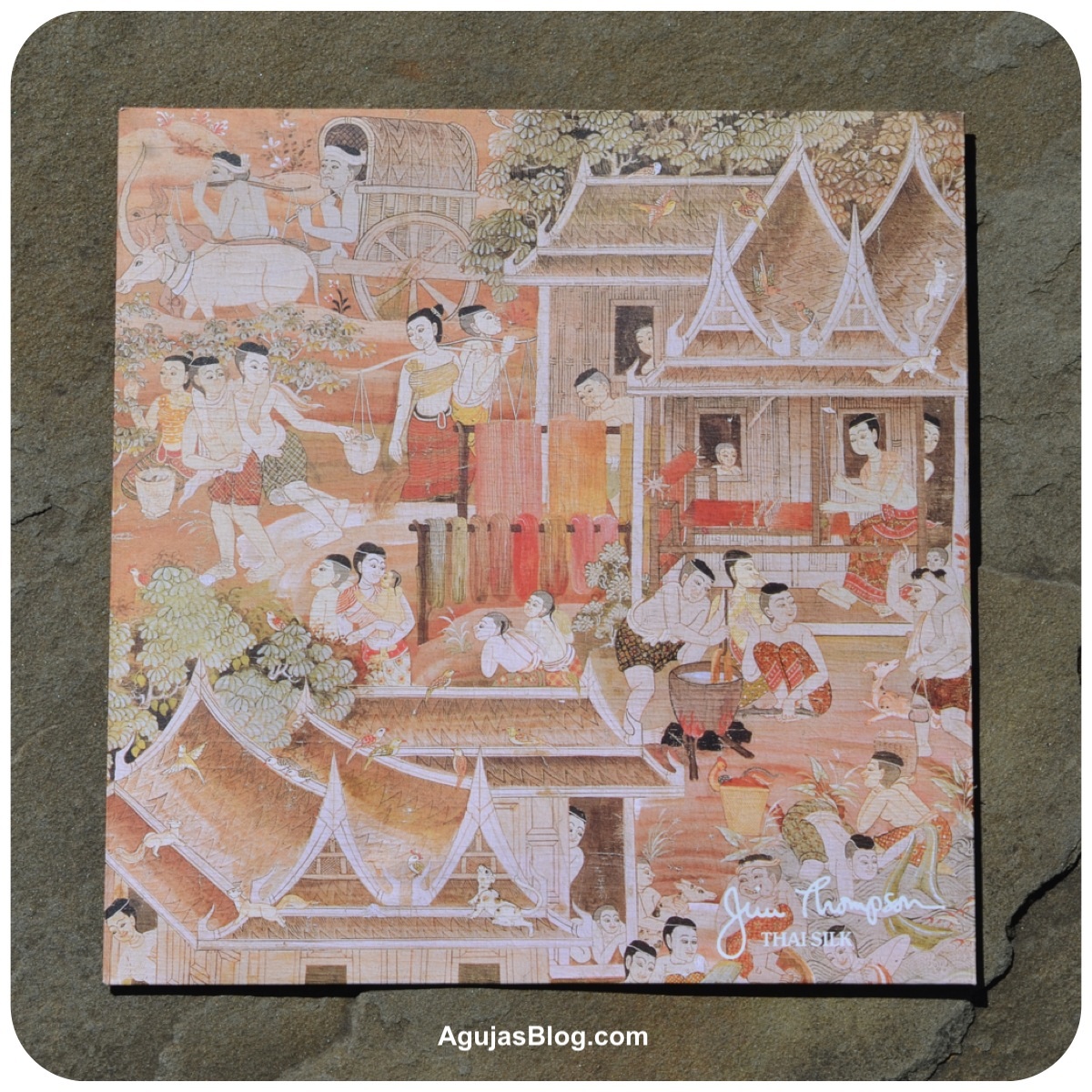
Even the packaging it came in is beautiful. The paper envelope is imprinted with scenes of the silk-making process.

Silk Scarf Packaging 7
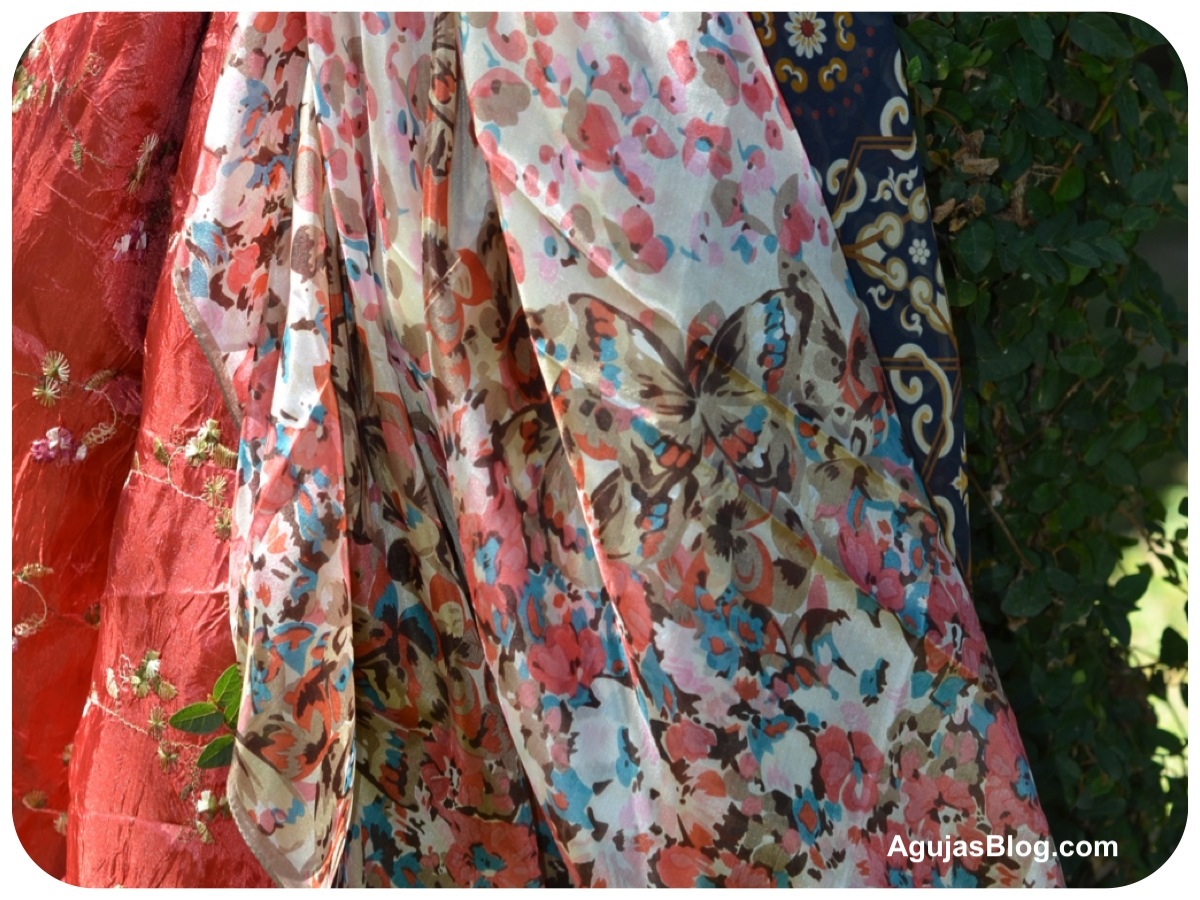
He picked this up during his visit to Chiangmai in northern Thailand. This silk scarf is from Jolie Femme, a Thai silk factory.

Butterfly Silk Scarf 8
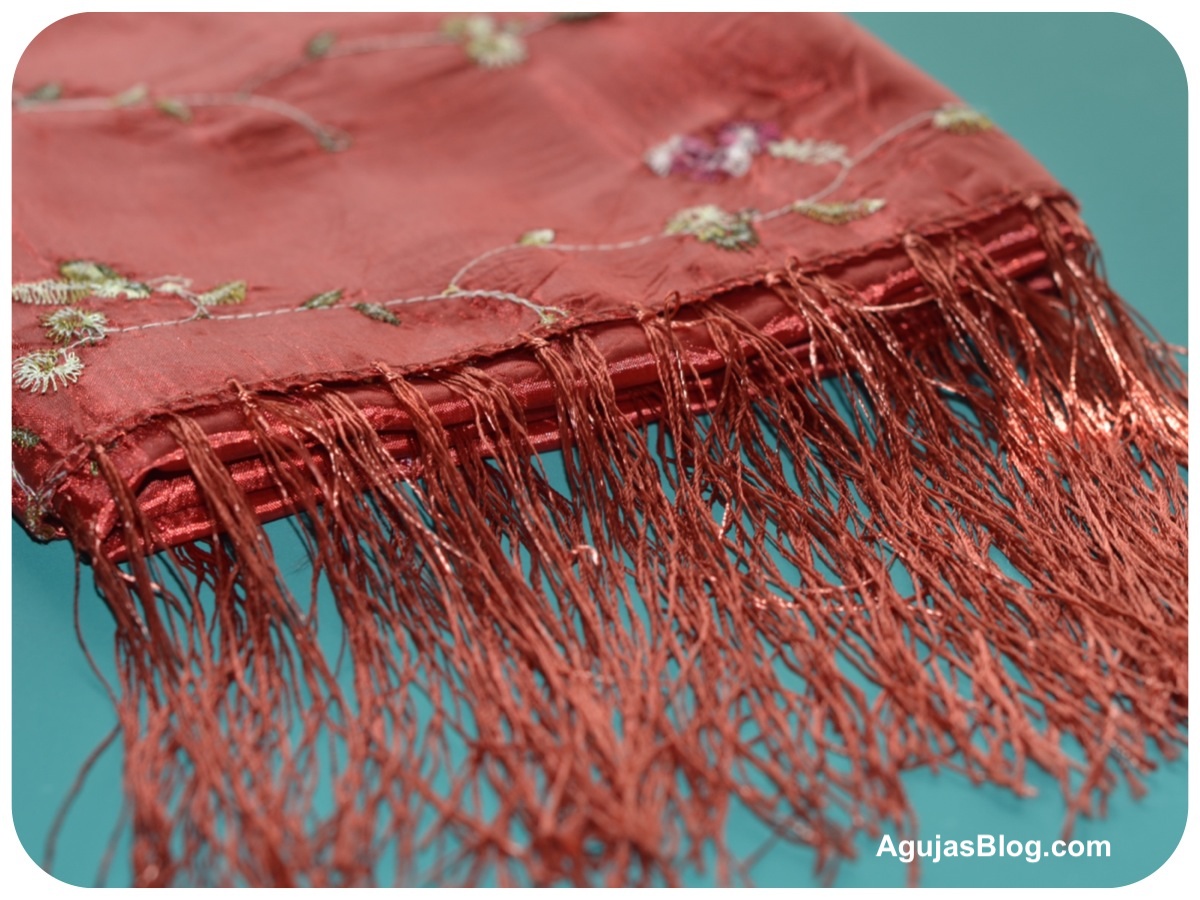
This crumpled silk scarf is from the Old Market in Siem Reap, Cambodia.

Crumpled Silk Scarf 9
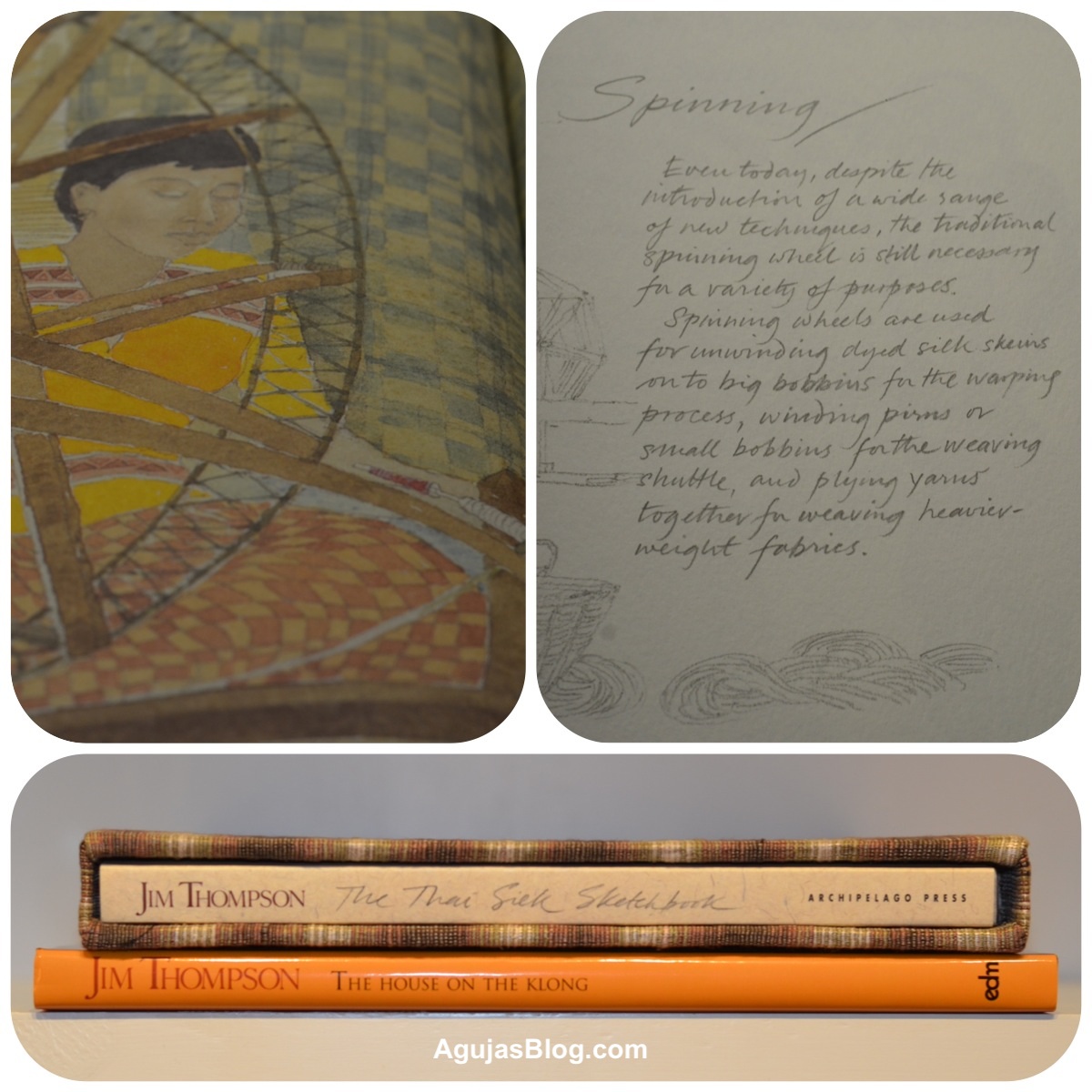
Finally, he brought these two illustrated books that tell the history of the Thai silk industry. The Thai Silk Sketch Book contains beautiful watercolors depicting the reeling, spinning, dyeing and weaving of silk textiles. The House on the Klong is a lovely picture book about the art collected by Jim Thompson over his lifetime and which is now on display at his home turned museum.

Jim Thompson Books 10
I may not have been there but he made sure to give me a sense of the place through photographs, retelling what he saw, and bringing these lovely things to make me smile.

Tie-Dyed Textiles in Cambodia

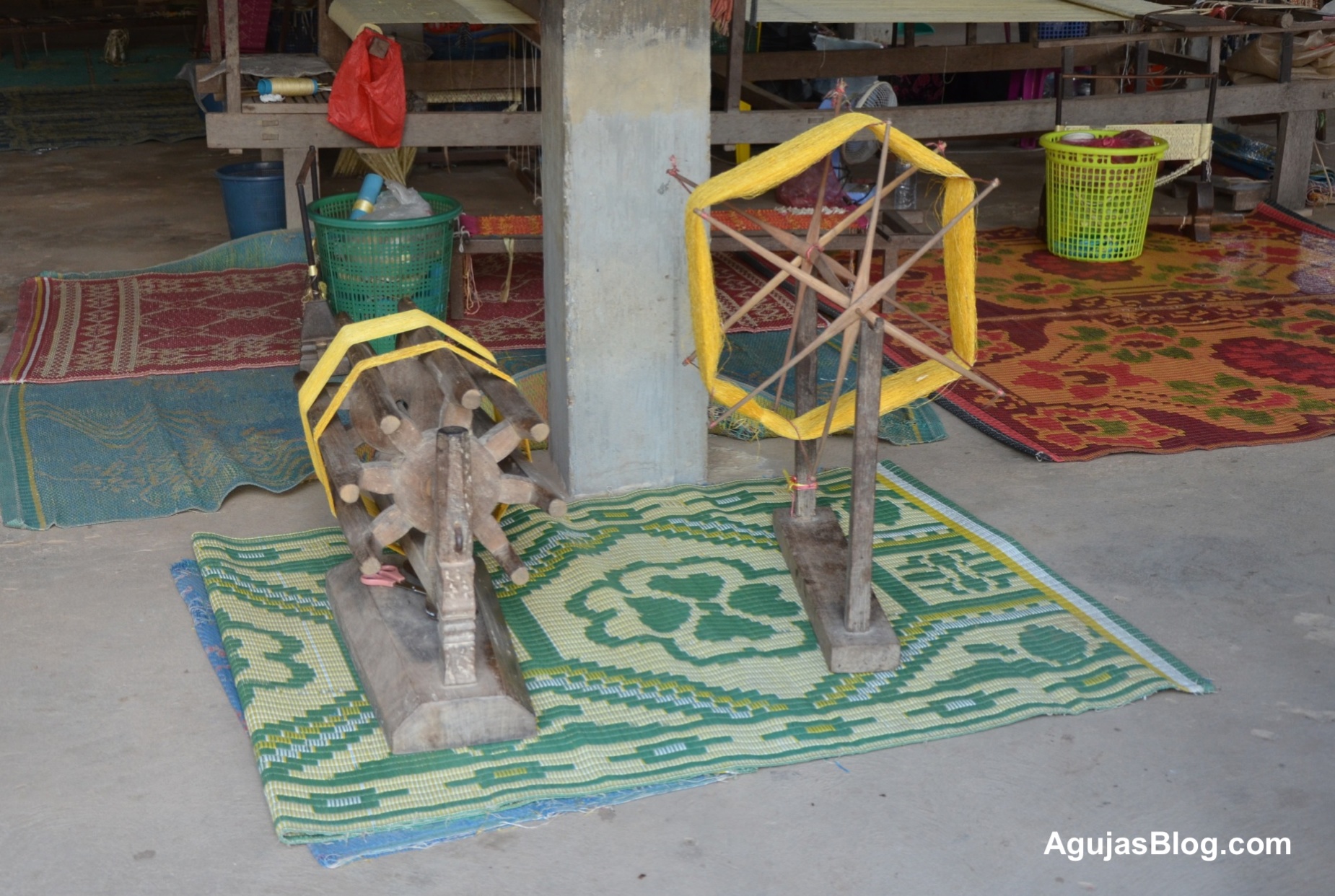
During his trip to Southeast Asia, my husband purposefully visited a couple of textile factories knowing that I would be interested in knowing about local crafts. The first place he toured was the Institute for Khmer Traditional Textiles (IKTT) in Siem Reap Angkor, Kingdom of Cambodia. There, he walked the shop floor and took the following photographs of local women artisans spinning, dyeing and weaving traditional Cambodian textiles.

IKTT 5

IKTT 1

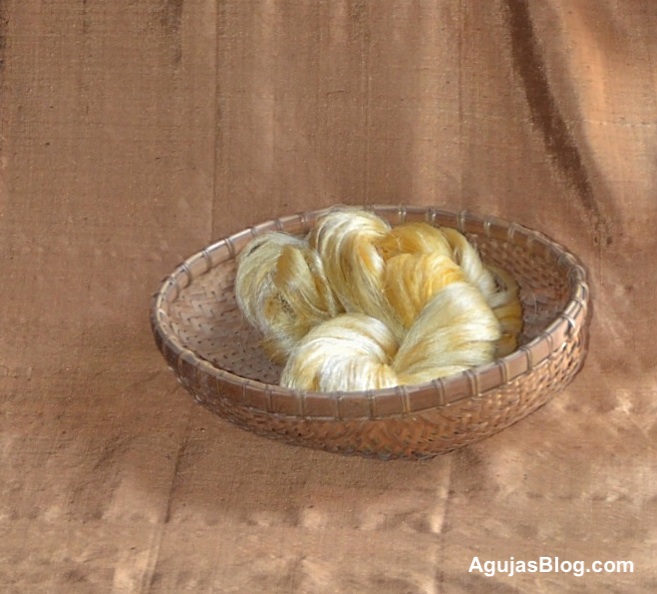
The raw yellow silk is reeled from cocoons of the same golden color. I initially thought the golden silk thread had been dyed but it is actually in its natural form. You can read more about yellow raw silk here.

IKTT 2

IKTT has also embarked on preserving and regenerating a natural forest in Siem Reap. The undertaking includes cultivating plants and trees that can be used as natural dyes.

IKTT aims to restore the art of creating traditional Cambodian textiles and has established a village project called PROJECT OF WISDOM FROM THE FOREST where 140 IKTT staff currently live growing trees to be used in silk-worm raising and the natural dying of fabric. We offer job opportunities to disadvantaged women and are working to preserve the national heritage for younger generation[s].

IKTT 3

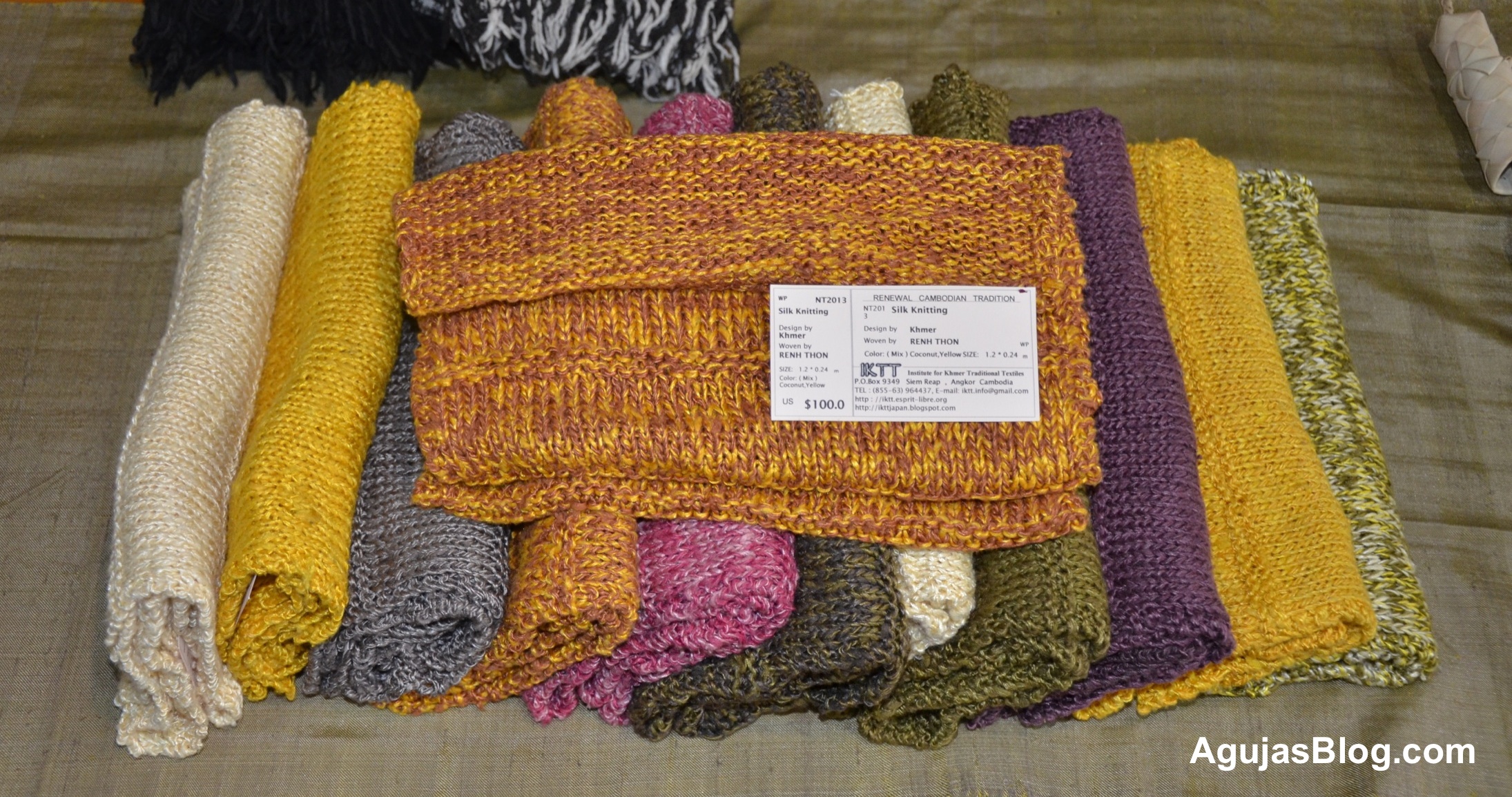
These scarves are hand knit out of 100% pure silk and sold at market.

IKTT 4

His next tour was at the Angkor Silk Farm located approximately an hour outside of Siem Reap. Run by Artisans Angkor, they cultivate Mulberry trees at the farm and continue the traditions of Khmer arts and crafts such as weaving silk textiles, stone and wood carving, and silk painting.

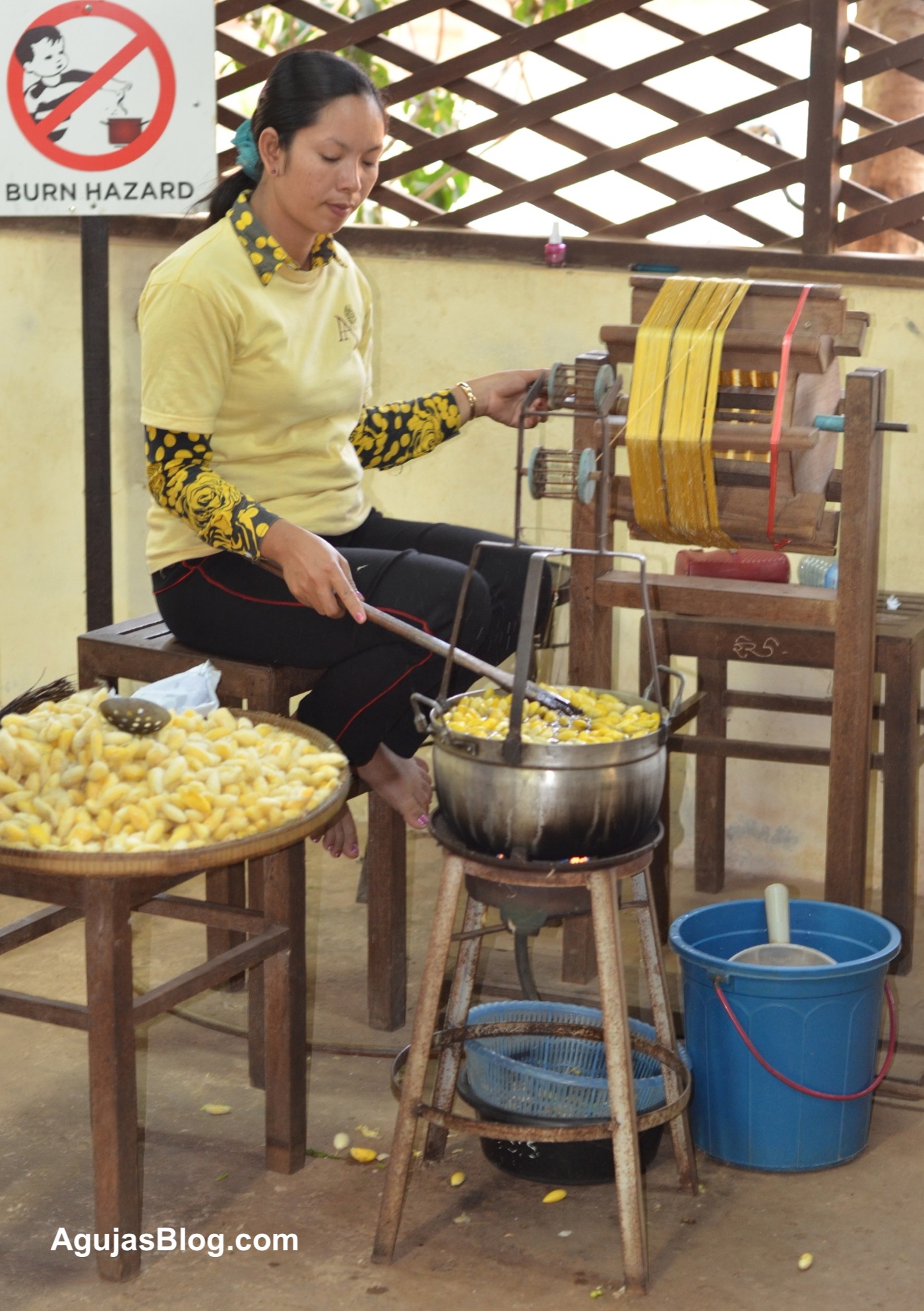
Here, a young woman heats up the cocoons as she reels the silk threads from them. I will spare you the photograph of the platter of silk worms my husband shared with me.

Artisans Angkor 1

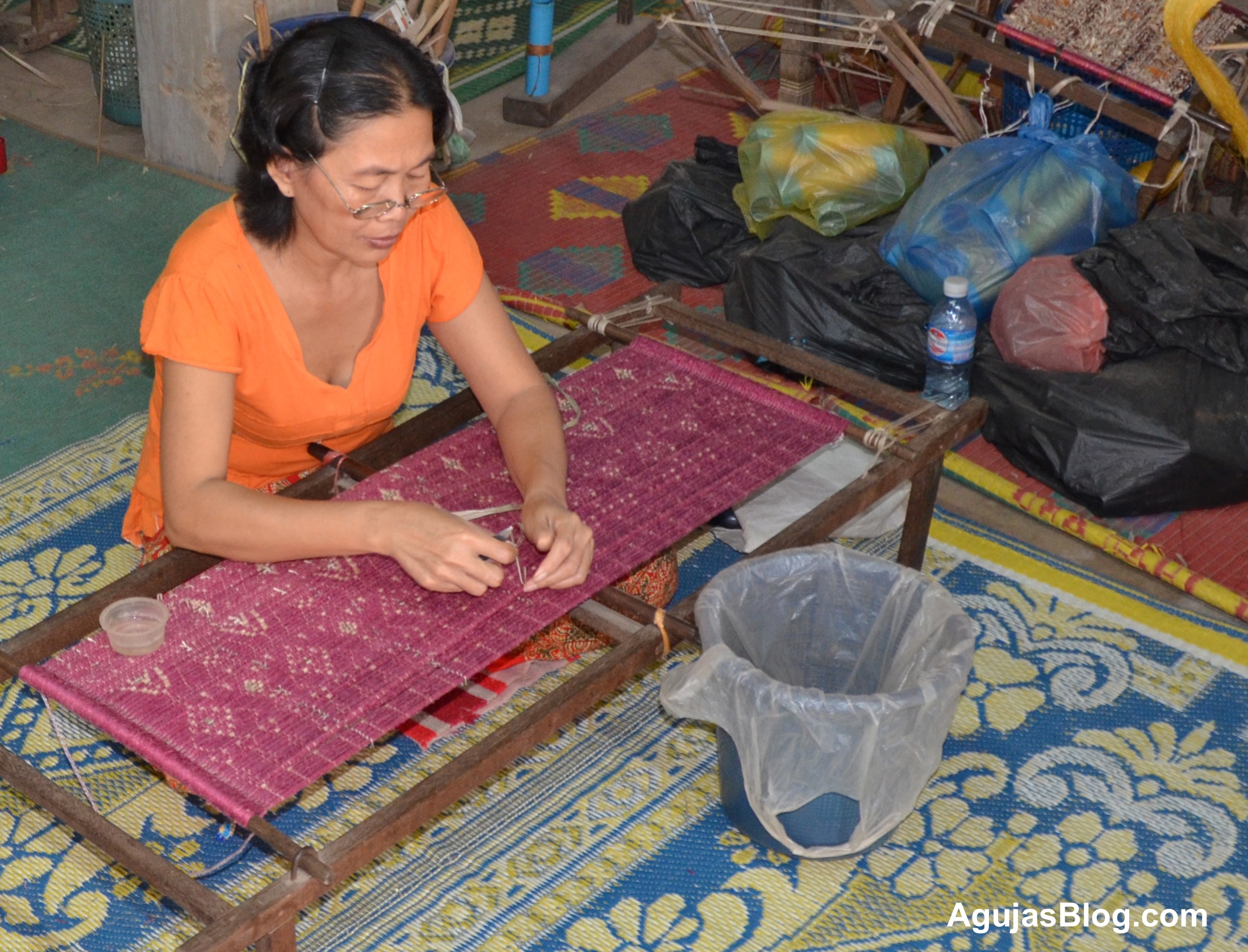
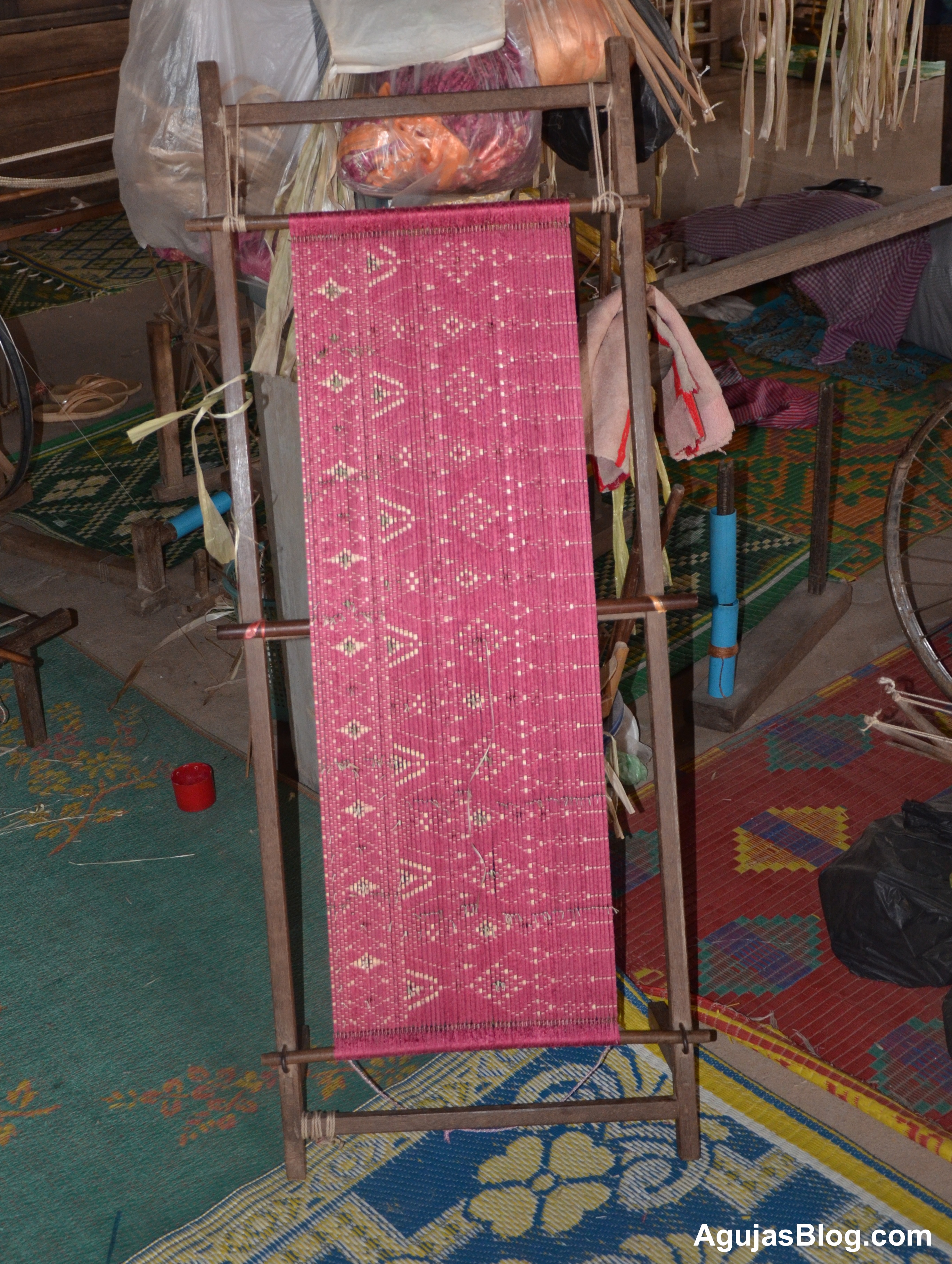
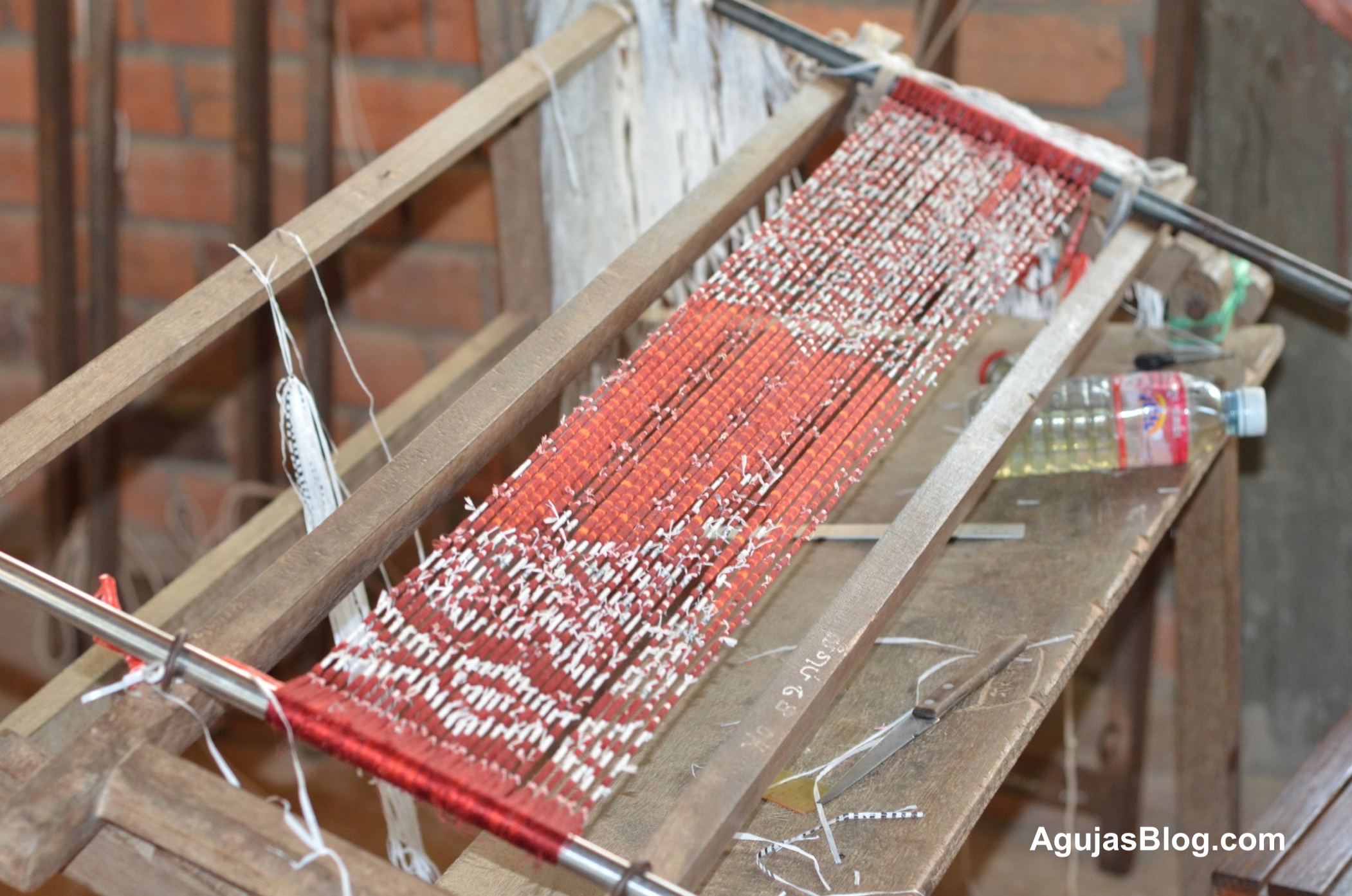
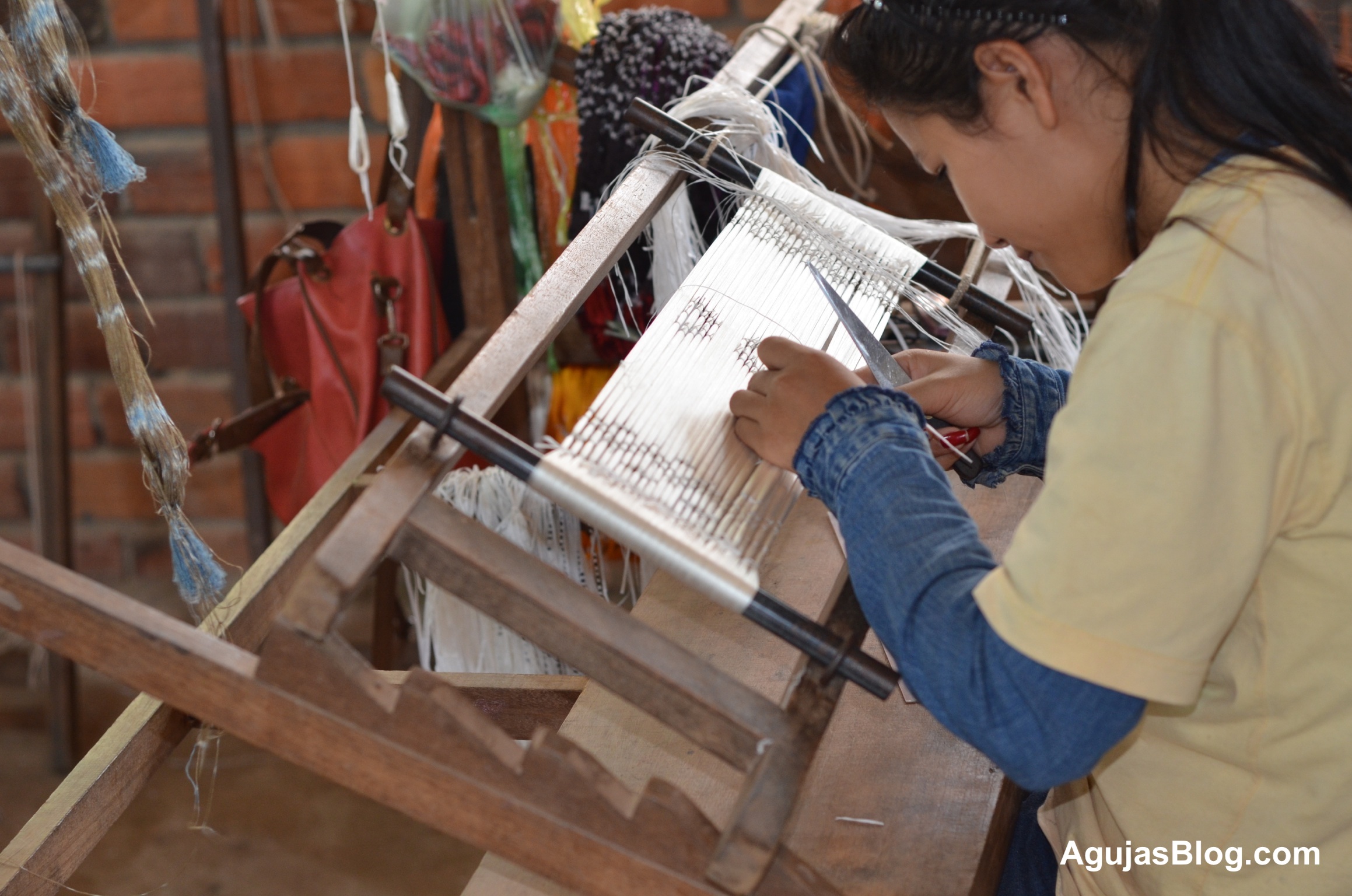
The ikat technique, or tie-dyeing of the silk threads, requires meticulous attention to detail. The term “ikat” means “to bind, tie or wrap around.” This young woman is tying a pattern onto the silk threads. My husband tells me that they would work off a picture or another textile to create the pattern.

Artisans Angkor 3

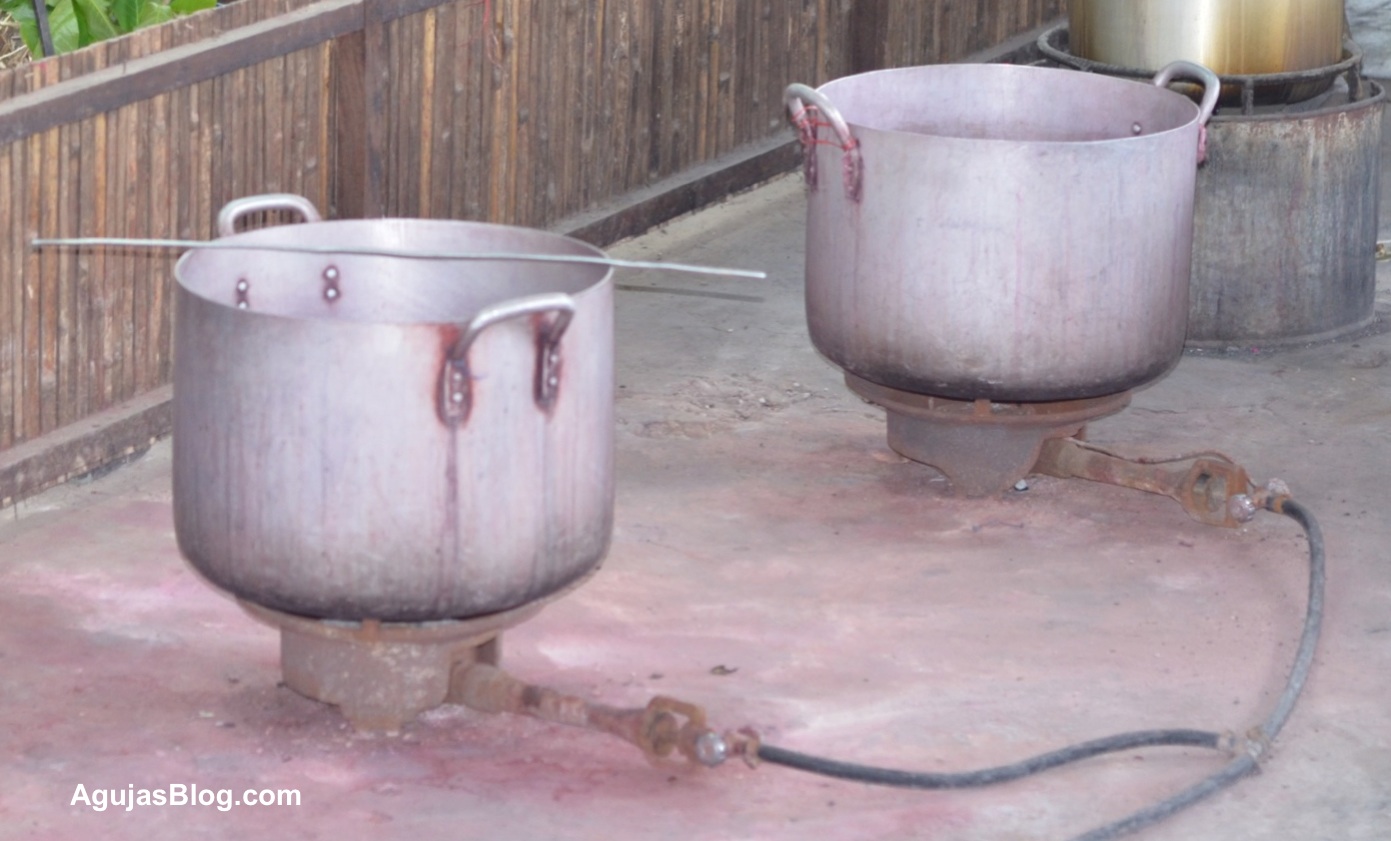
After tying the knots, they would submerge the textile into large dye pots to pick up the desired color. Once dry, they would untie the knots and dye the fabric again. This process would continue until they achieved the pattern and color palette they wanted.

Artisans Angkor 4

Artisans Angkor 2

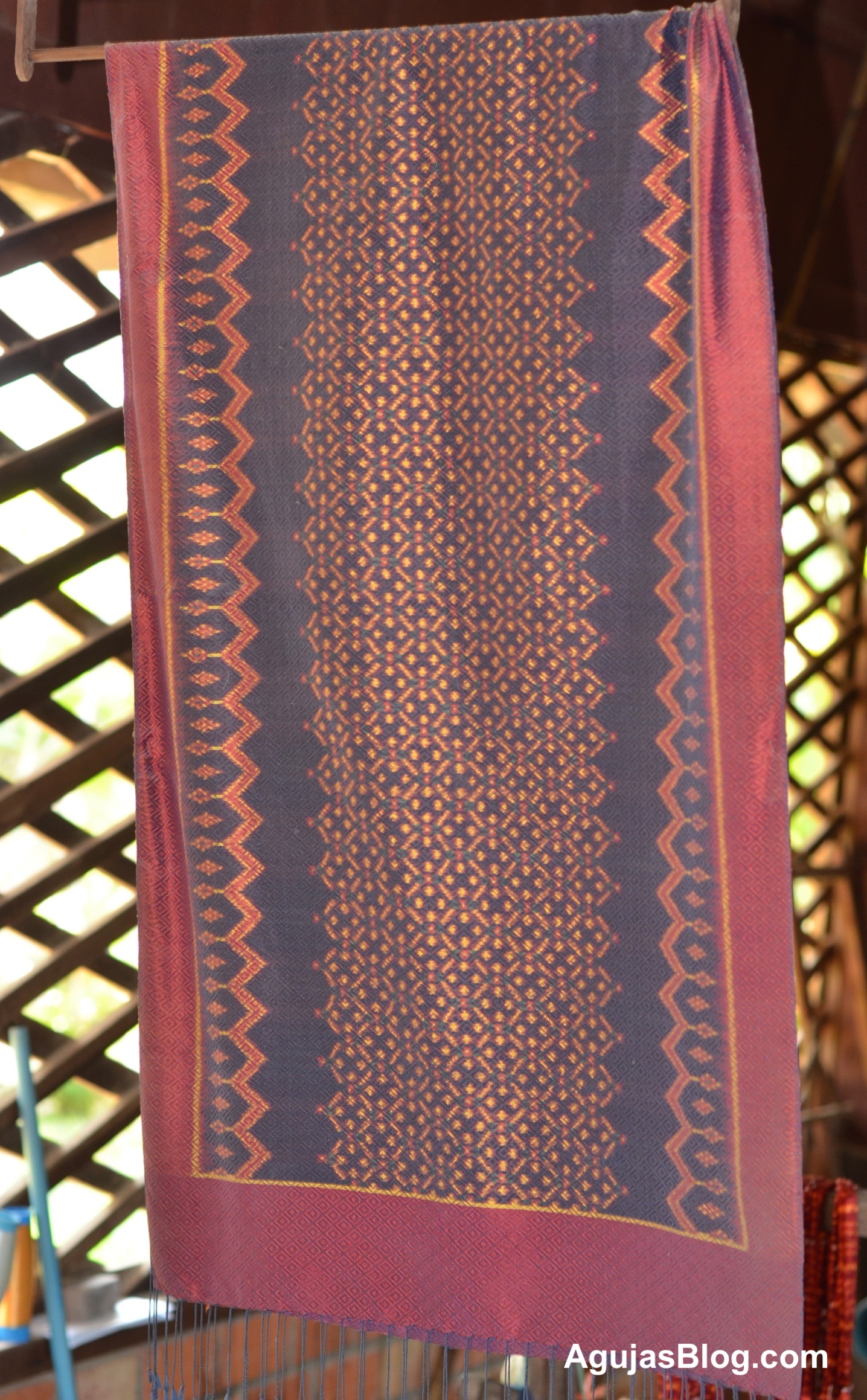
Apparently, some of the textiles are so beautiful that they are displayed as art and even framed in glass to protect them.

Artisans Angkor 5

I would love to spend a month or two in one of these factories and sit next to these women reeling, dyeing and weaving. Perhaps one day …