Huichol Yarn Art

Some time ago, my husband and I made a backpacking trip to Real de Catorce, which is located near Matehuala. Matehuala is significant only in that it marks roughly the half-way point between the U.S.-Mexico border and Mexico City. It was one of those cross-country bus, non-air conditioned van, and back of pick-up truck kind of trips. (Yes, I know, first class all the way).

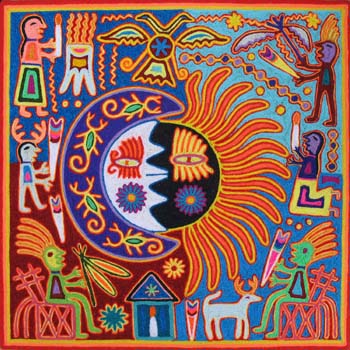
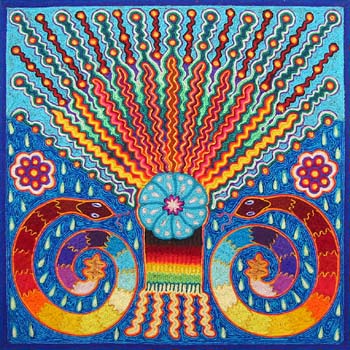
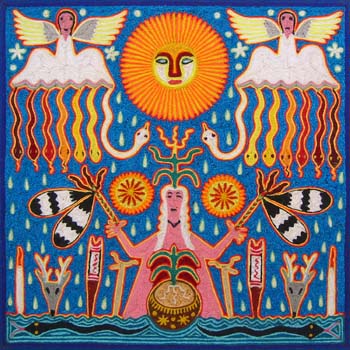
Real de Catorce is an old silver mining town located about 2,750 meters (9,000 feet) above sea level in the Sierra de Catorce, close to the Tropic of Cancer. The area is home to the Huichol Indians. They can be seen in traditional dress throughout the town and selling their arts and crafts in the markets. One of their crafts involves creating exquisitely detailed and colorful paintings using yarn. The yarn paintings reflect their religious beliefs and aspects of nature that comprise their cosmology.

When I visited, I did not take pictures of the Huichol or of their art so I found examples of their art online. The following four yarn paintings came from here. In them, you will find the visions of the Shaman, nature and deities, snakes, eagles, deer, an eclipse, the peyote, and corn, among others.
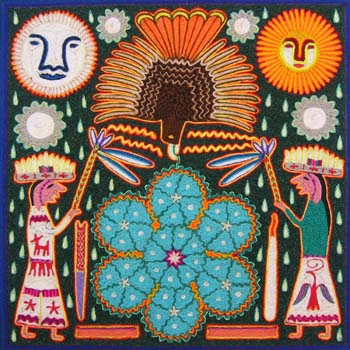
The central figures in this next yarn painting are the eagle looming overhead flanked by the sun and the moon while the bottom half features the peyote. The peyote is  a kind of cactus with hallucinogenic properties. The peyote is a sacred plant to the Huichol and the cultivation and gathering of the plant is controlled to prevent extinction and misuse.
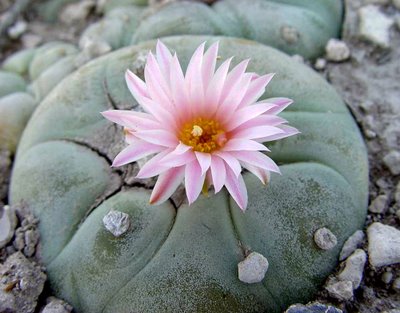
This is what peyote looks like in the wild.
{source}

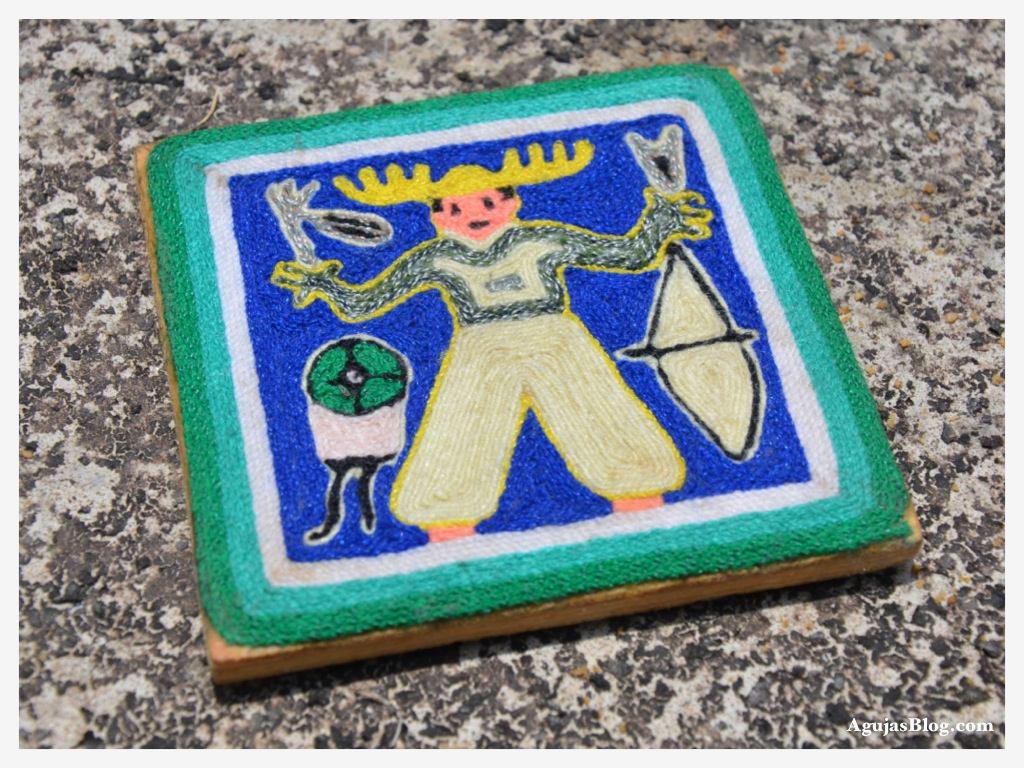
I did bring home this small 4×4 inch yarn painting (small items I could stash in the backpack). The painting is of “Hombre Chaman de Mucho Conocimiento” or “Shaman Man of Much Knowledge” and is signed by the artist, Alejandro López Torres. In it you can appreciate the winding of the yarn on the wood to create the image.
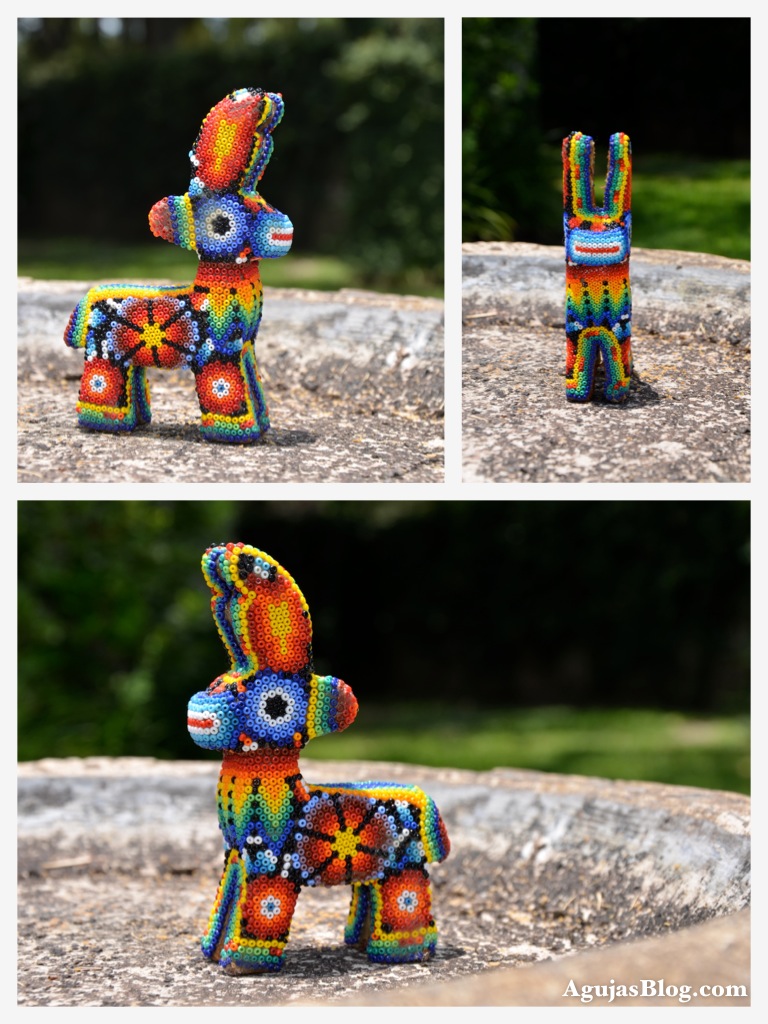
Another Huichol craft uses extremely tiny beads to create jewelry and decorate animals carved from wood. The beaded carvings are usually of animals revered by the Huichol, like this tiny deer (stands 4 1/2 inches tall).
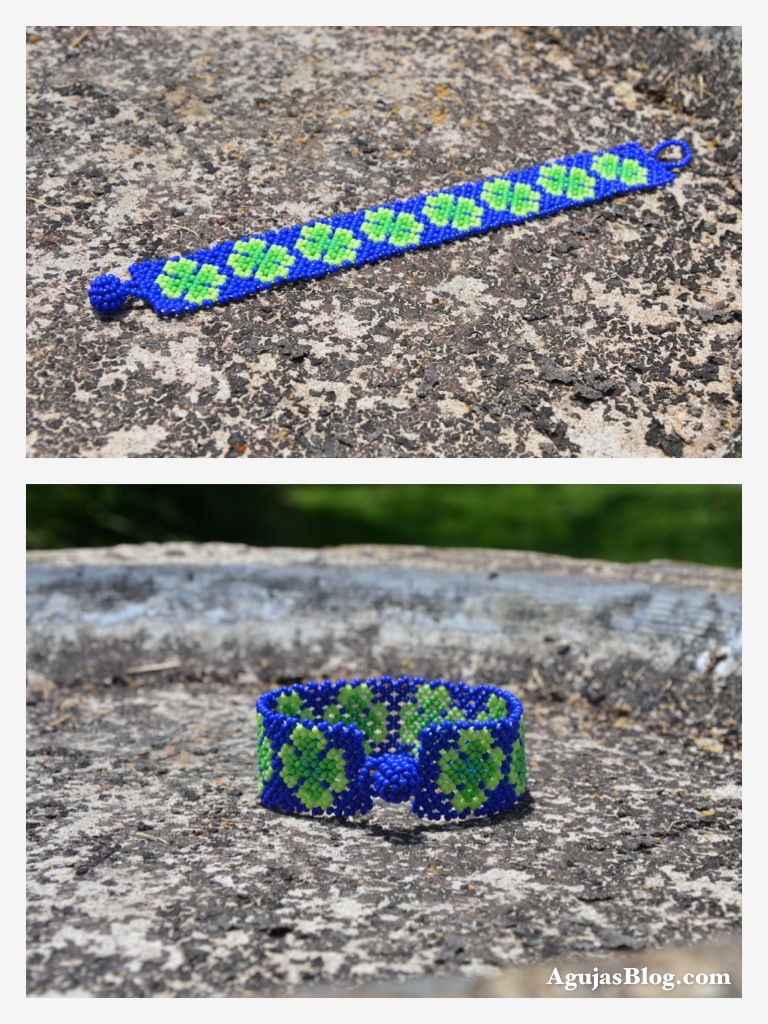
Here is a beaded bracelet I brought home. The main motif is the peyote.
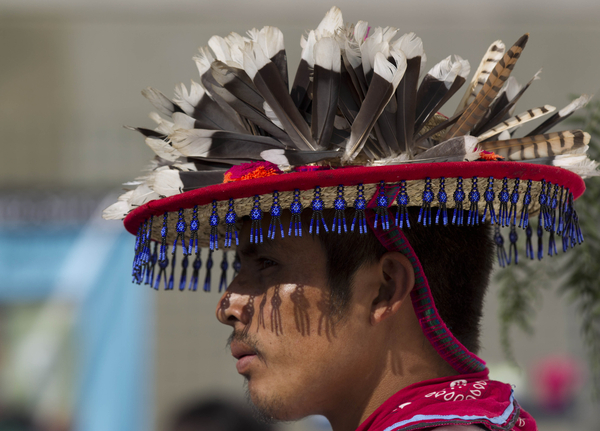
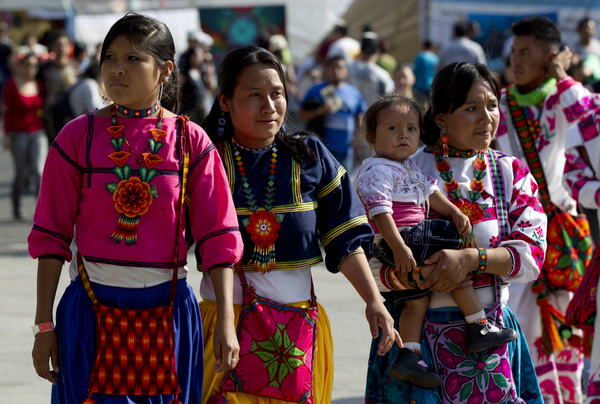
In the process of writing this post, I learned that a few days ago there was a huge gathering of Huichol Indians in Mexico City for Wirikuta Fest 2012. Wirikuta is another name for the Huichol. The music festival featured famous singers and musicians including Café Tacvba and Julieta Venegas, two of our favorite artists. The festival was held in support of the Huichol Indians who are fighting the encroachment of mining on their lands. The following pictures of Huichol in traditional dress were taken at the festival and can be found here (slides 18 & 19).
Stay tuned for a post about Real de Catorce.
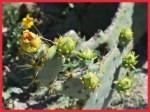
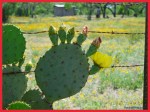
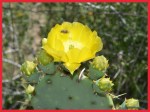
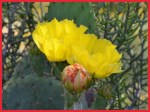
Roadside Blooms

There are long stretches of road in Texas.

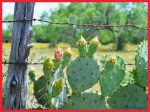
You see the occasional armadillo (dead or alive) by the highway. Even tumbleweed has been known to roll across as if being swept aside by the dusty wind. And in the driest parts of the state, you can find an abundance of the prickly pear cactus, our state plant.

The plant is a source of food. It produces a red fruit – the tuna – about the size of a fig. The green pads of the plant are stripped of their thorns, cleaned, peeled and cooked with onions, peppers and tomatoes – nopalitos!

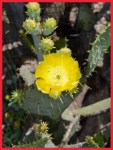
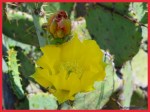
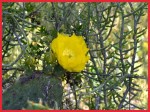
And not to be outdone, the resilient cactus casually displays her bright blooms to the hot sun. On a recent drive home to see family, we pulled over to admire these roadside beauties.

So began our visit to Fes

Upon arriving at the train station in Fes, we followed our host’s instructions and sought out a cab. Our host had told us how much the cab ride would cost so when the first cab driver quoted a price that was five times more, we told him no and moved on. He relented, agreed to our price, and drove us.

This should have been our first sign.

Once we arrived at the entrance to the medina, we waited for our guide to the Riad. To this day, we’re not exactly sure what happened. My husband handed over the fare but the driver was preoccupied having a heated conversation with a man who was standing on the street. As we’re making our way out of the cab, the man reaches through the window and punches our cab driver. Just then, our escort arrives and we hastily get our bags and follow him through the maze of the medina.

A few minutes later, a man runs up behind us yelling in Arabic. Our escort tells us that he is saying that we did not pay the cab fare. We assure him we did and the man – who was not even our cab driver – finally walks away hands in the air, muttering. So began our visit to Fes.

The Streets of Fes

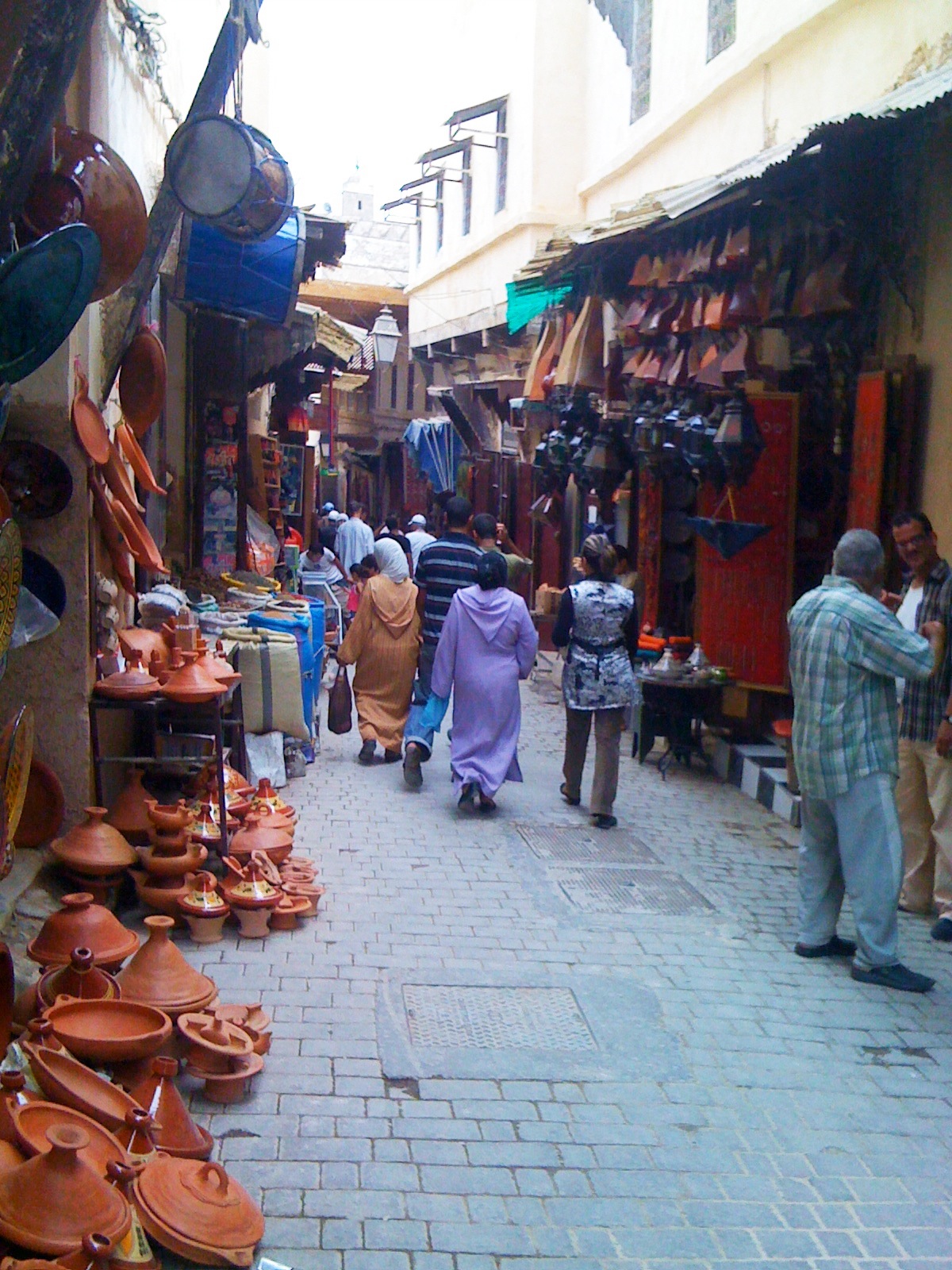
One of 9,000 streets in the 1200 year old city.

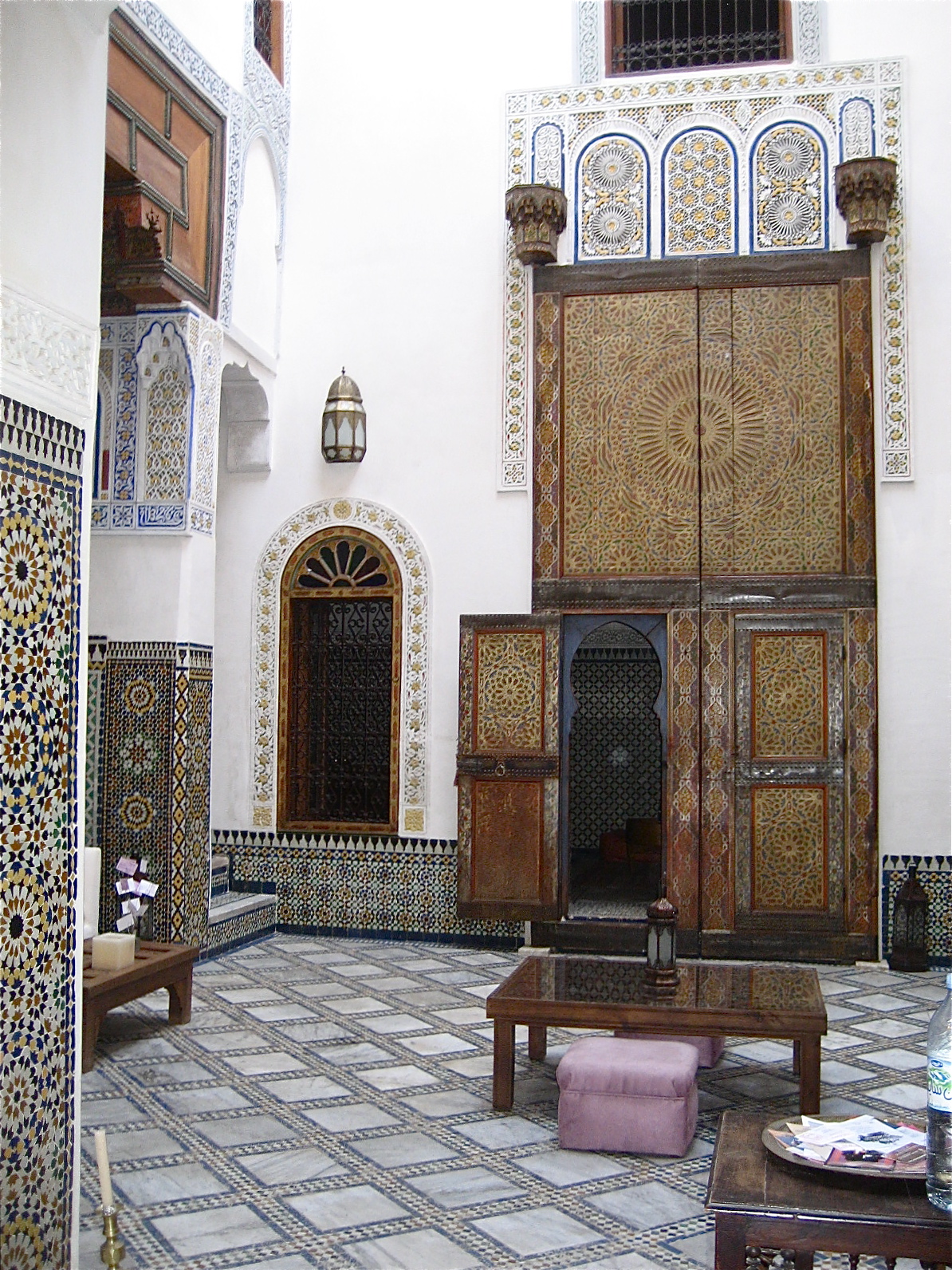
Dar Attajali

Dar Attajali was beautifully renovated but unbearably hot. So hot, my husband could not get any sleep. We were in a large suite of rooms which had several sitting areas, a small kitchenette and a large bathroom. Unfortunately, the room had low ceilings with large wooden beams that dropped even lower. Every now and then as he was pacing at night from the heat, I would hear a bump followed by a slew of words muttered in Spanish. We left Fes ahead of schedule.

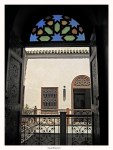
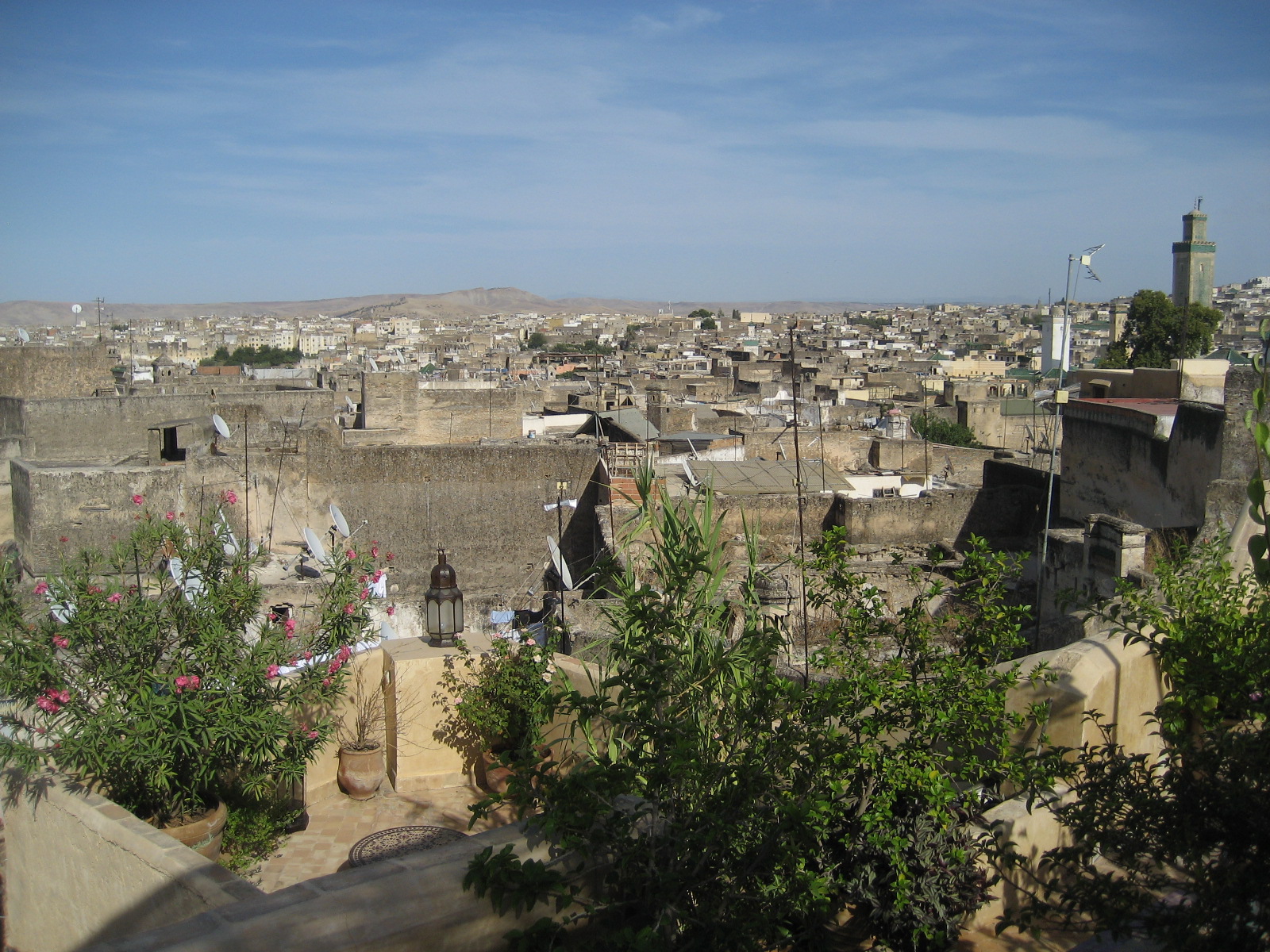
View from the Terrace

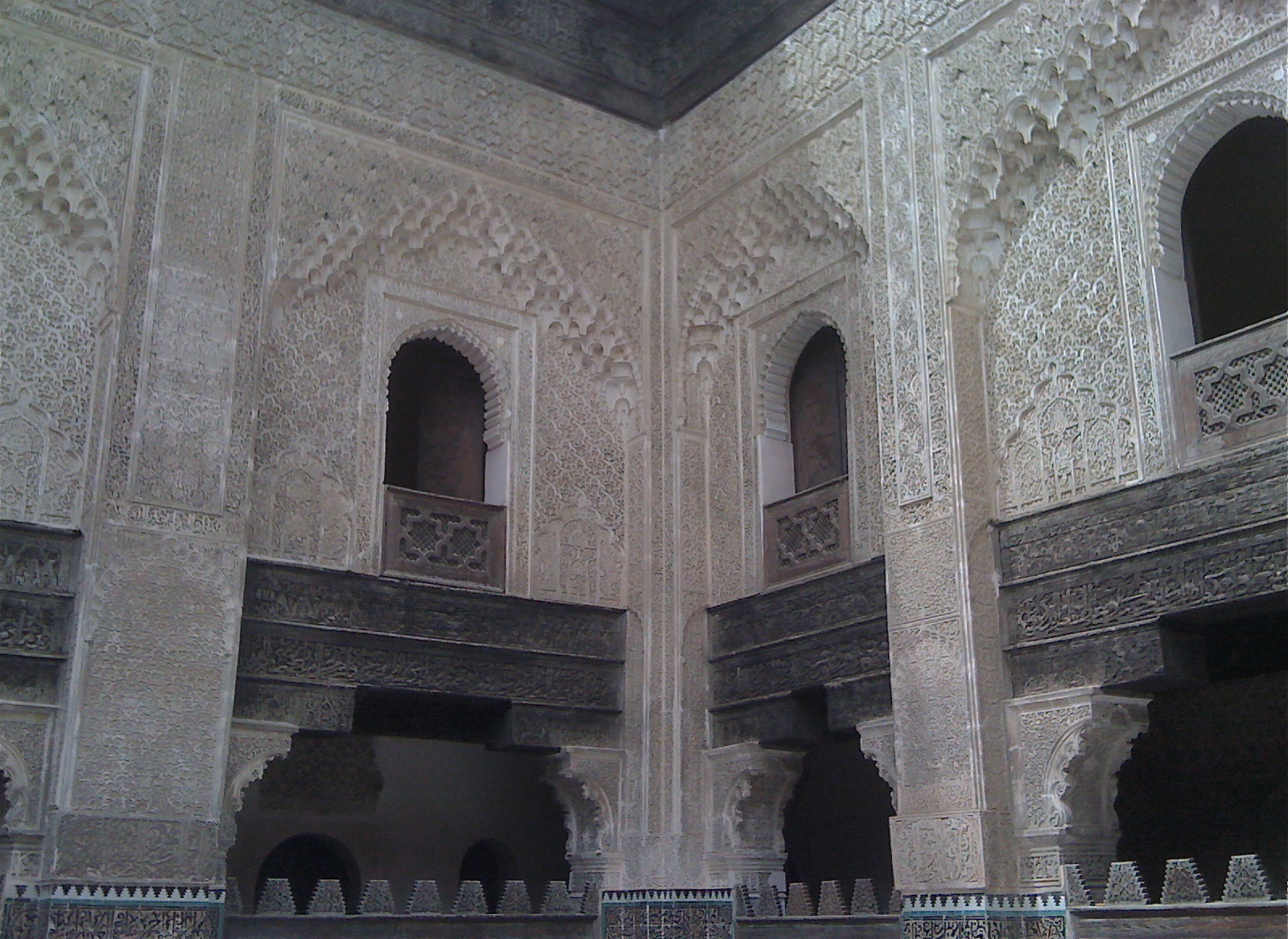
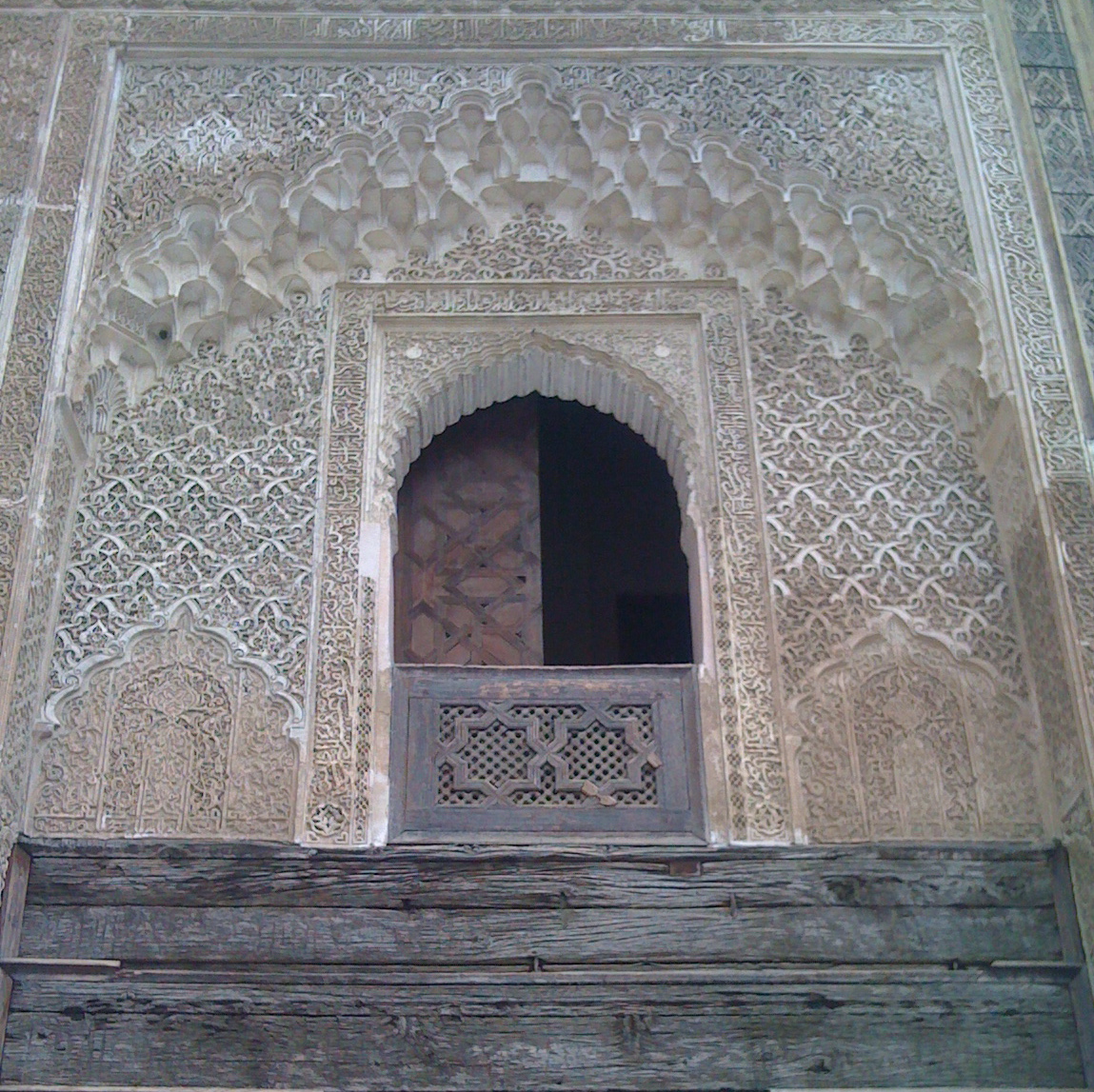
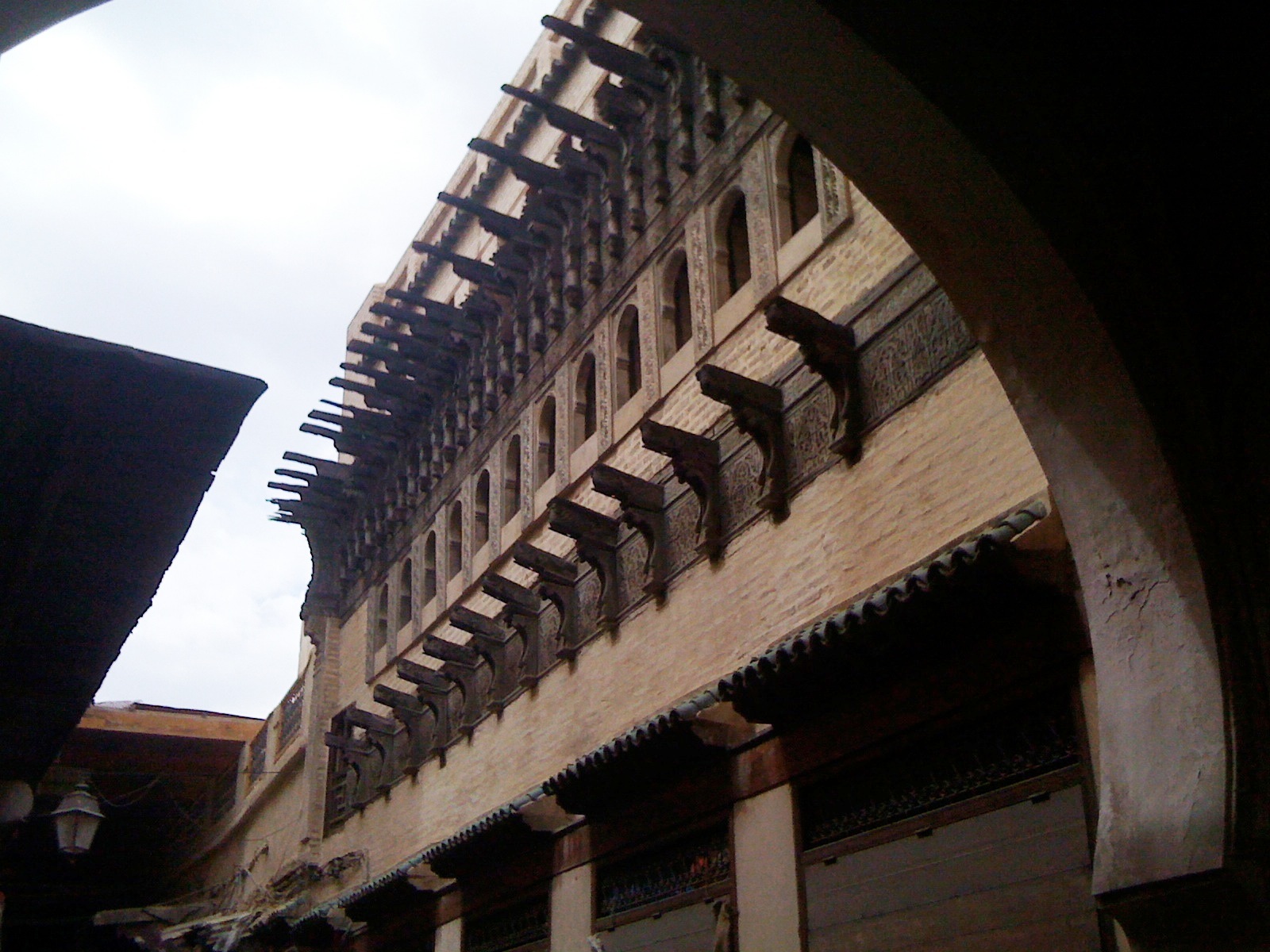
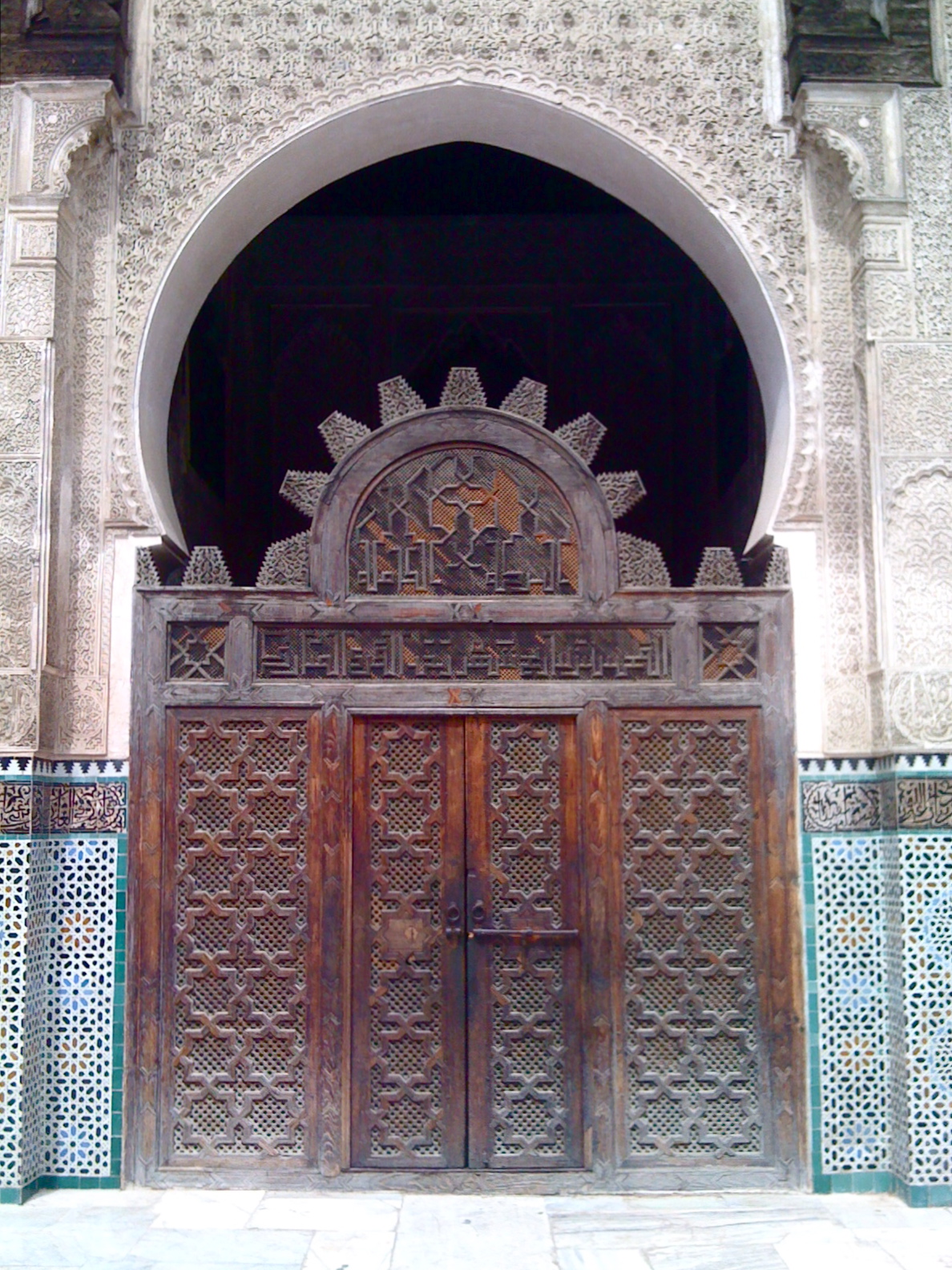
Madrasa Bou Inania

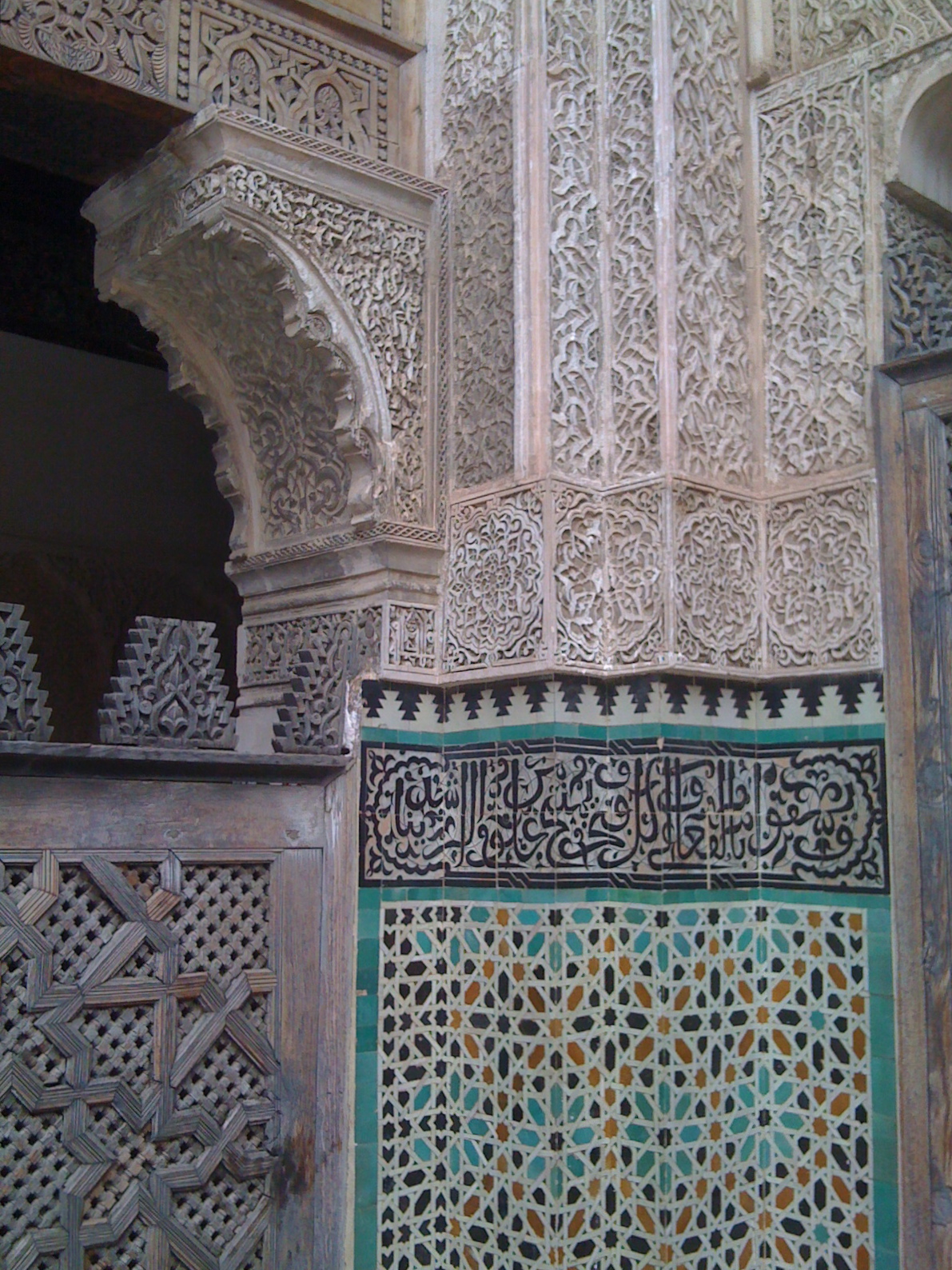
The Madrasa Bou Inania was founded in 1350 to serve as both a mosque and Islamic college. The plaque marking its location reads, “The mosque is marked by its fine mihrab, its onyx marble columns, and its elegant minaret overlooking Talaa Kbira Street. Its facades are entirely decorated with mosaics, carved cedar wood and plasterwork.”

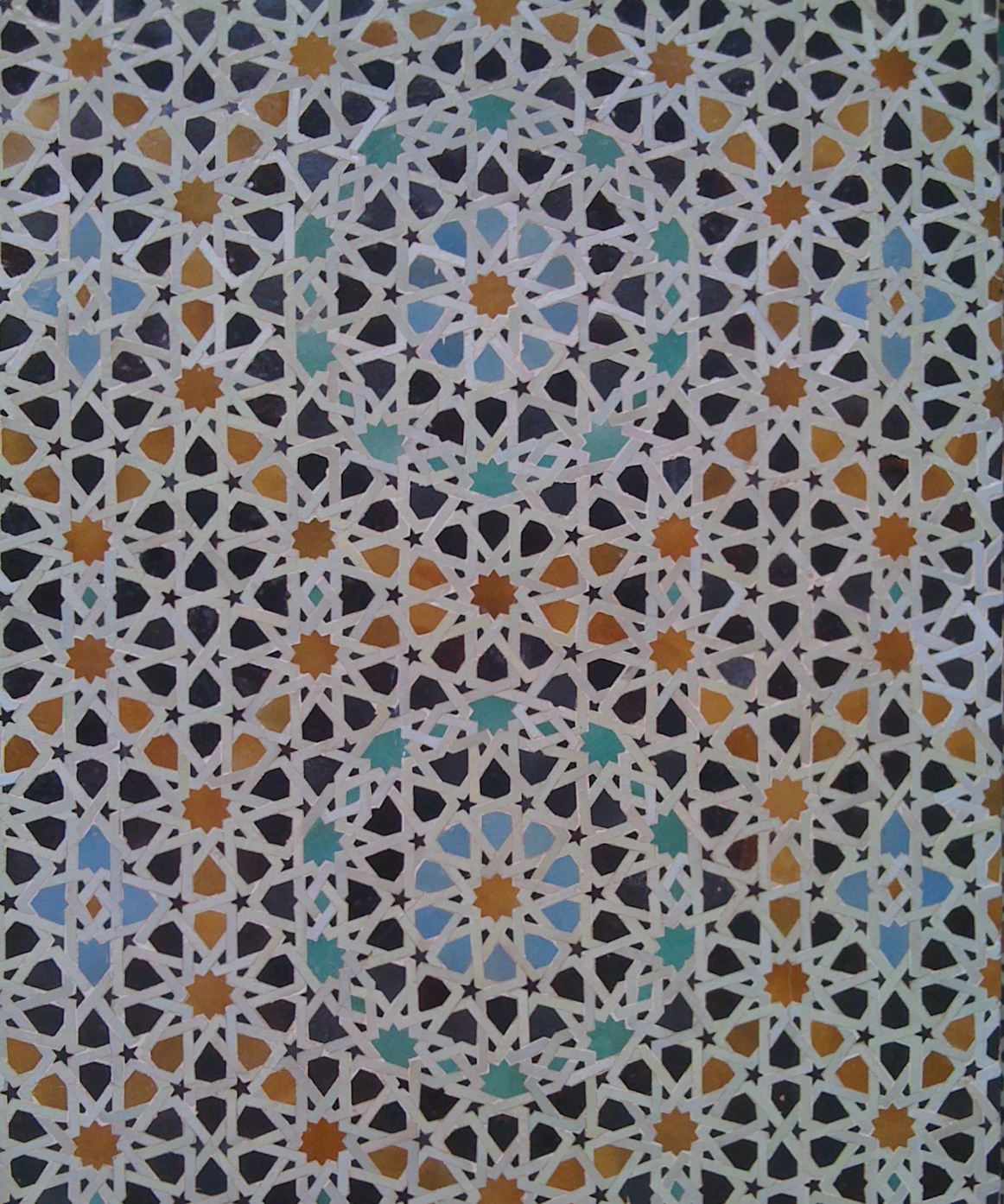
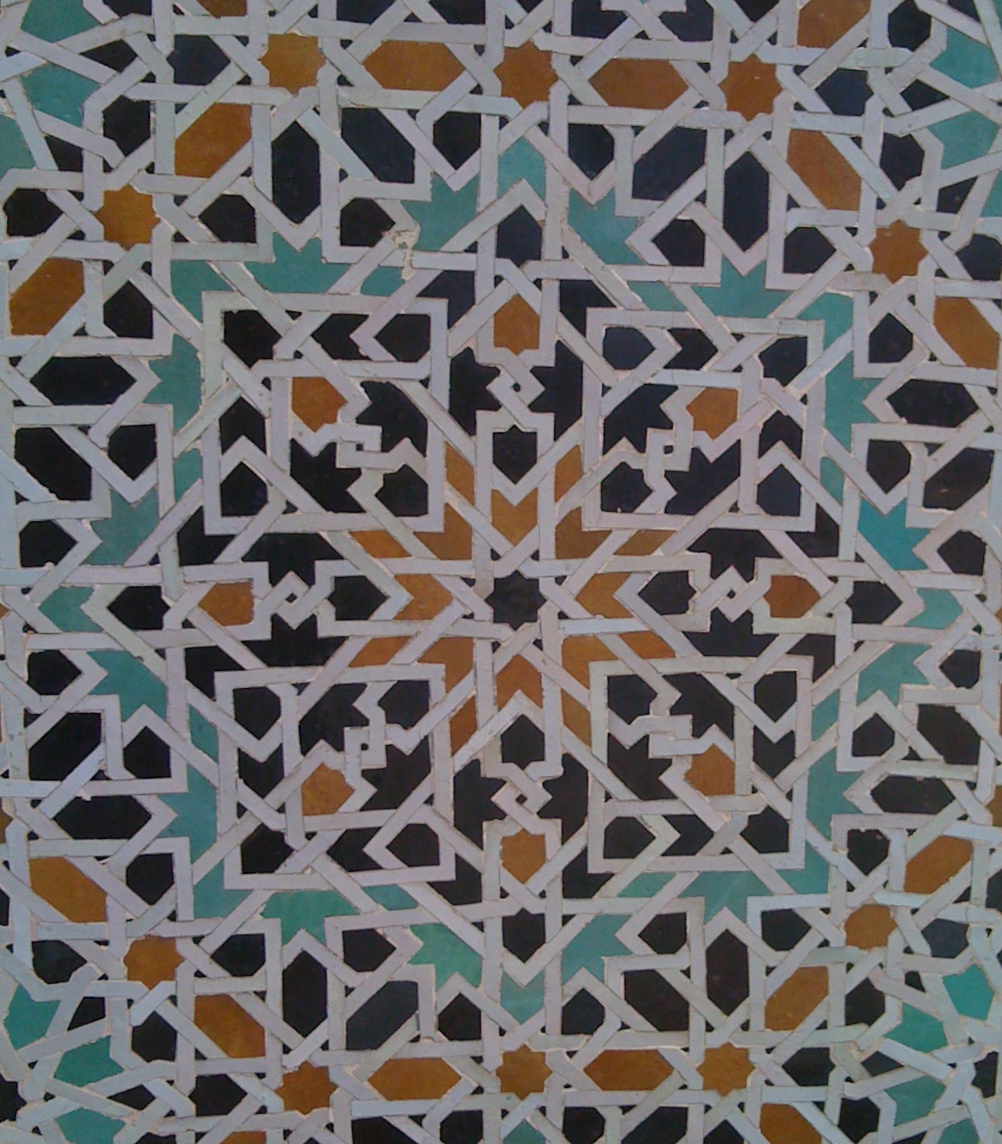
Tilework Detail

Dar al-Magana

Across Talaa Kbira is Dar al-Magana, which is Arabic for “clockhouse.” The structure is what remains of a hydraulic clock which was completed sometime in the mid-1300s.

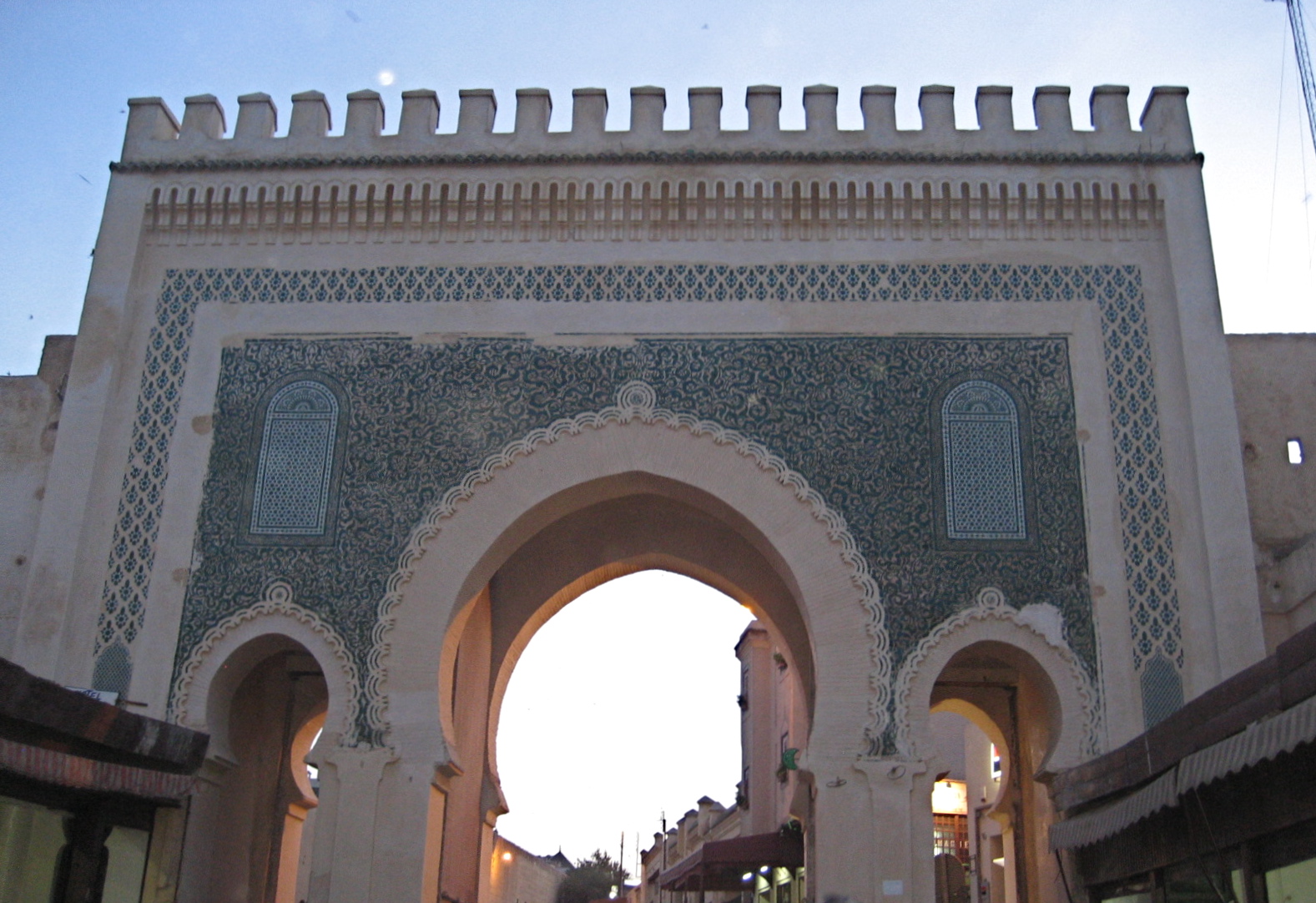
Bab Boujloud

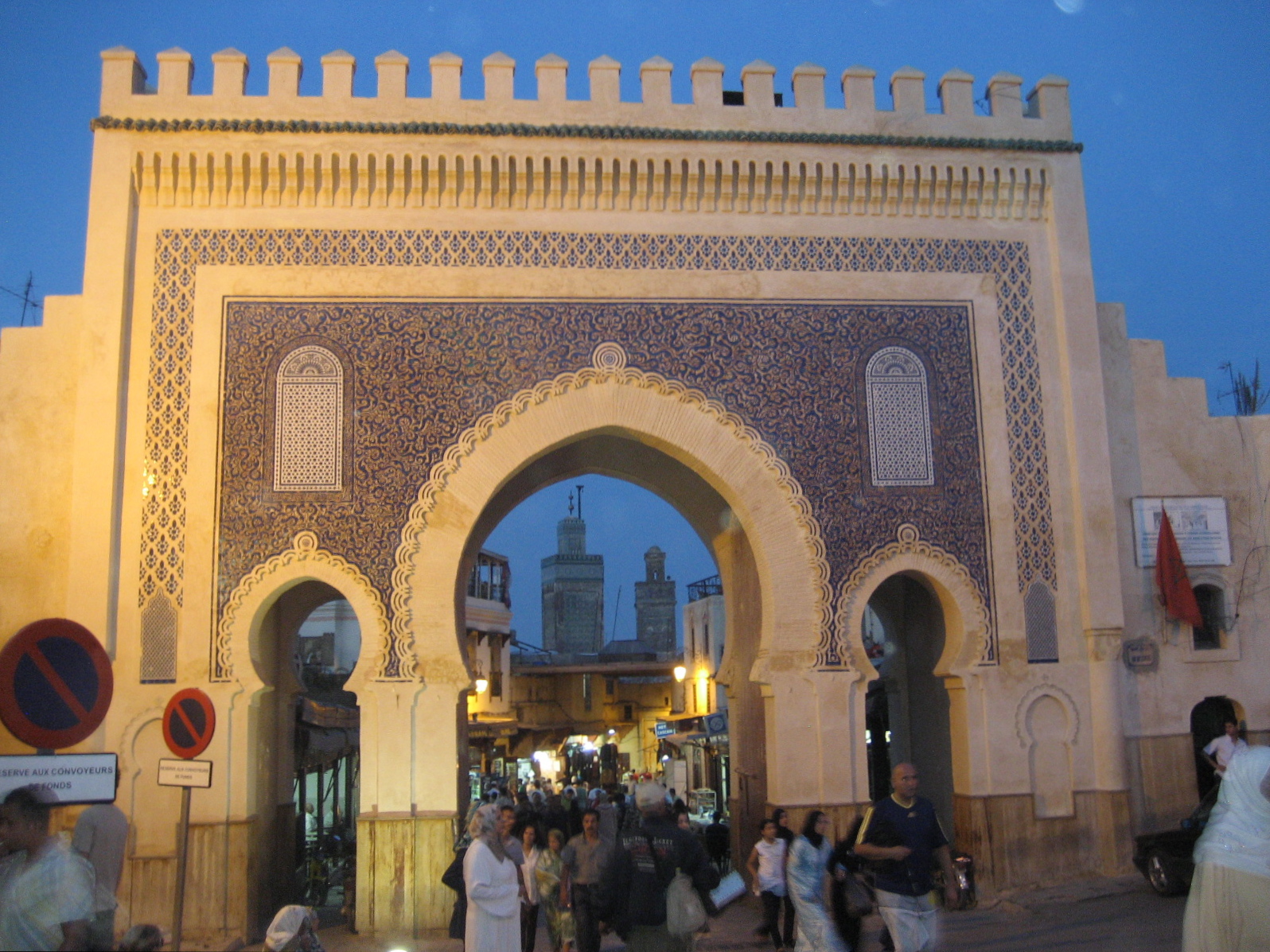
Bab Boujloud is the main entrance to the medina. The gate is decorated with green zellij on the inside, the color of Islam, and blue zellij on the outside, the color of Fes. According to Wikipedia, zellij is “terra-cotta tile work covered with enamel in the form of chips set into plaster.” Note the view of the minarets as you look into the medina.

Memories of Marrakech

Narrow streets. Almost being run over by motorbikes. The calls to prayer.

Beautiful kaftans. Wearing a hijab. The night food market on the main square. Snake charmers.

Throngs of people. Hot mint tea. The mosaics and tile work.

The smell of the tanneries. Our rooms in the Riad. Couscous served in tajines.

Traffic jams consisting of yelling locals, confused tourists, speeding bicycles and donkey-pulled carts.

Freshly squeezed orange juice. The smells of cumin, cinnamon and nutmeg.
Being bathed in a Hammam.

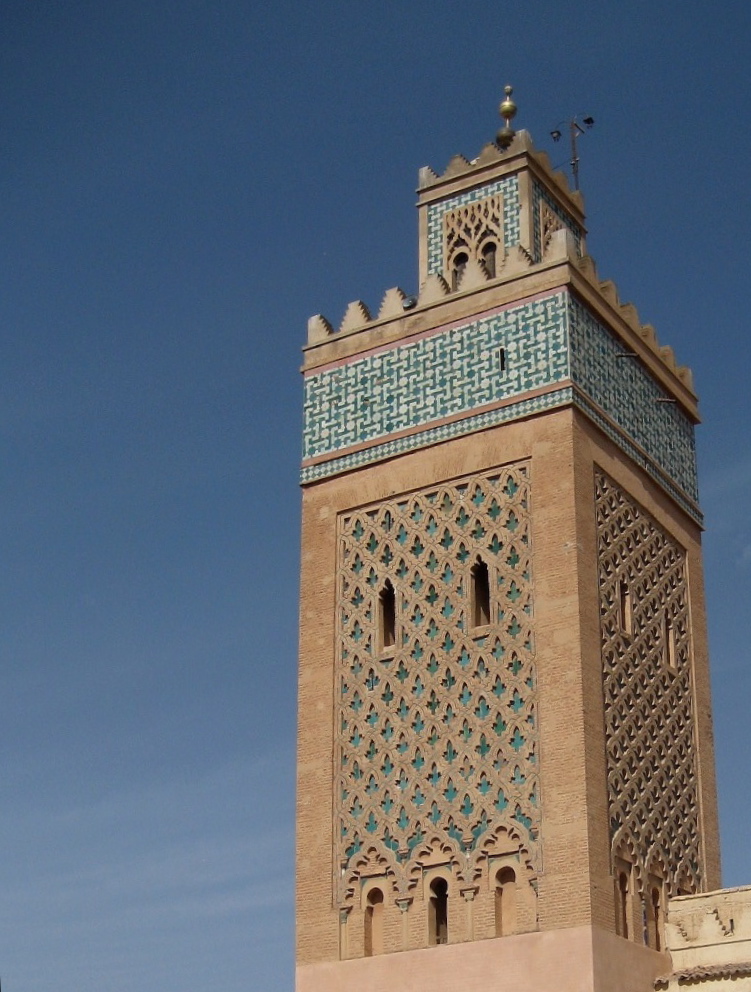
Koutoubia Mosque, the largest mosque in Marrakech, was completed in the 12th century.
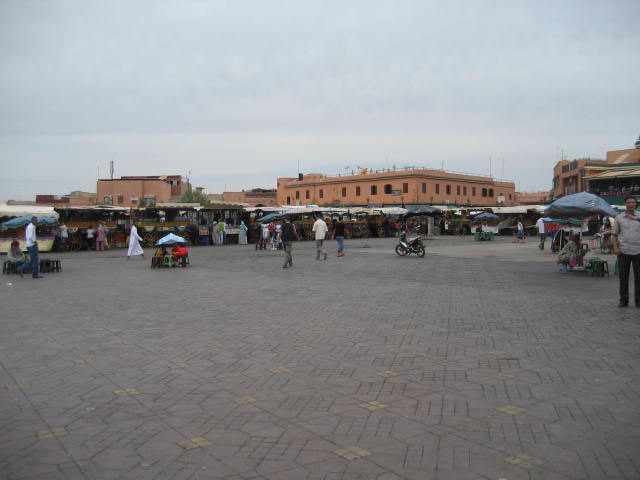
Djemaa el-Fna, the main square in the medina (old city).
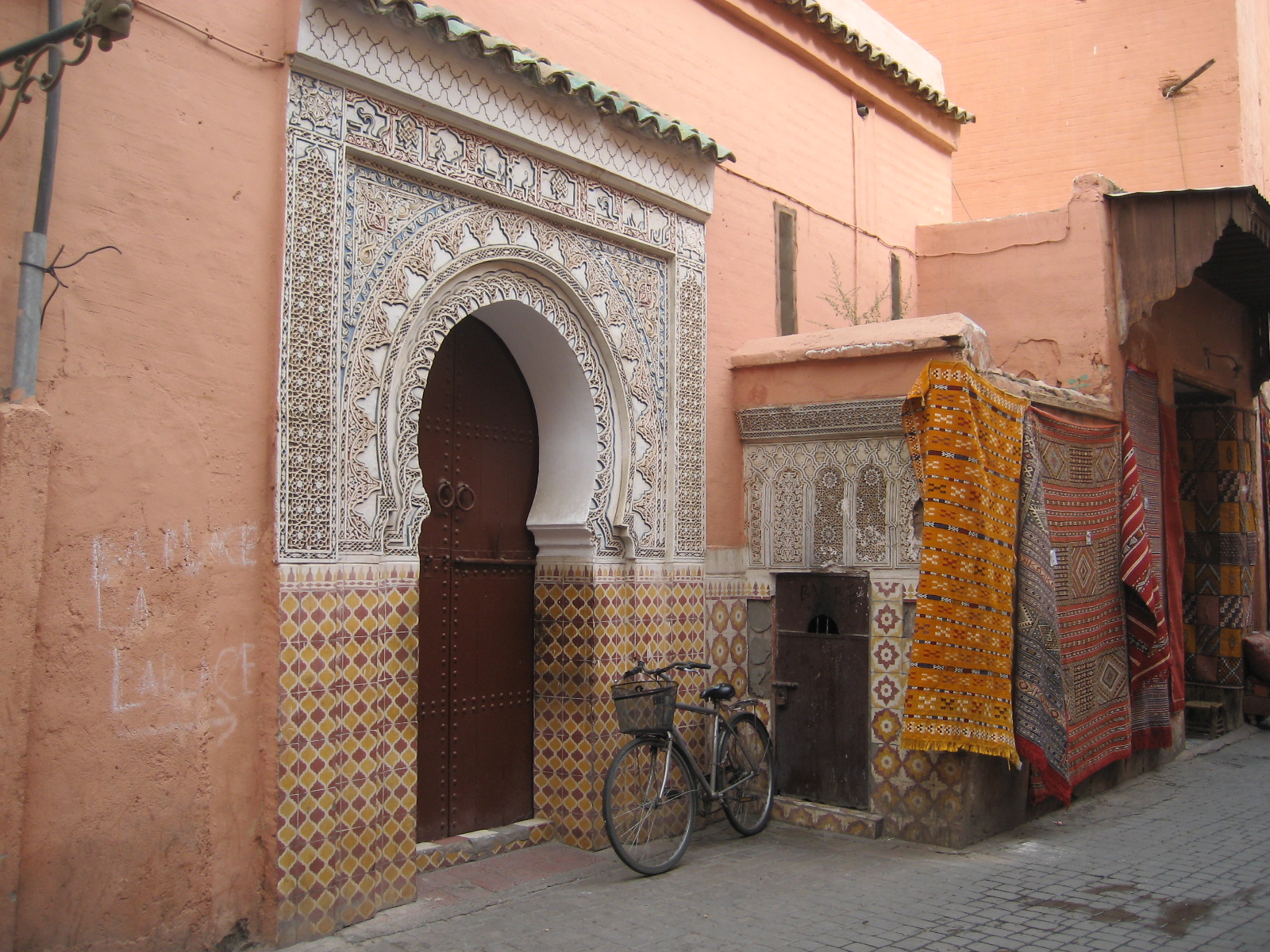
One of many streets and alleyways inside the old fortified city.
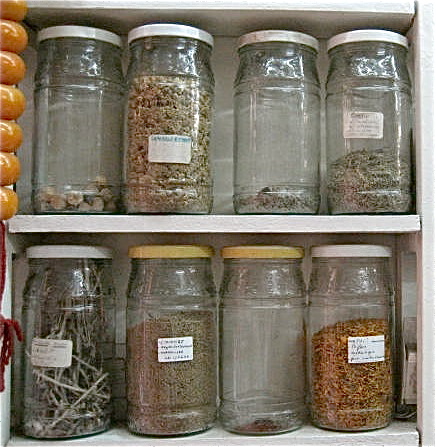
Spice jars from a vendor in the souk, a traditional North African market.
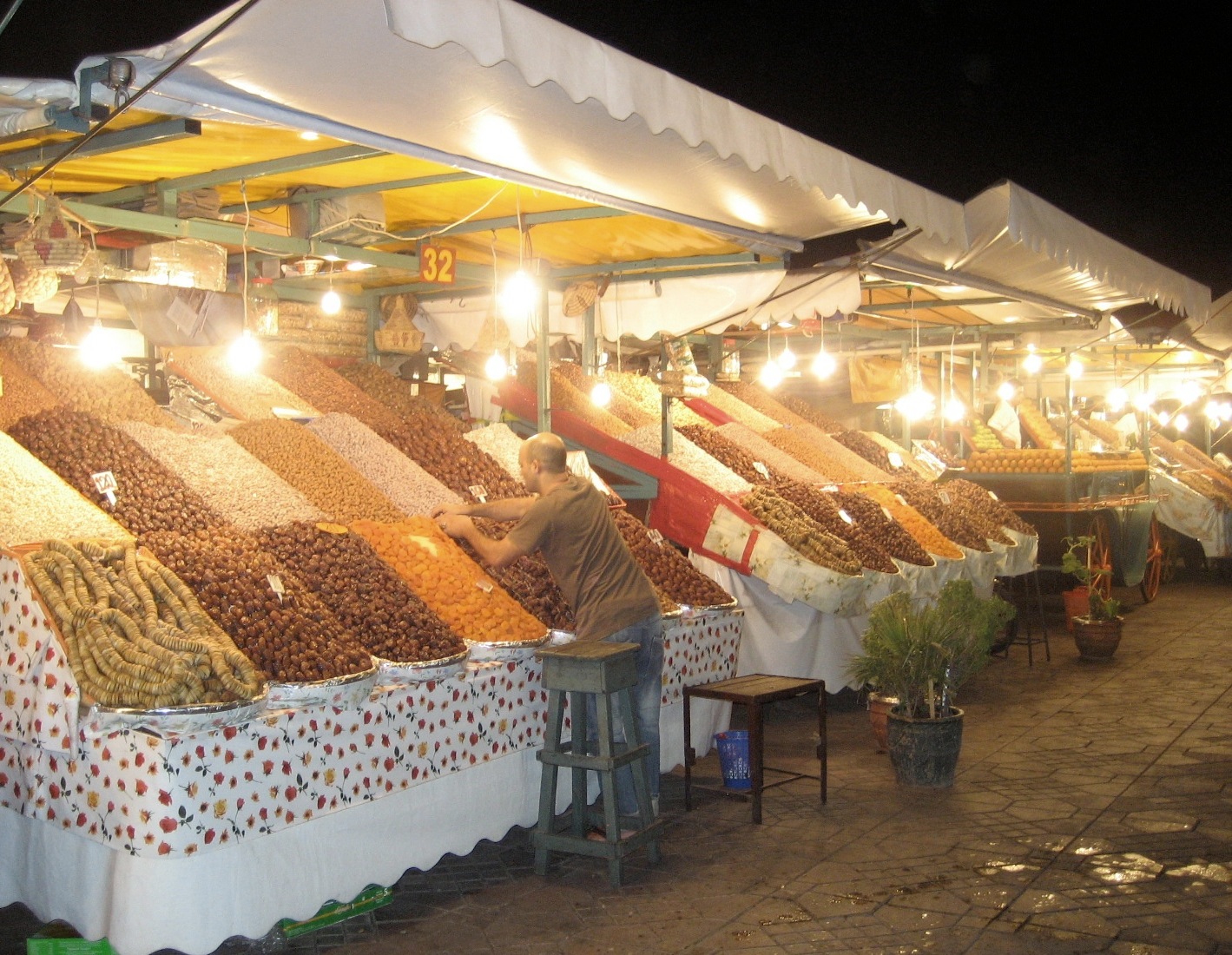
Nut and spice vendor on the main square.
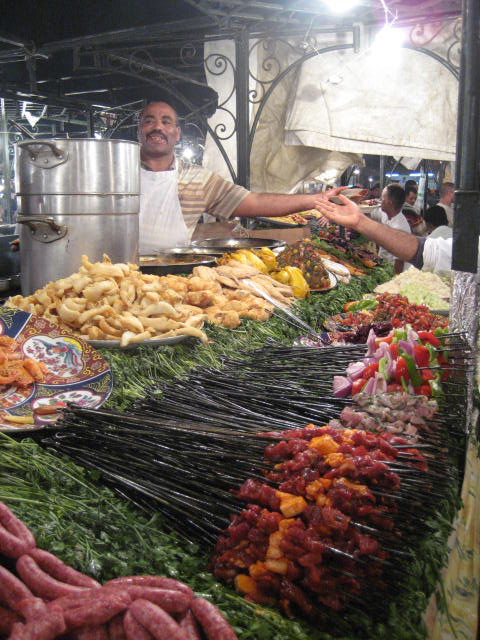
At sunset, the Djemaa el-Fna is transformed into a giant open-air restaurant.
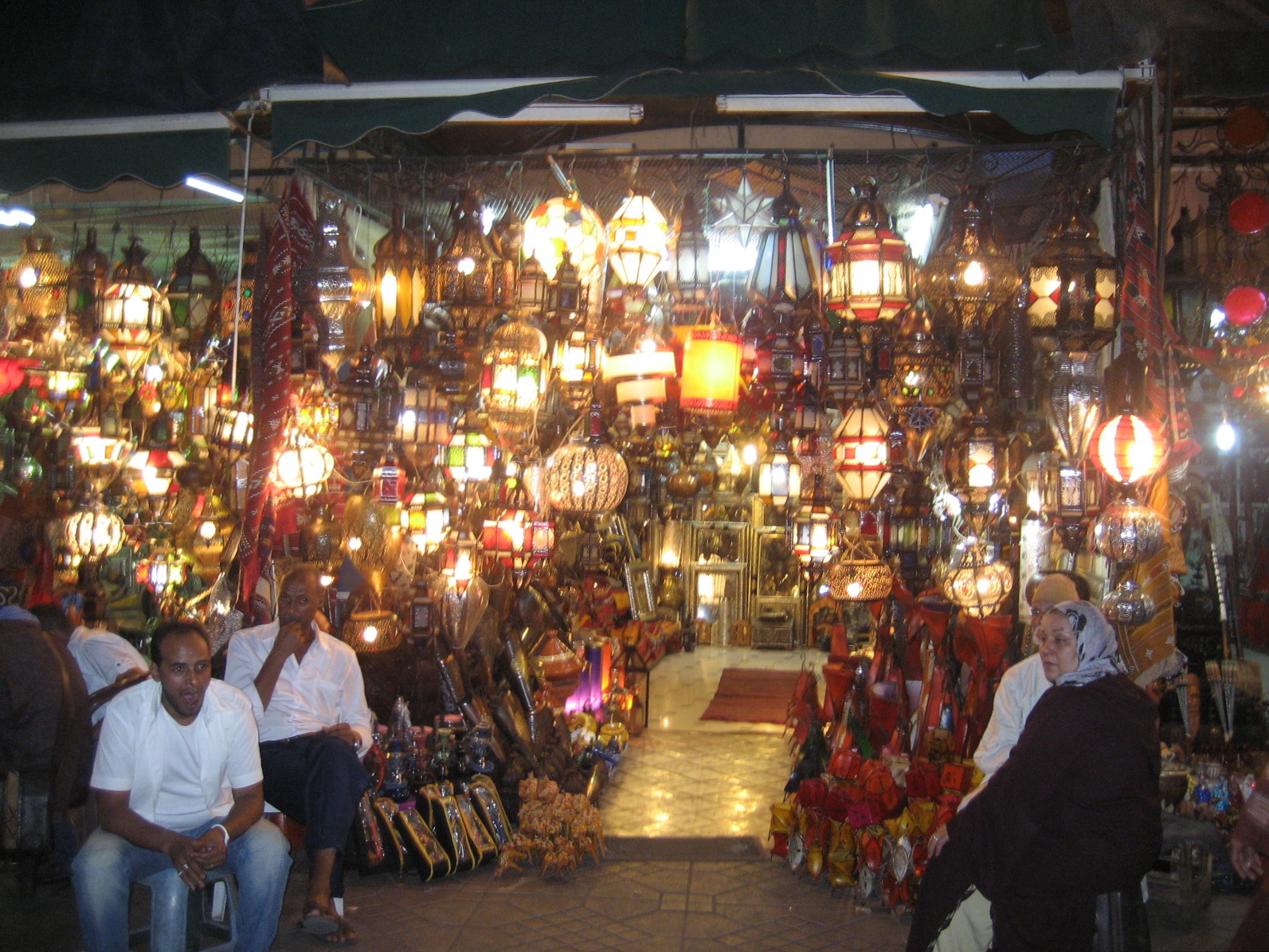
Lantern vendor.
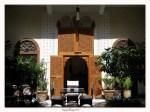
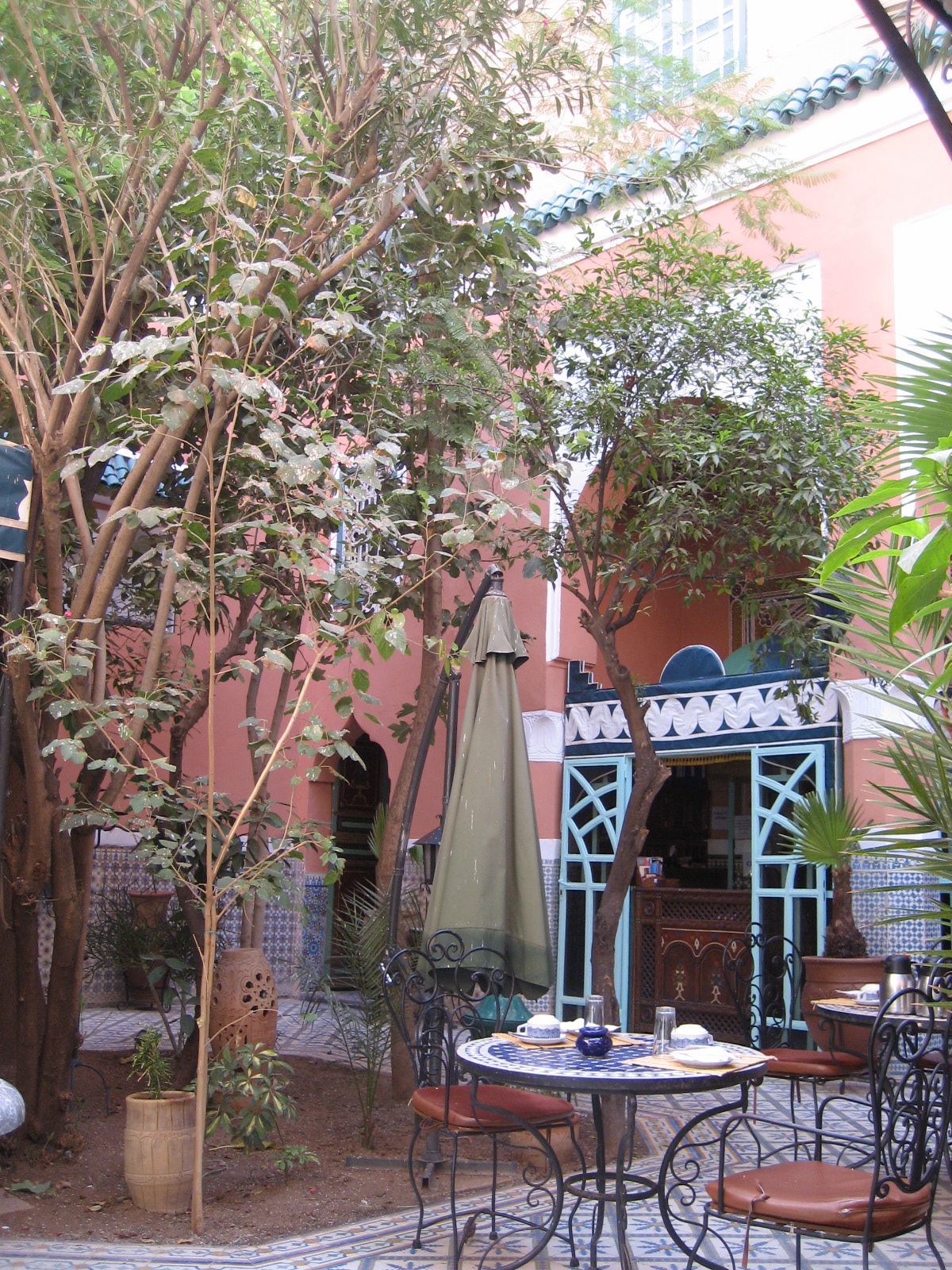
Courtyard of Riad Catalina.
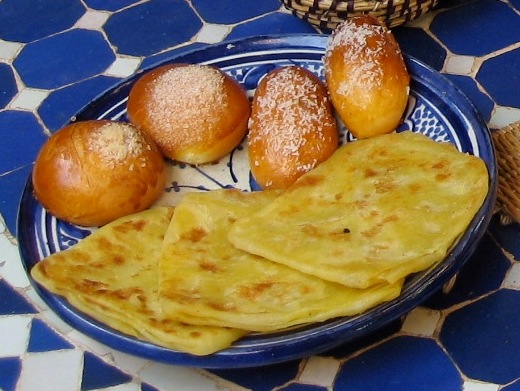
Breakfast at the riad.
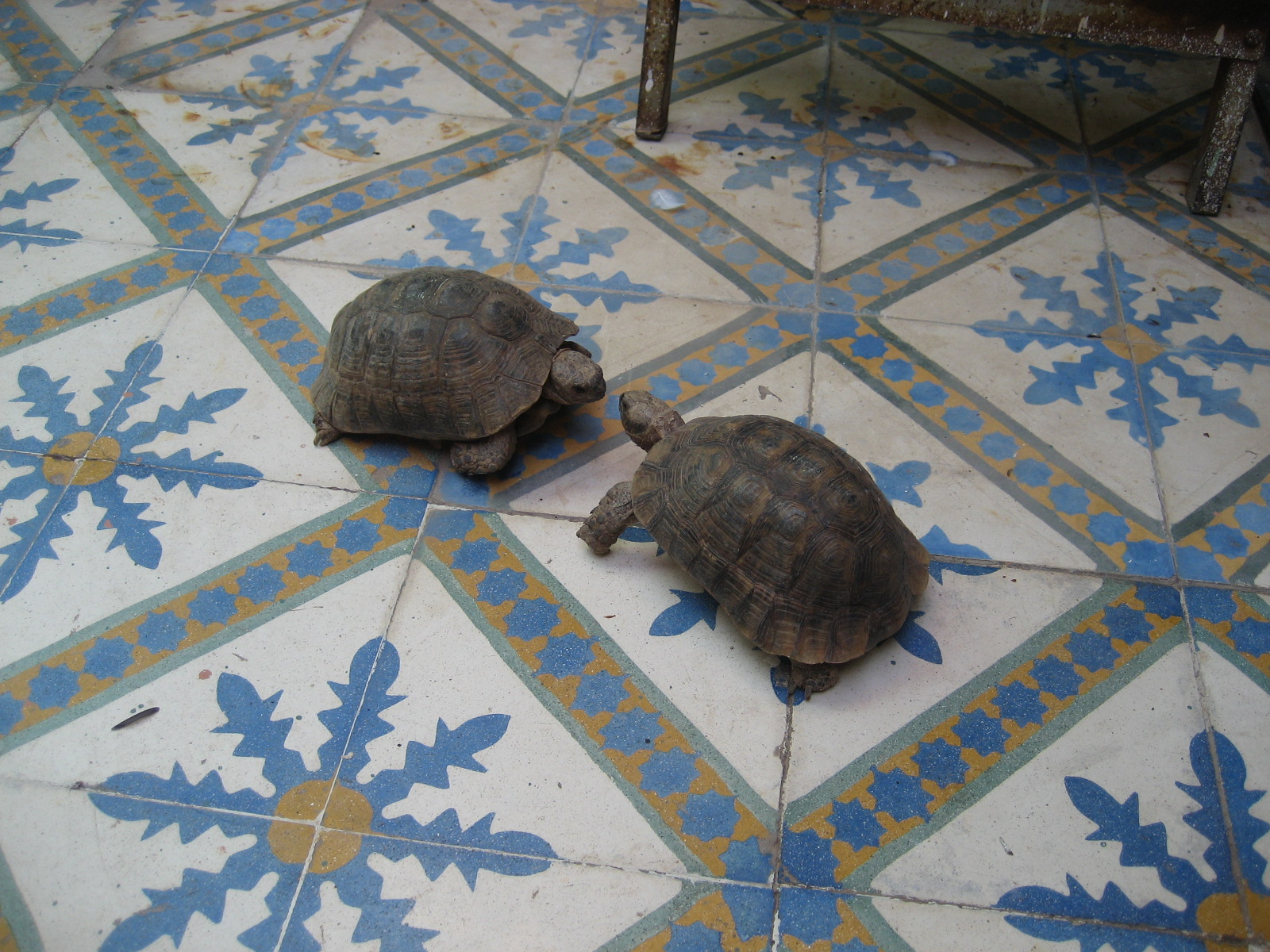
Fighting turtles. The first turtle sees the second one and starts walking toward it. The second one gets close enough to start snapping at the first. Must have been a domestic quarrel. After a while, both walk off together in the same direction.
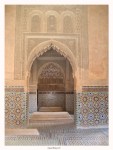
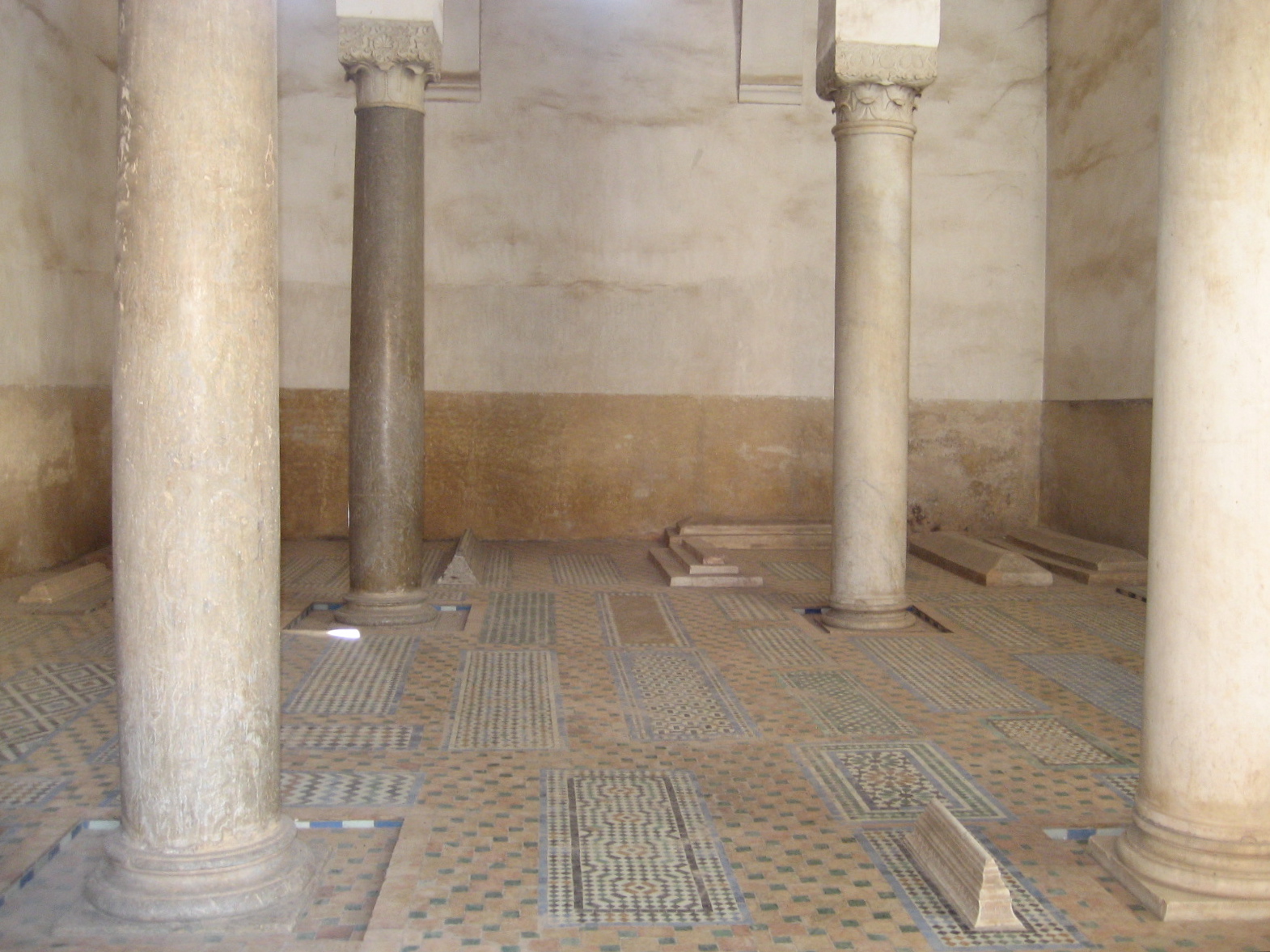
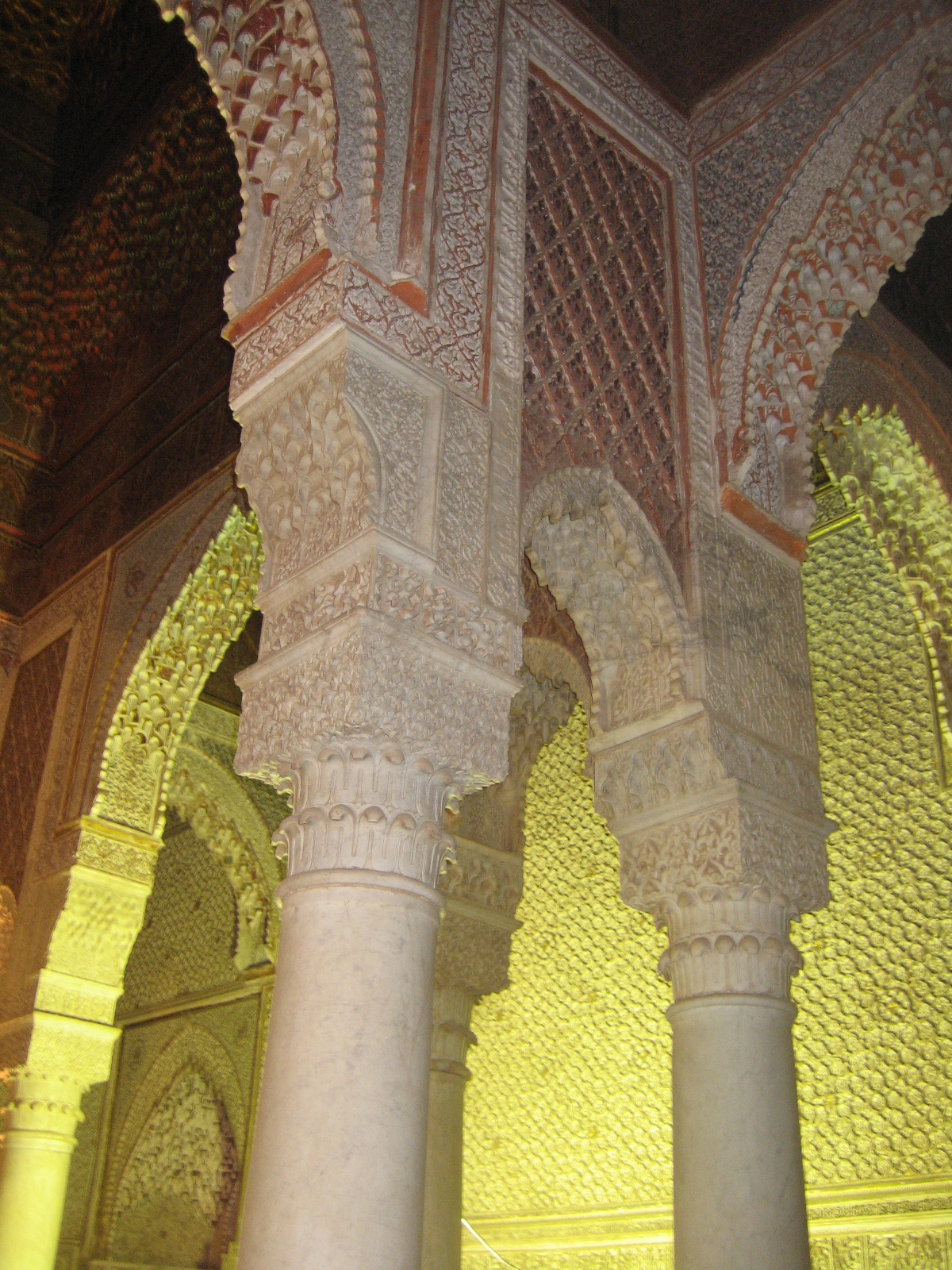
The Saadian Tombs date back to the mid 1500s. Members of the Saadi Dynasty are buried inside the mausoleum.
Intricate carvings adorn the columns and ceiling of the tombs.
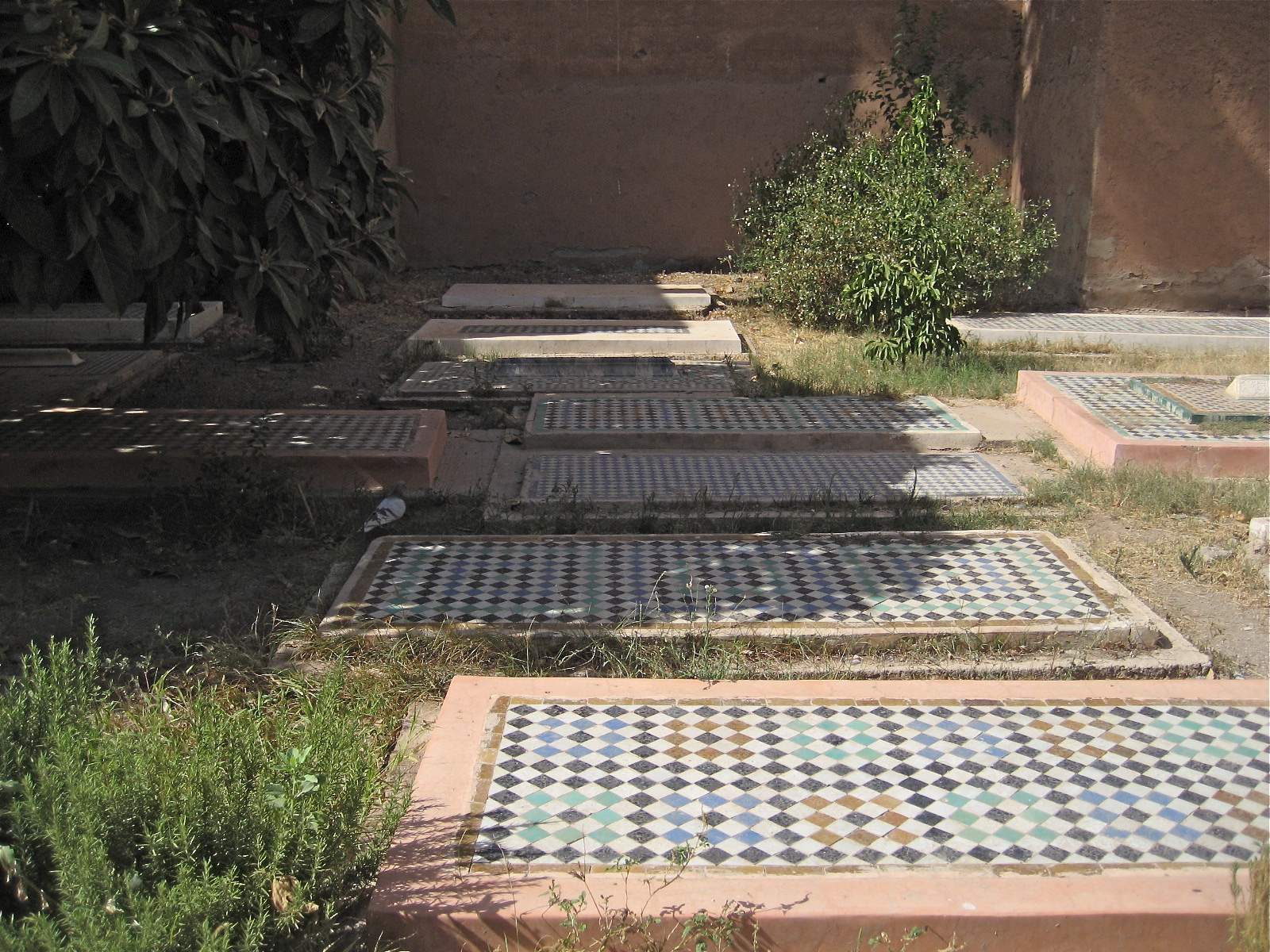
Outside in the garden are the graves of soldiers and servants.
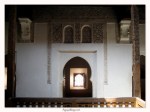
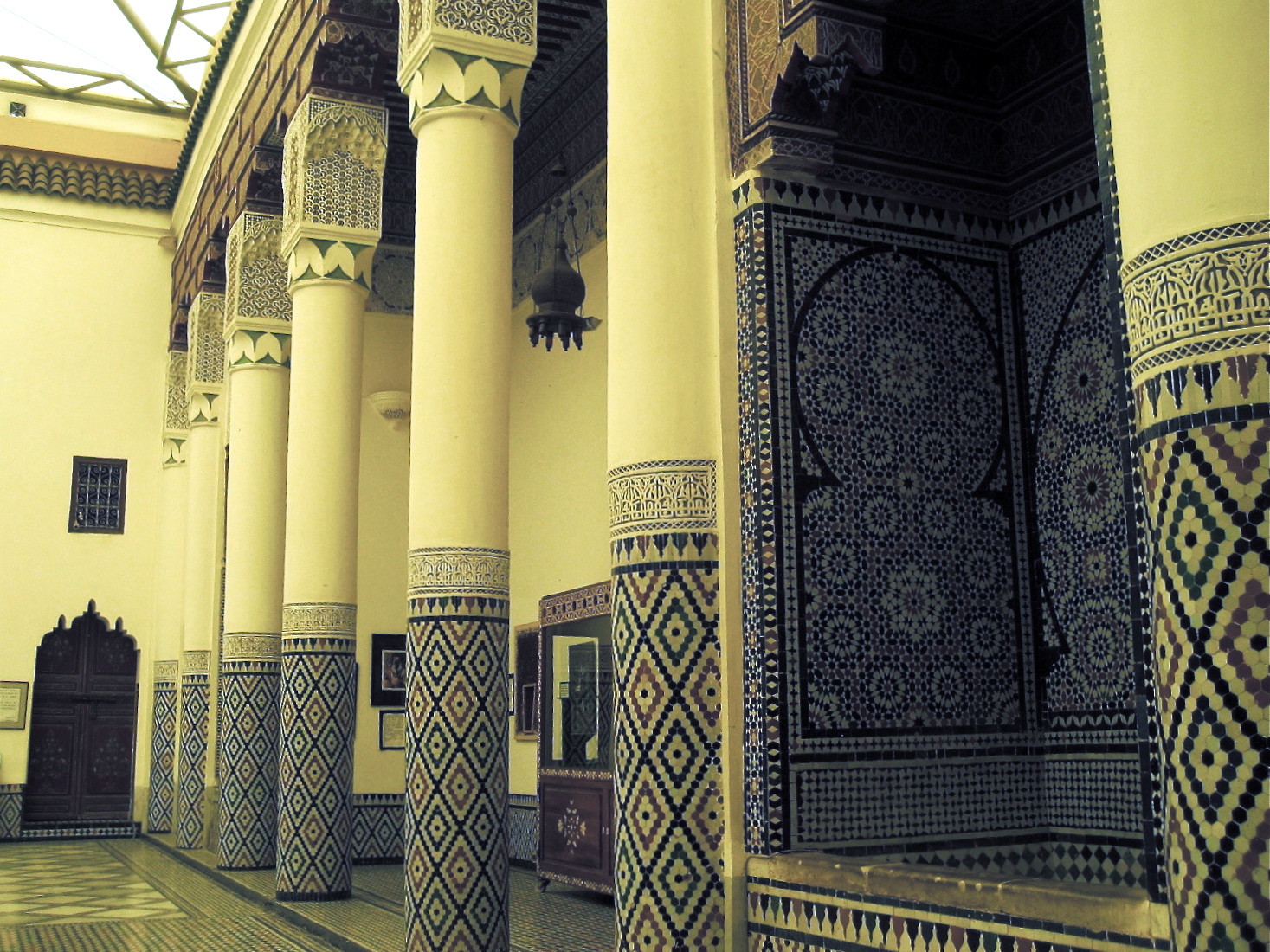
Inside the Museum of Marrakech housed in the Dar Menebhi Palace built at the end of the 19th century.
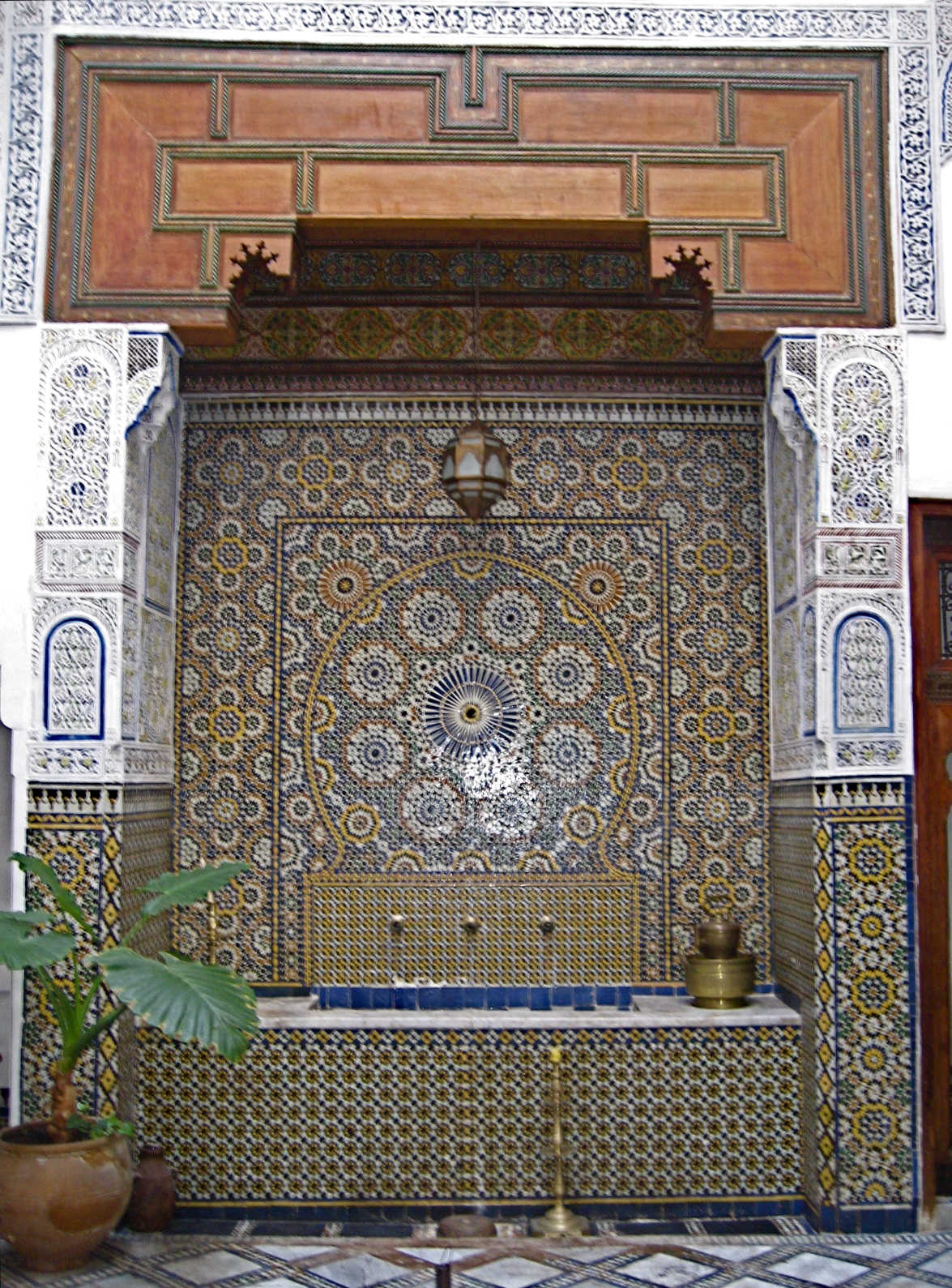
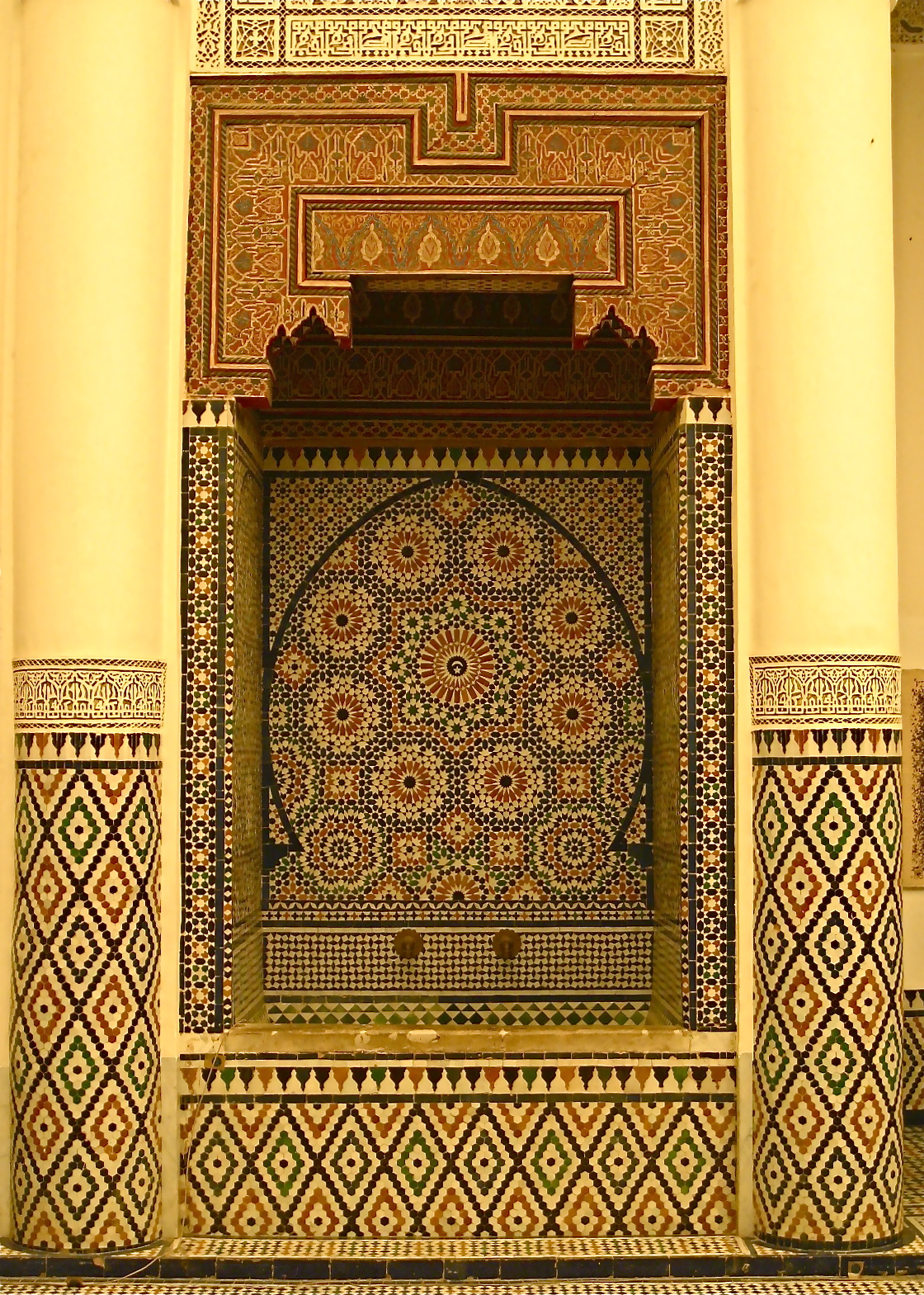
A fountain inside the palace.
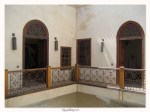
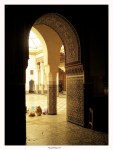
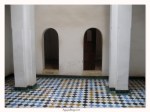
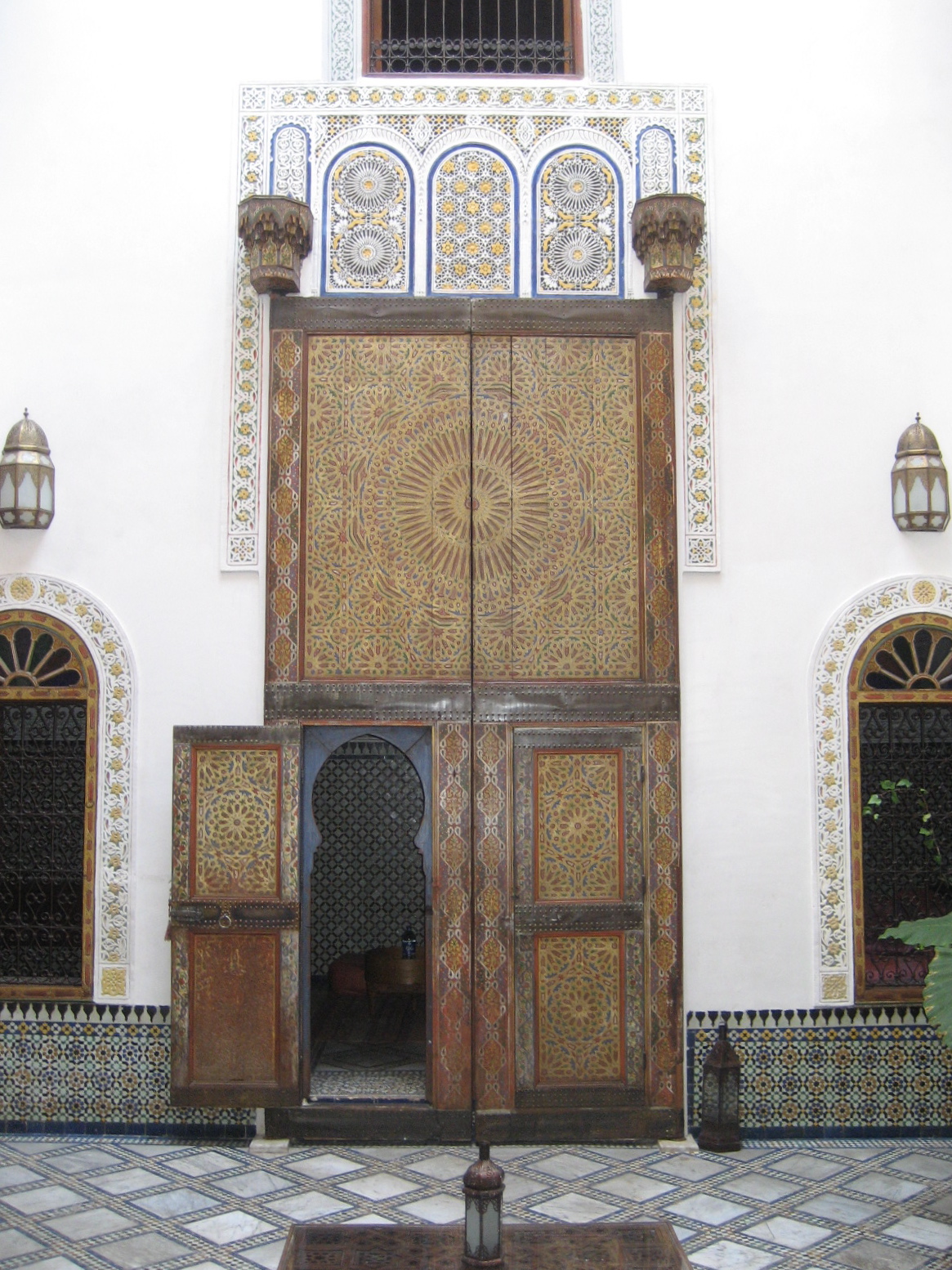
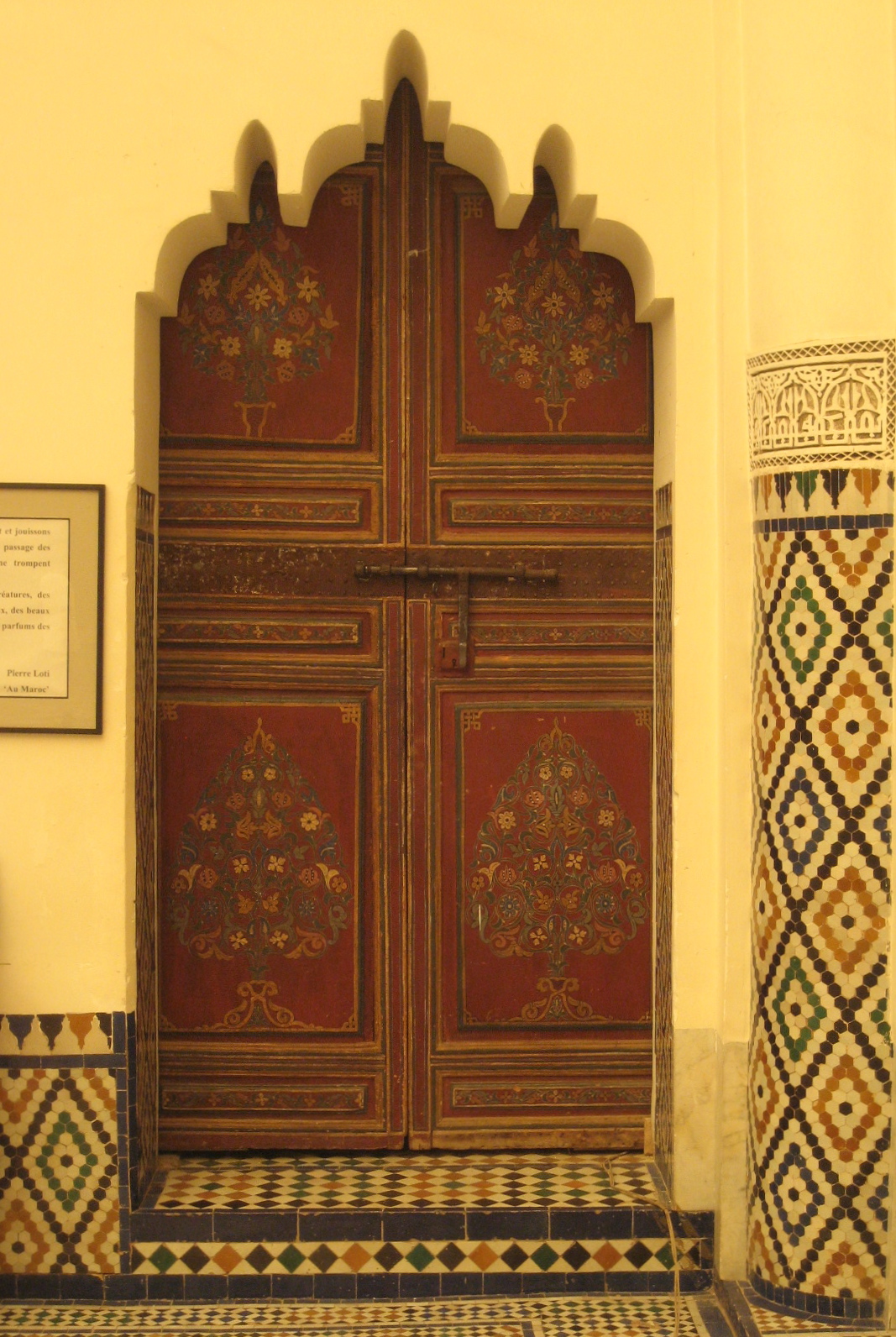
Doorway in the main courtyard.
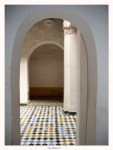
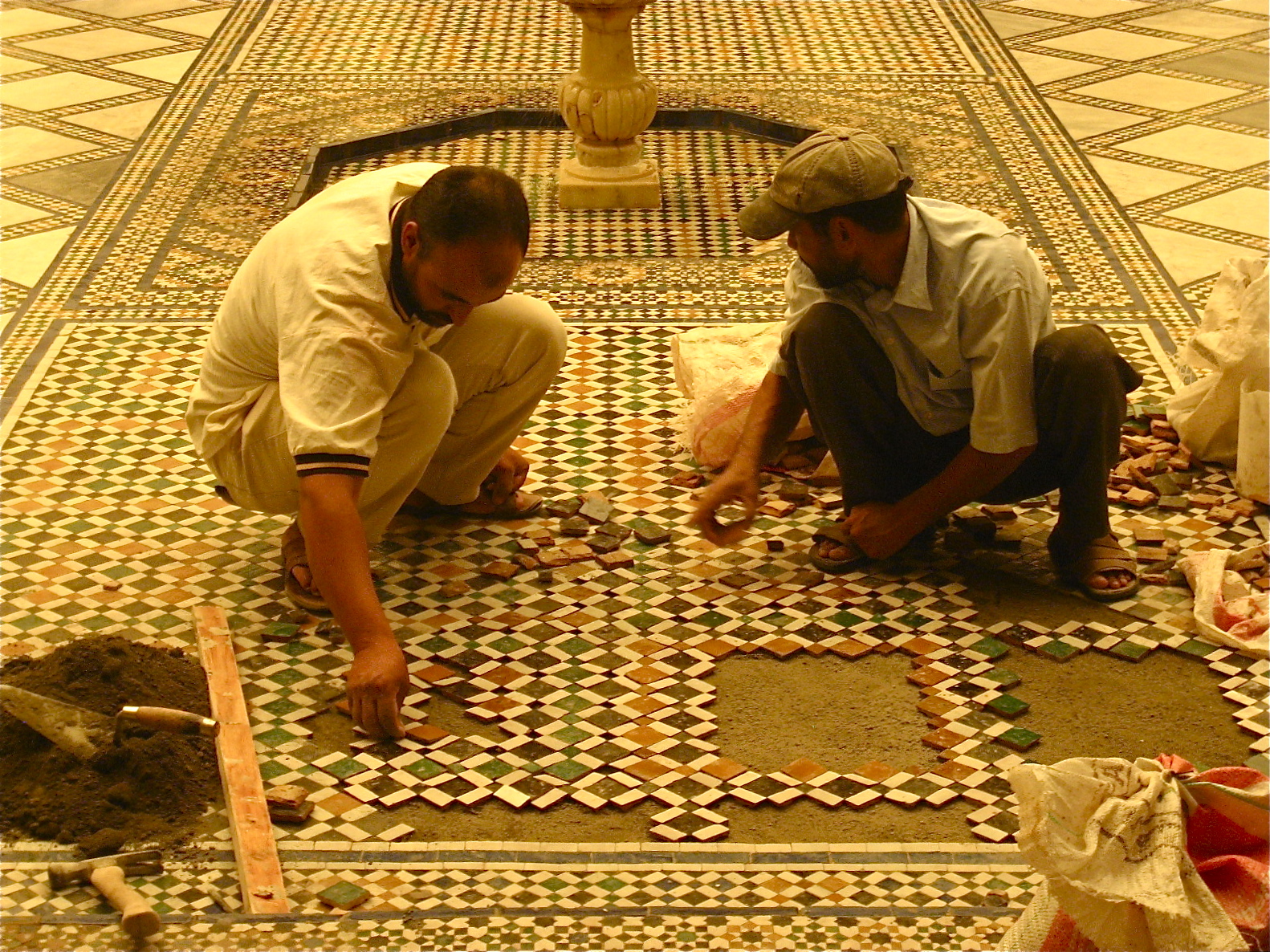
Workers restoring the tile work on the courtyard floor.
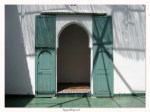
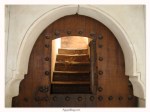
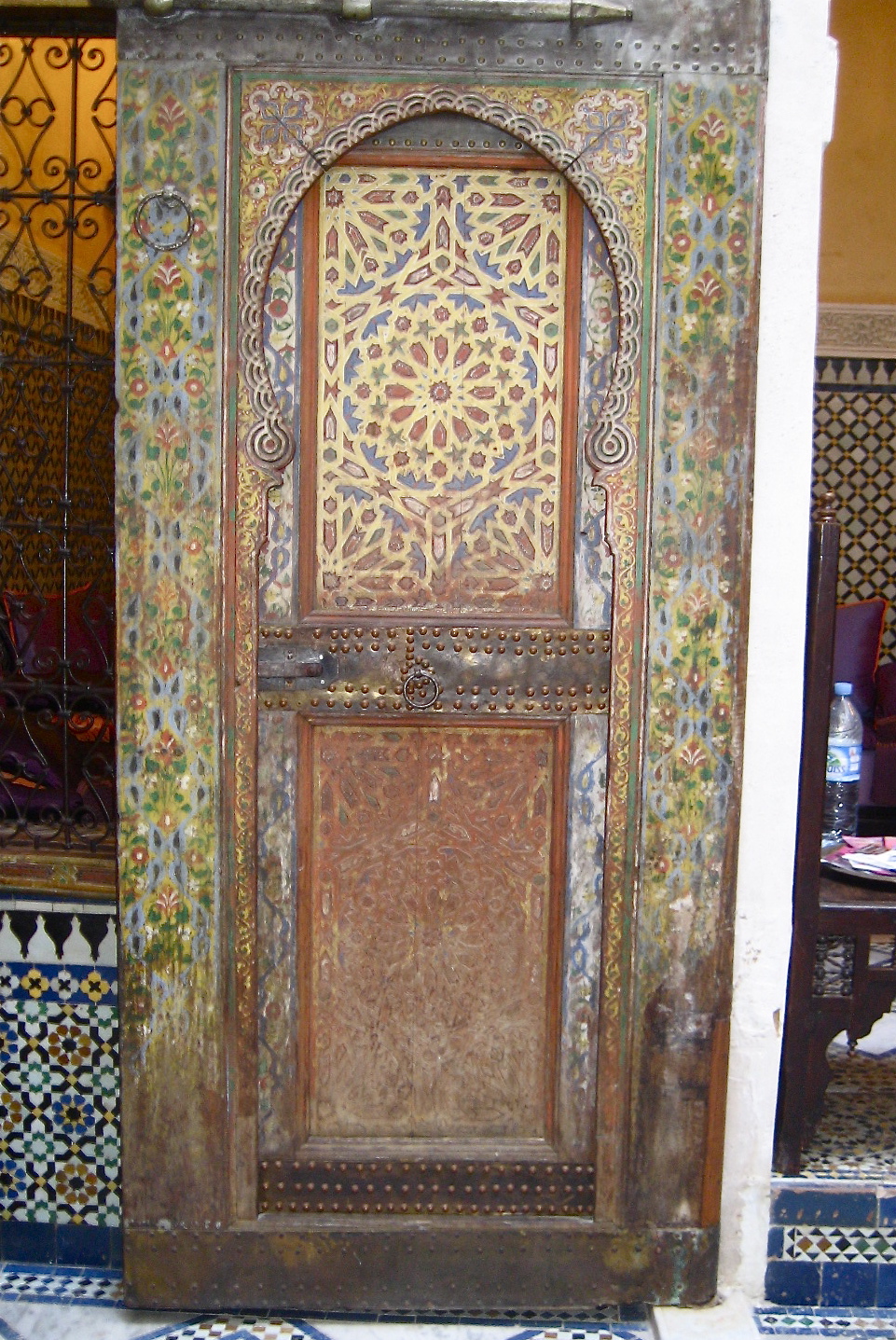
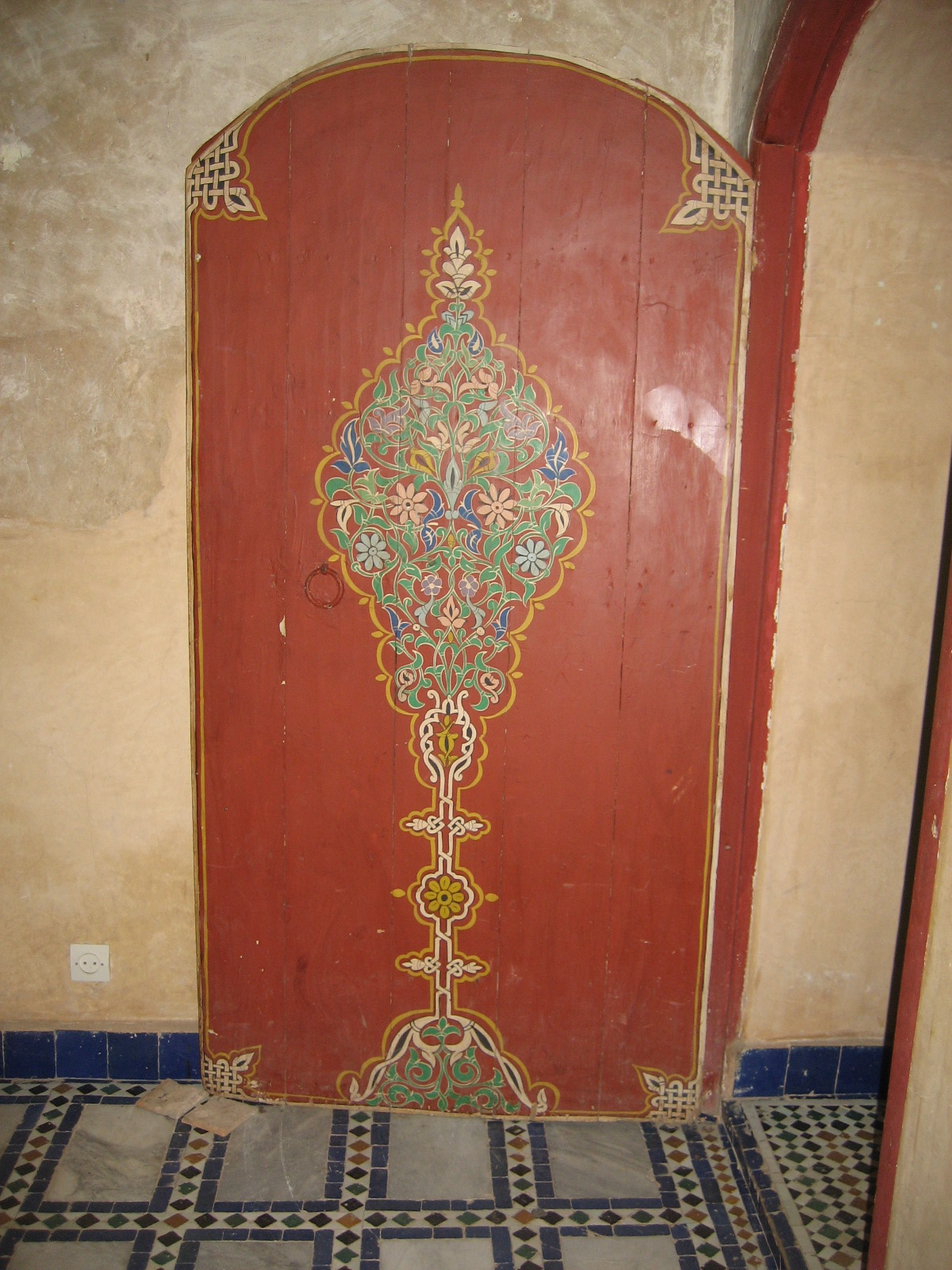
This door eventually leads to the Hammam inside the palace.
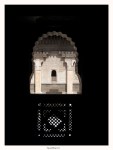
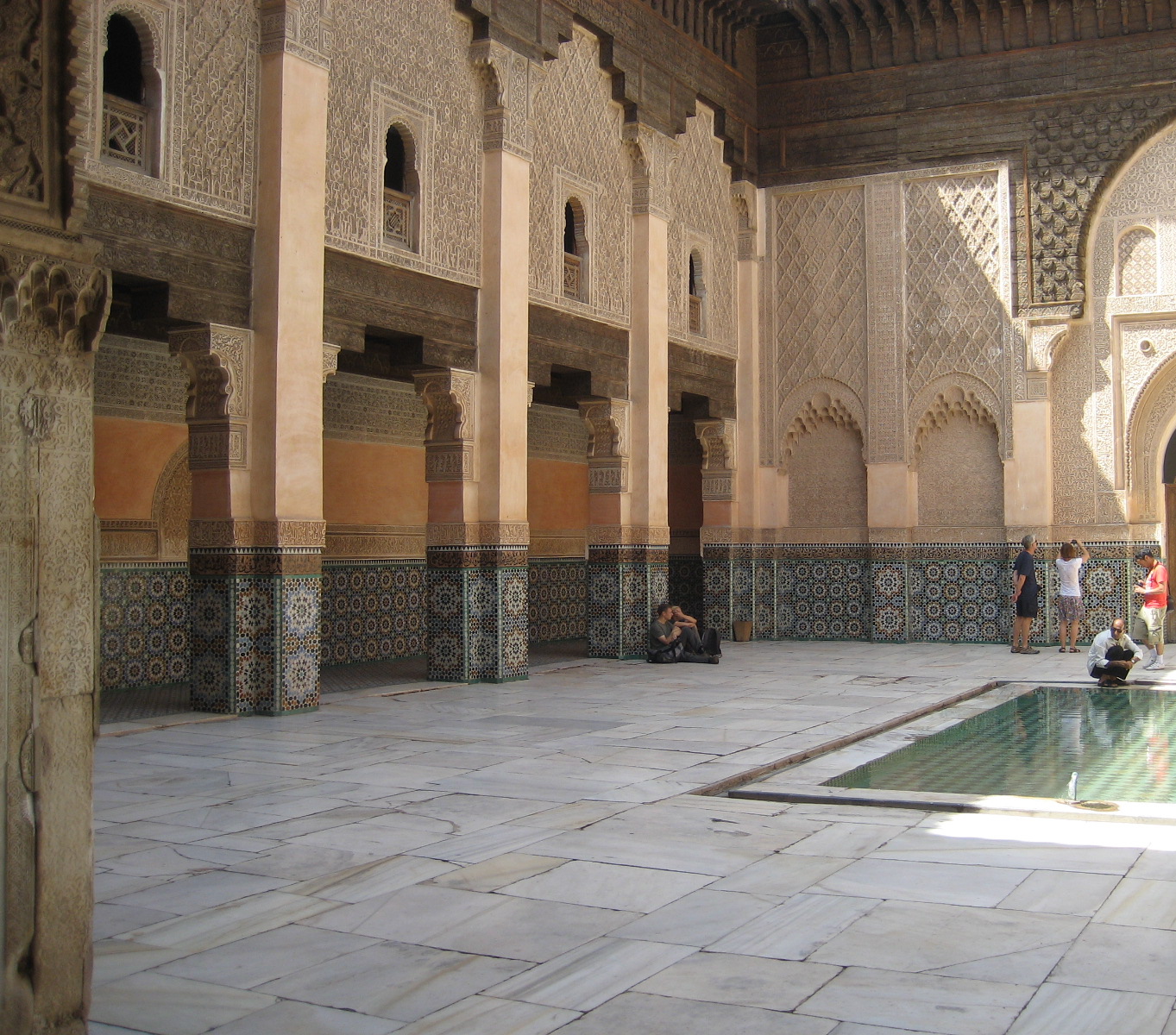
The Ben Youssef Madrasa was an Islamic college founded in the 14th century.
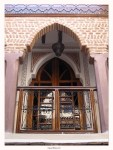
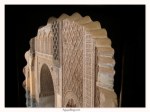
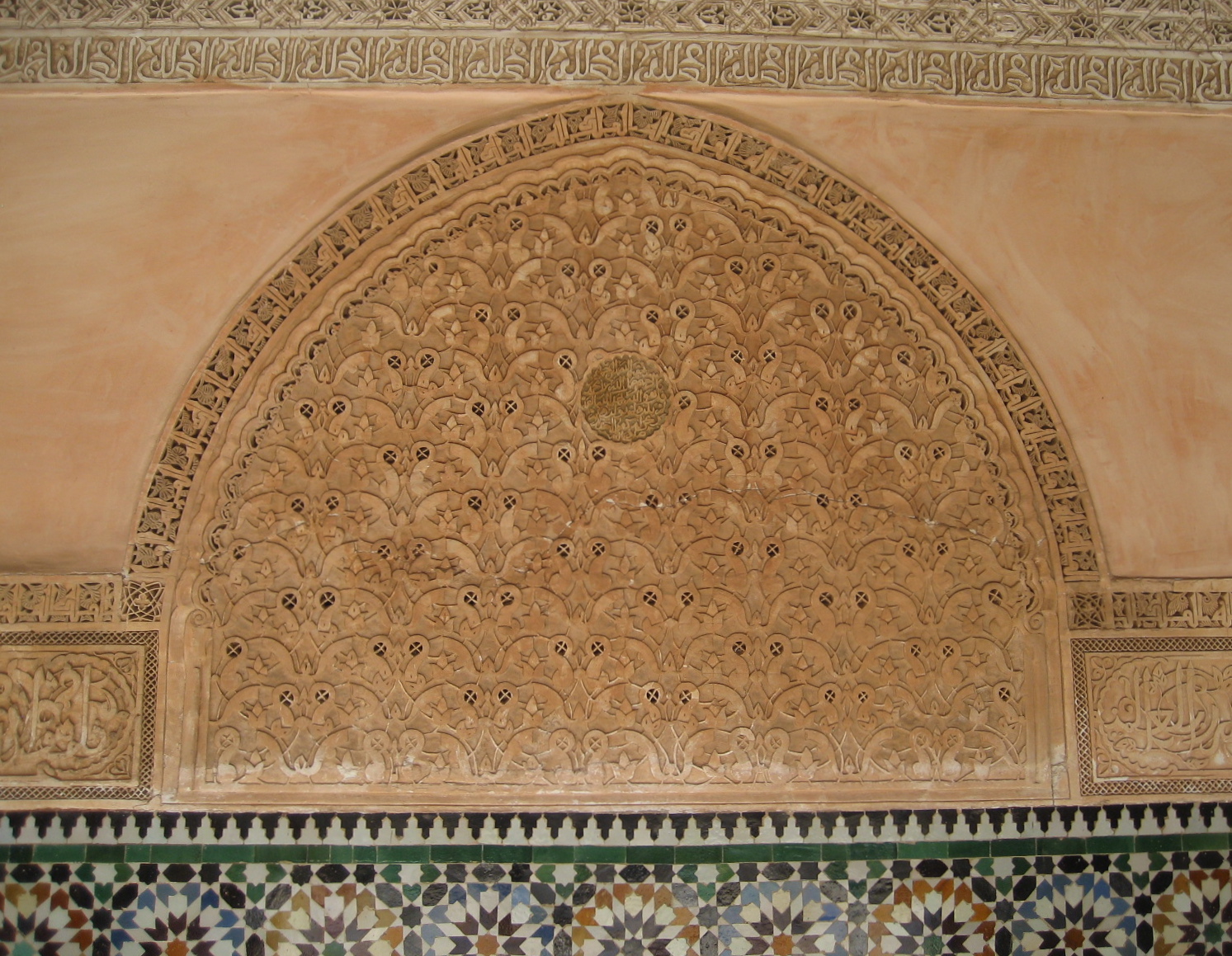
Intricate detail inside the Ben Youssef Madrasa.
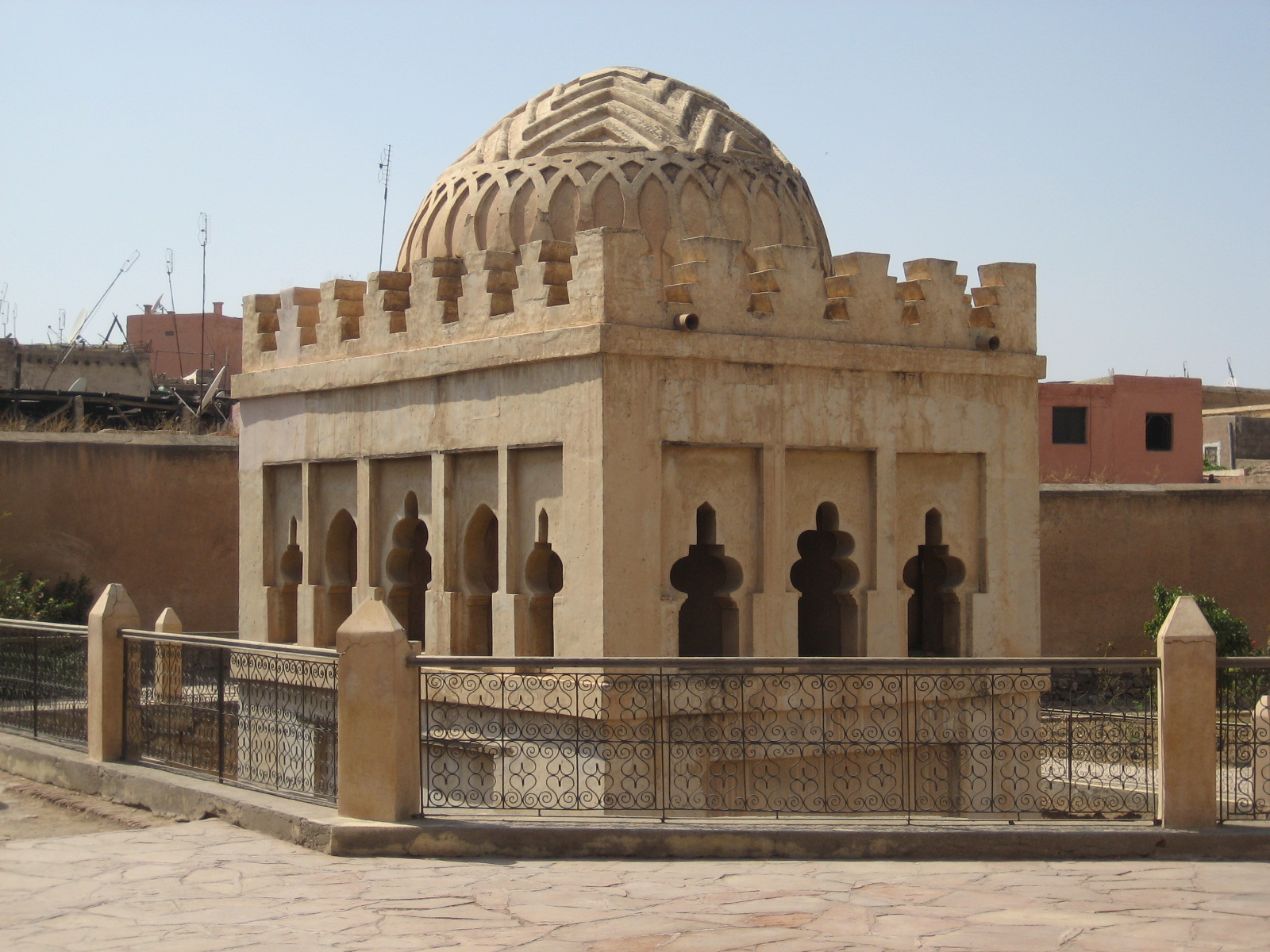
Near the Museum of Marrakech is La Koubba Almoravide which dates back to the 11th century and is an example of Almoravid architecture.
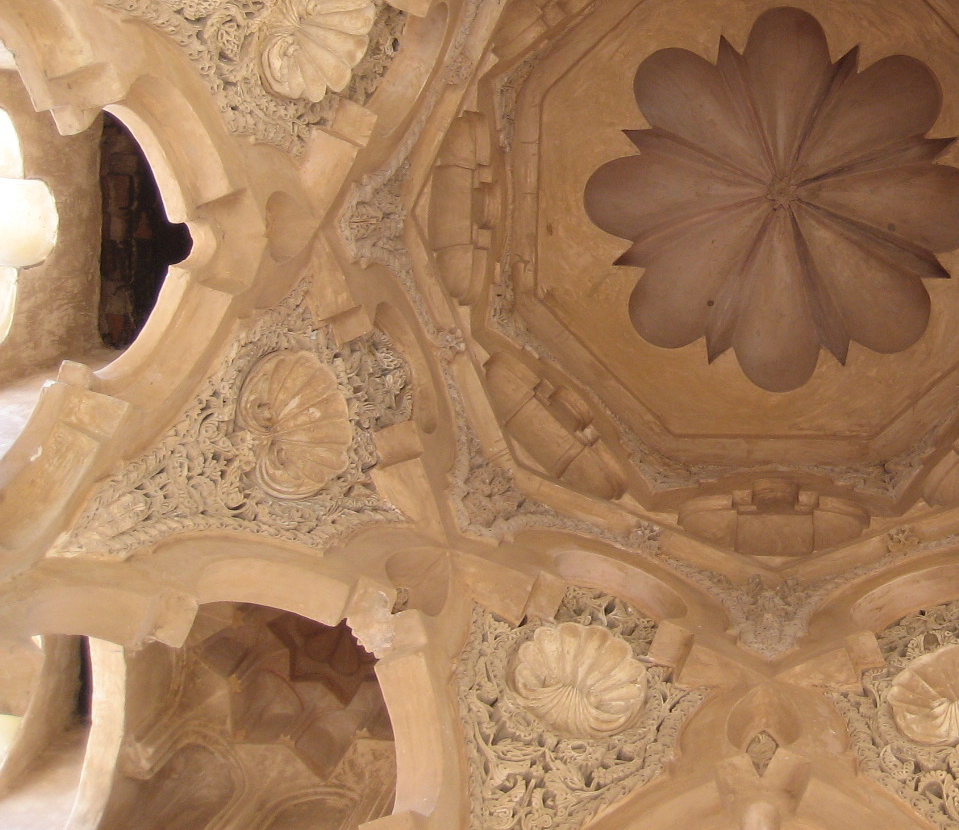
Under the dome of La Koubba Almoravide.

More on Marrakech and Fes coming soon.