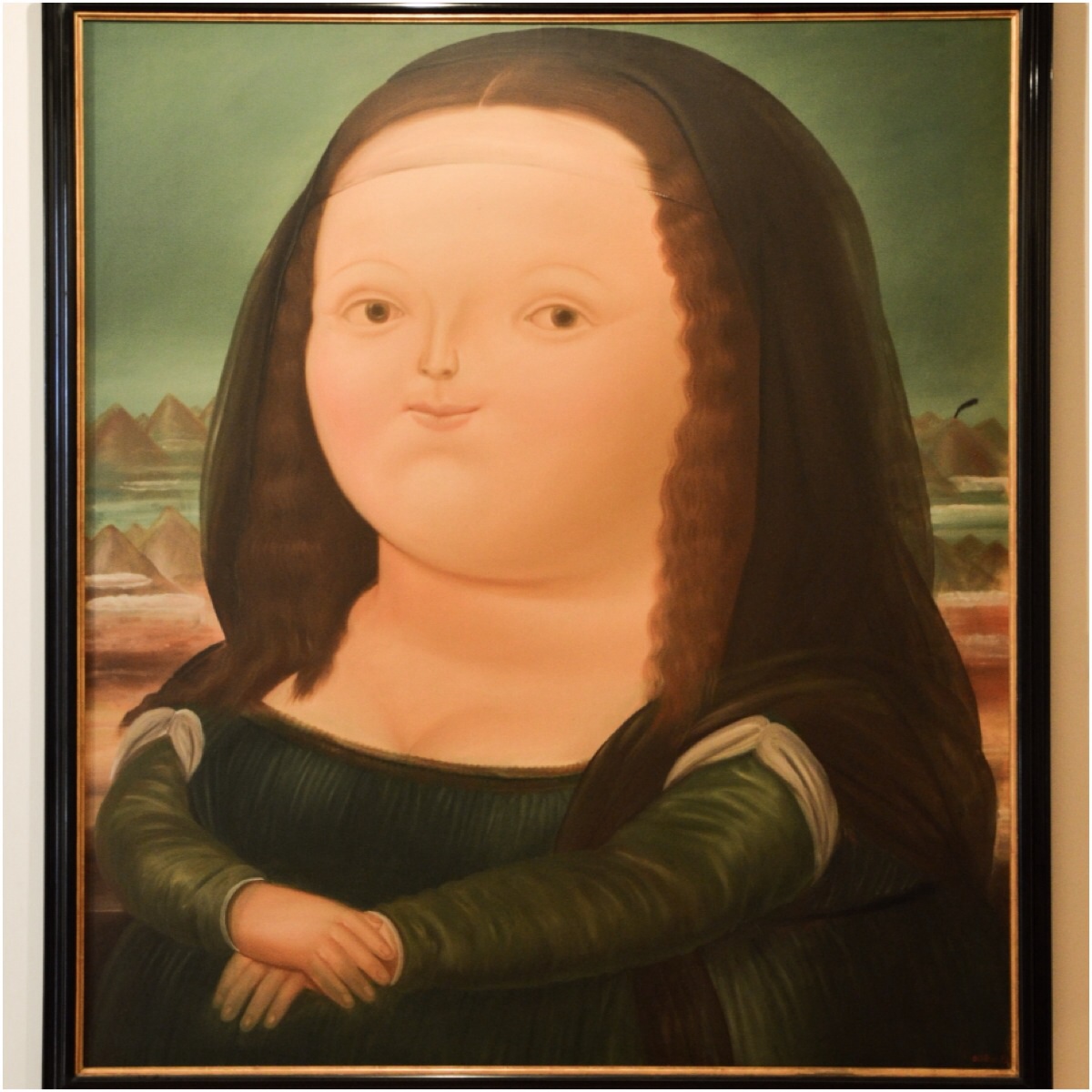
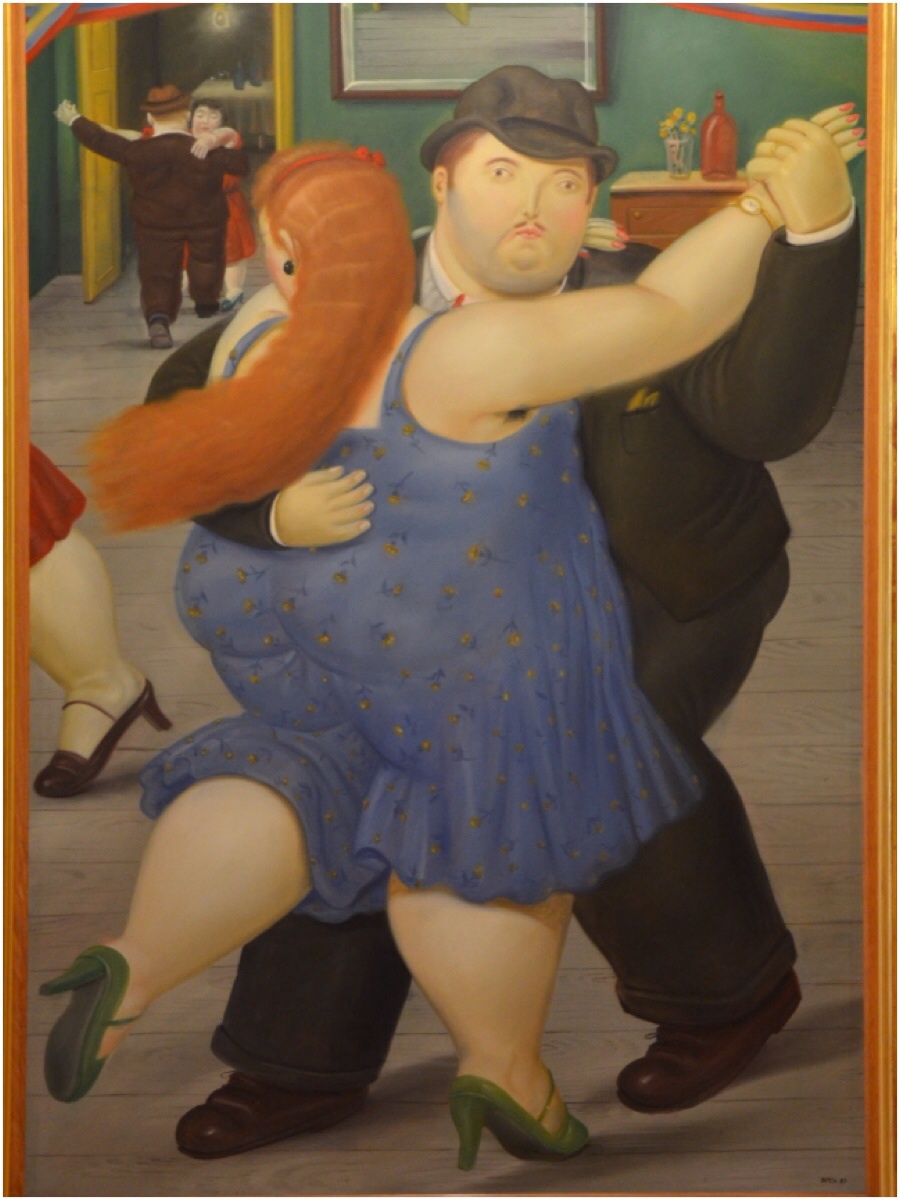
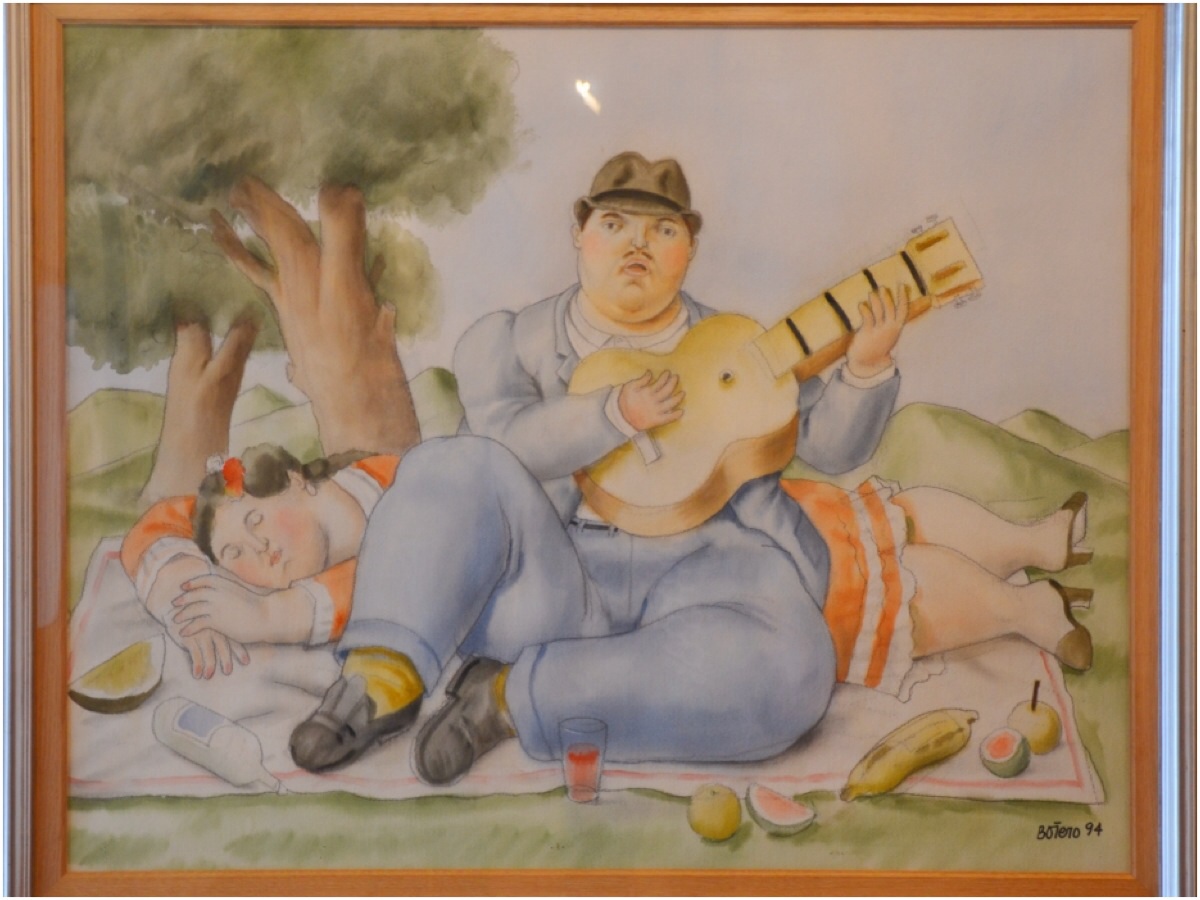
The highlight of our second day in Bogotá was a visit to the Museo Botero. Fernando Botero’s paintings and sculptures are characterized by disproportionately large people and objects. I felt as if I was looking at the portrayals through a different lens. They made me smile.
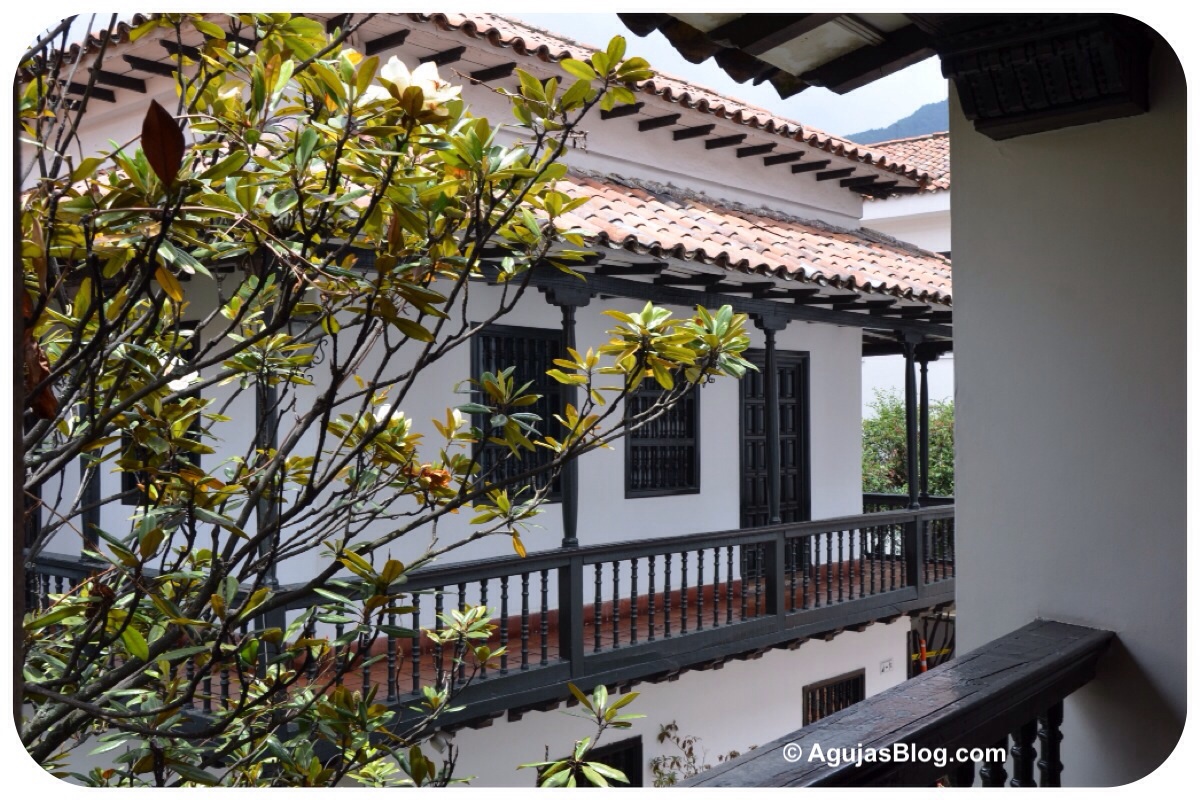
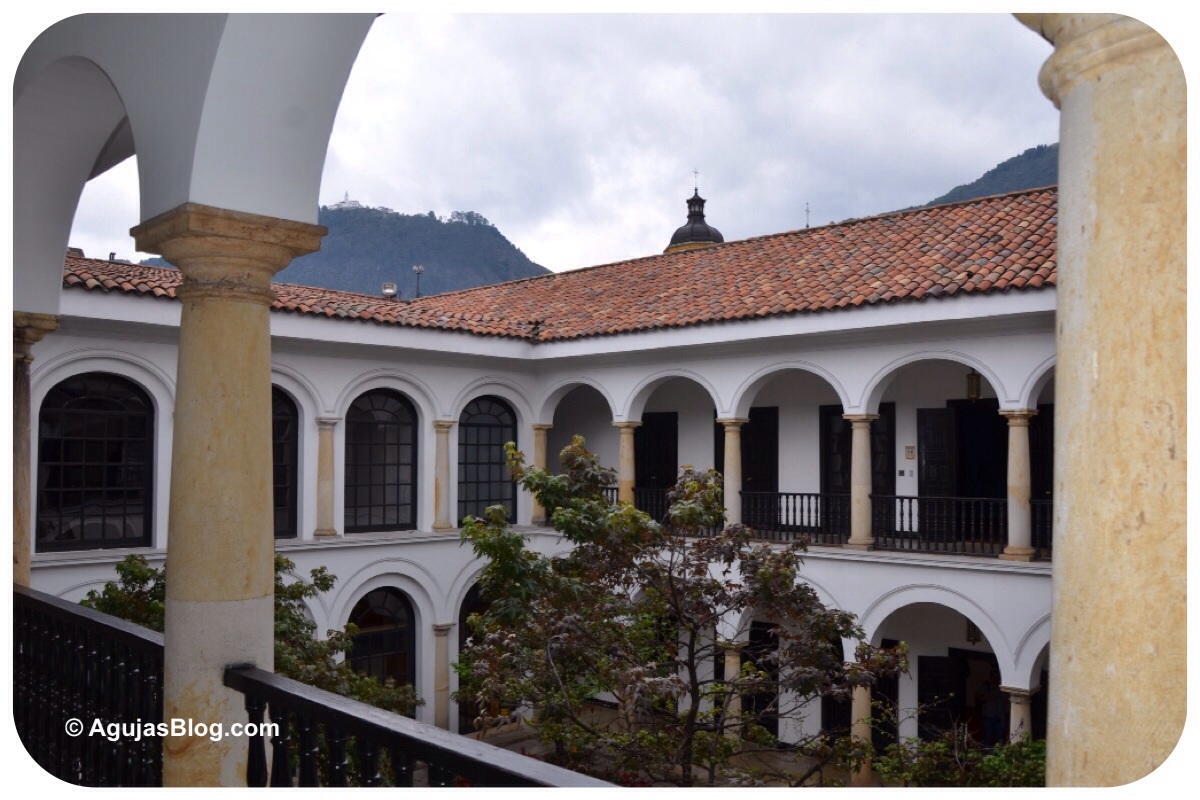
The museum is located inside a roomy house built in the early 1700s for the local archbishops. It has wide verandas and beautiful gardens with views of the nearby mountains.
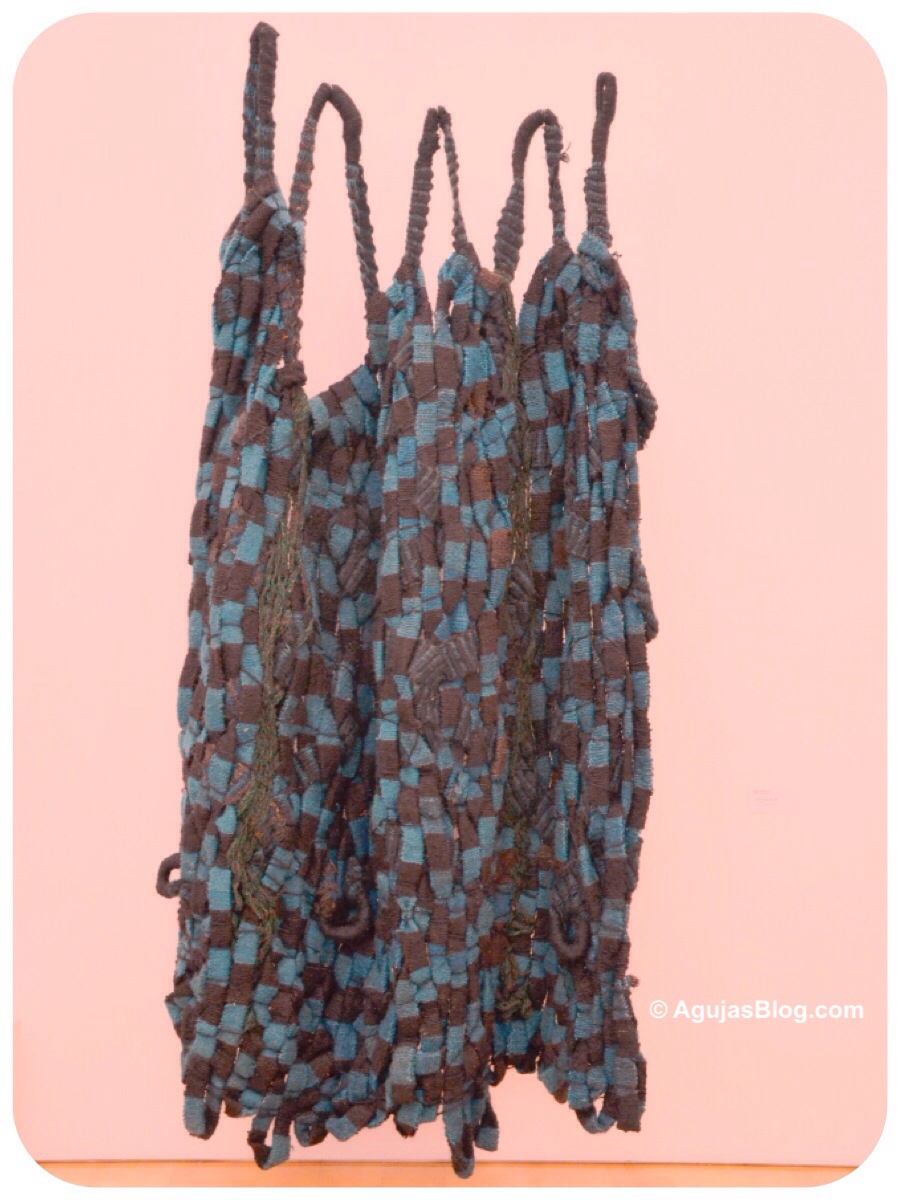
The museum also has a collection of art by international and local artists. This large textile was another favorite. It is the work of Olga de Amaral, a textile artist from Bogotá.
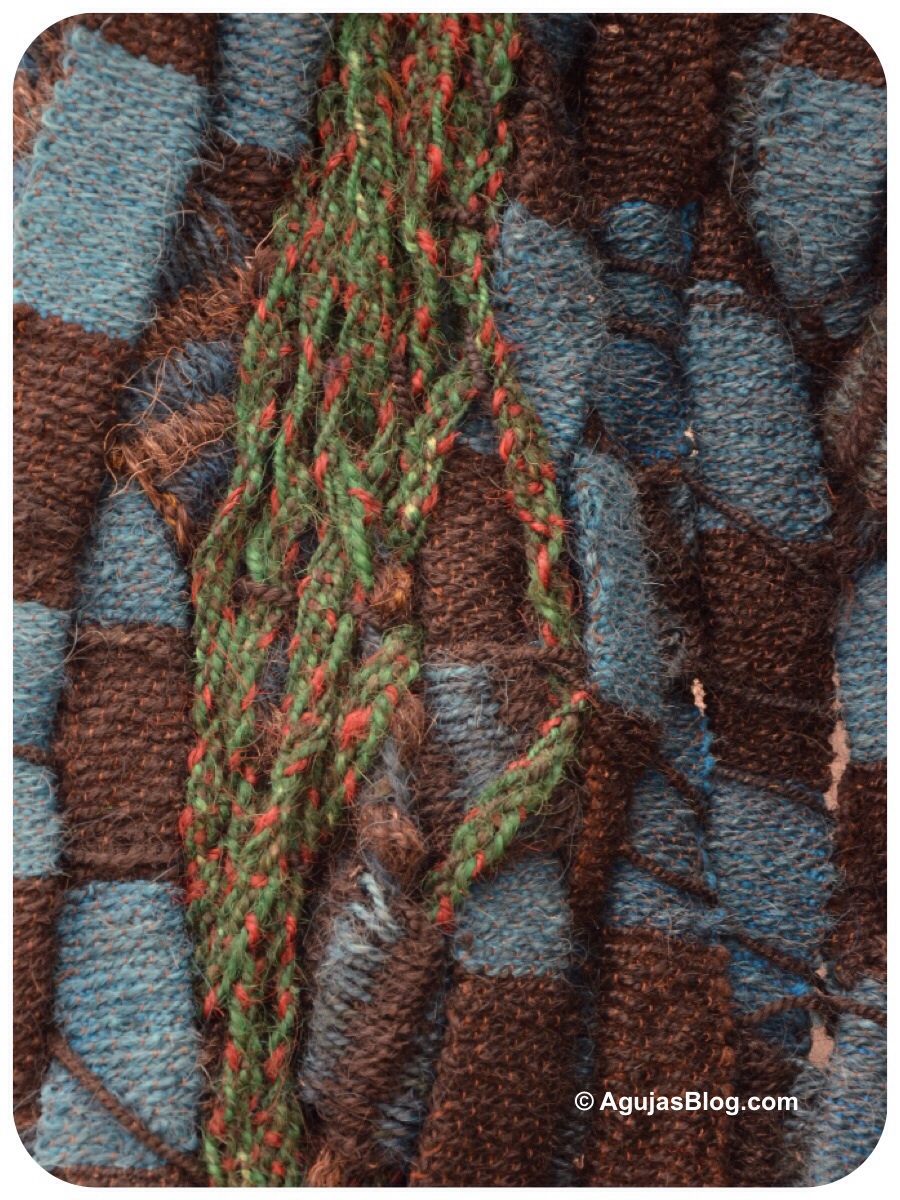
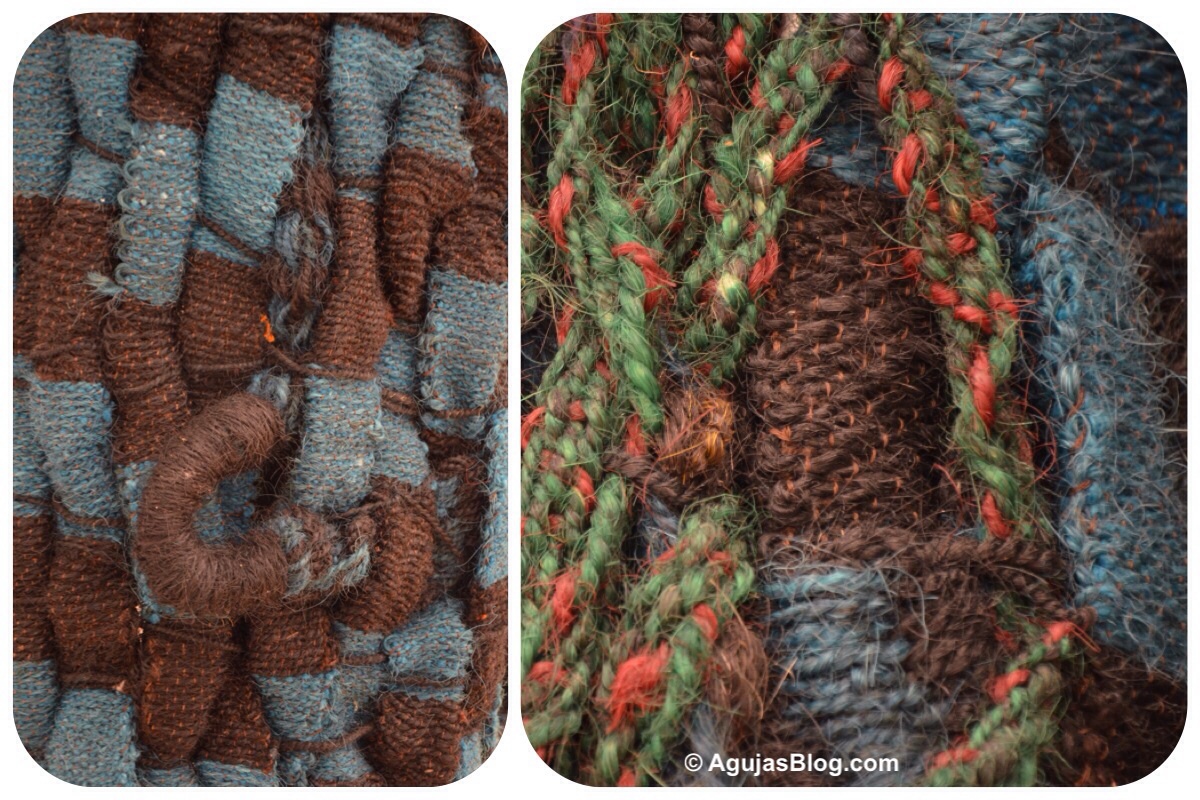
The tapestry is called Muro tejido No. 98 (Ca. 1972), made from animal and vegetable fibers.
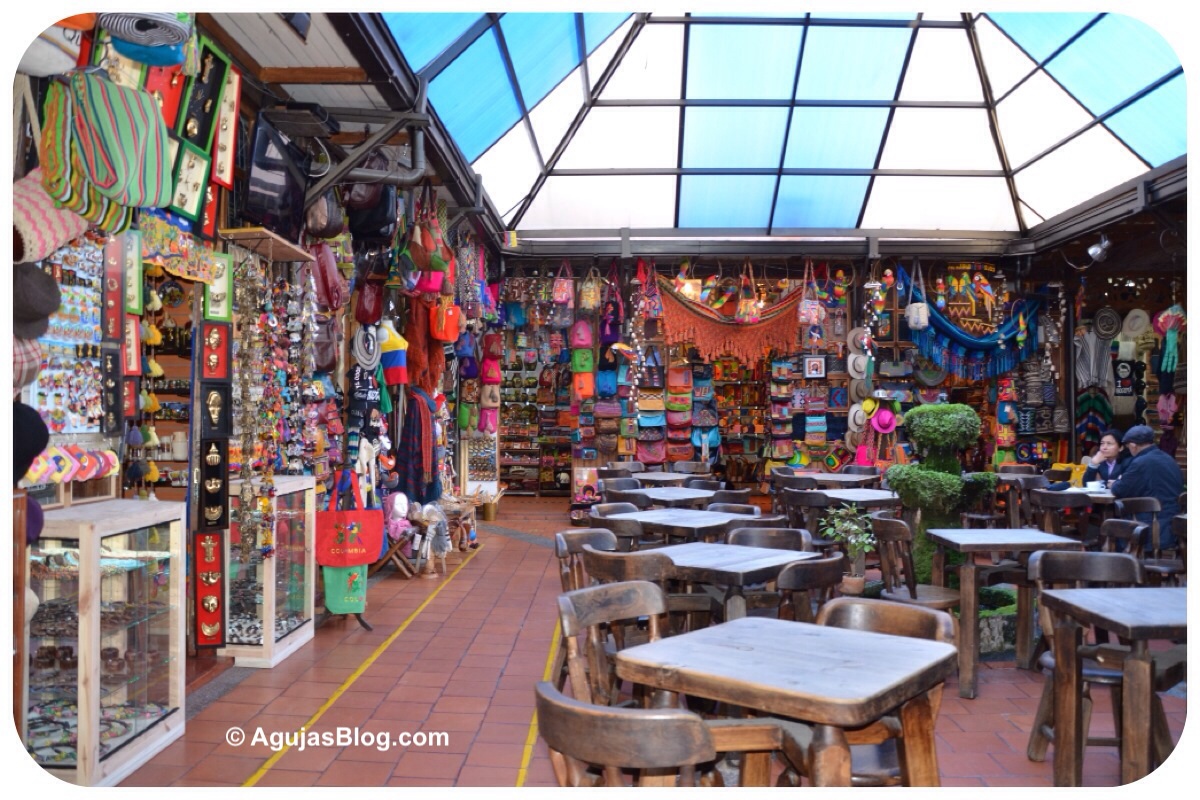
Our last stop was all about shopping! The Galería Artesanal de Colombia had countless tienditas (little stores) full of local arts and crafts
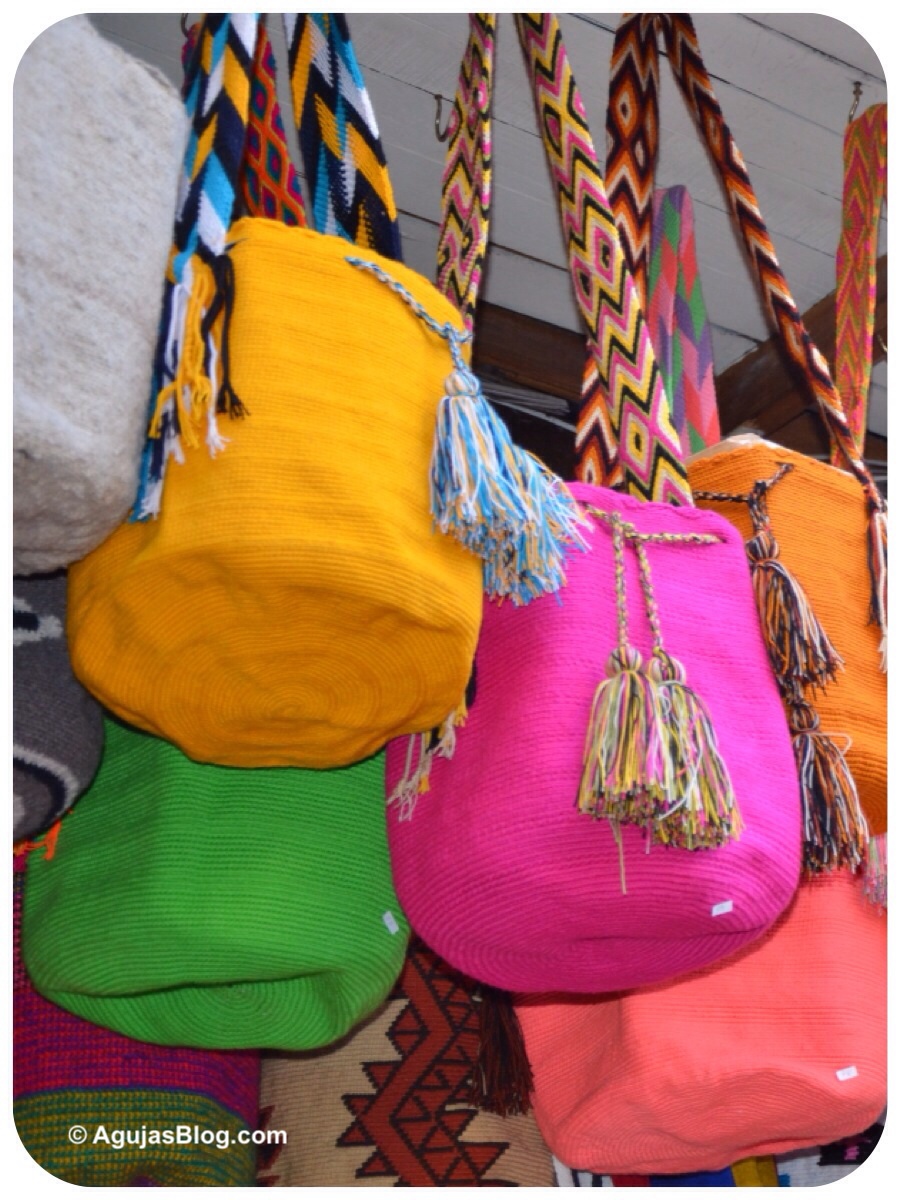
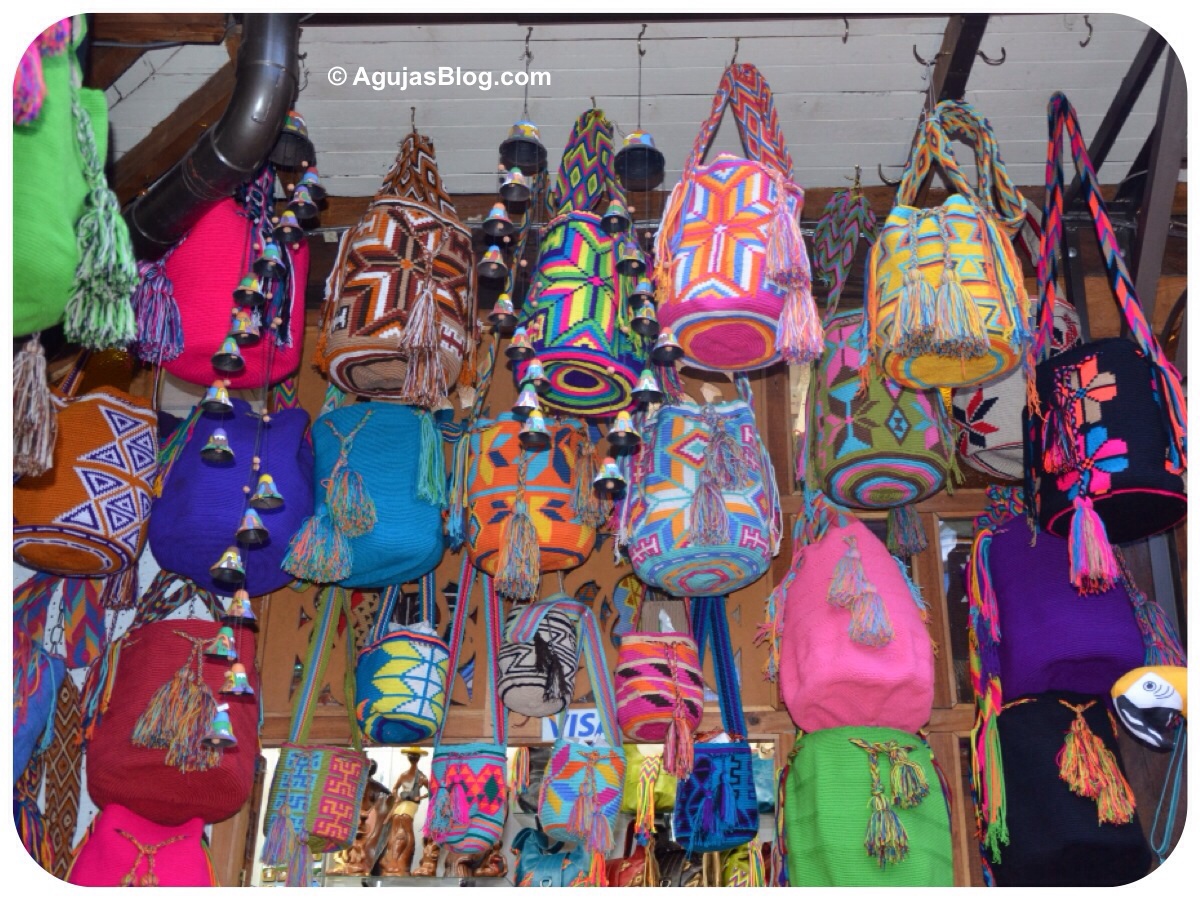
I fell in love with these exquisite crochet bags handmade by Wayúu women. The bags are crocheted with cotton thread and come in vibrant colors and interesting designs, each unique to the woman who made it. Multiple threads are woven together to make the straps.
As young Wayuu women come of age, they learn to weave and crochet Wayuu Mochila bags. According to legend, the tradition comes from “Wale´kerü”, a spider that taught the women how to weave their creative drawings into the Mochila bags. Each design incorporated into every Mochila bag is unique to the weaver, telling a story through the bag’s colors, patterns and shapes. (Source)
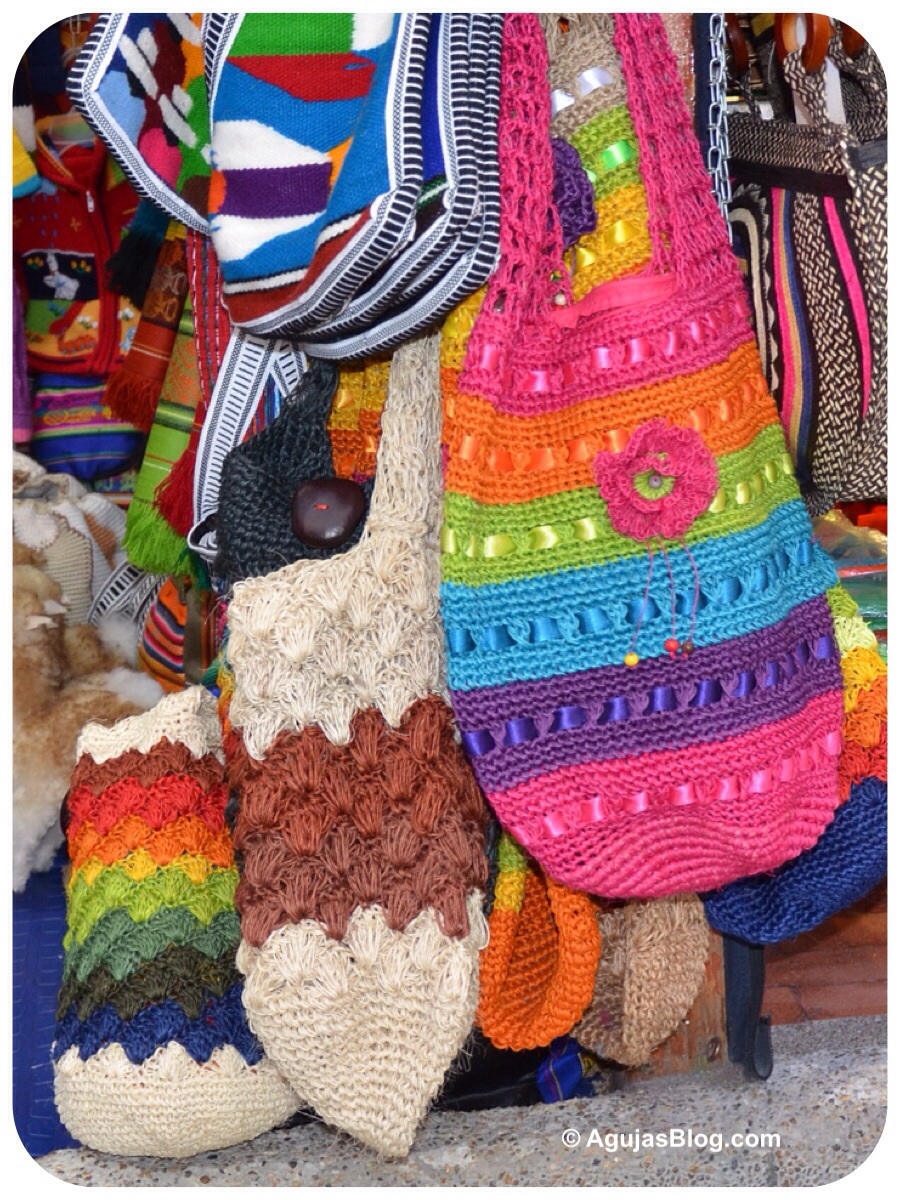
Along the long aisles of hammocks, baskets, bracelets and hats, there were more crocheted bags.
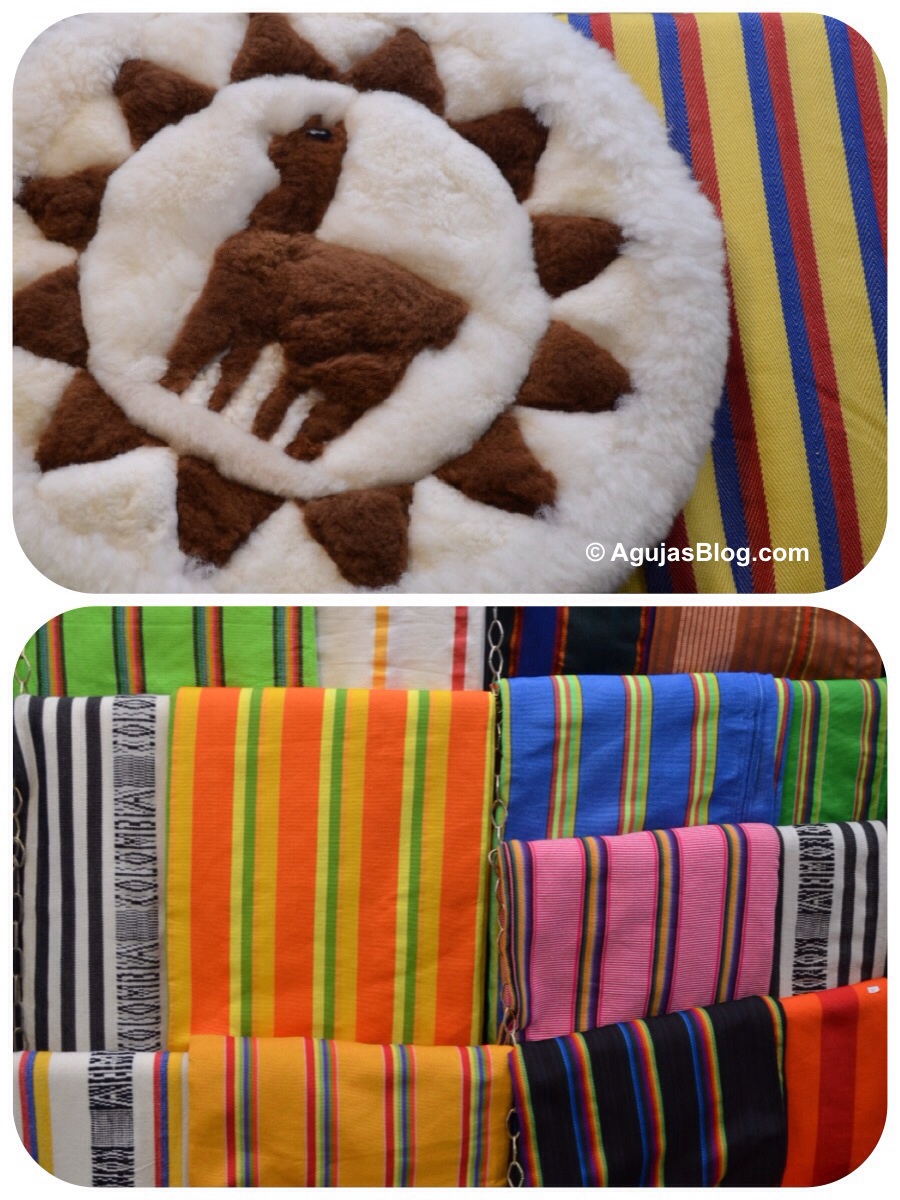
There were also textiles woven in bright colors.
By the end of the day, my head was spinnng, possibly due to the explosion of color, or the altitude! Another amazing day in Bogotá.
This was our first visit to Colombia and now I know where all the beautiful people come from. The capitol is nestled in a valley surrounded by mountains. The vegetation is rich and green and vibrant with colorful flowers. The people are charming and open and beautiful inside and out. Here is a recap of three wonderful days in Bogotá.
Day One
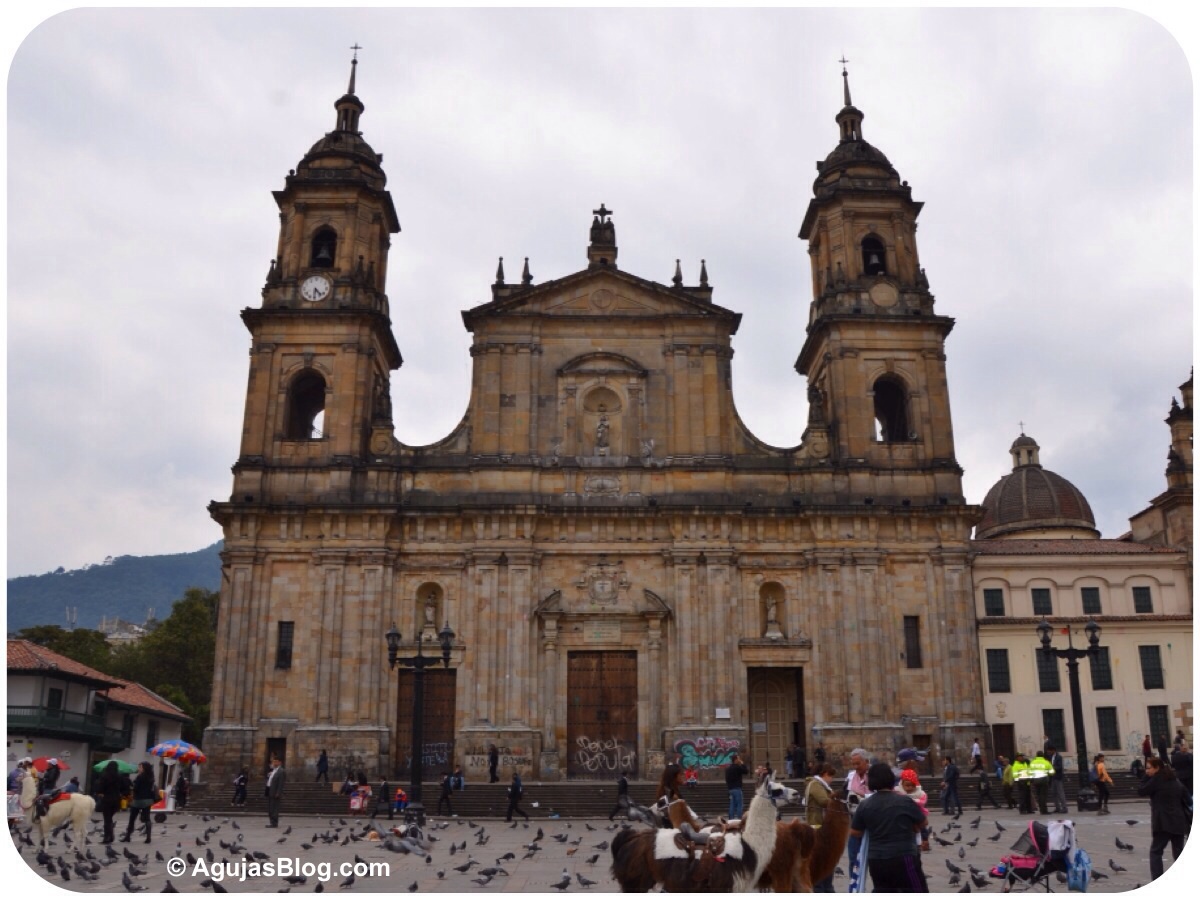
We walked through the cobblestoned streets of the historic La Calendaria district. At its center is Plaza Bolívar anchored at one end by the Cathedral of Bogotá. The Cathedral was built in the early 1800s (source) and has seen better days. But the church and the plaza were still the heart of the city pulsing with people and activity.
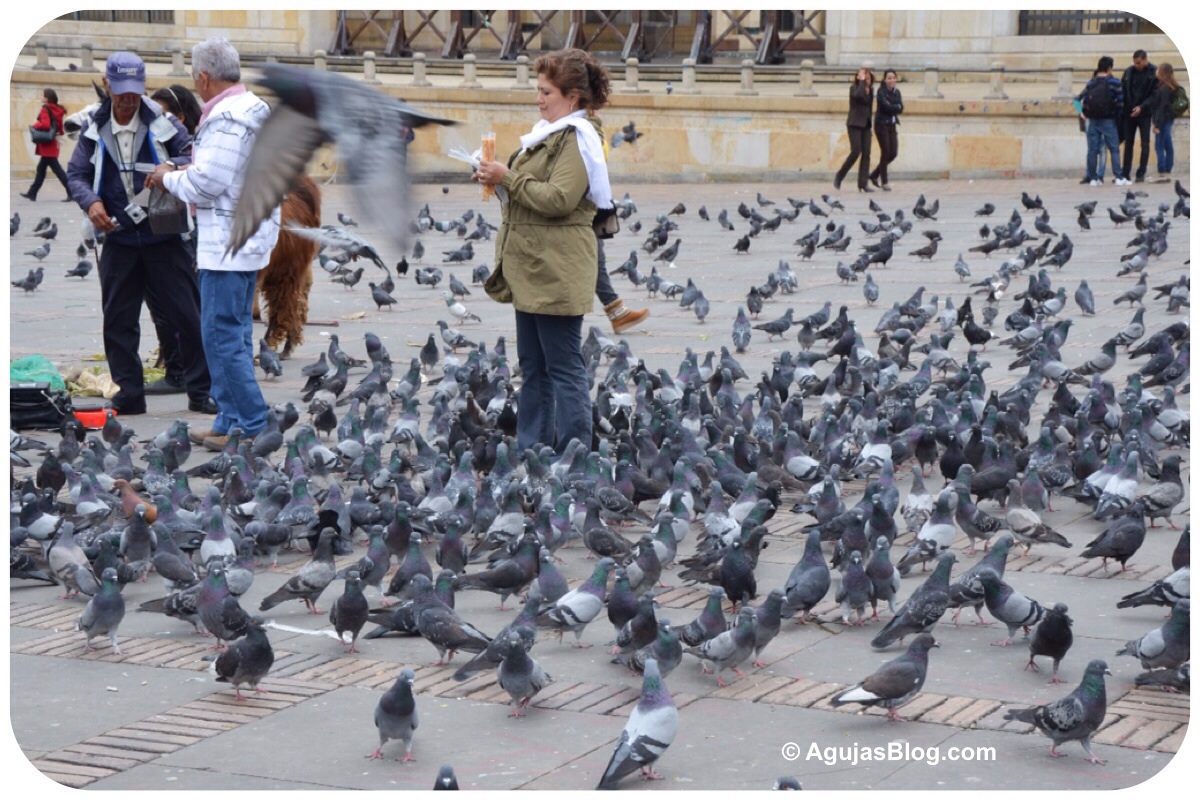
The plaza was taken over by pigeons, hundreds of them. People were buying dried kernels of corn from the street vendors and feeding them. For a moment, I had the sensation that I was in the middle of a Hitchcock movie.
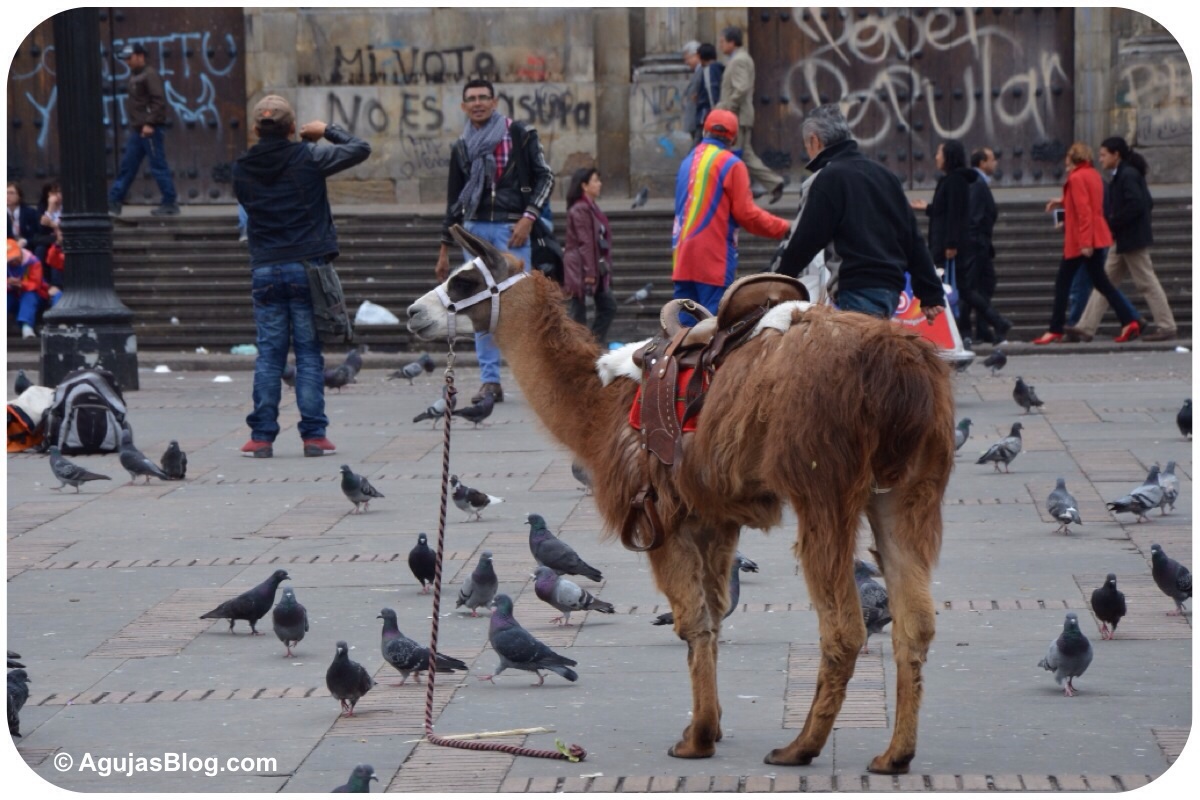
And what’s a plaza without llamas!
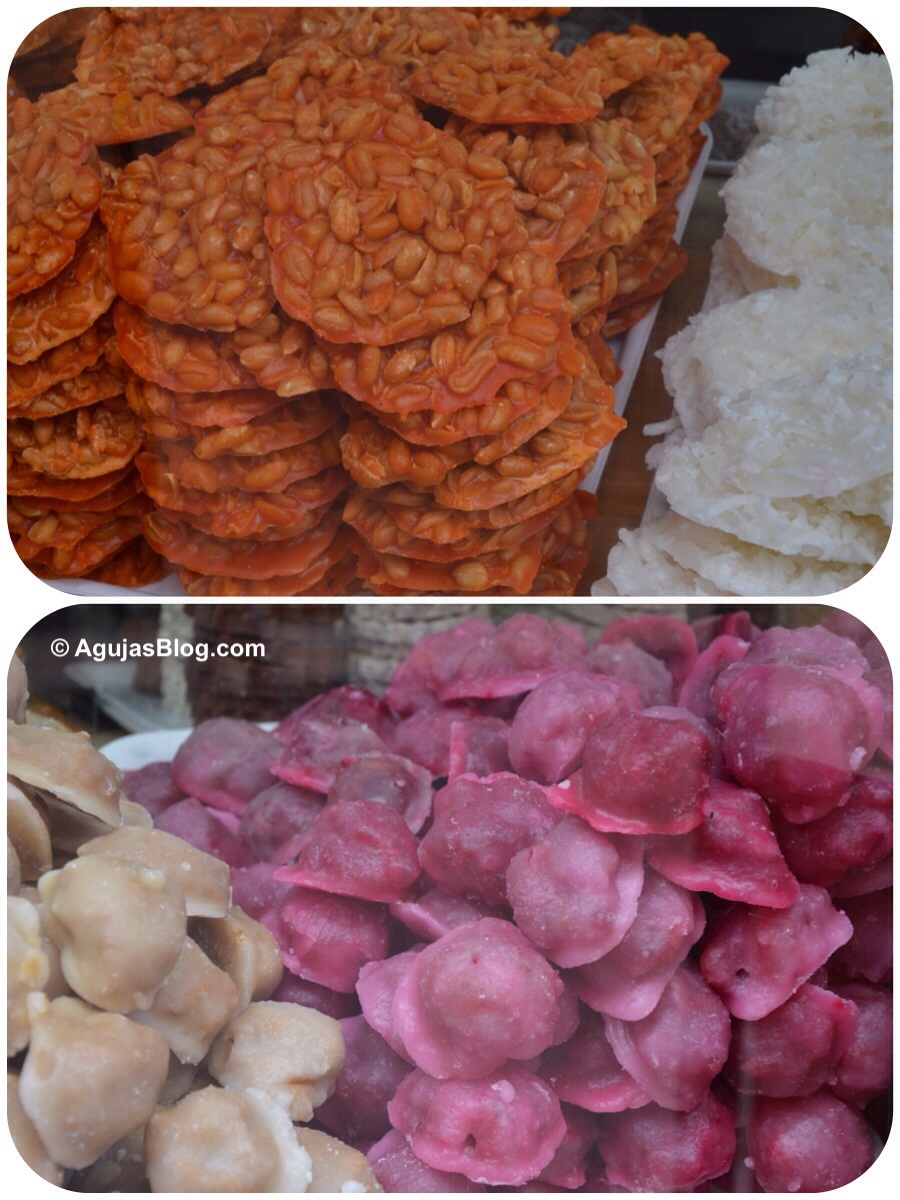
Close to Plaza Bolívar is a very small restaurant called “La Puerta Falsa” (The Fake Door) that has been around since 1816 (source). The first thing that draws you in is the window featuring trays full of these.
The ones on top are cocadas de arequipe con cacahuates y cocadas blancas (coconut with dulce de leche and peanuts and sugared coconut). The goodies at the bottom are called Marquesas. They are filled with fruits such as guanábana and moro (sour sop and mulberries).
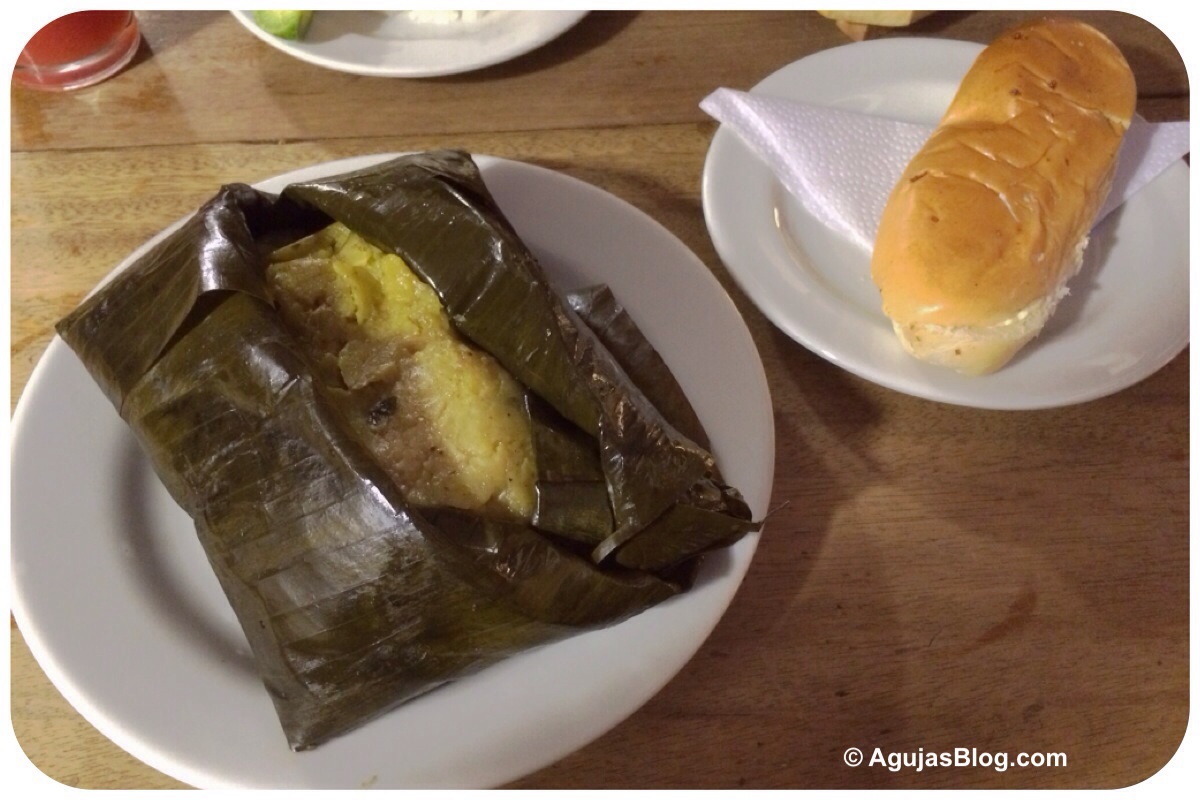
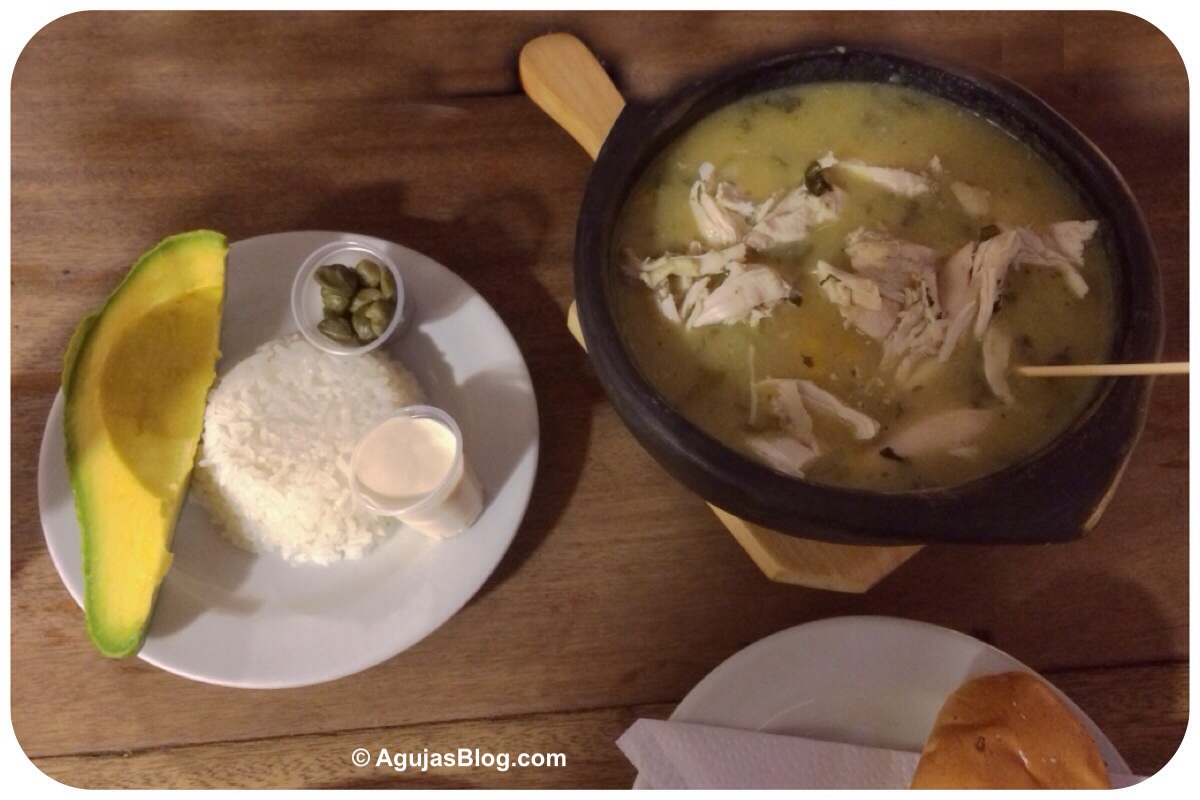
Inside the tiny restaurant, we had a typical Colombian meal of tamales and ajiaco. The tamale was filled with a delicious mixture of cornmeal, chicken, chick peas and carrots all wrapped and tied inside large green banana leaves. To accompany it I had a glass of fresh mulberry juice. My husband had the Ajiaco Santafereño, a thick soup of chicken, yellow potatoes and corn. It was accompanied by rice, avocado slices, crema fresca (fresh cream) and capers.
It so happens that “La Puerta Falsa” was featured in an episode of Parts Unknown with Anthony Bourdain. Watch Anthony enjoy a steaming tamale.
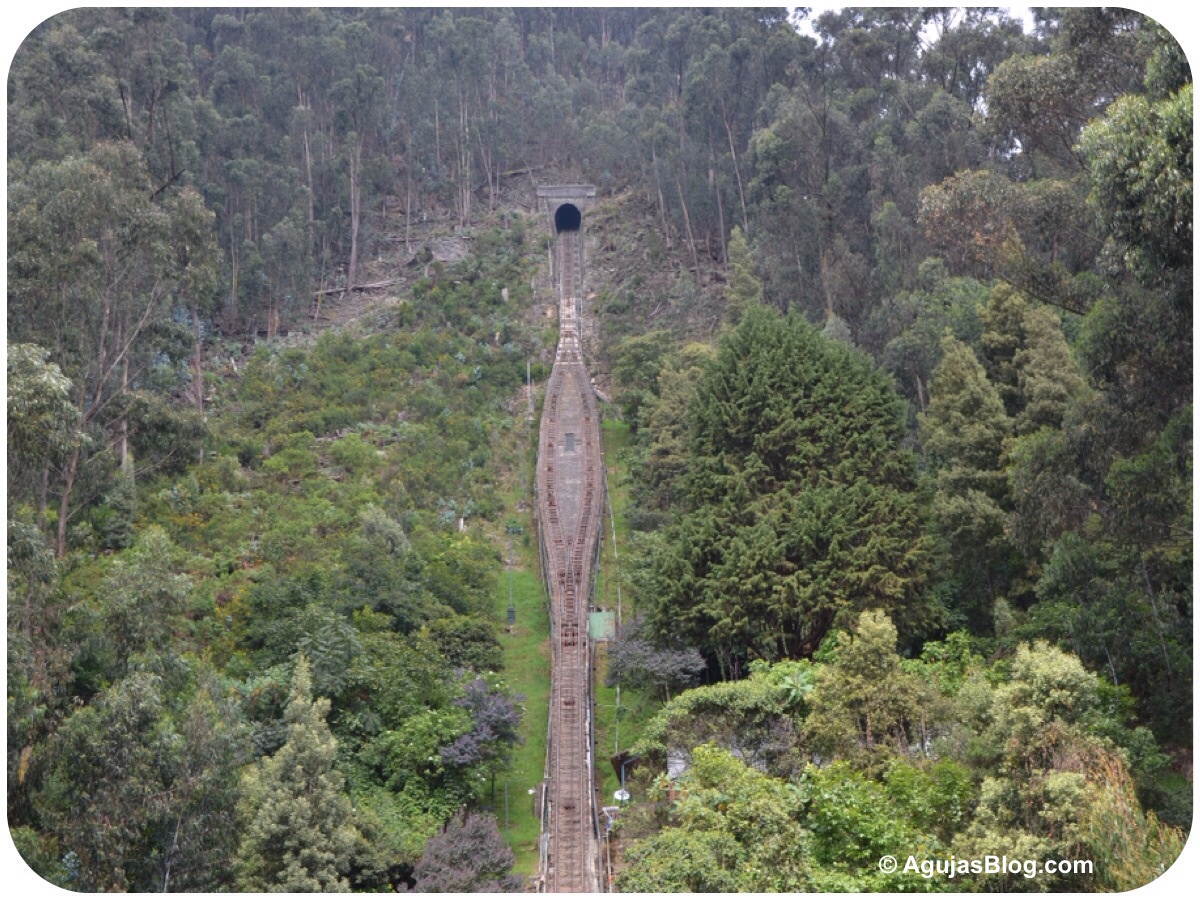
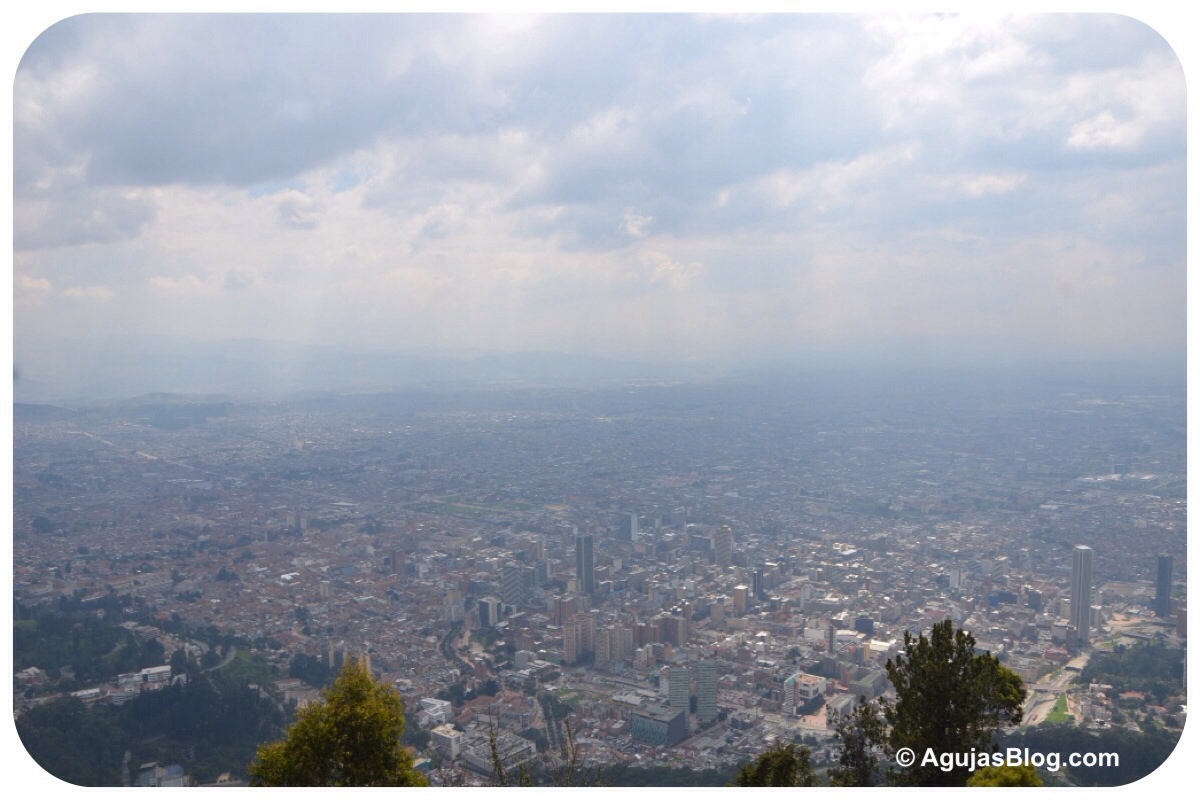
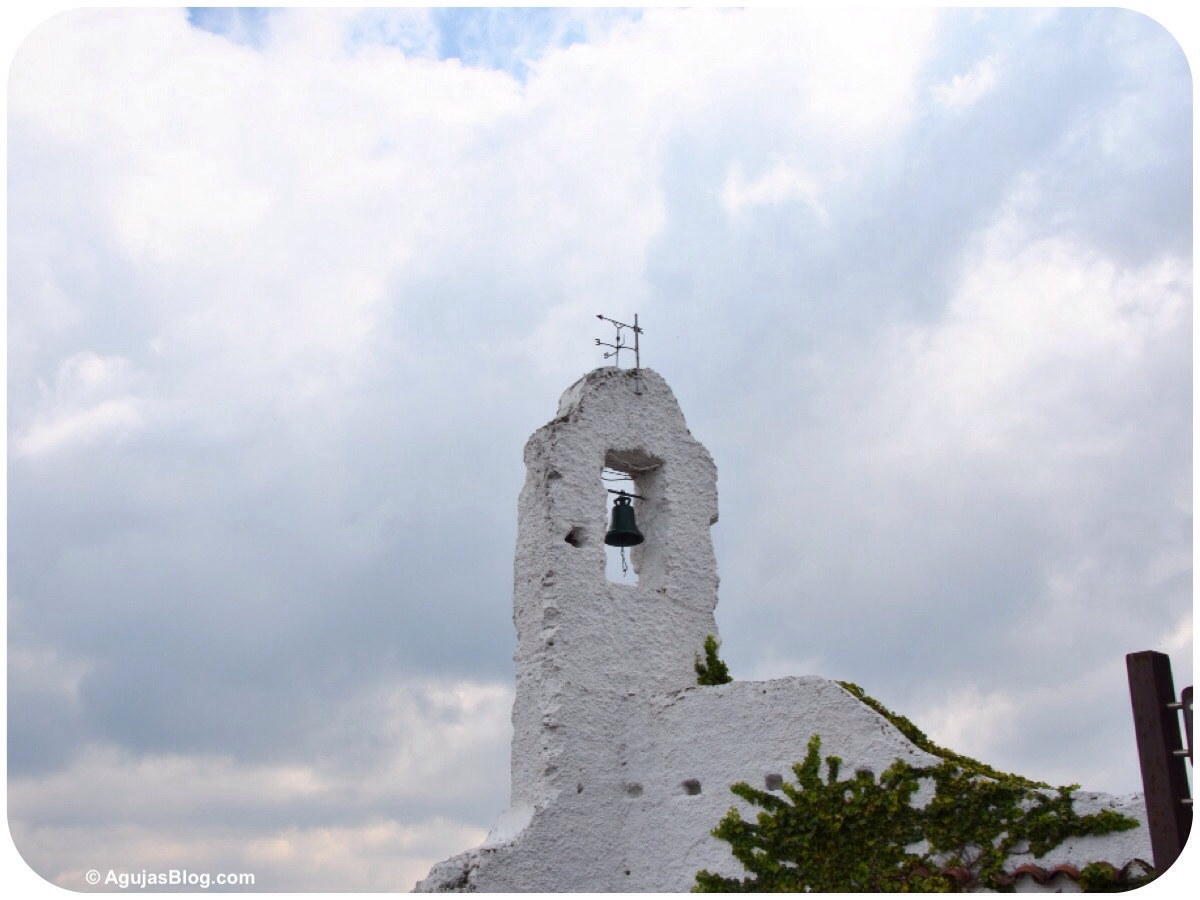
Our next stop was el Cerro Monserrate, a mountain in the center of the city. One can hike up or take either a train or cable car. We chose the teleférico (cable car). The cable car took us over the funicular rails below.
Once up the mountain, from 3,170 meters above sea level, there was this incredible view of Bogotá. The city stretched farther than I could see, possibly due to the smog. According to Colombia’s Official Travel Guide, the city has over 10 million people.
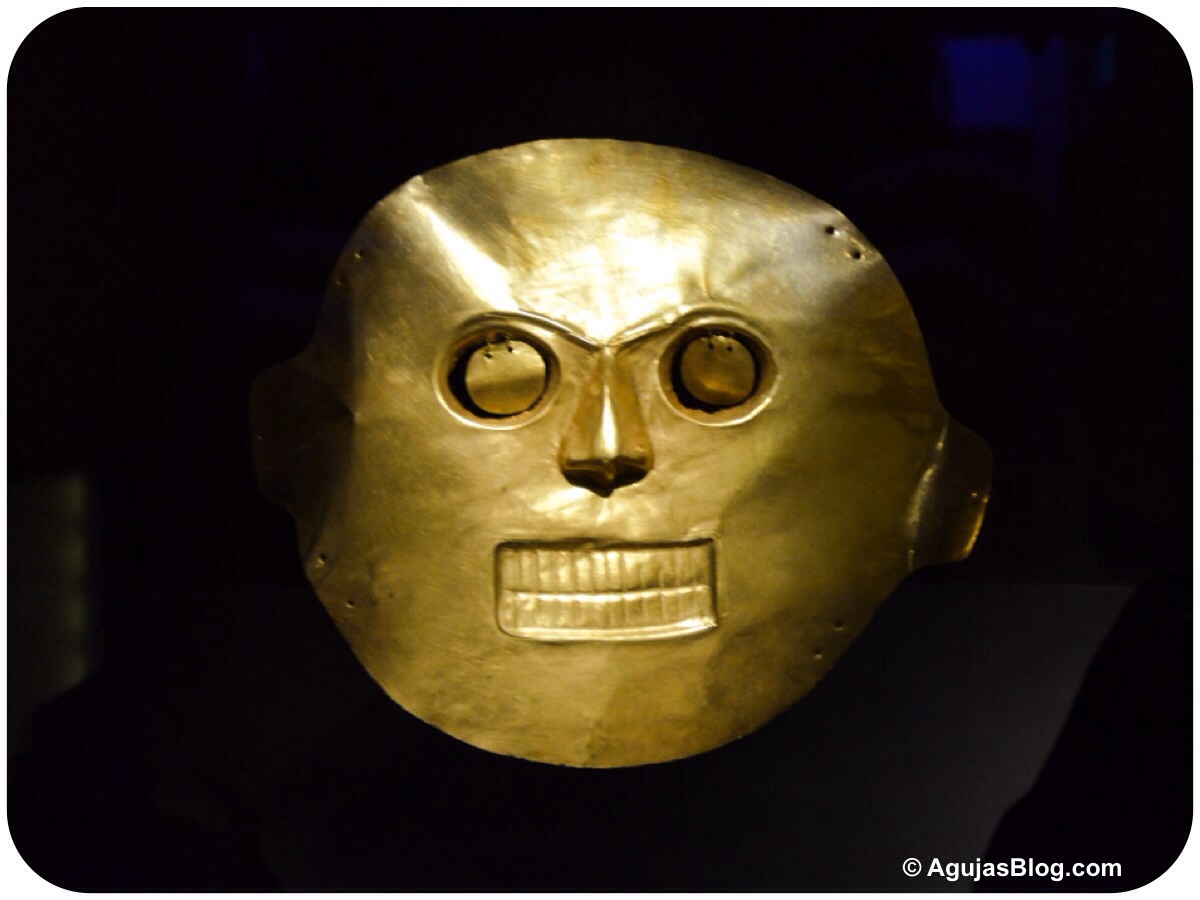
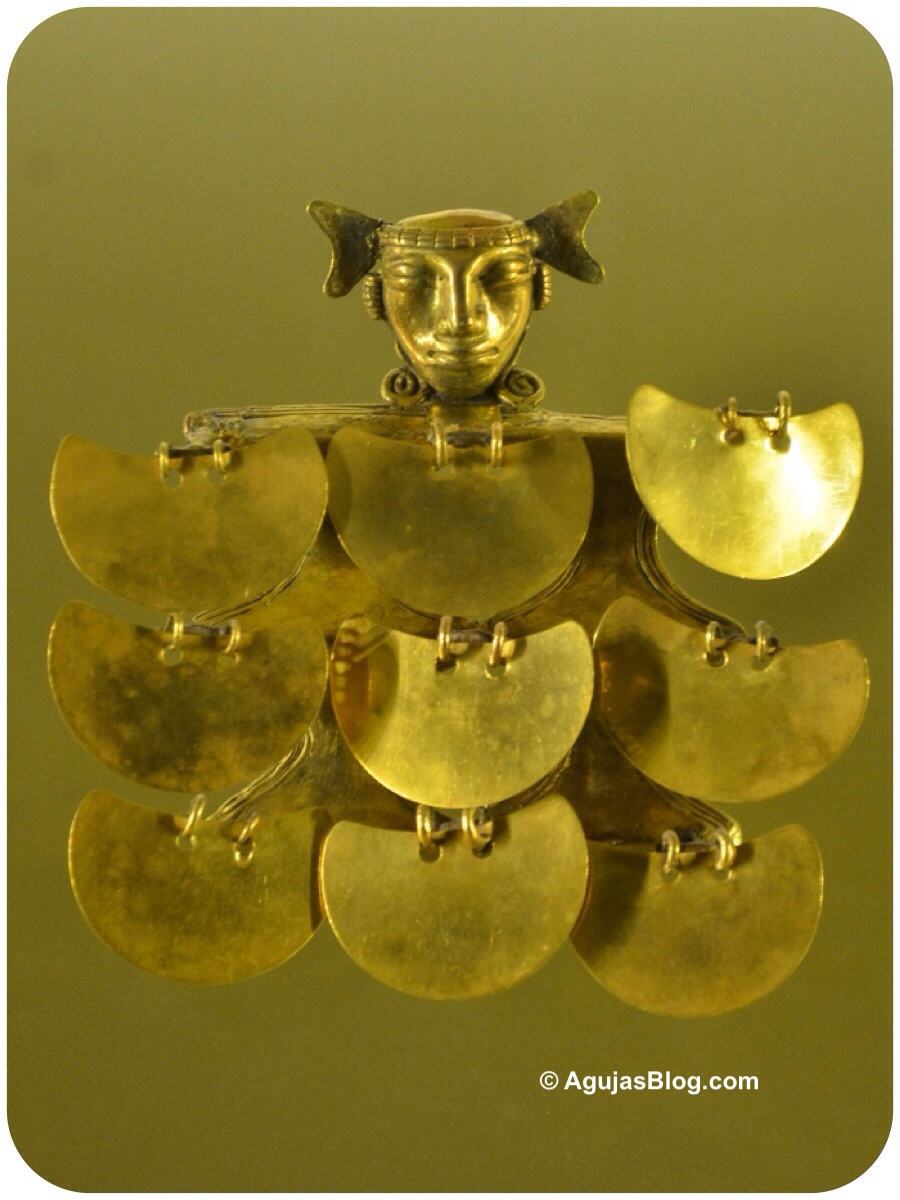
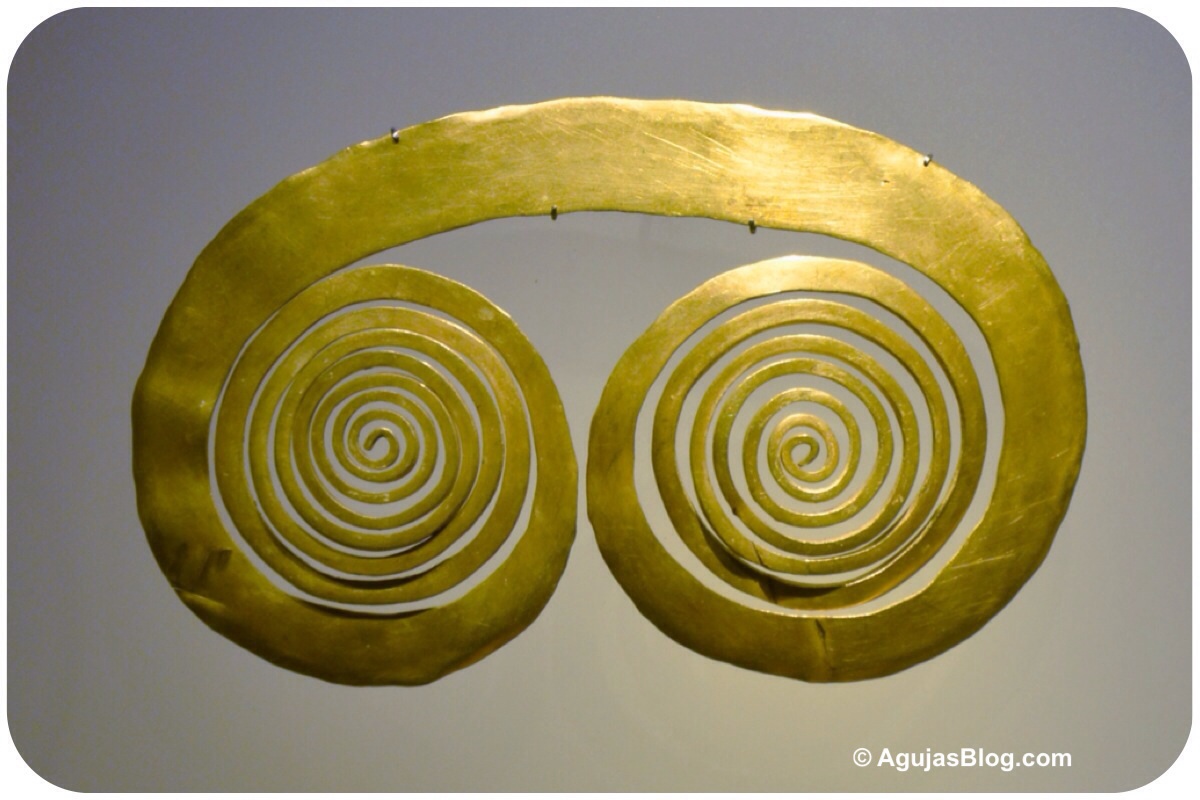
The Museo de Oro (Gold Museum) featured pre-Colombian art hammered out of gold.
Gold funeral masks…made of the sacred metal…immortalized the chieftains with their symbolic power.
During ceremonies, the hanging plates on ornaments twinkled in the light and gave off metallic sounds…
Time was conceived as being cyclical or like a spiral…
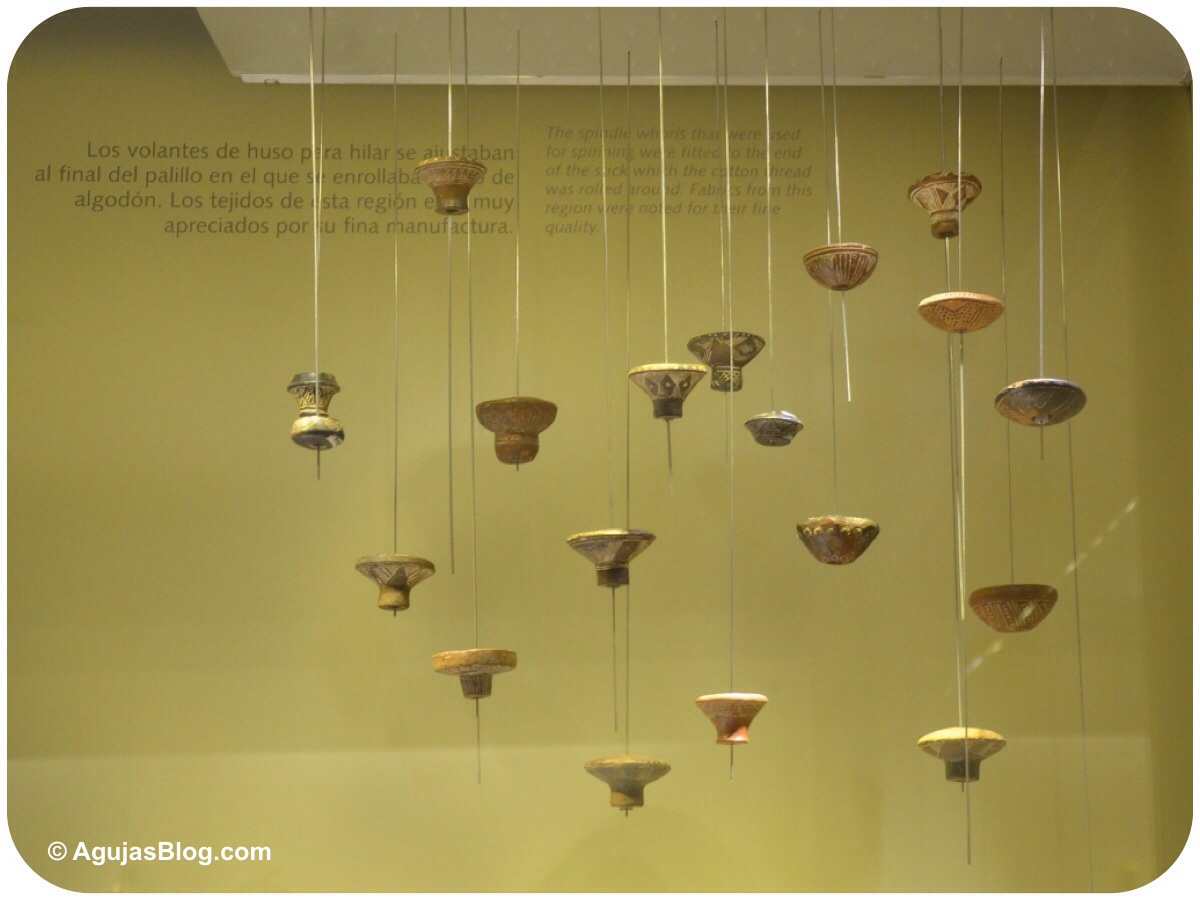
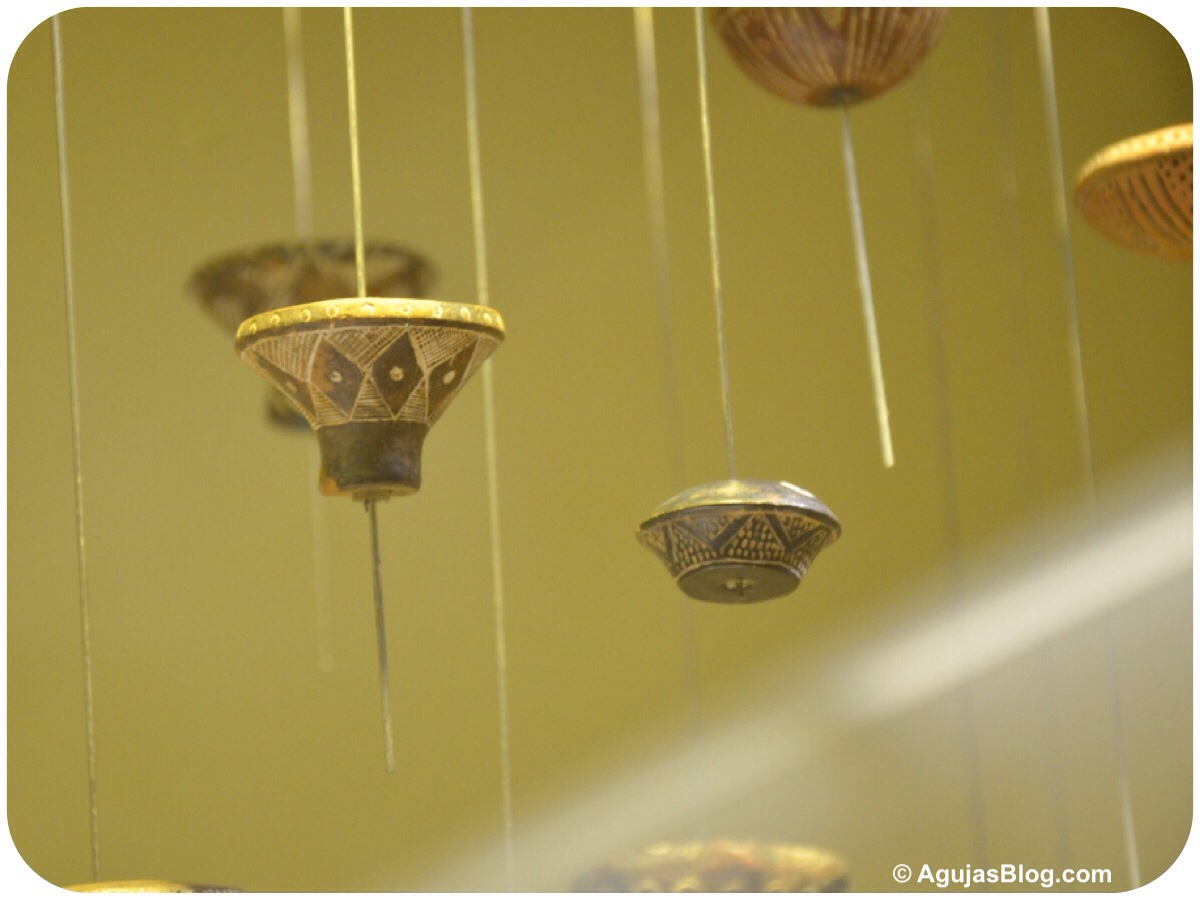
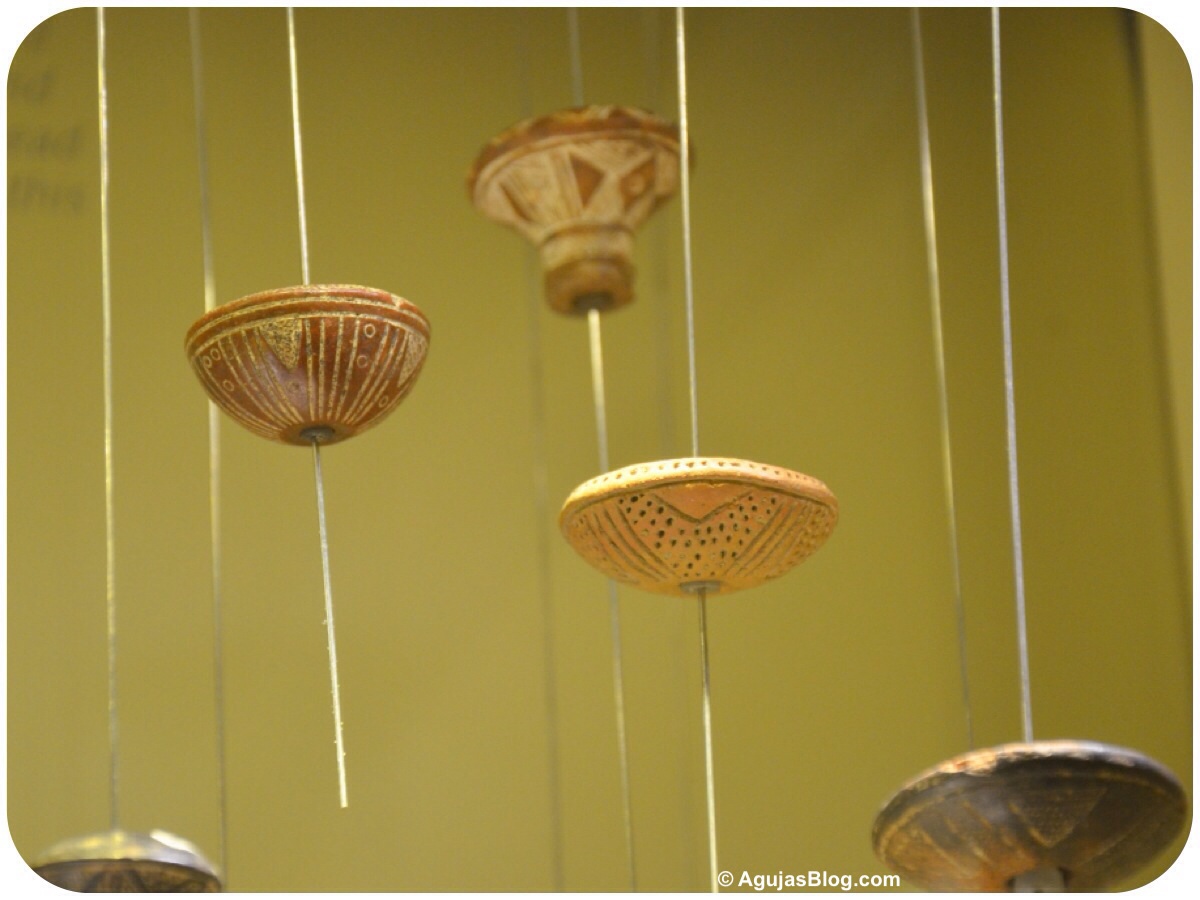
As I turned a corner to the next exhibit room, I saw this.
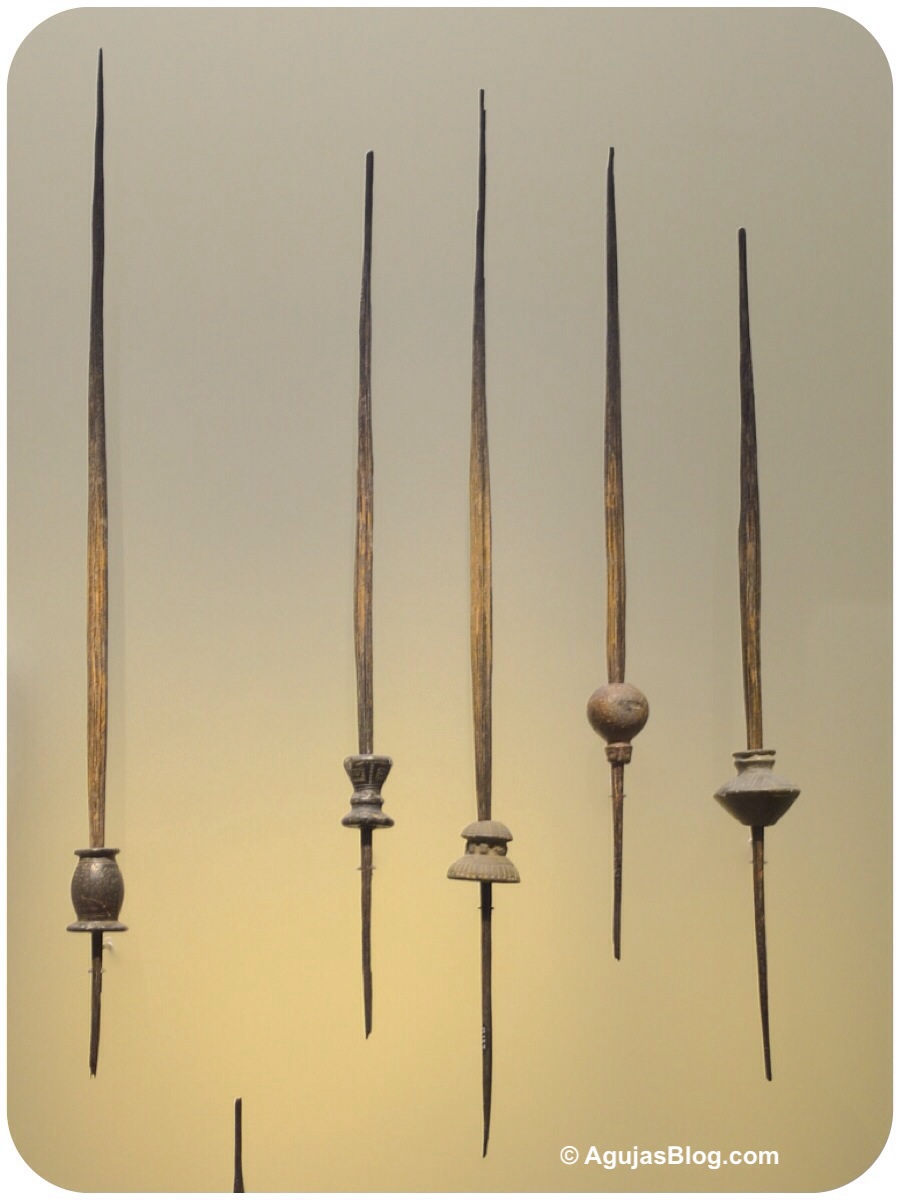
The spindle whorls that were used for spinning were fitted to the end of the stick which the cotton thread was rolled around. Fabrics from this region were noted for their fine quality.
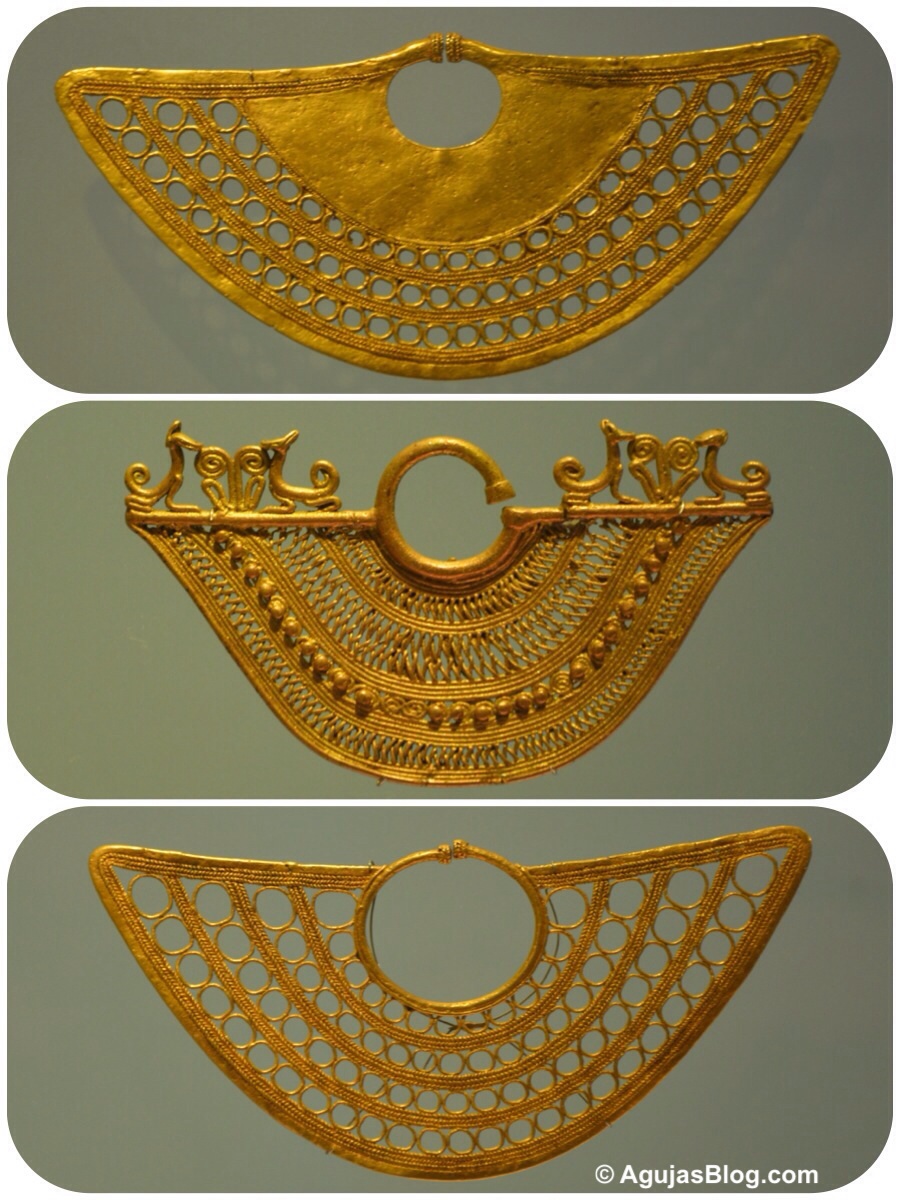
Like a metaphor, the weave notion can be seen in the filigree work in earrings…and in other objects… [200 a.C – 1000 d.C]
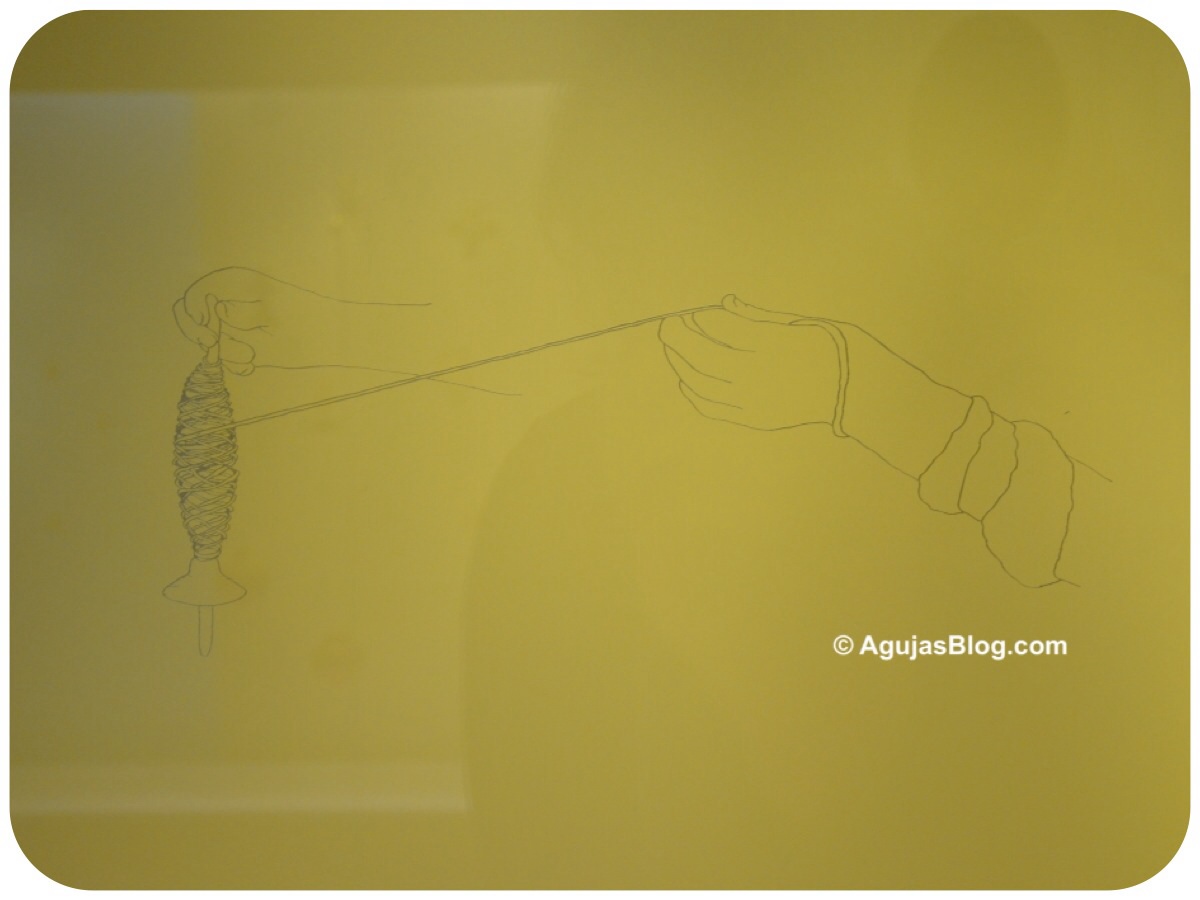
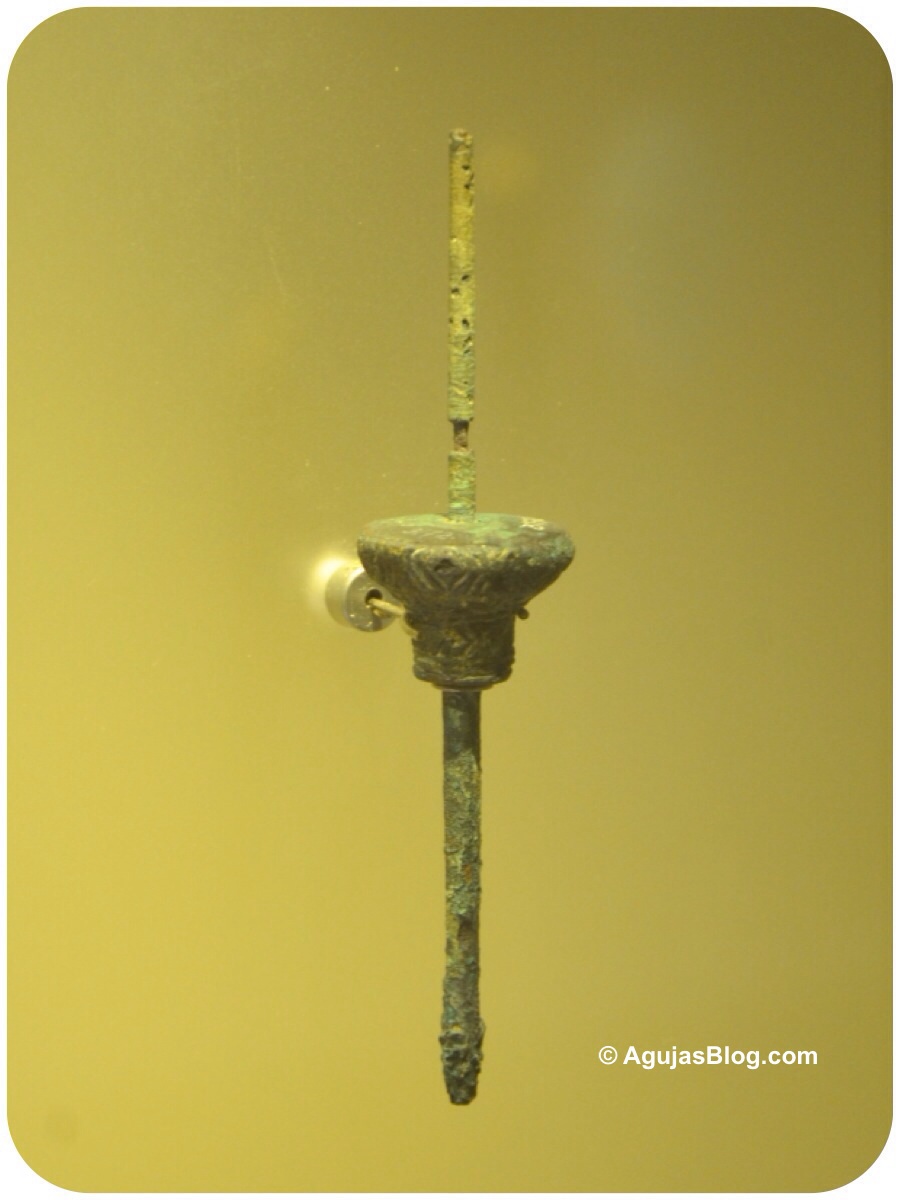
Cotton and sisal were spun using spindles that were driven by engraved stone whorls…
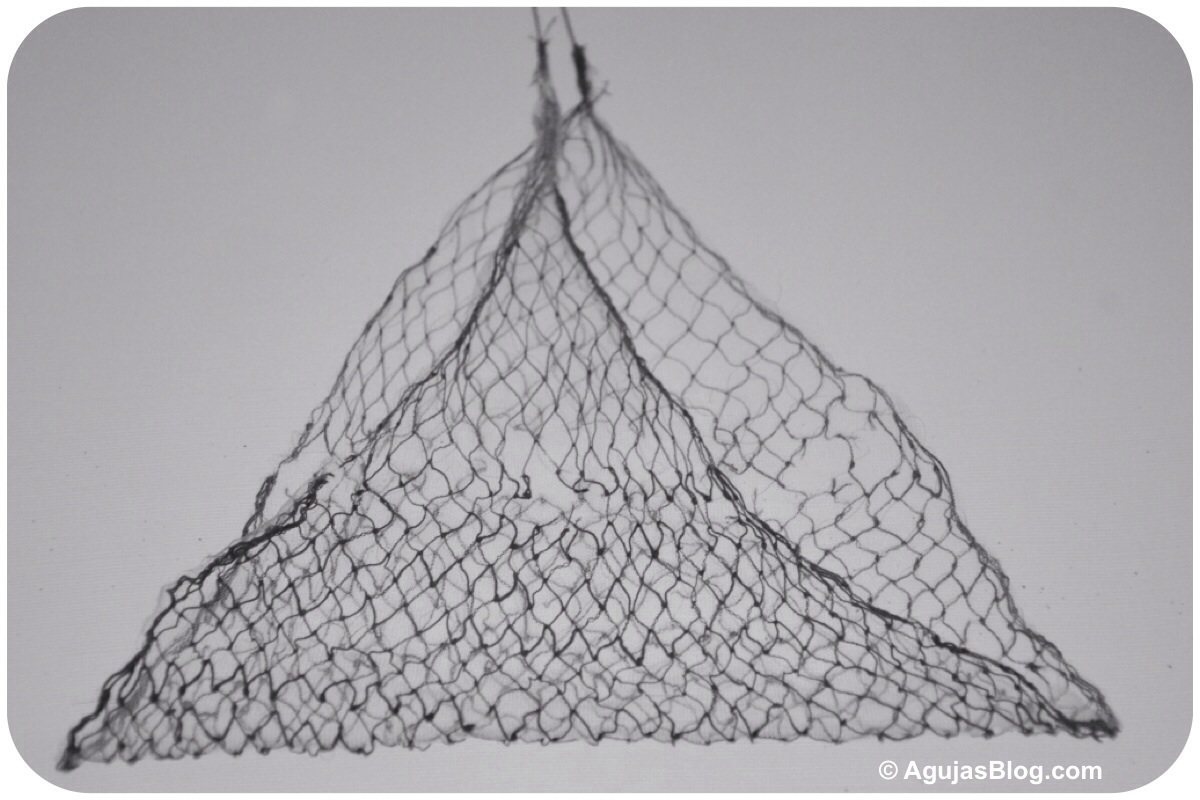
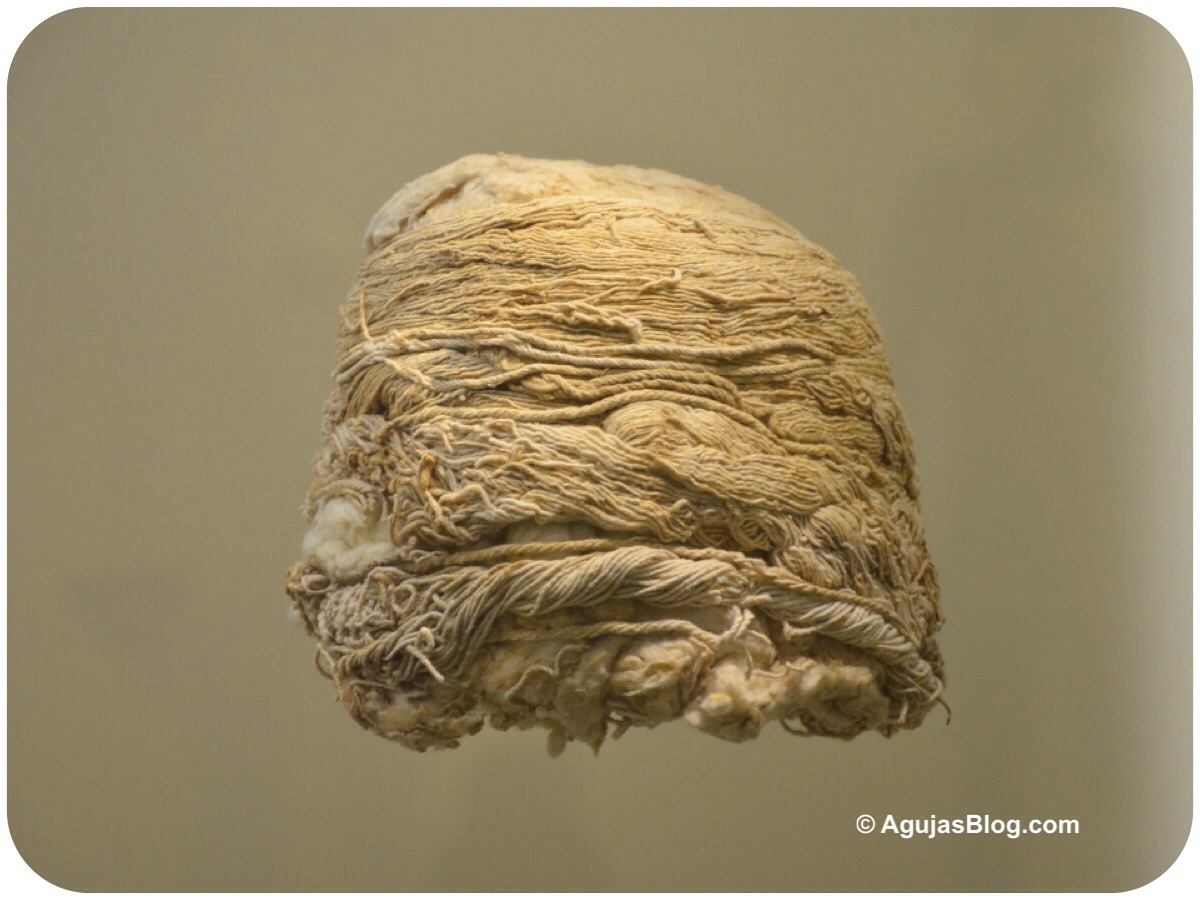
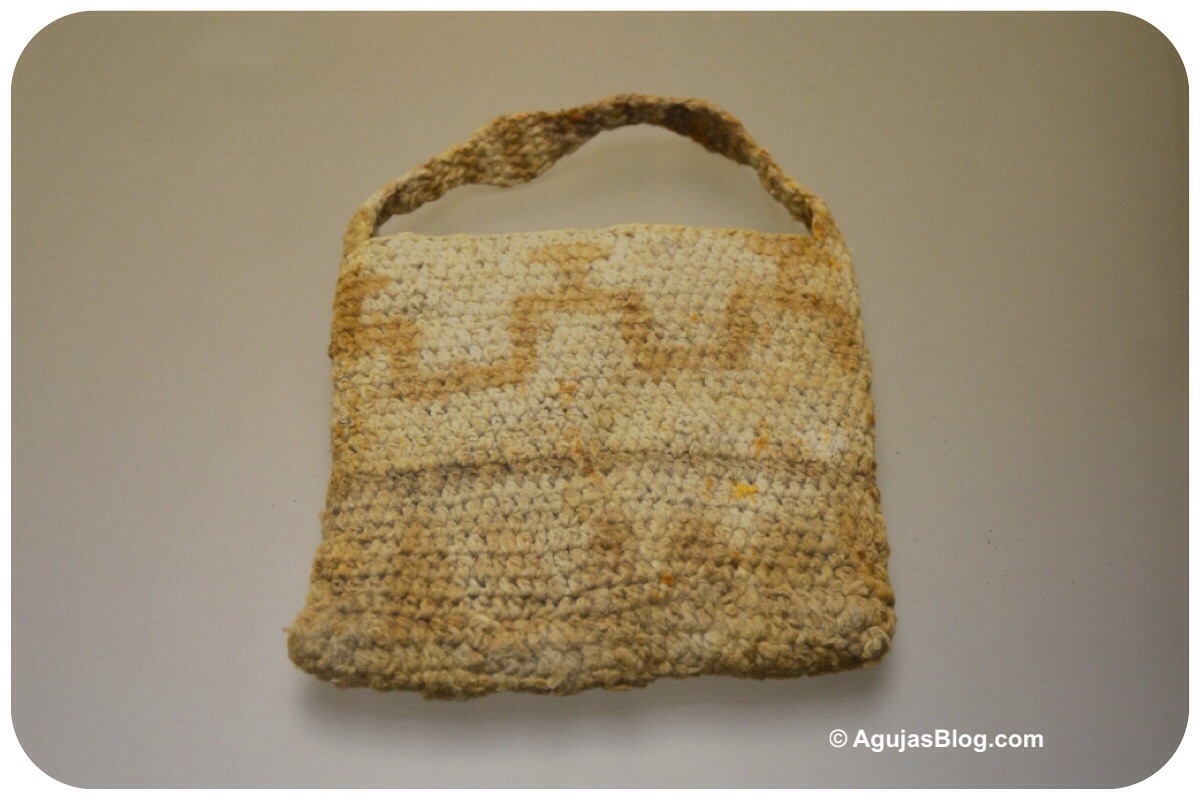
…and the resulting thread was used for making blankets, caps, bags and nets. [600 d.C – 1600 d.C]
We ended Day One with a fantastic dinner at Andrés Carne de Res. We went to the city center location; the original is in the suburb of Chia. I can’t tell you more about it because no retelling will do it justice. It’s the sort of place you simply have to experience, like Bogotá.
It was almost time for my 60-day visa to expire and I had to leave China to renew it. So off we went to Tokyo. My first priority was yarn. I googled yarn stores in Tokyo and several blogs had recommendations. I made my list and went in search of yarn.
My first attempt was a fail. We took a long circuitous route in search of Mother Earth supposedly located at 3-3-39 Minamiazabu Minato-ku. We strolled through some very interesting neighborhoods, but no Mother Earth.
The second attempt was also a fail. I was in search of Avril, which is known as Habu Textiles in the USA. From examining a Tokyo Metro map, the stop was somewhat off the grid. Given that I had some lovely yarn from Habu Textiles in my stash already, I decided to forego Avril.
Attempt #3 was a home run. We took the Tokyo Metro from the Roppongi Station to the Shinjuku Station. According to Wikipedia, “the station was used by an average of 3.64 million people per day in 2007, making it … the world’s busiest transport hub.” I believe it.
Finding the yarn store required navigating the streets with our smart phone map. It isn’t too far from the station, but it is tucked away on a busy pedestrian street. Okadaya is an arts and crafts store. Different floors house sewing supplies, buttons, ribbons, wigs, and yarn. Photos are not allowed but just imagine yarn nirvana. There was Noro, of course, but I selected Japanese brands that I had not seen in the United States.
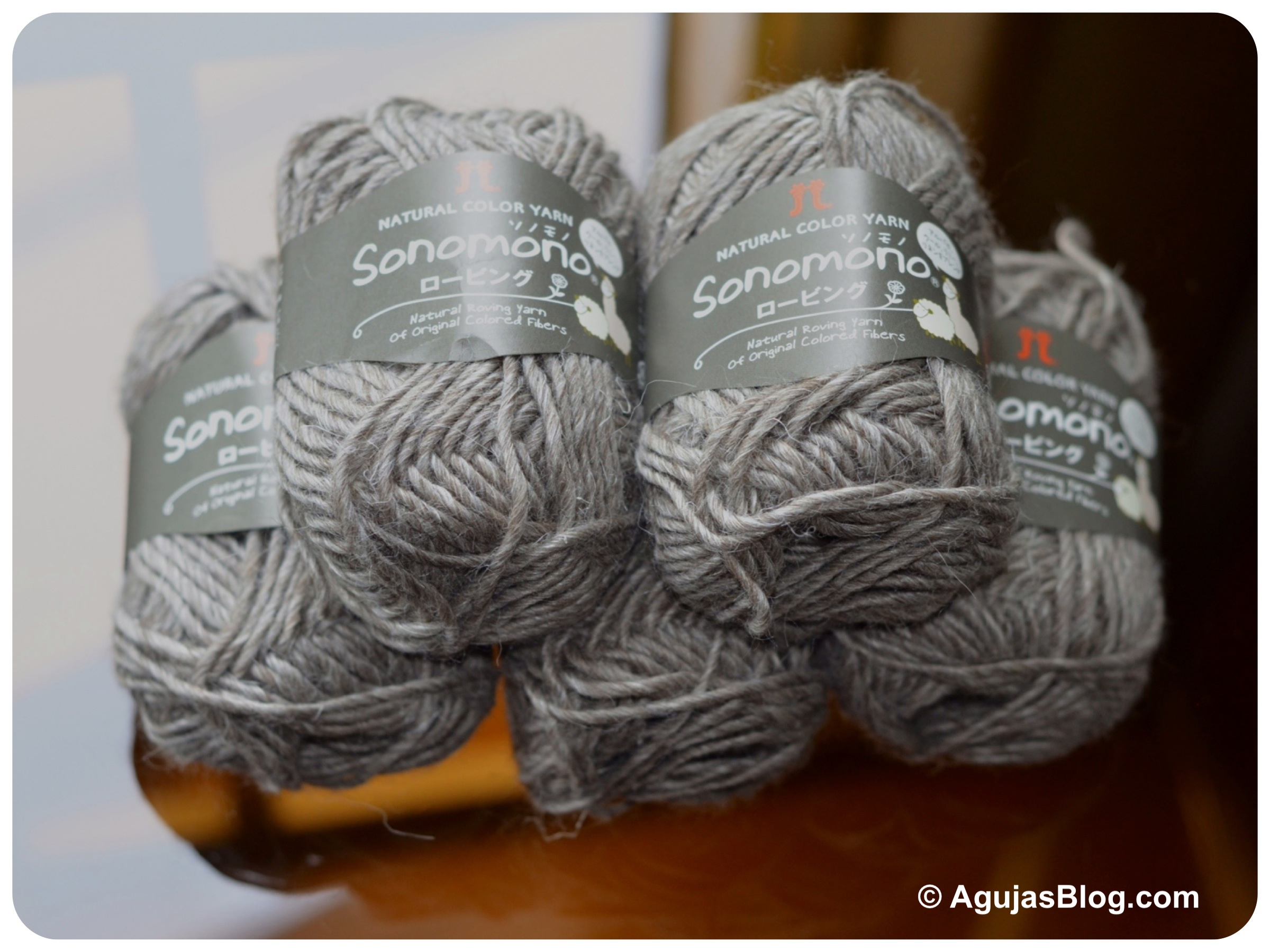
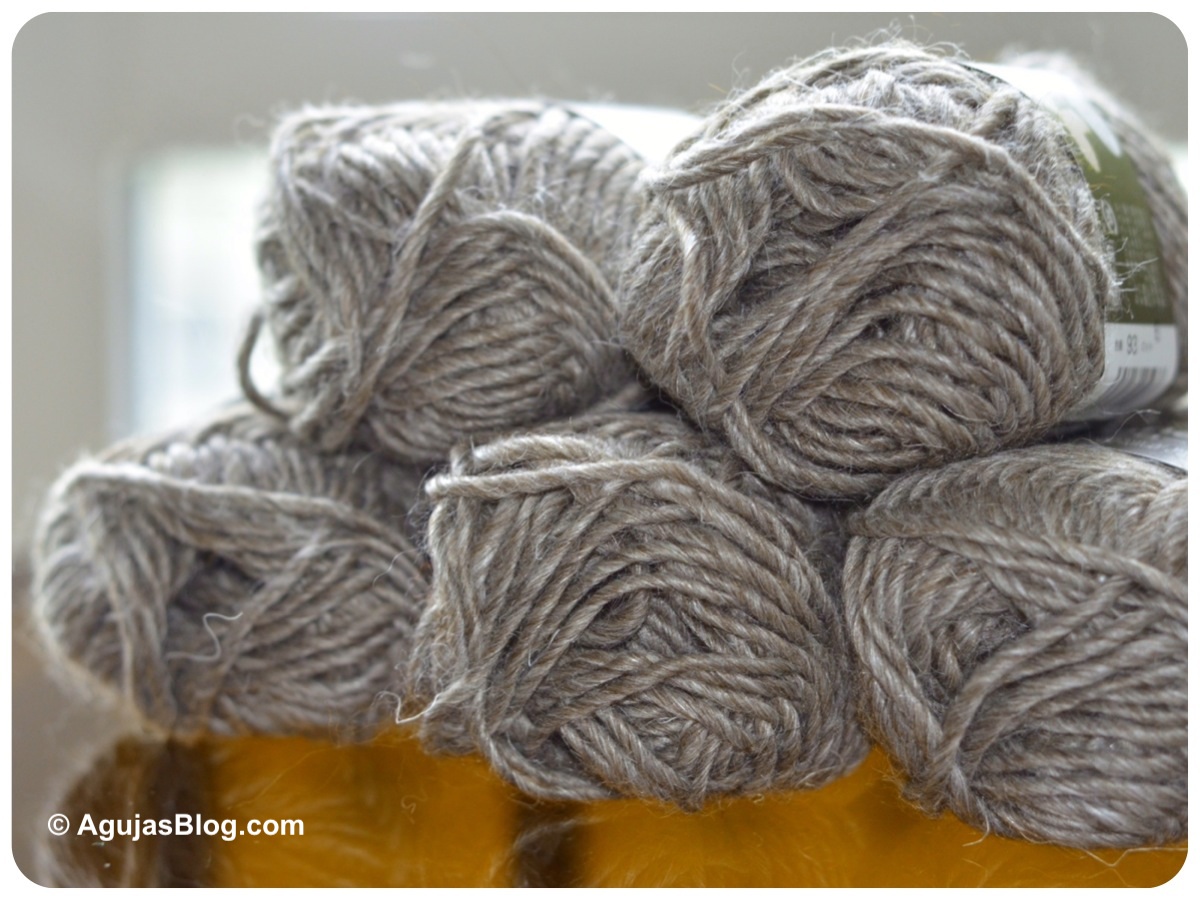
First I found Sonomono in this natural color. Each ball is 40 grams, 64 meters of 40% Alpaca, 30% Wool and 30% Linen.
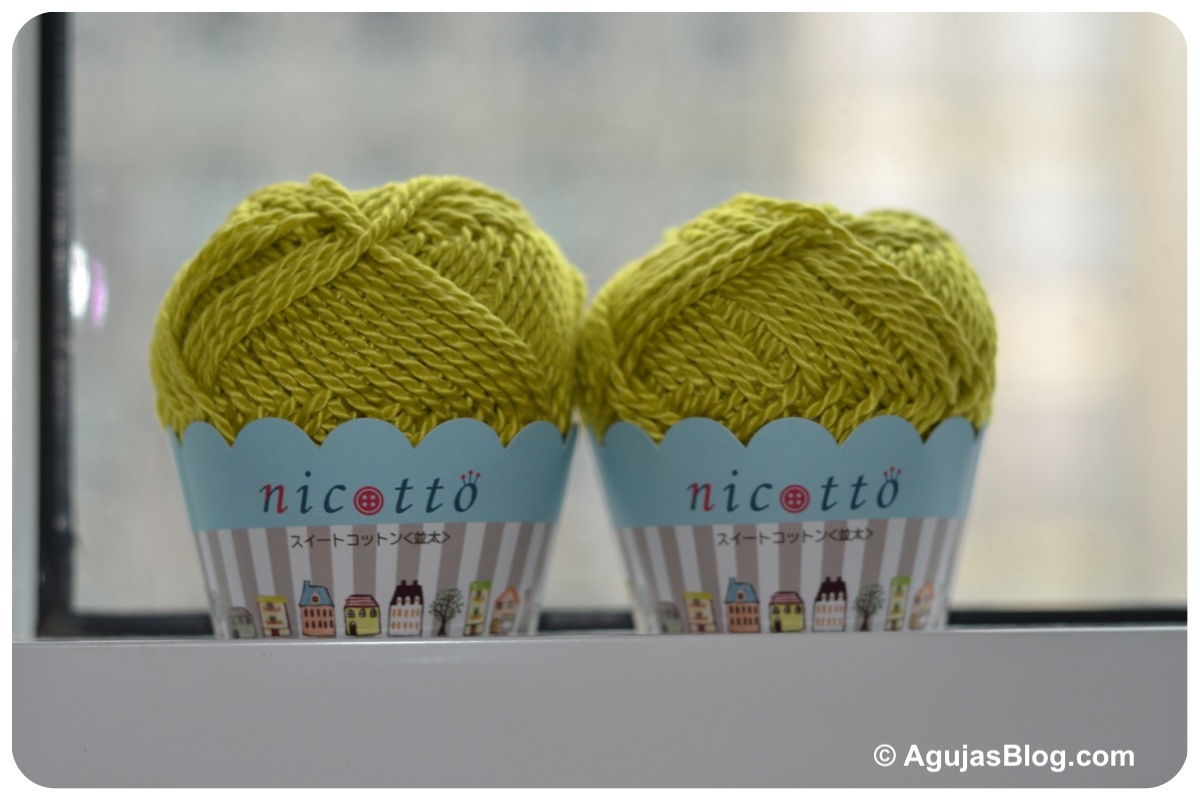
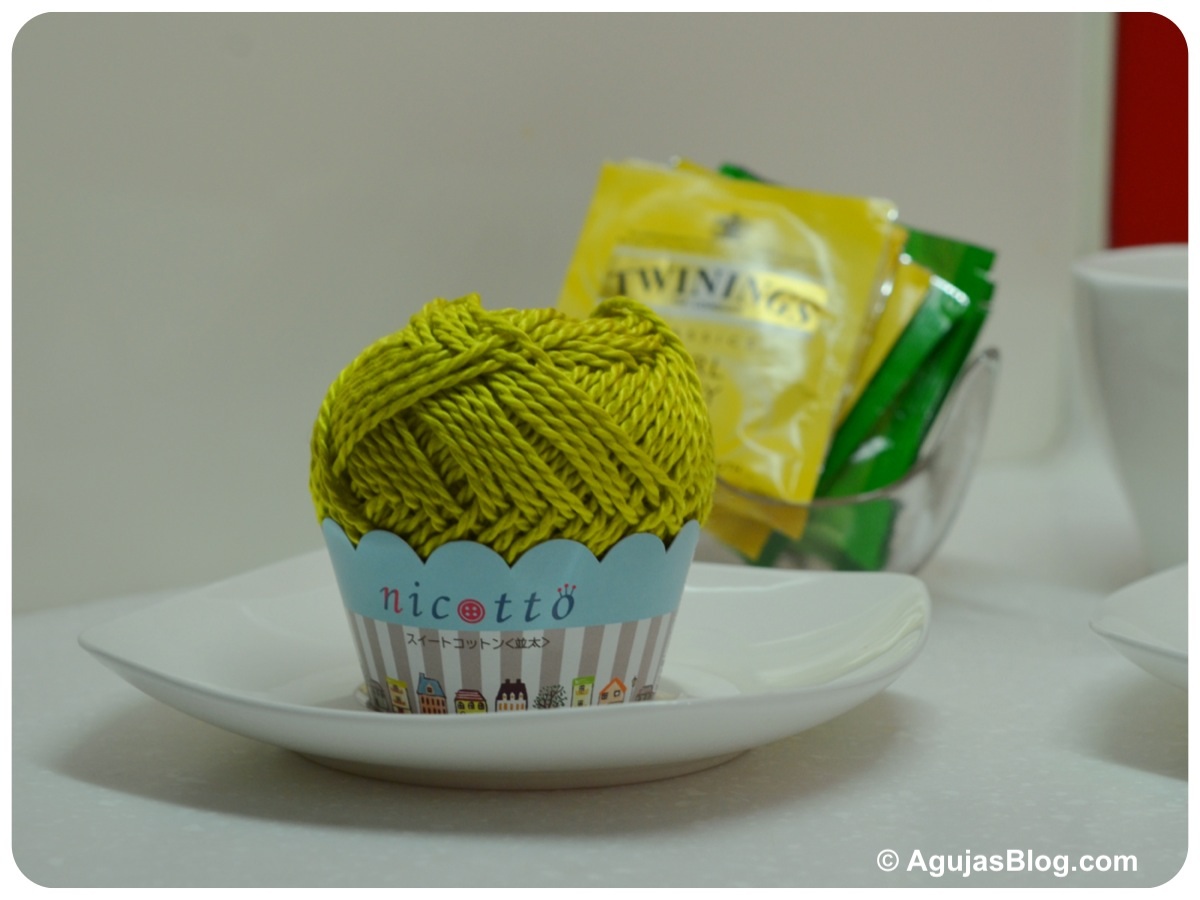
After my husband checked on me to make sure I had not suffocated in a crate of yarn (I guess I was up there a long time), I picked up two of these cotton cupcakes by Nicotto. Each cupcake is 30 grams, 50 meters of 100% Cotton.
We also took some time to visit a couple of museums. The Tokyo National Museum was a highlight with its display of beautiful kimonos from the Edo Period (17c-19c). The garments were in glass display cases so the photos may have reflections.
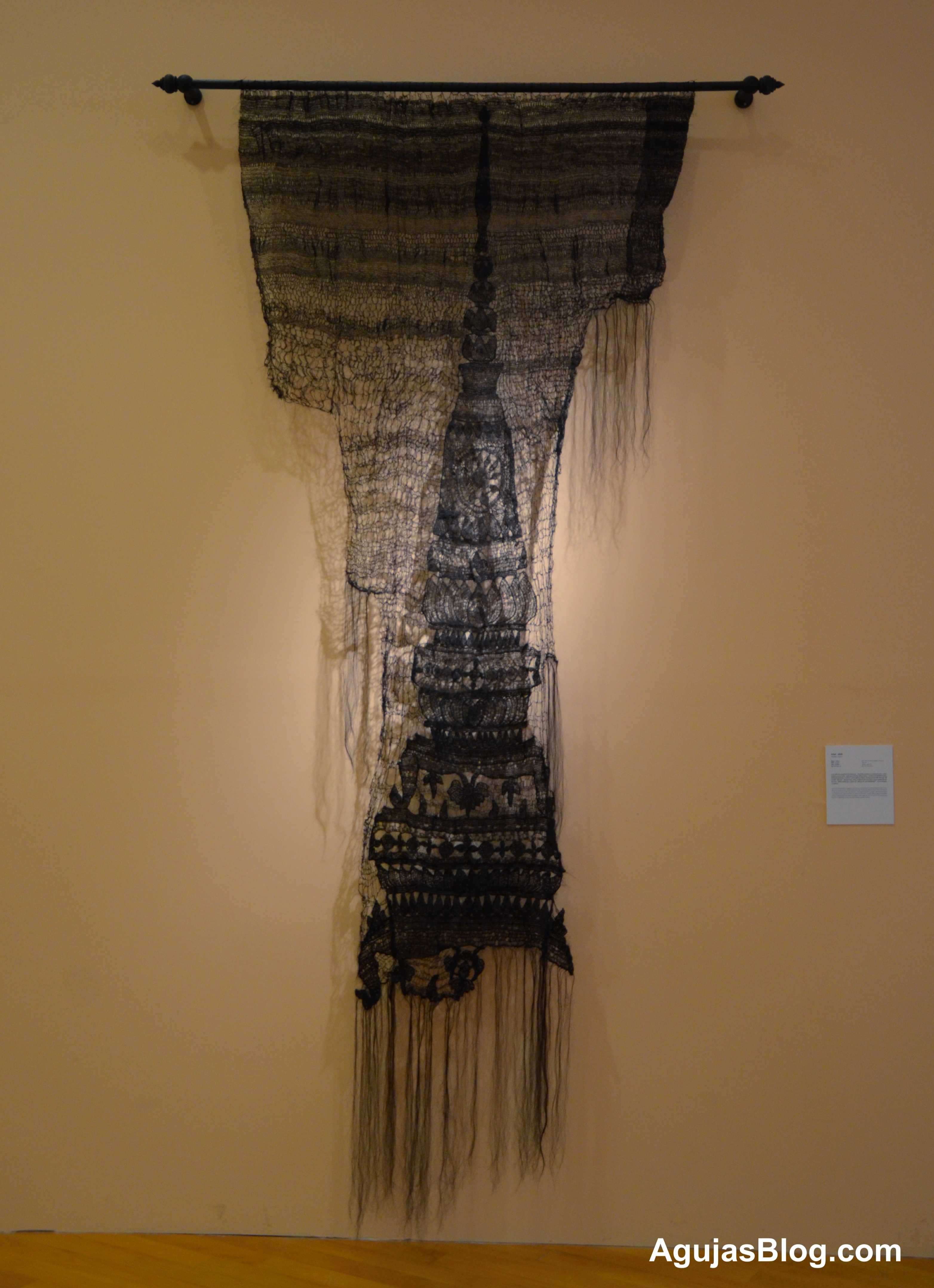
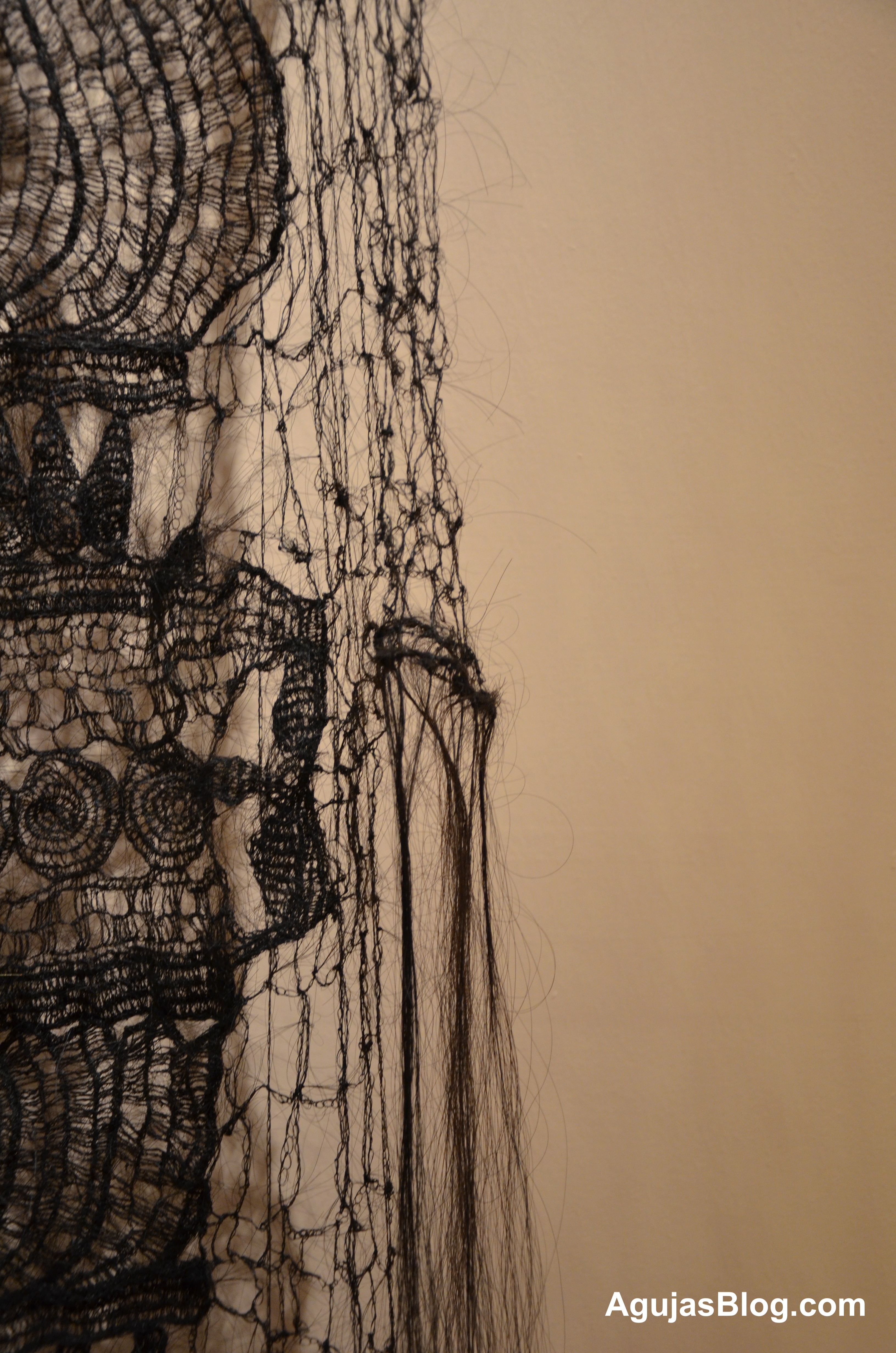
More photographs from the husband taken at the Bangkok Art and Culture Center in Thailand. This textile is called Trailak (The Three Characteristics of Existence), 2012. It is woven entirely of hair.
The placard reads:
From his faith towards Dhamma regarding Trailak (The Three Characteristics of existence) that teaches people to consider on truth of impermanence, incompleteness and non-self. This teaching inspired the artist to weave hair that is the symbol of body or impermanence to be created as a mixed media in the form of a pagoda referred to something we should remind and pay respect at all times. The objective of this artwork is to express idea, emotion and feeling obtained from considering corpse that is the mark of death in order to refine our mind from lust and omit wickedness with the aim to do good things and reach pure heart according to Buddha’s teaching.
I am assuming that the weaver used human hair to symbolize impermanence. The pagoda is incredible, with so much detail to give it its shape and ornamentation. It is rather interesting to me how buildings such as churches, temples and other holy places can last for centuries far outliving the humans who built them.
{Click on any image for a large-screen view and descriptions}.
Roskilde Kloster is a beautiful monastery formerly for unmarried noble ladies. The town of Roskilde dates back to medieval times. Roskilde is a member of the Most Ancient European Towns Network.
Five Viking ships were sunk in the fjord to create a barrier against invaders. The ships were made out of oak, pine, lime, ash and birch.
The ships were longships, trading ships, warships and fishing vessels. Their sizes varied carrying crews of 5-6 to 30. Top speeds ranged from 8.5 to 20 knots.
Danish kings and queens spanning over 10 centuries are buried at Roskilde Cathedral.
White marble wreath in the chapel of Christian IX (died in 1906).
Queen Margrete I (1412) united Denmark, Norway and Sweden. The original gown was made of fabric woven in Italy at the beginning of the 15th century and is currently located in Uppsala.


 Agujas