More Mexico City Highlights

Our trip to CDMX (Ciudad de México or Mexico City) was packed with visits to historic archaeological sites, museums, street festivals, and restaurants serving the most delicious food. These photos do not do justice to the sights, sounds, and smells of the city but they will give you a glimpse of the amazing CDMX.

Templo Mayor

The Great Temple was the Mexica sacred space par excellence. The most important rituals were enacted here, including those dedicated to their gods, the naming of their leaders, and the funerals of the nobility. The Mexica architects designed the Great Temple as the center for their model of the universe, where the horizontal plane converged with the vertical plane. (Source: Site placard).
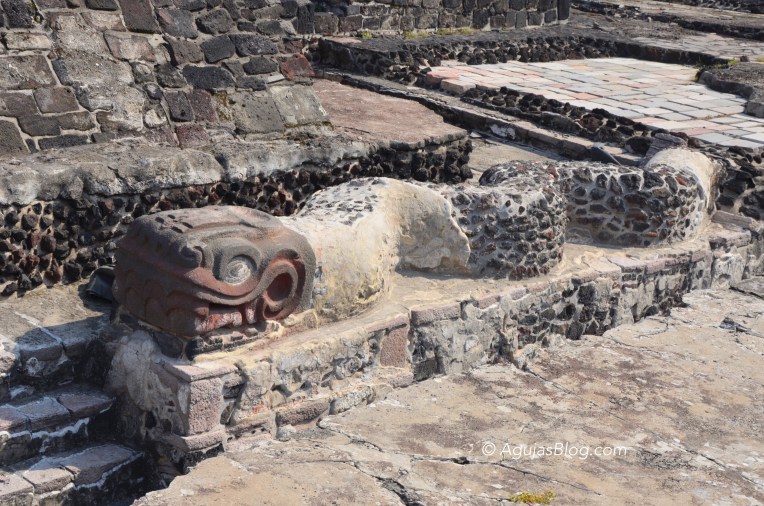
Coatepantli aka
Serpents and Frogs at the Great Temple. Different species of serpents were represented in architecture; their bodies were decorated with symbolic elements, such as feathers, rings, or spirals. Two enormous serpents, each measuring 6 m (20 ft) long and with an undulating body, flank the access to the platform. (Source: Site placard).
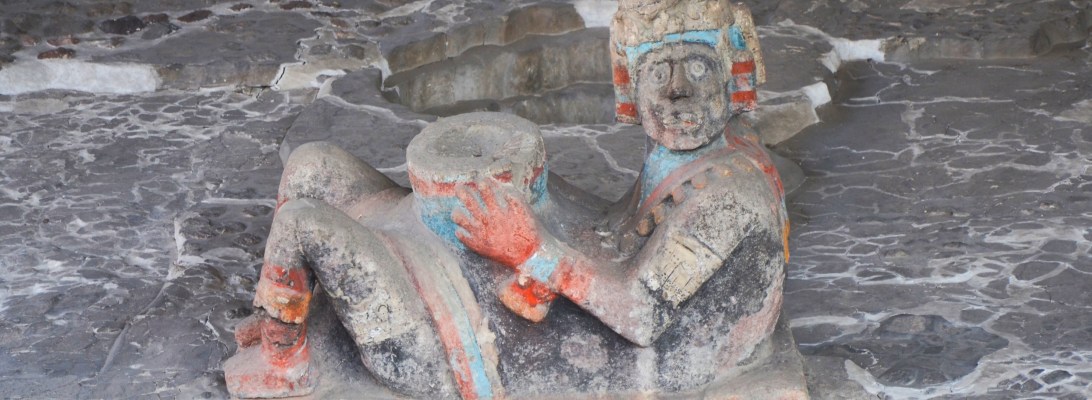
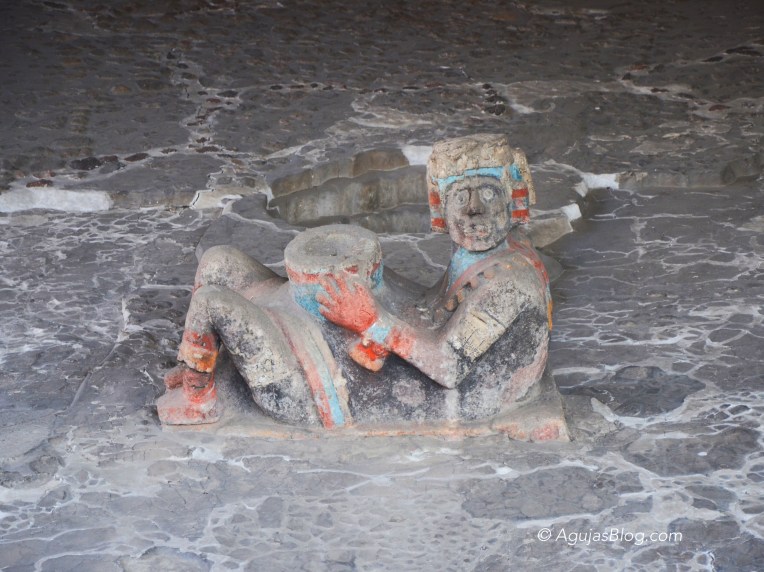
Chac mool at Tlaloc Shrine
Tlaloc, the rain god … was responsible for bringing rain, which enabled crops to grow. Outside the entrance, we can see the polychrome sculpture of a chac mool, bearing the attributes of Tlaloc and still retaining its original color. (Source: Site placard).
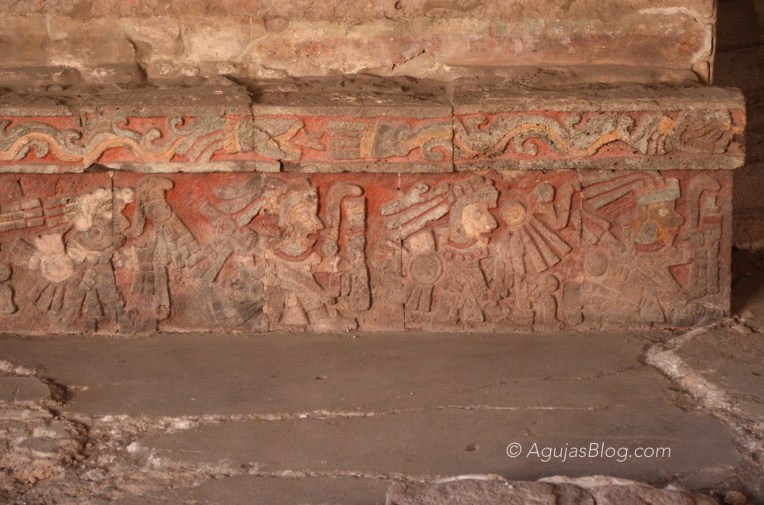
The House of the Eagles
Bas reliefs of eagle warriors and serpents.

Coyoacán

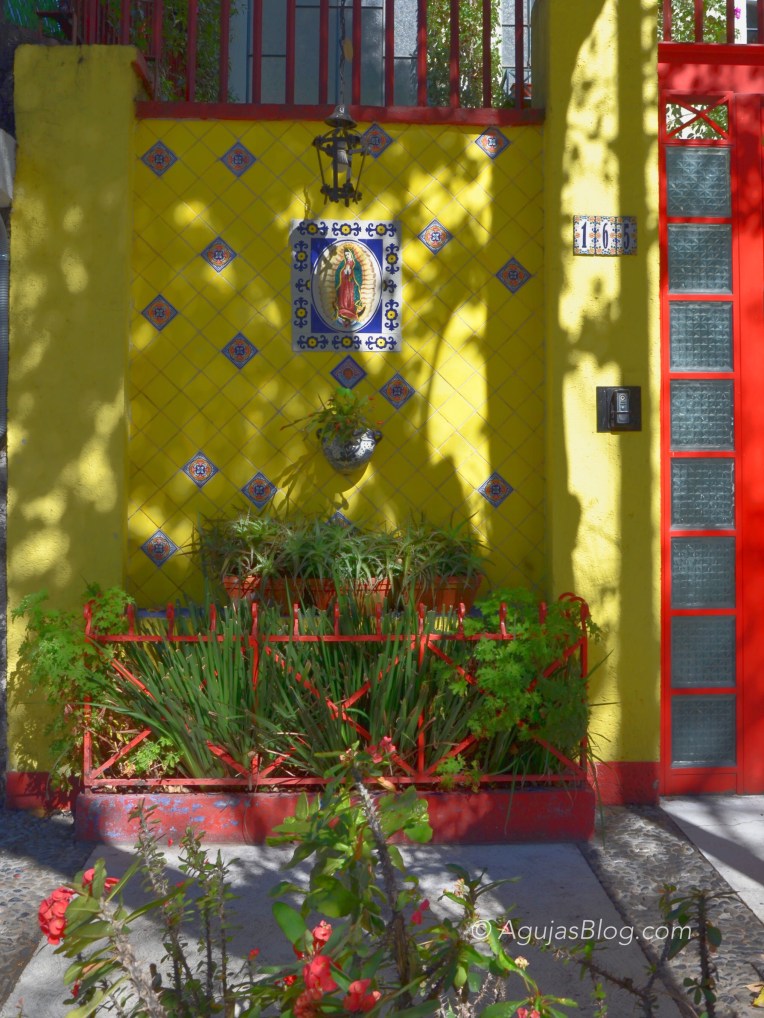
Frida Kahlo’s blue house is located in the neighborhood of Coyoacán. The word means roughly “place of the coyotes” in náhuatl, an Aztec language still spoken today. The neighborhood is vibrant. Walking along the shady streets, we came across this brightly decorated altar to the Virgen de Guadalupe.
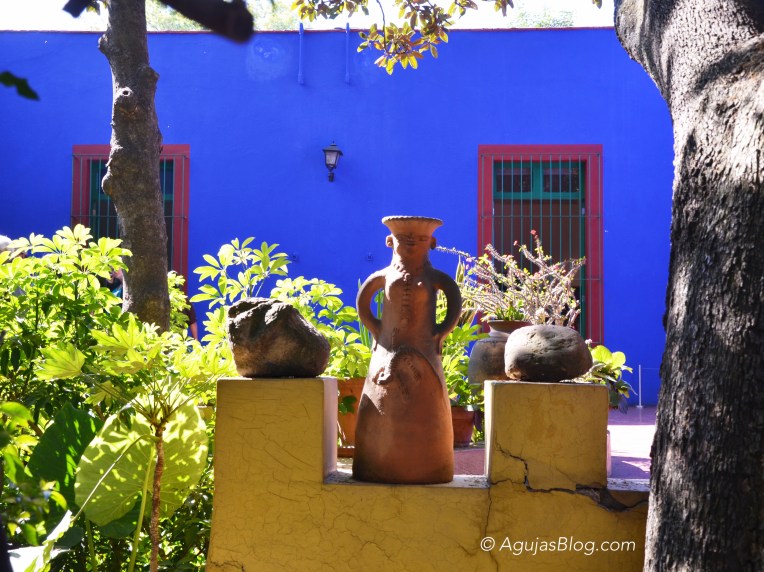
Our destination was La Casa Azul, the home that Frida Kahlo was born and died in. A hand painted sign tells visitors that Frida y Diego vivieron en esta casa 1929-1954 (Frida and Diego lived in this house 1929-1954).
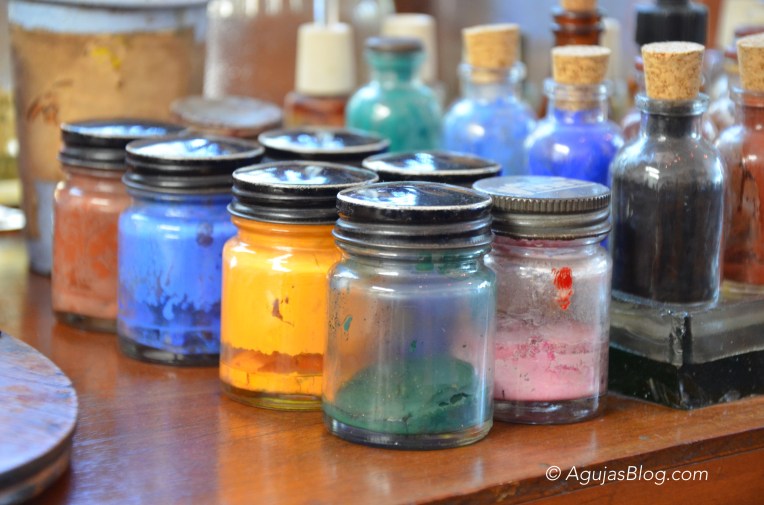
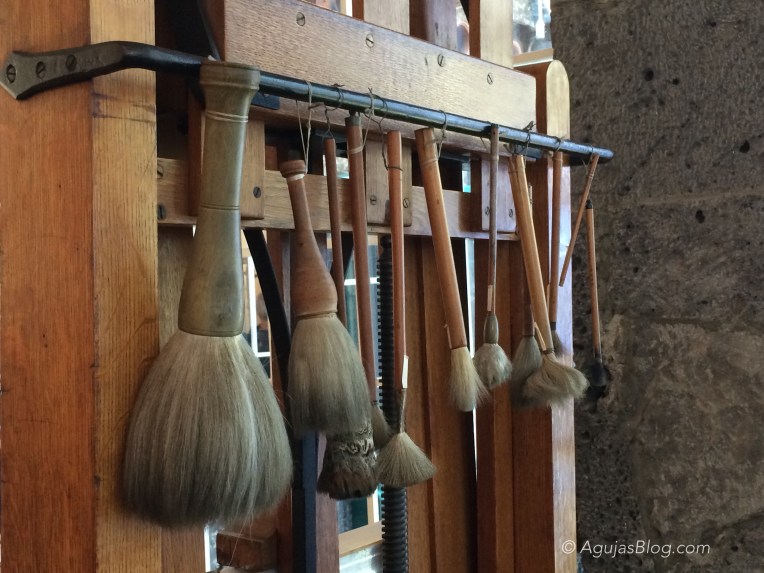
Frida’s studio still has her collection of paint bottles and brushes.
A special exhibit called Los Vestidos de Frida Kahlo (The Dresses of Frida Kahlo) displayed the artist’s clothing, jewelry and footwear. Also on display were the tight corsets she wore as a result of a childhood accident that left her with a lifetime of pain.
IMG_1611

“My painting carries with it the message of pain.” – Frida Kahlo.

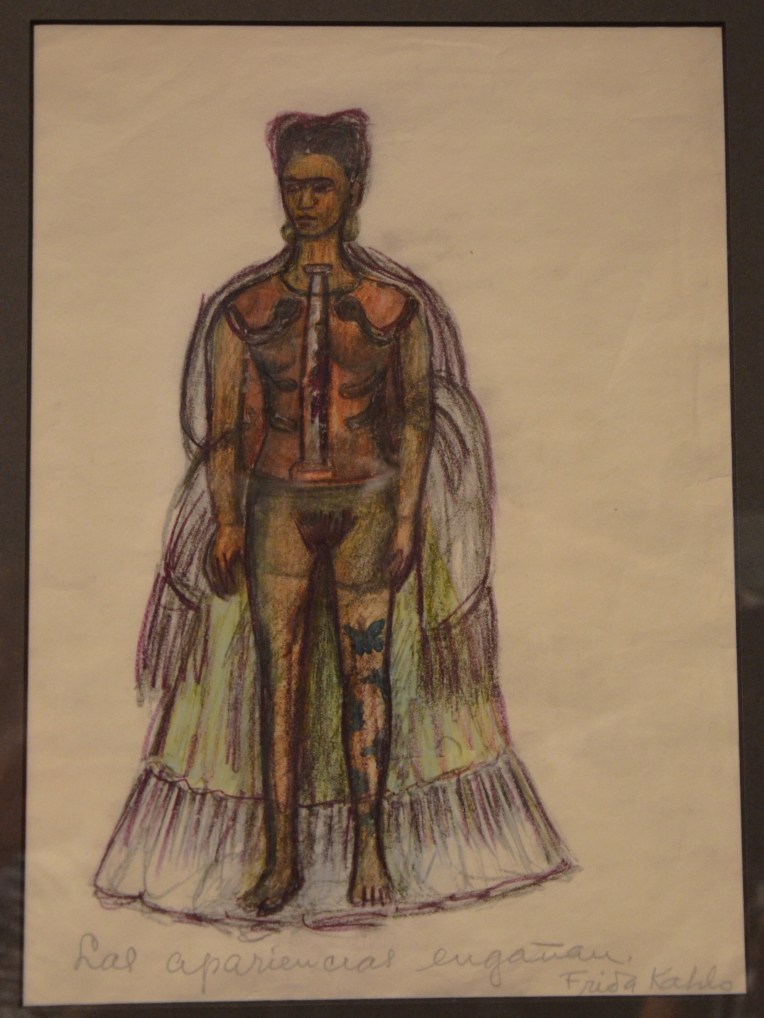
The exhibition takes its title from an artwork by Frida Kahlo of the same title – Las Apariencias Engañan (Appearances can be Deceiving) – where Kahlo portrays herself in manner of an X-Ray, revealing her dramatic disabilities concealed beneath the layers. (Source: http://bit.ly/2s0j0lC)

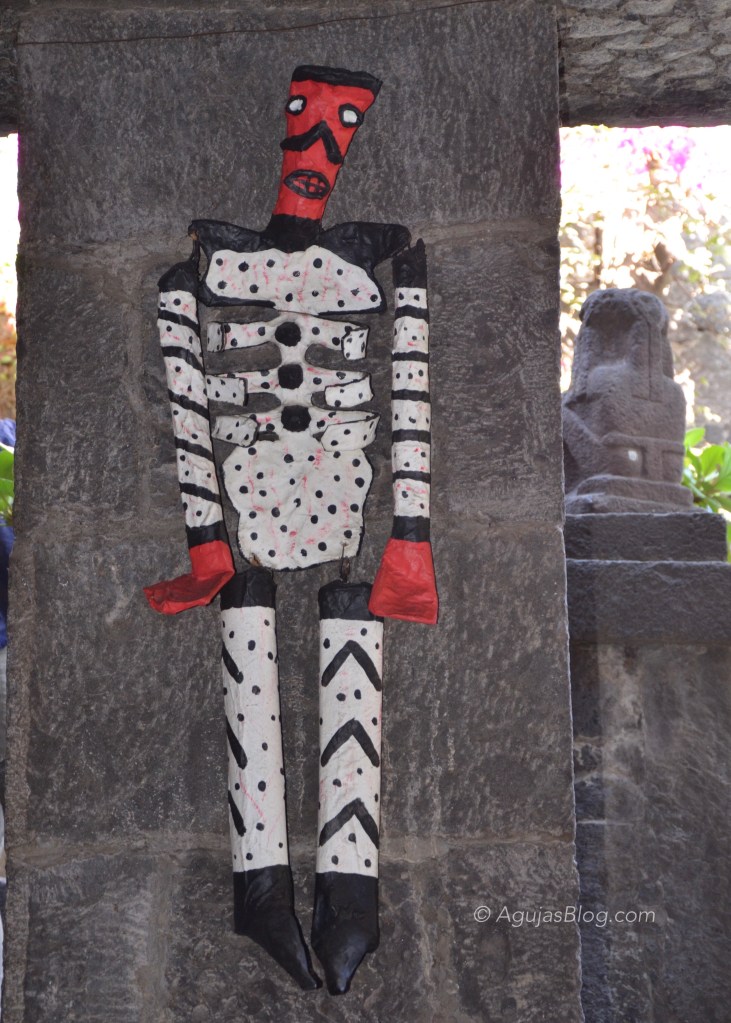
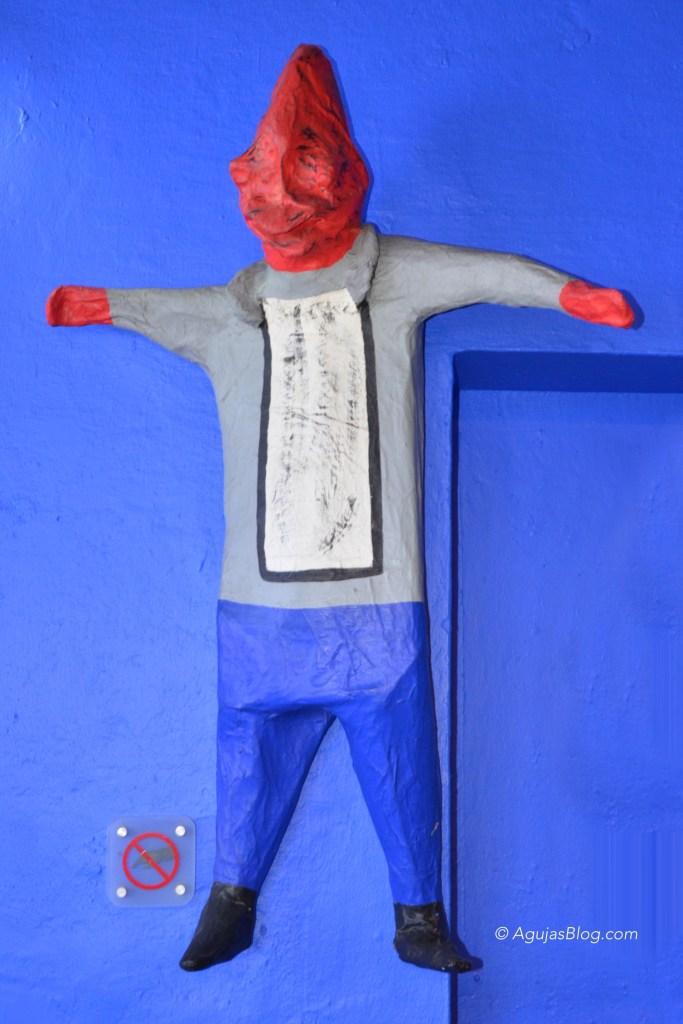
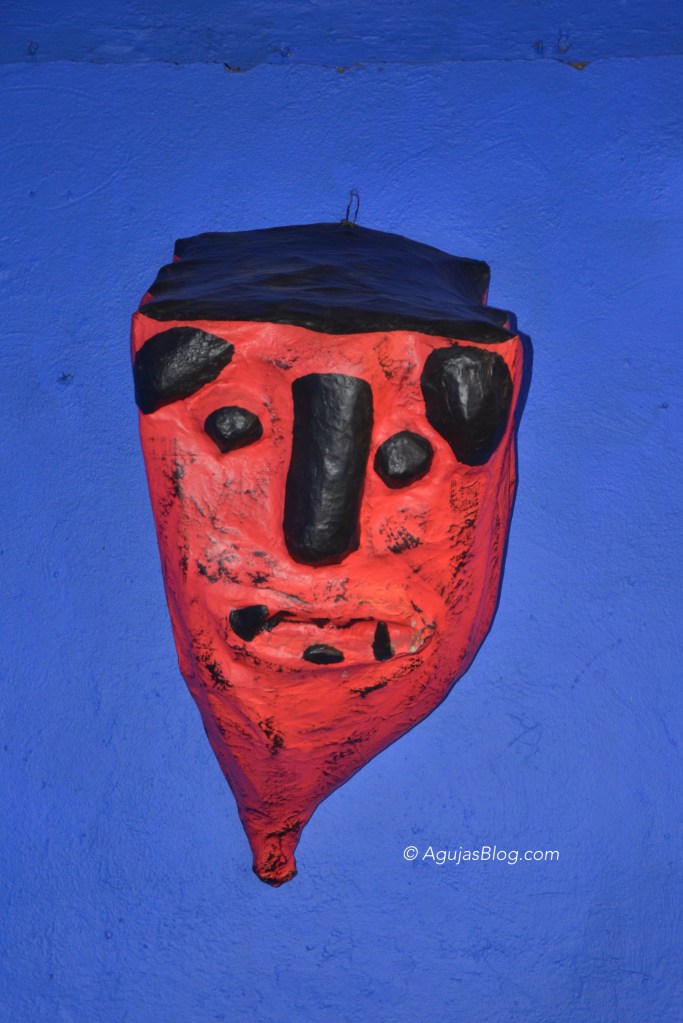
Giant paper mâché figures are located throughout the house and courtyards.
Vogue Mexico has a slide show of many of the items from the exhibit plus selected photos of the Blue House. To learn more about the Blue House, go to the Museo Frida Kahlo site.

Trotsky’s House

Leon Trotsky’s house is a ten minute walk from La Casa Azul. The home is simple and the grounds peaceful although the guard towers and bullet holes in the walls tell another story.
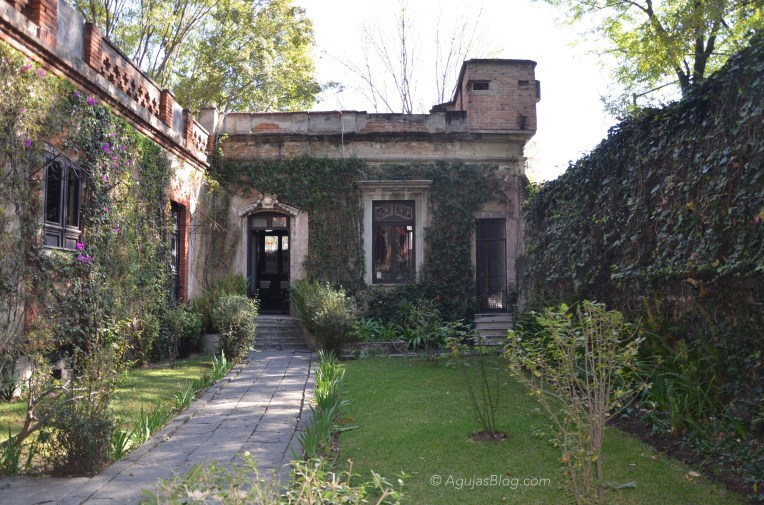
Leon Trotsky House

Trotsky’s desk still has the items he used on a daily basis – his spectacles, papers and ink bottles.
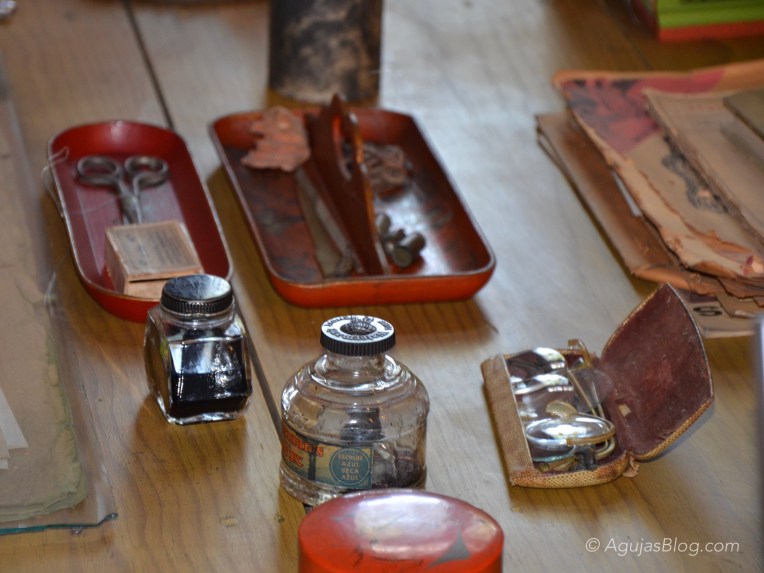
Items on Leon Trostky's desk.

Yarn Sightings

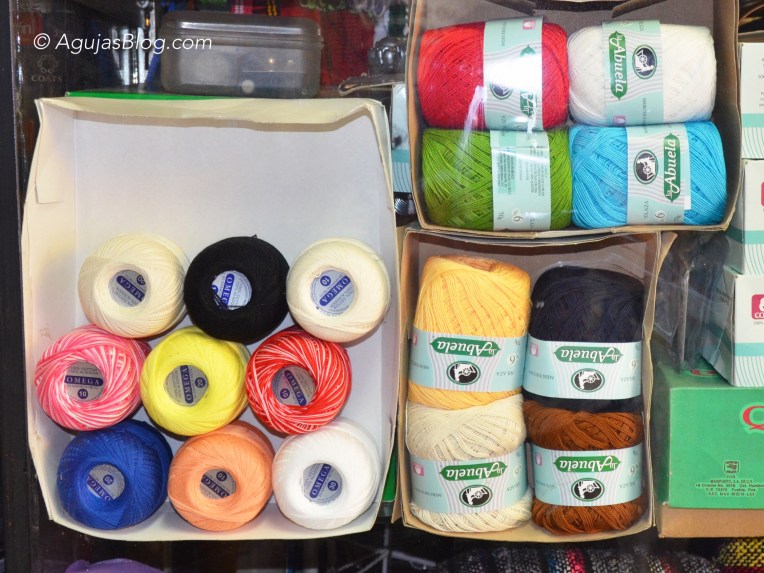
The Mercado de Coyoacán is a typical Mexican market with all kinds of touristy items on sale including pottery, traditional dresses, puppets, t-shirts and the like. The market also carries an abundance of fresh fruit, meats and spices. Walking along all the circuitous aisles I finally spotted yarn. I didn’t buy any but it was nice to see and touch.
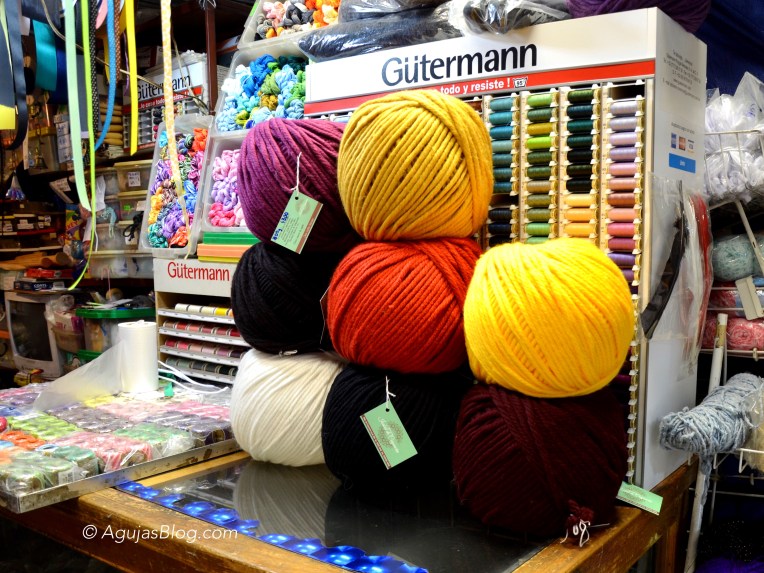
Yarn Sighting 1 at Mercado de Coyoacan

Yarn Sighting 2 at Mercado de Coyoacan

City of Teotihuacán

The holy city of Teotihuacan (‘the place where the gods were created’) is situated some 50 km north-east of Mexico City. Built between the 1st and 7th centuries A.D., it is characterized by the vast size of its monuments – in particular, the Temple of Quetzalcoatl and the Pyramids of the Sun and the Moon, laid out on geometric and symbolic principles.

Human occupation of the valley of Teotihuacan began before the Christian era, but it was only between the 1st and the 7th centuries A.D. that the settlement developed into one of the largest ancient cities in the Americas, with at least 25,000 inhabitants.

(Source: http://whc.unesco.org/en/list/414).

A full-day excursion took us to the City of Teotihuacán where my son and I climbed to the tops of the Pyramids of the Sun and Moon. The Pyramid of the Sun is the third largest pyramid in the world rising to 75 meters (246 feet) high. The 248 steps to the top are high and narrow. I won’t show you a photo of what I looked like once I got to the top, but trust me, I did it. We also climbed the Pyramid of the Moon which is 43 meters (140 feet) high.
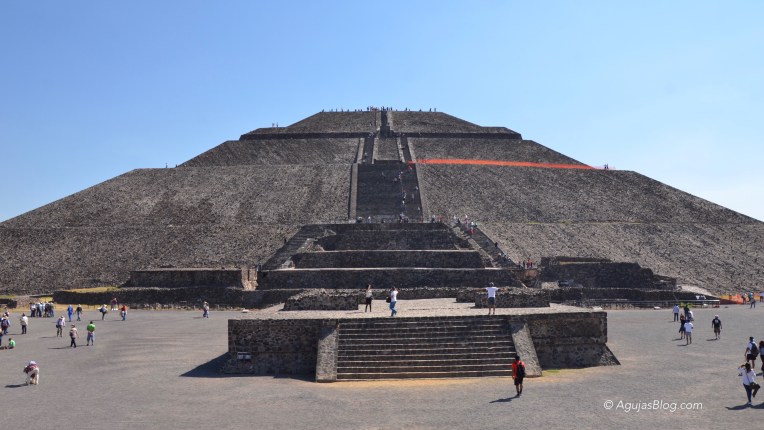
Pyramid of the Sun

Pyramid of the Sun: The pyramid’s base is 222 meters long on each side, and it’s now just over 70 meters high. The pyramid was cobbled together around AD 100 from three million tonnes of stone, without the use of metal tools, pack animals or the wheel. (Source: http://bit.ly/2r8Zr9p).

Temple of the Feathered Serpent

The structure known as the Temple of Quetzalcoatl or the “Plumed serpent,” was built between 150 and 200 a.d. It consists of seven stepped bodies, with “slope and panel” designed walls on all four sides, decorated with plumed serpents, carved in stone, which move among seashells. (Source: Site placard).
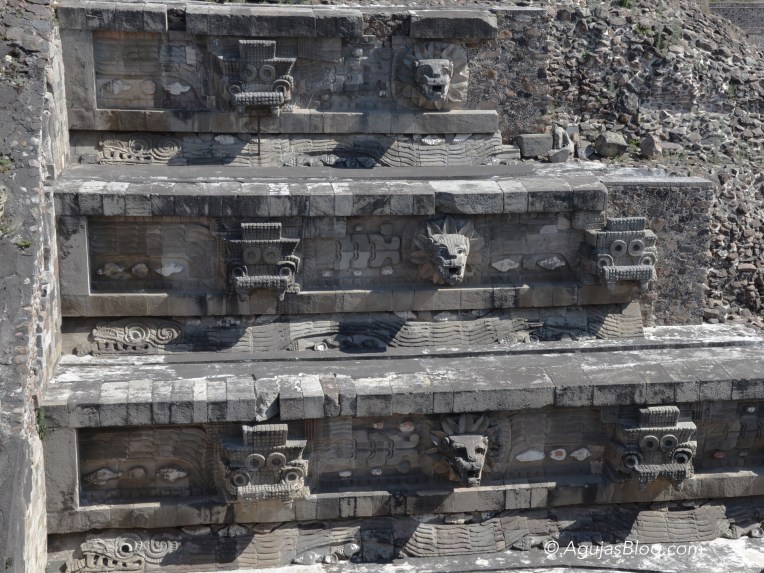
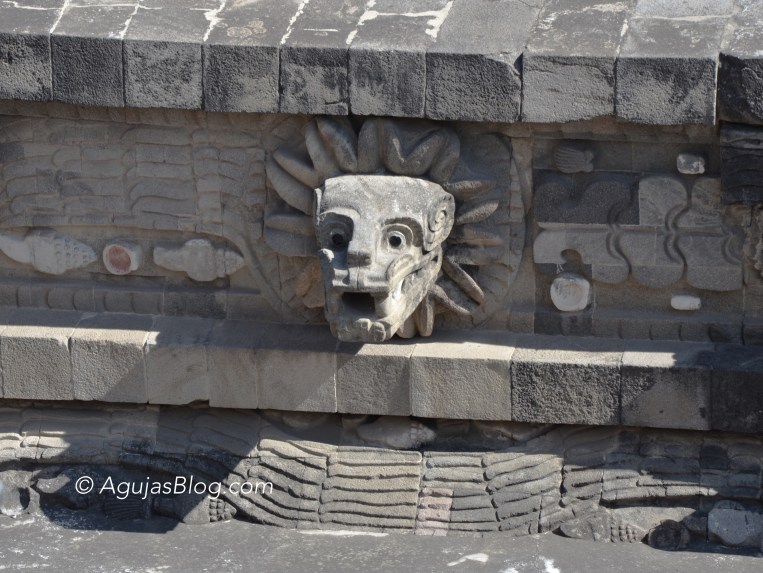
Temple of the Feathered Serpent - Wall

Temple of the Feathered Serpent - Close up

As we walked down one of the pyramids, we saw these stones jutting out of the slanted wall. There wasn’t a sign telling us what they were but we surmised they are there to break someone’s fall should they have the misfortune of tumbling down the pyramid.
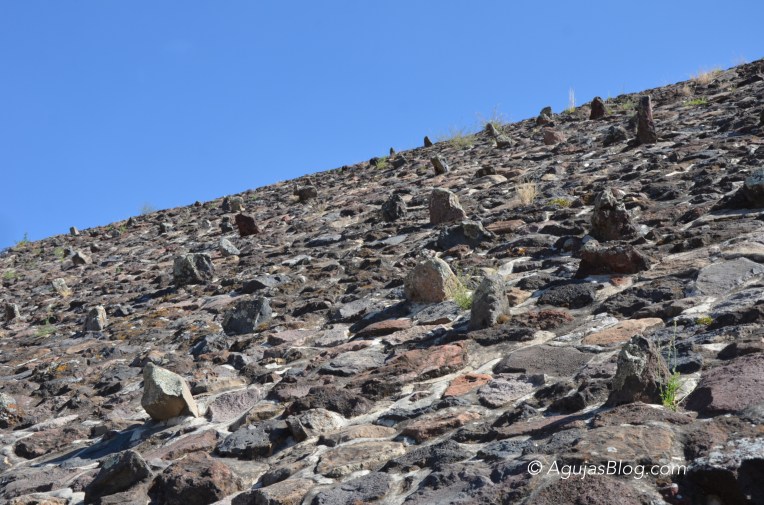
Side of a pyramid.

El Bazaar Sábado

Early Saturday morning, we made our way to the neighborhood of San Ángel for the Bazaar Sábado. We walked along cobble-stoned streets into beautiful colonial buildings and around the periphery of San Jacinto Square overflowing with artists. Artisans in many crafts gather every Saturday morning featuring artwork in leather, glass, pottery, jewelry, and textiles. The Androna textiles were magnificent in their multi-colored hues.
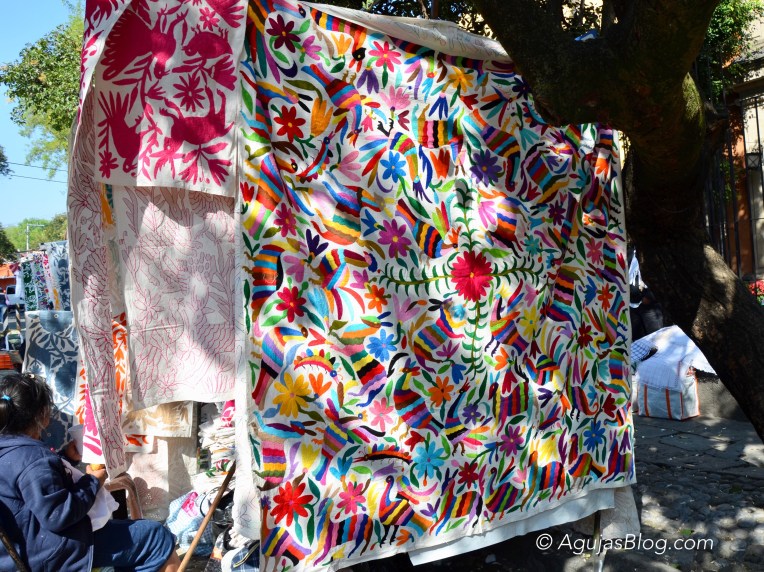
Androna Textiles 1

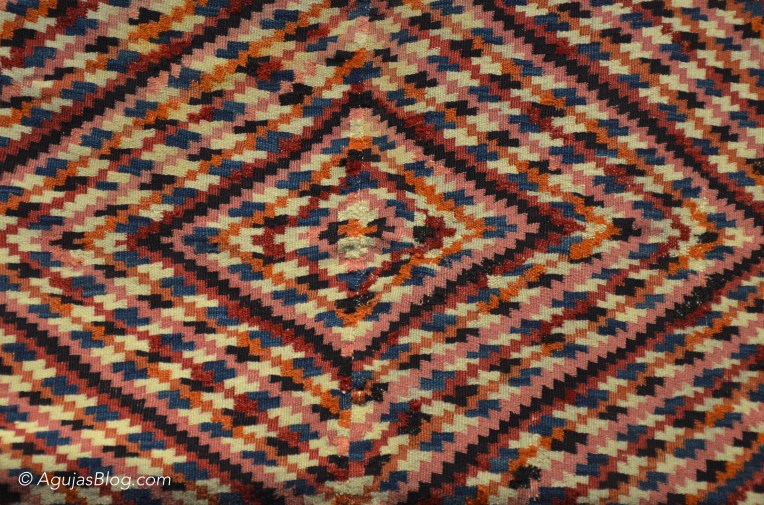
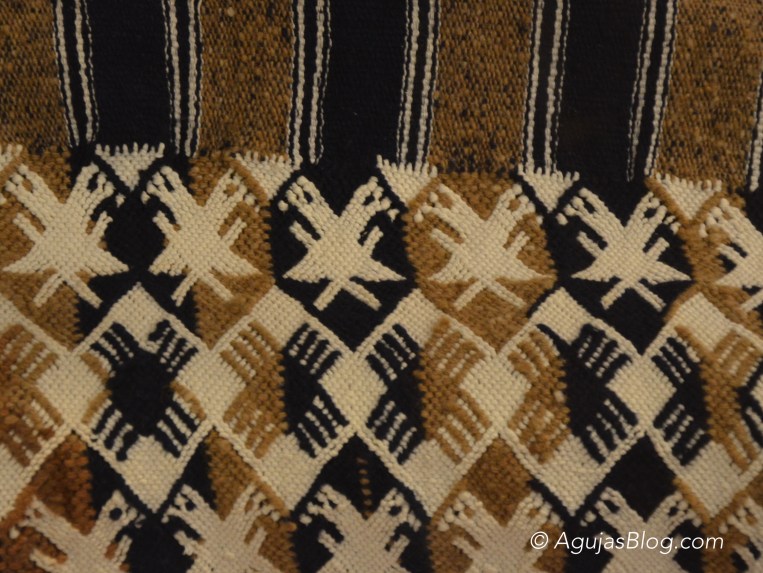
Textile techniques and designs are a living heritage passed from mothers to daughters throughout generations in regions like Oaxaca, Chiapas, Puebla, San Luis Potosí, Guerrero, Hidalgo and Yucatán. With materials such as cotton, silk, wool and linen, Androna Linartas curates traditional textiles made with different techniques like back strap loom, foot loom, embroidery and hook among others. Her goal is to preserve the essential Mexican textile culture. (Source: http://bit.ly/2suKWAI).
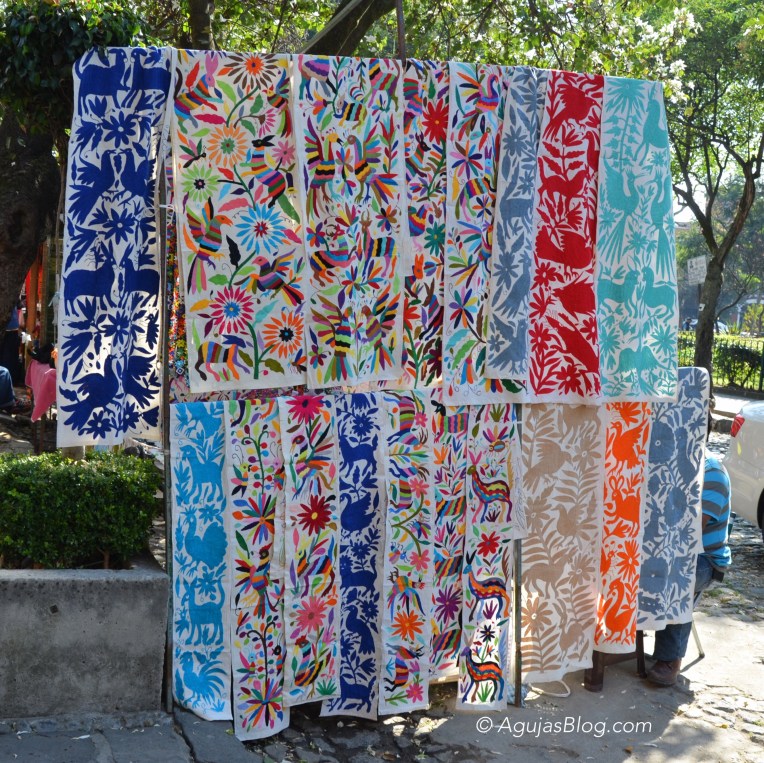
Androna Textiles 3

This is already a long post so I will stop here. Luckily, the flight to CDMX is only two and a half hours from Houston. I see another trip on the horizon. Hasta la próxima.


From Beginning to End, Popular Mexican Traditions

Working full-time and pursuing an MBA do not leave very much free time. Immediately after the new year, there was a gap of about a week before major assignments were due. We took advantage of this opportunity for a trip to México City, only a two-hour flight from Houston. There was the added benefit that Cornell has a board room of students in México City and I was able to join them for class.

The purpose of the trip was to show our son some of the many treasures of México. We went on a whirlwind tour of murals, pyramids, cathedrals, archaeological ruins, culture and gastronomy. Along the way, my husband and son appeased me by allowing me to look for interesting textile arts.

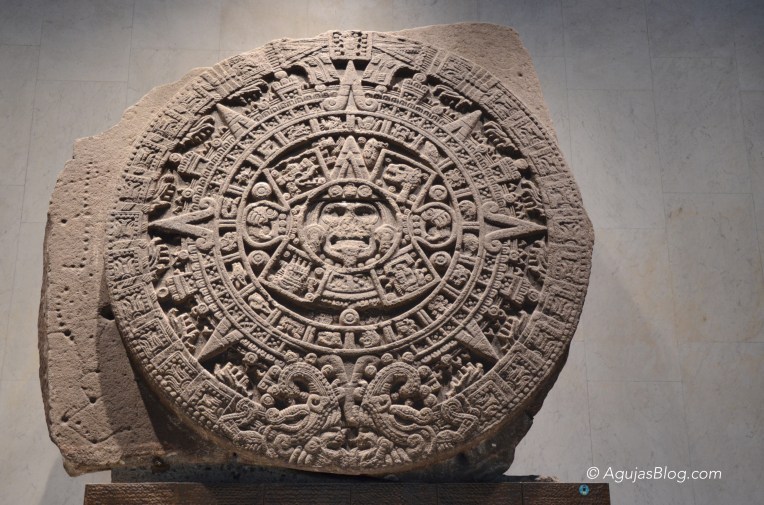
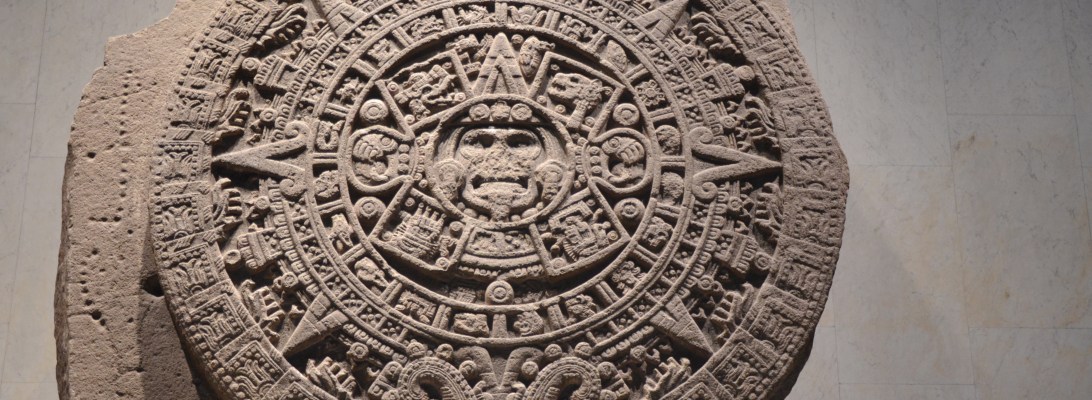
We could have spent days walking through the vast National Museum of Anthropology. The museum features grand salons for every major period of Mexican history. We made a beeline toward the magnificent Piedra del Sol (Stone of the Sun), which is often incorrectly called the Aztec calendar. The Stone of the Sun is 3 feet deep, almost 12 feet wide and weighs almost 25 tons.

IMG_1546

The stone “depicts the five consecutive worlds of the sun from Aztec mythology. …it is an elaborately carved solar disk, which for the Aztecs and other Mesoamerican cultures represented rulership. At the top of the stone is a date glyph (13 reed) which represents both the beginning of the present sun, the 5th and final one according to mythology, and the actual date 1427 CE, thereby legitimizing the rule of Itzcoatl (who took power in that year) and creating a bond between the divine and mankind.

(Source: http://www.ancient.eu/Sun_Stone/)

Textiles

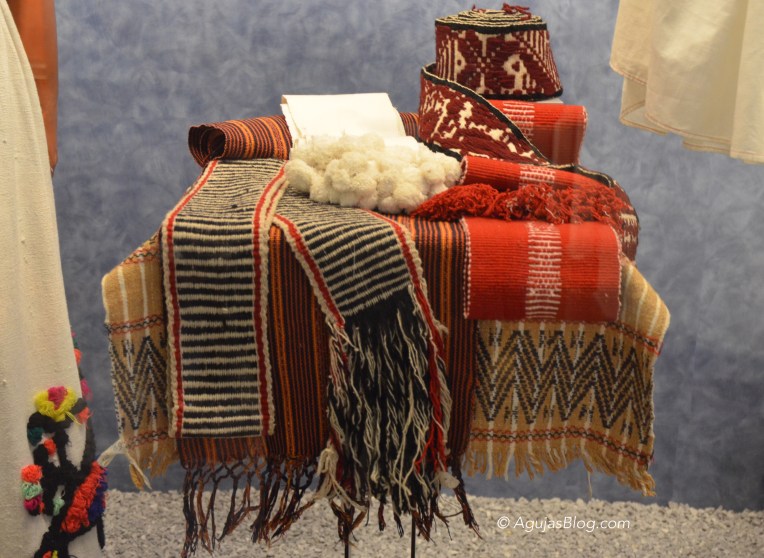
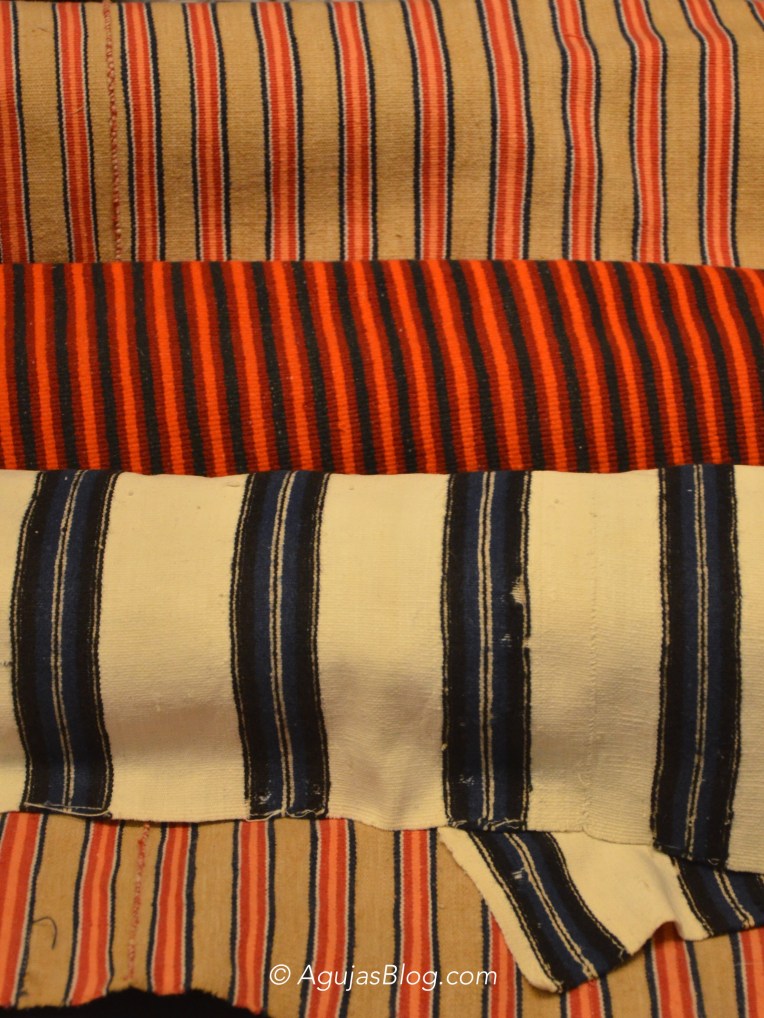
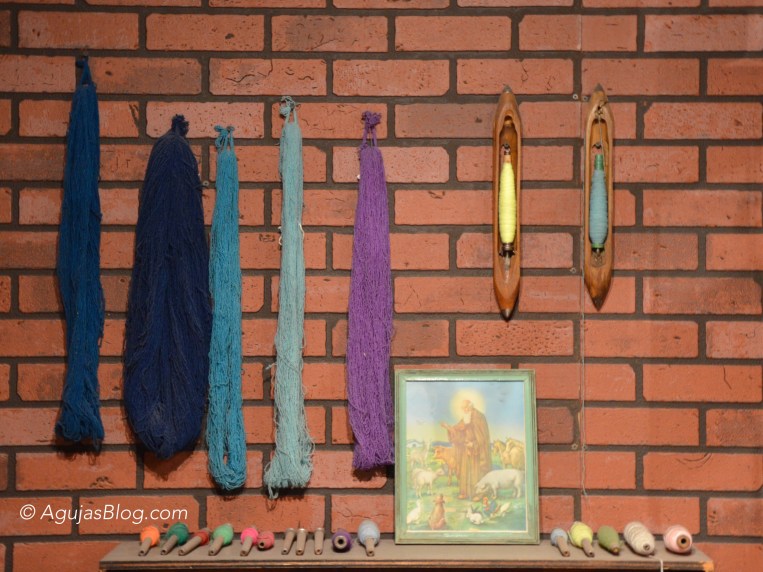
After staring at awe at the massive stone, we wandered through various halls and came across these ancient textiles of the indigenous Nahua.
“Clothing distinguishes the indigenous groups of México and even within one group. Among the Nahuas each subgroup, each region and even each village has its own way of dressing. Each pattern conserves a tradition, each design speaks of knowledge maintained over the centuries, each form represents a way of seeing the world.”
(Source: Museum placard)

Basketry

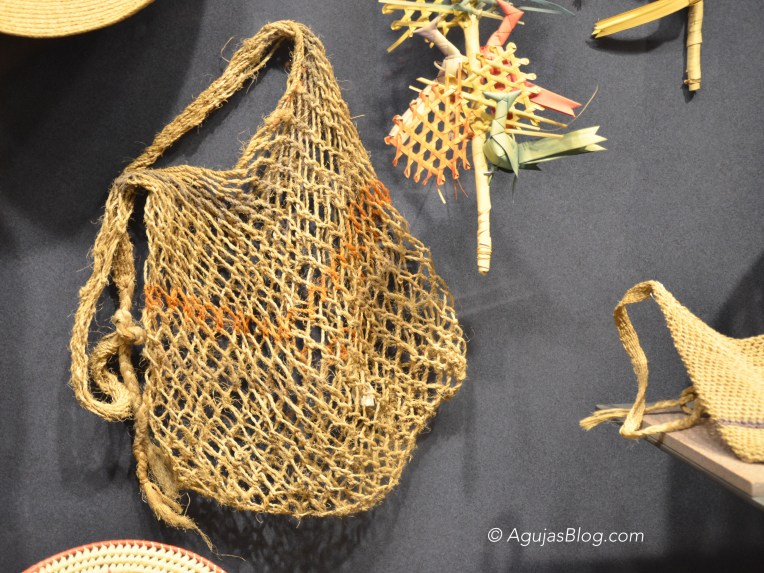
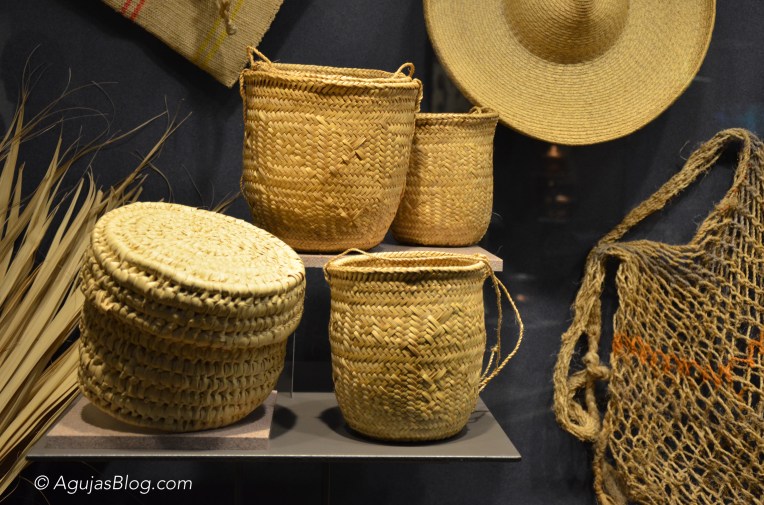
We saw woven bags and baskets made from hard fibers such as junco, bejuco, palm and carrizo.

Weaving

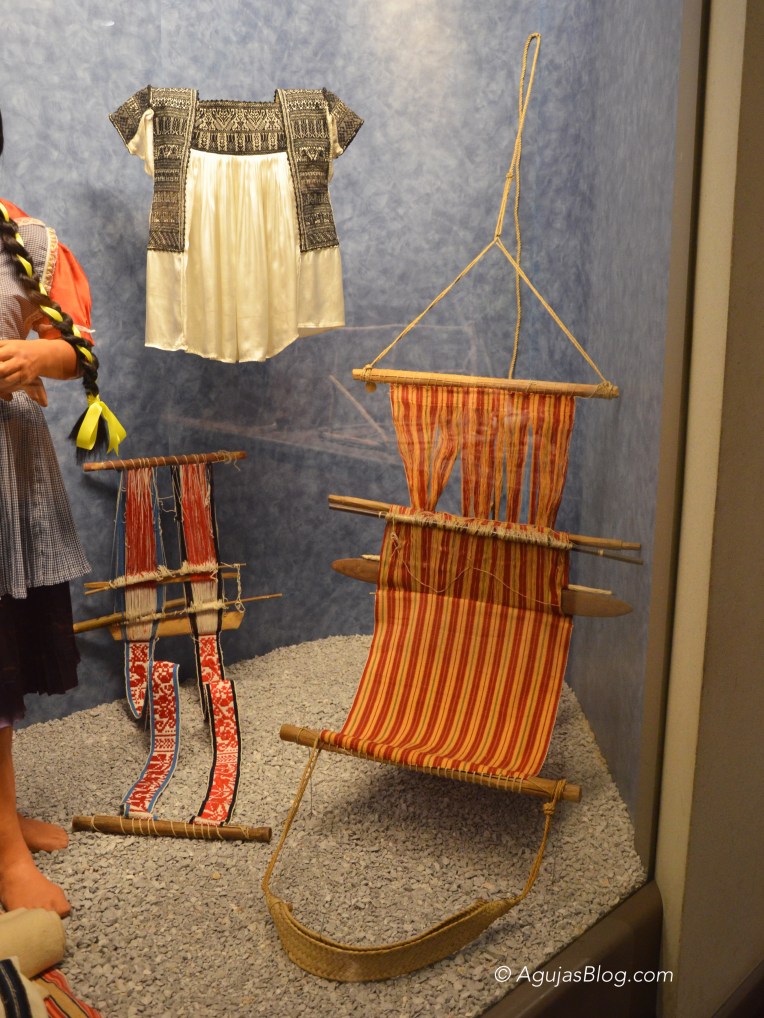
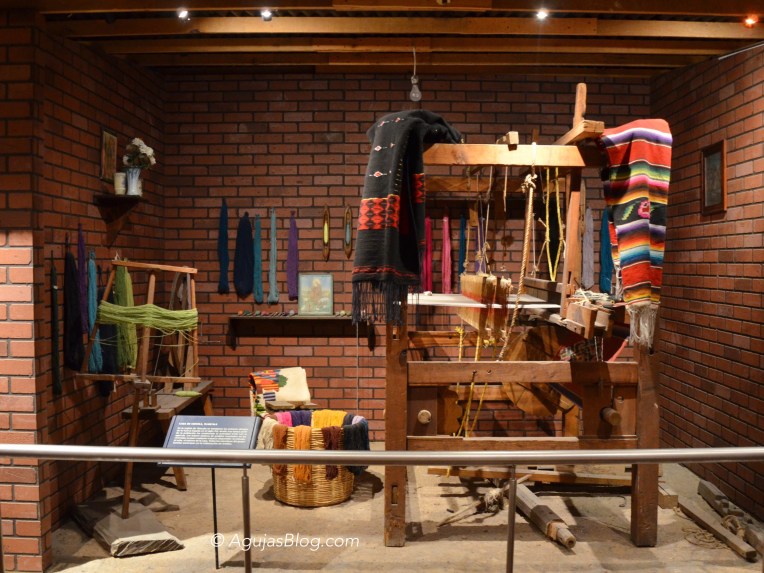
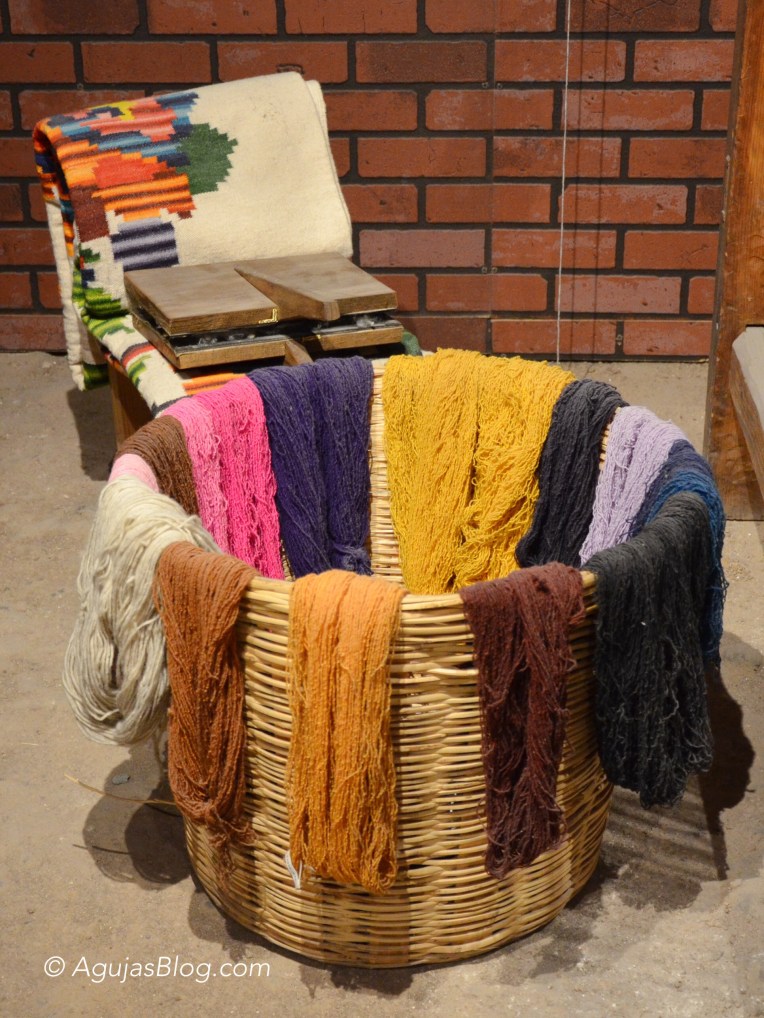
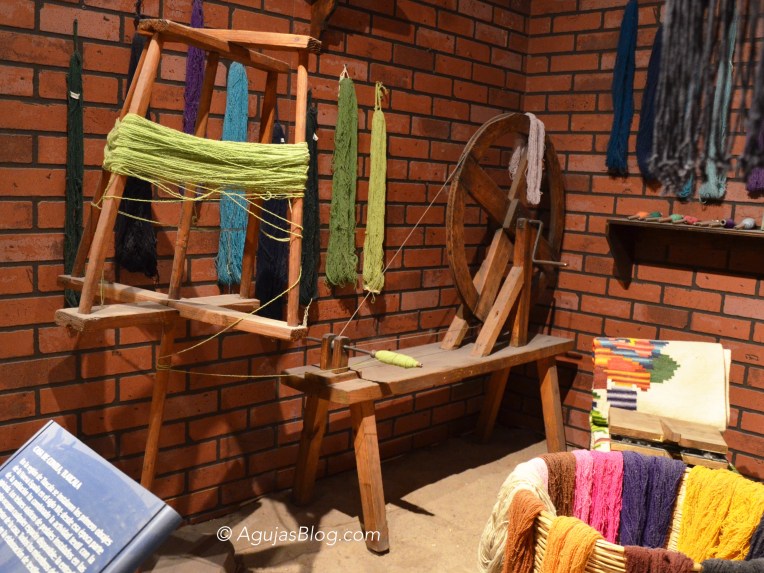
This is a reproduction of a typical home in the village of Contla in the state of Tlaxcala. According to the museum placard, rustic pedaled looms were installed in any available space.

Crafts

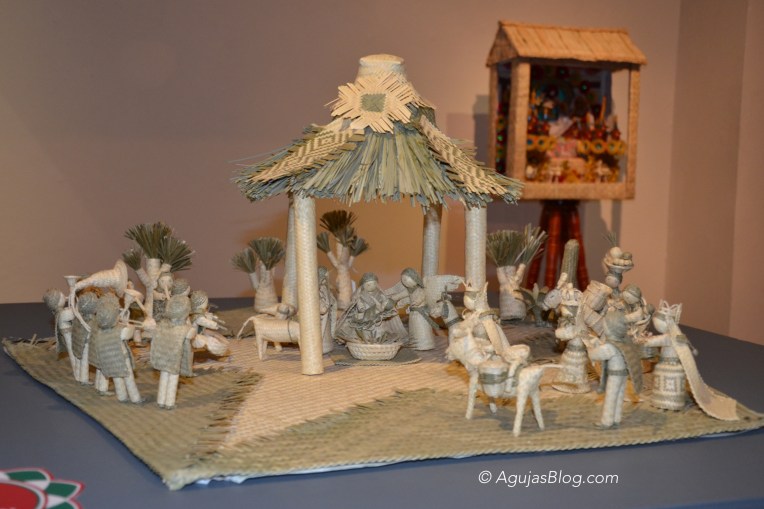
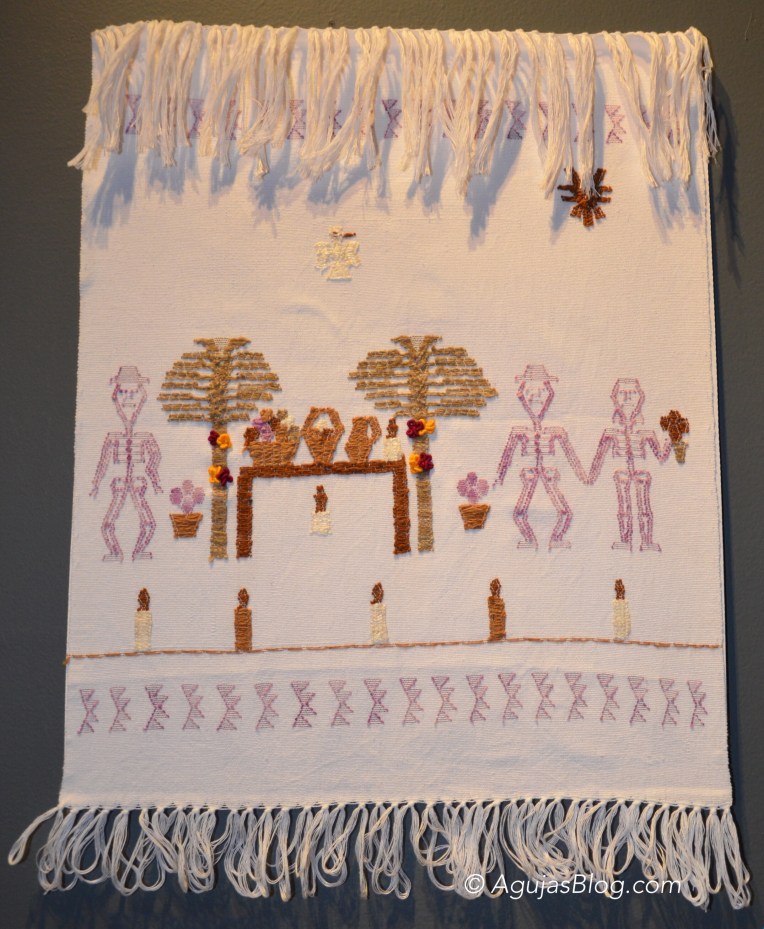
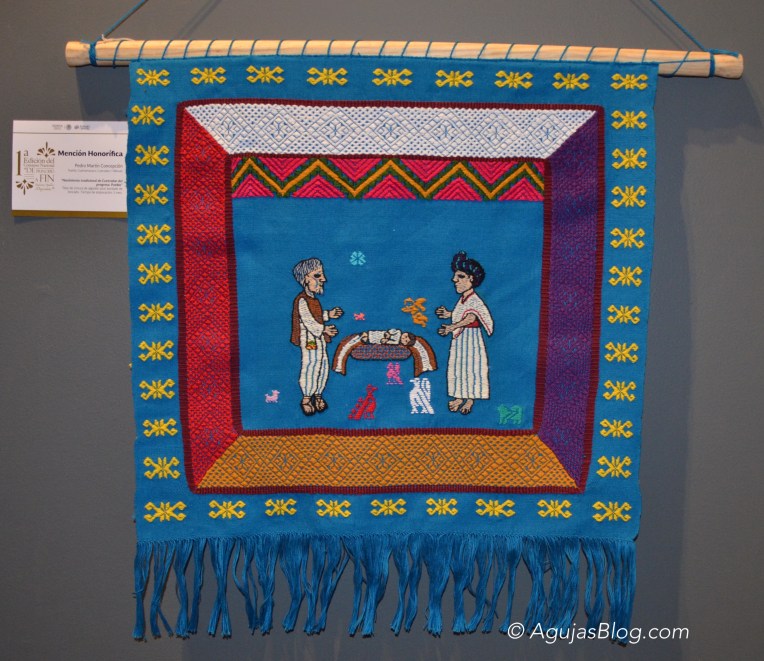
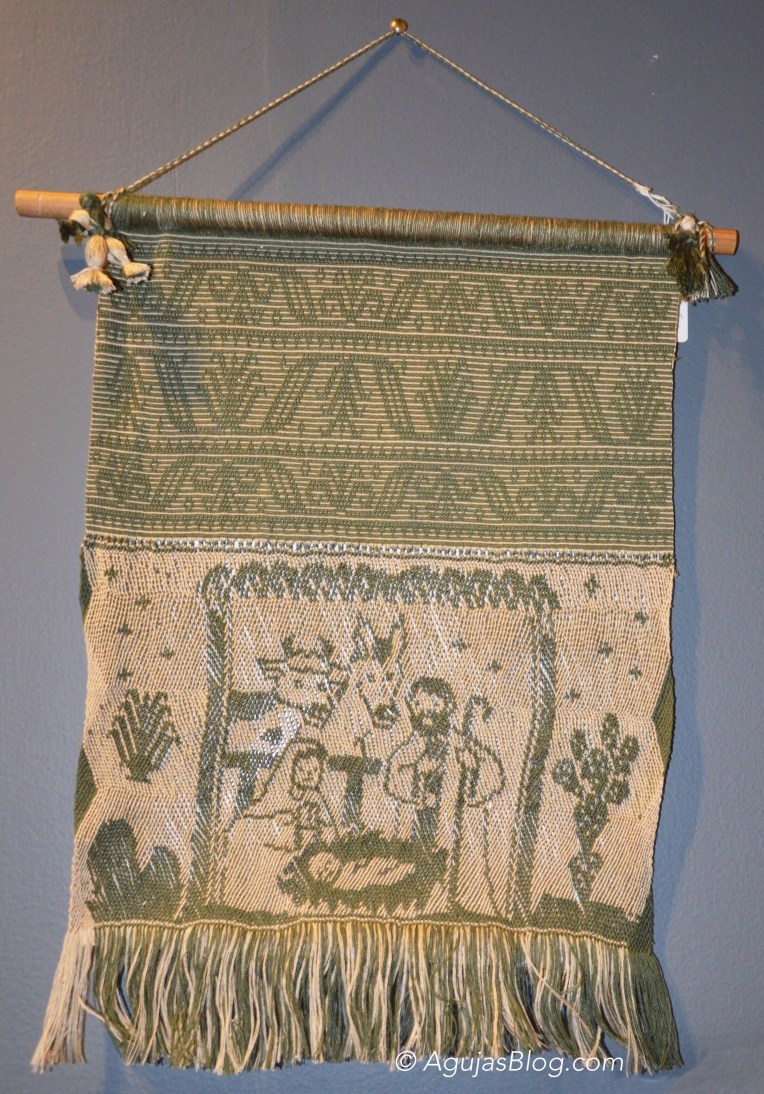
A day at the Saturday Bazaar in San Ángel yielded a wonderful surprise. Since we were there right after Christmas, we saw all the winning entries for the Primer Concurso Nacional, “De Principio a Fin, Tradiciones Populares Mexicanas” (First National Competition, “From Beginning to End, Popular Mexican Traditions”). Themes revolved around the Day of the Dead and Christmas.

Las piezas que se elaboran con motivo de estas festividades, dan cuenta de la compleja concepción de la vida humana y de la constante interacción entre la vida y la muerte dentro de la cultura popular mexicana.

The pieces that are created for these festivities tell the story of the complex idea of life and the constant interaction between life and death within popular mexican culture.

(Source: Event signage. Translations are mine.)

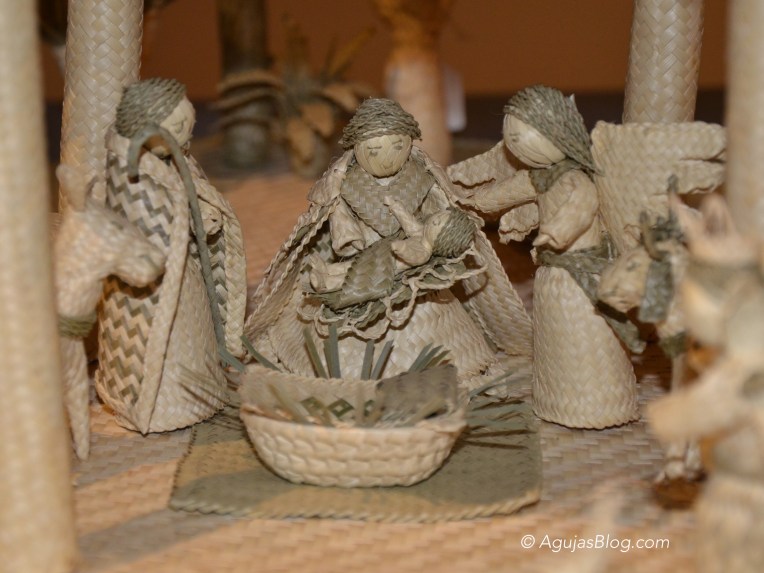
Nacimiento tejido en palma natural maciza y tierna, elaborada con técnica de esfera. 38 piezas.

Nativity woven from natural strong and tender palm constructed with a spherical technique. 38 pieces.

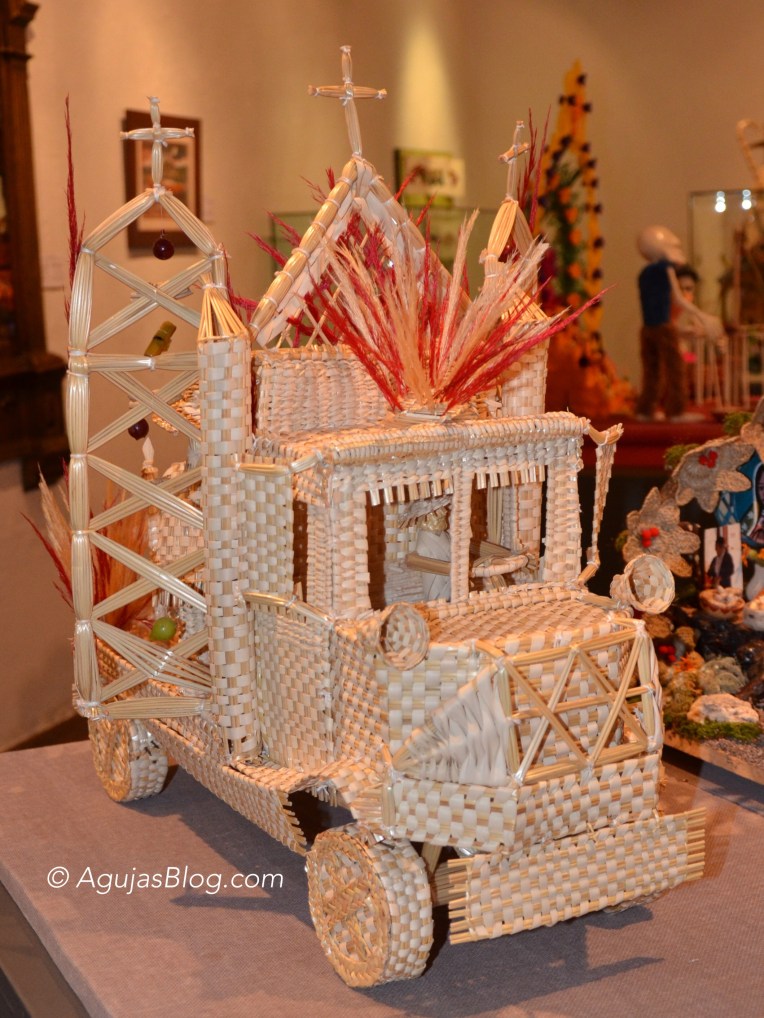
Carro alegórico con ofenda tradicional del Día de muertos, elaborado con fibra de trigo. Tiempo de elaboración: 1 semana

Allegorical vehicle with a traditional offering of the day of the dead, constructed with wheat fibers. Time to produce: 1 week.

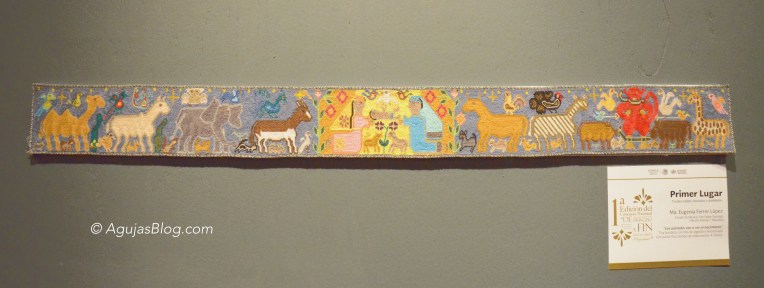
“Los animales van a ver el nacimiento”
Tira bordada con hilo de algodón mercerizado con punto fino. Tiempo de elaboración: 4 meses

“The animals go to see the nativity.” Embroidered strip with mercerized cotton thread with a fine point. Time to produce: 4 months.

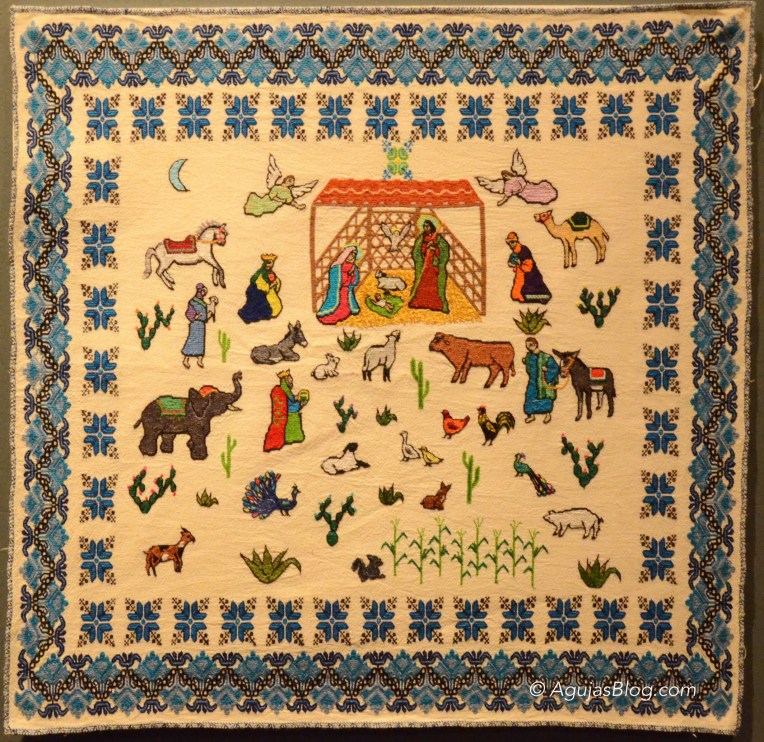
Nacimiento con bordado fino mazahaua en manta de algodón.

Finely embroidered nativity on cotton cloth in the style of the Mazahaua people.

“La tradición de mi pueblo”
Servilleta elaborada en telar de cintura, con técnica de brocado, tenida con tintes naturales: caracol púrpura y algodón coyuchi verde.

“The tradition of my village.” Napkin woven on a backstrap loom with brocade technique and tinted with natural dyes: purple snails and organic green cotton.”

“Nacimiento tradicional de Cuetzalan del Progreso. Puebla.”
Telar de cintura de algodón azul, bordado de brocado.
Tiempo de elaboración: 1 mes

“Traditional nativity of the city of Cuetzalan del Progreso, Puebla.” Blue cotton on a backstrap loom embroidered in brocade. Time to produce: 1 month

Tapiz de Nacimiento Mexicano, elaborado en telar de cintura de algodón con doble alzadera y puntas de flecos.
Tiempo de elaboración: 1 mes

Tapestry of the Mexican Nativity, woven on a backstrap loom out of cotton with fringe. Time to produce: 1 month

These are only a sampling of the many handicrafts we saw during our trip. More to come.

Stockholm Yarn Crawl

For our holiday in Stockholm, we found the most adorable apartment through Airbnb. Monica’s apartment had everything we could possibly need – a comfy living room, narrow but incredibly well-organized and stocked kitchen, and a fold-down bed that didn’t take up much space. The lift to the third floor was one of those old-fashioned ones that just fit two people and had a metal accordion door. The apartment was located only one long block from the metro. The SoFo (South of Folkungagatan) neighborhood was very eclectic and bohemian with antique stores and fab pubs nearby. My husband and I wanted to just take up residence in Monica’s apartment forever, but we figured she needed it back eventually.

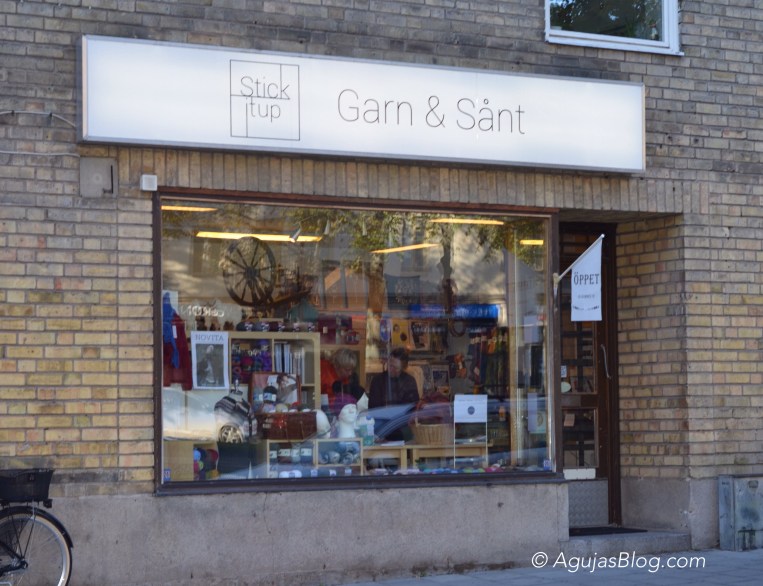
It’s impossible to visit Sweden and not run across yarn shops. Yet another reason why I ❤️ Sweden. I had a list on the ready for our forays around town. Our first stop was Stick it Up, located in SoFo only a brisk 15 minute walk from Monica’s apartment.

Stick It Up - Exterior

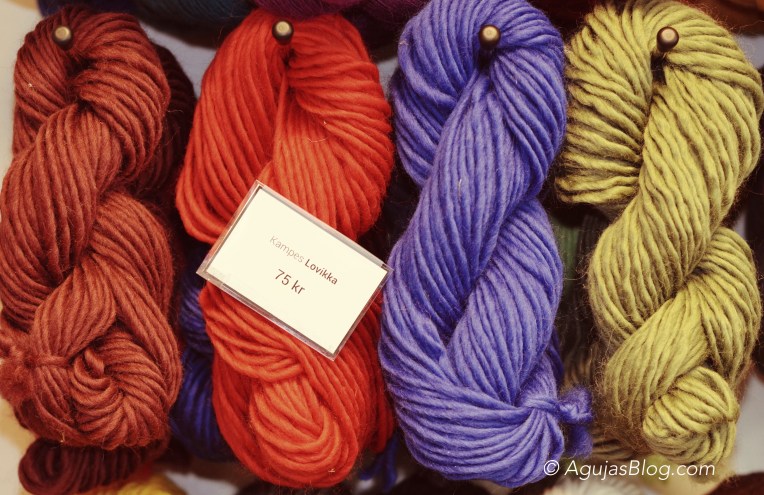
Stick it Up is a small shop with a nice selection of yarn in natural and man-made fibers. The owner was kind and friendly and explained the sources of the various yarns. I narrowed my selection to these 100% wool skeins intended for Lovikka mittens, which the owner explained were traditional in Sweden. Once home, I looked up the history and found a nice summary about the origin of the mittens on the Heart of Lovikka website. I brought home two skeins of a lovely green (not pictured here). Stick it Up is located at Ringvägen 64, 118 61 Stockholm, tel. 08-642 00 13.

Stick It Up - Yarn

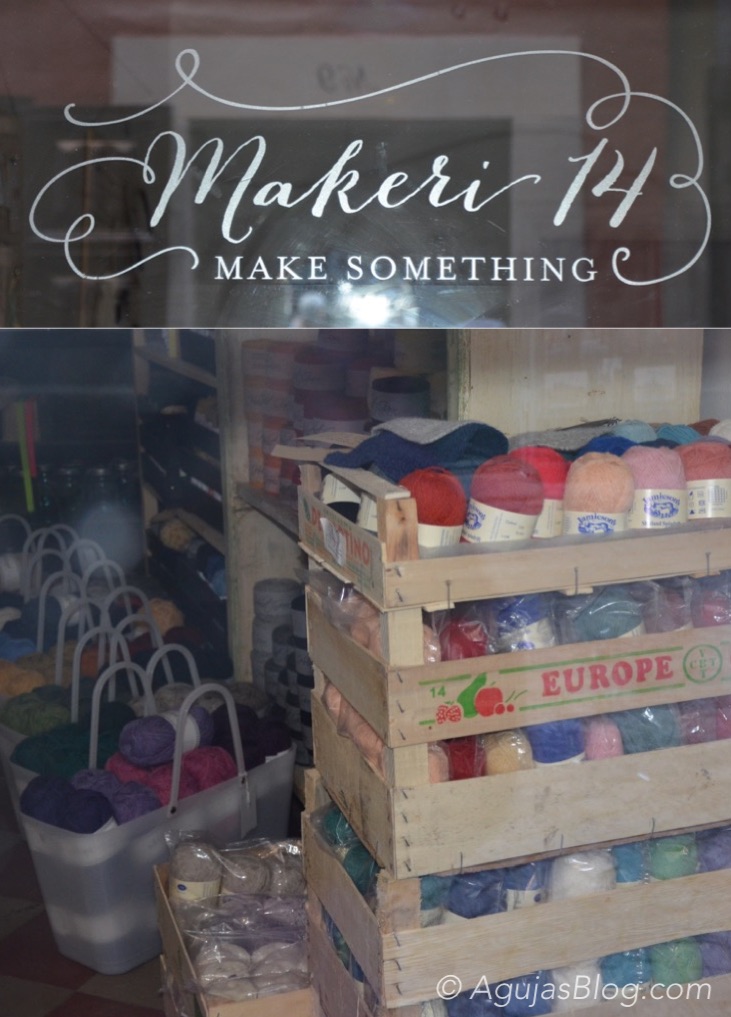
Content with my purchases, we headed over to Gamla Stan to explore the old town center. As we meandered through the cobblestone streets, I spotted this in a dark window – yarn!

Makeri 14 - Window Shopping

Alas, as I got closer, the shop was closed. All I could do was cup my hands against the window and look longingly at the baskets full of yarn. The shop was tiny, meant only to walk in, buy and leave. Makeri 14 is located at Köpmangatan 14, 111 31 Stockholm.

Makeri 14 - Exterior

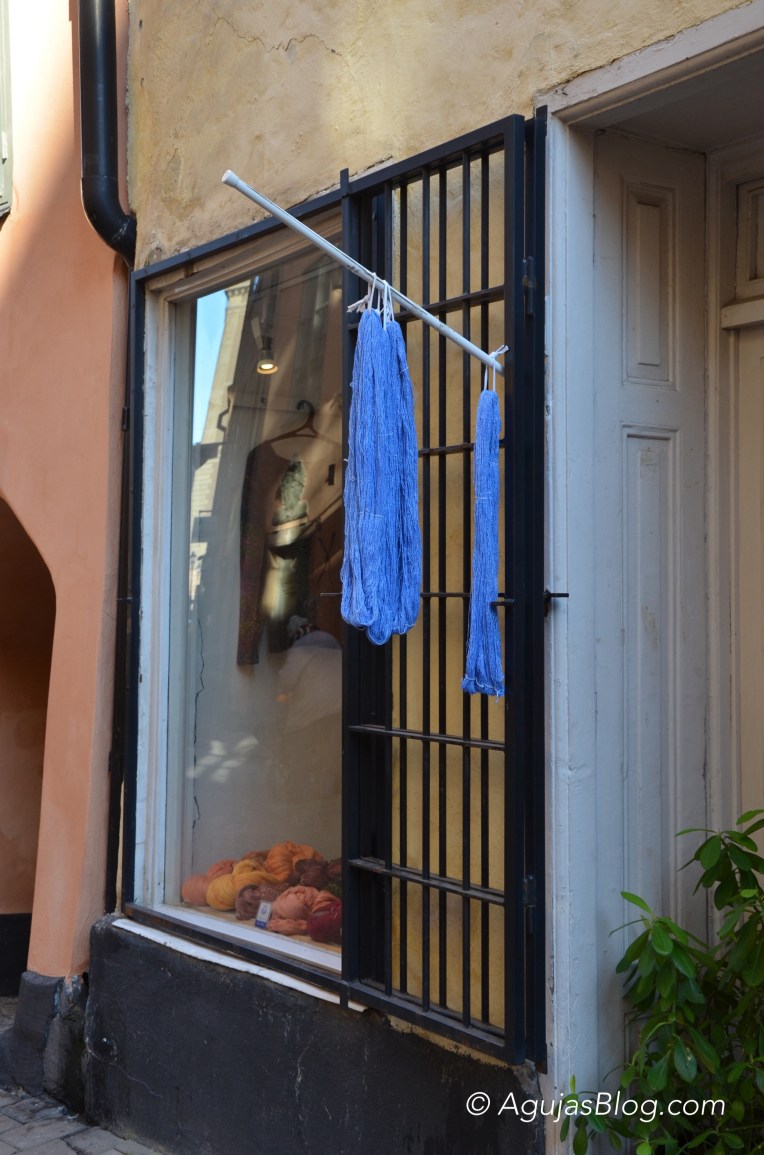
The next yarn shop was located near a statue of St. George slaying the dragon. I easily spotted it because this was hanging outside the door.

Anntorps Väv on Österlånggatan 11

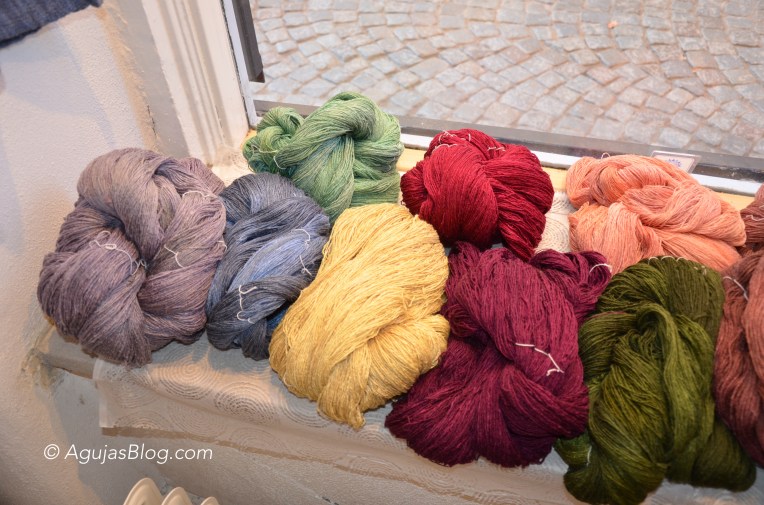
Anntorps Väv was also somewhat small but had a luscious collection of yarn in natural fibers. Just look at these 100% silk beauties in the window! The proprietress spoke a little bit of English and I spoke not a bit of Swedish but we managed to point and understand each other perfectly. The silk is spun for the store and she hand dyes it in these jewel-tones.

Anntorps Väv - Window Shopping

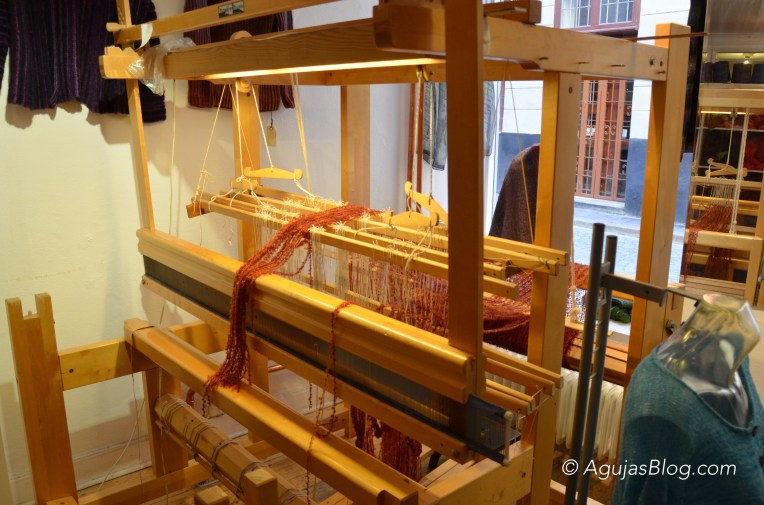
The other reason the shop is small is because this large loom takes up most of the space. When we walked in, the proprietress was weaving on it. In the store were large fluffy blankets she had woven on the loom. Anntorps Väv is located at Österlånggatan 11, 111 31 Stockholm, tel. 0046(0)8 676 00 23. It’s a few doors down from Stockholms Gästabud Bar and Bistro where we had those fabulous Swedish meatballs (pictured in previous post).

Anntorps Väv - Loom

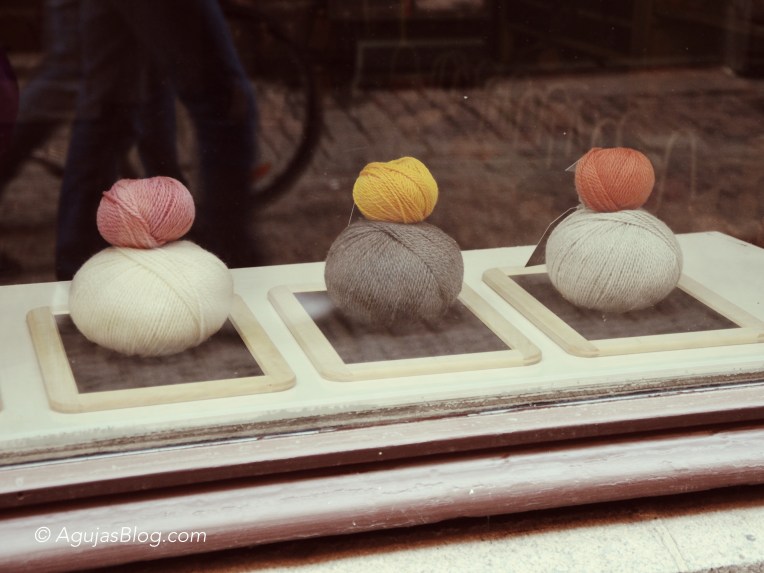
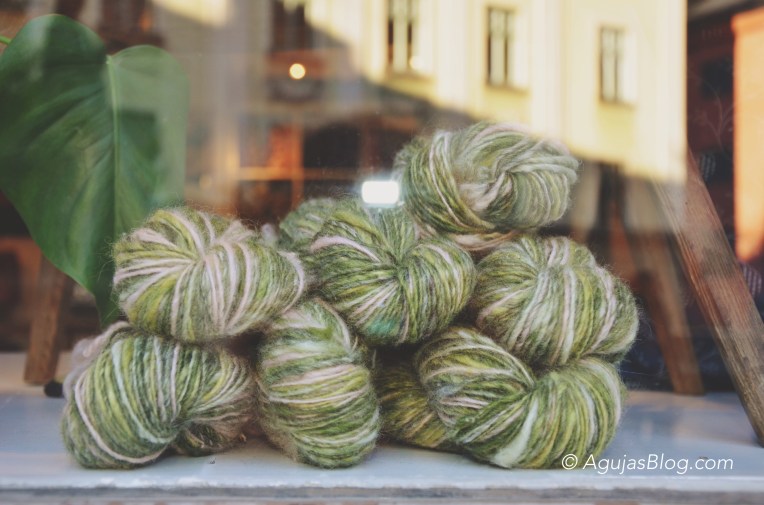
Window shopping in Gamla Stan is heavenly when you spot things like these skeins.

Galleri Yamanashi - Window Shopping

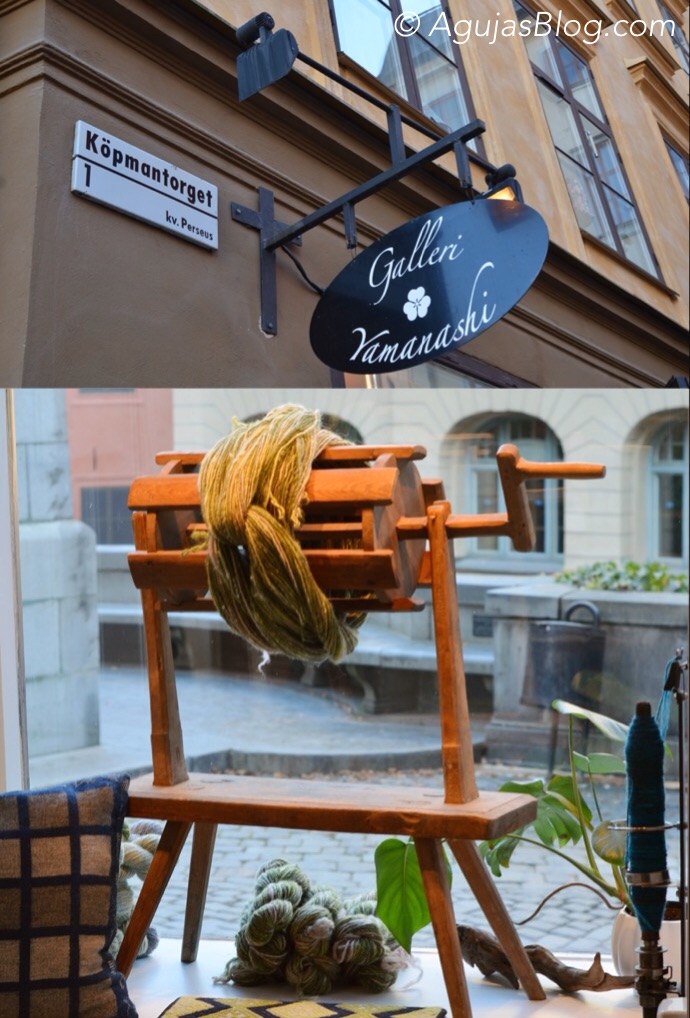
Galleri Yamanashi is located in a largish space in a busy corner with large windows facing the street. The gallery is very nicely laid out inside with plenty of room to look around. Throughout the space, there are examples of tools used in the spinning of yarn.

Galleri Yamanashi at 1 Köpmantorget

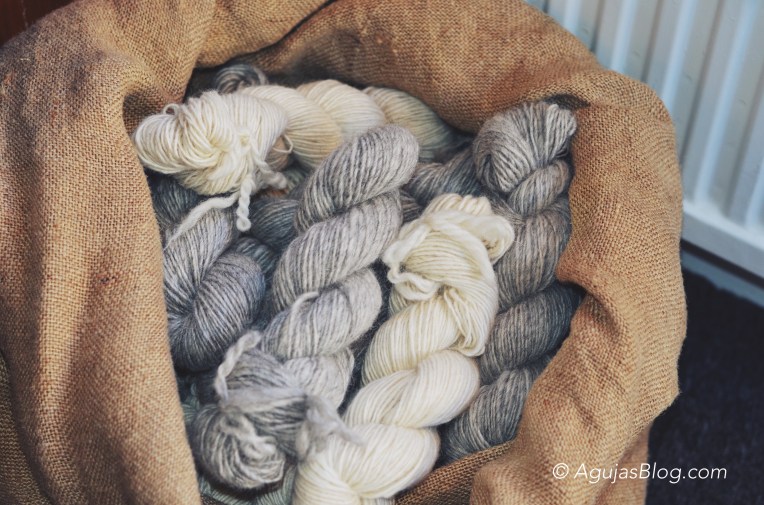
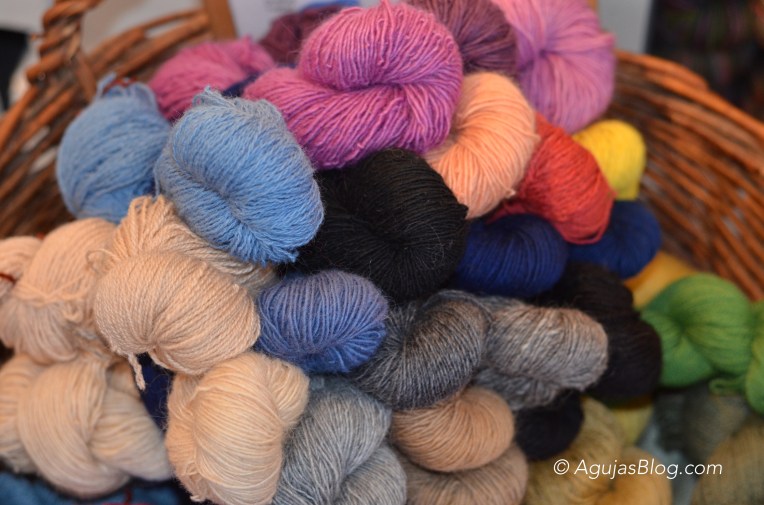
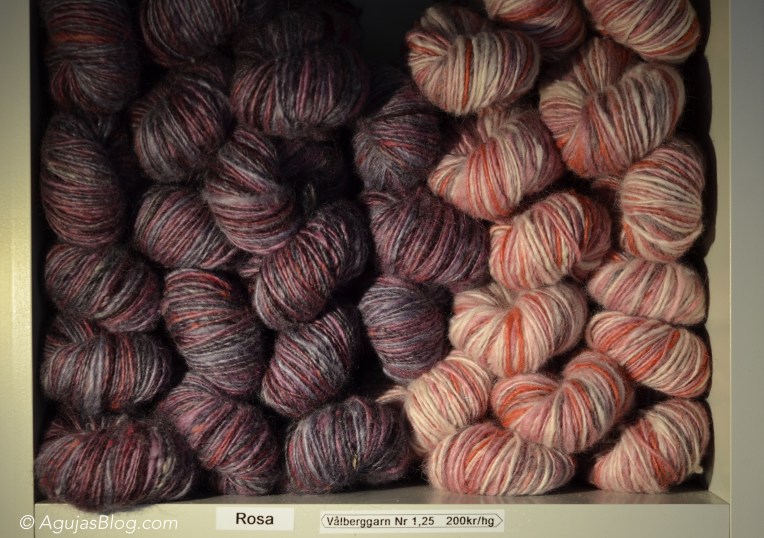
Their selection of yarns was nicely curated and presented. There were natural skeins of wool in burlap sacks and dyed skeins in large baskets. A large wall cubby housed skeins in various weights and colors.

Galleri Yamanashi - Yarn Bag
Galleri Yamanashi - Yarn Basket
Galleri Yamanashi - Yarn Cubbies

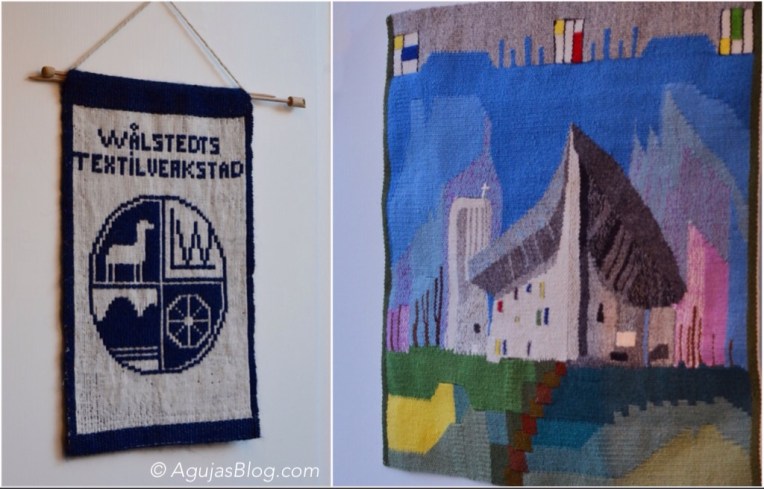
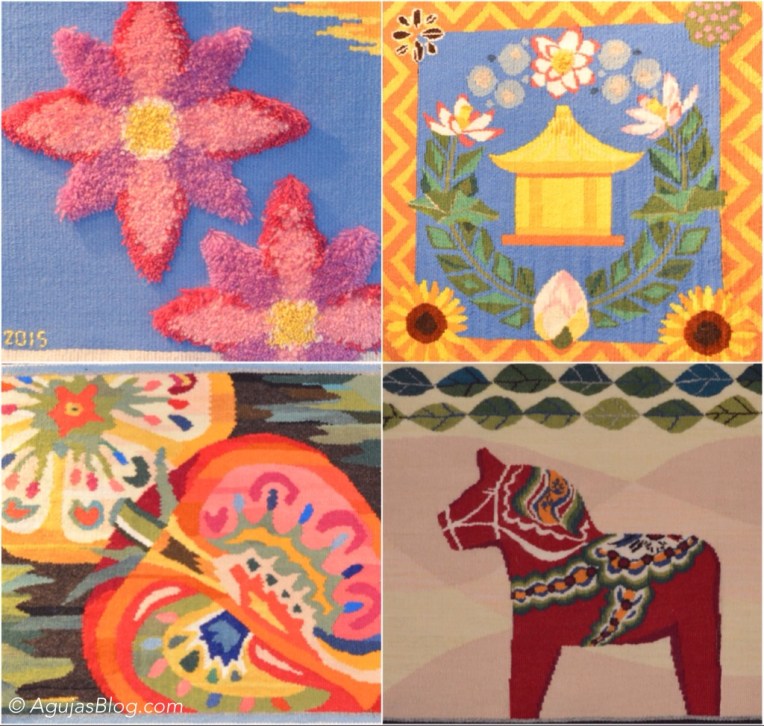
During my visit, the shop had a special exhibition showcasing entries from the 2015 Wålstedts Textile Art Contest. The contest is a knitting and weaving competition between Sweden and Japan using Wålstedts yarns. To see the other winning entries in both weaving and knitting categories, go to galleri-yamanashi.se.

Wålstedts Textile Art Contest 2015 - 2
Left: Wålstedts Textile Art banner. Right: The chapell Notre-du-Haut by Ayako Murota.
Wålstedts Textile Art Contest 2015 - 1
Top Left: Weaver-Jyuri Nagayo. Top Right: Praying reconstruction and rebirth of eastern Japan by Mieko Sano. Bottom Left: Received Excellence Award, tomato by Weaver-Kaoru Yoneda. Bottom Right: Weaver-Maki Kimimori.

I was curious about Wålstedts yarns. According to the gallery’s website, the Wålstedts spinneri is one of the oldest spinning mills in Sweden dating back to 1934. Their fibers are sourced from Swedish sheep and have been cleaned, spun and dyed by four generations of the Wålstedts family. The following video from the Wålstedts Textilverkstad website depicts gorgeous Swedish country landscapes and the process the family uses to make this beautiful yarn.

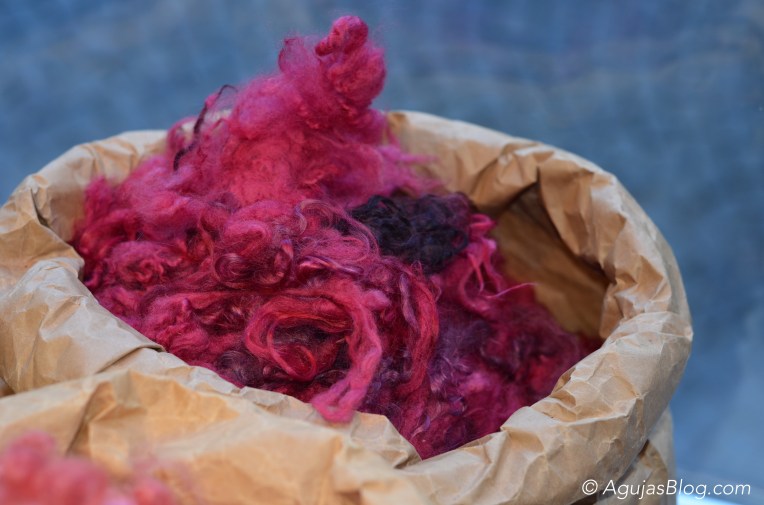
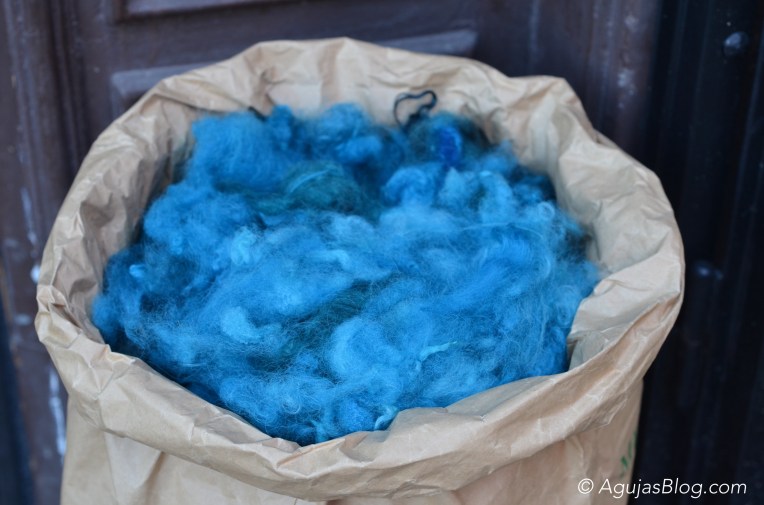
There were several bags full of wool fibers from the Wålstedts factory dyed in rich colors around the gallery. Galleri Yamanashi is located at Köpmantorget 1, 111 31 Stockholm.

Galleri Yamanashi - Pink Fleece

Galleri Yamanashi - Blue Fleece

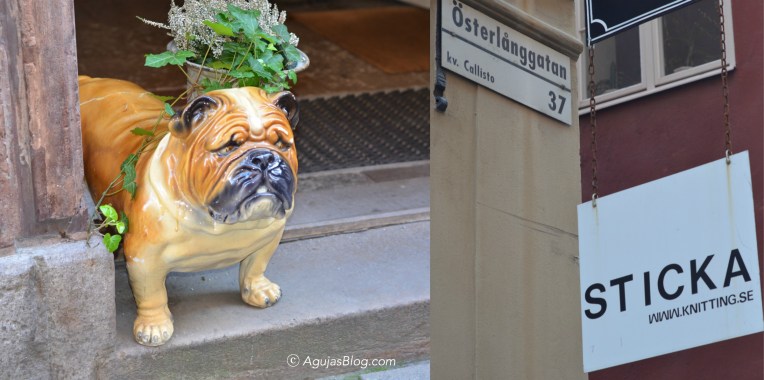
The final yarn shop I visited was Sticka, also located in Gamla Stan. At the entry, I was greeted by this ferocious ceramic bulldog – too cute!

Sticka at 37 Österlånggatan

The interior of Sticka looks more like a clothing shop than a yarn store. Displayed on racks throughout the space were beautiful, airy knitted items for purchase, such as shawls and sweaters. They had a small but nice selection of yarns from various countries but not too many local yarns. Sticka is located at Österlånggatan 37, 111 31 Stockholm, tel. +46 8 23 37 37. For some reason, the website will not display but here is a link to their Facebook page.

That concludes my Swedish yarn crawl. I know there were many more yarn shops that I could not possibly visit during my stay. Good enough reason to return one day!

Rosebank Roof Market

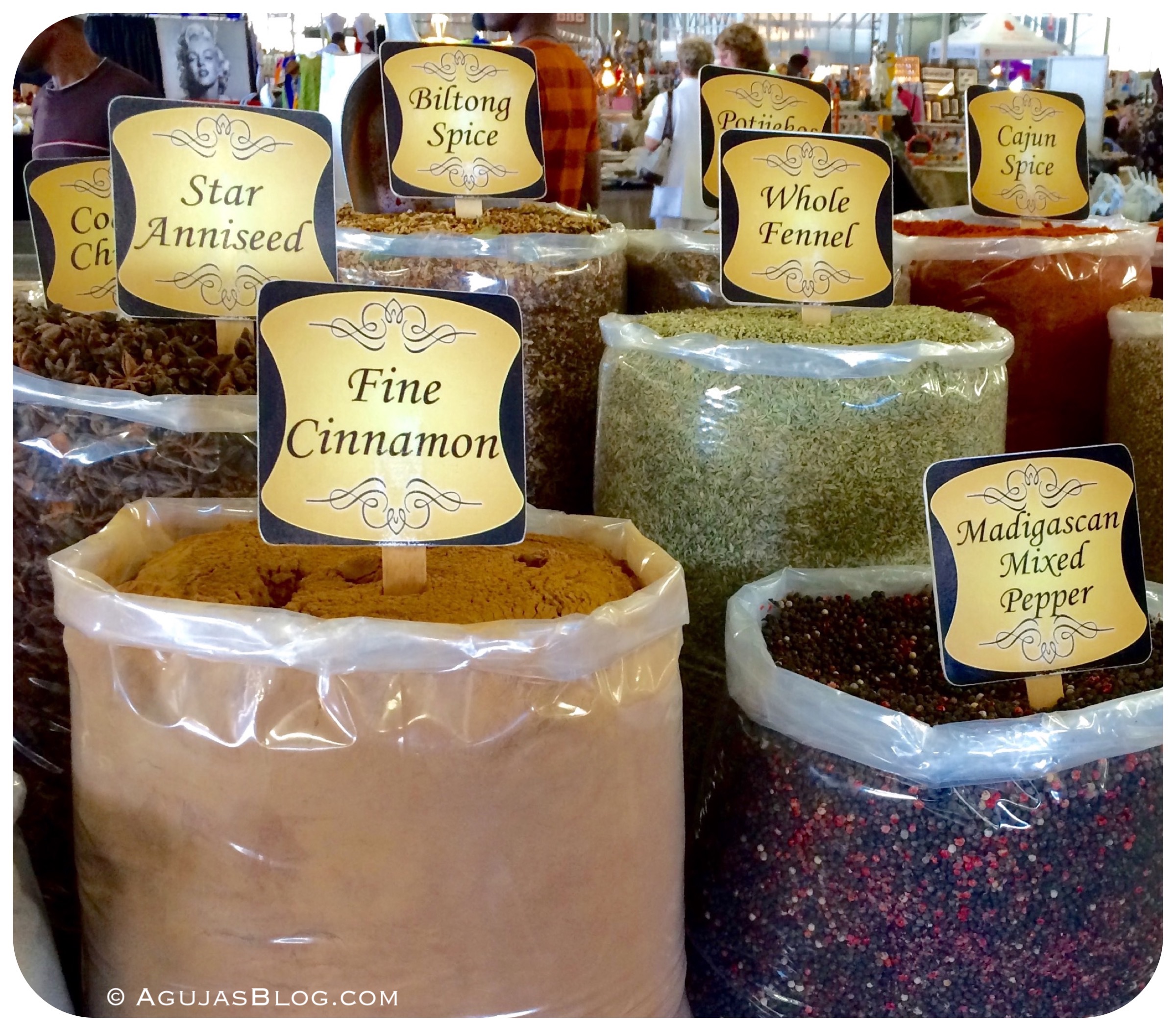
On the only Sunday morning in Johannesburg, we walked over to the rooftop of Rosebank Mall where we were greeted with a huge market. What a delight! The spice table was our favorite. We were able to sample quite a few of the combinations. The Biltong Spice in the back was scrumptious! It is rubbed on raw meat so that the flavors soak in as it dries. (Biltong is a dried, cured meat similar to beef jerky).

Rosebank Roof Market Spices

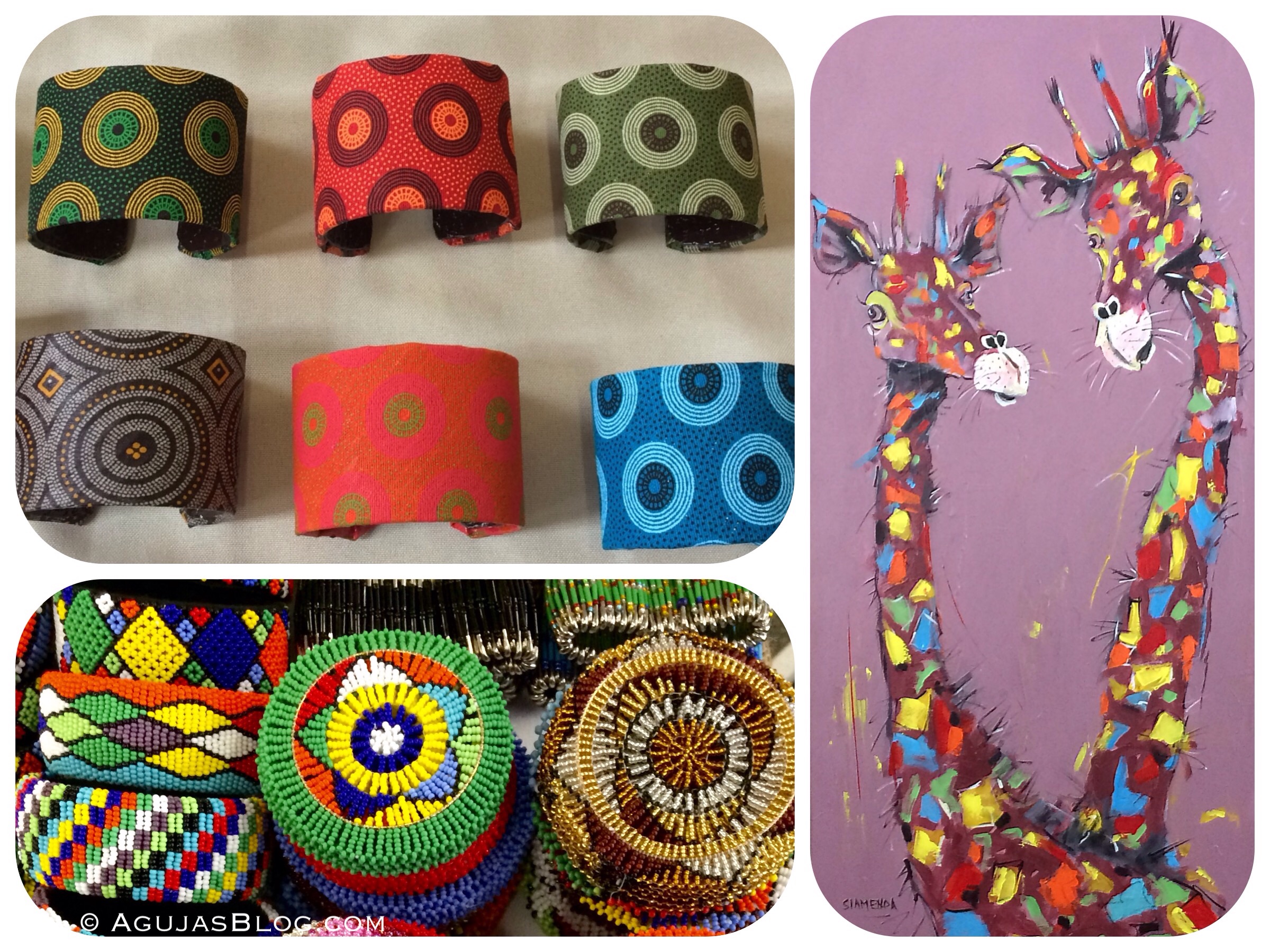
There were handicrafts and souvenirs everywhere – an explosion of color! Loved the fabrics used on these cuff bracelets. There was quite a bit of beadwork such as shown on the coasters. The colorful giraffes are from a painting.

image

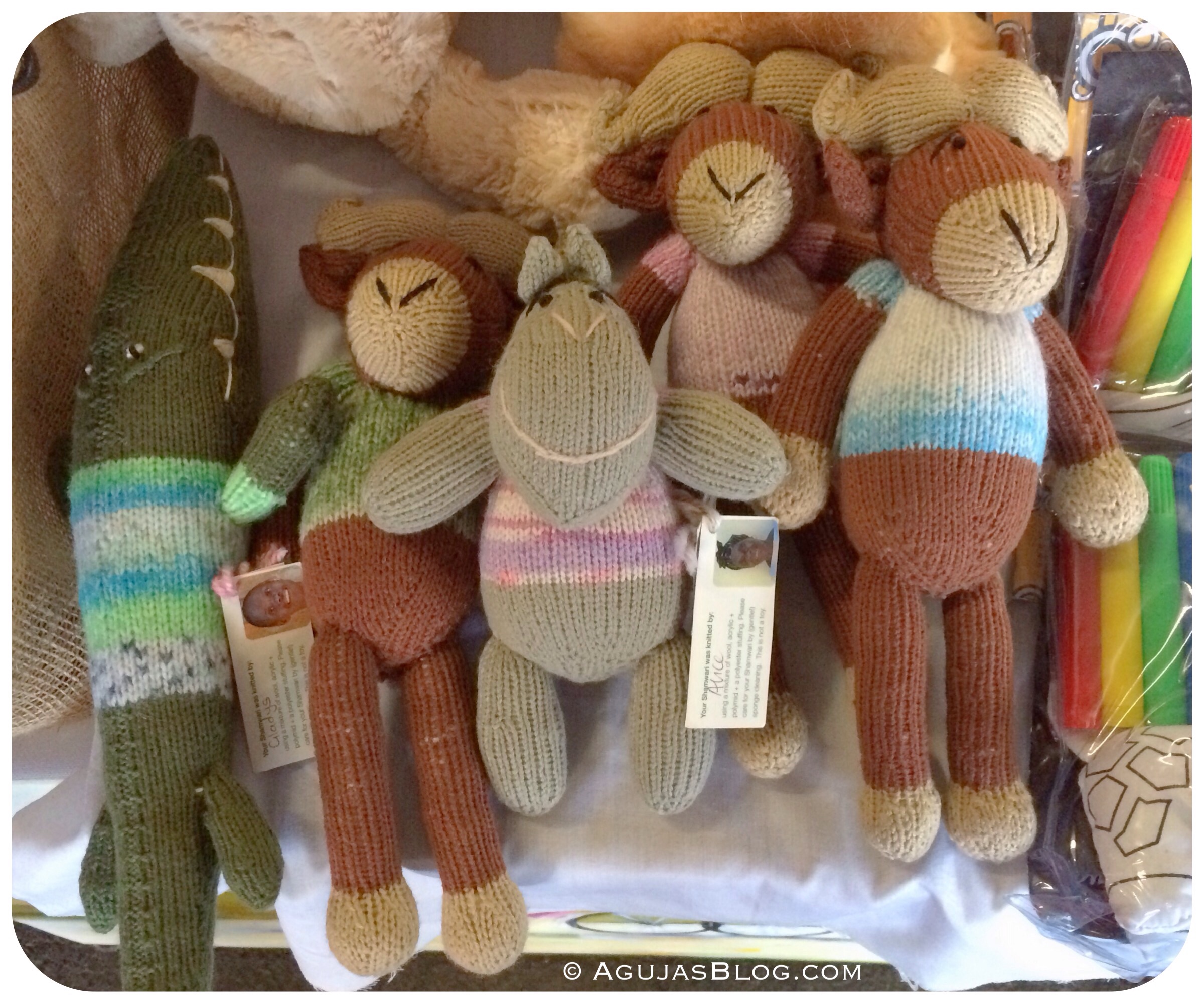
Amongst the handmade items, were these adorable knitted stuffed gnu and other “wildlife.”

image
Gogo Olive was born in Zimbabwe to empower local women – each product is lovingly handmade and is as individual and cheerful as the lady who knitted it! Hope (v.): to trust or believe. Knit (n.): to join or be joined together closely.

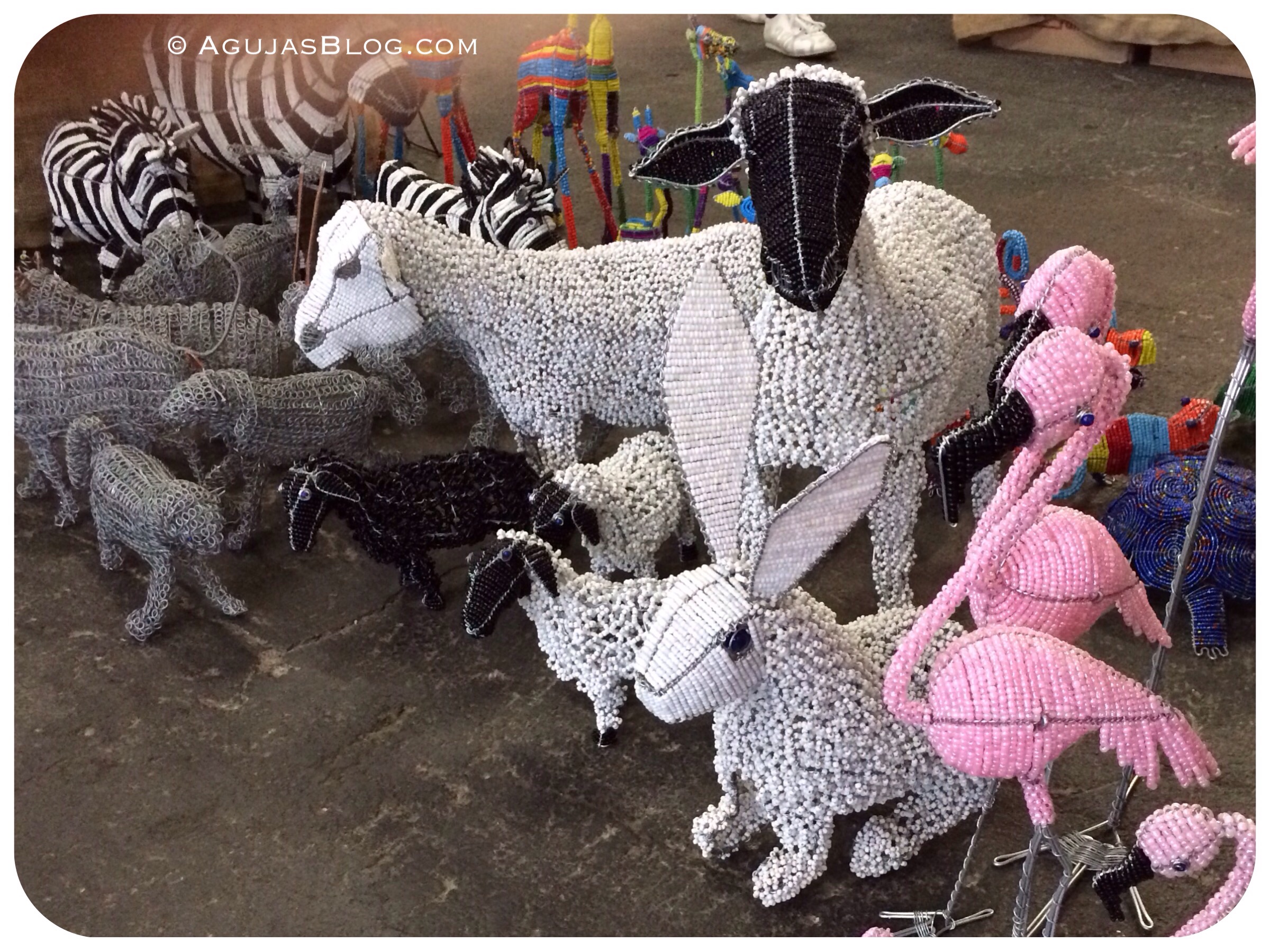
These farm-friendly animals are shaped with strong wire and then beaded. Love the sheep! Unfortunately, he did not fit in my suitcase.

image

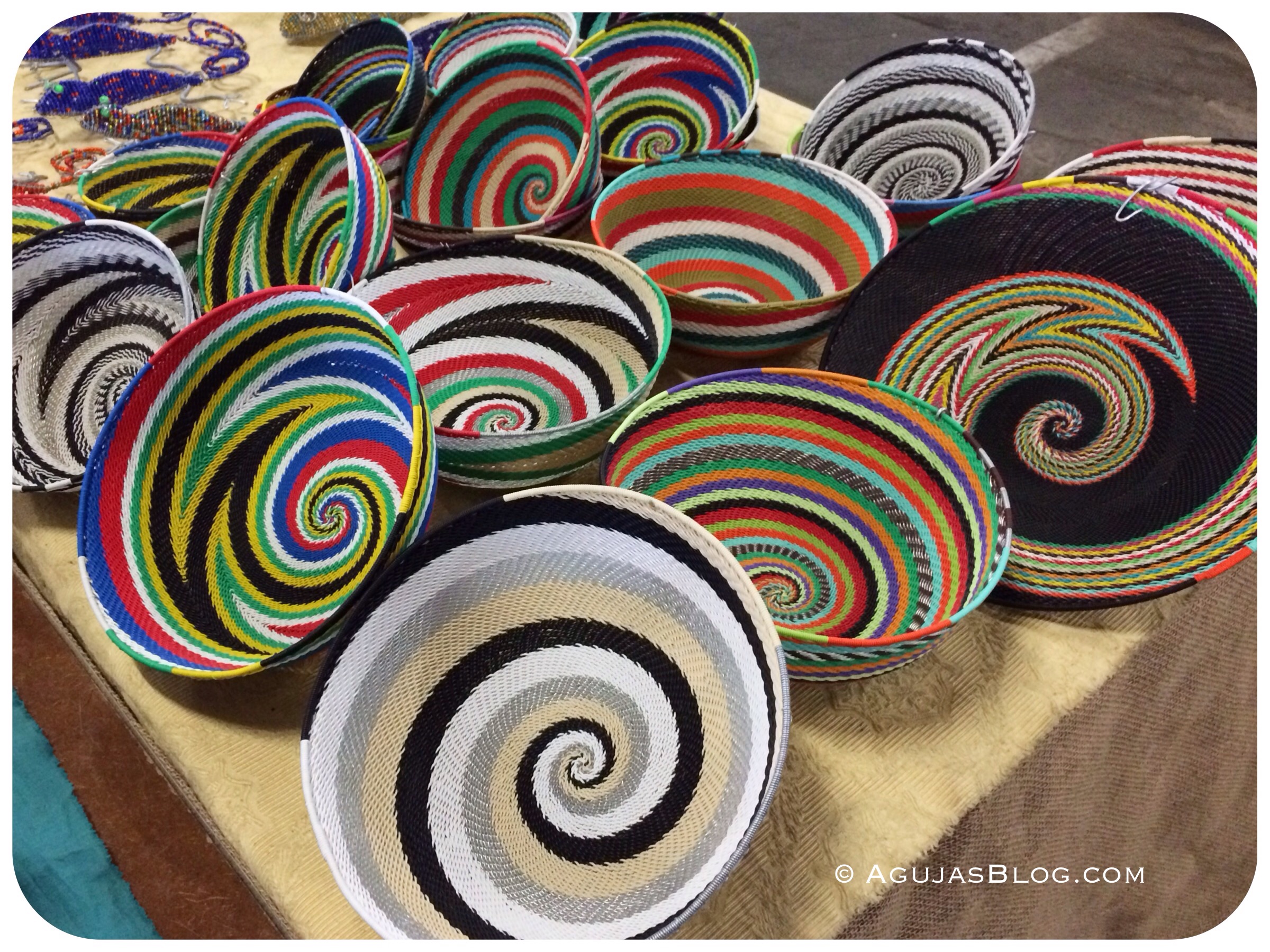
These baskets are woven from telephone wire. They are so colorful and the swirls are mesmerizing.

image

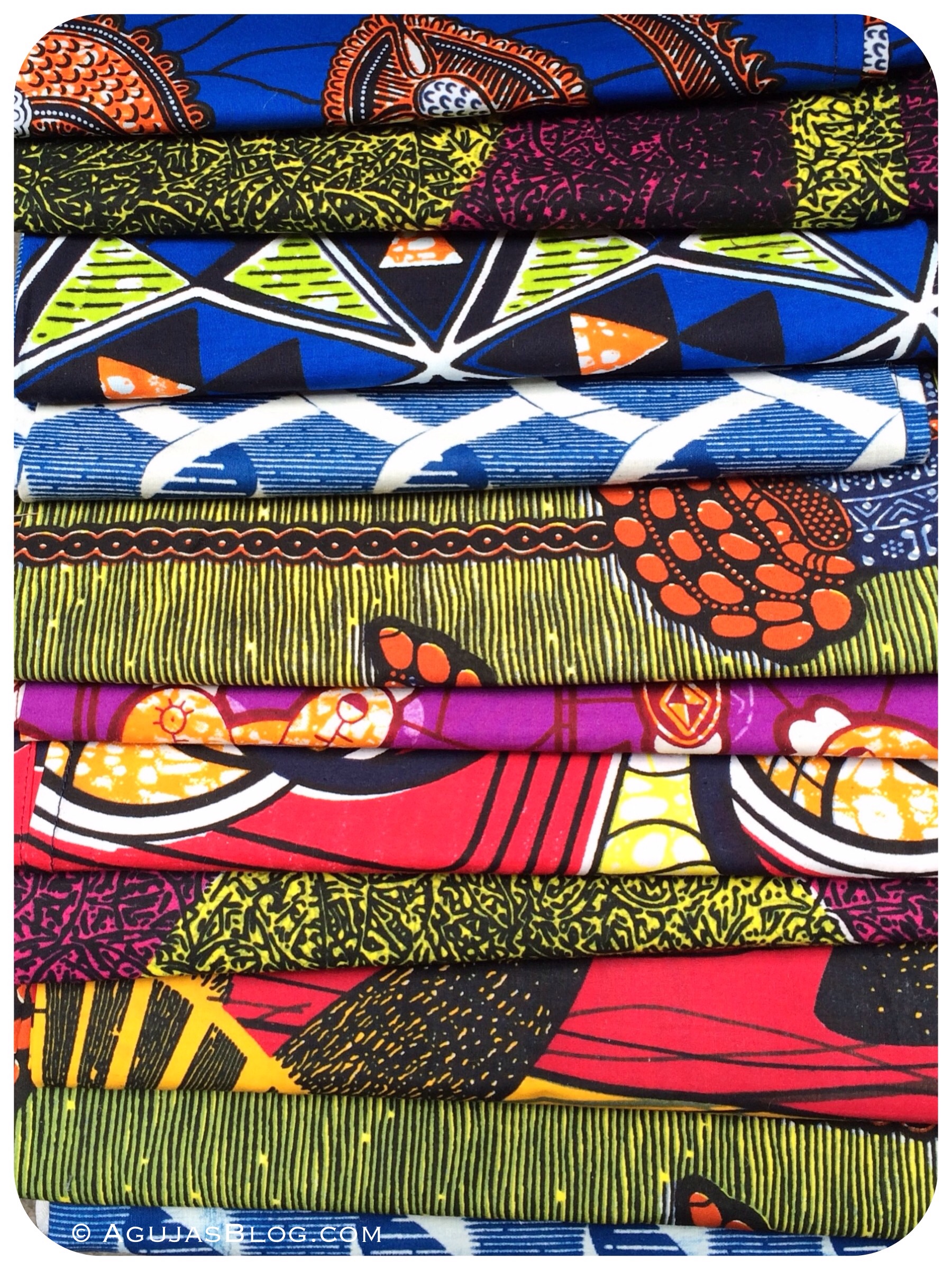
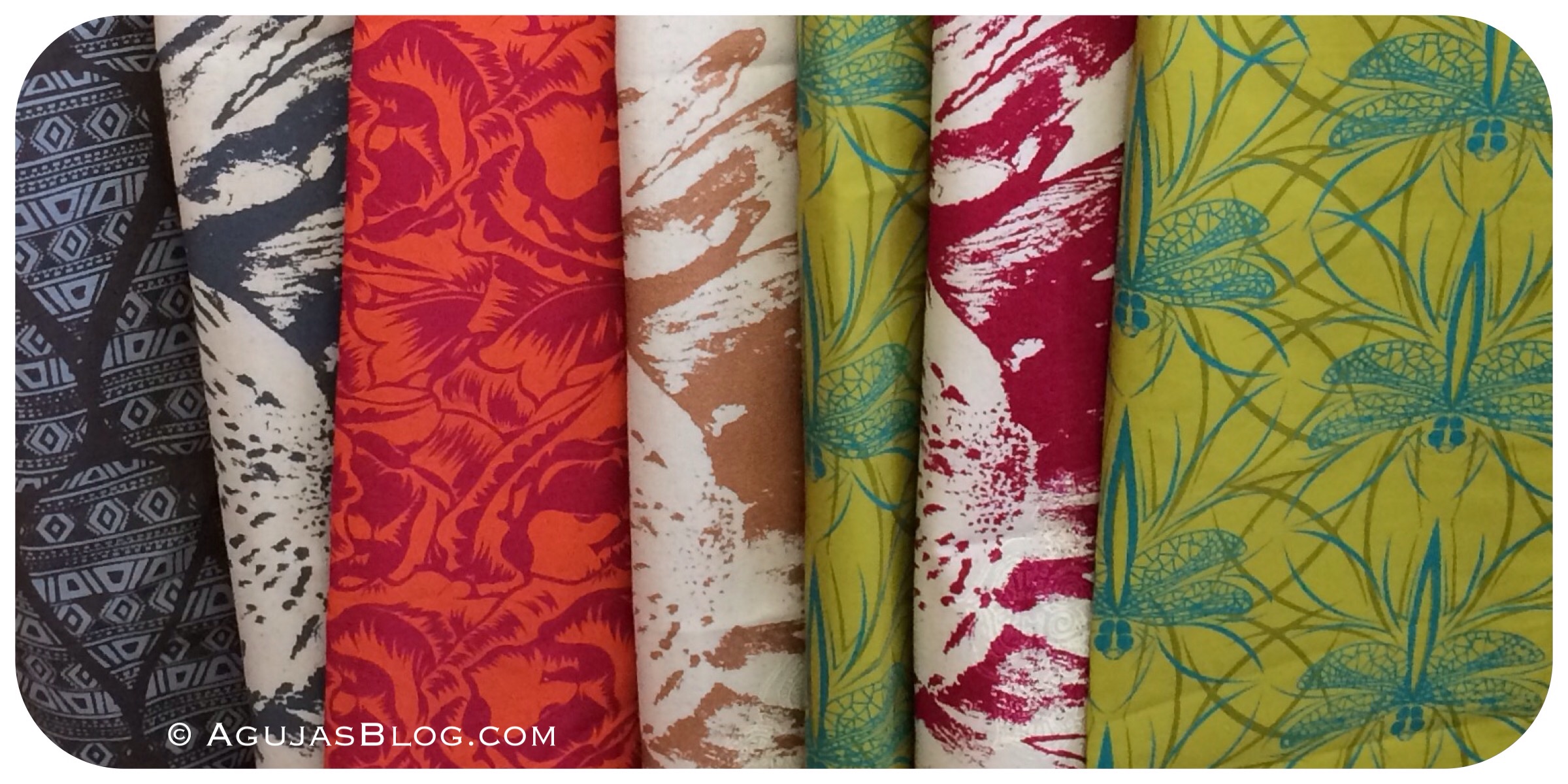
There were various fabrics ranging from bright and bold geometric patterns to the more modern interpretations below. (That second set of fabrics is from the Neighbourgoods Market).

Traditional colors and patterns.

A modern twist to fabric designs.

I enjoyed absorbing all the colors and smells of the market. If you ever make it to South Africa, I highly recommend the Rosebank Sunday Market.