Your Husband is a Berber!

We wanted to explore Africa and chose Morocco as our first venture on the continent. We were tempted by Casablanca with romantic images of dapper men in white suits and damsels in distress but decided on a more traditional route. We spent most of our time inside the medina in Marrakech and a couple of days lost in the labyrinth of Fès.

If you go to Morocco, a must buy is a woven rug. And if you are going to buy a rug in Morocco, you must be prepared to haggle.

We meandered from rug seller to rug seller, browsing, looking, until we decided to get serious. At the first sign of actual interest, the proprietor took us upstairs to a room stacked to the ceiling with carpets. One by one, a young boy took them down and displayed them on the floor at our feet while we sipped on sweet mint tea.

We saw a few we liked and started whittling them down to our favorites. Then the negotiations began. My husband took the lead while I listened and occasionally shook my head. The starting price was outrageously high. My husband patiently explained that we knew nothing about rugs or how much work went into making each one but thought they were all quite beautiful, and that we were on a budget. He made a counter-offer. Apparently it was outrageously low because our host threw his hands in the air and described the craftsmanship that went into each one in agonizing detail.

And so the conversation continued. The proprietor gave us another price. I opened my eyes wide with shock. My husband told him we would love to buy a rug from him since he had been so patient with us but it was too far off our budget. Another counter-offer. More detailed explanations. It continued like this for some time. I had another glass of mint tea. Finally, they agreed on a price. The proprietor exclaimed that he would not want to disappoint me by sending us home without a rug. We thanked him effusively.

As my husband handed him the agreed-upon price, the proprietor turns to me and exclaims, “Your husband is a Berber!” I can only deduce that meant that (a) my husband is cheap, or (b) a very good negotiator.

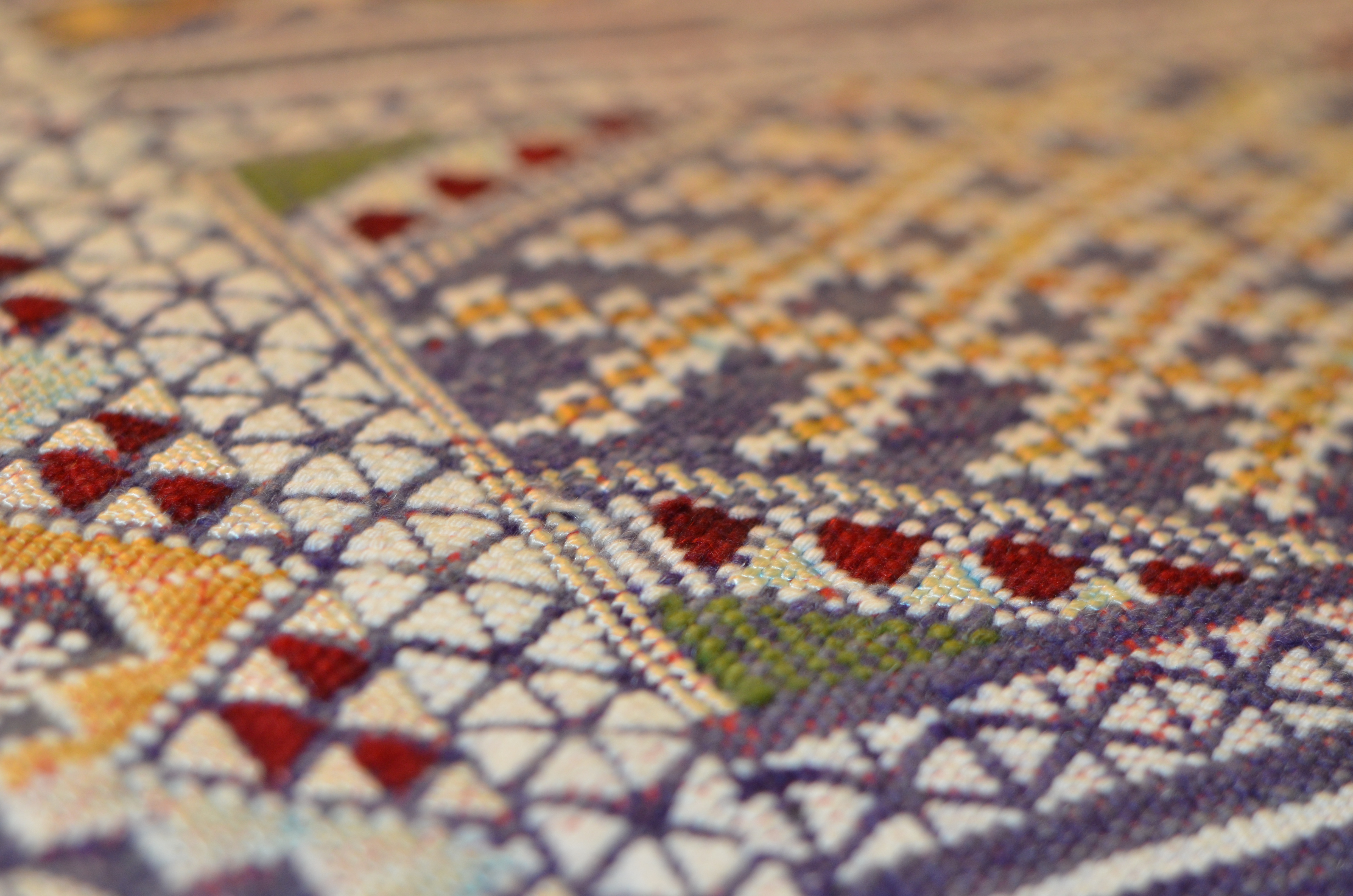
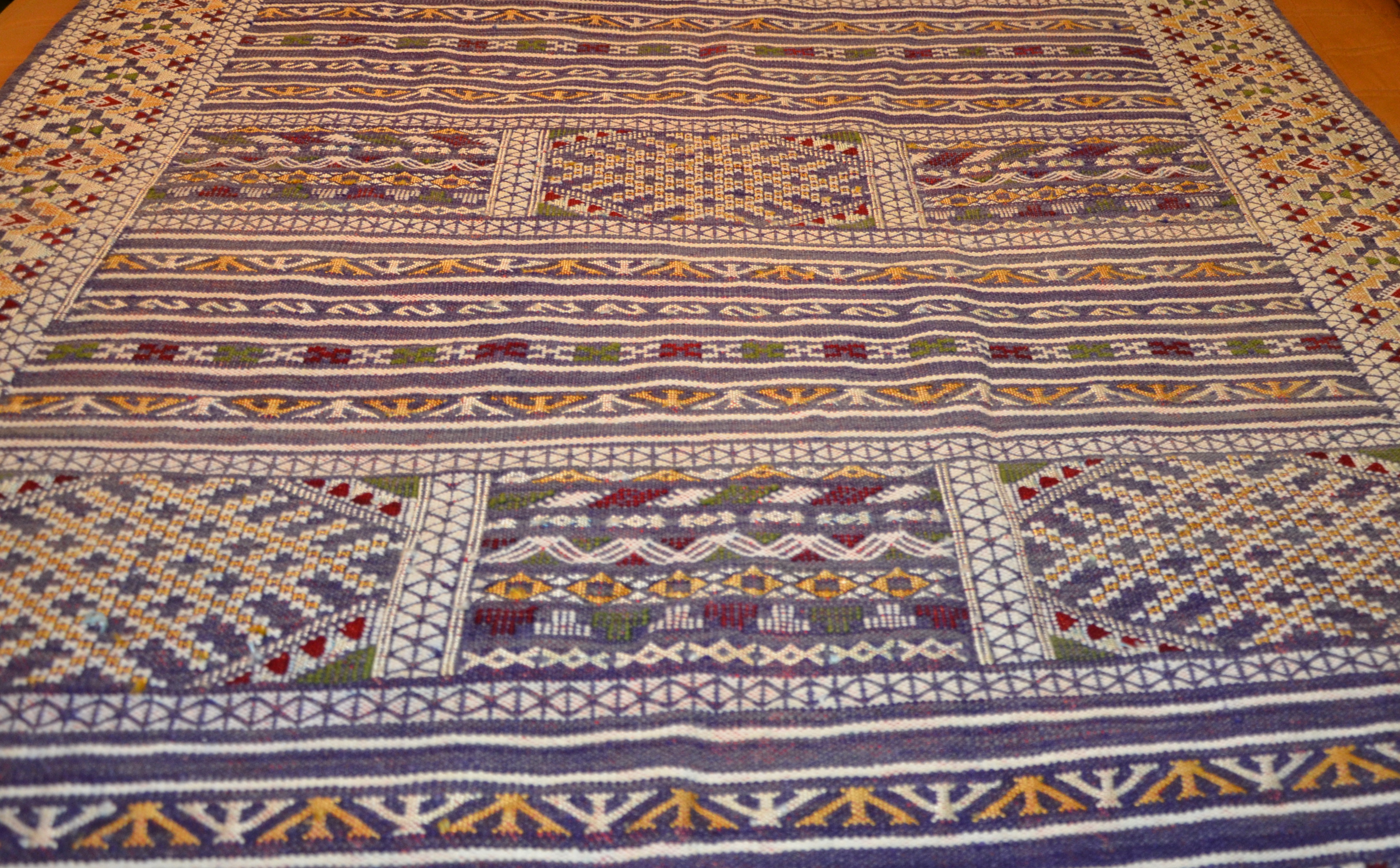
This is our Moroccan rug.
Contemporary Craft in Houston

Some time ago, I discovered the Houston Center for Contemporary Craft (HCCC) located in Houston’s Museum District. The HCCC focuses on arts and crafts made from clay, fiber, glass, metal, wood or found/recycled materials. In addition to a variety of exhibitions, they have an Artist Residency program. When you visit the museum, you can see that each artist has their own workspace for perfecting their craft.

When I visited the museum, the Contemporary Handweavers of Houston (CHH) was holding its Artisan Market. Occupying the large display rooms were booths of textiles, jewelry, rugs, clothing and yarn. Weavers were working on large looms and spinners with their whirring wheels were scattered around the rooms.

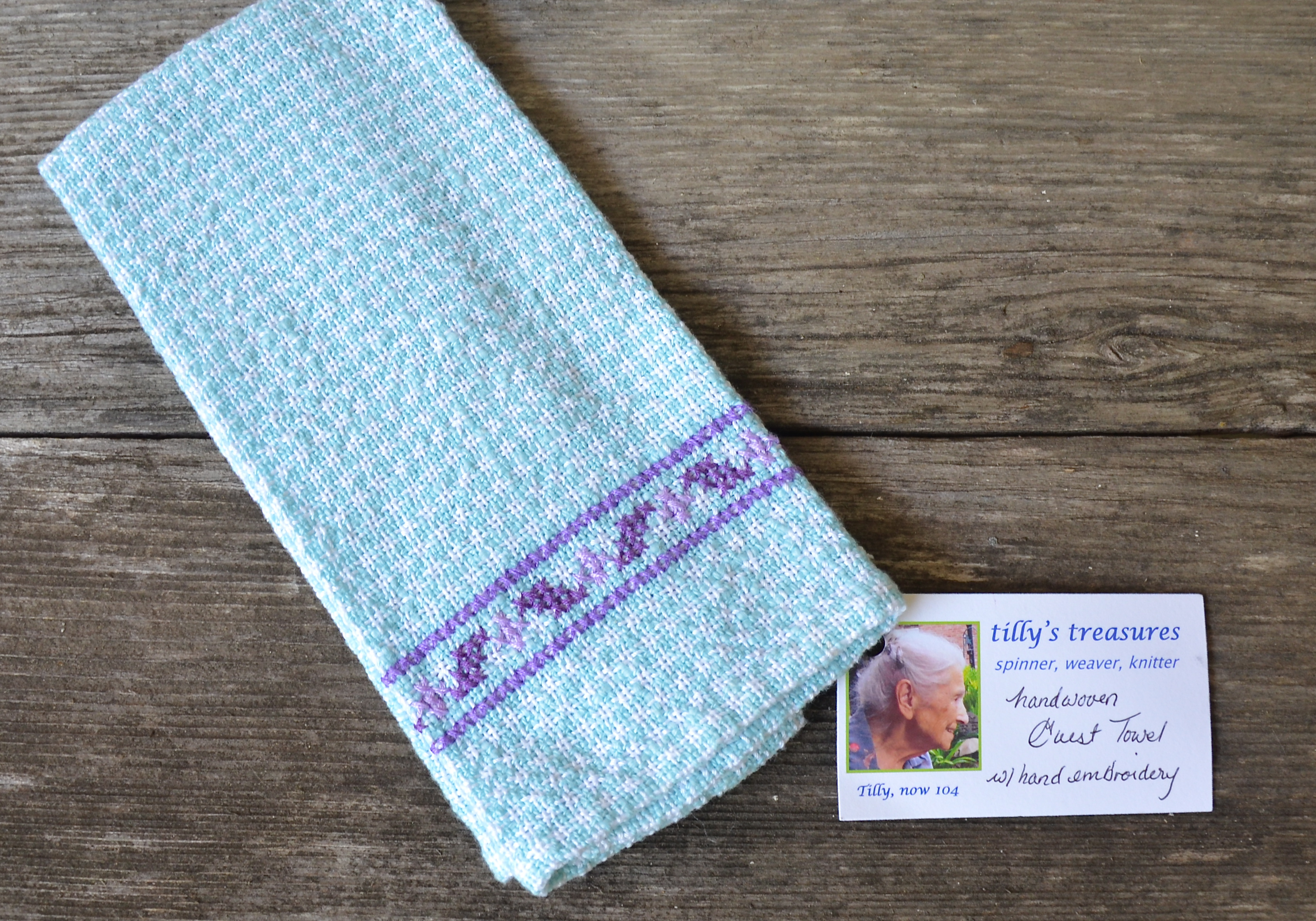
I had to bring this small guest towel home only because it was handwoven and embroidered by 104 year old Tilly Marchwinski. Mrs. Marchwinski was not present but it seemed that everyone there knew her. They told me that she never missed the show but was a little under the weather that day.

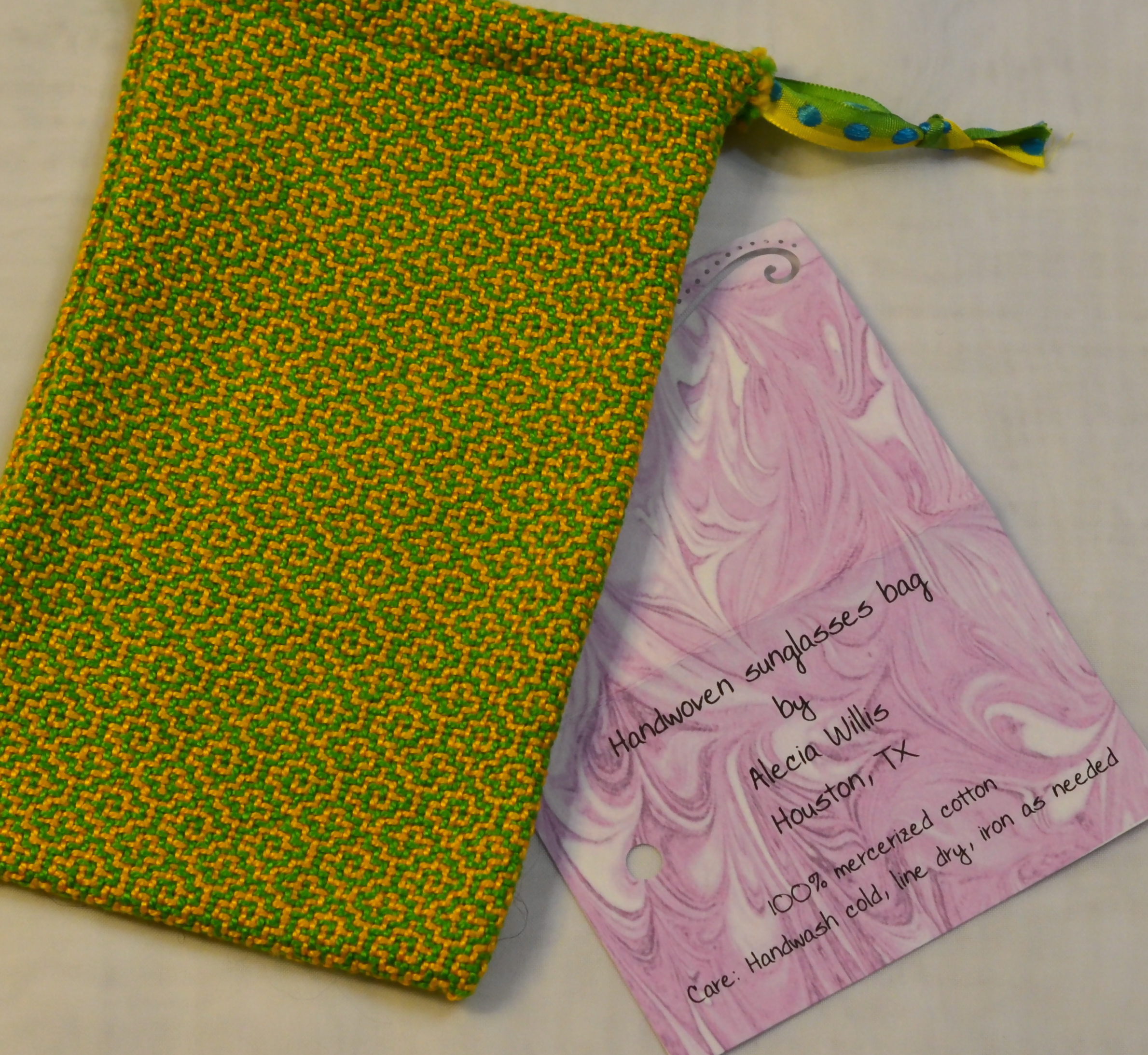
This next item was the perfect sunglasses case. I loved both the vibrant colors and the texture produced by the swirling pattern.

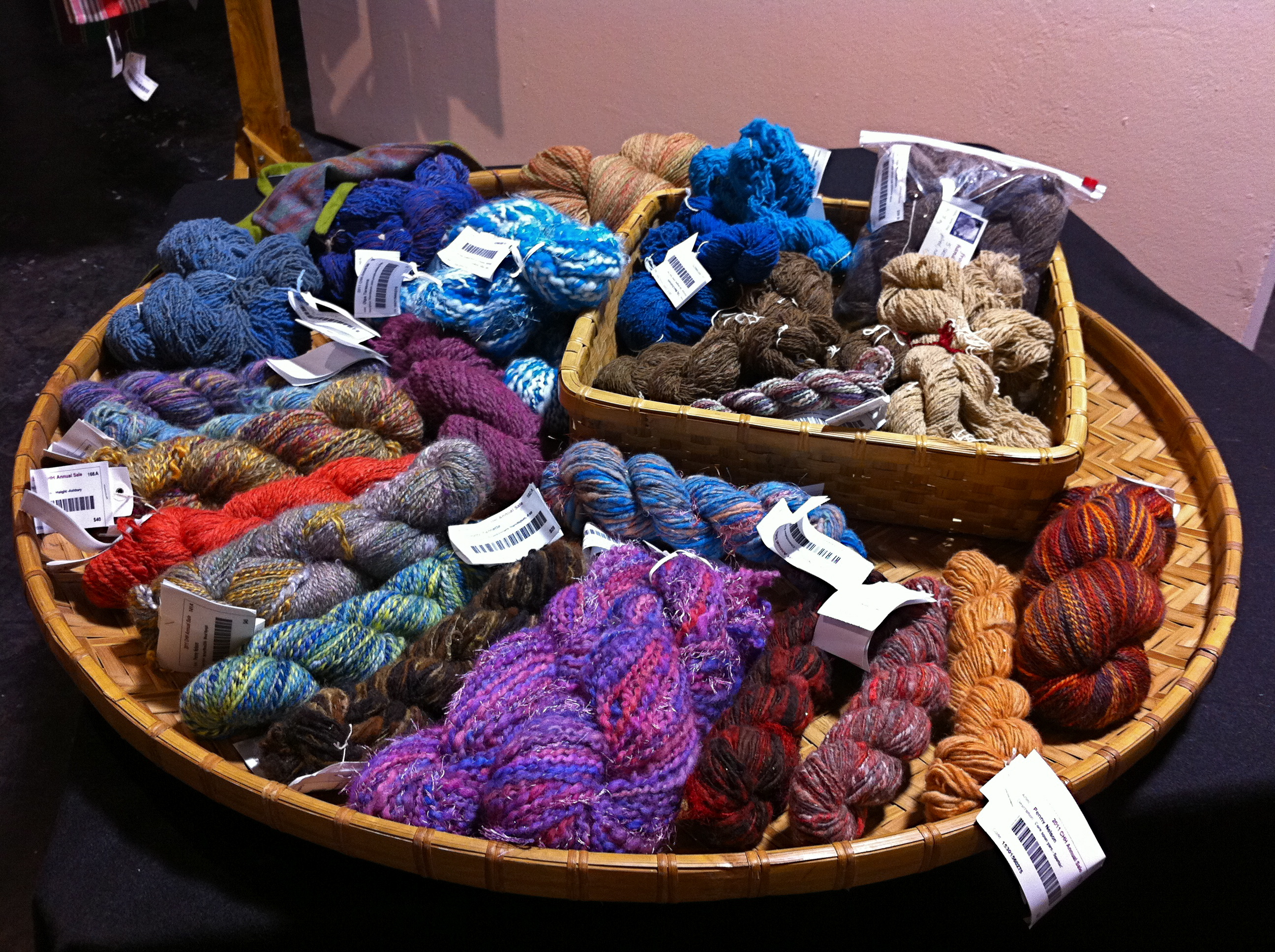
This large basket was filled with handspun, hand dyed yarns.

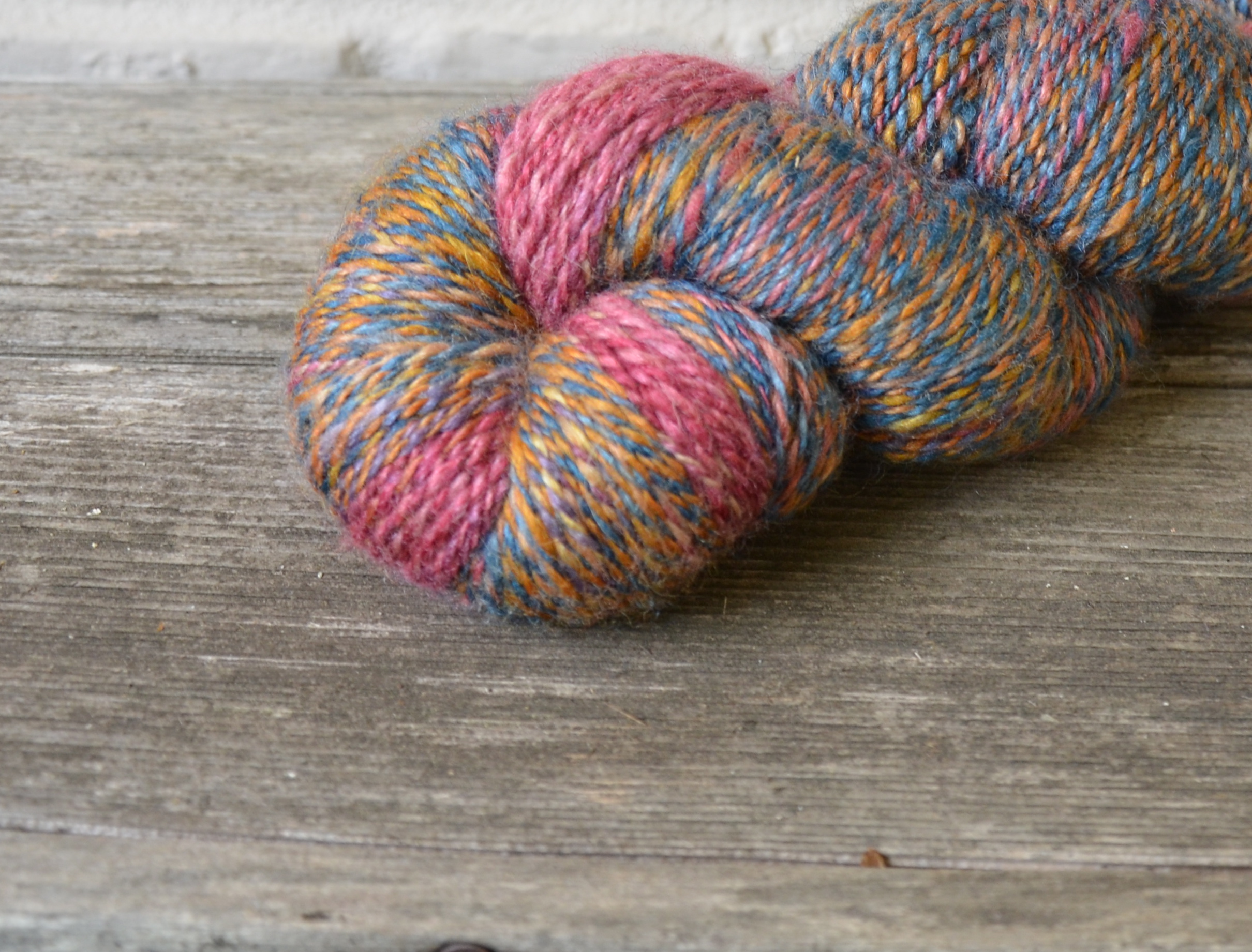
This hank of yarn was handspun by Peggy Barnette of Sky Loom Weavers. Fiber contents – 80% BFL Wool, 20% Silk, 2 ply.

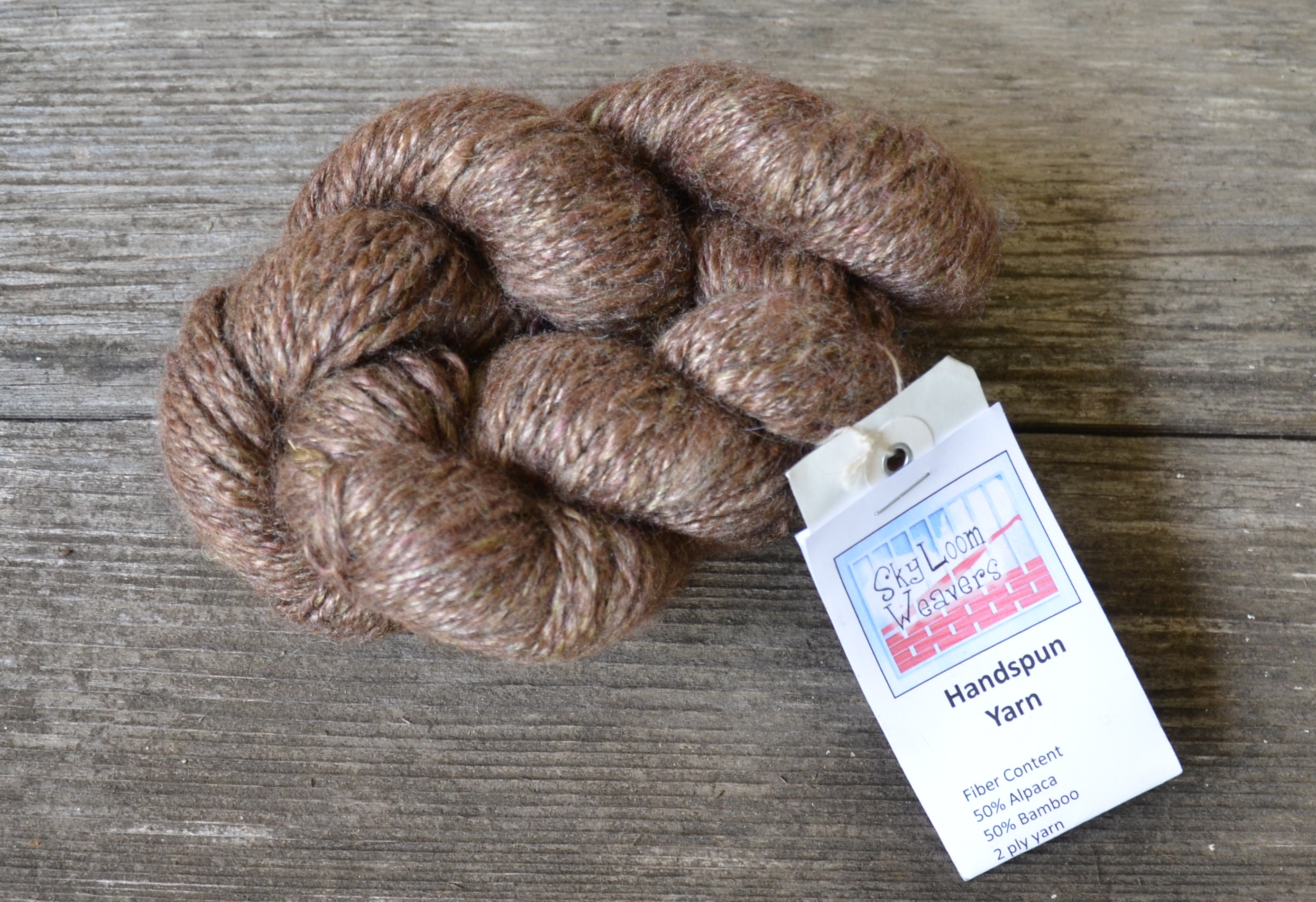
Normally I am drawn to rich, vibrant colors but I couldn’t resist the sheen of this soft brown yarn called “Chocolate Mint.” It is a 2 ply yarn spun from 50% Alpaca, 50% Bamboo by Penny Nelson also of Sky Loom Weavers.

Follow these links to learn more about the HCCC and the CHH. According to their website, the next CHH Artisan Market will be held on September 6-8, 2012 at the HCCC.

Japanese Yarns In The Garment District

A few days ago, I was in New York City and took the opportunity to visit Habu Textiles. I dragged two teenagers through the Garment District in search of 135 W. 29th Street. The entrance is nondescript and if you’re not looking for it, you’ll probably walk right past it. Habu Textiles is located on the 8th floor, which is somehow fitting since the Japanese word for “ha 八” means “8.”

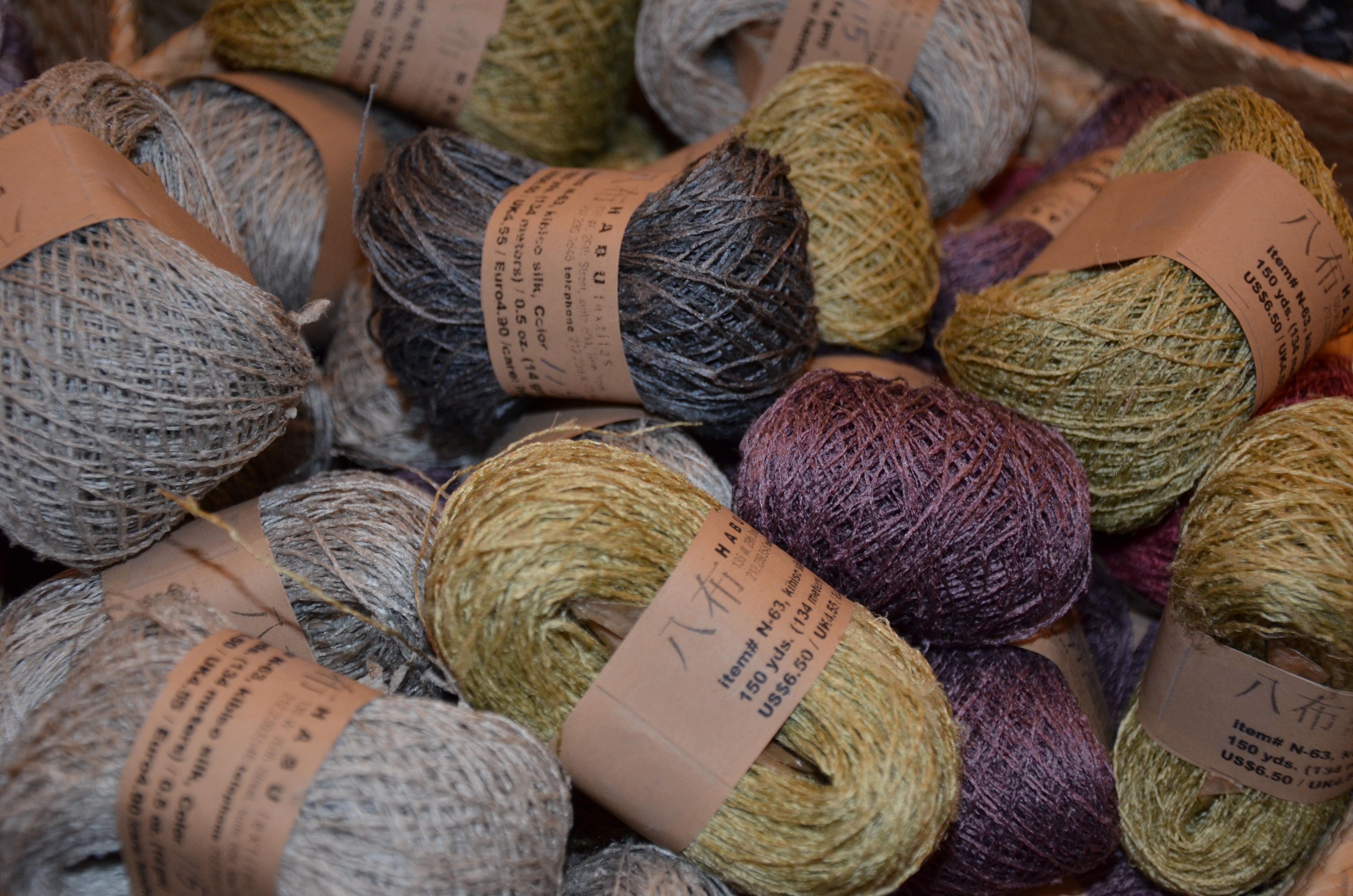
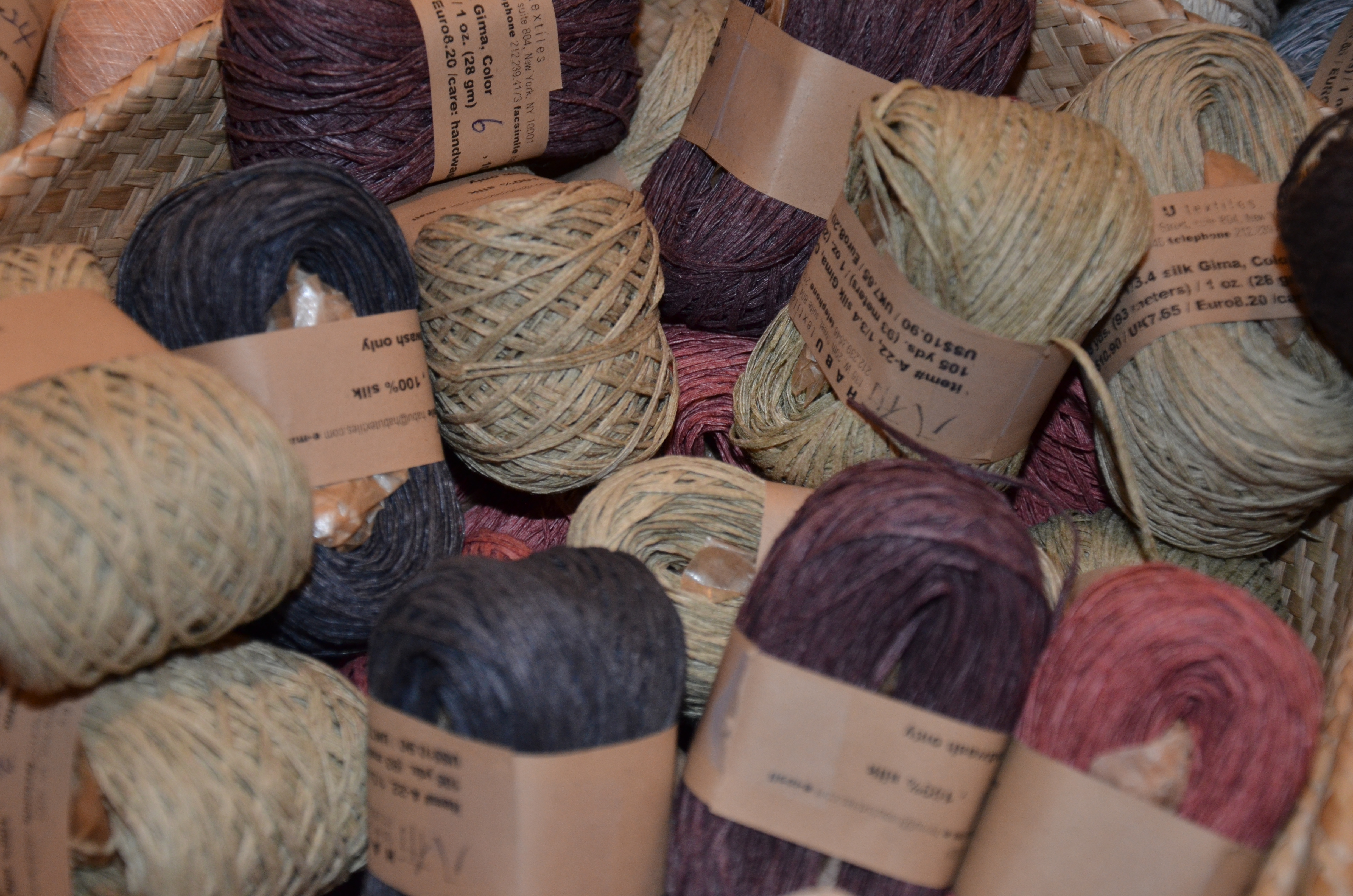
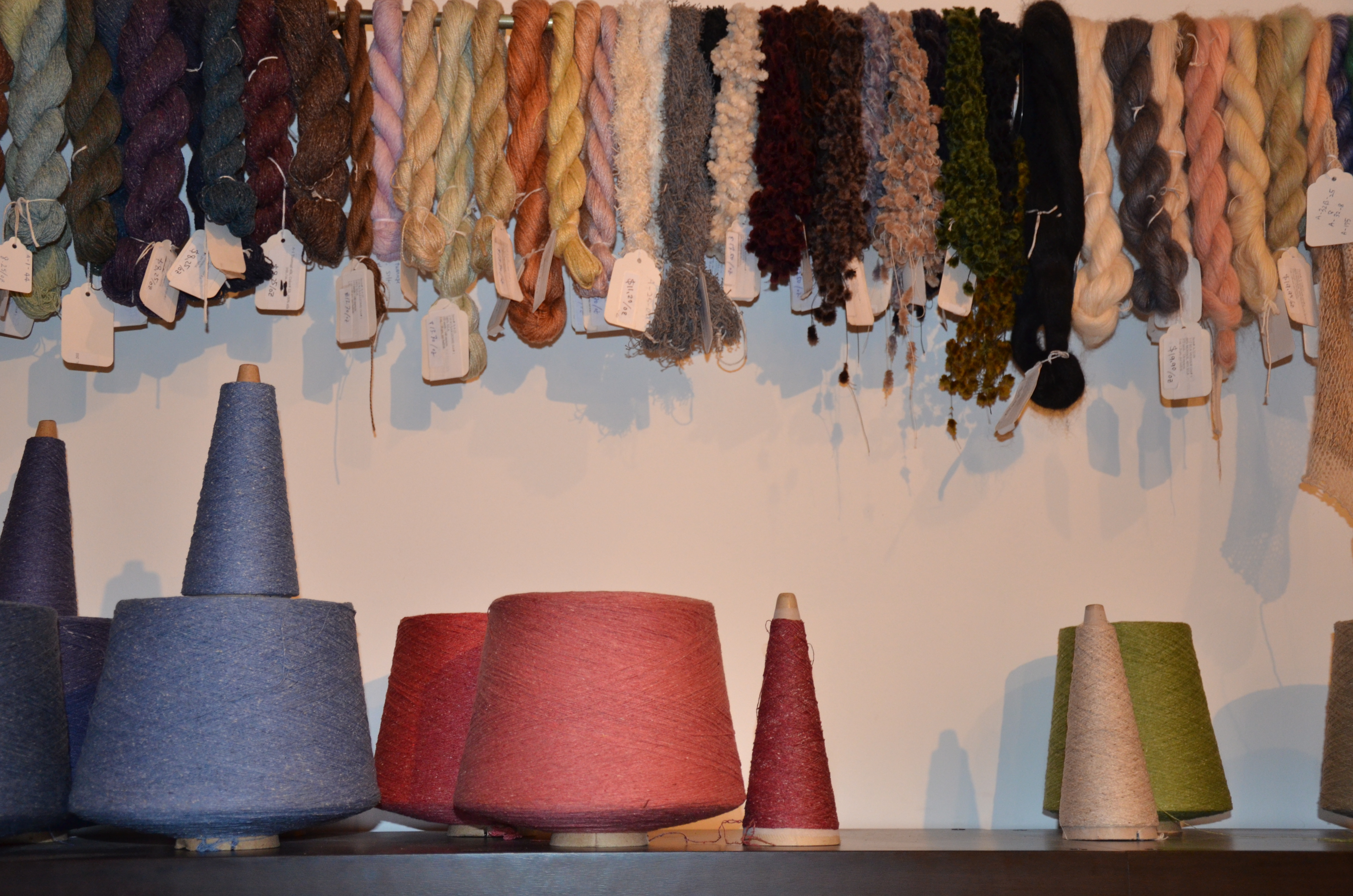
The showroom is quite small but filled with exquisite yarns spun in Japan. The fibers used in the yarns range from wool and silk to bamboo, stainless steel, and cotton so fine it feels like paper. While the showroom itself seems small, it is actually part of a larger room that houses the weaving studio. Beyond the free-standing sheet rock walls of the showroom, I could hear the whirring of looms in the background. I had to fight the urge to pull back the curtains marked “employees only” and take a peek. Thankfully, they were kind enough to let me take pictures of the yarns which I can now share with you.

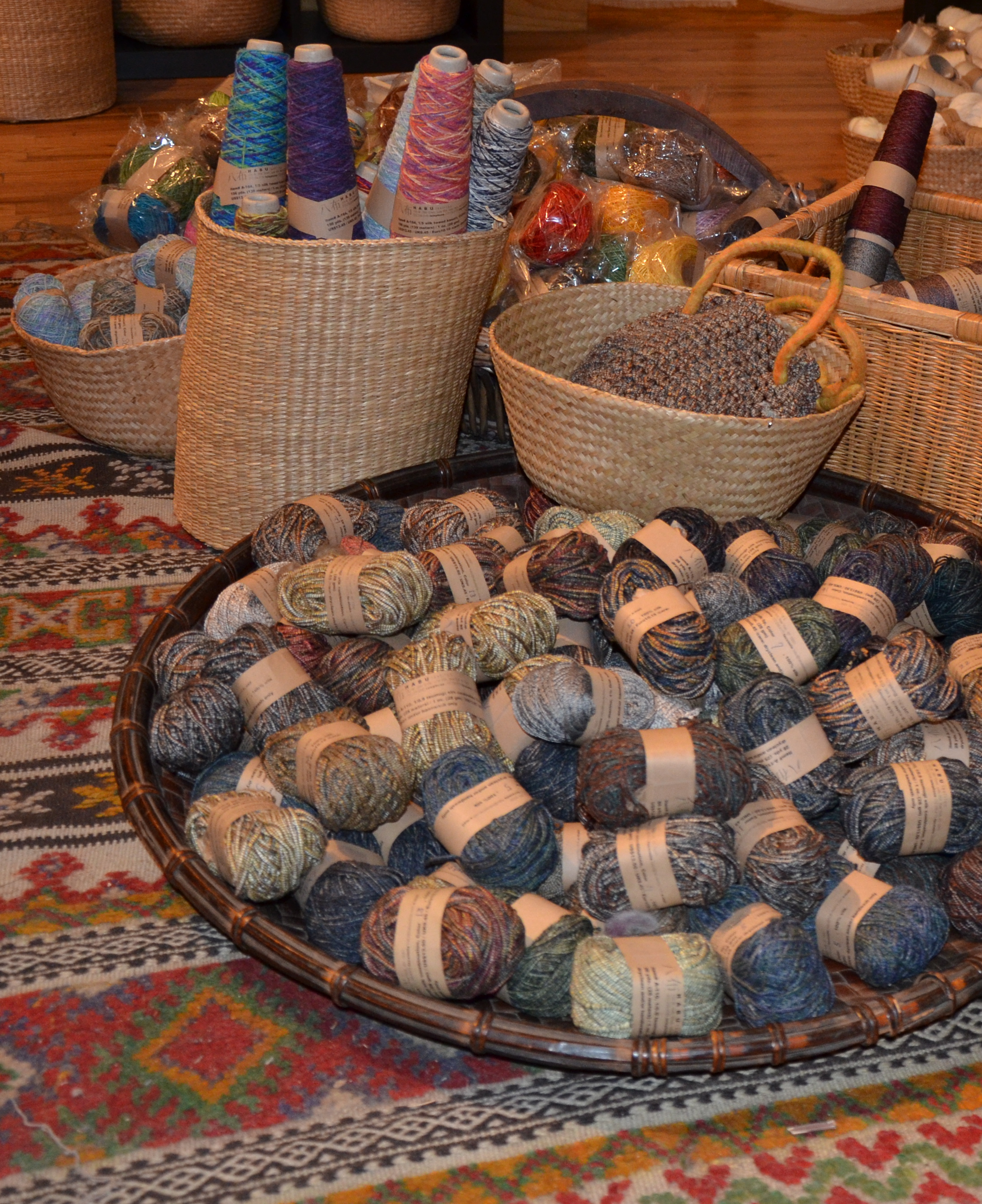
There were baskets filled with yarn throughout the showroom. In the large basket in the foreground is Wrapped Tsumugi Silk (100% Silk). This yarn is a silk wrapped in silk. According to the Habu Textiles website, it is created using a traditional cord-making method.
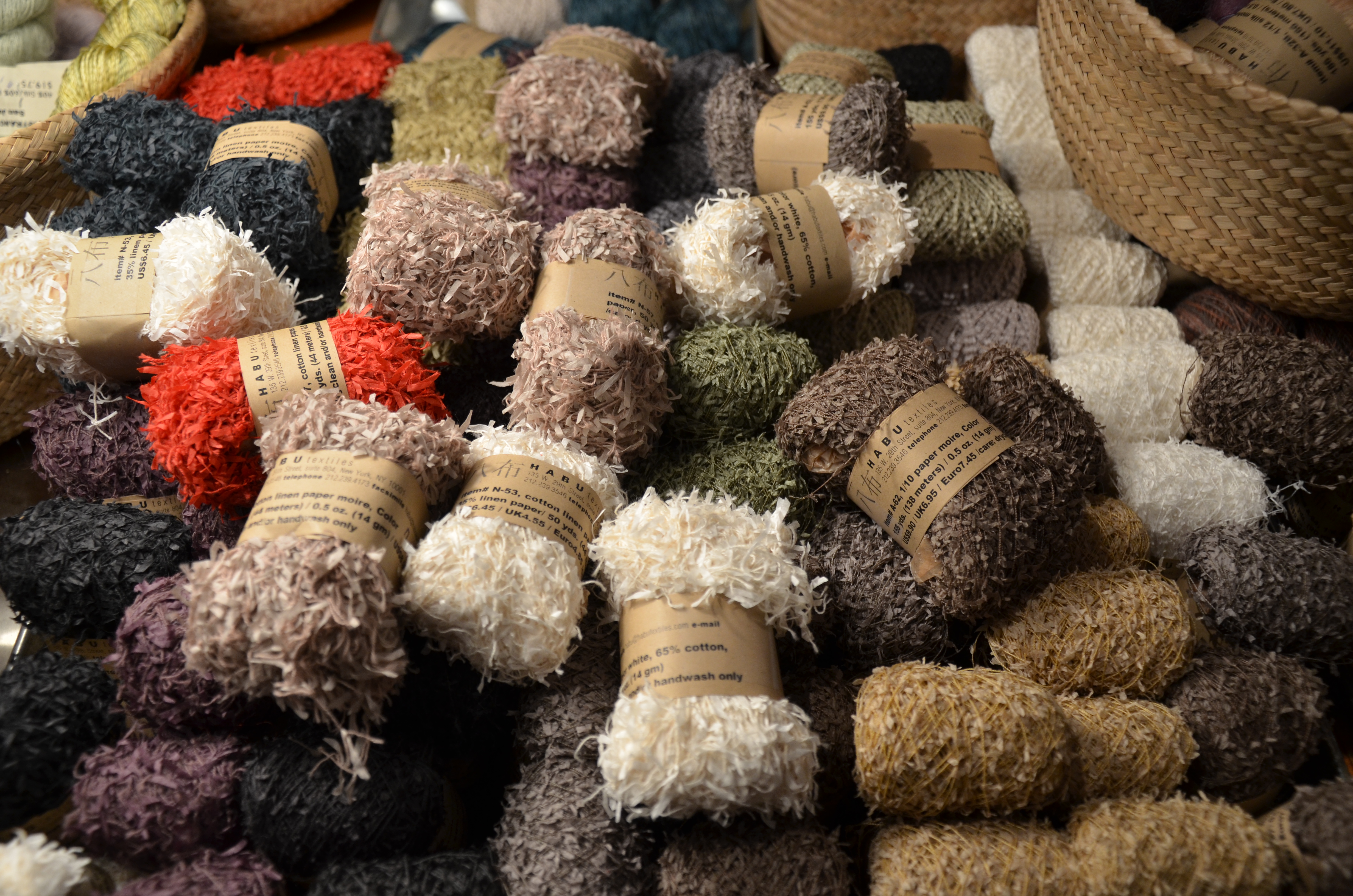
Cotton Linen Paper Moire (65% Cotton, 35% Linen). This lace/fingering weight yarn is exquisitely delicate. It feels like fine paper.
This Kibiso Silk (100% Silk) is made from "waste" silk. It's a slightly rougher silk but with silk's sheen and strength.
Silk Gima (100% Silk). Gima means "fake linen" in Japanese. This yarn feels like linen but is made entirely of silk.
This "chunky" Alpaca Knitted Yarn (68% Mohair, 32% Nylon) is interesting to look at up close. It is actually a narrow knitted tube. You can knit this knitted yarn with large needles or fill the tube with roving (as shown) to create interesting looks.
There were shelves full of this thread-like yarn around the showroom.

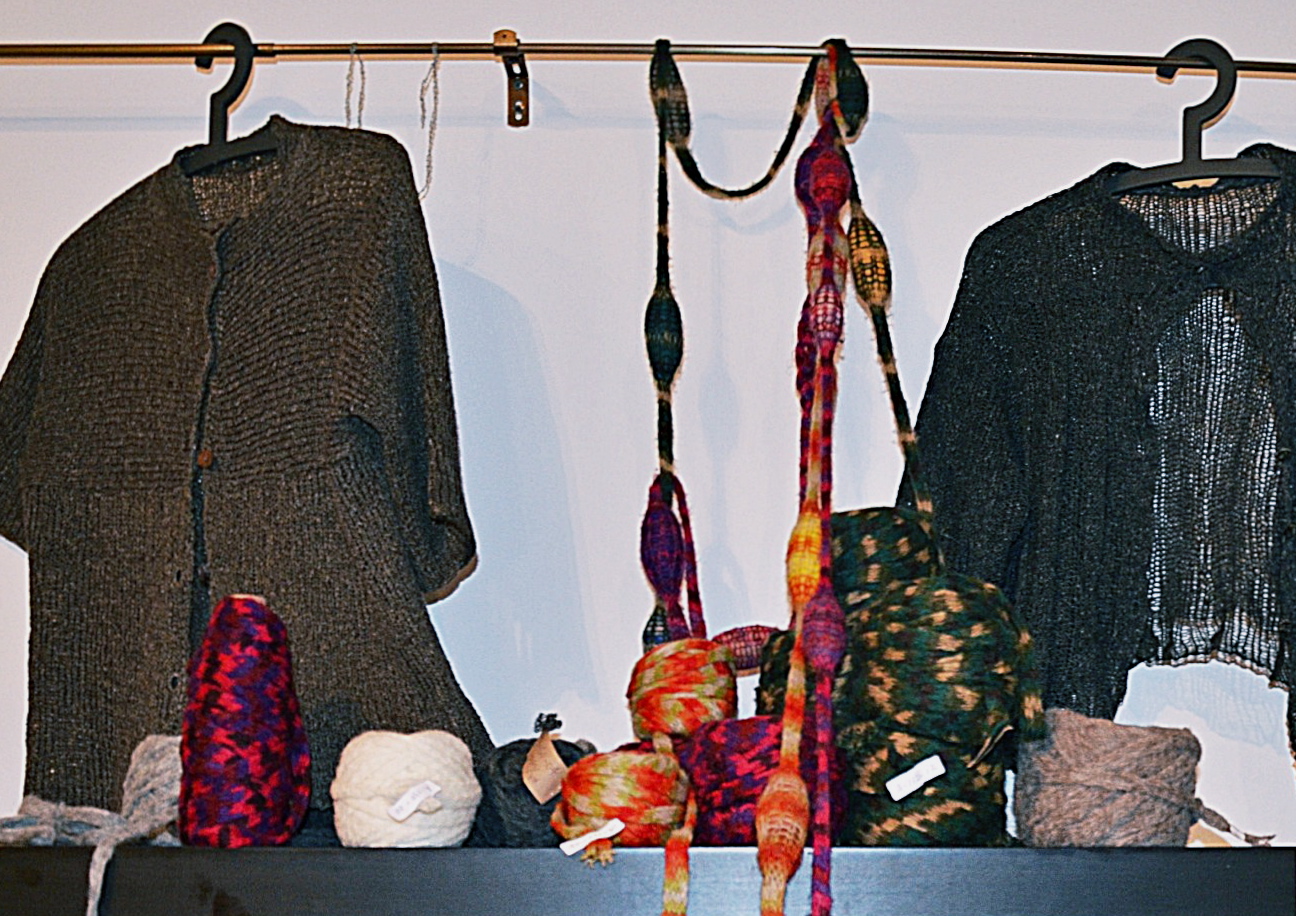
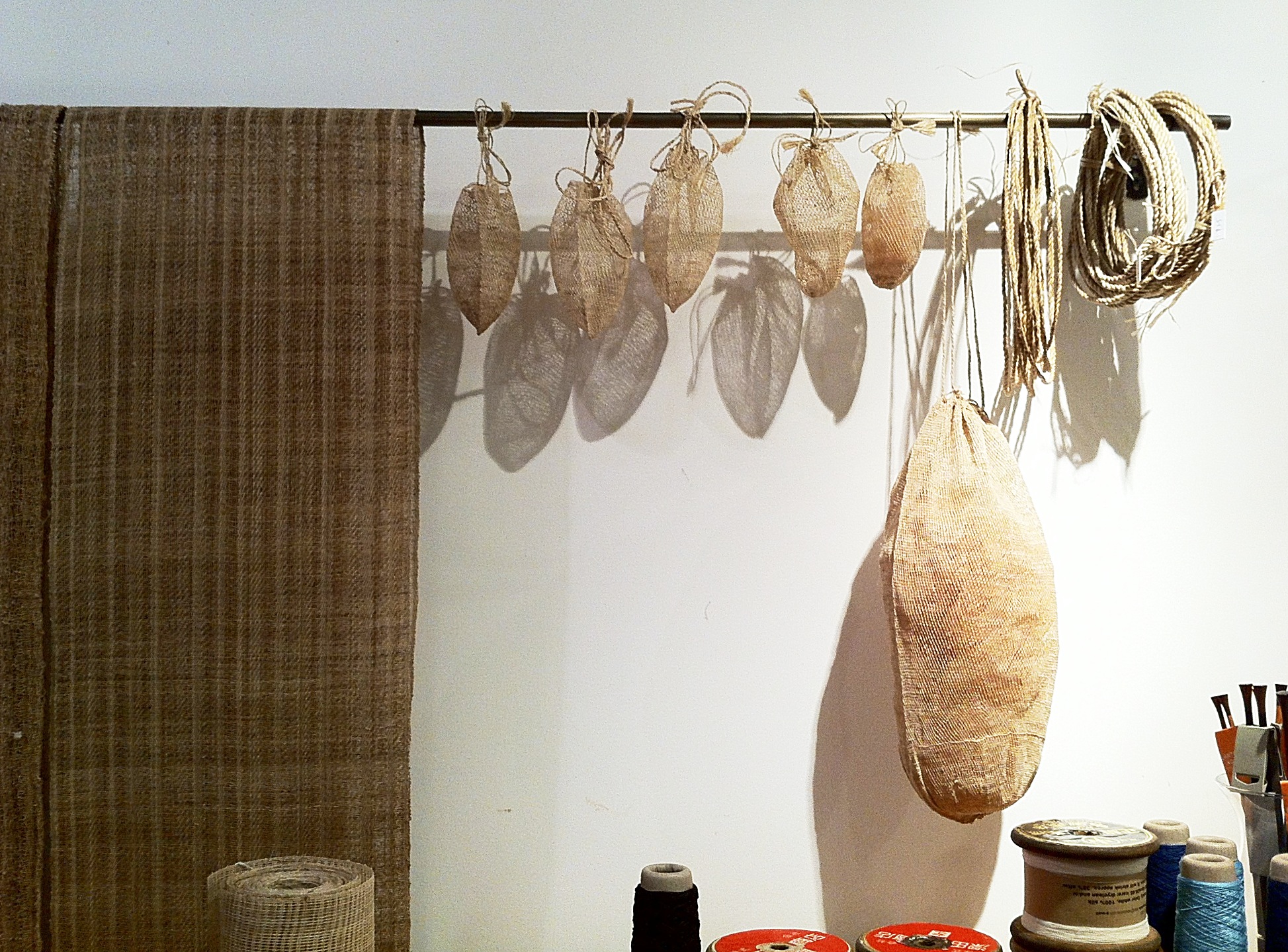
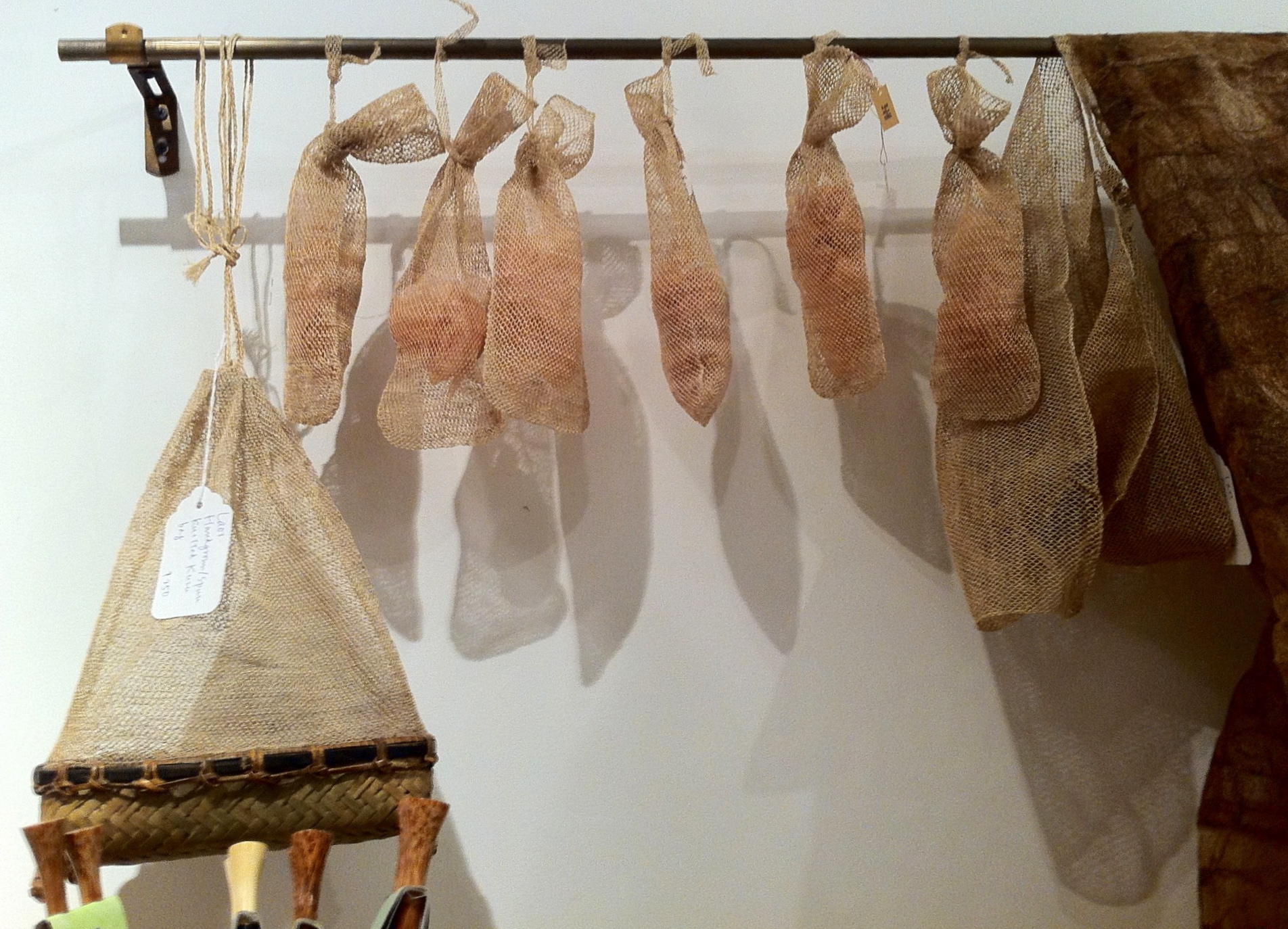
Besides yarns, Habu Textiles offers woven fabrics also made from natural materials such as silk and pineapple fiber. The fibers originate from China, France, Japan, Laos and the United States. These two displays caught my attention. The knotted bags and ropes are made in Laos.

You can learn more about and buy these fabulous yarns and textiles at the Habu Textiles website.

Johanna Gullichsen Textiles

One of our must-stops while in Helsinki was the Johanna Gullichsen design studio. Located in the Helsinki Design District, (they have another store in Paris), the storefront features table linens, bags, and pillow covers made out of the artist’s bold and geometric woven textiles. The second room contains bolts and bolts of her wonderful fabrics. They are available for purchase for furniture upholstery and there were several chairs in the studio covered in them. While we were there, the designer was in consultation with a client so we did not get an opportunity to speak with her. Nonetheless, we did revel in the various textiles.

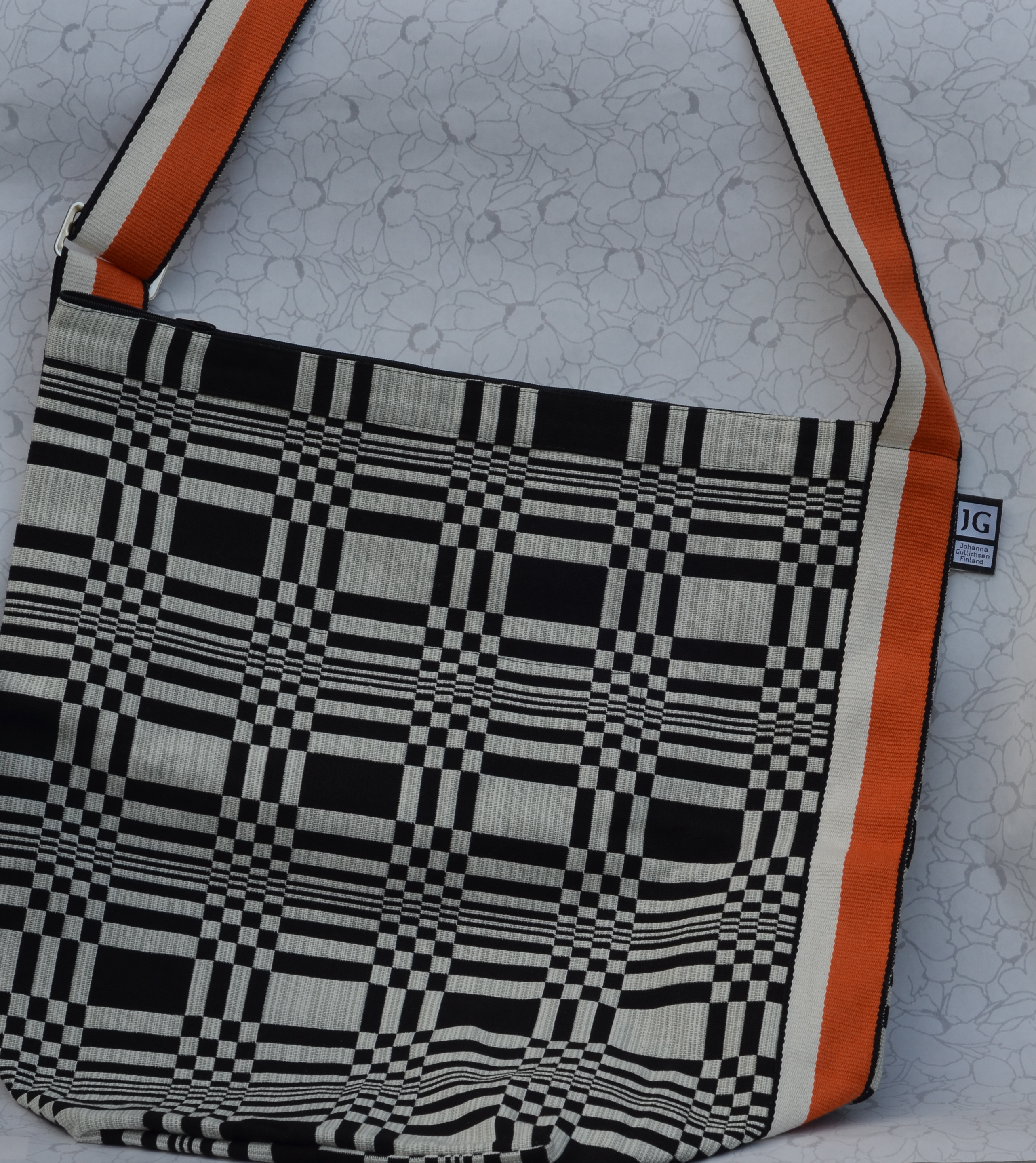
The bold geometric design of this bag caught my attention. I love the way the pattern gives the illusion of rolling waves, like looking at a mirage of water on a hot pavement. The bag is large with a nice wide bottom and can be worn over the shoulder or cross-body.

Tetra sack in Doris black fabric with orange strap, 100% cotton. The Doris pattern is also available in blue and bordeaux.
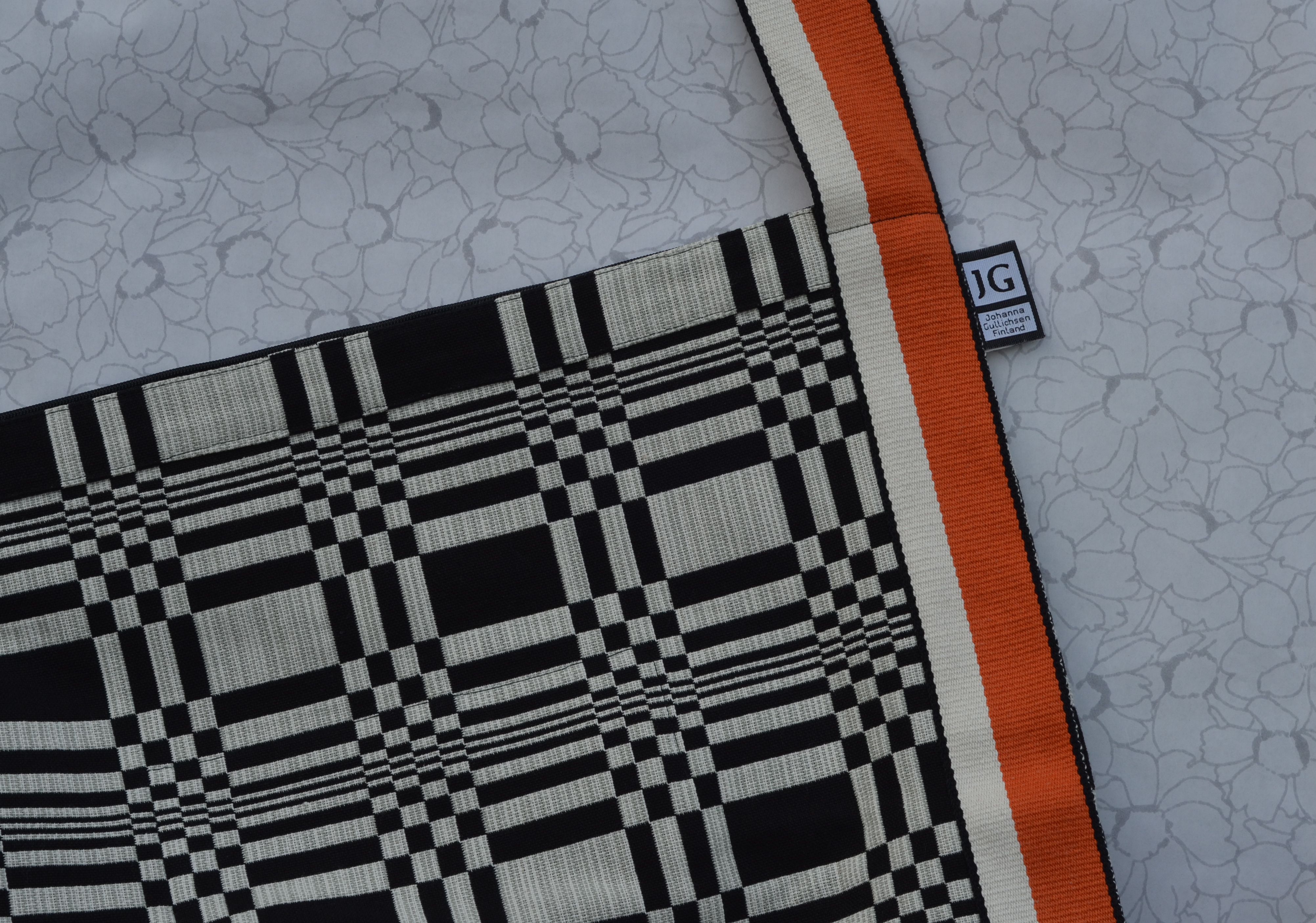
Tetra sack close-up of geometric pattern.

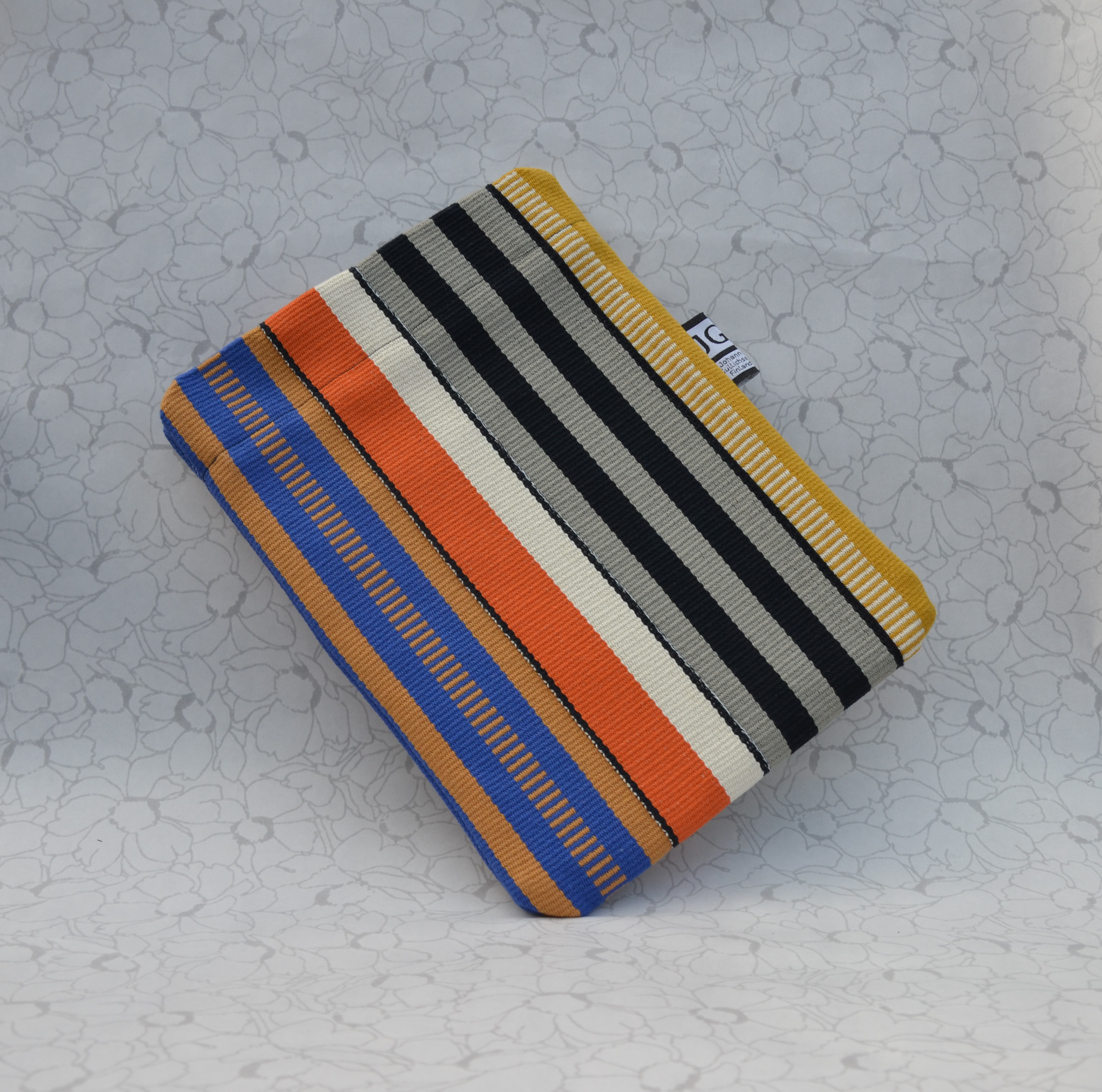
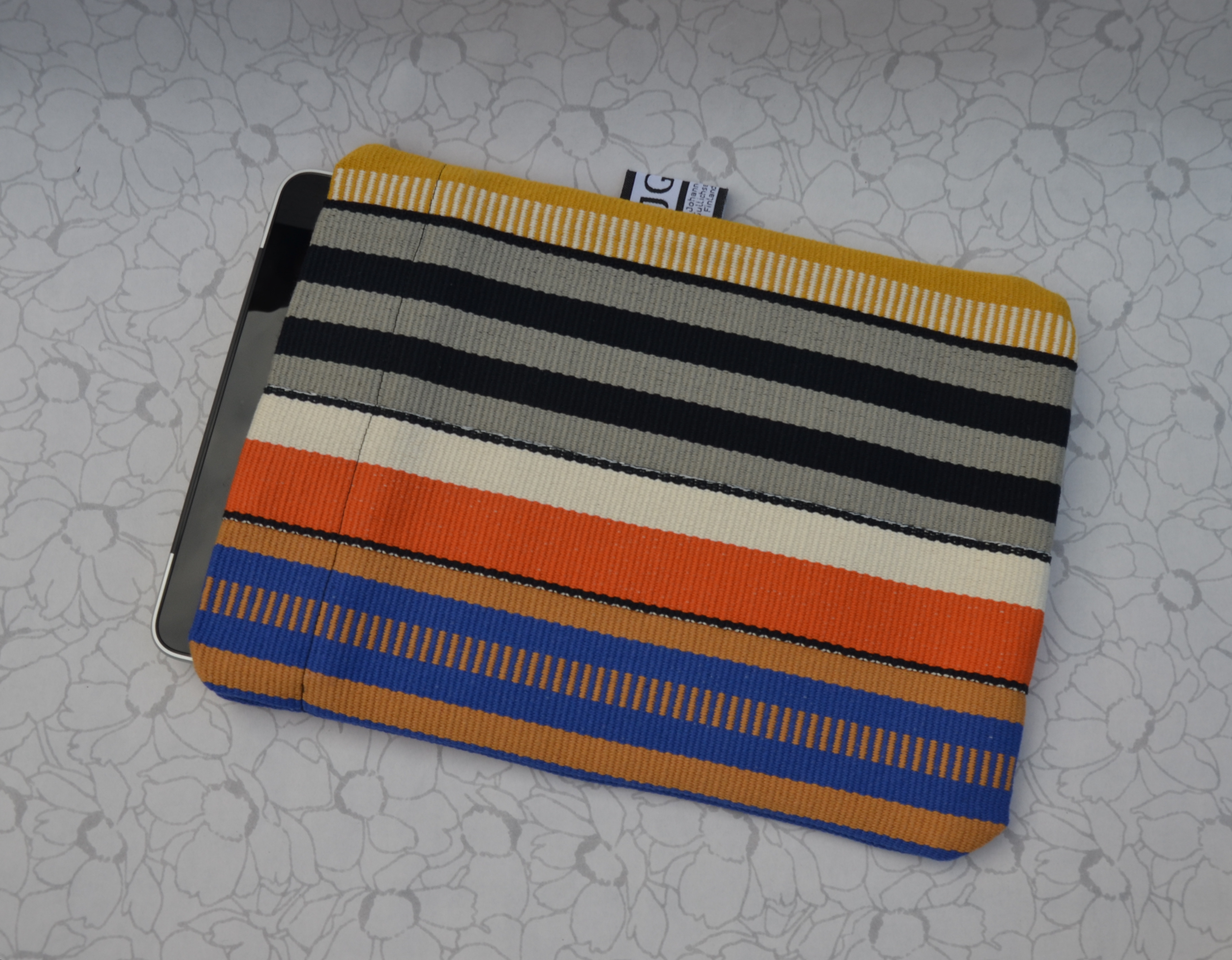
The iPad sleeve was a relatively new product. The colors were particularly attractive and the simple row design keeps it balanced. The sleeve has an inner fabric fold and a velcro closure to keep the iPad safely tucked inside.

Multicolor iPad sleeve.
iPad sleeve with iPad inside (not included).

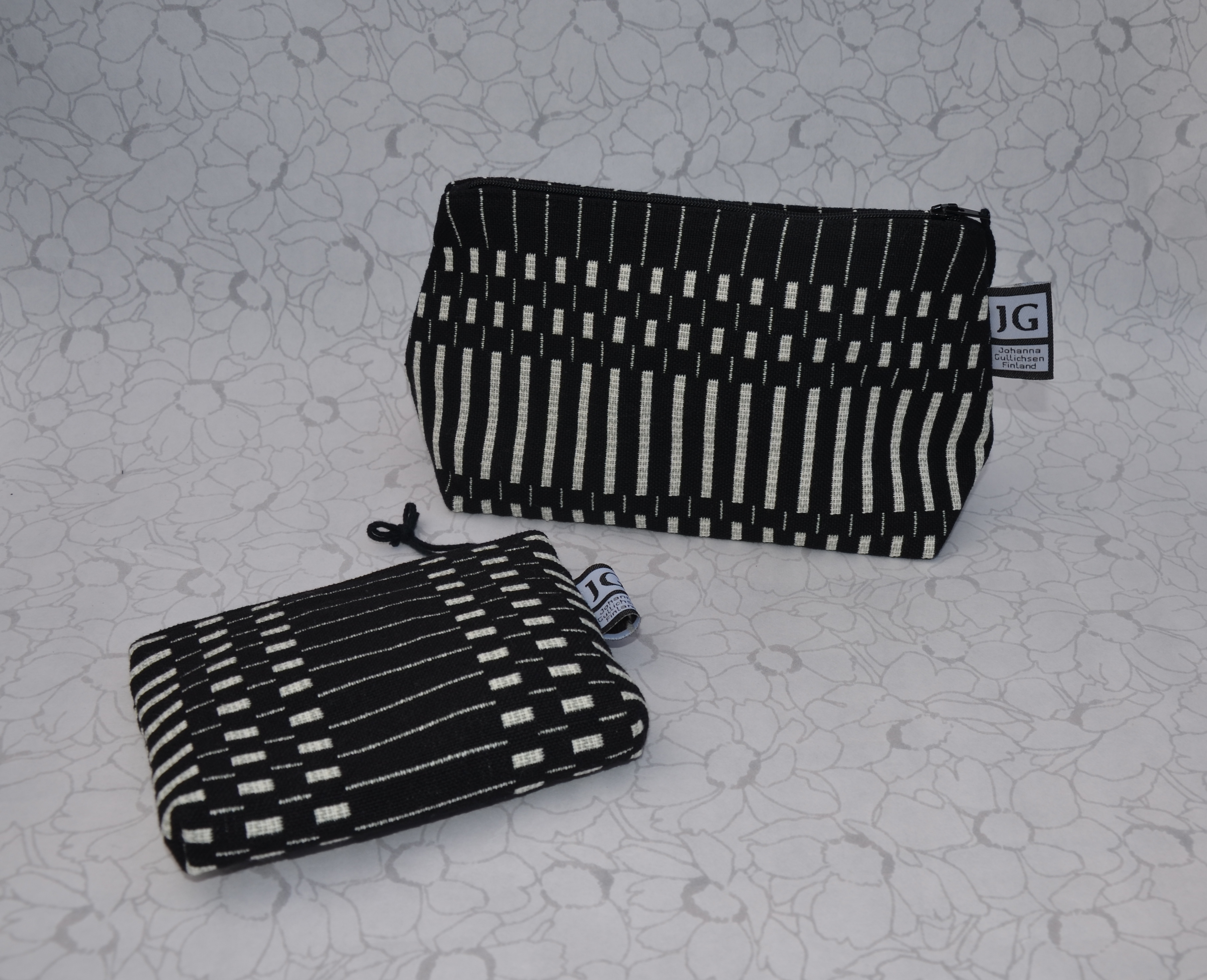
We picked up a few of these catch-all bags for cosmetics or to corral chords for electronic devices.

Small bags in Nereus black fabric, 100% cotton. The Nereus fabric is also available in blue and bordeaux.

For more about Johanna Gullichsen, read her biography on her website.

{logo source}

International Quilt Festival

My friend, Natalia, and I attended the 2011 International Quilt Festival in Houston. More than simply utilitarian, these quilts are works of art. Styles ranged from traditional to contemporary, incorporating a variety of techniques including hand quilting, embroidery, appliqué, machine quilting, piecing and fusing. Here are a few of my favorites.

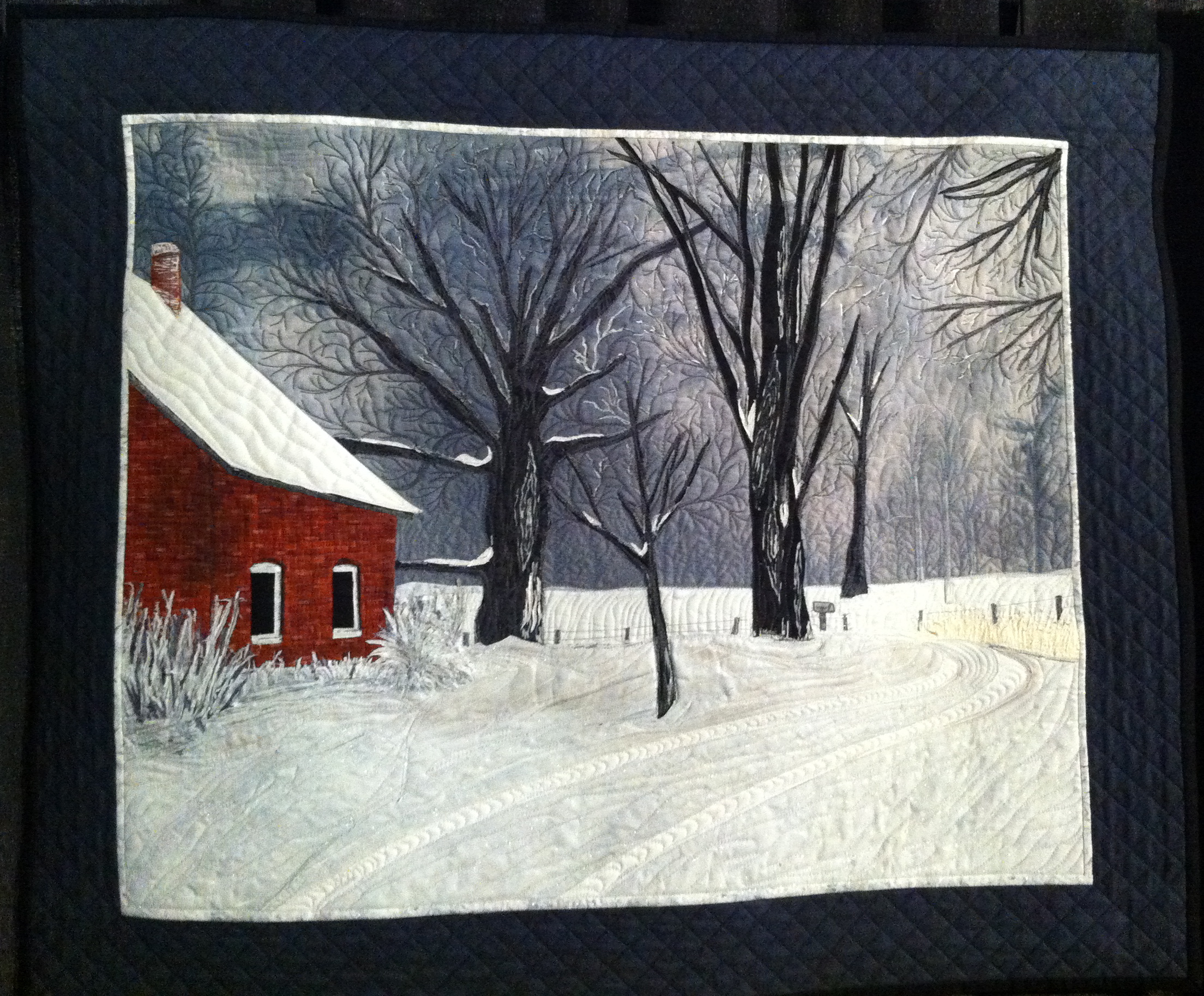
“The Laneway” by Grace Whiting from the O Canada exhibit. Techniques: Some machine piecing and quilting; hand appliquéd. Delicate threads create the foliage while the quilting pattern echoes the undulations of the fallen snow.
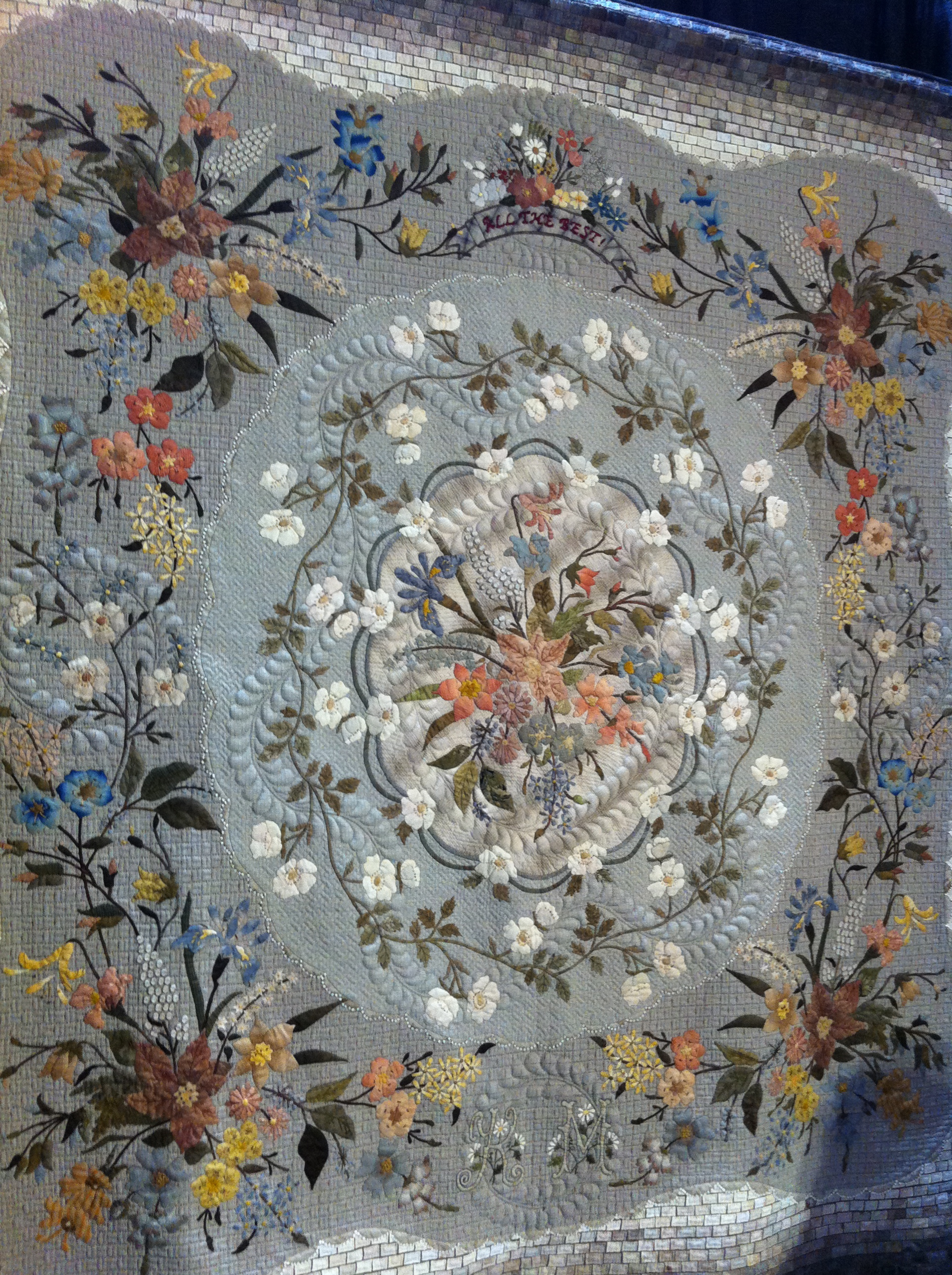
“Bouquet” was hand-pieced, appliquéd, embroidered and quilted by Keiko Morihiro from Japan as her 30th wedding anniversary present to her husband. Winner: Master Award for Traditional Artistry.
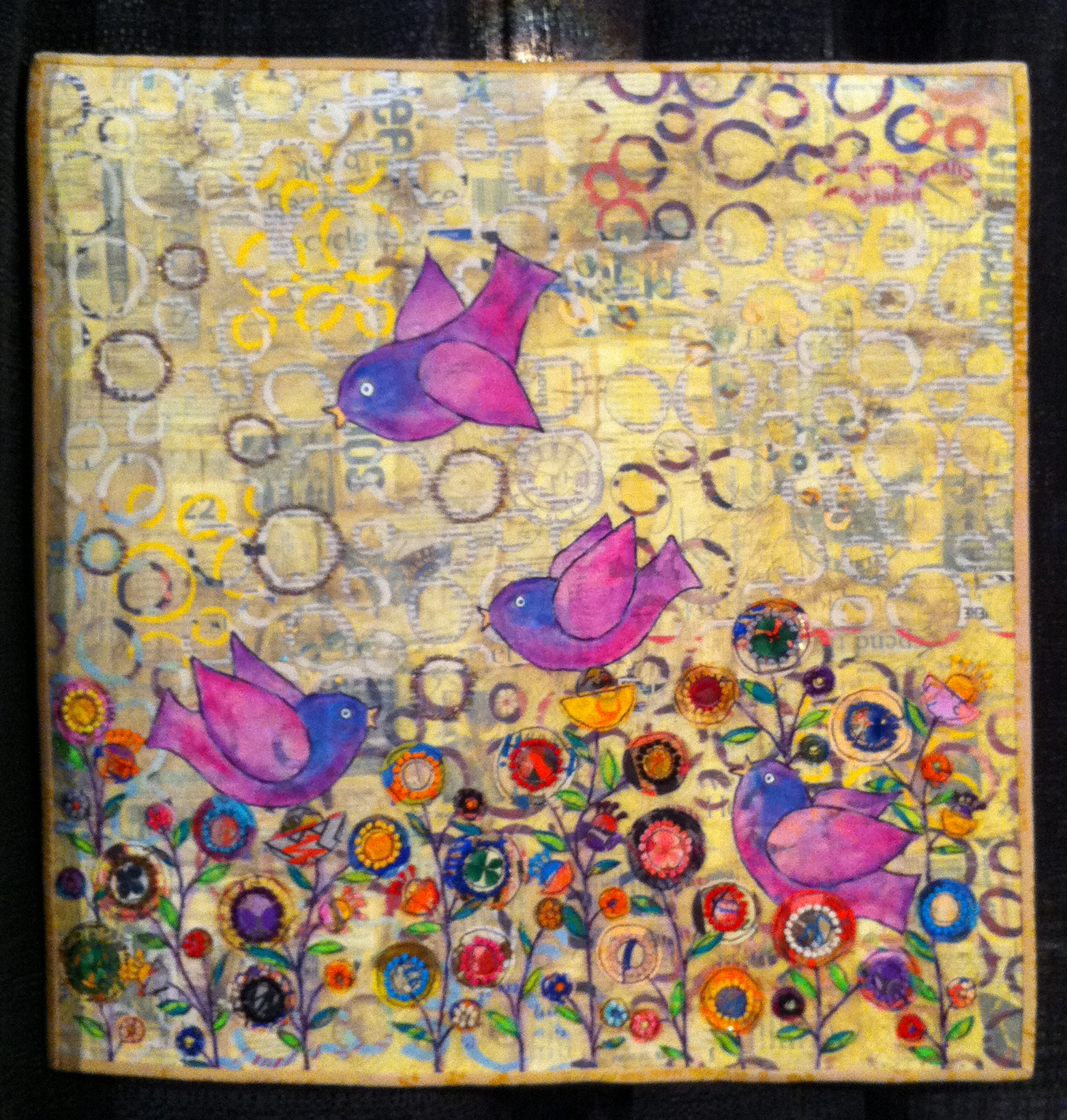
“Twitter” was assembled using recycled materials, including newspapers, to represent the artist’s vision of an environmentally responsible social network.
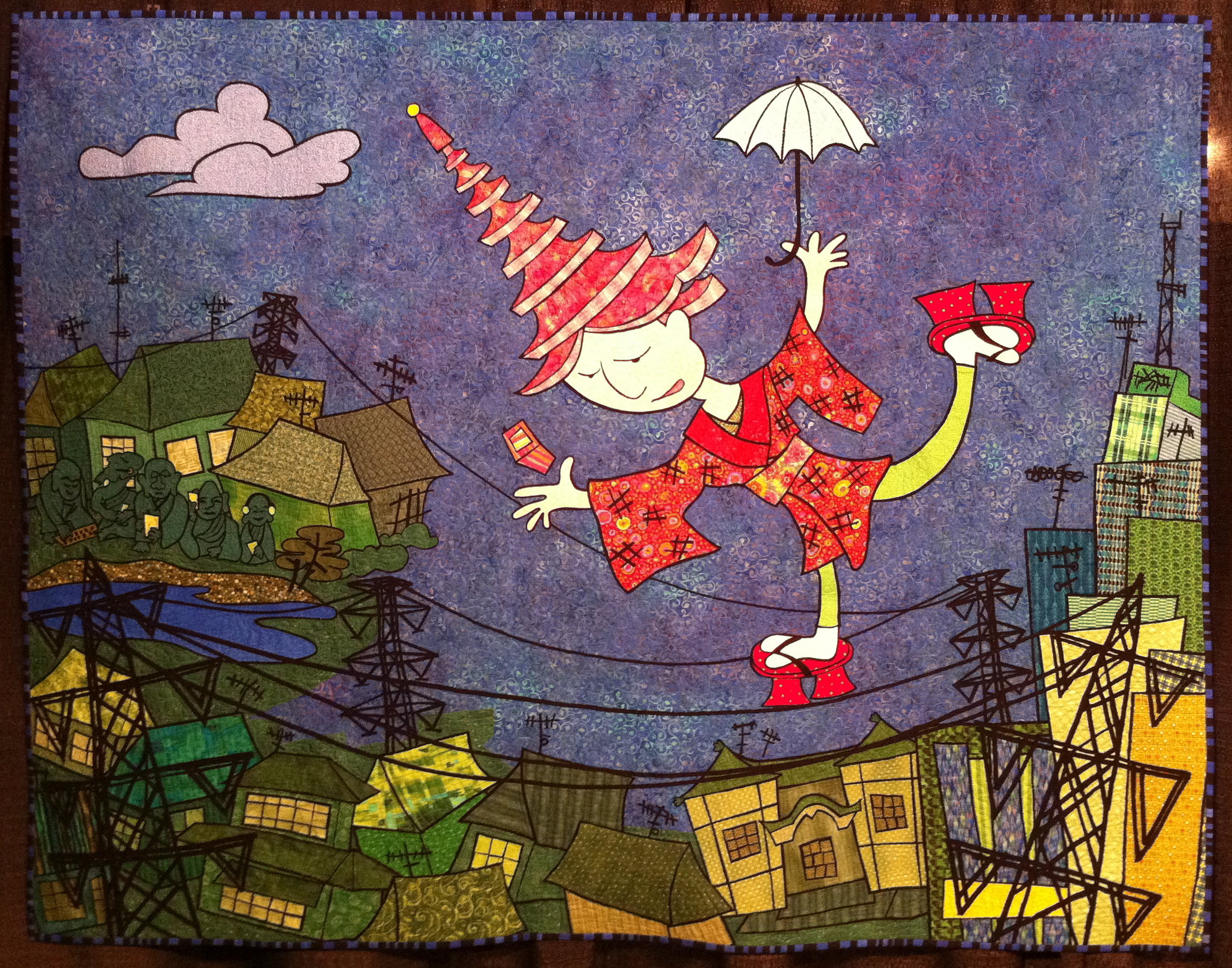
From the Art-Whimsical category, “Tokyo – Wish You Were Hair” by Pam RuBert. The artist made the quilt for an exhibition “exploring the intersection of fiber art with new technologies.”

For more quilts by Pam RuBert, click here.

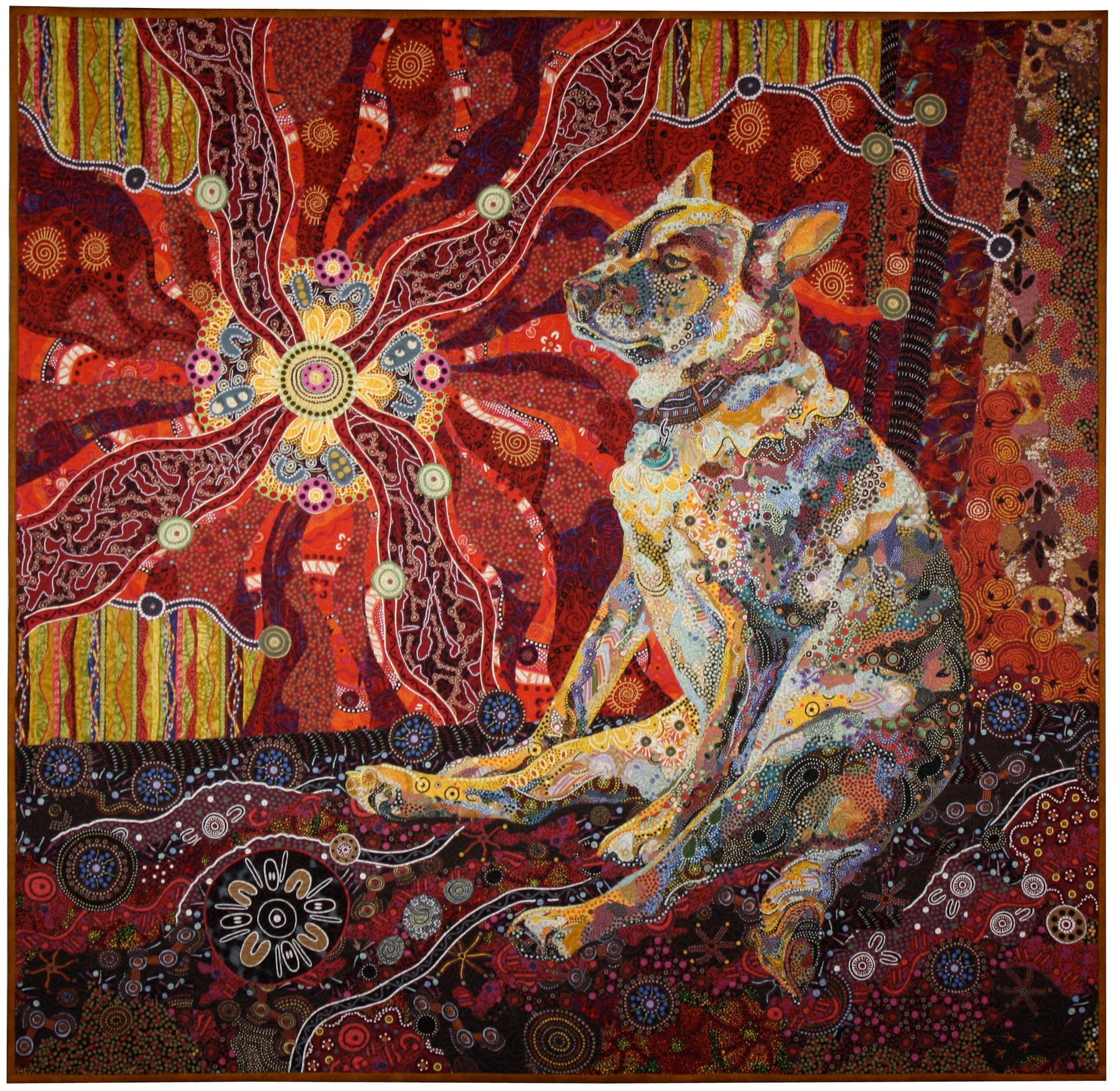
“Dixie Dingo Dreaming” by award-winning fabric artist, Susan Carlson. Her work is like a collage that fuses small fabric pieces into a recognizable image.
{"Dixie Dingo Dreaming" image source}

Read  more about Susan Carlson’s work here. Keep track of the happenings leading up to the 2012 International Quilt Festival here.