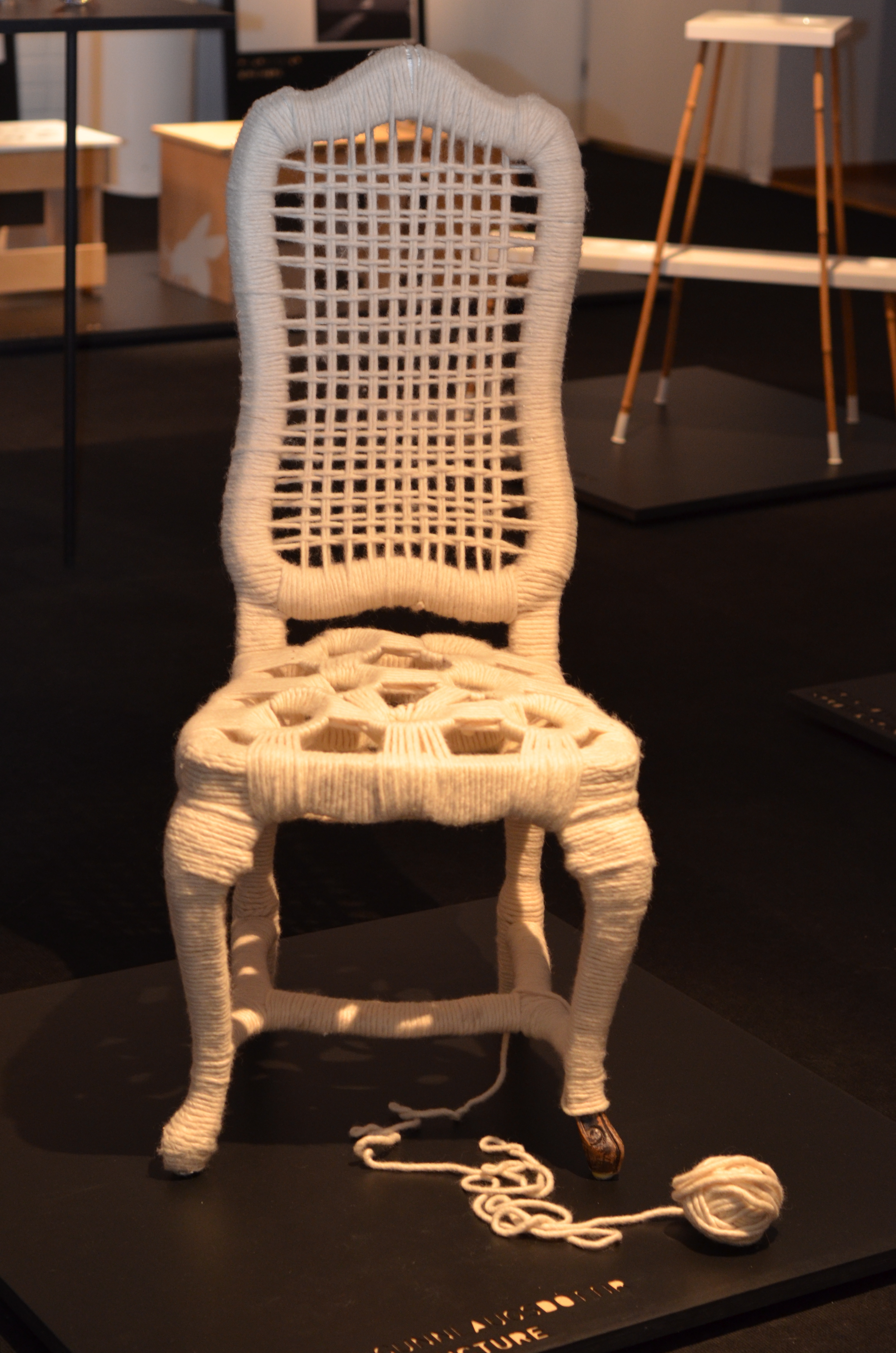
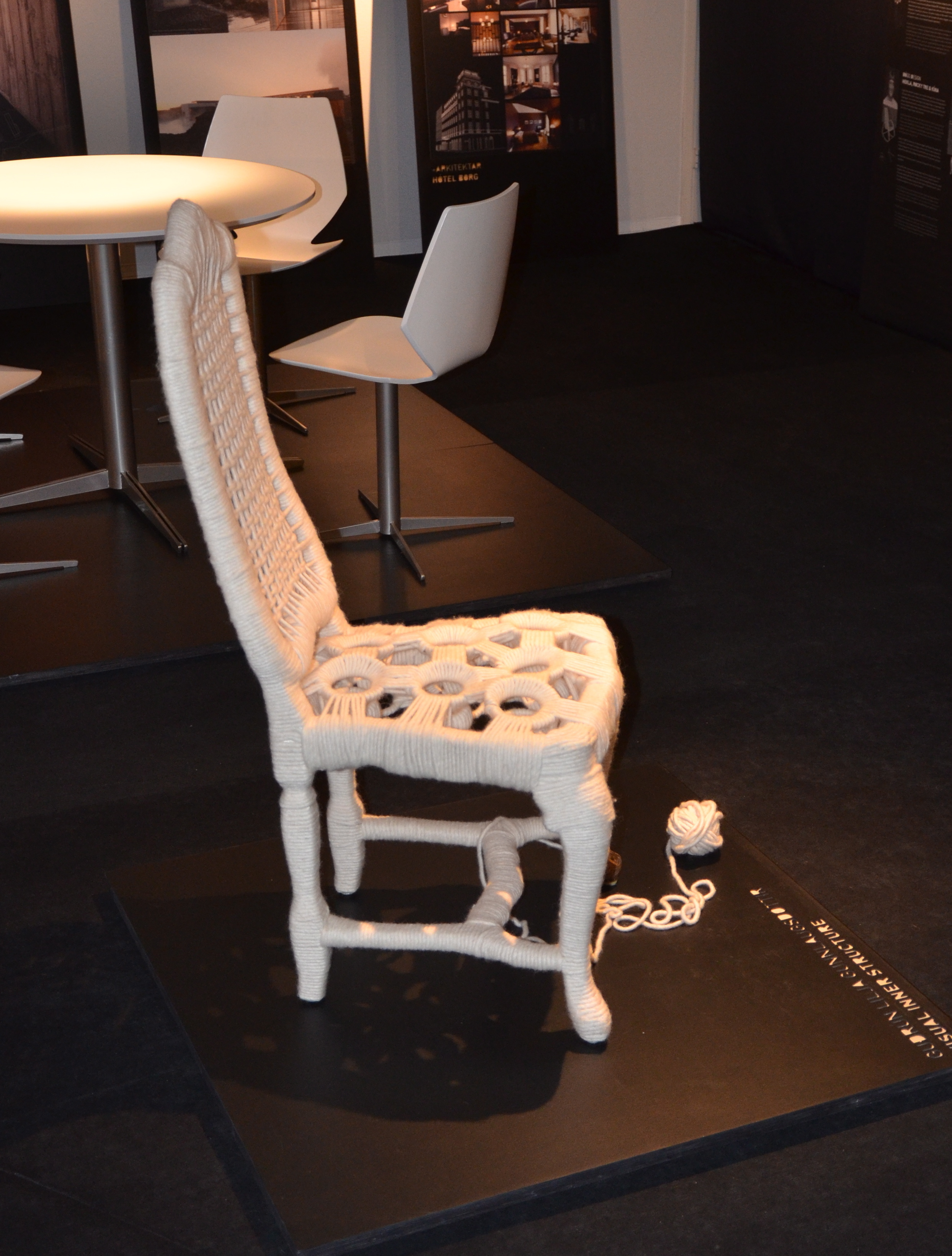
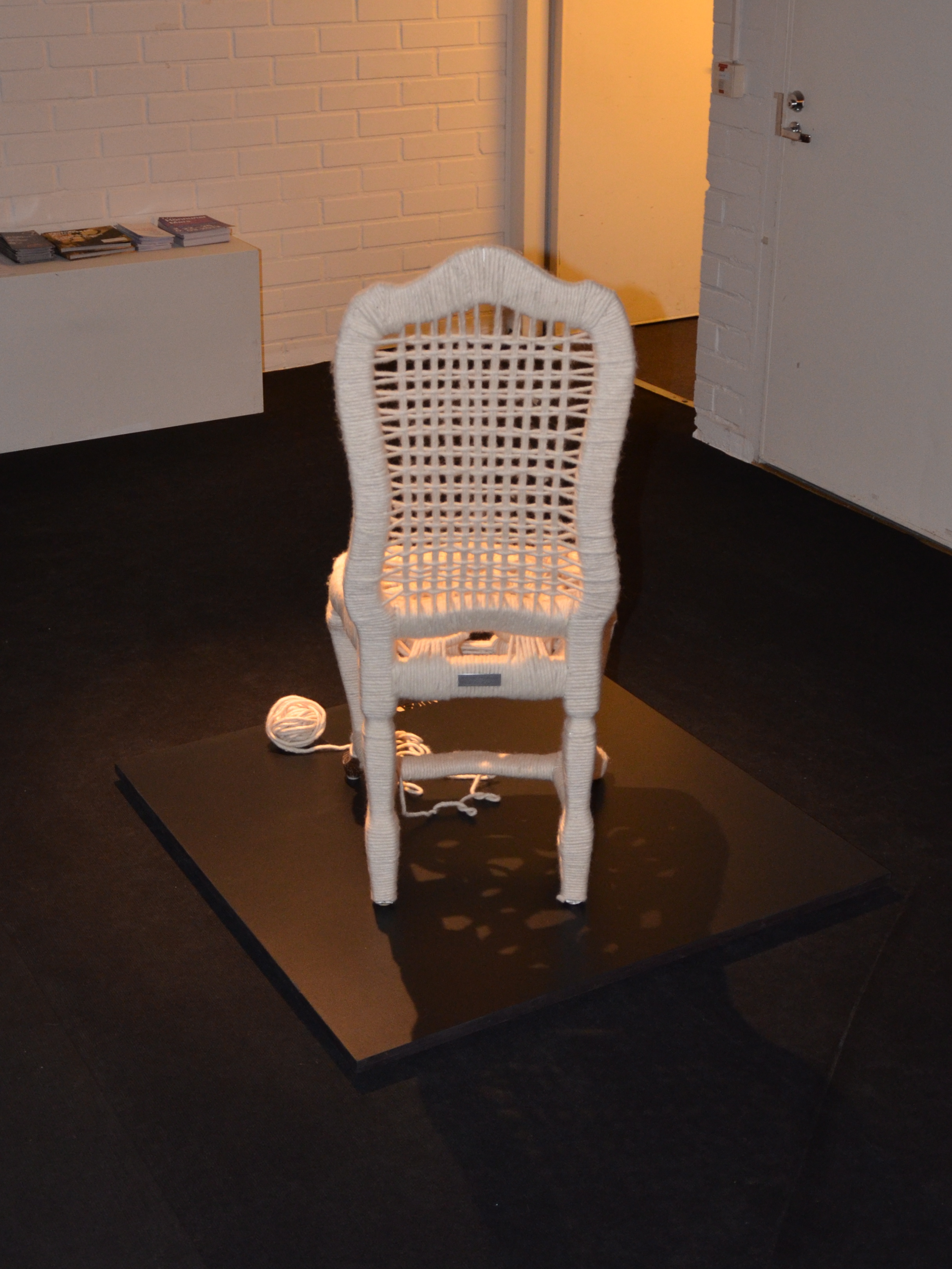
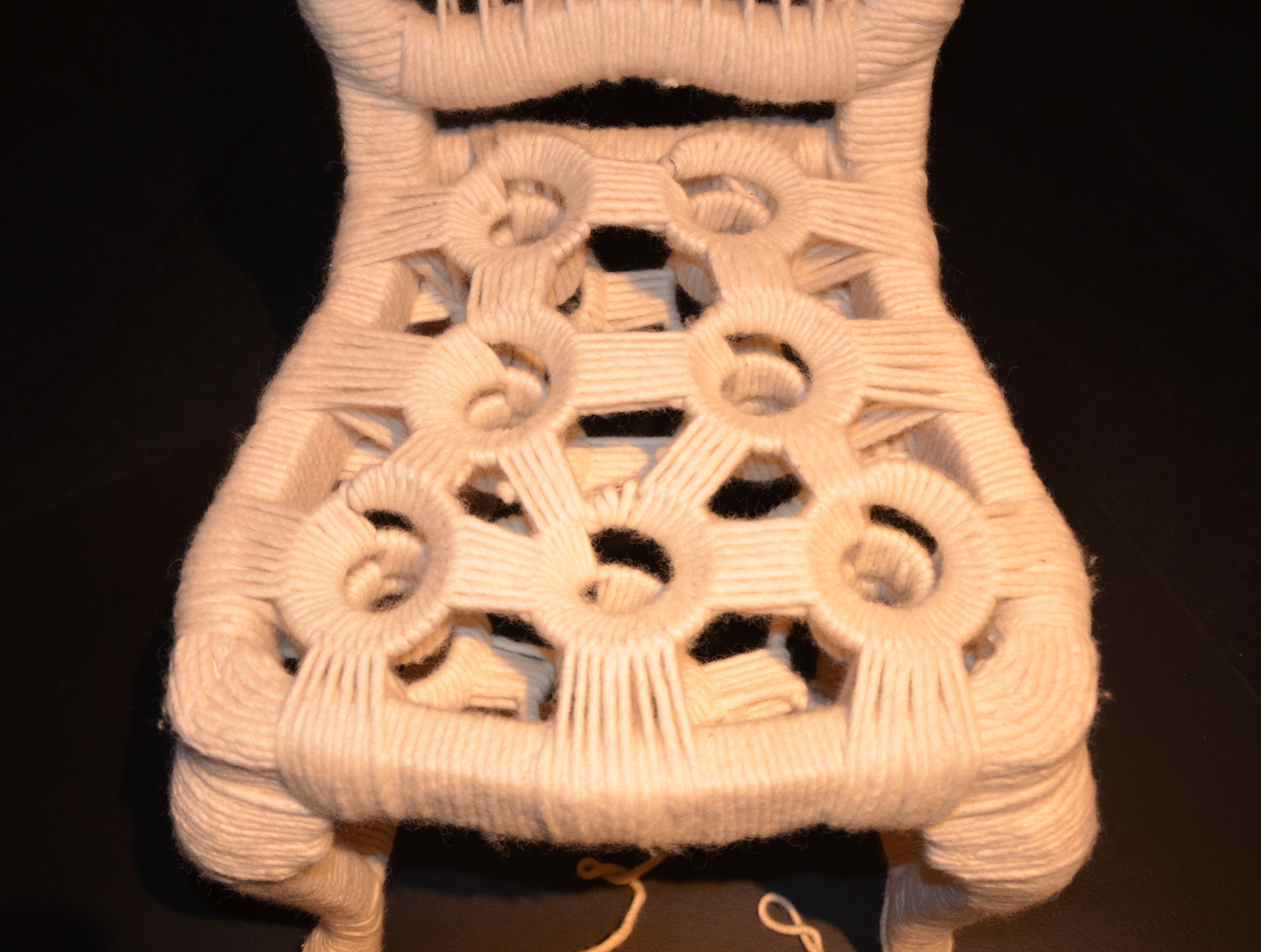
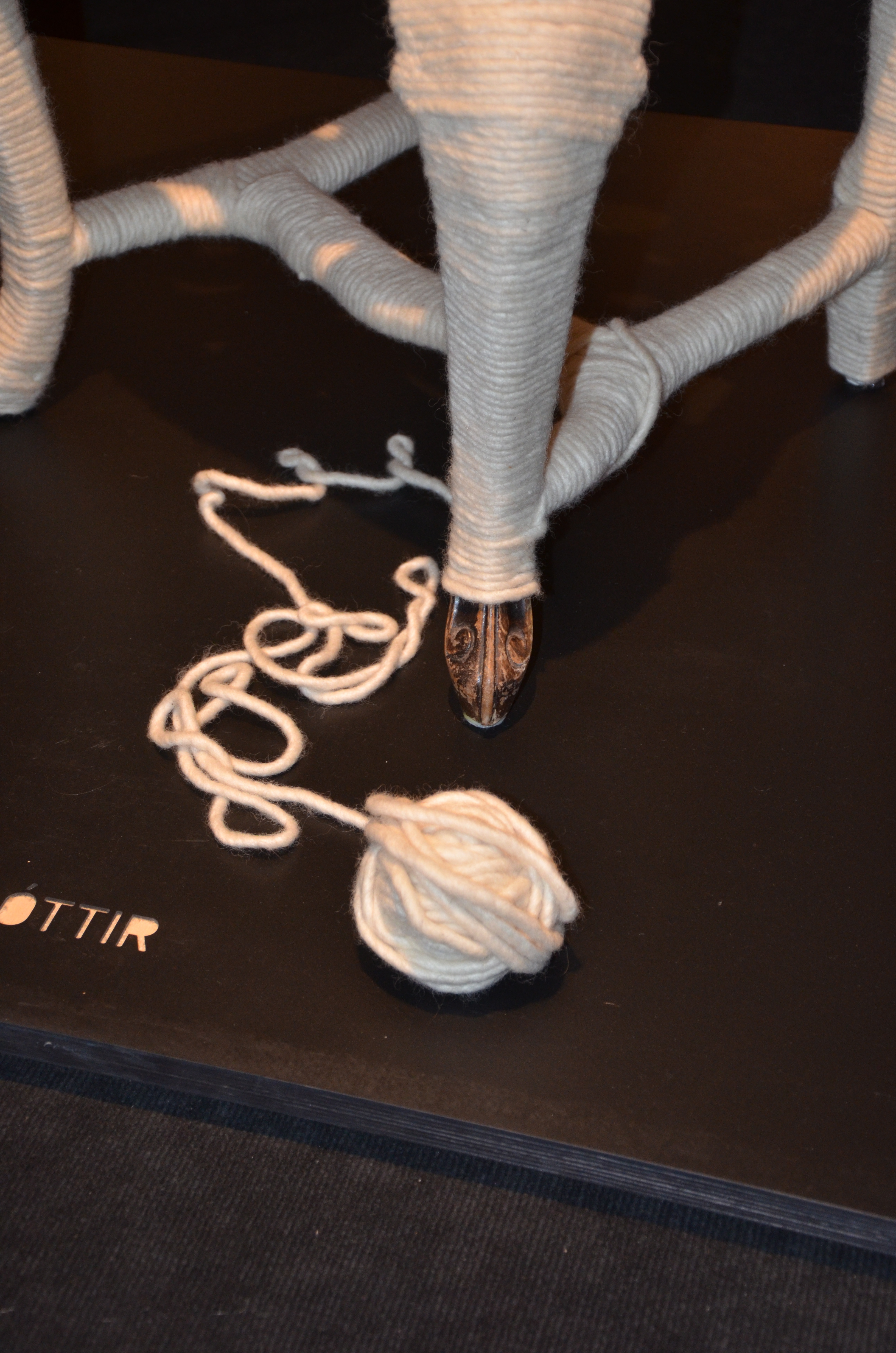
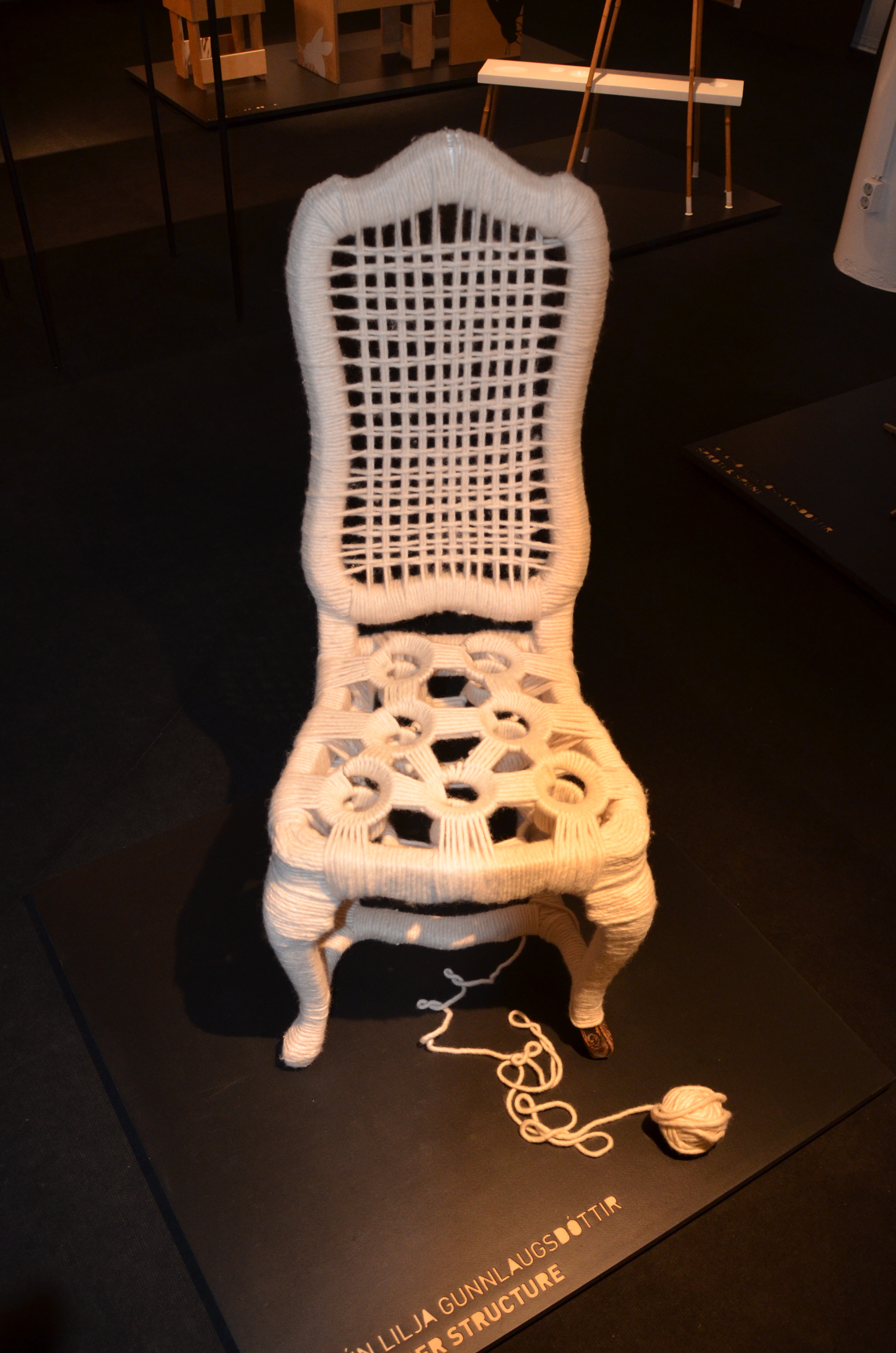
During our time in Helsinki, we practically ran into this exhibit featuring designers from Iceland. The Icelandic Contemporary Design exhibit showcases modern Icelandic designers in the categories of furniture, product design and architecture. What caught my eye was this chair – it was covered in thick white yarn! The chair is called “Visual Inner Structure – Second Life of a Chair” and it is the work of Icelandic designer Gudrún Lilja Gunnlaugsdóttir. According to the exhibit, the designer was inspired to create the chair from her experience working with refugees. The chair represents the life of a refugee who is stripped of everything – her past, family, belongings – to start a new life in a new land. The designer then uses yarn to weave a new life for the chair. Here are various views of the piece.
Visual Inner Structure - front view.Visual Inner Structure - side view.Visual Inner Structure - back view.Visual Inner Structure - close up of seat springs.Visual Inner Structure - close up of chair leg and ball of yarn.Visual Inner Structure - angled front view.
The designer studied at the Design Academy Eindhoven and formed a company called Studiobility, which strives to bring together art and product design. Read this press release about the Icelandic Contemporary Design exhibit in Helsinki. The press release lists all of the designers in the exhibit with links to each of their biographies or websites.
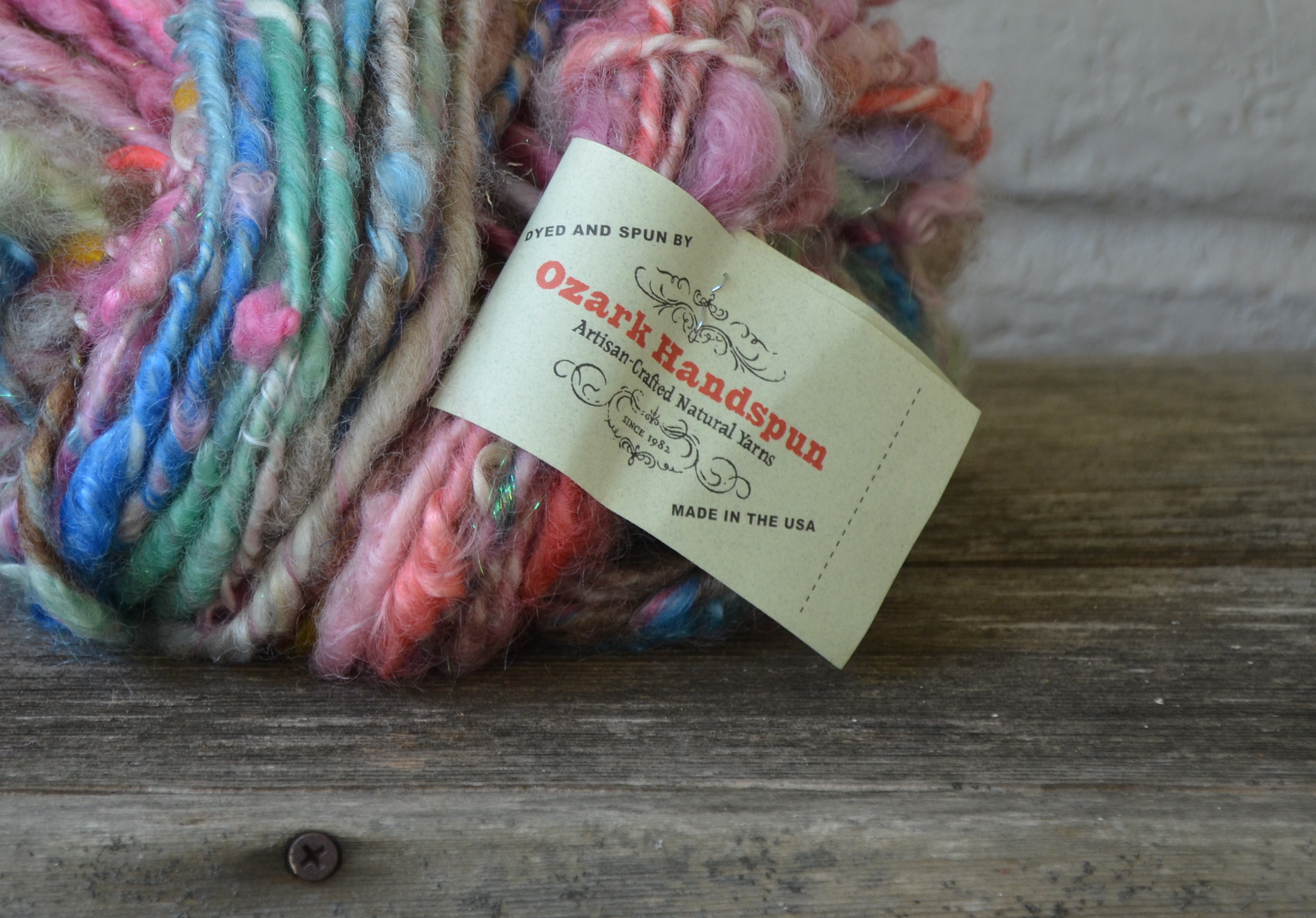
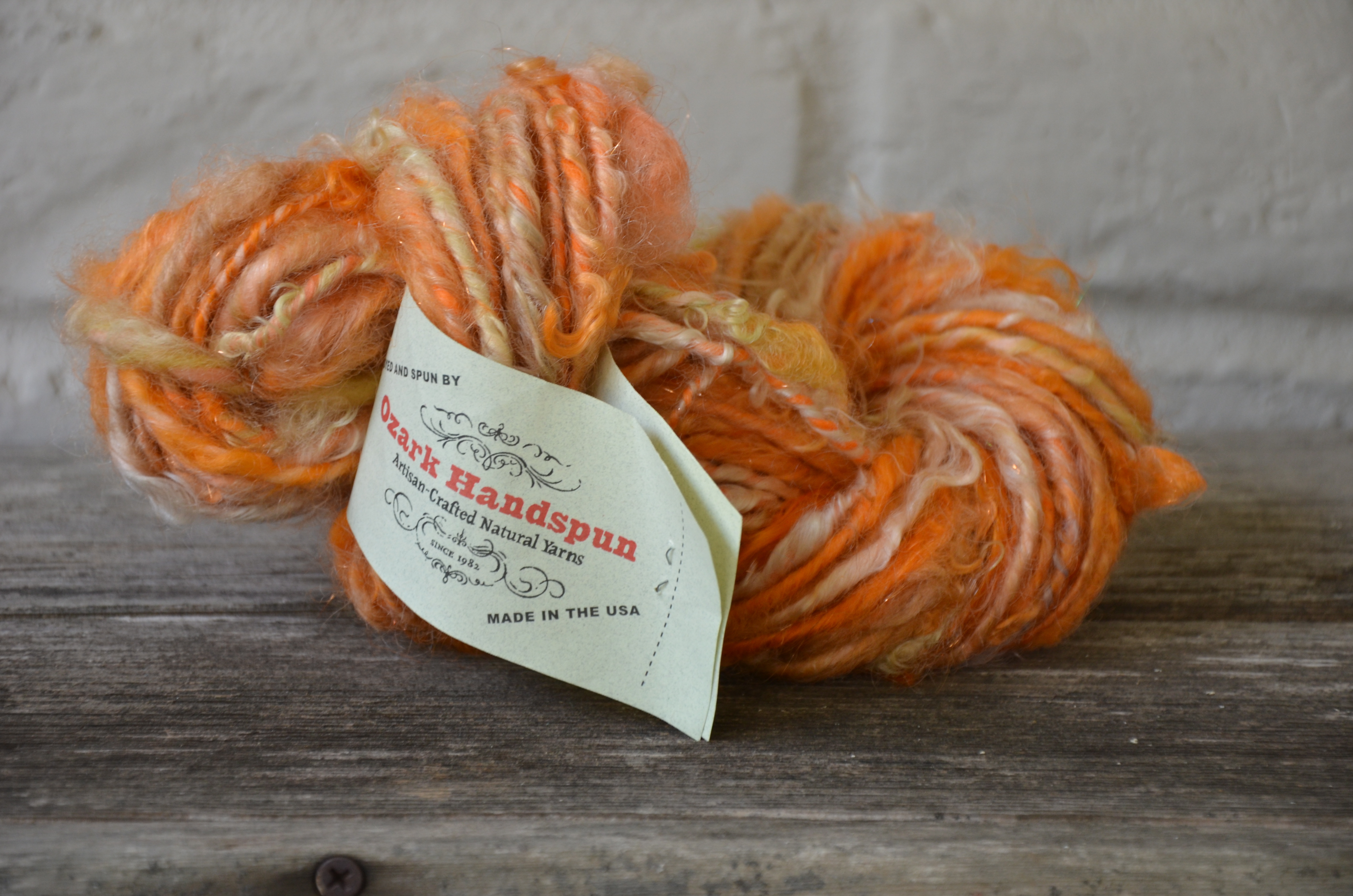
At the 2011 International Quilt Festival, among rows and rows of patterned fabrics and sewing notions, we came across yarn. Ozark Handspun had skeins of variegated hand-dyed, hand-spun yarns. Each skein was unique in texture, color and thickness. David Gentzsch, the artisan, explained how he hand-dyed the wool in vats of color that he mixed himself. He then spun the dyed wool interweaving different batches to create each skein. Here are some examples.
One skein each of “Baby Doll” and “New Multi”; 65% Mohair, 35% Wool.“Ziggy”; 65% Mohair, 35% Wool.
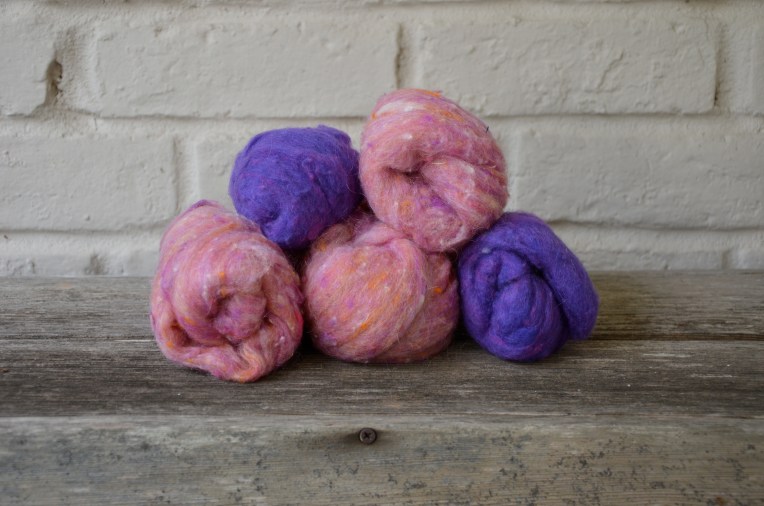
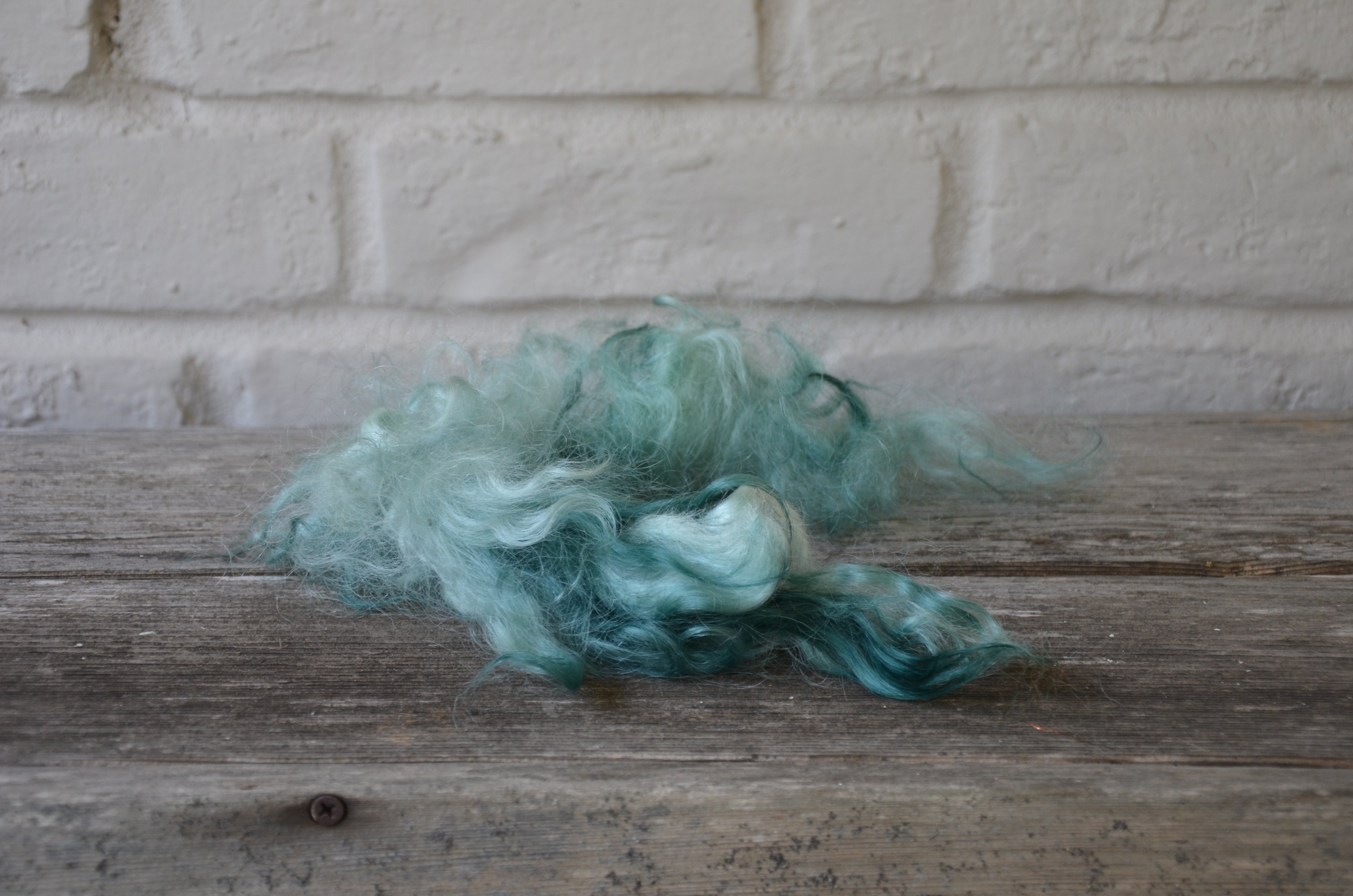
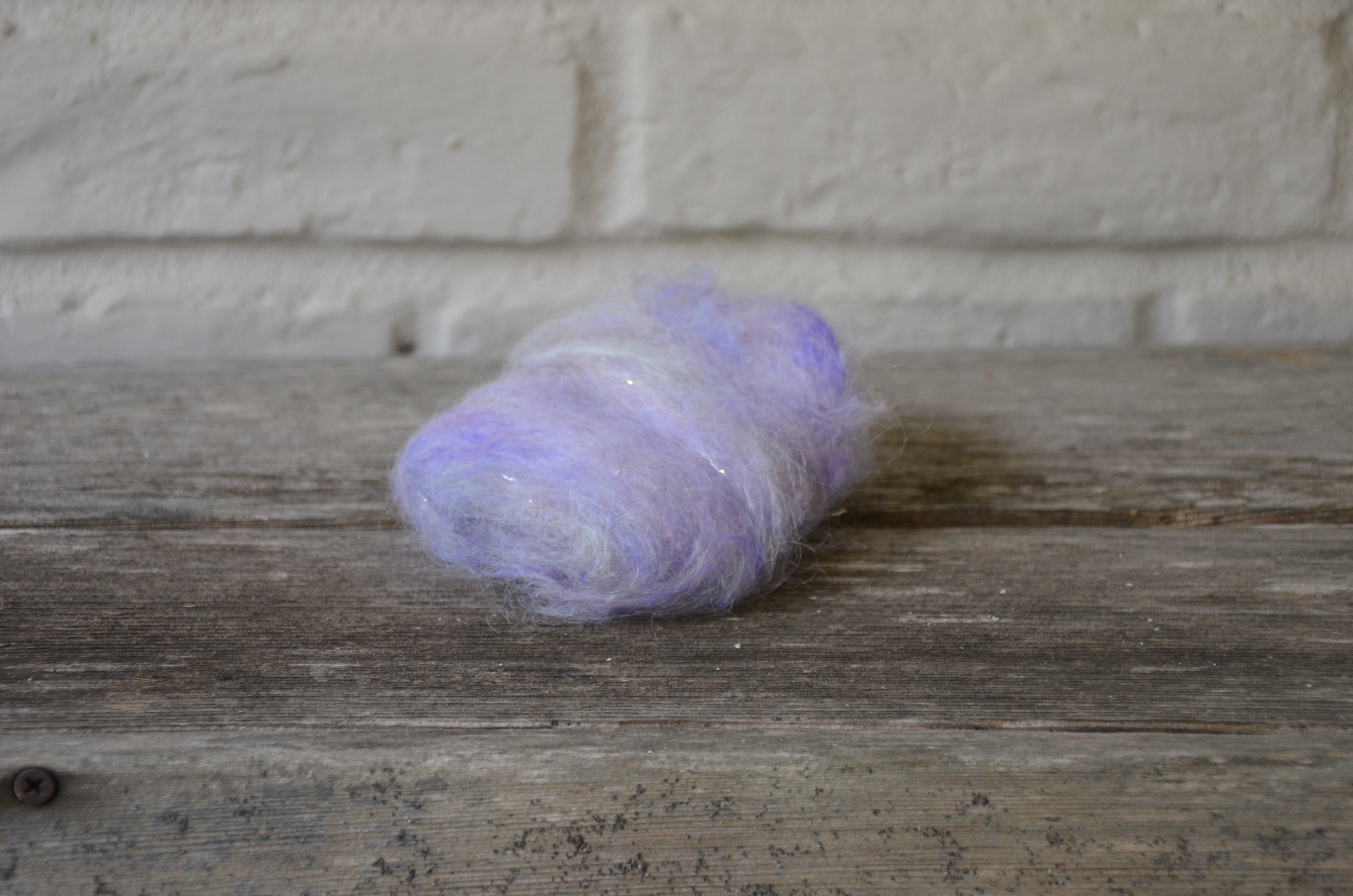
I mentioned to David that I was taking a spinning class the following weekend and to my delighted surprise, he grabbed a couple of handfuls of dyed wool roving and gave them to me!
Teal wool.Lilac mohair.
Learn more about these artisan-crafted natural yarns at Ozark Handspun.
A knitting trip would not be complete without the opportunity to see, touch and buy yarn. We drove through the Ruhr region to arrive in Wickede, about an hour east of Dusseldorf. We were greeted at Atelier Zitron by the proprietor, Herr Klemens Zitron.
Right away, Herr Zitron took us into the yarn showroom. (If you are a knitter, you can only imagine how difficult it was to keep from running and throwing myself onto the yarn.) Zitron yarn is sold throughout the United States, Canada and Europe. They are more widely known for their sock yarns, and we saw plenty of sock yarn in bright colorways. But the range of Zitron yarns goes far beyond socks.
Their lace weight yarn is exquisite. Herr Zitron showed us various pieces knit with their lace weight yarns – light and airy shawls with intricate patterns.
We spent a good deal of time on the Gobi line. Gobi is a particularly high-quality worsted weight yarn that comes in a series of solid earth tones. It is made from a blend of three luxurious fibers – 40% extra fine merino wool, 30% camel, and 30% alpaca. (I brought home 15 balls in black.) Herr Zitron explained that it is not necessary to knit with chunky yarn to keep warm. One must use high quality yarn that feels good against the skin. A good yarn will keep you warm without overpowering you.
Back in his office, Herr Zitron shared his insights on the fibers that go into producing Zitron yarns. He took out small bags, each filled with a natural undyed fiber. As we touched each one, he made us guess what the fiber origin was. We touched raw merino wool, mohair, and camel, among others. The camel was the most surprising. It was incredibly soft, and strong. He had us feel raw wool typically used for sock yarn. He then placed the wool used in Zitron sock yarn in our hands. The difference was instantly noticeable. Both wools were soft and felt good on the skin, but the wool used in Zitron yarn was splendidly soft and supple. Herr Zitron has discerning taste and only chooses the highest quality fibers to produce the yarns that carry his name.
At Atelier Zitron, they are constantly innovating. Herr Zitron gave us a sneak peek at their Spring yarn collection. All I will share is that it is exquisite. The colorway has a special sheen to it that any knitter would find enchanting. Other than that, you will have to look for it in 2012.
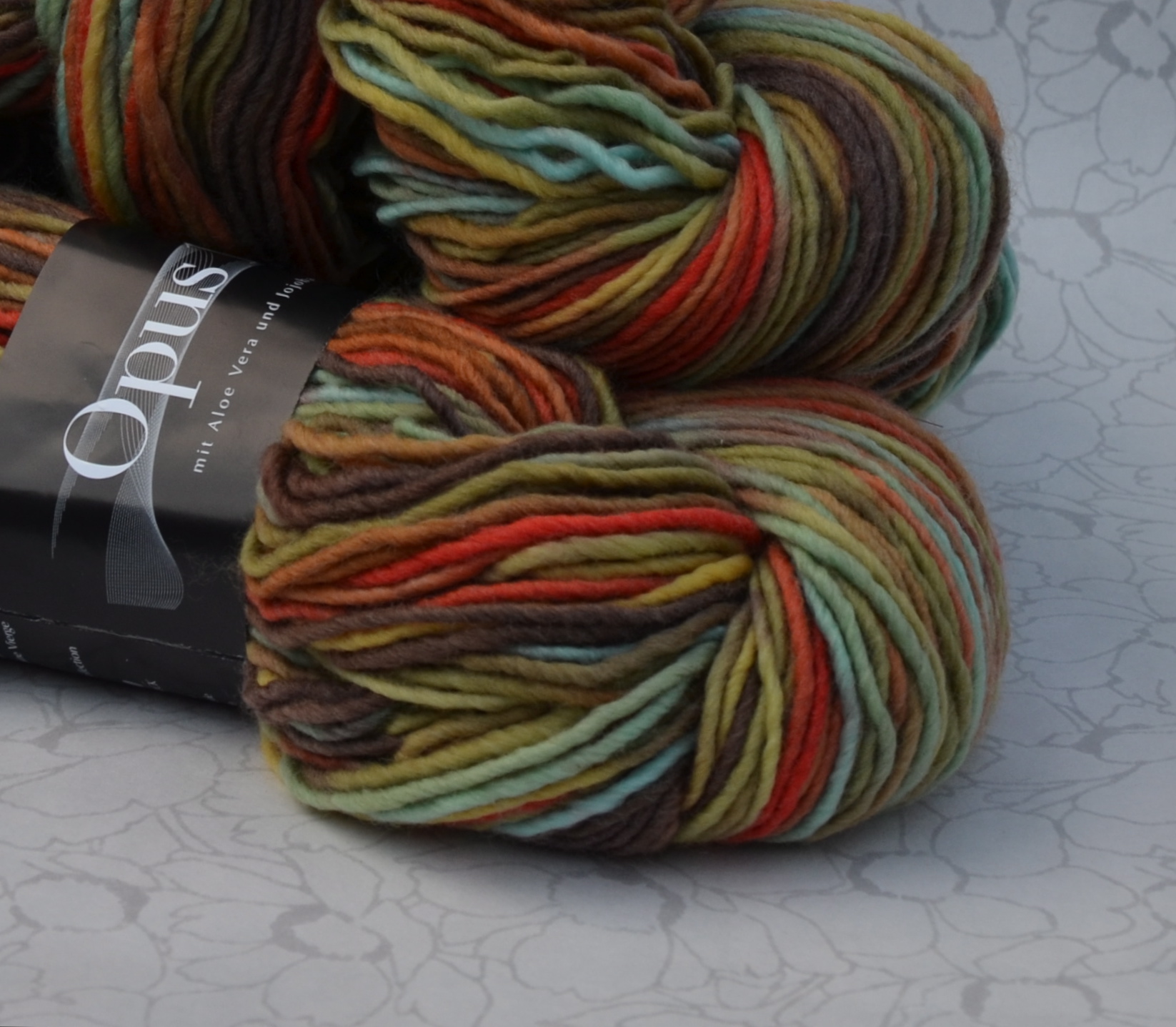
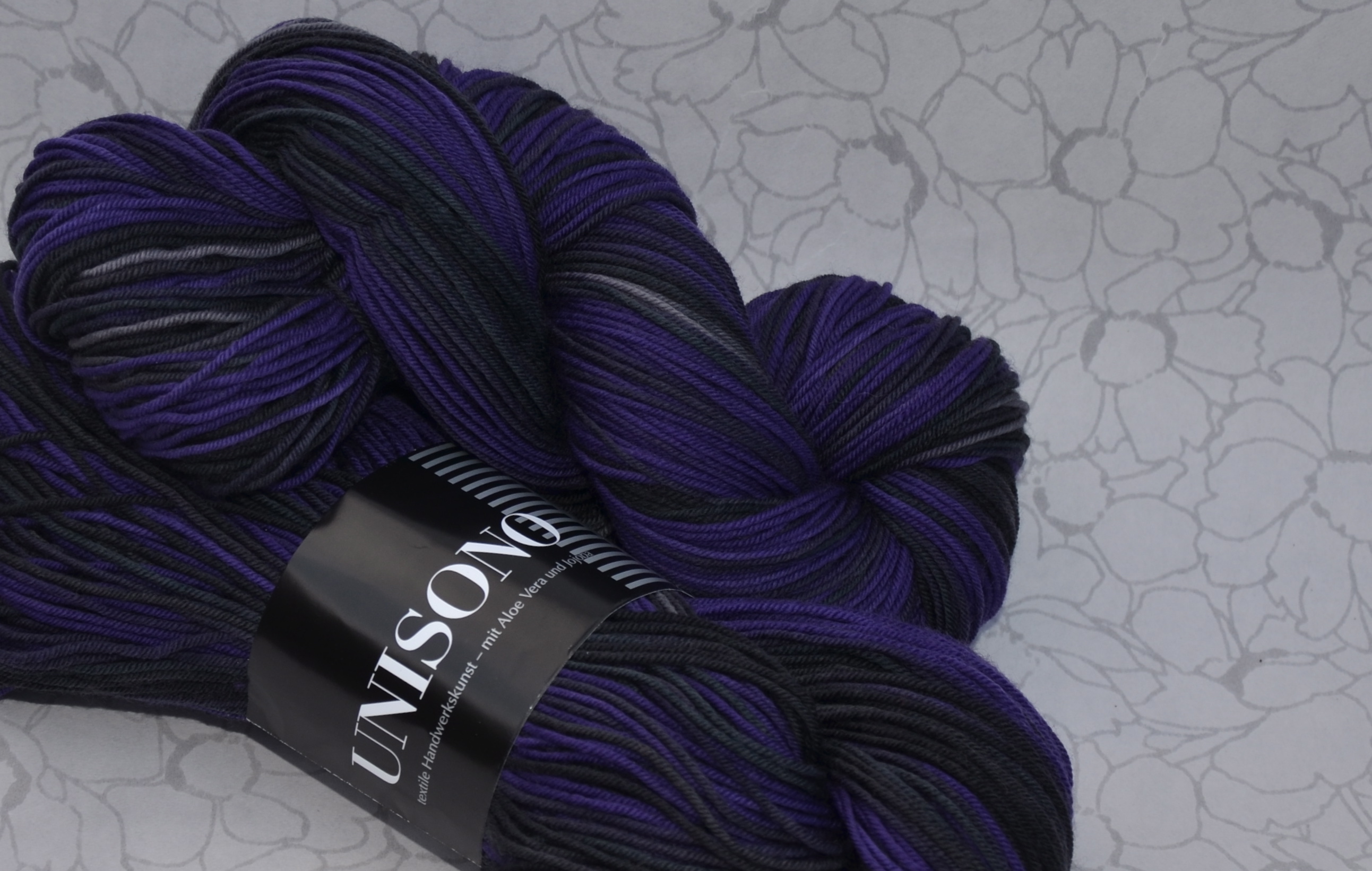
By the end of our visit, we finally had an opportunity to shop. Here is a sampling of my purchases.
Opus 1 - 100% Merino wool enriched with Aloe Vera and Jojoba.Unisono - 100% Merino extra fine, enriched with Aloe Vera and Jojoba.
Zitron yarns are made especially for hand-knitting. All yarns are made in Germany. Learn more about Zitron yarns at their website.