Of Yarn and Kimonos

It was almost time for my 60-day visa to expire and I had to leave China to renew it. So off we went to Tokyo. My first priority was yarn. I googled yarn stores in Tokyo and several blogs had recommendations. I made my list and went in search of yarn.

My first attempt was a fail. We took a long circuitous route in search of Mother Earth supposedly located at 3-3-39 Minamiazabu Minato-ku. We strolled through some very interesting neighborhoods, but no Mother Earth.

The second attempt was also a fail. I was in search of Avril, which is known as Habu Textiles in the USA. From examining a Tokyo Metro map, the stop was somewhat off the grid. Given that I had some lovely yarn from Habu Textiles in my stash already, I decided to forego Avril.

Attempt #3 was a home run. We took the Tokyo Metro from the Roppongi Station to the Shinjuku Station. According to Wikipedia, “the station was used by an average of 3.64 million people per day in 2007, making it … the world’s busiest transport hub.” I believe it.

Finding the yarn store required navigating the streets with our smart phone map. It isn’t too far from the station, but it is tucked away on a busy pedestrian street. Okadaya is an arts and crafts store. Different floors house sewing supplies, buttons, ribbons, wigs, and yarn. Photos are not allowed but just imagine yarn nirvana. There was Noro, of course, but I selected Japanese brands that I had not seen in the United States.

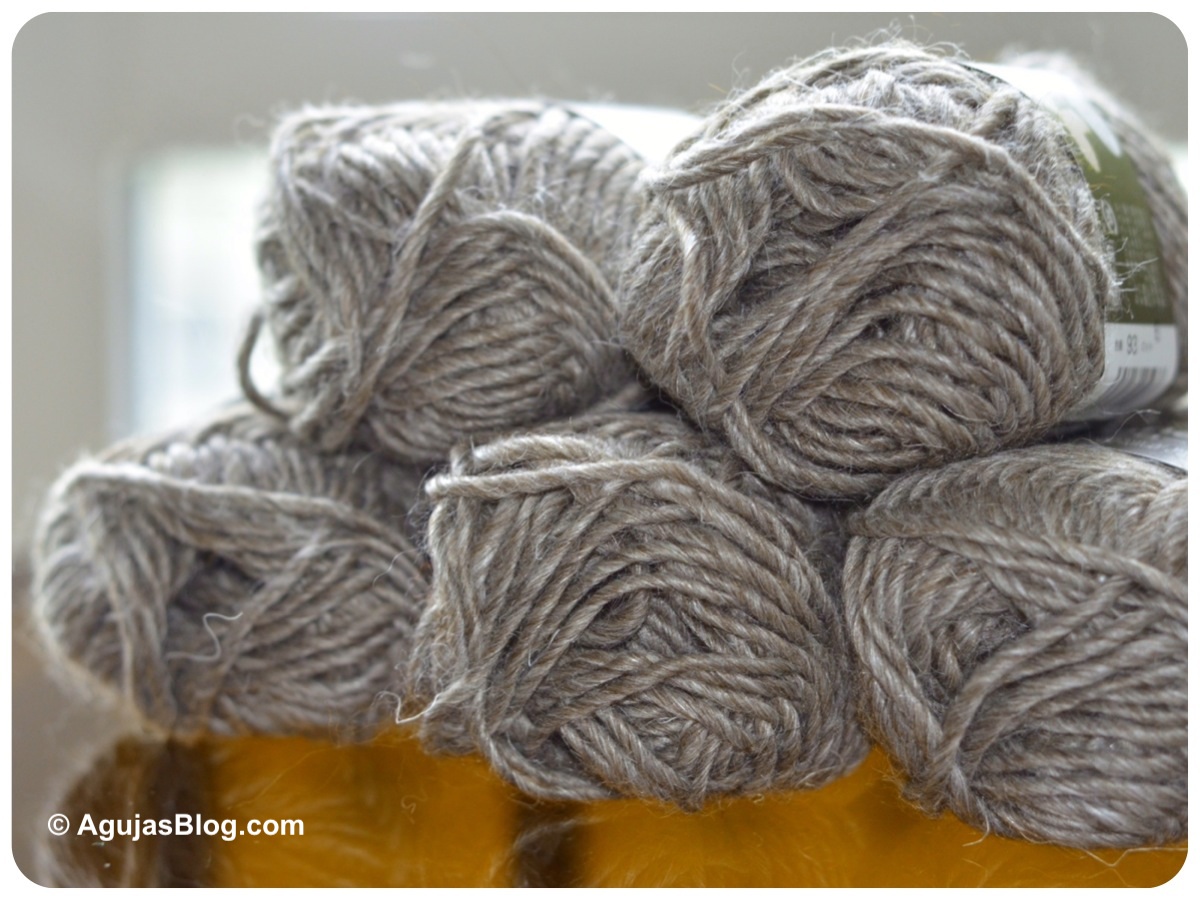
First I found Sonomono in this natural color. Each ball is 40 grams, 64 meters of 40% Alpaca, 30% Wool and 30% Linen.
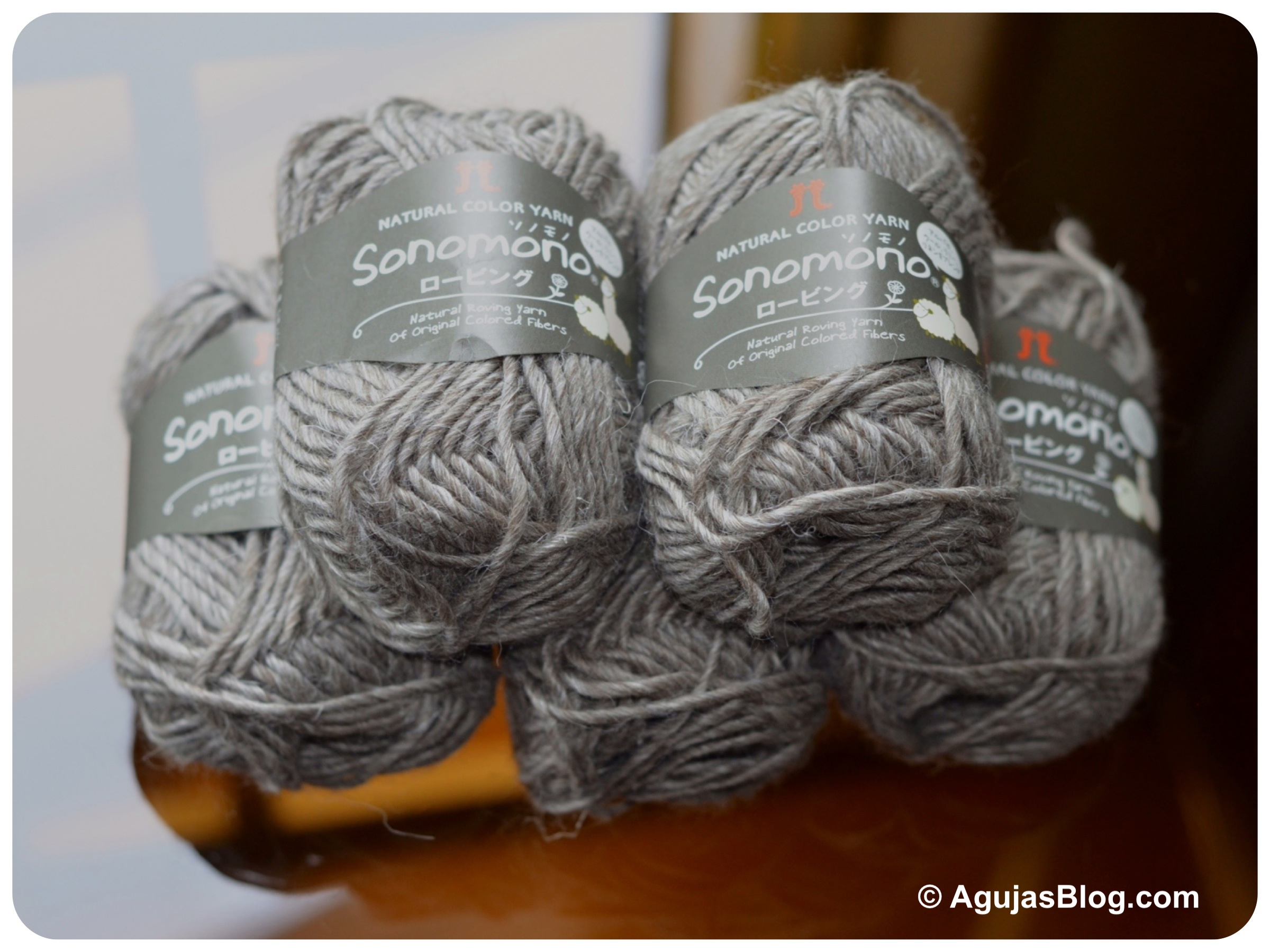
Sonomono Yarn 1

Sonomono Yarn 2

After my husband checked on me to make sure I had not suffocated in a crate of yarn (I guess I was up there a long time), I picked up two of these cotton cupcakes by Nicotto. Each cupcake is 30 grams, 50 meters of 100% Cotton.
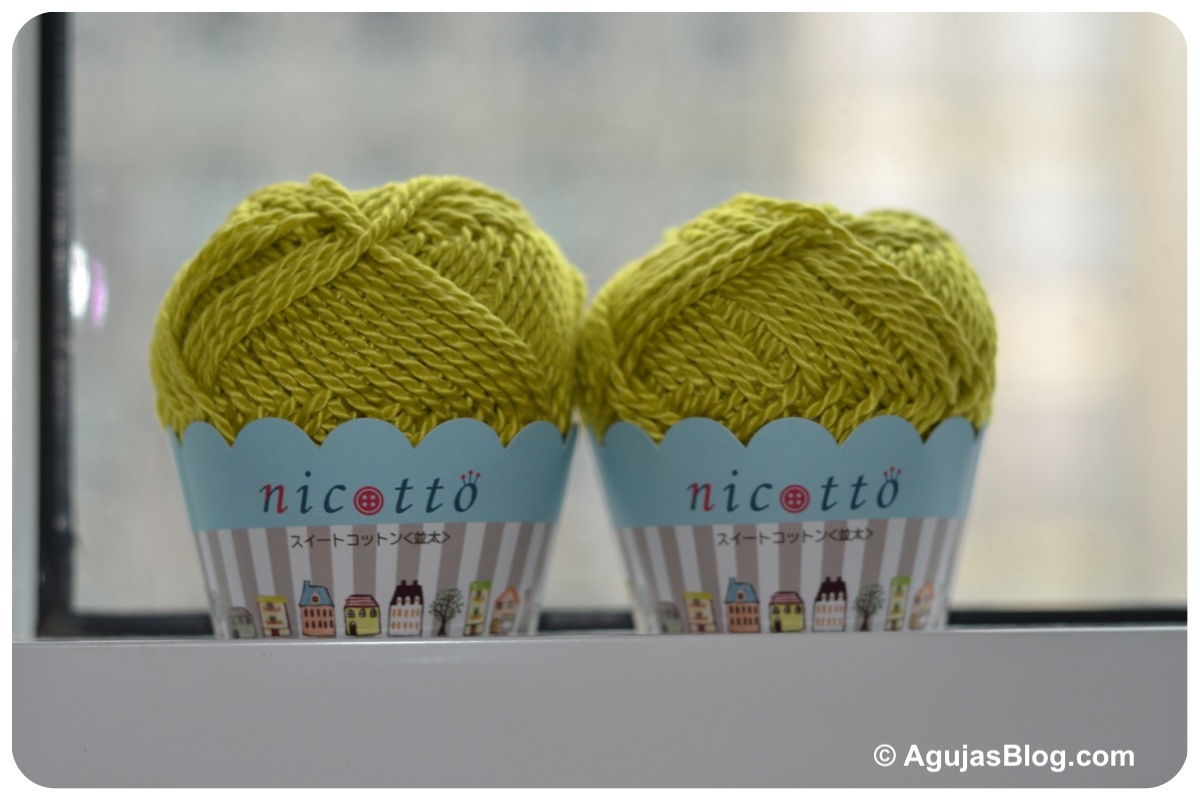
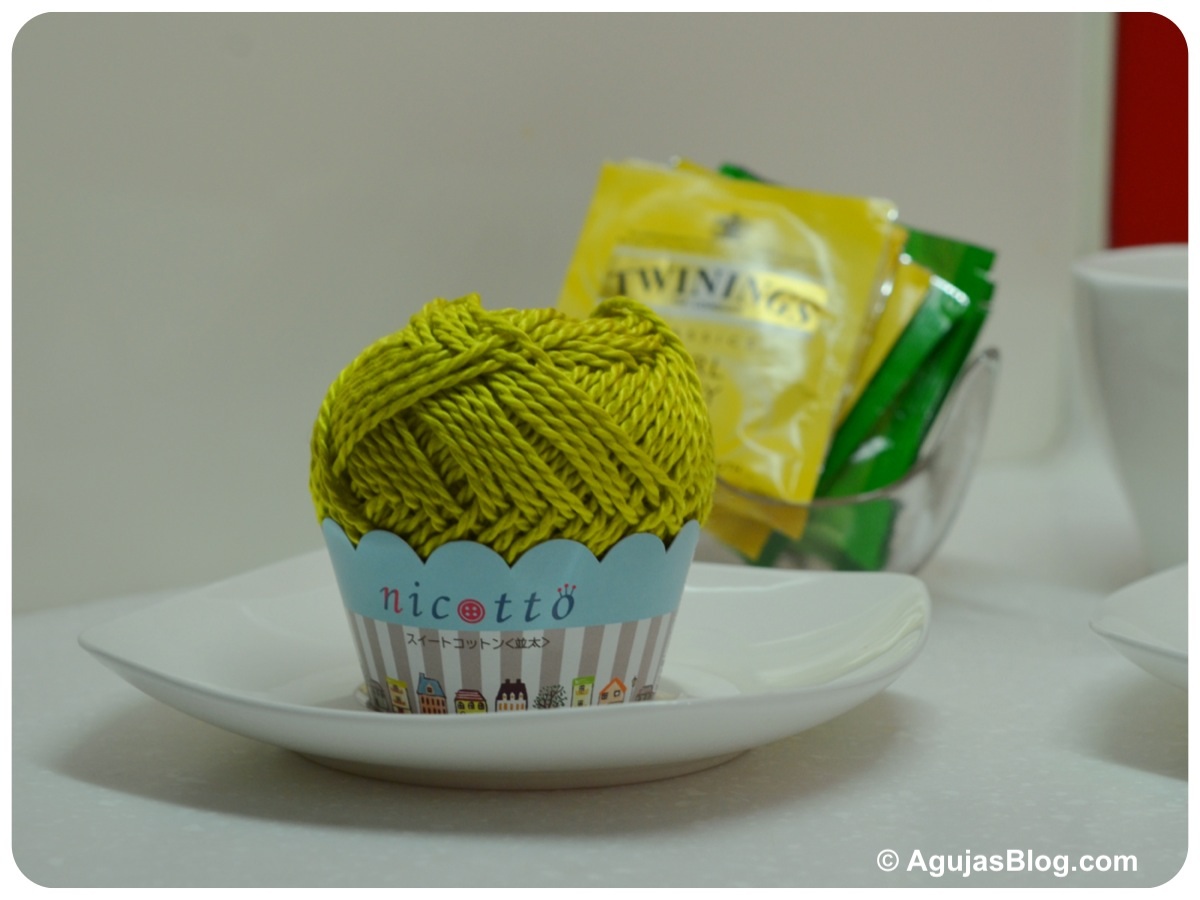
Nicotto Yarn 1

Nicotto Yarn 2

We also took some time to visit a couple of museums. The Tokyo National Museum was a highlight with its display of beautiful kimonos from the Edo Period (17c-19c). The garments were in glass display cases so the photos may have reflections.
This slideshow requires JavaScript.

Crocheting at the Long Corridor

One hazy day, we went to the Temple of Heaven Park. The air quality index was very high at 347 (hazardous) and reached a high of 477 (more hazardous) by evening. I’ve noticed that the worse the air quality, the cooler it gets, so overall it was a pleasant afternoon.

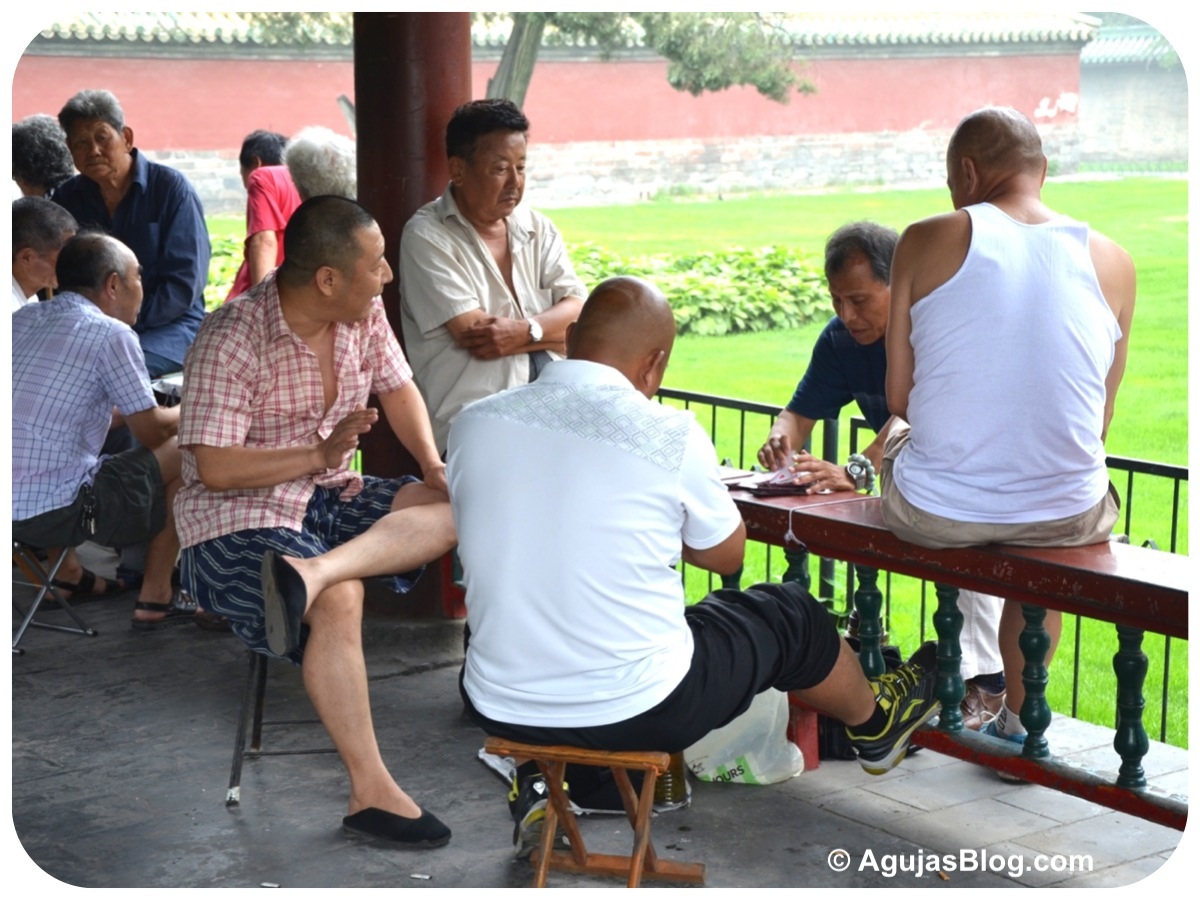
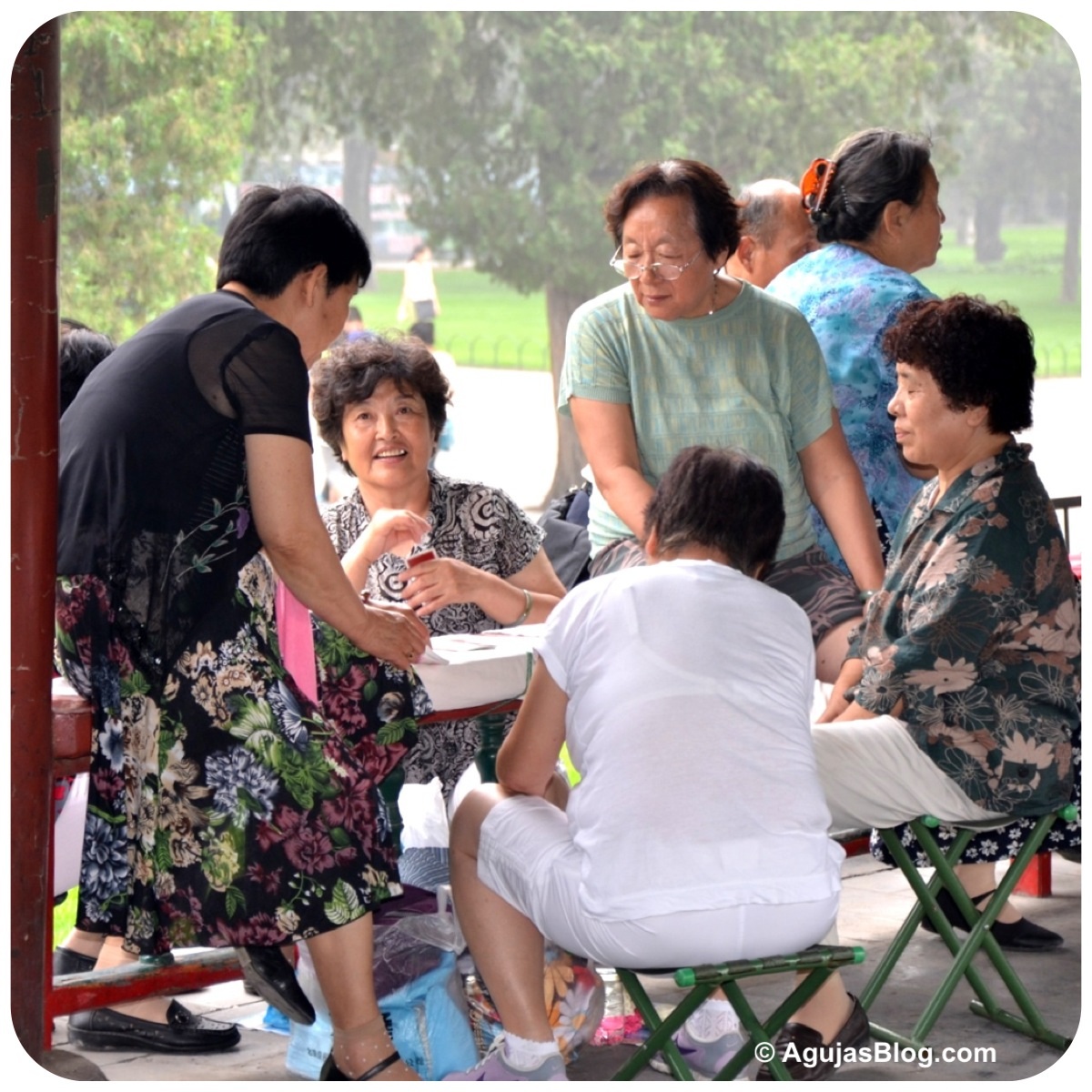
We gravitated toward a long passageway where many locals had congregated. There were countless groups of men and women playing lively games of cards.

Men Playing Cards - Long Corridor

Women Playing Cards - Long Corridor

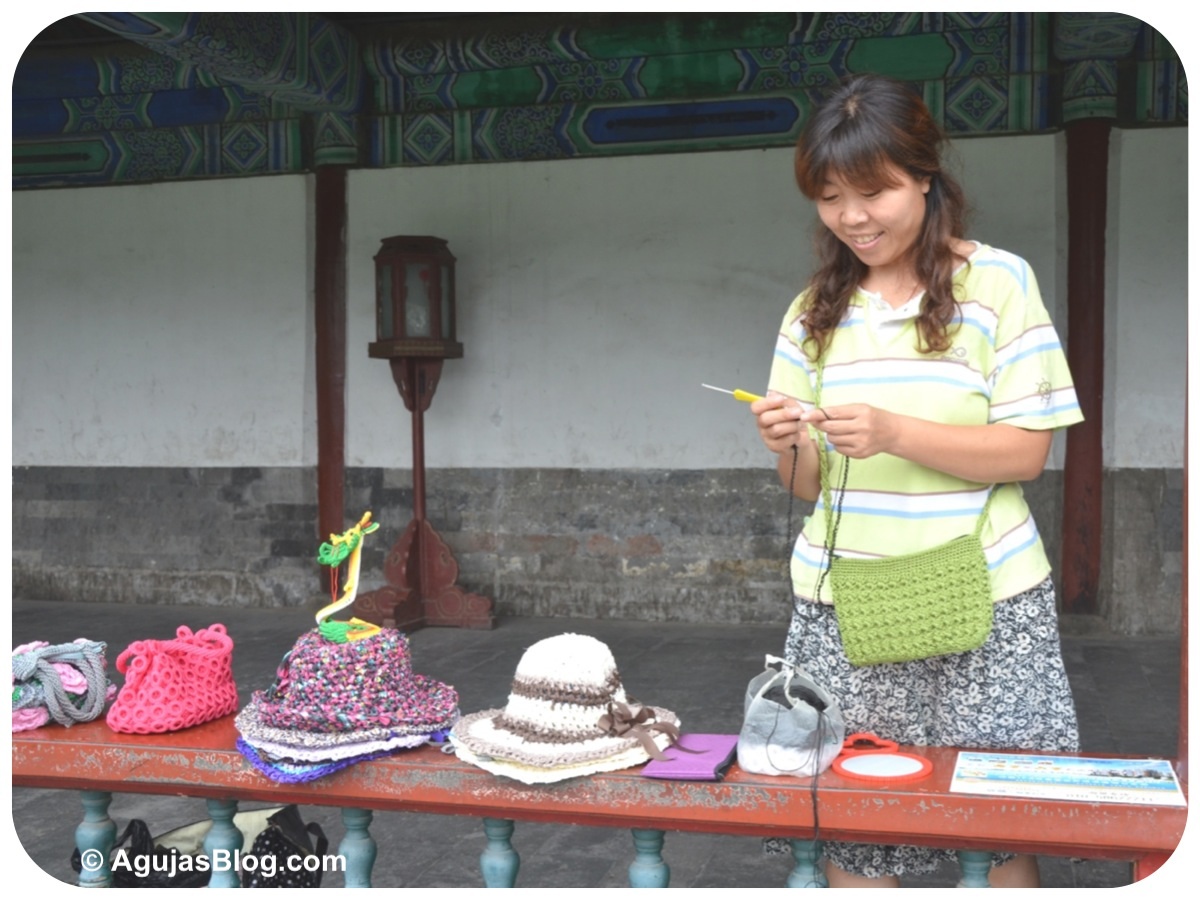
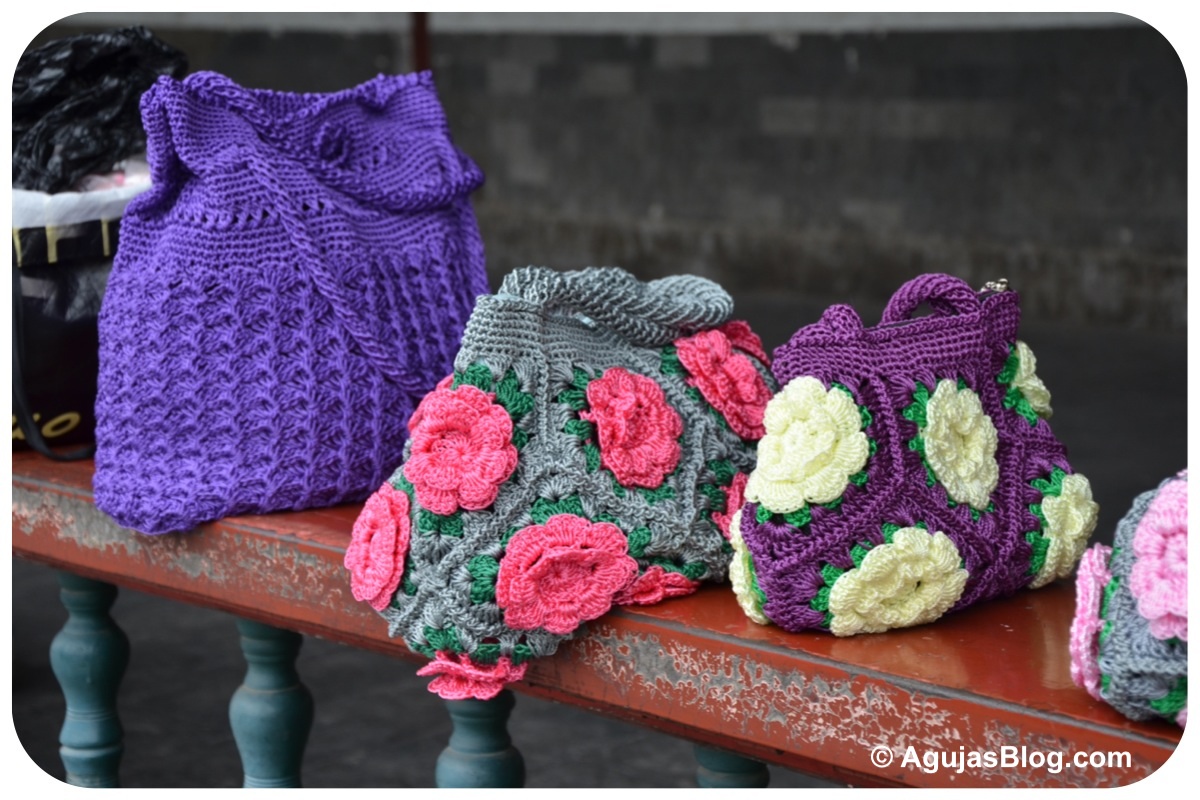
As we continued, I was immediately drawn to a woman working with her hands. From afar I could tell she was crocheting! She had several of her handmade items for sale and even let me add a few triple crochet stitches.

Crocheting Along the Long Corridor

Crocheted Handbags - Long Corridor

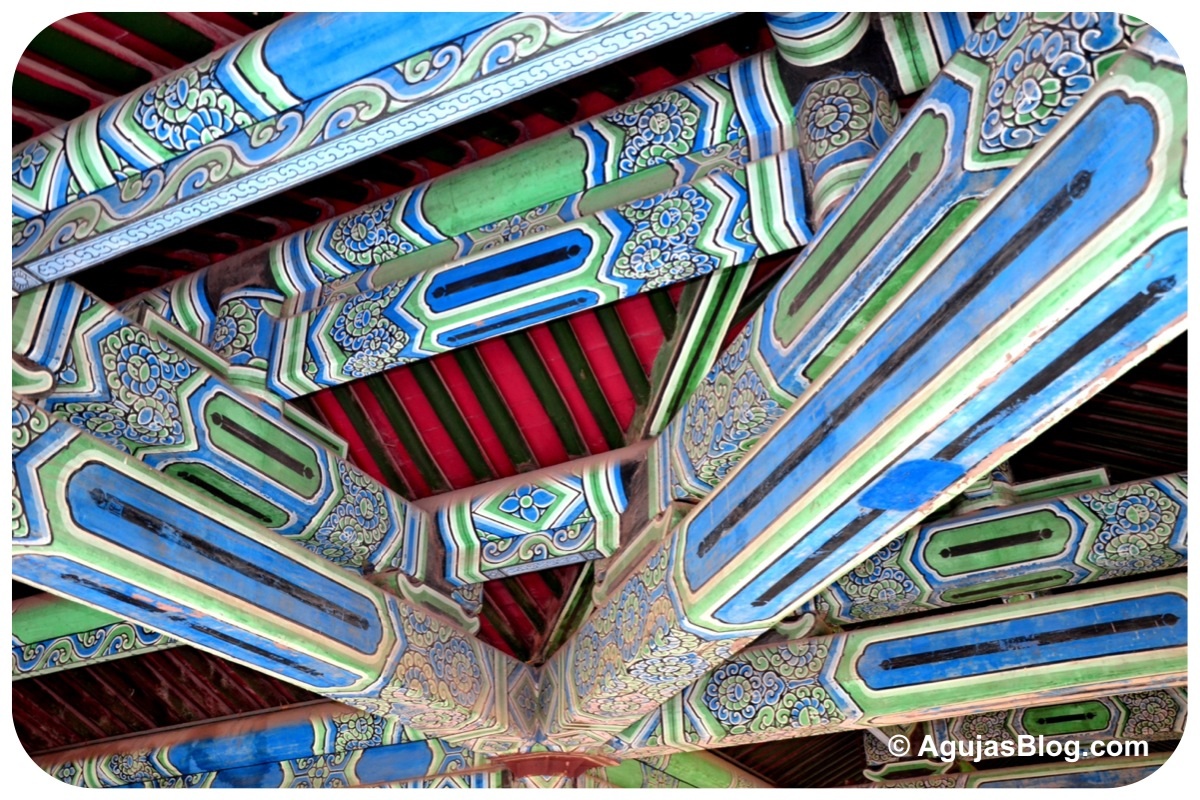
The Long Corridor consists of covered passages connecting the Animal Killing Pavilion to the Divine Kitchen and the Divine Warehouse. From what I read, the night before a ceremony, the Long Corridor would be lit up with lanterns. Offerings of jade, silk, grains, and fruit would be stored there.

Beams along the Long Corridor

The Temple of Heaven is actually the name of the entire park covering 2.7 million square meters. During the Ming (1368-1644) and Qing (1644-1911) dynasties, the emperors held worship ceremonies here.

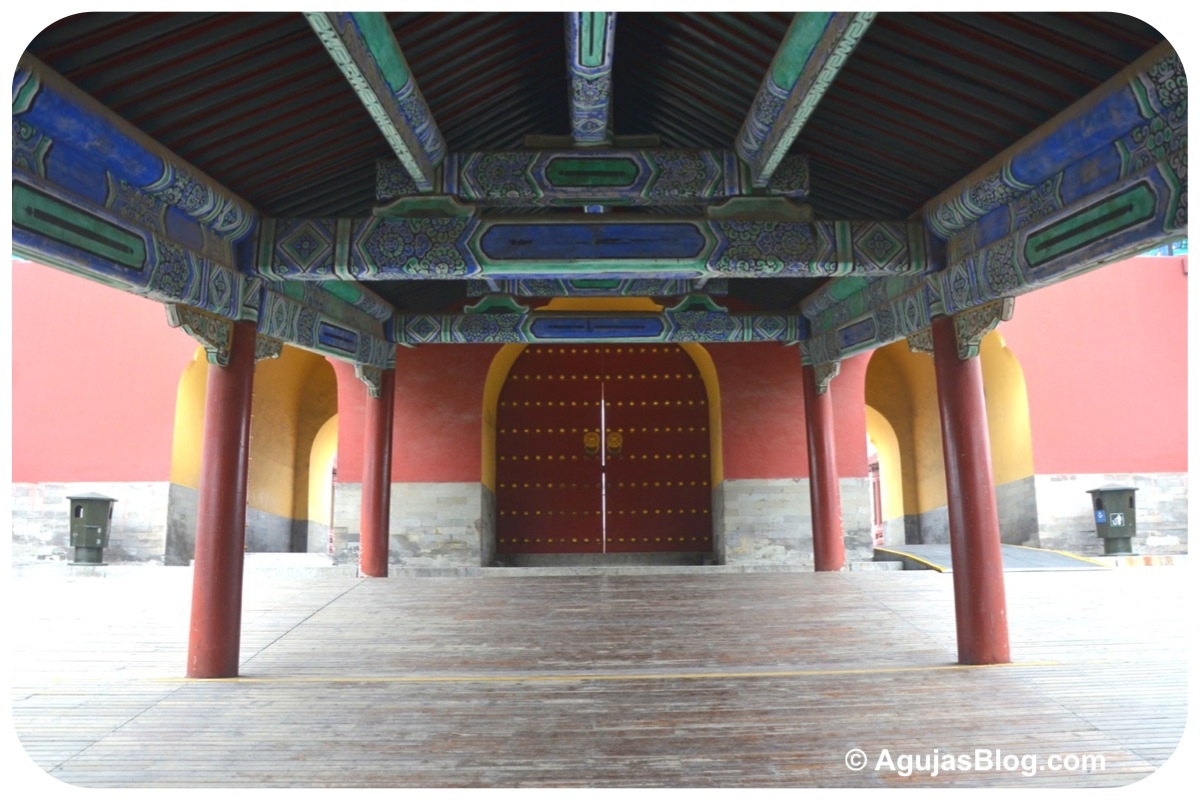
Route to Hall of Prayer for Good Harvests

Detail en route to Hall of Prayer for Good Harvests

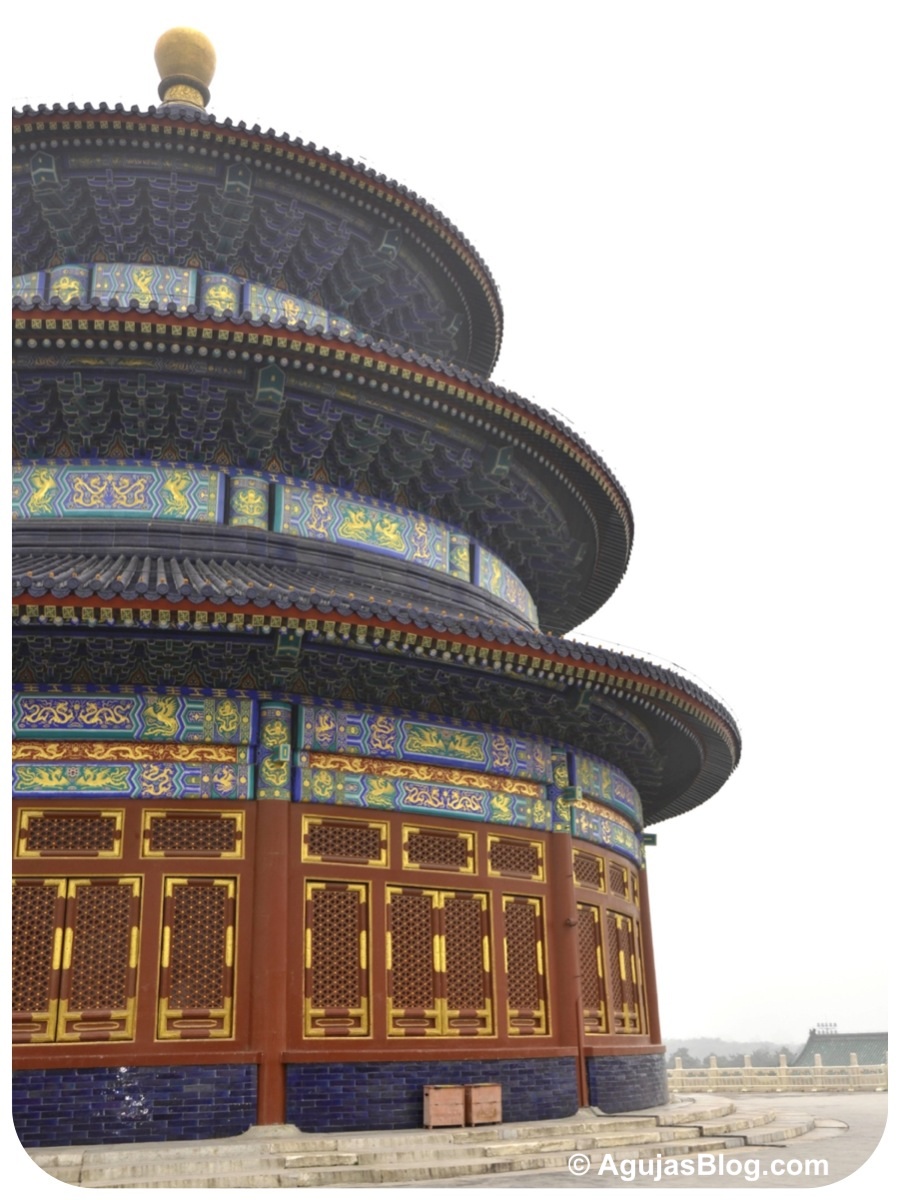
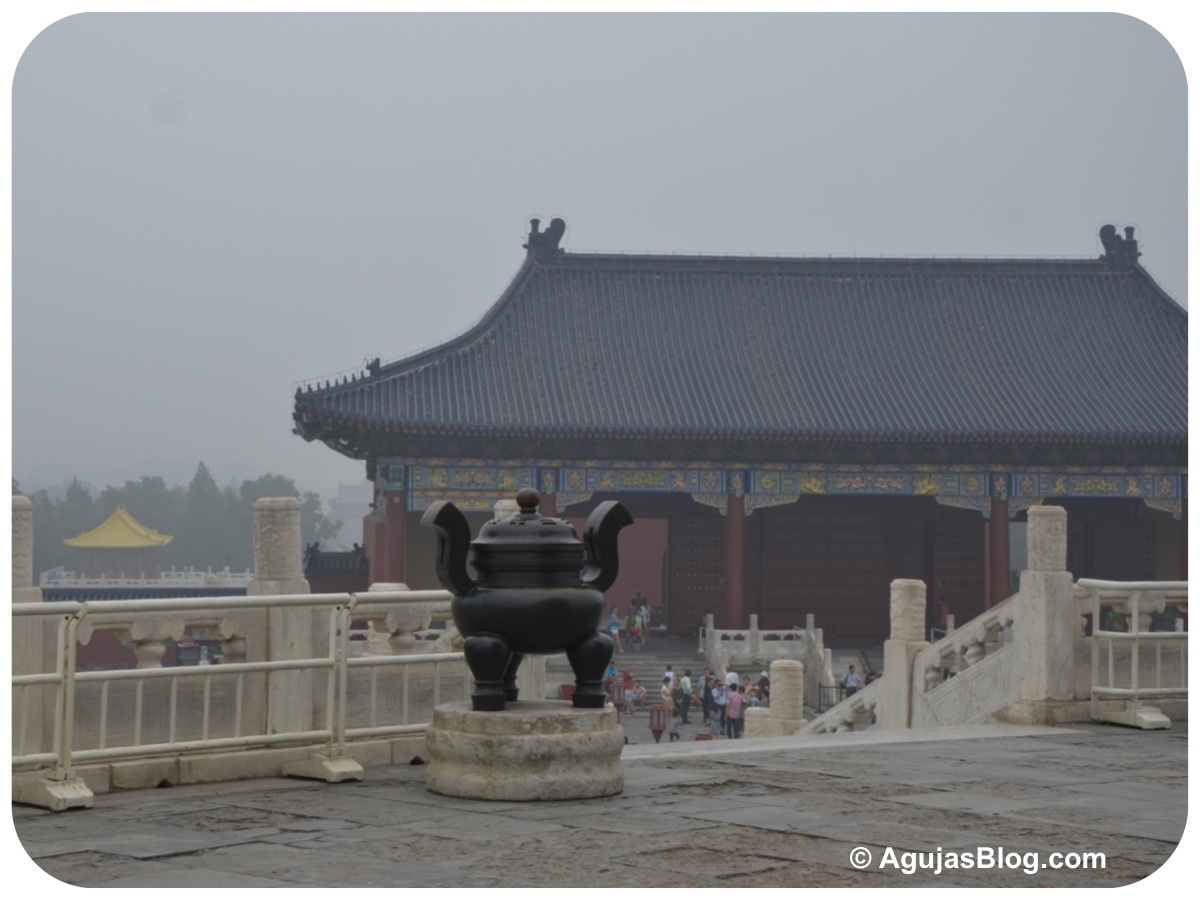
The Hall of Prayer for Good Harvests is perhaps the most associated with the Temple of Heaven. Worship ceremonies were held here to pray for good weather and good harvests.

Hall of Prayer for Good Harvests

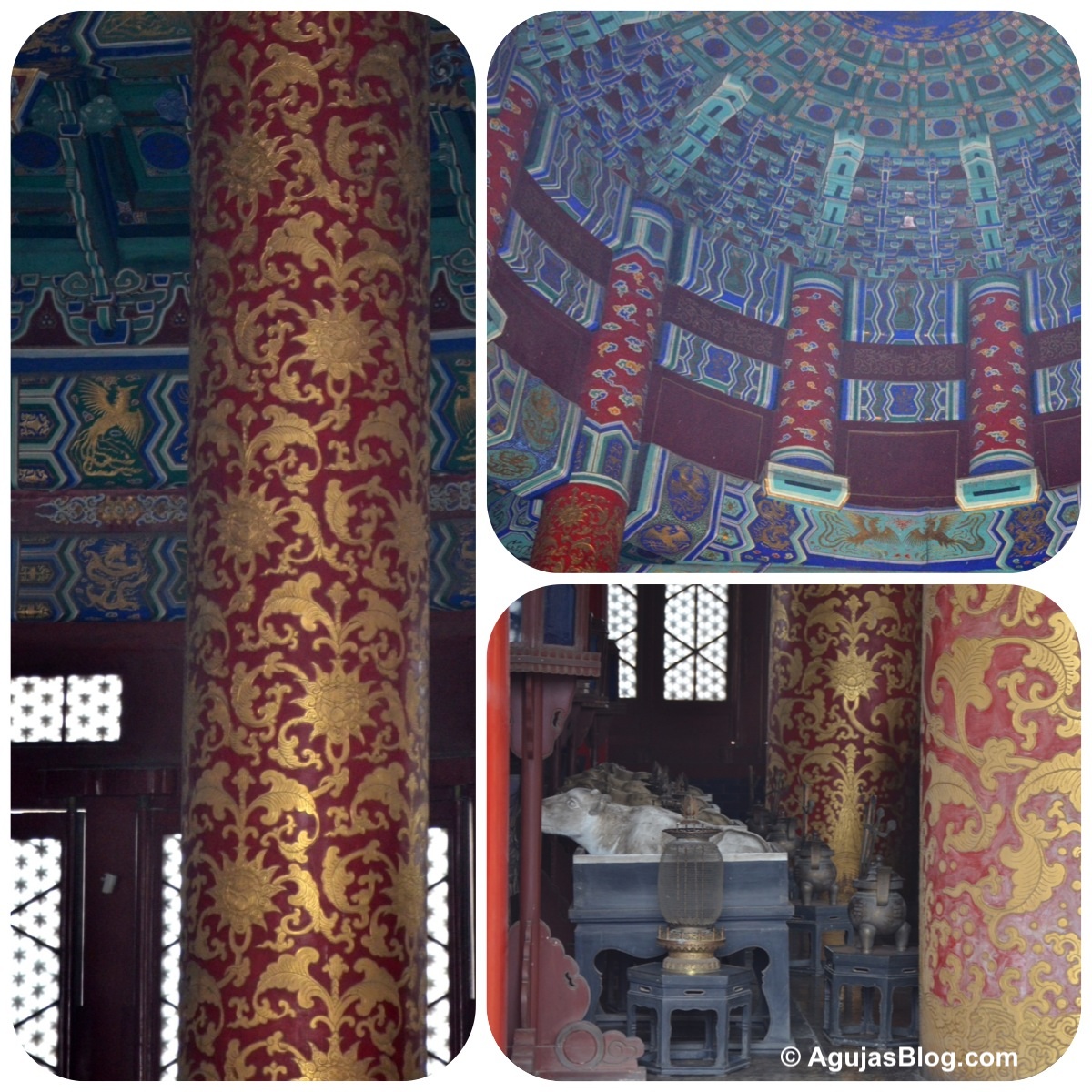
Inside Views - Hall of Prayer for Good Harvests

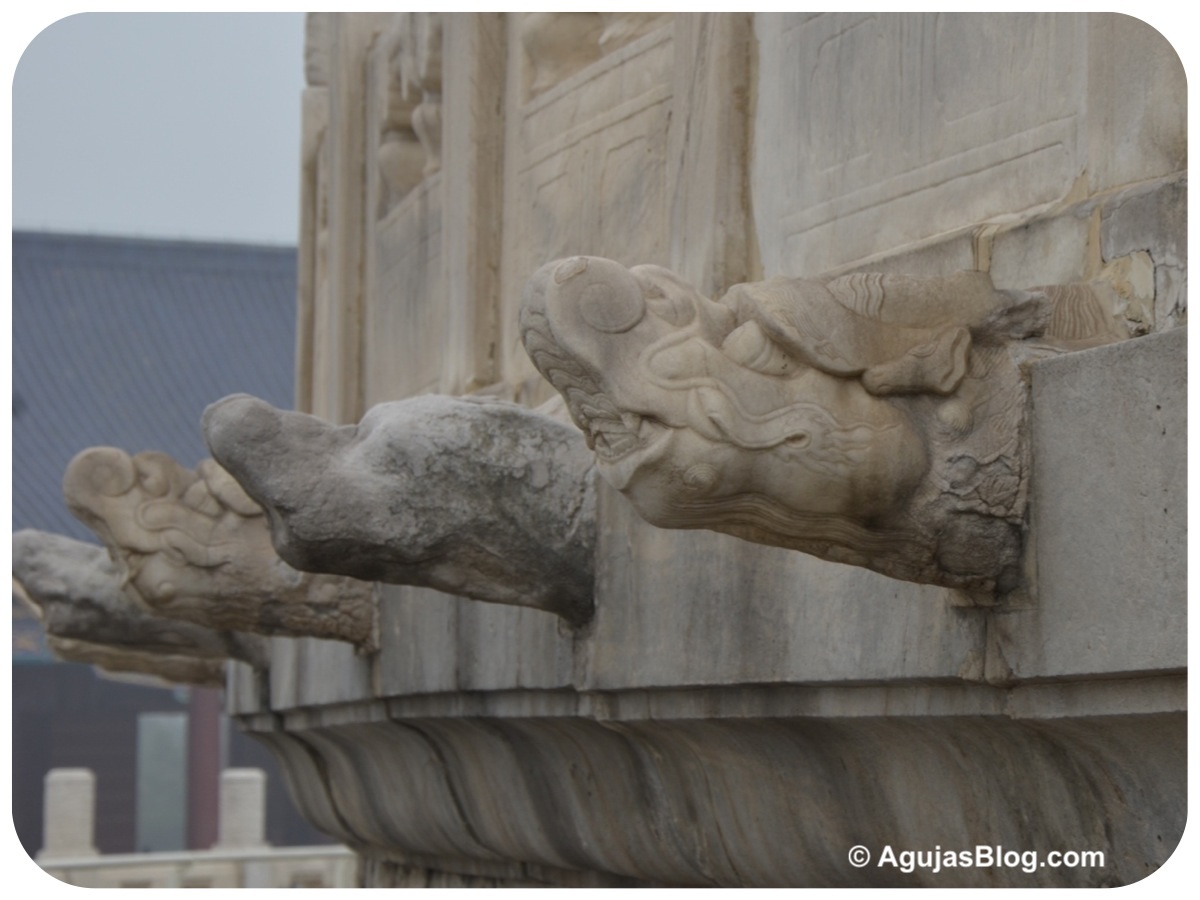
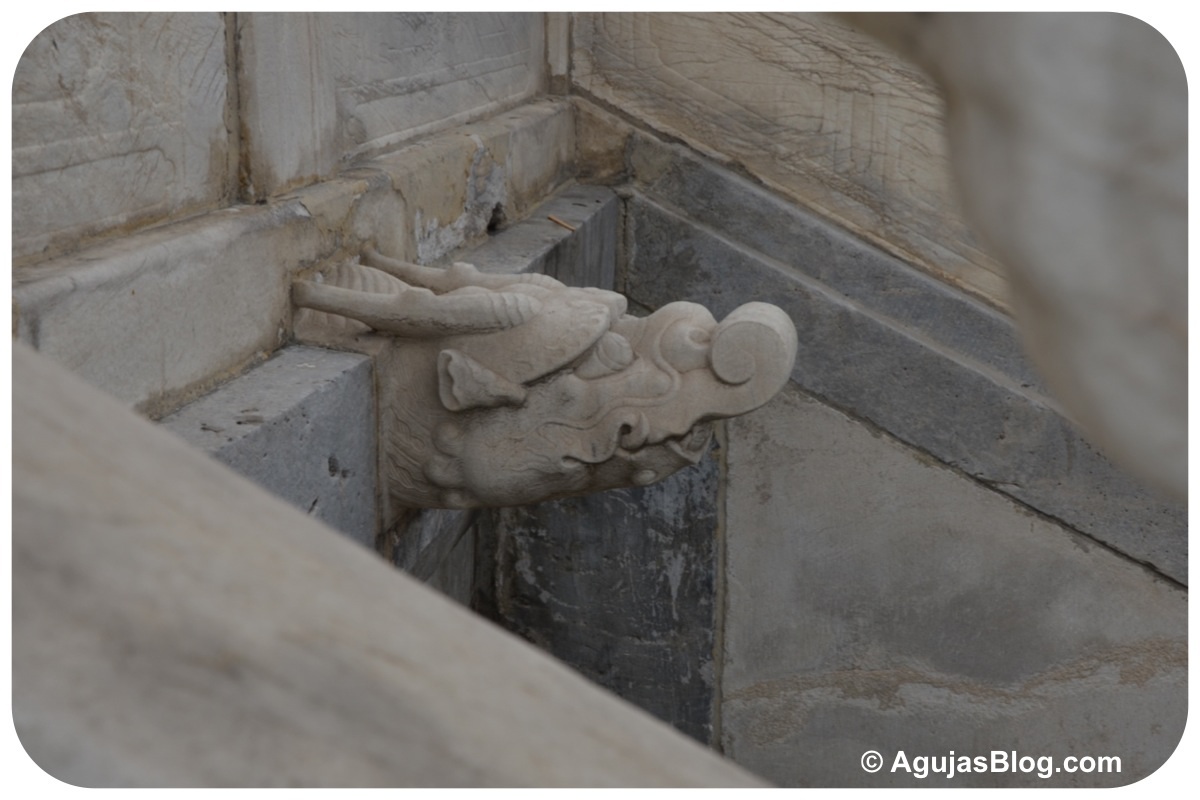
Water Drainage - Hall of Prayer for Good Harvests

View from Hall of Prayer for Good Harvests

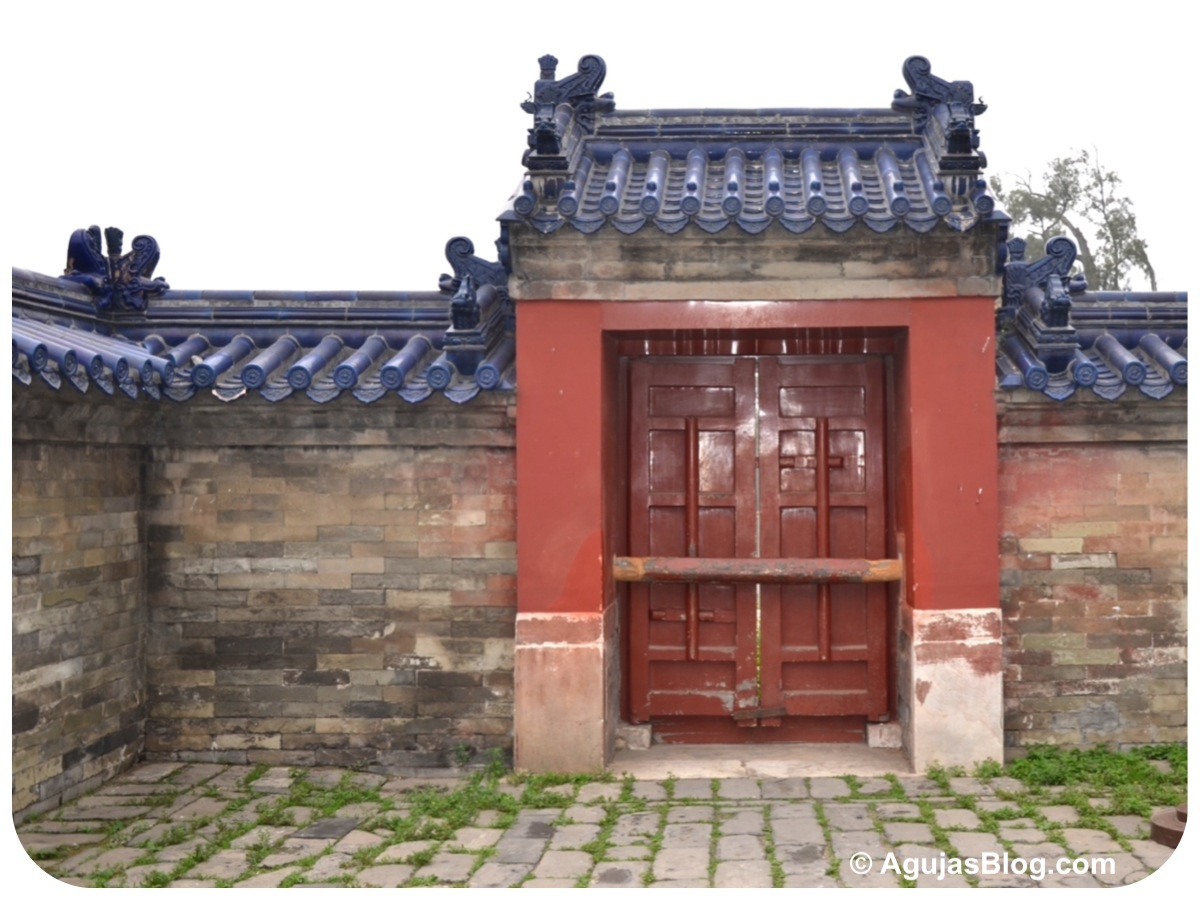
Near the Hall of Prayer for Good Harvests, there is a Seventy-Year-Old Door. According to the sign, it is so named because it was built for Emperor Qianlong as a shortcut to the ceremony when he was 70 years old and in failing health. Out of concern that his sons would abuse the convenience, he decreed that only his offspring who had reached the age of 70 could use the door. No other emperor in the Qing Dynasty reached that age so he was the only person to ever use the door.

70 Year Old Door

Near the Seventy-Year Old Door.

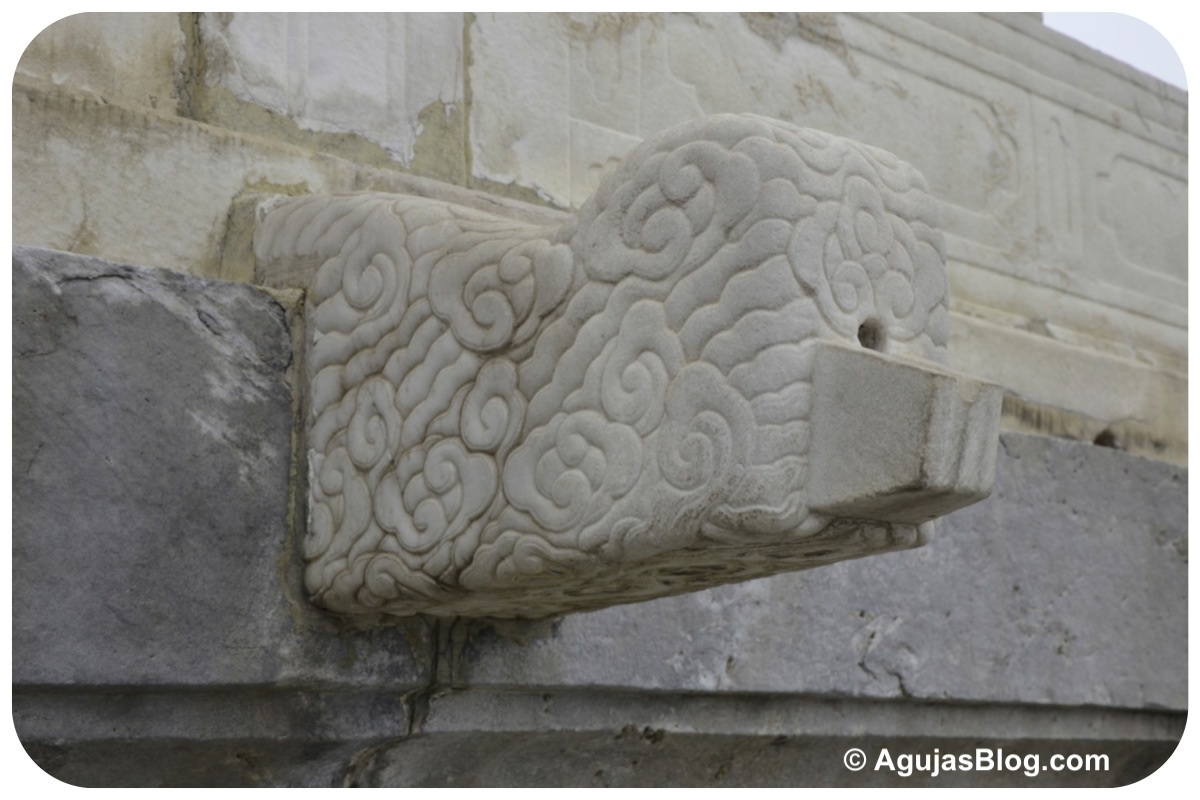
Detail of Water Drainage - Hall of Prayer for Good Harvests

Annex - Hall of Prayer for Good Harvests

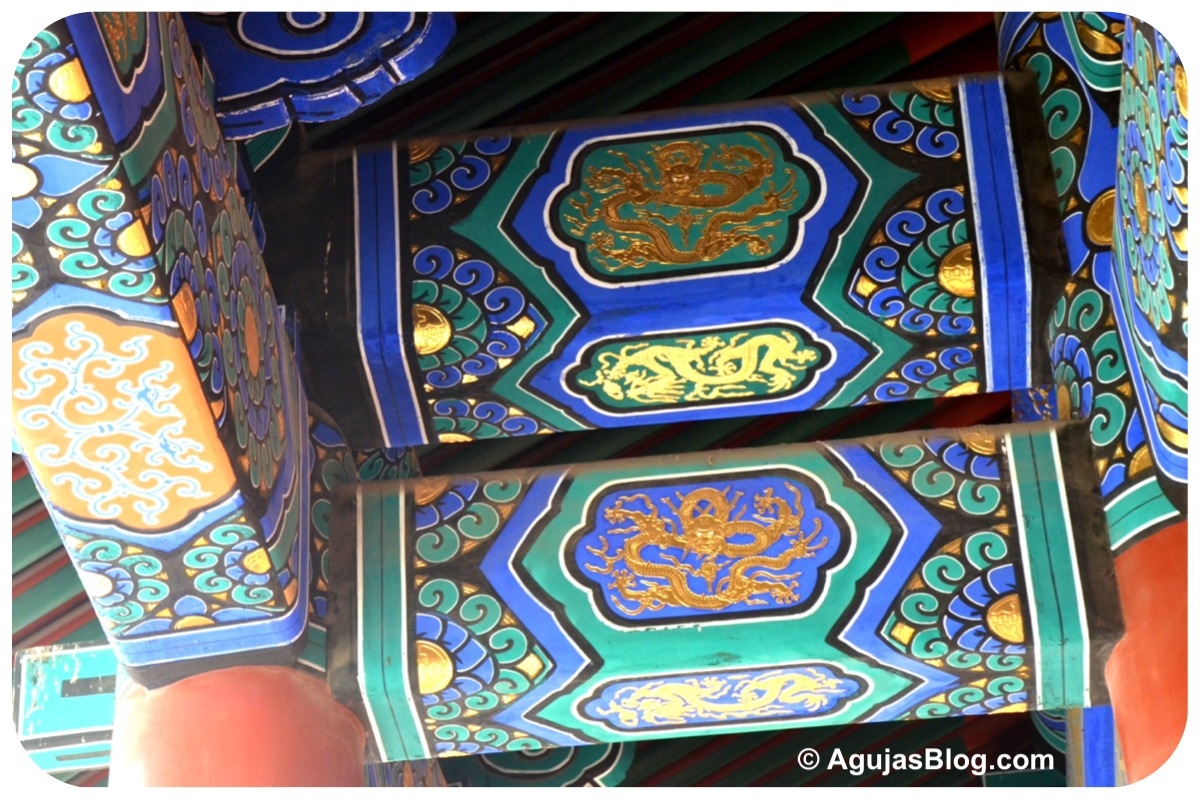
Colorful Beams - Temple of Heaven Park

Flower Detail Water Drainage - Hall of Prayer for Good Harvests

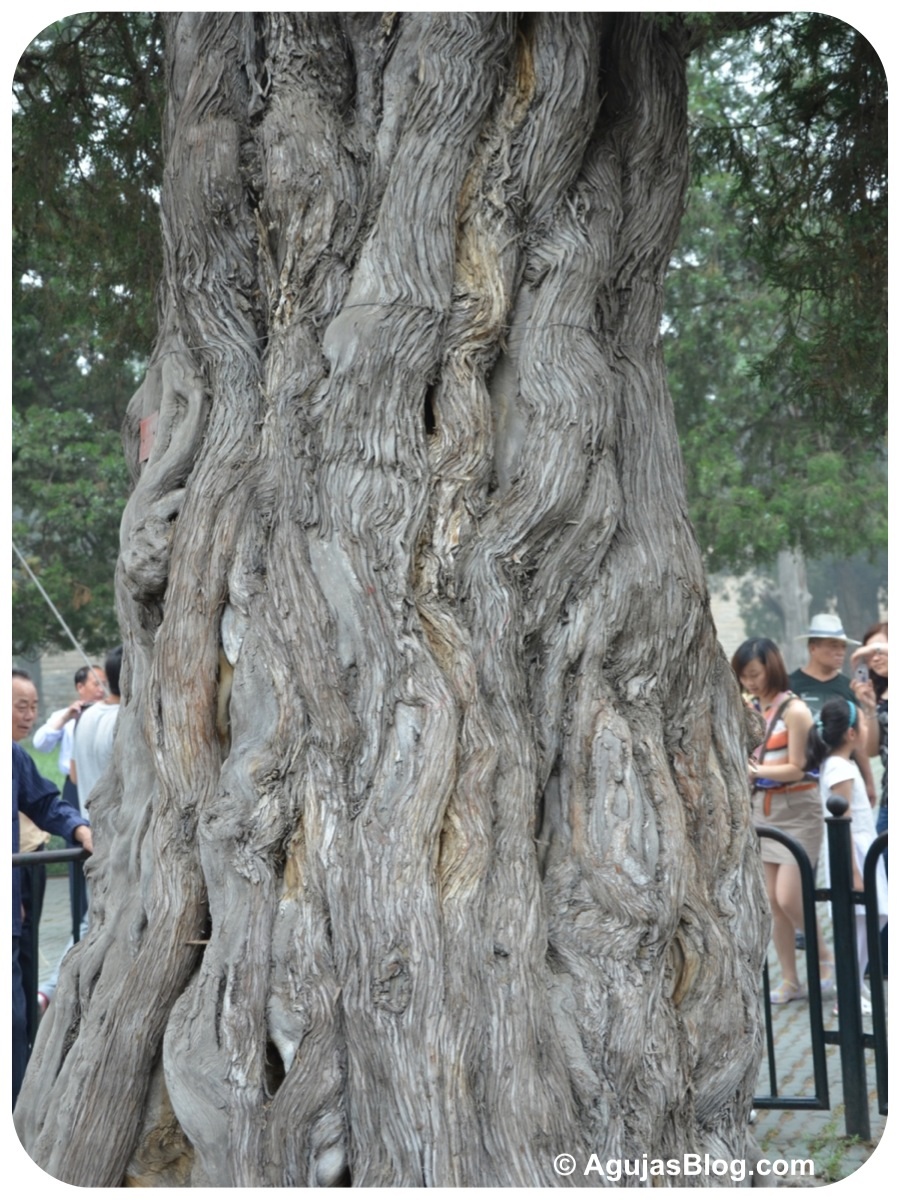
The Nine Dragon Juniper is over 500 years old. The trunk is covered with grooves that resemble nine dragons twisting around the tree, hence the name.

Nine-Dragon Juniper

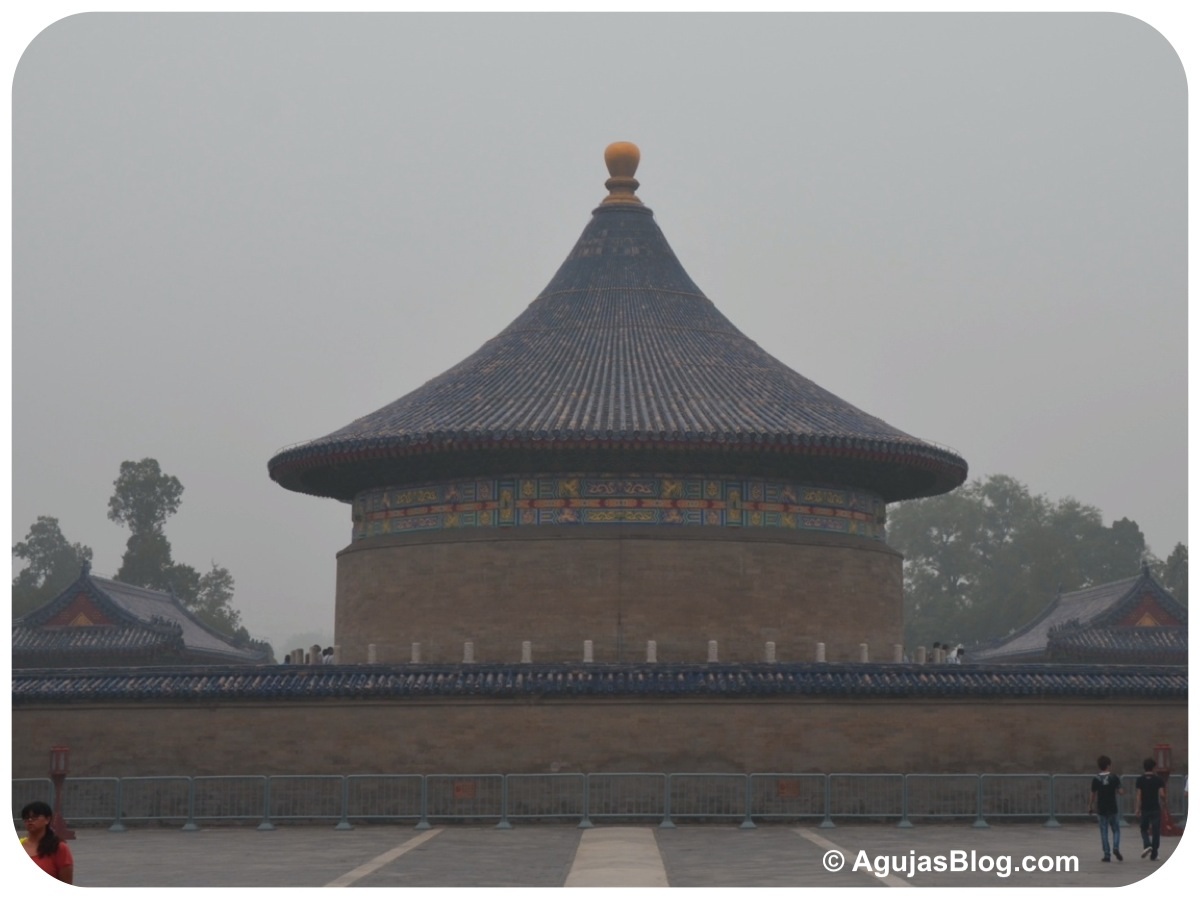
The next stop was the Imperial Vault of Heaven. The surrounding wall is called Echo Wall because of the acoustics.

The Imperial Vault of Heaven

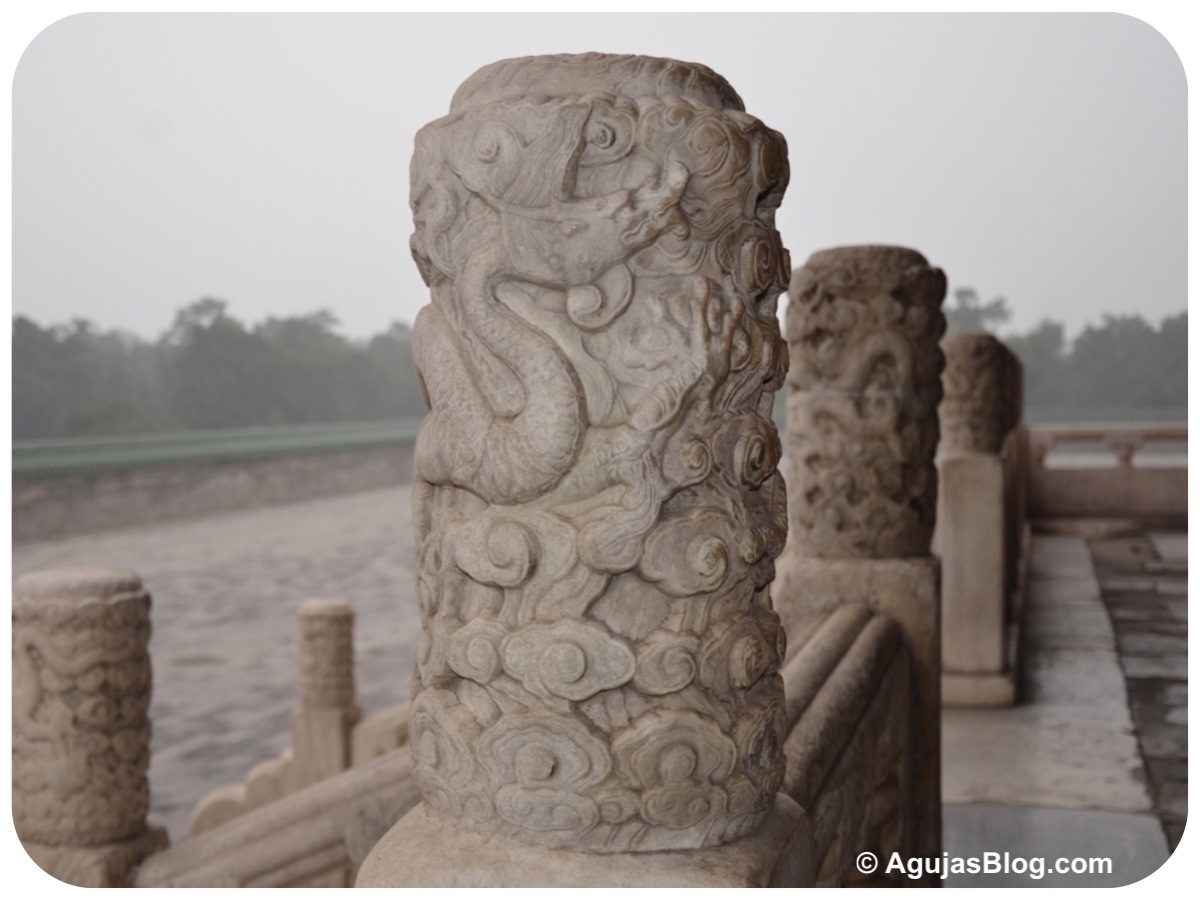
Sculpted Stone - Temple of Heaven Park

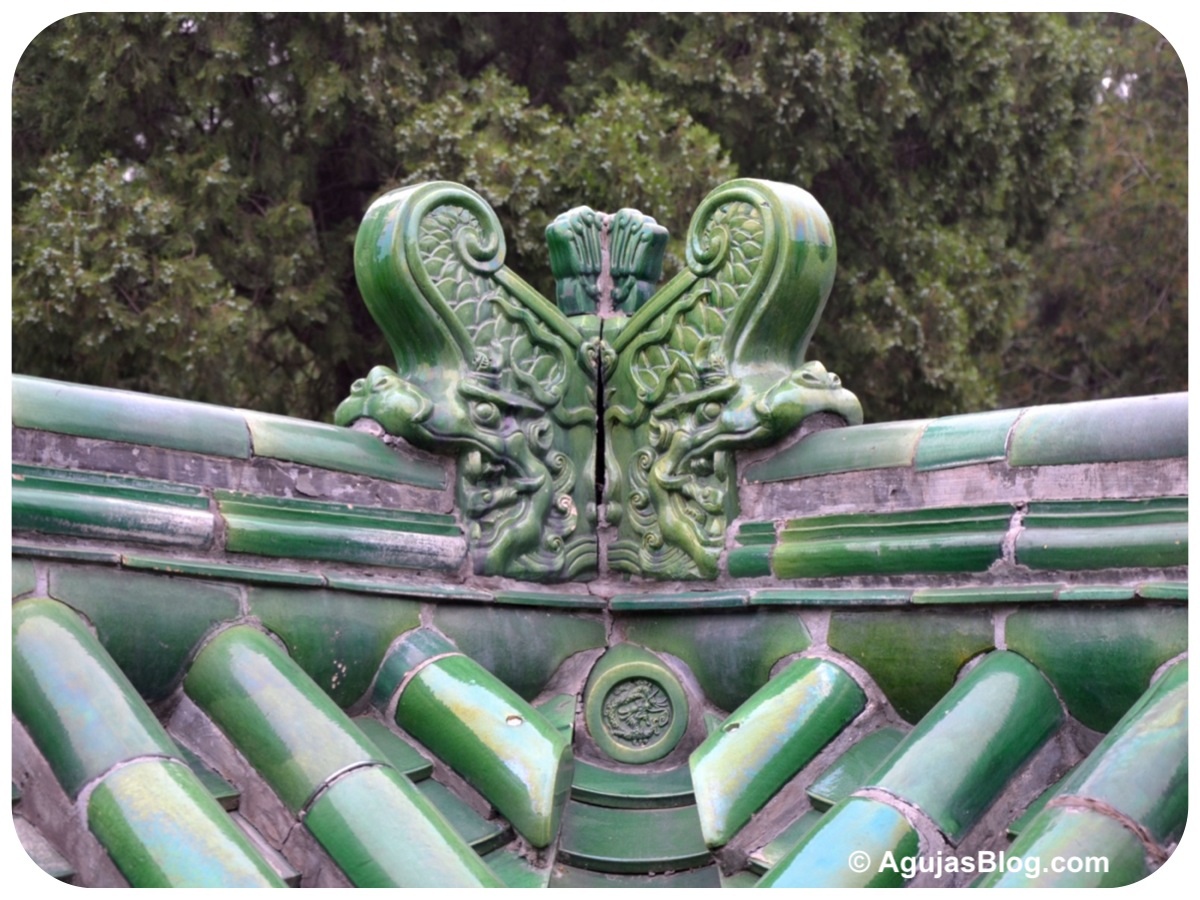
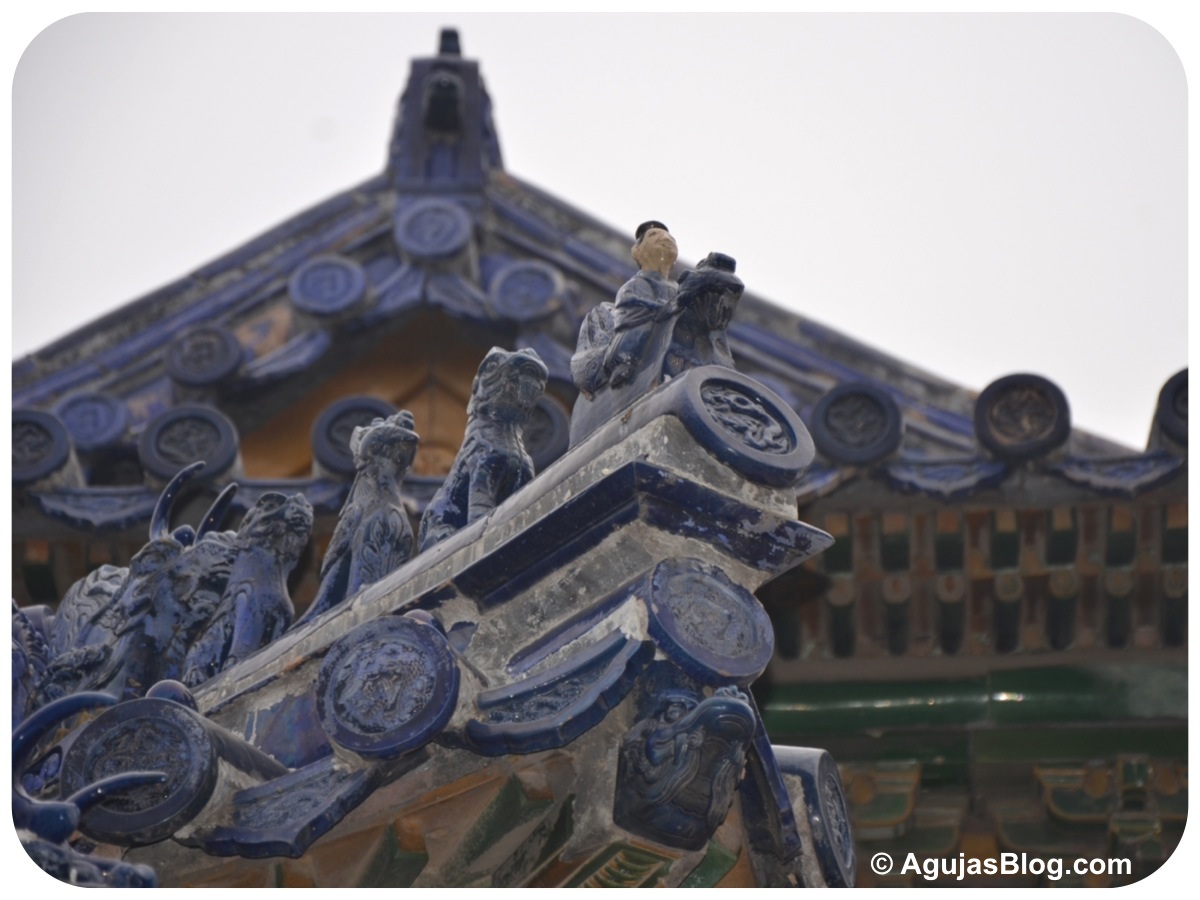
Roof Detail - Imperial Vault of Heaven

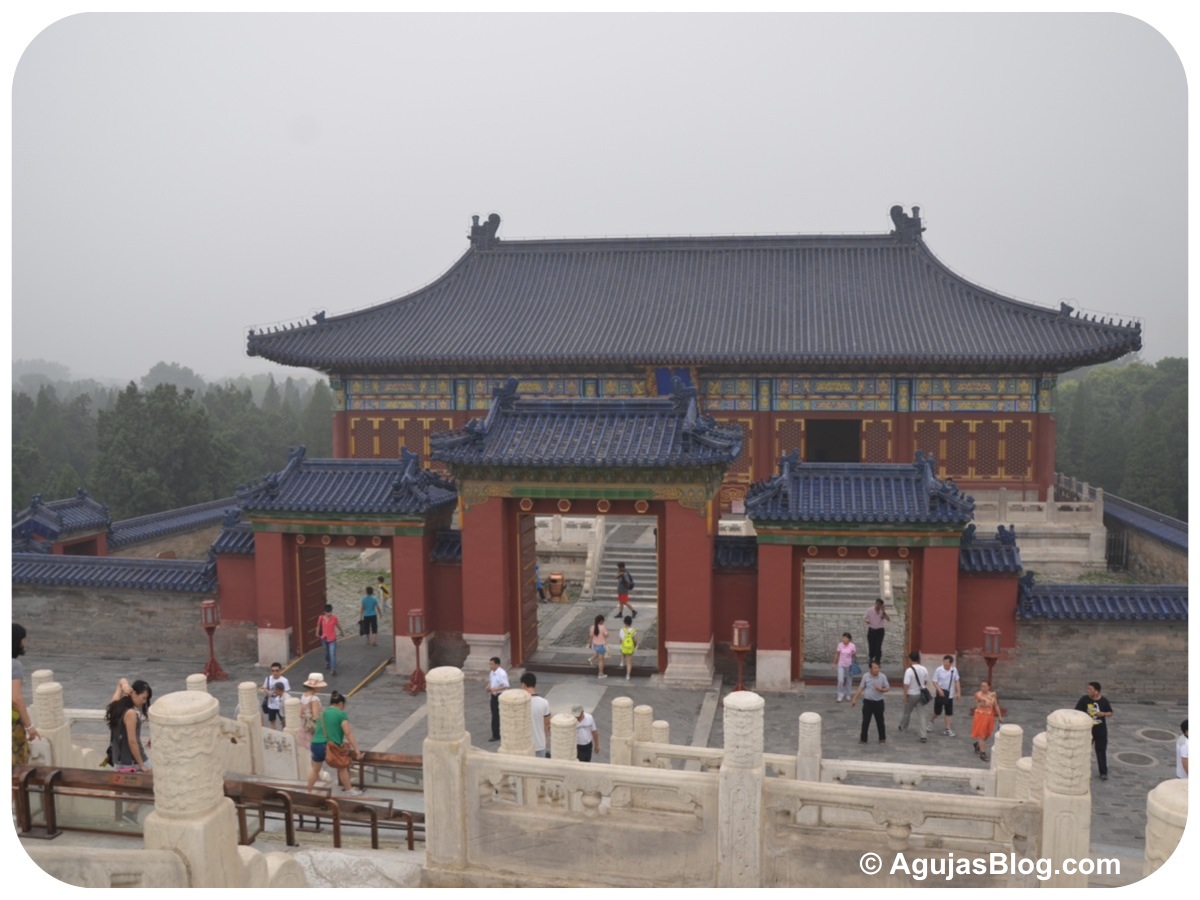
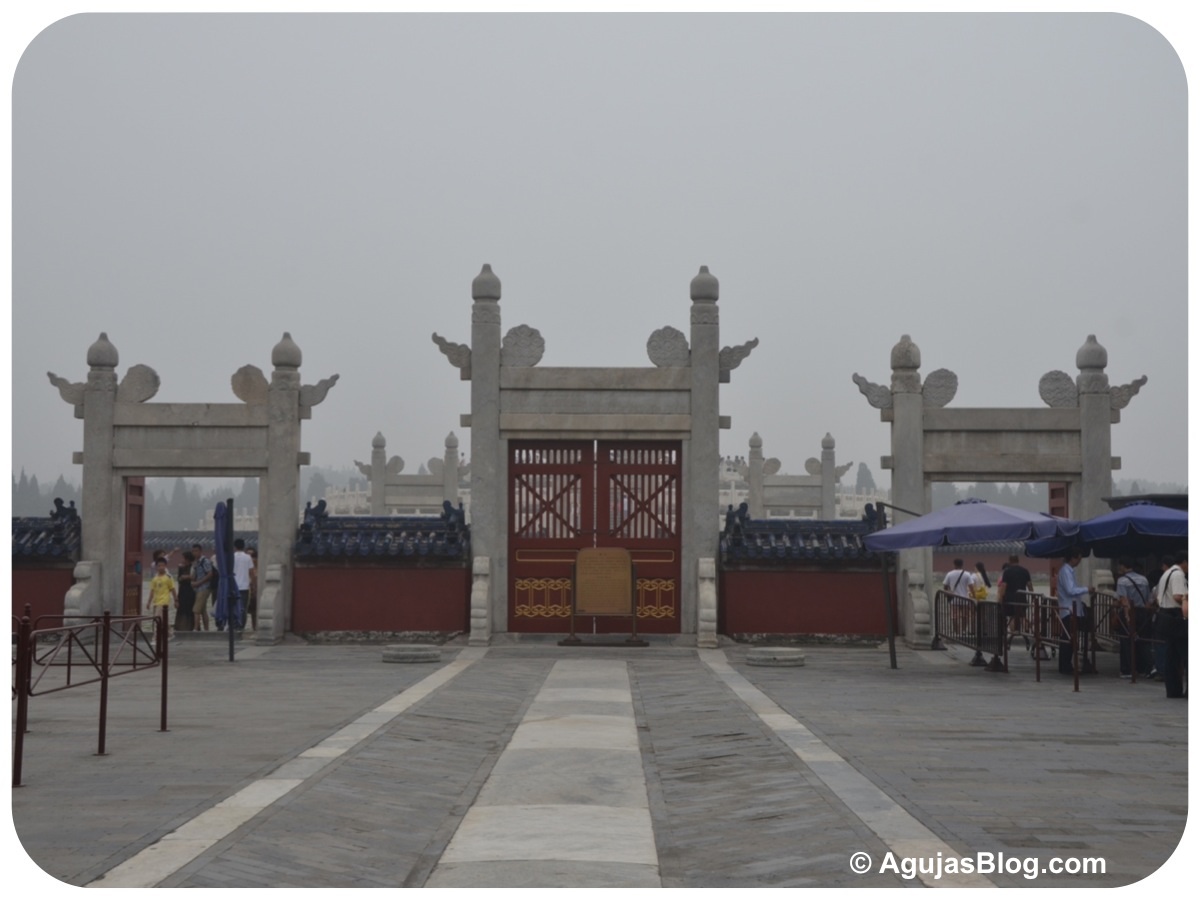
The last stop was through these gates to the Circular Mound Altar, which is the actual temple of heaven as this is where the emperors sacrificed to Heaven. By then, there were many visitors and it was impossible to get a good photo of the Heavenly Center Stone.

En Route to the Circular Mound Altar

After walking the length of the park, we were ready for a nap.

Saturday Afternoon at the Lama Temple

Walking the grounds of the Lama Temple offered a respite from the busy week. Known as the “Palace of Peace and Harmony,” the Lama Temple (Yonghegong) was originally the home of an emperor. It is a Mongolian-Tibetan temple and monastery dating back to the late 16th century.

Click on any image for a large-screen view.

The Lama Temple is located at 12 Yonghegong Dajie, Beixinqiao, Dongcheng District, Beijing, Yonghegong Lama Temple subway stop on Line 2.

Spinning Near Yashow Market

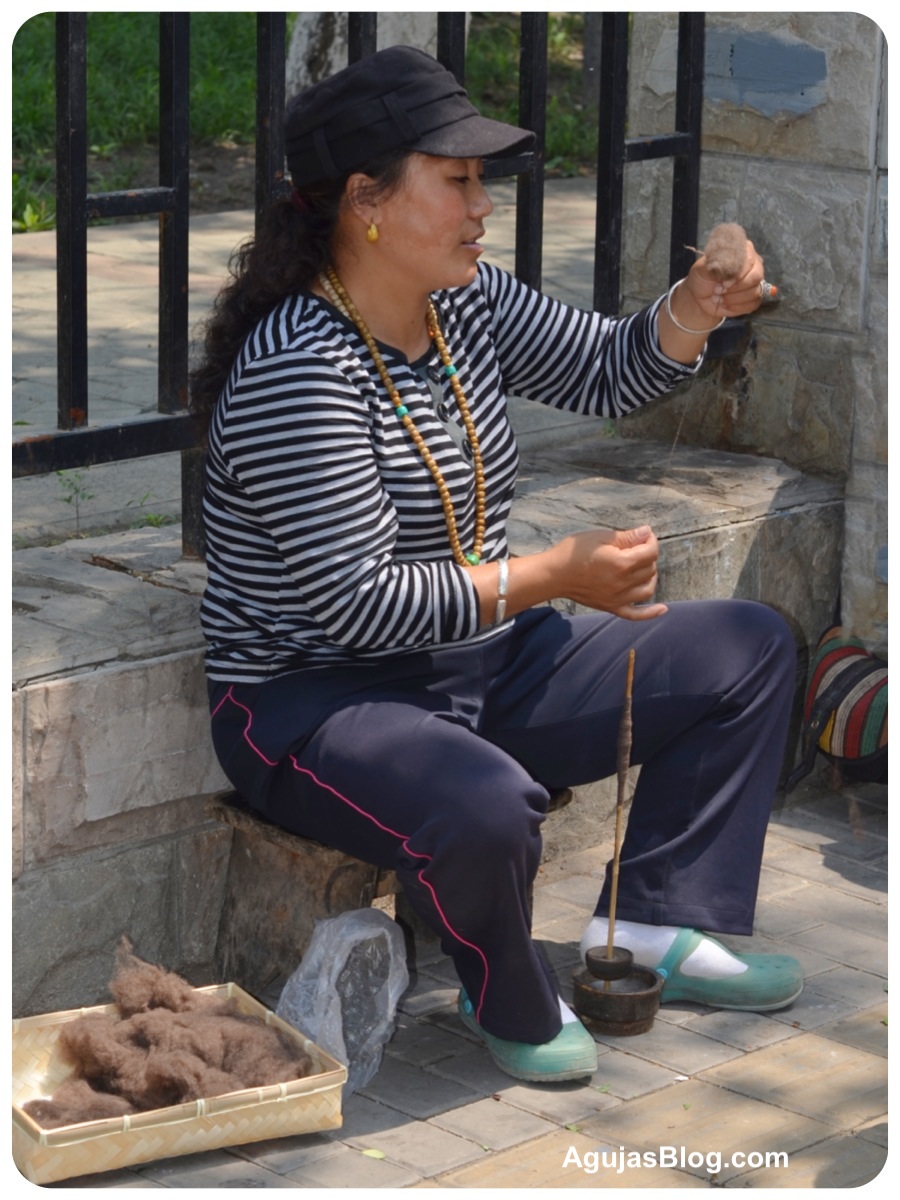
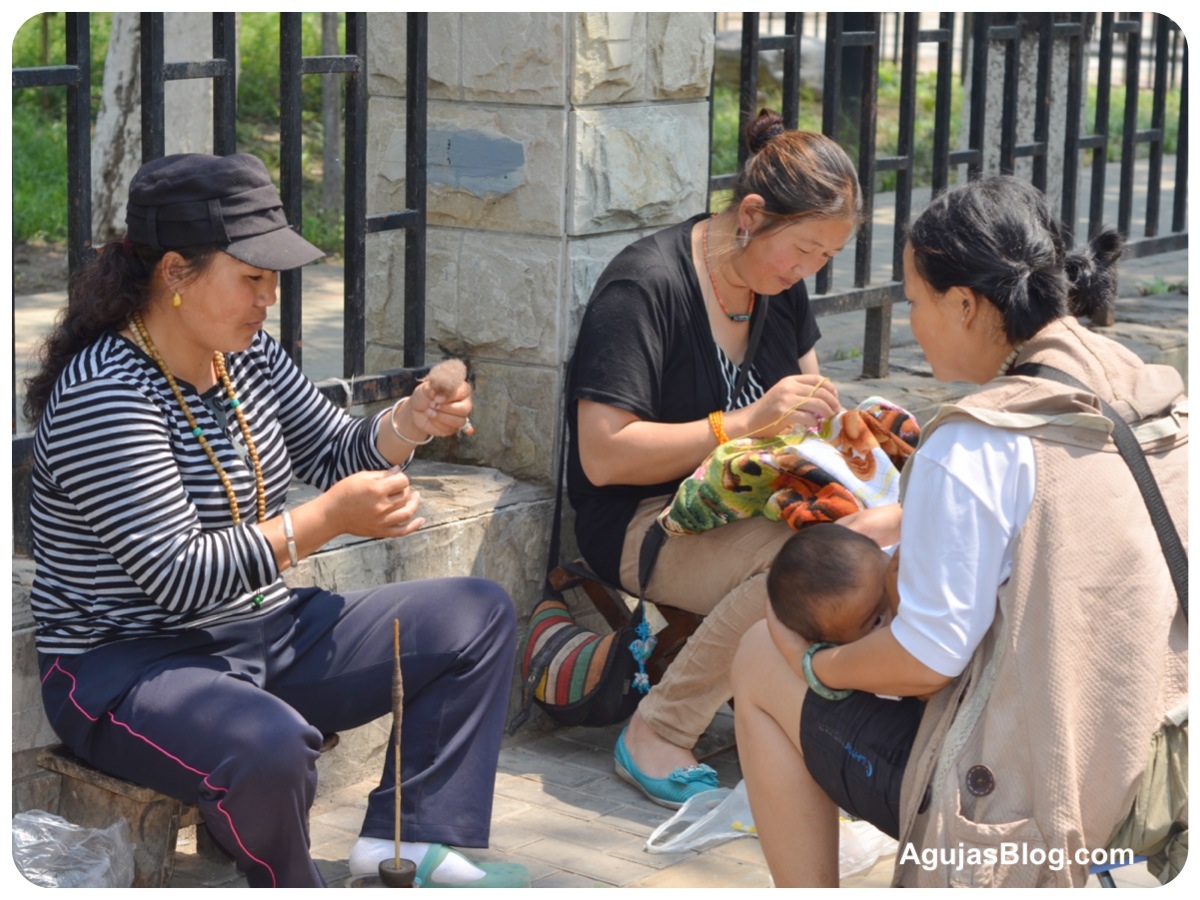
As I was walking towards the subway after a morning of haggling at Yashow Market, I saw this – a woman spinning wool!

Spinning at Yachow Market

I asked her if the fiber was 新羊毛 (xīn yáng máo), the Chinese term for wool. She smiled and nodded.

Spinning and Cross-Stitching at Yachow Market

Her companion had a thick yellow thread or yarn on the floor beside her. As she talked, she continued working on what looked like a cross-stitch landscape. I may have to carry my WIP and a little stool with me so I can join these sidewalk sessions. The ladies allowed me to take a few photos. Even the baby peeked into the camera!

Finding Yarn in Beijing

Work has pretty much consumed my life. I haven’t had time to knit, read or blog. There have been some very exciting developments though. I am at the starting point of a three-month stint in Beijing. The husband and the boys have been very supportive but I miss them, and it’s only been a week! The plan is for them to visit in mid-June. I hope to know my way around better by then.

On my first weekend here, I ventured over to the Silk Market. The old market has been modernized with each vendor occupying a glass-walled store inside the building. There are aisles and aisles of leather bags, shoes, watches, silk scarves, electronics, pearls, costume jewelry, and the regular assortment of Chinese bric-a-brac. The most important part of the Silk Market experience is the haggling. No matter how high the starting price of an item, go as low as you can and be firm. They won’t sell it to you if they’re not making money off of it.

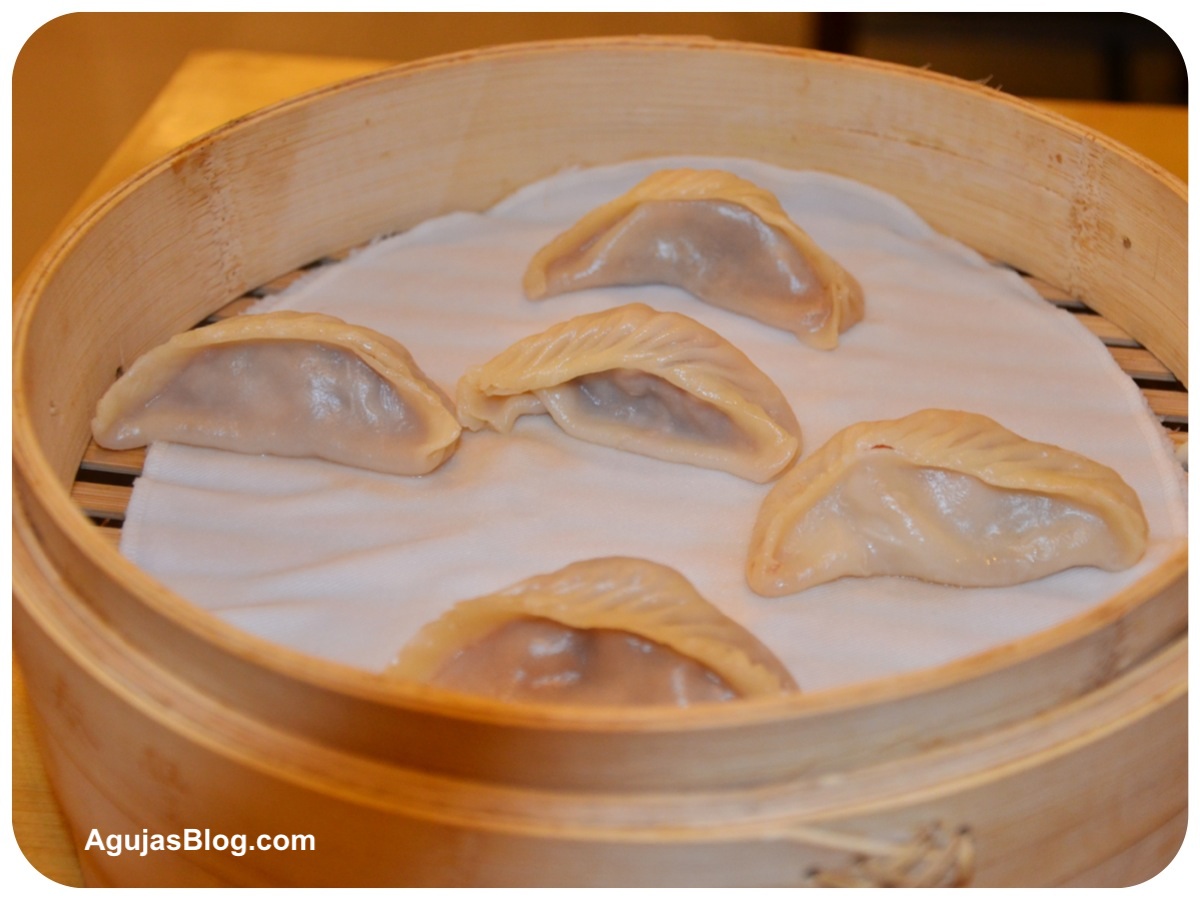
I have really enjoyed the food. I found a great dumpling restaurant nearby called Dintaifung. You can watch the chefs shaping the dough through a window. Each dumpling is filled with your choice of pork, shrimp, or vegetables and each holds a pocket of delicious broth inside.

Shrimp and Pork Dumplings

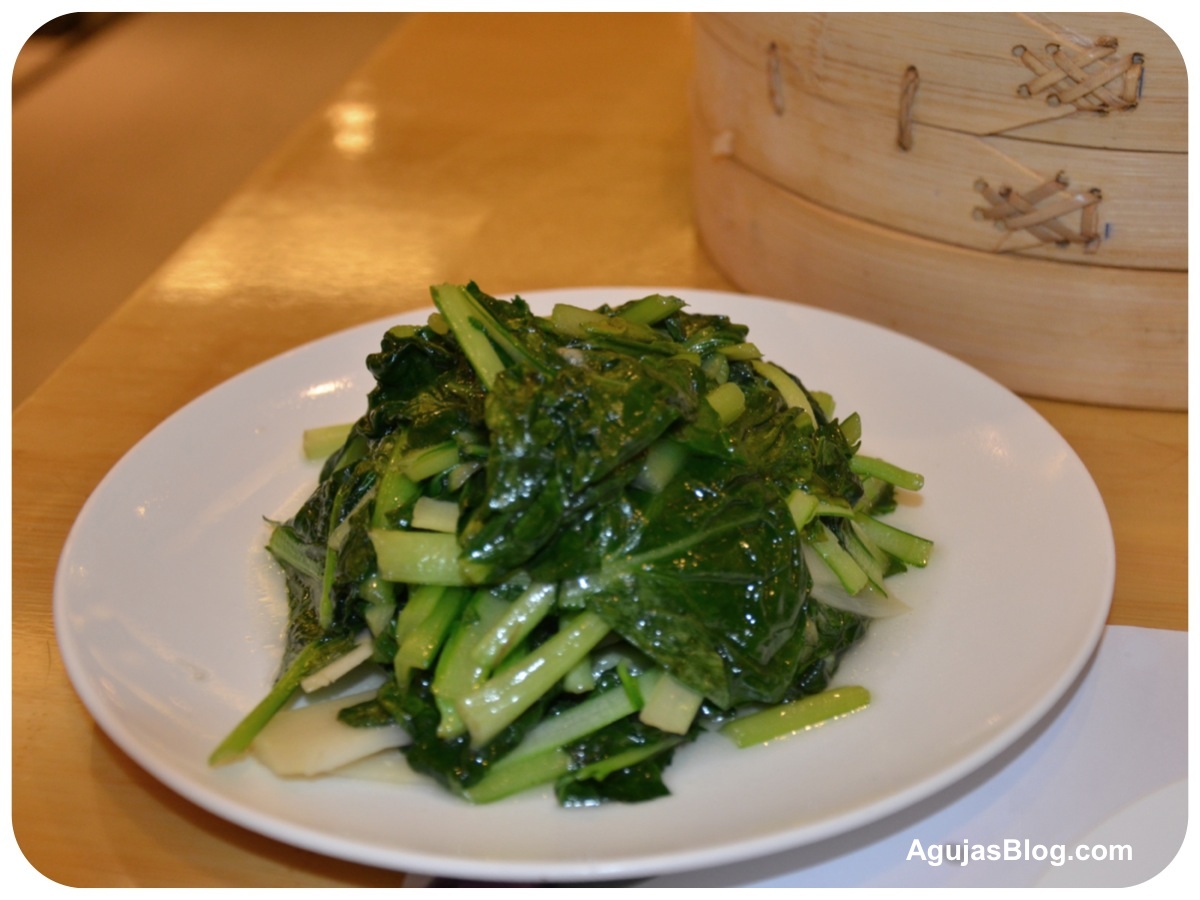
I’ve also become fond of these sautéed bitter greens and bamboo shoots.

Sautéed Bitter Greens

My next priority was scoping out yarn stores. In my search for yarn, I decided to brave the subway system. I had seen YouTube videos of the Beijing subway rush hour – mobs of people squeezing into the cars. Thankfully it was Sunday, and negotiating the subway system turned out to be fairly straightforward.

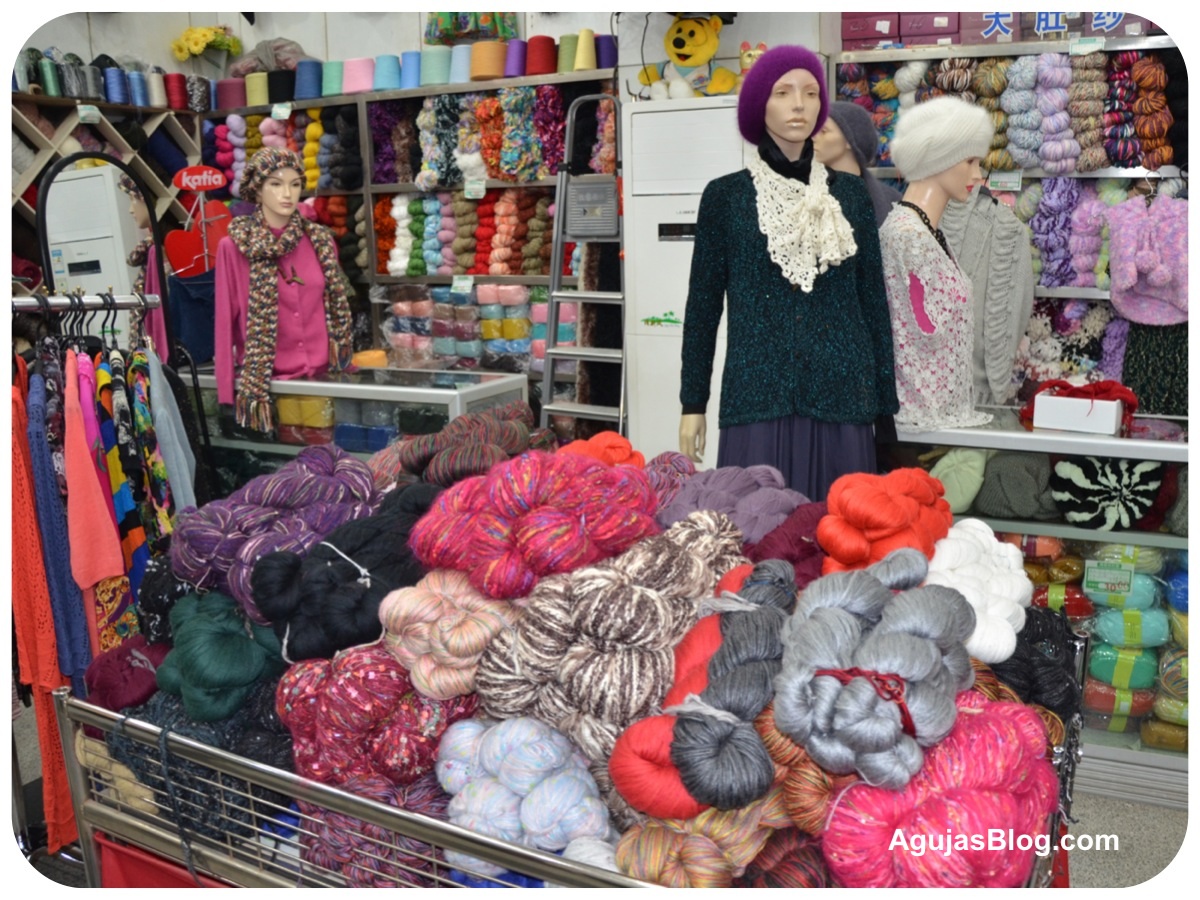
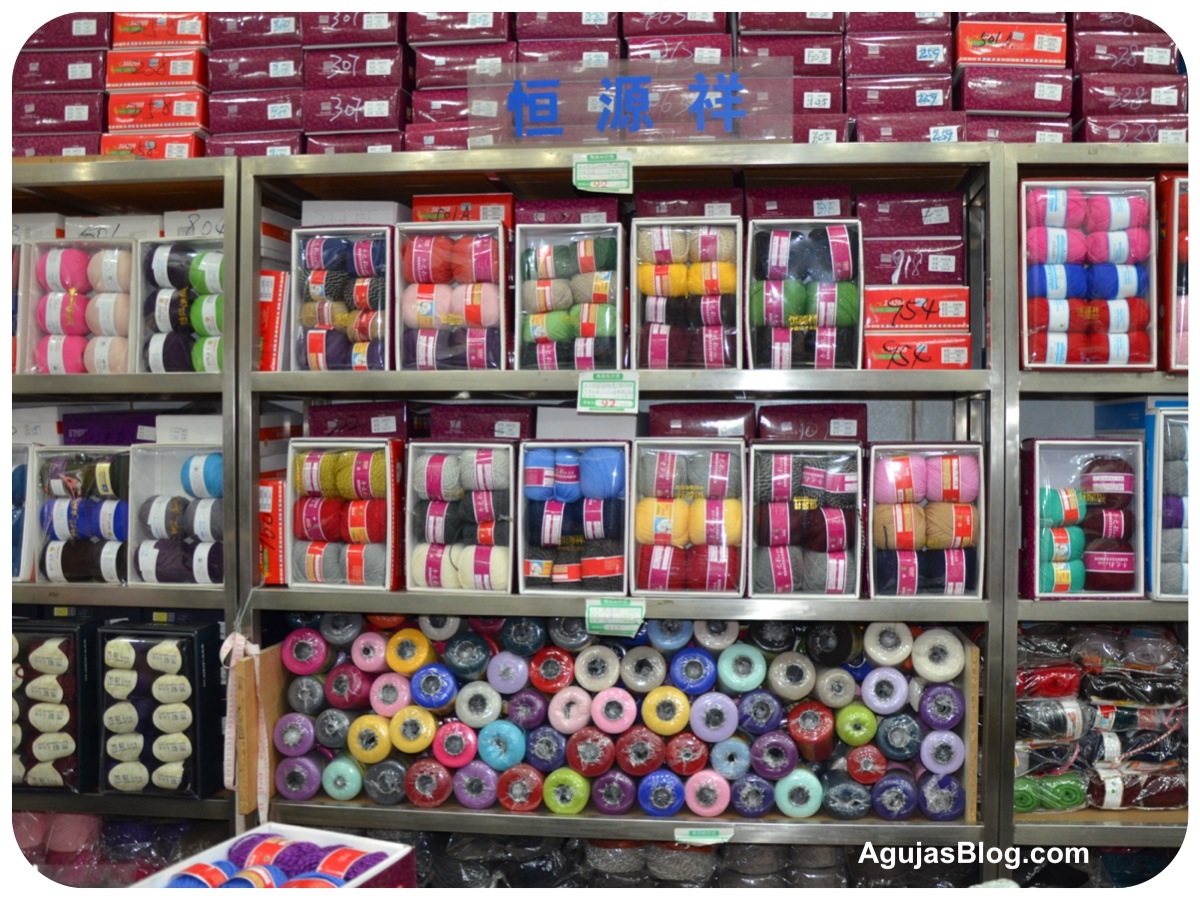
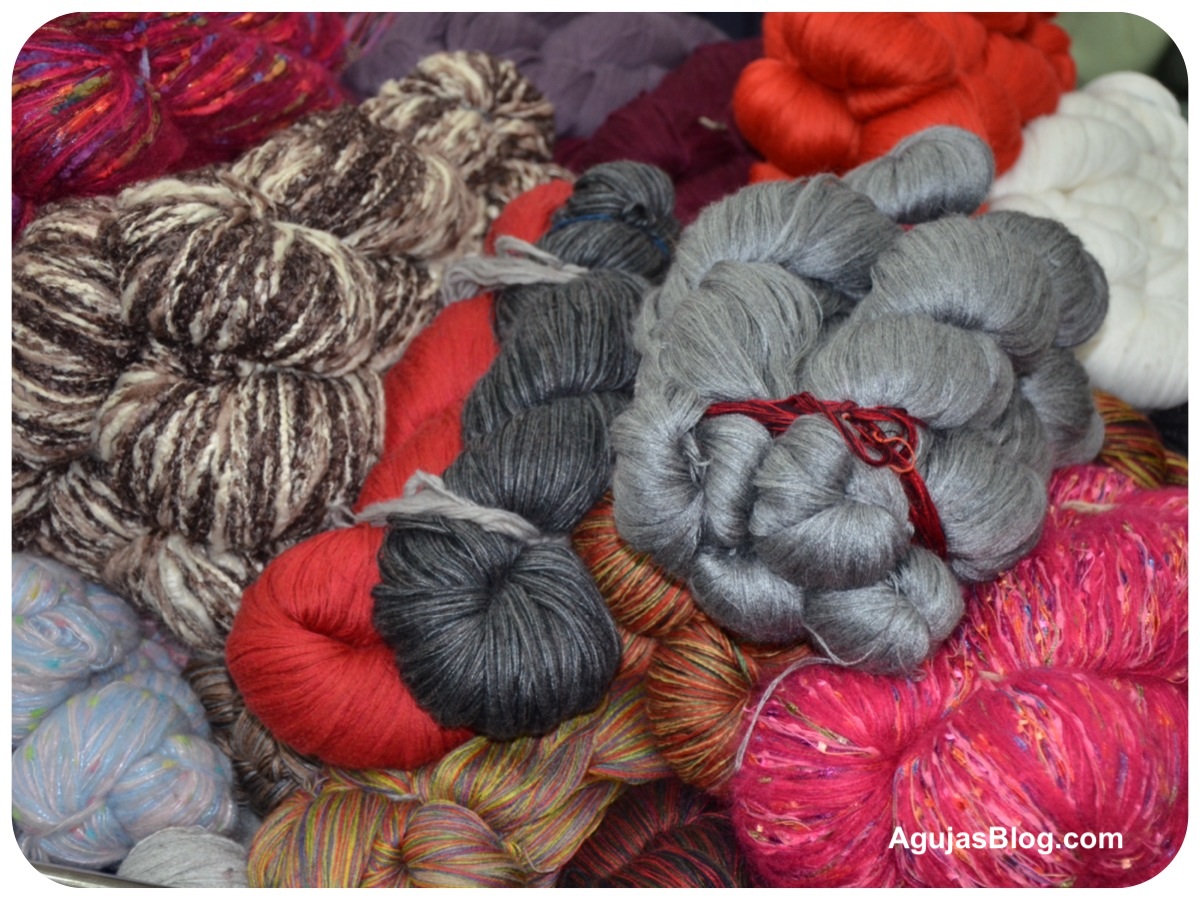
I exited the subway at the Dengshikou exit. Initially I walked the wrong way but a kind soul pointed me in the right direction. The Wansha Cashmere store is located off of Dongdan North Street, about three blocks north of Jinbao Street. The address is 14-2 Dengshikou Street. The store isn’t very large and you sort of have to be looking for it. Inside, it was stocked floor to ceiling with yarn. They carry wool, cashmere, mohair, cotton, camel and novelty yarns.

Wansha Cashmere 1

Wansha Cashmere 4

The women were very helpful and let me browse to my heart’s content and even snap a few photos.

Wansha Cashmere 2

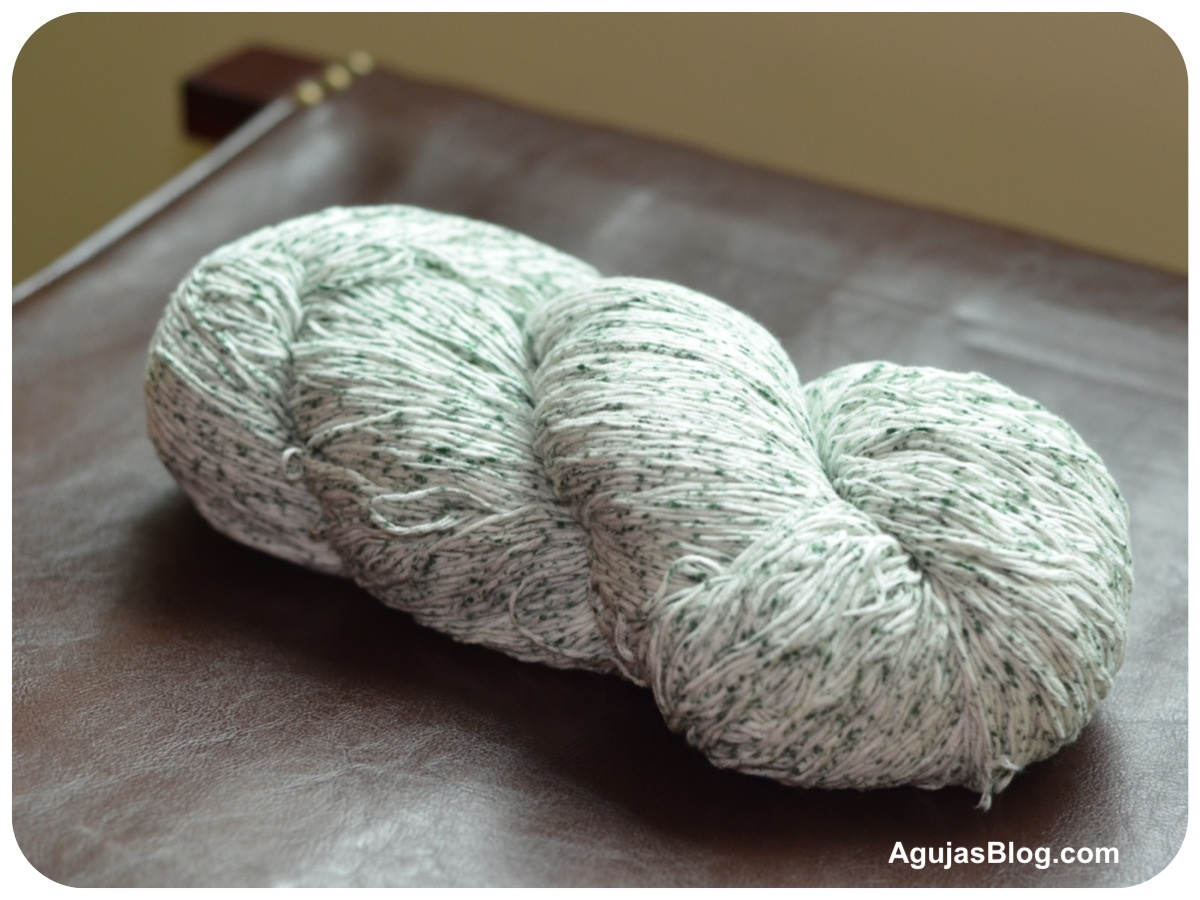
Here are my purchases. First, a large hank of cotton yarn. I really liked the green speckled look. It sort of reminds me of a robin’s egg except in green. The price was determined by weighing the yarn on a scale.

Cotton from Wansha Cashmere

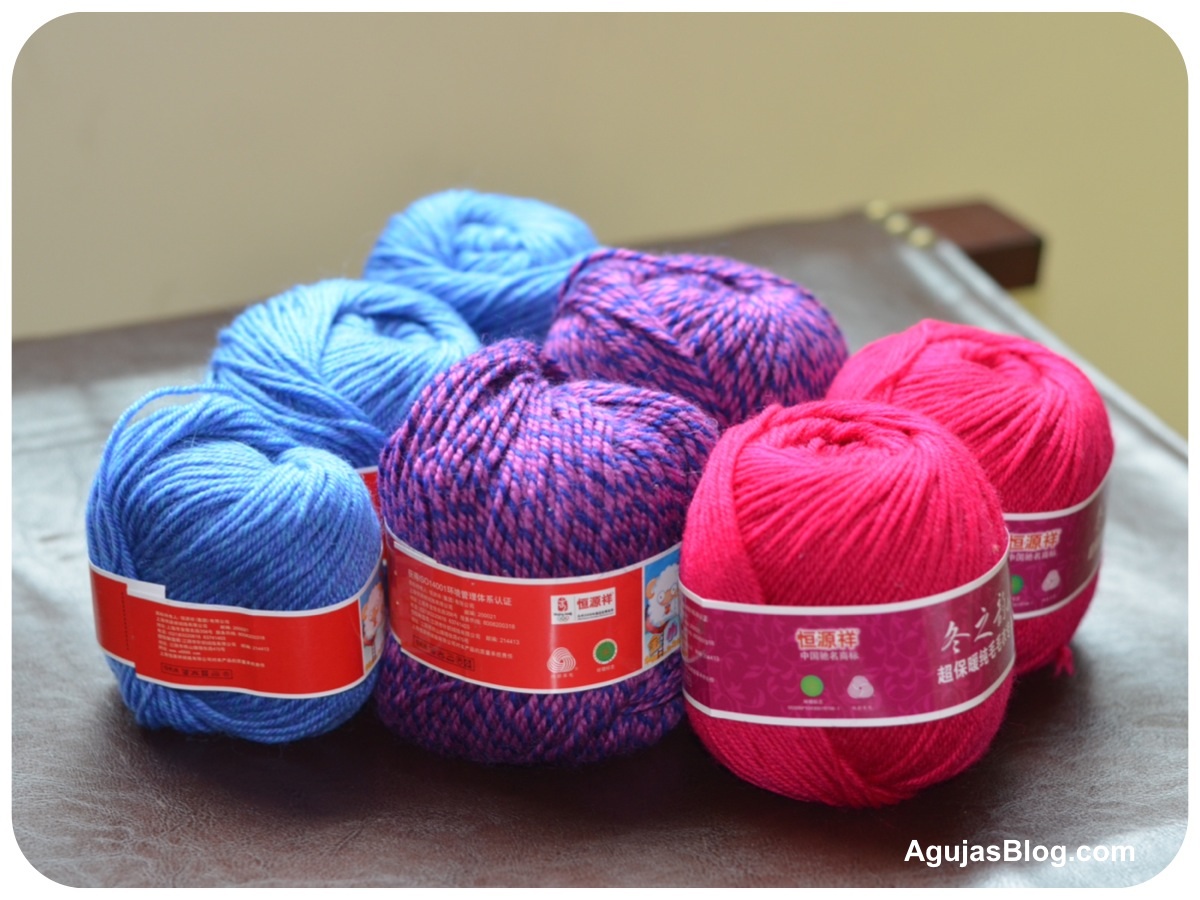
I also picked up these bright balls of wool yarn. Some are 50 gram and some are 100 gram balls.

Wool from Wansha Cashmere

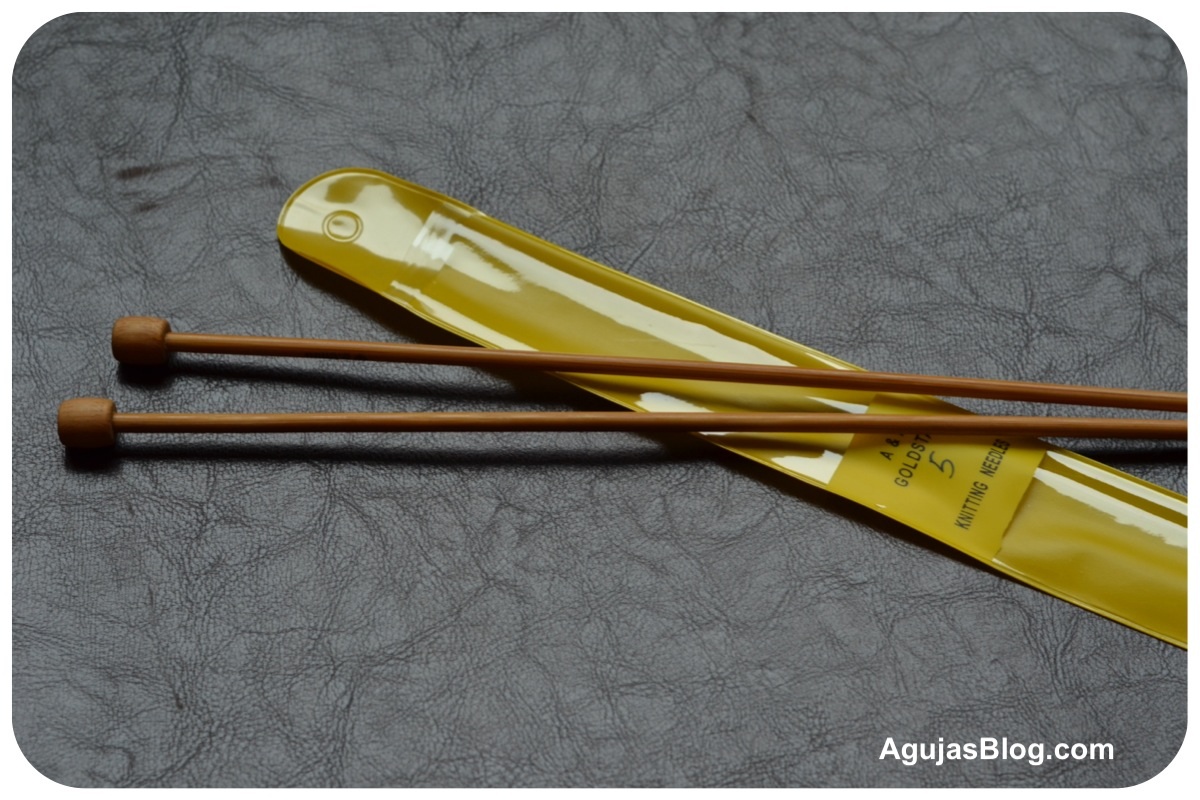
This set of knitting needles cost me 10 yuan or about $1.50 US.

Knitting Needles from Wansha Cashmere

All in all, it was a good first weekend in Beijing. Hopefully I’ll find time to do some knitting soon.