While I didn’t write out any knitting goals for the year, I knew that I should put my ever-growing stash to good use (besides just being beautiful to look at and soft to the touch).
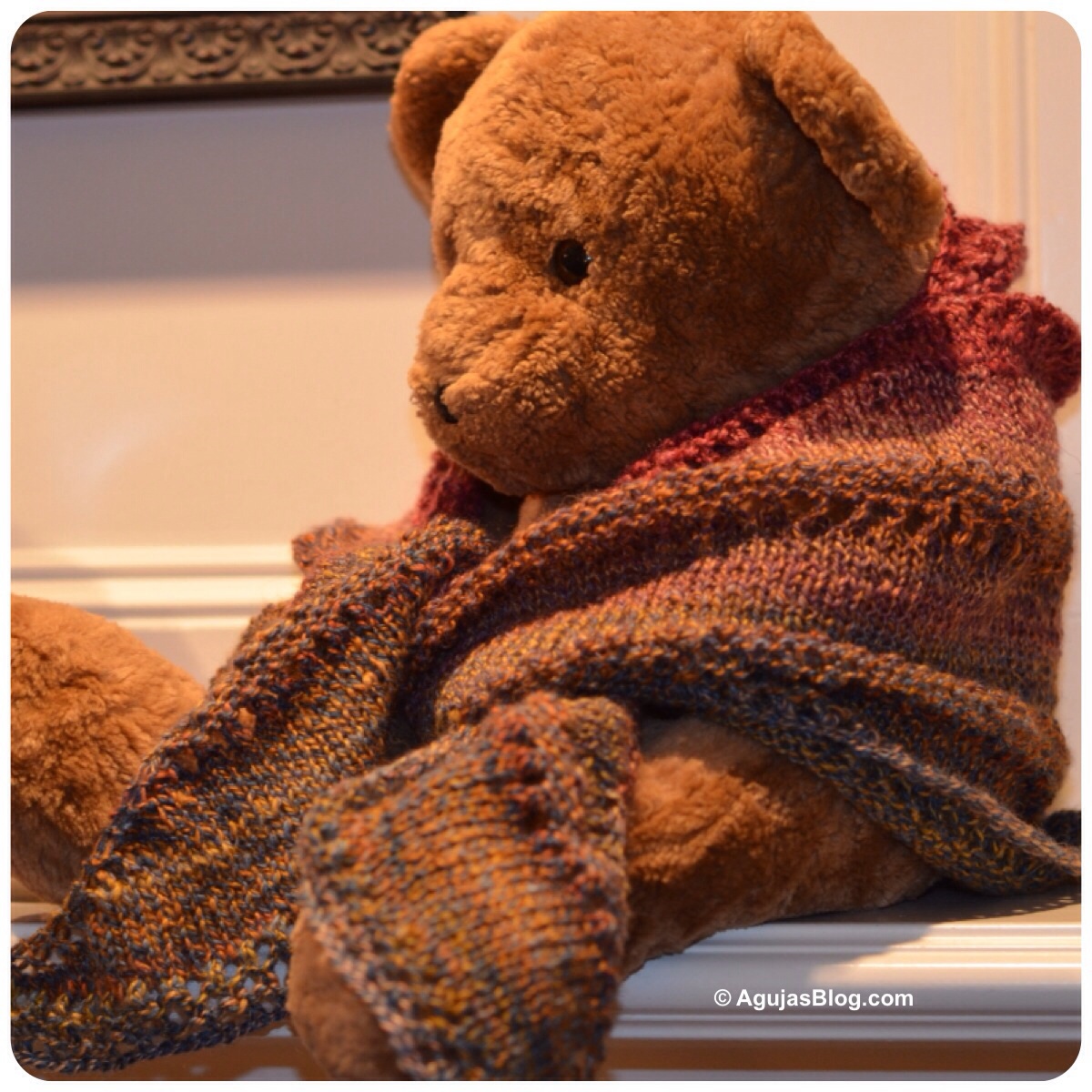
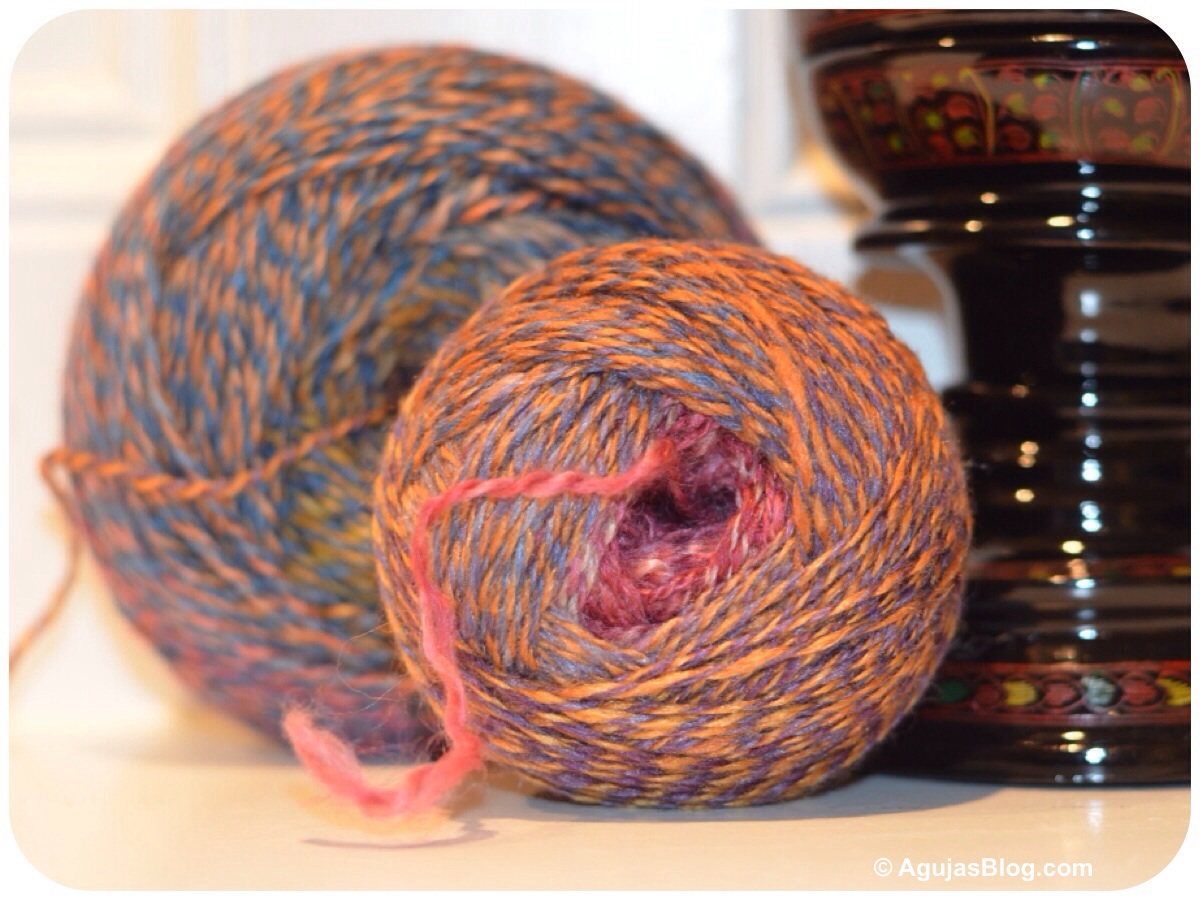
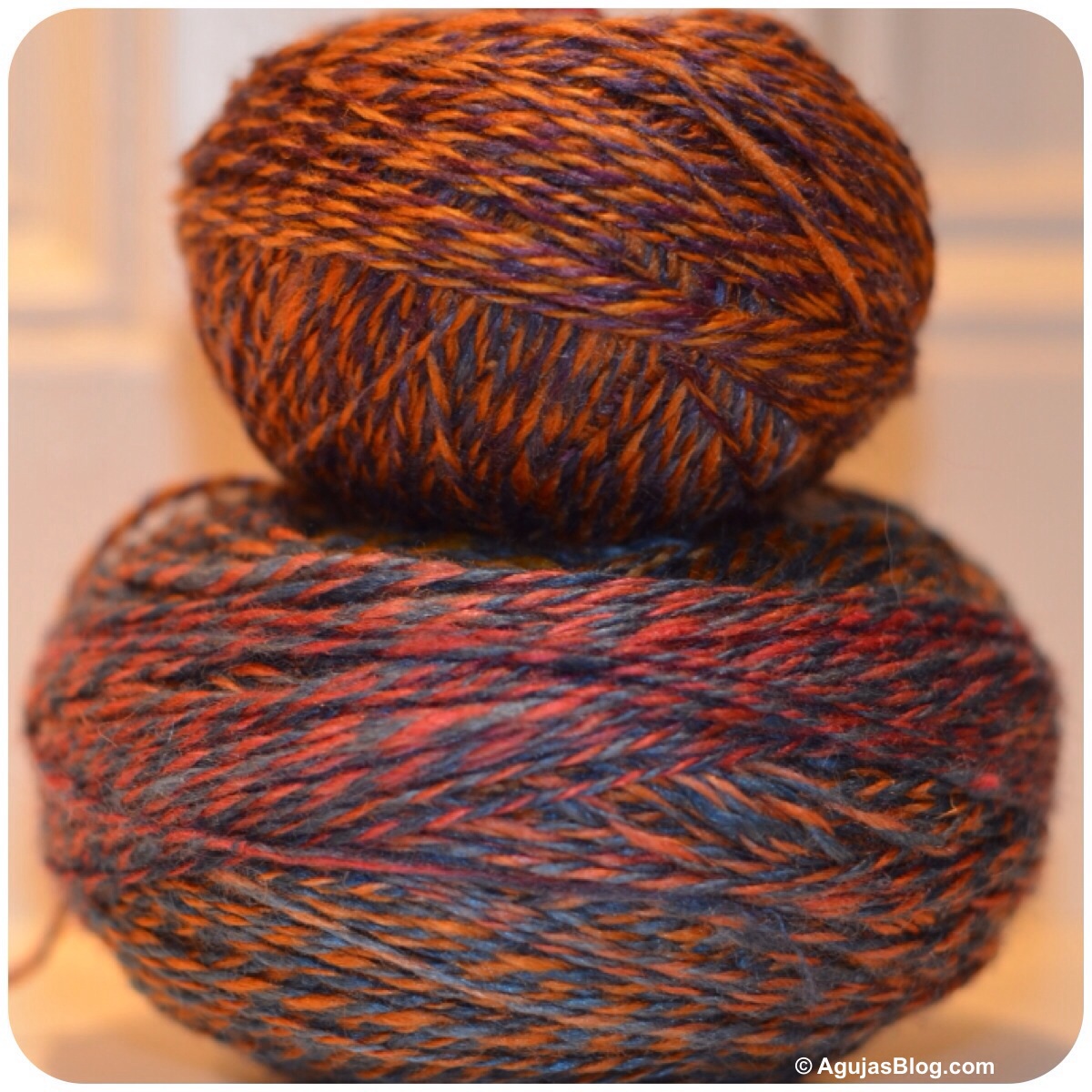
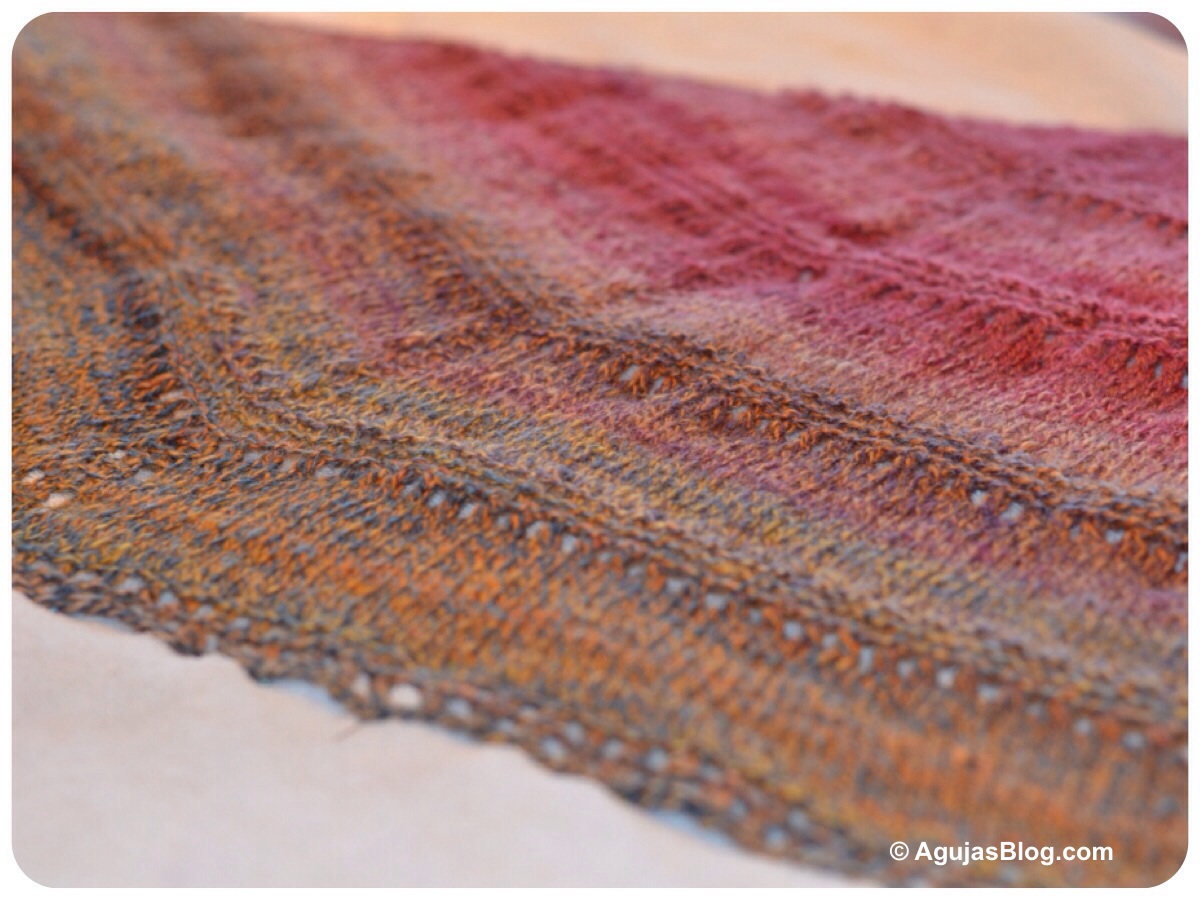
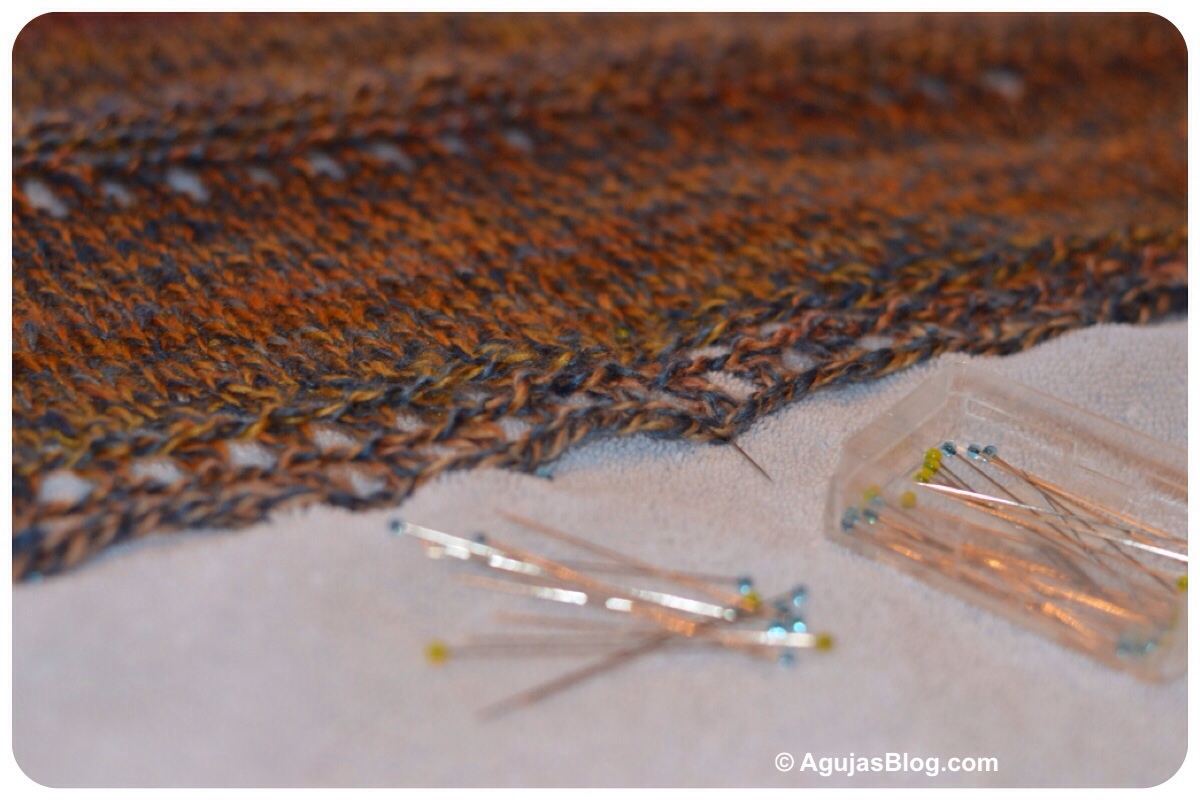
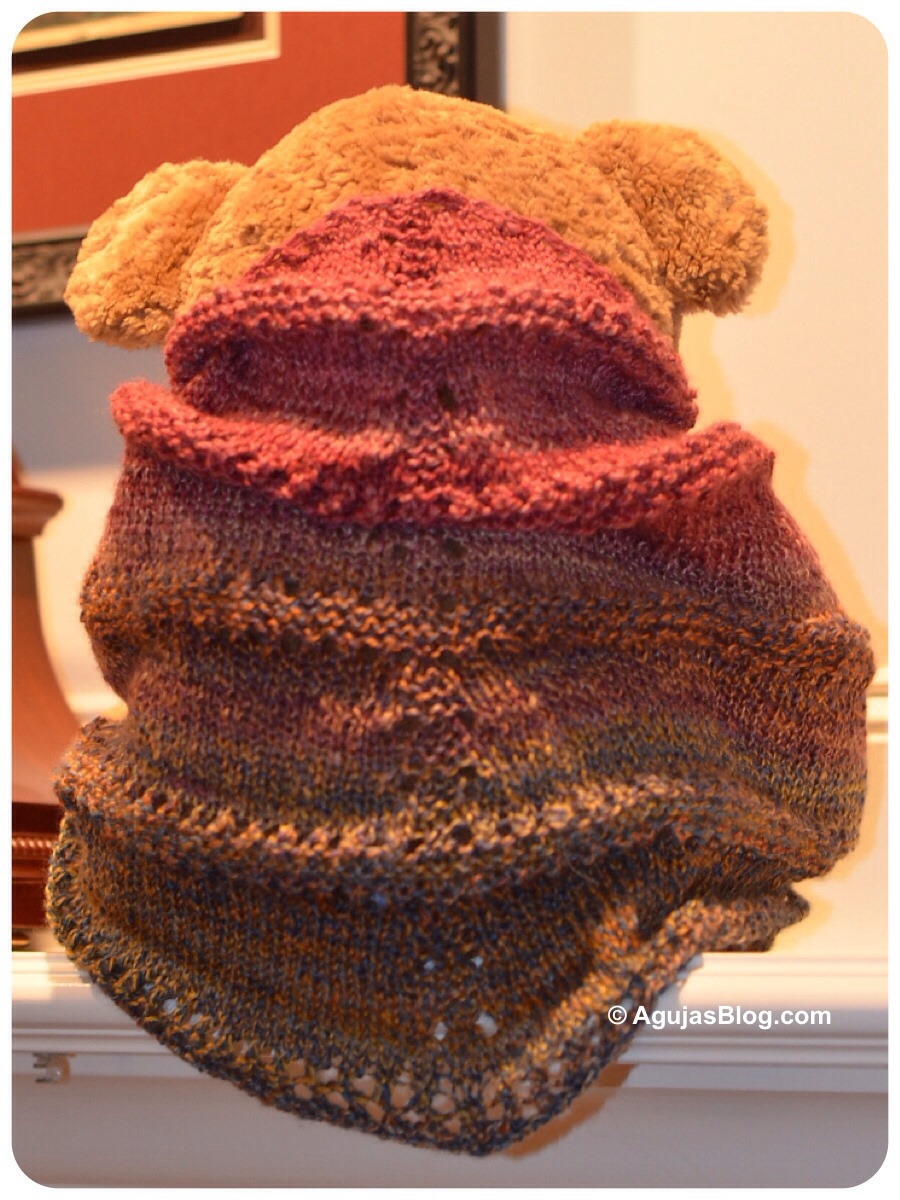
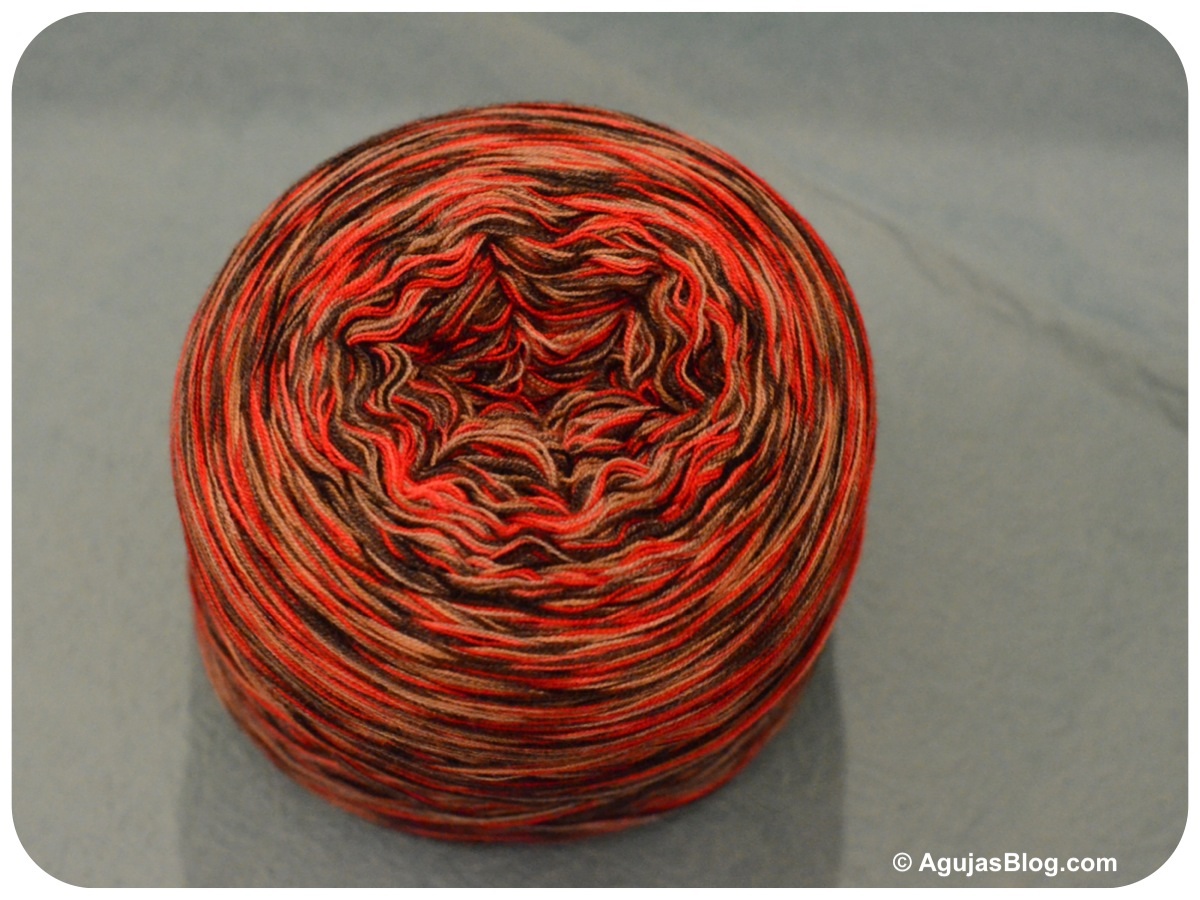
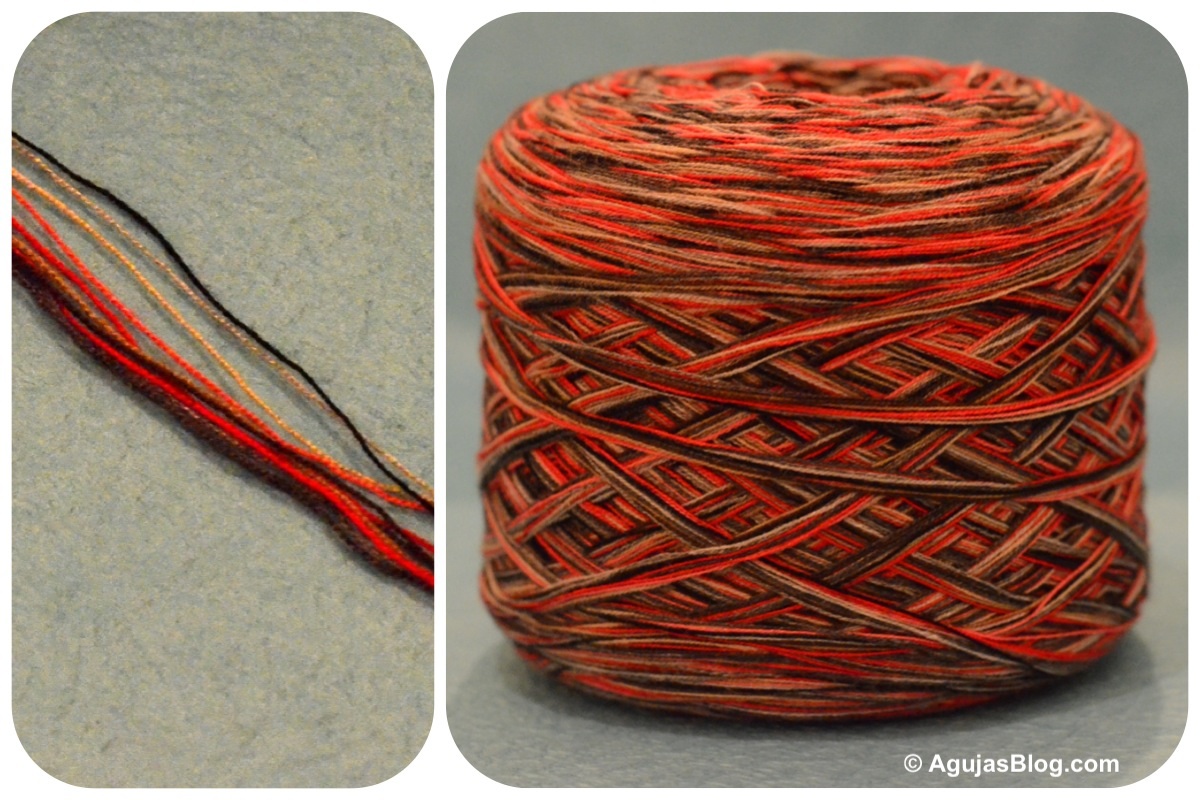
I decided to use this hand spun that I bought at a crafts fair. The combination of Bluefaced Leicester and silk (80/20) felt luscious in my hands.
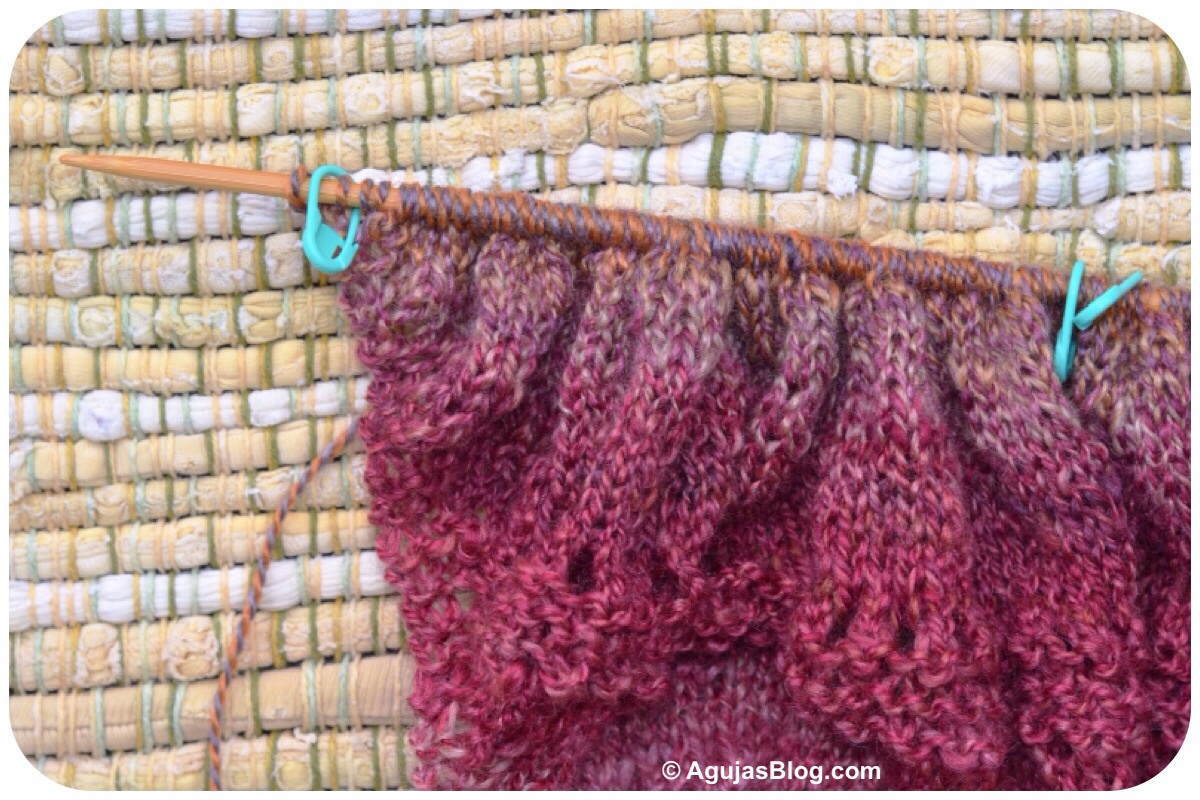
There were 490 yards of it to play with and the color changes were lovely to look at as they unfolded.
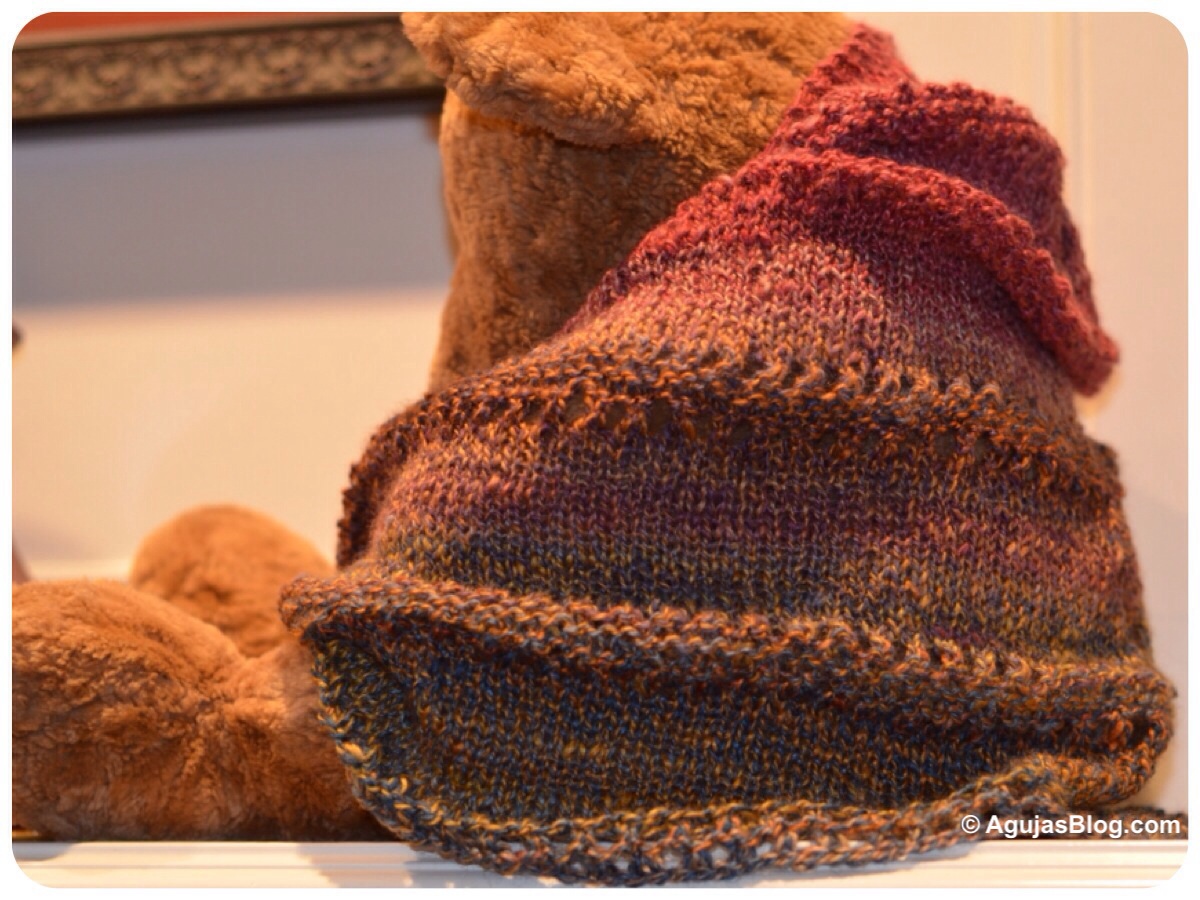
The size is just right to use as a scarf, a shoulder wrap, or to keep Bear warm on chilly nights.
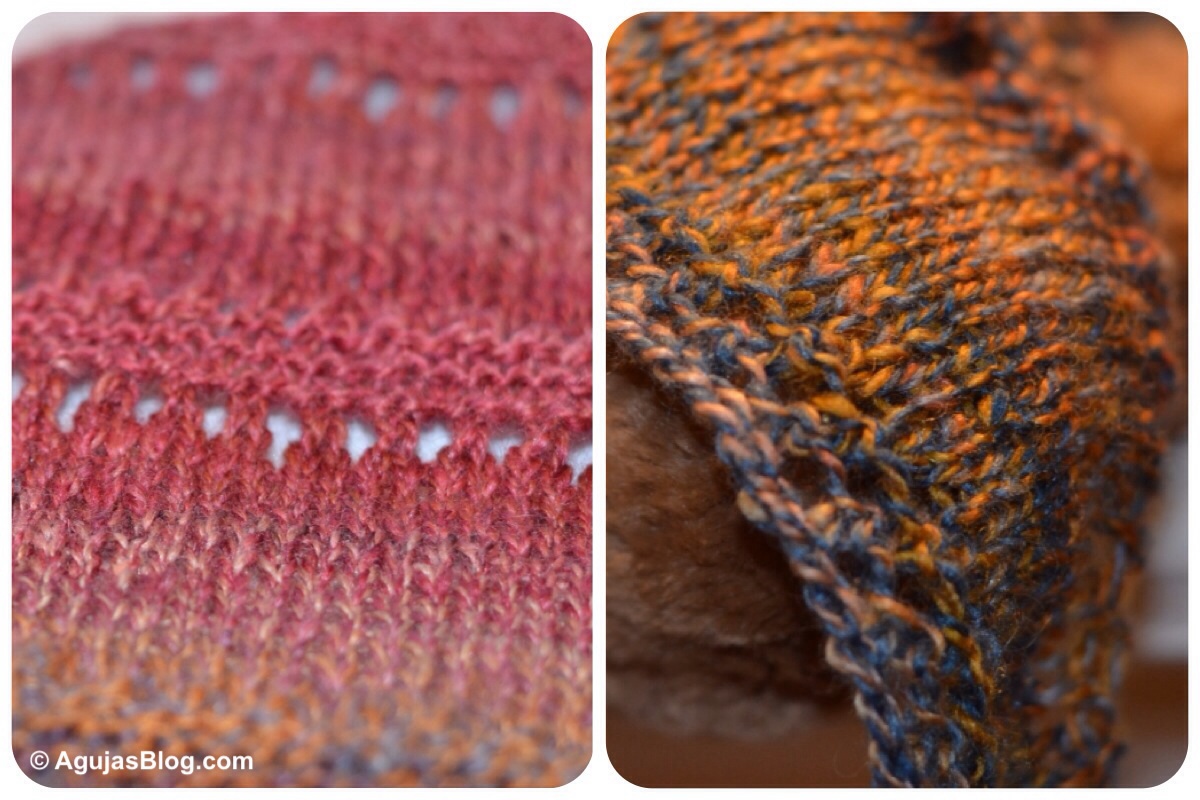
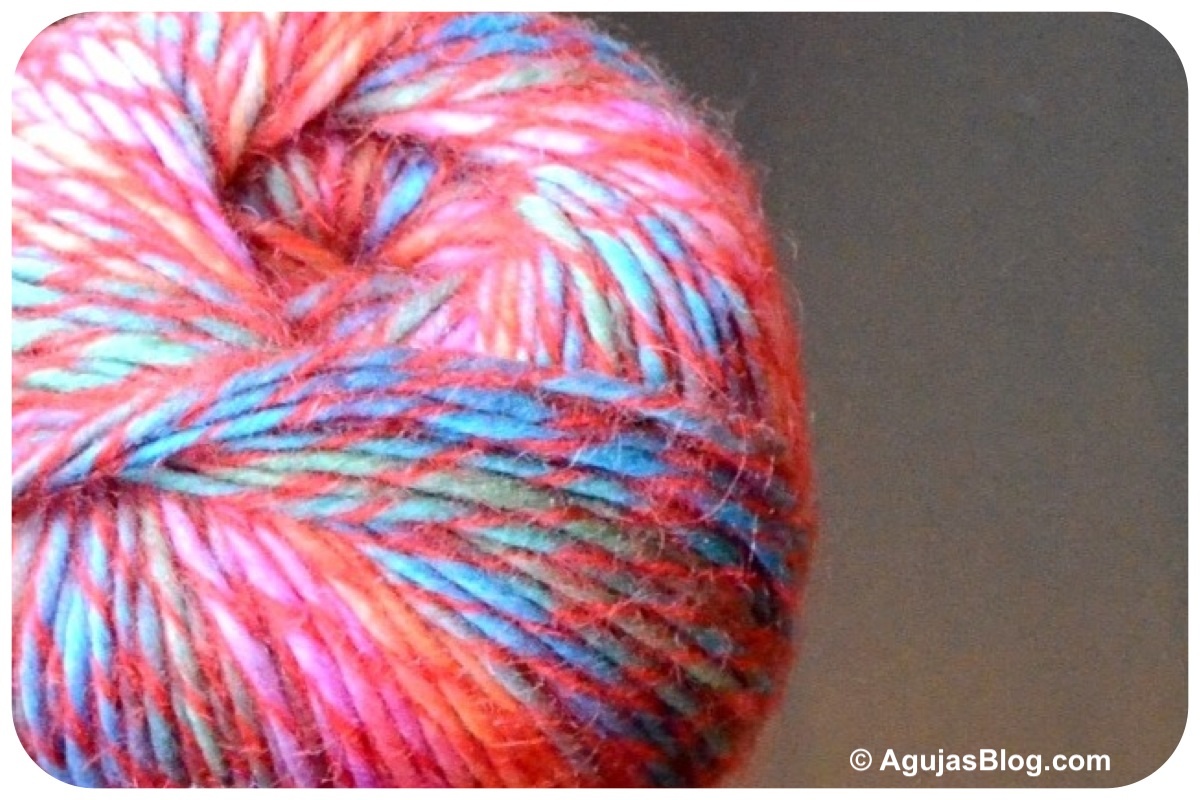
Here are some colorful close-ups.
This was the perfect little gift to me.
Wishing you a happy valentine’s day full of love and yarn.
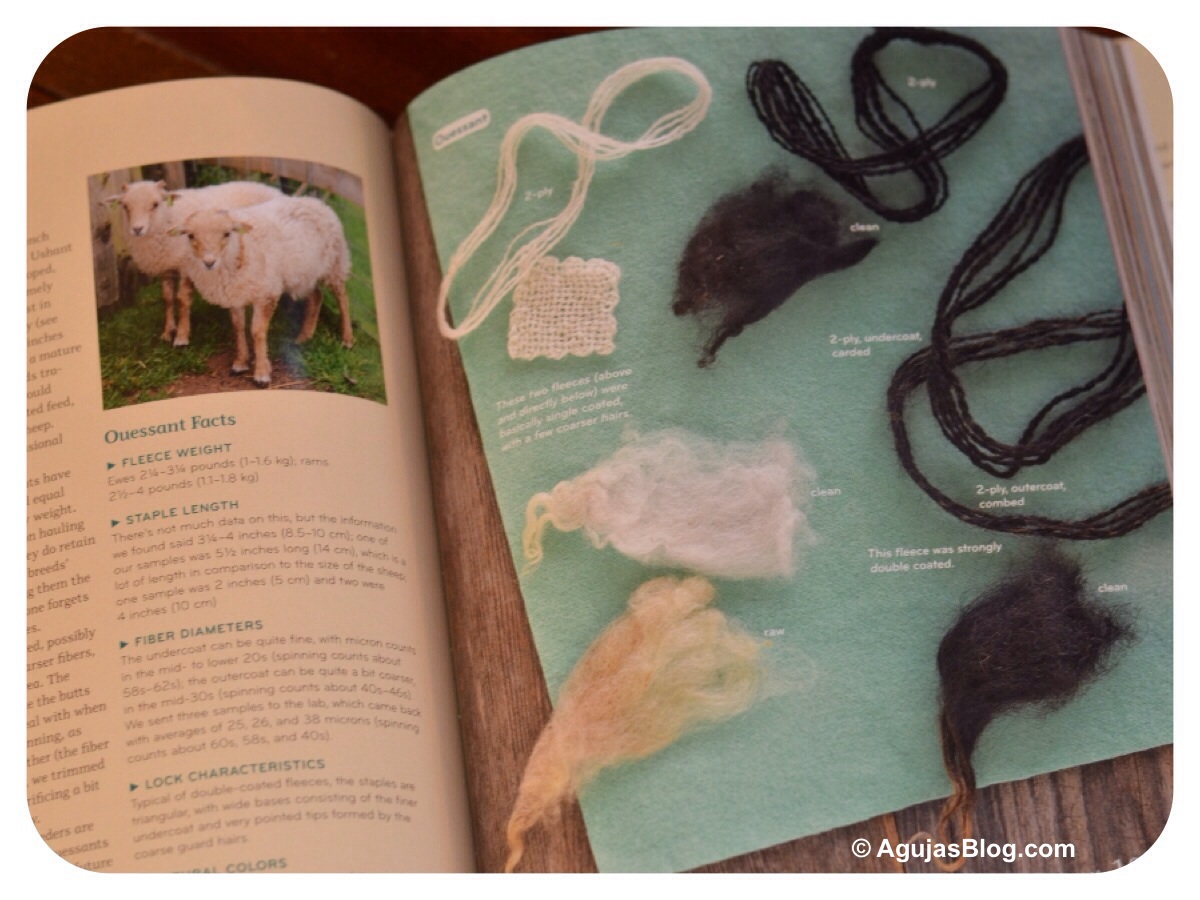
This was an early holiday gift from friends. They know me so well! I had paged through the Fleece & Fiber Sourcebook at the bookstore and became engrossed with the back story of all those wonderful fibers. Now I can read it anytime!
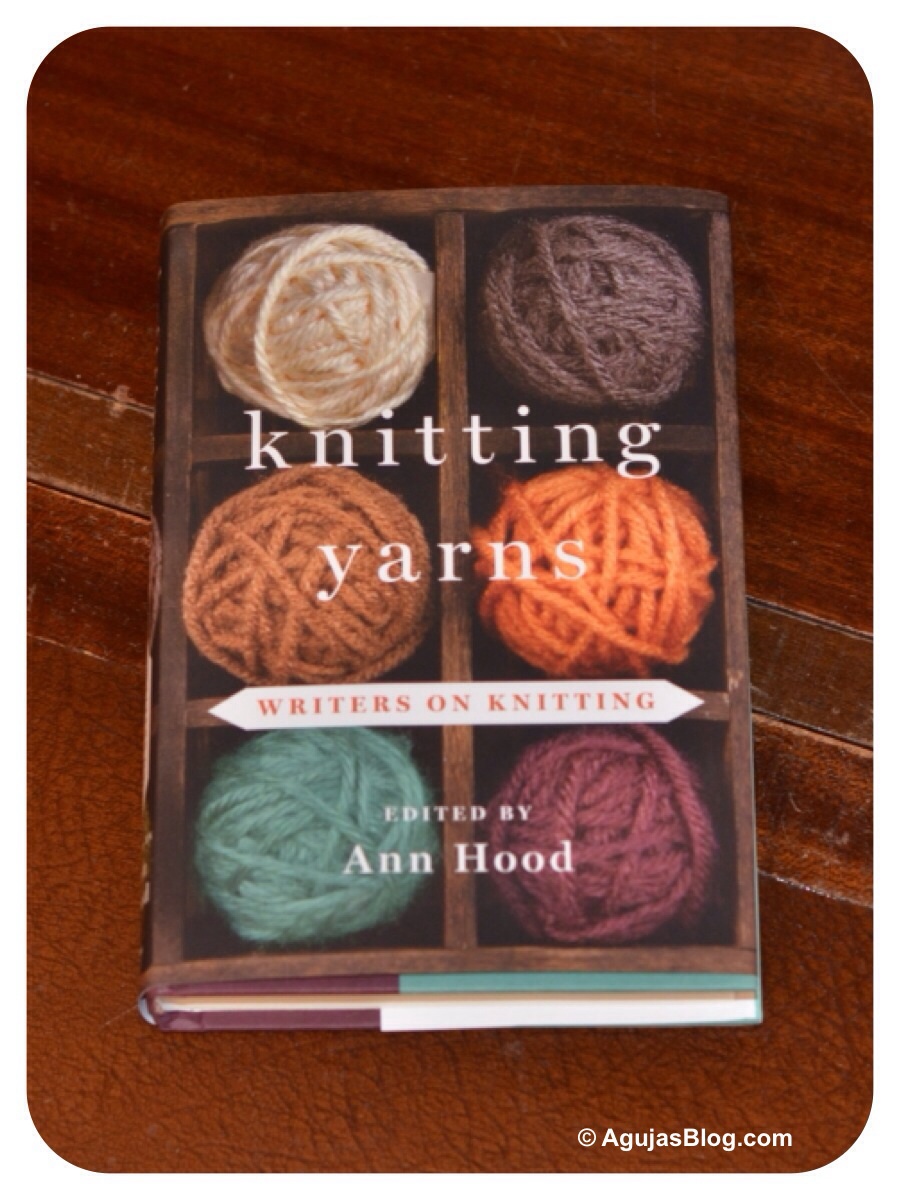
Just in time for the holiday break, there is this collection of stories about knitting. If it wasn’t so warm out (you know, Texas) I would kindle a fire in the fireplace and start reading now.
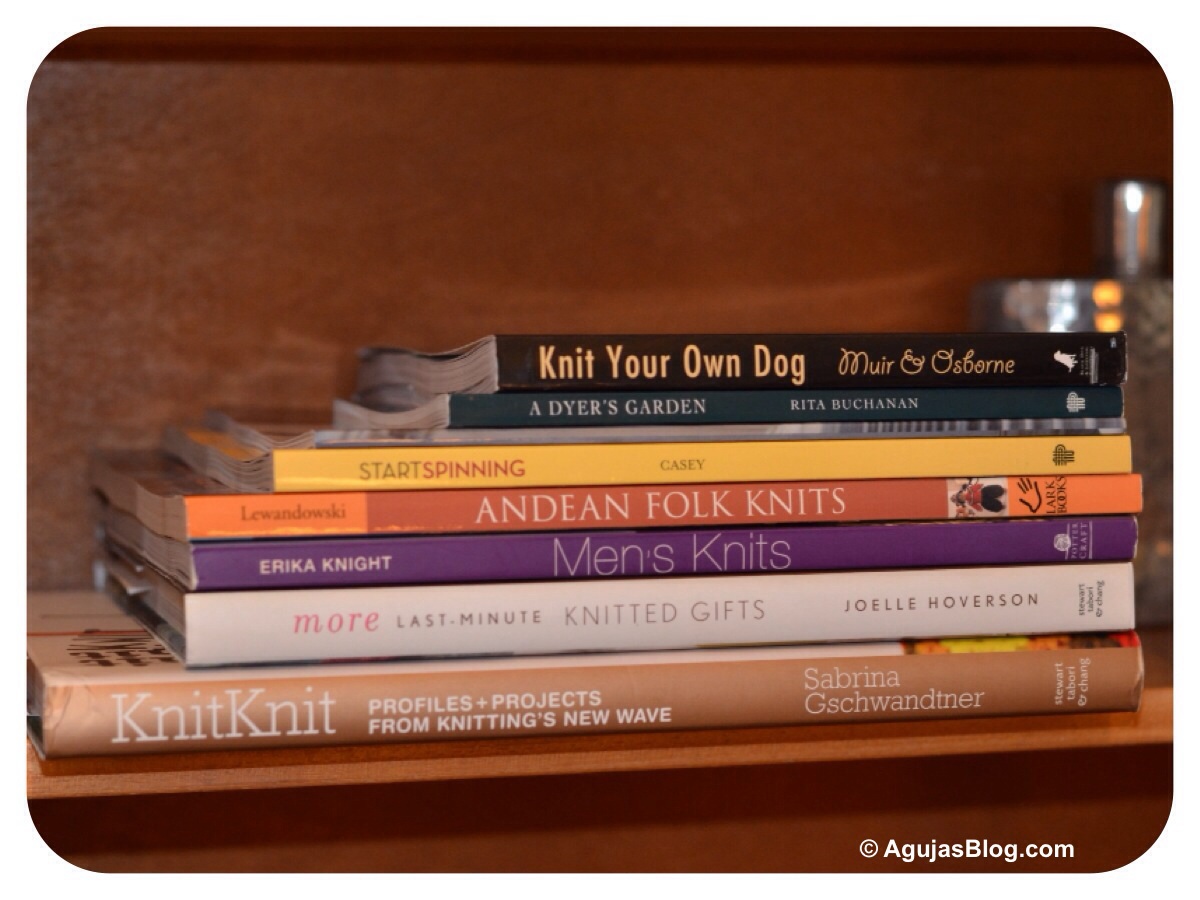
This made me think of other knitting books I’ve collected. There aren’t that many but each one has a purpose – spinning, dyeing, intricate color work, knitting art, and gift ideas.
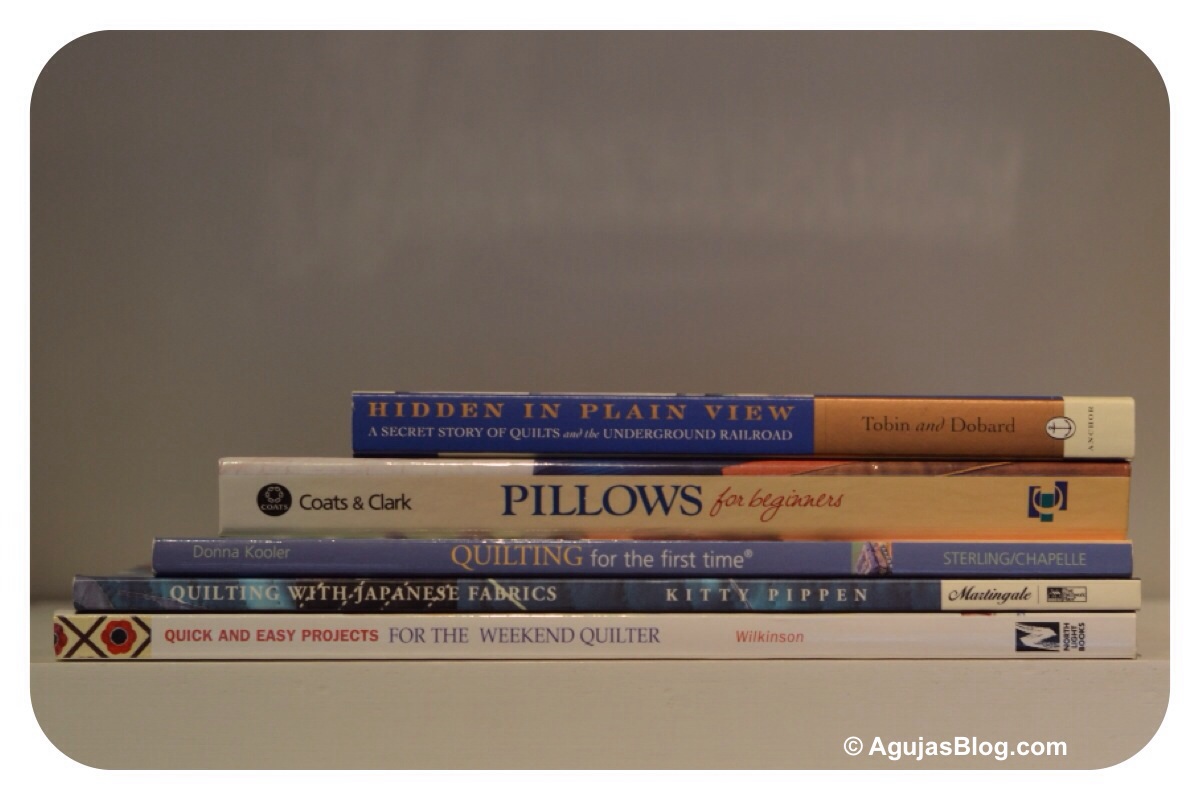
I also realized I had a few quilting books from prior attempts. Quilting with Japanese Fabrics has photos and instructions for stunning silk quilts. I picked up Hidden in Plain View during a trip to Gettysburg. I found it fascinating how quilt patterns were used as signs on the Underground Railroad.
What’s in your knitting library? Any favorites you recommend?
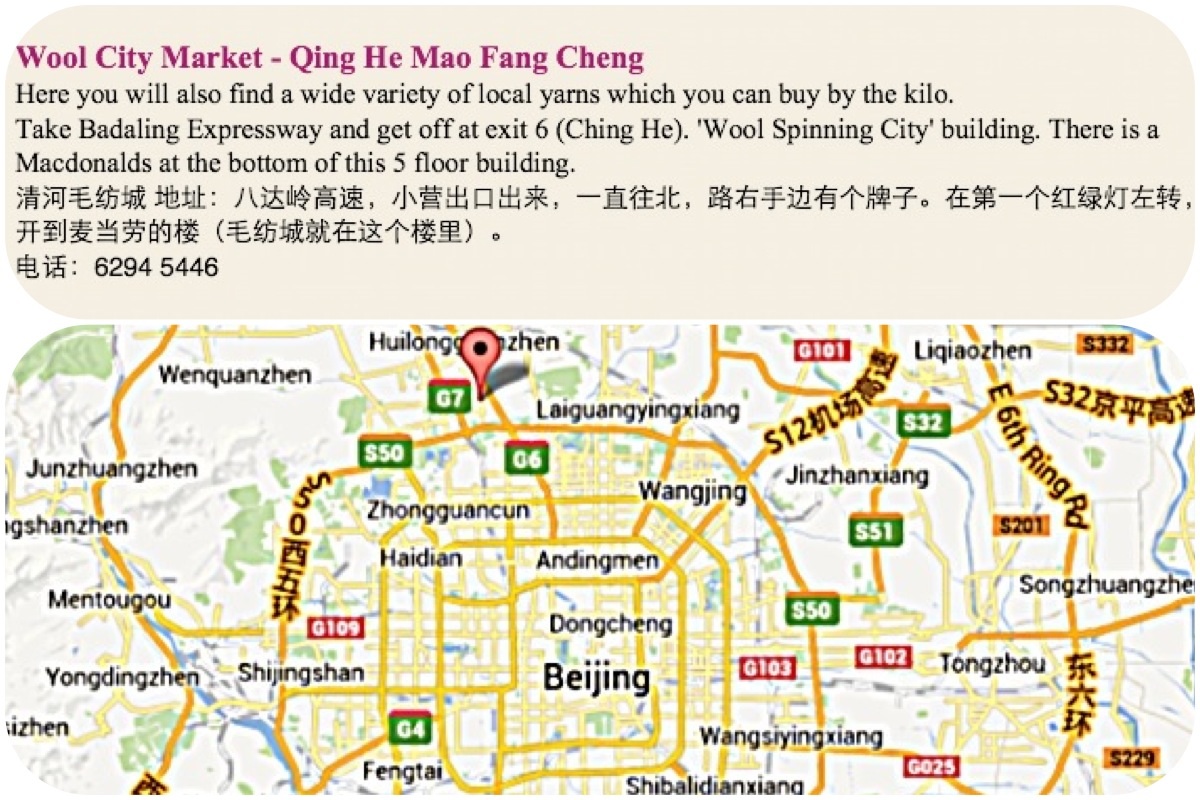
In my ongoing quest to find yarn in Beijing, I tried another market recommended by the Beijing Guild. Maofangcheng is also known as the Fabric Market. From what I read, you can have wool and cashmere coats tailor made from any fabric shop inside the five-story building.
The first task was getting there. The market is located on the Northeastern side of the city just outside the 5th Ring Road, far from where I am staying.
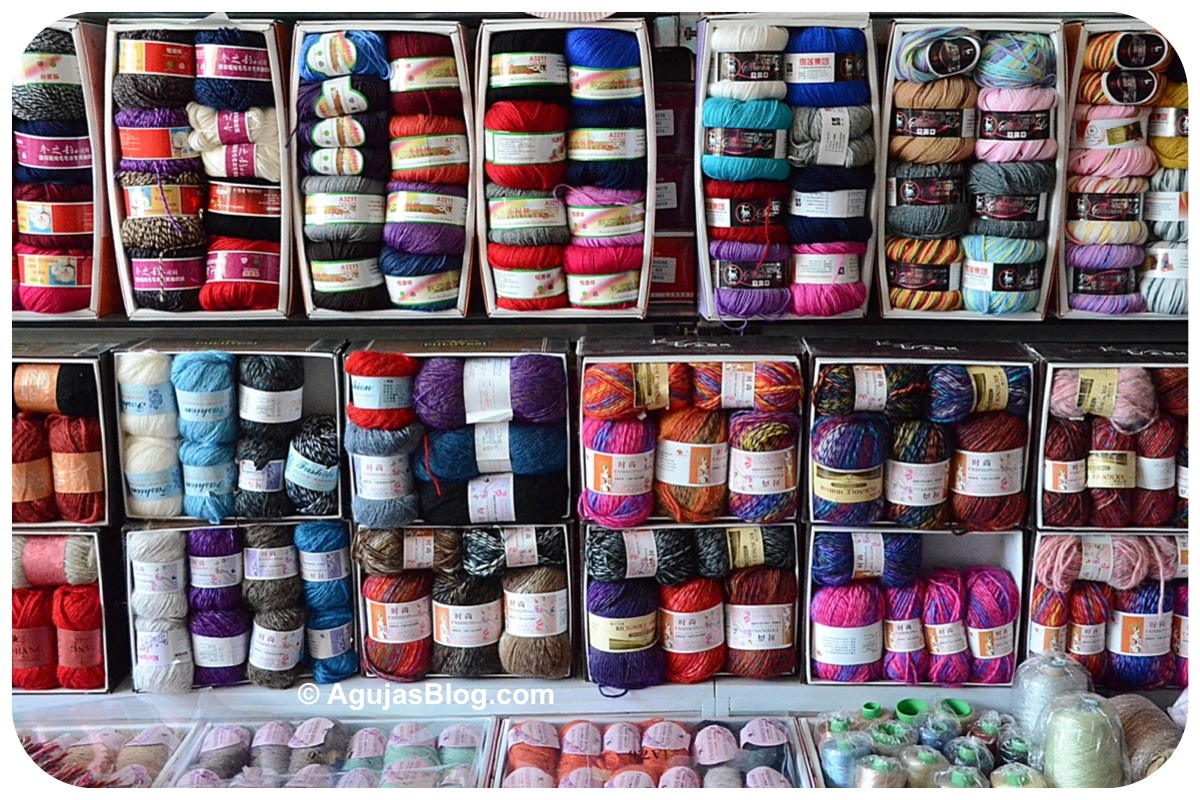
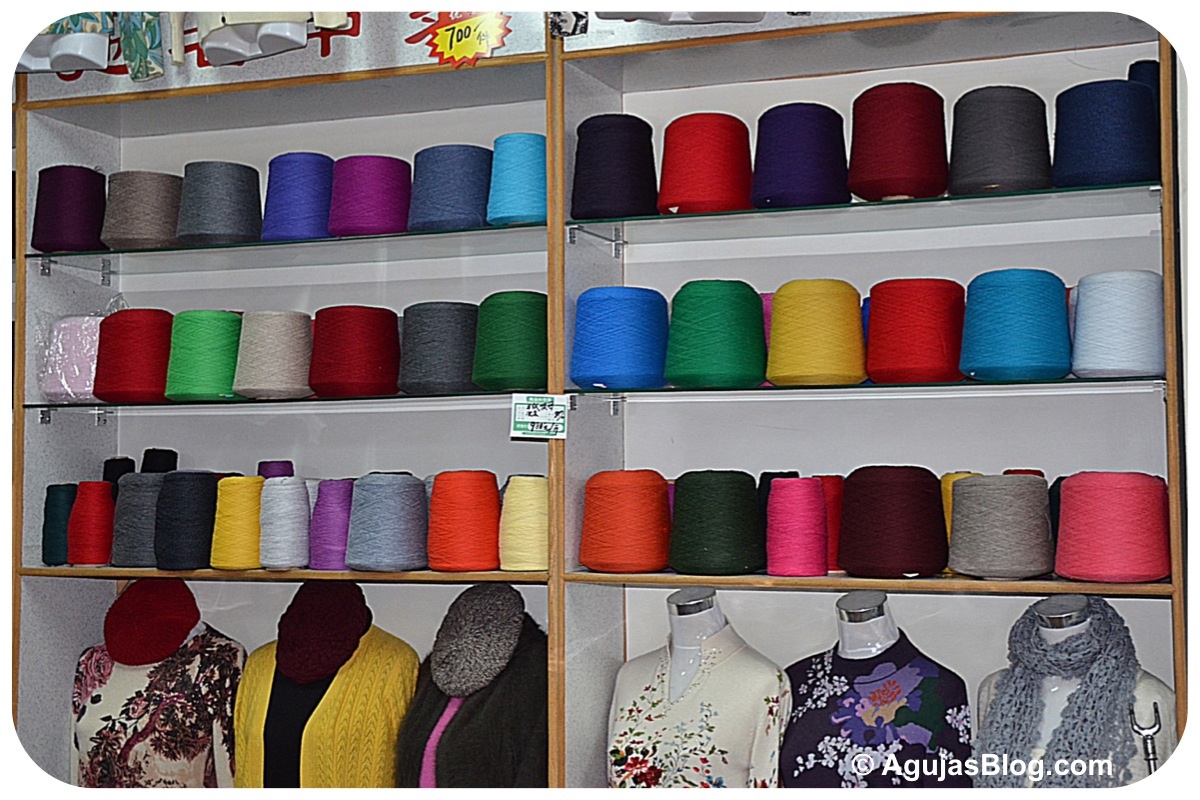
It was well worth the trip. Among the five floors of wool, cashmere and silk fabrics, were almost two full floors of yarn shops. Two — floors — of — yarn. I only took a couple of photographs. All you have to do is imagine walls of yarn in store after store after store.
These cones are wrapped in fine thin threads of cashmere.
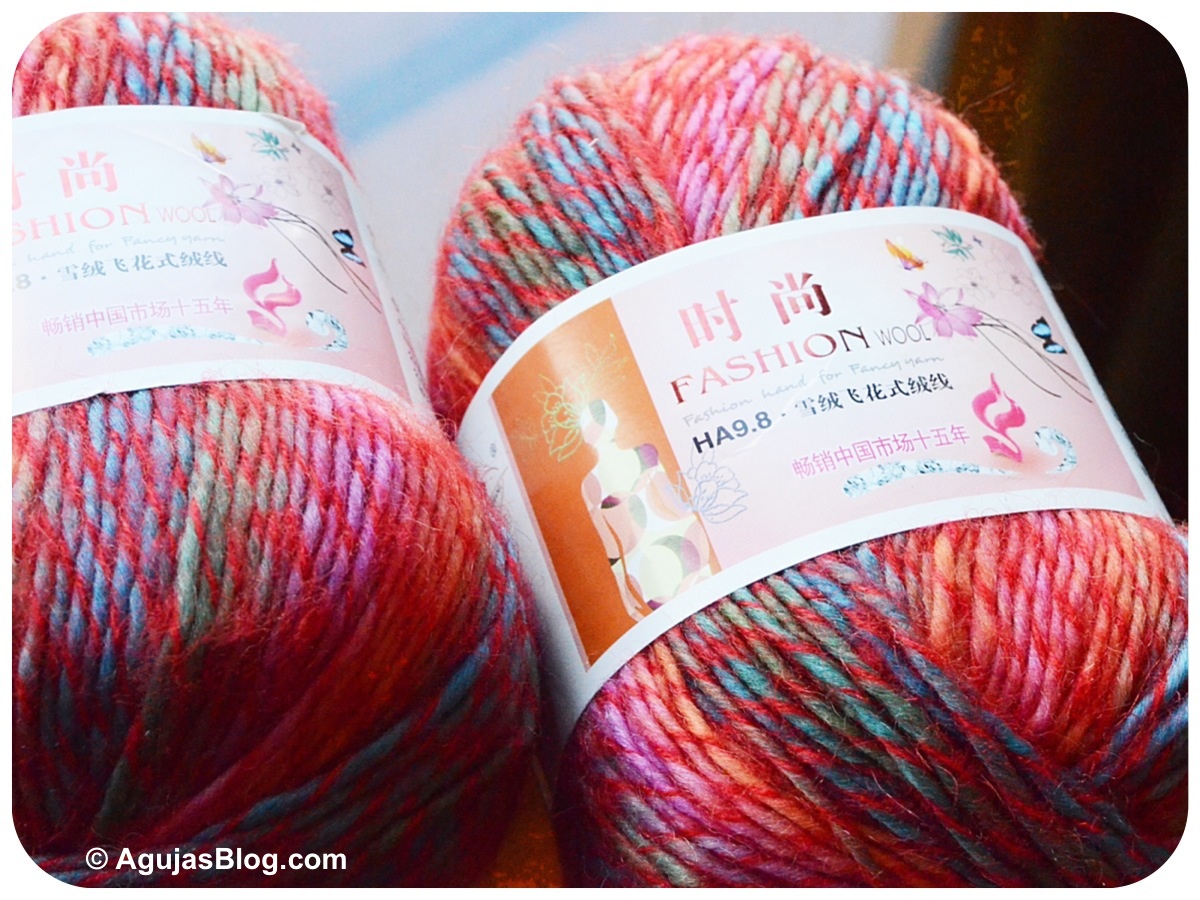
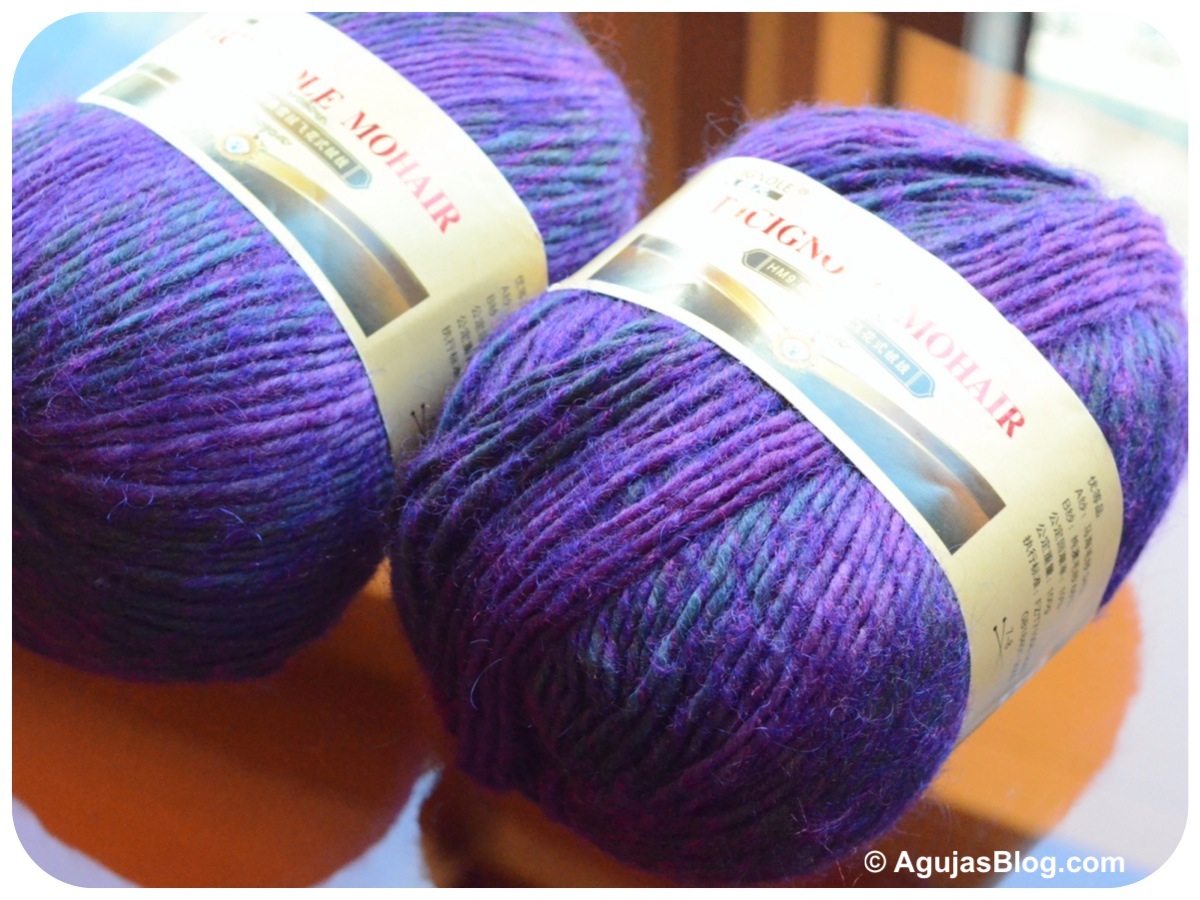
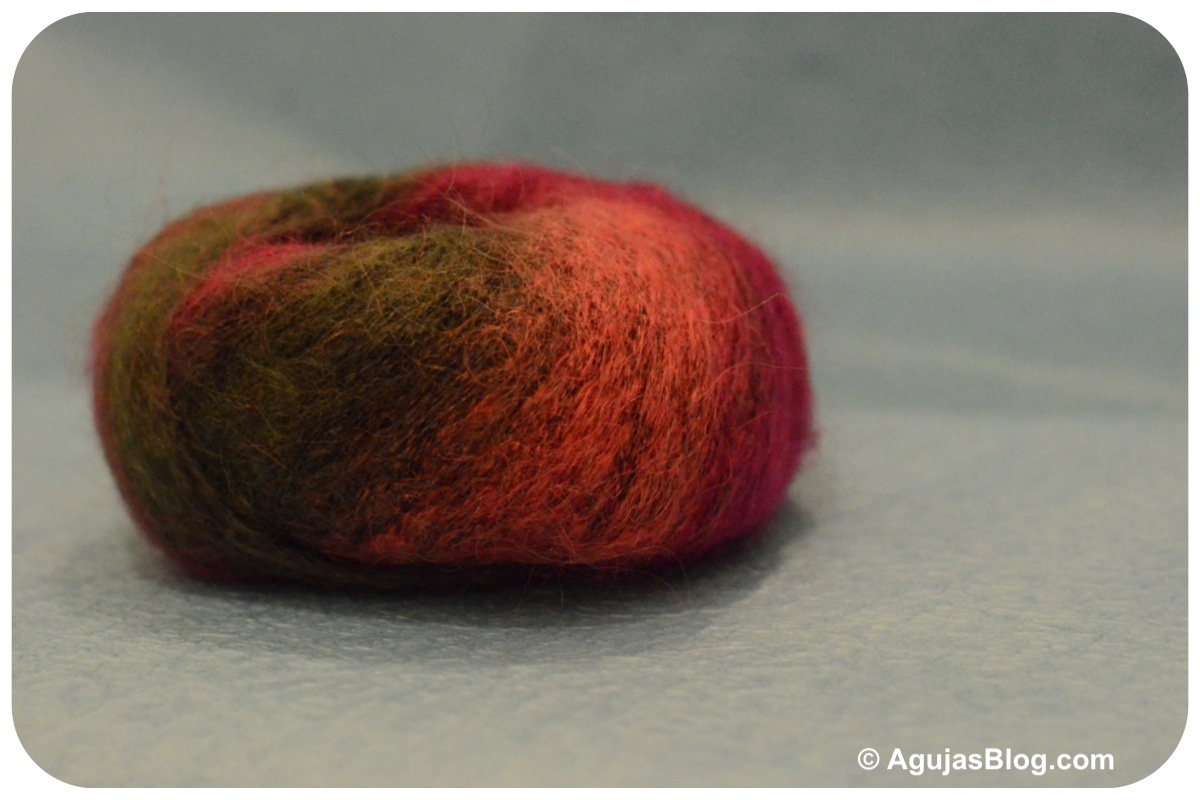
My first purchase was in Store #205 where I picked up this colorful wool and mohair blend. So festive!
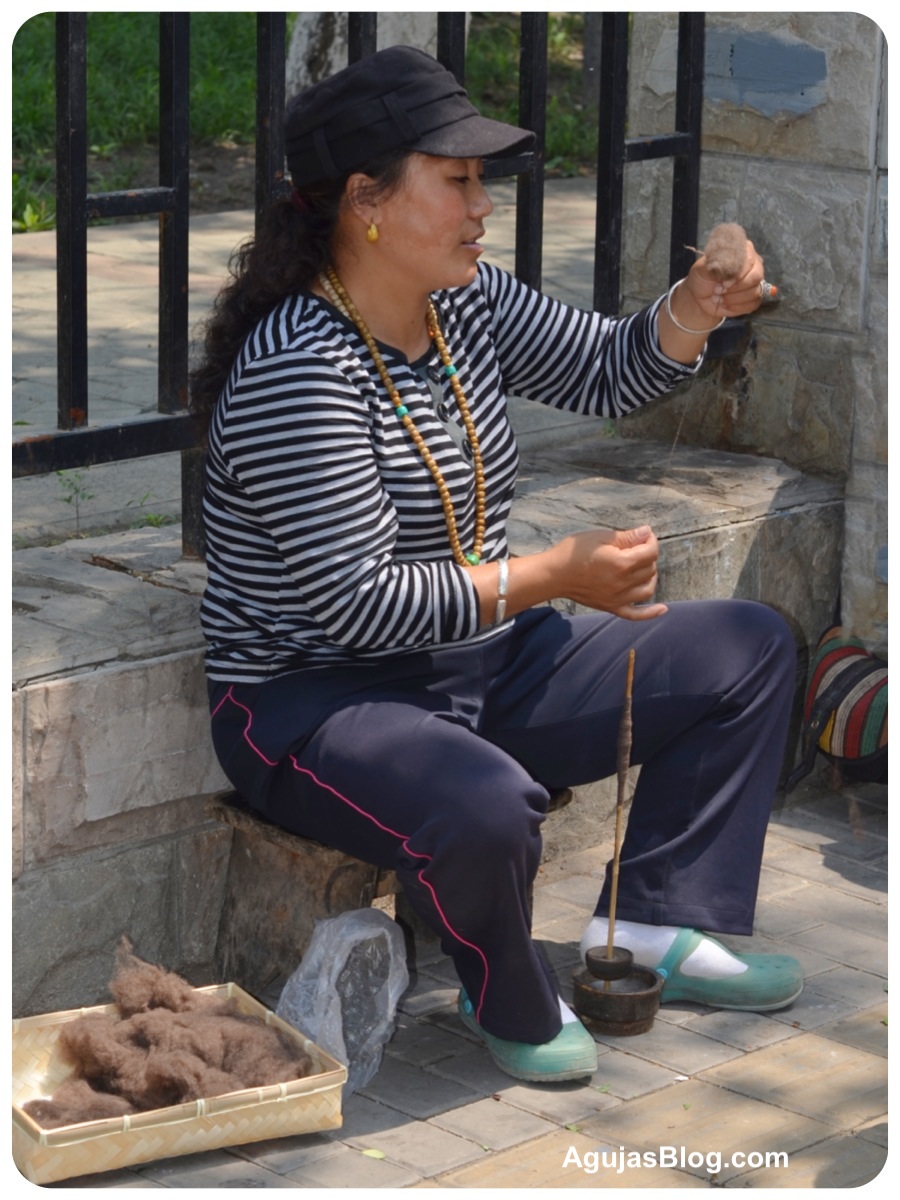
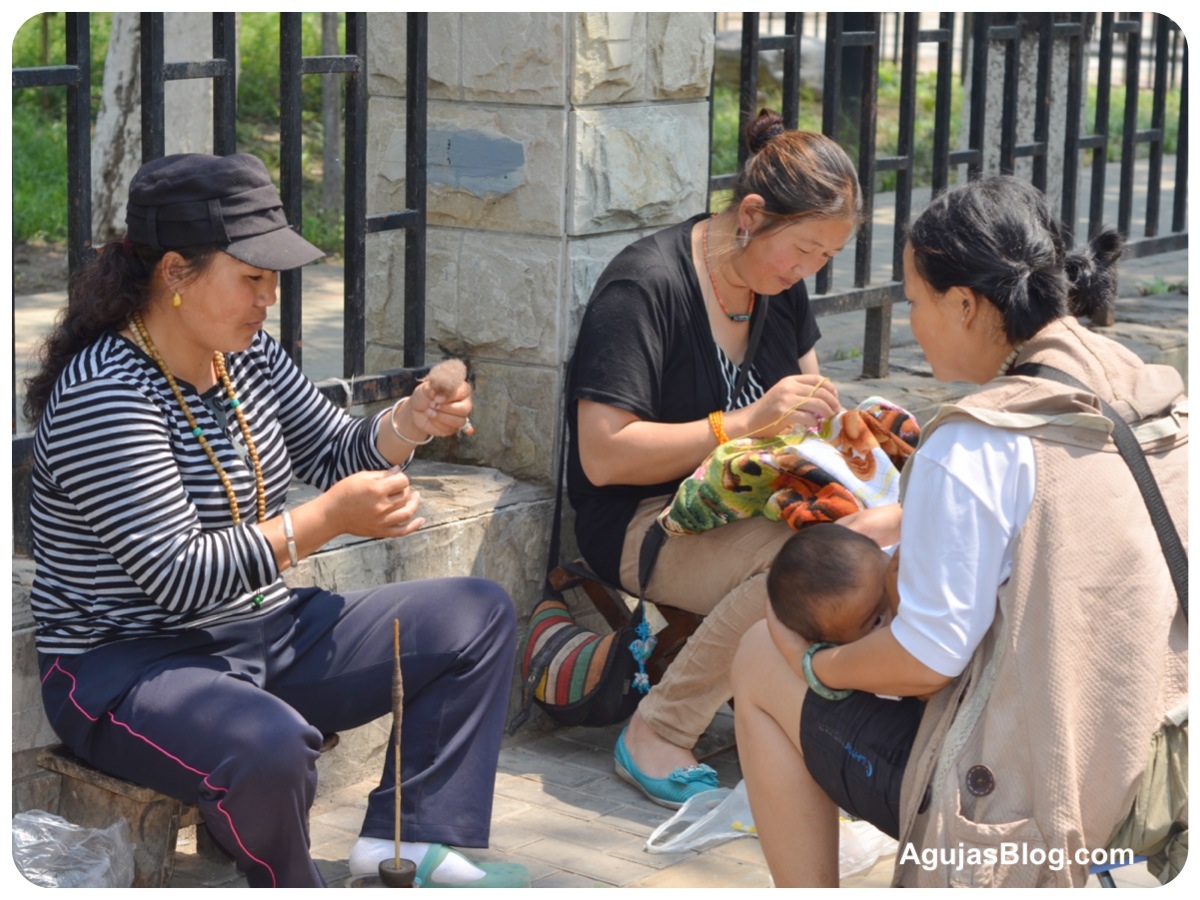
As I was walking towards the subway after a morning of haggling at Yashow Market, I saw this – a woman spinning wool!
I asked her if the fiber was 新羊毛 (xīn yáng máo), the Chinese term for wool. She smiled and nodded.
Her companion had a thick yellow thread or yarn on the floor beside her. As she talked, she continued working on what looked like a cross-stitch landscape. I may have to carry my WIP and a little stool with me so I can join these sidewalk sessions. The ladies allowed me to take a few photos. Even the baby peeked into the camera!
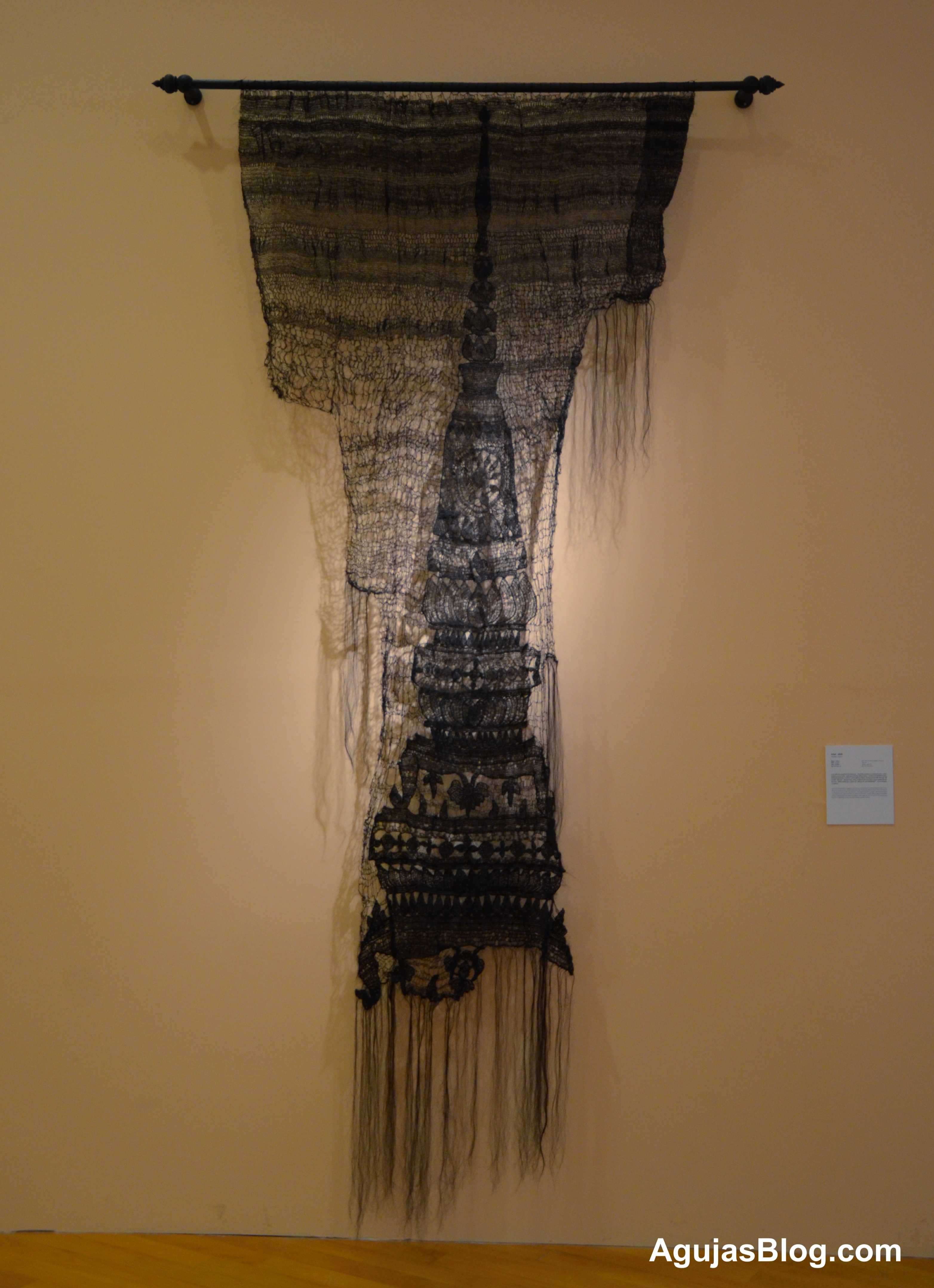
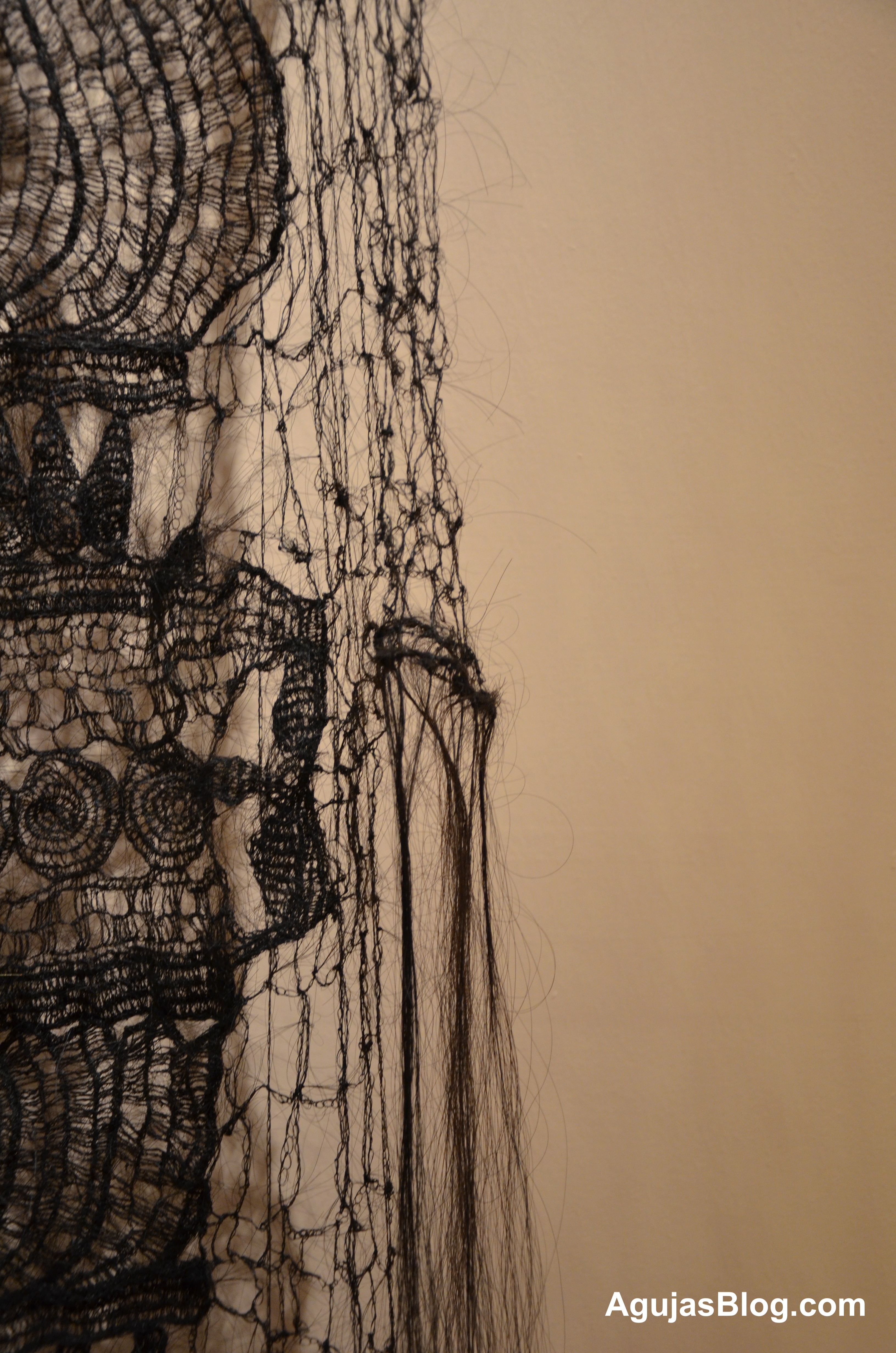
More photographs from the husband taken at the Bangkok Art and Culture Center in Thailand. This textile is called Trailak (The Three Characteristics of Existence), 2012. It is woven entirely of hair.
The placard reads:
From his faith towards Dhamma regarding Trailak (The Three Characteristics of existence) that teaches people to consider on truth of impermanence, incompleteness and non-self. This teaching inspired the artist to weave hair that is the symbol of body or impermanence to be created as a mixed media in the form of a pagoda referred to something we should remind and pay respect at all times. The objective of this artwork is to express idea, emotion and feeling obtained from considering corpse that is the mark of death in order to refine our mind from lust and omit wickedness with the aim to do good things and reach pure heart according to Buddha’s teaching.
I am assuming that the weaver used human hair to symbolize impermanence. The pagoda is incredible, with so much detail to give it its shape and ornamentation. It is rather interesting to me how buildings such as churches, temples and other holy places can last for centuries far outliving the humans who built them.
 {source}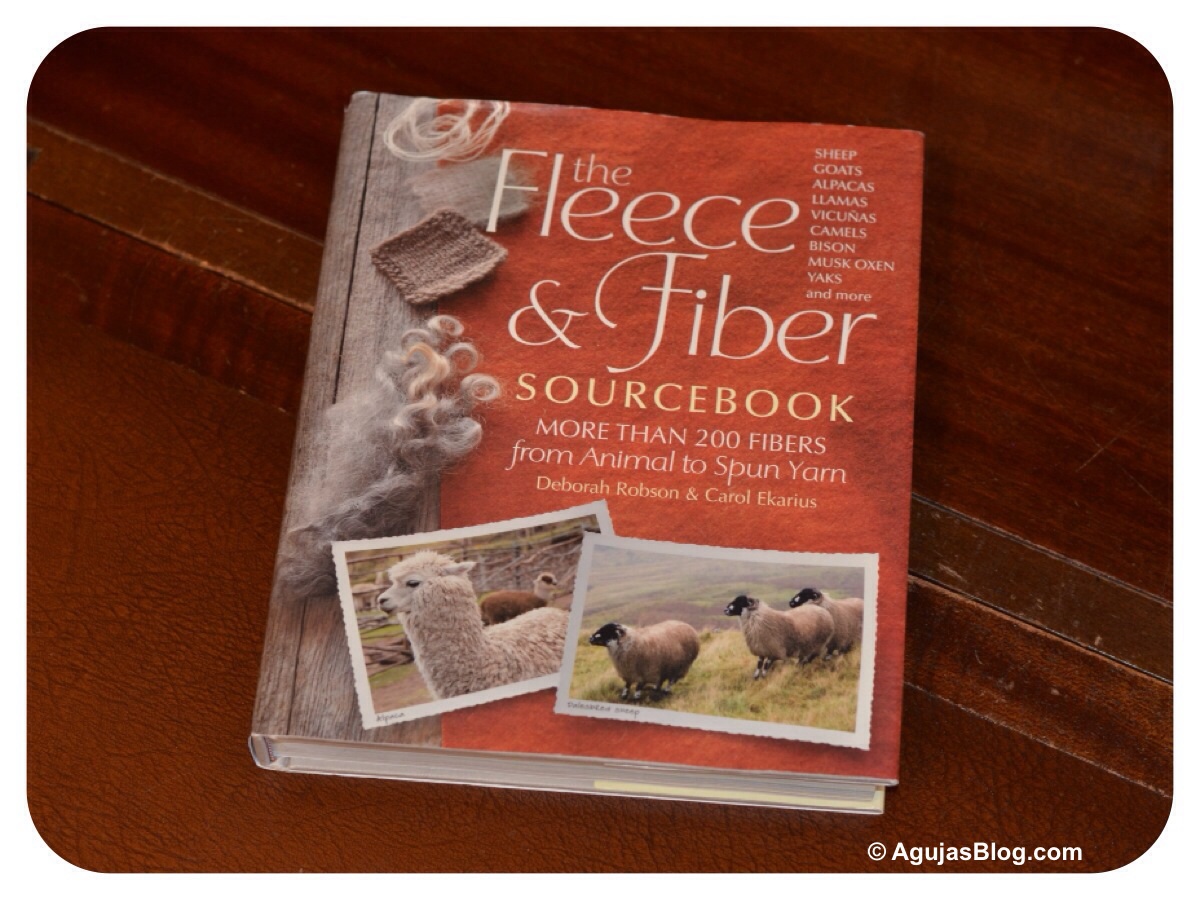
 Agujas