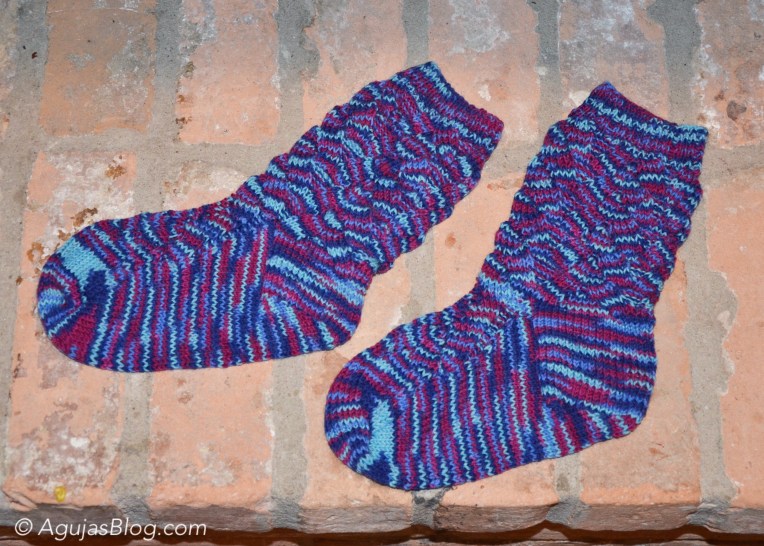
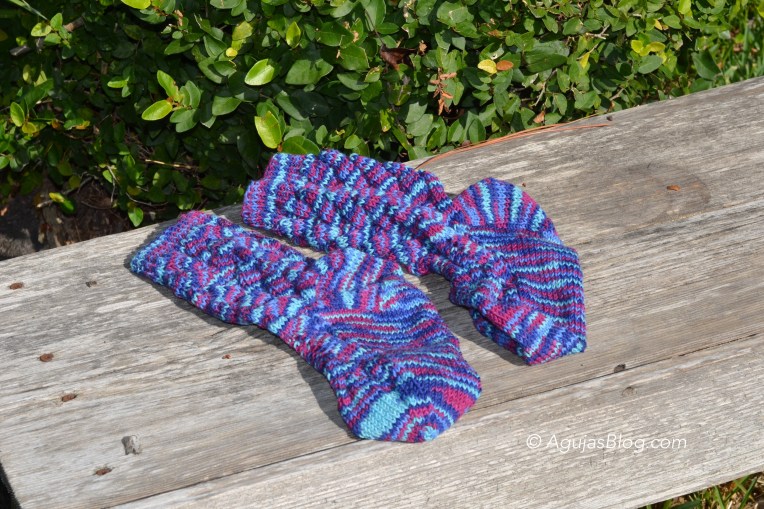
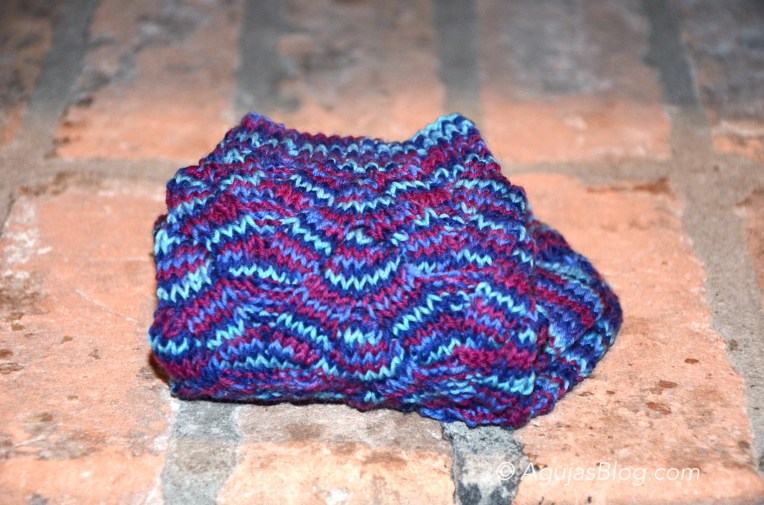
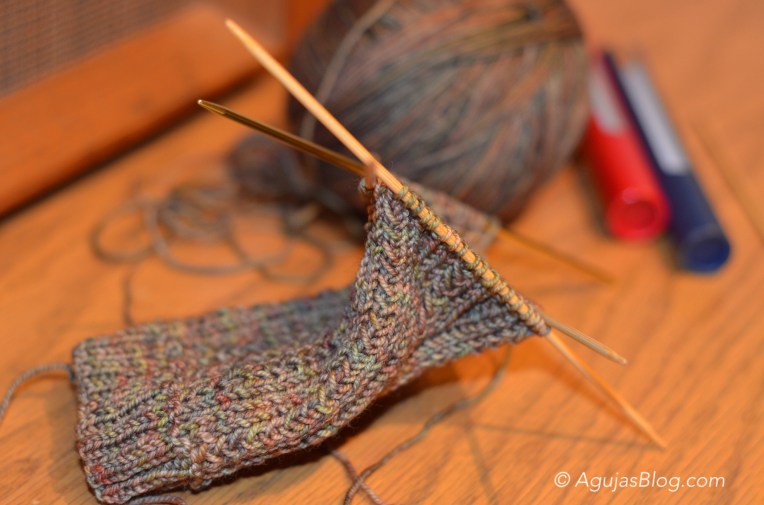
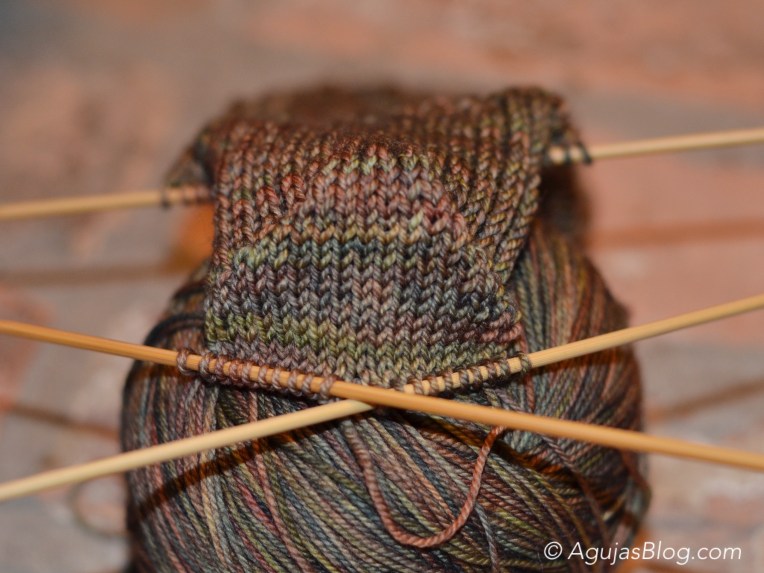
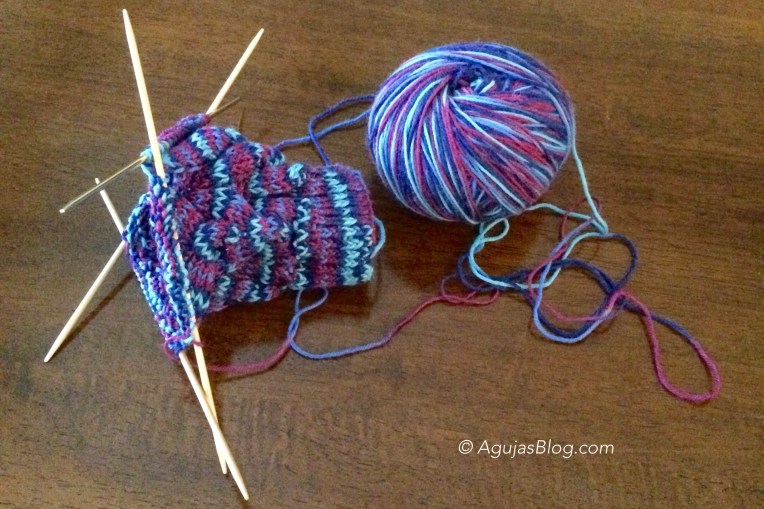
Shortly after the holidays, I bound off a couple of pairs of knitted socks. Who thought making socks would be so exciting? For the first set, I used the popular Monkey Sock pattern by Cookie A. I understand why so many knitters use this sock pattern. It is easy and produces a sock with interesting undulations.
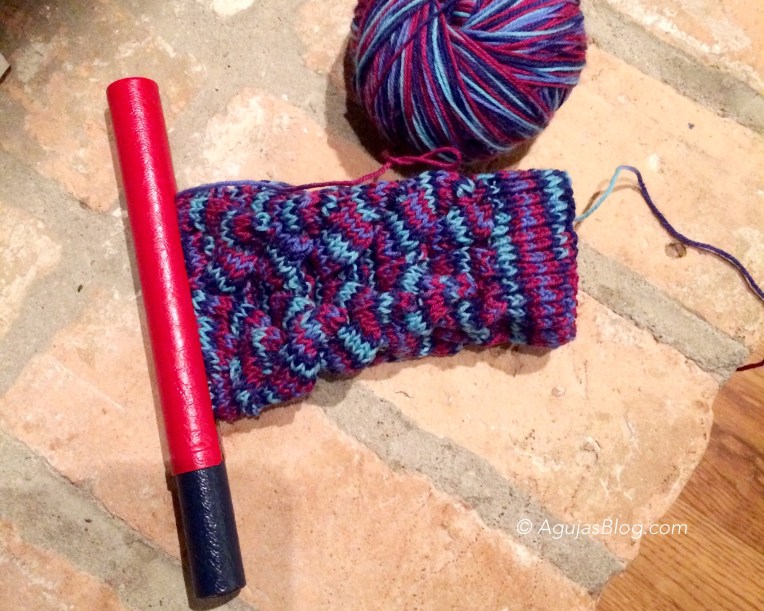
For the yarn, I used the skein I bought at Seaport Yarn in New York City. I really loved the purples and blues mingled together. When I was done, they badly needed some blocking.
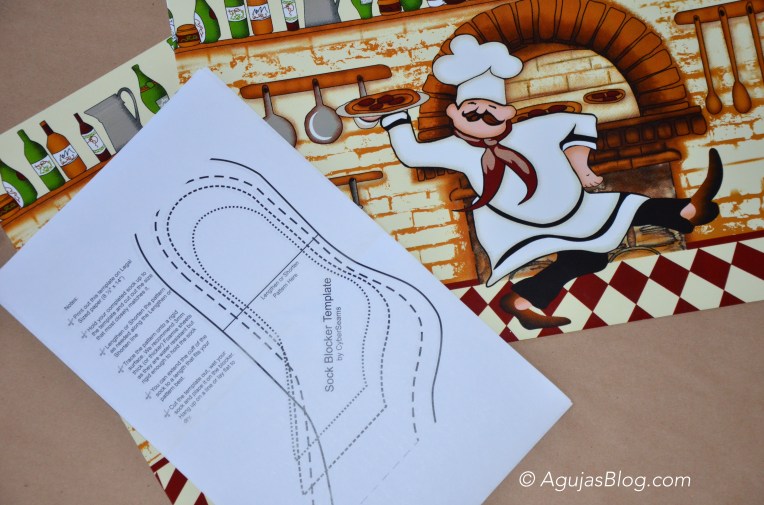
I looked all over the web for a pair of sock blockers and found several good candidates, but frankly, didn’t want to spend the money. So I made my own! After perusing several “how-to” articles, I settled on How to Make Your Own Sock Blockers. The instructions were clearly laid out and the materials easy to find – placemats from the dollar store!
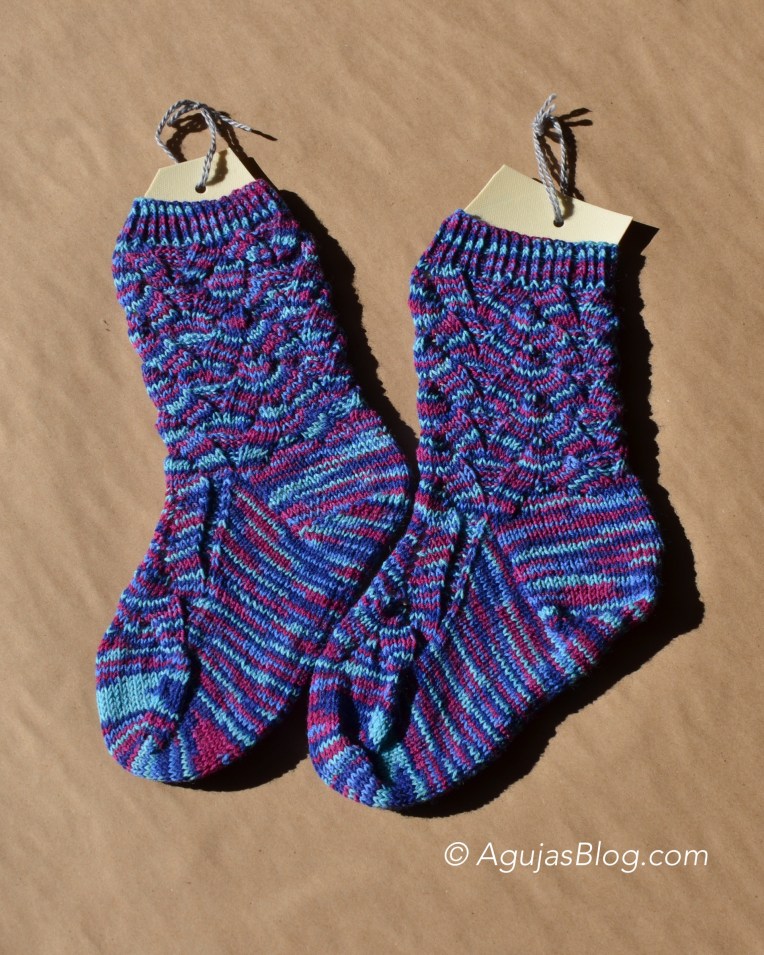
After cutting them to size, I used a hole puncher and some leftover yarn to tie a loop so I could hang them up to air dry. The tops of the blockers are a bit topsy-turvy but they did the trick.
The pattern is more visible after blocking.
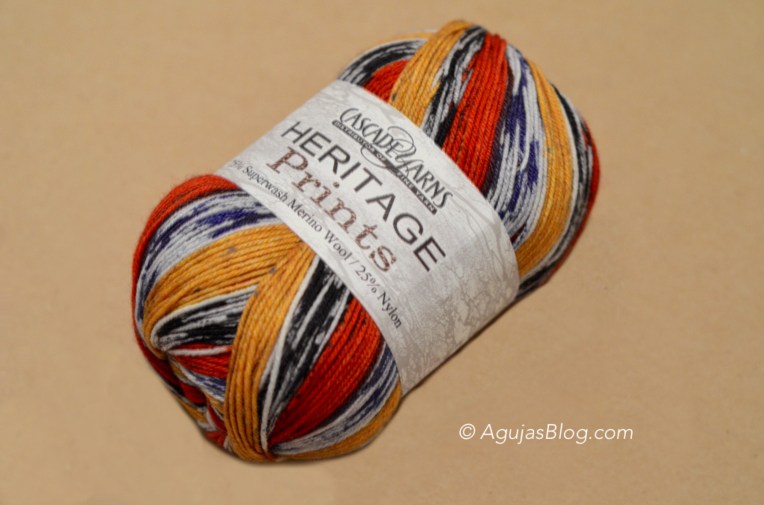
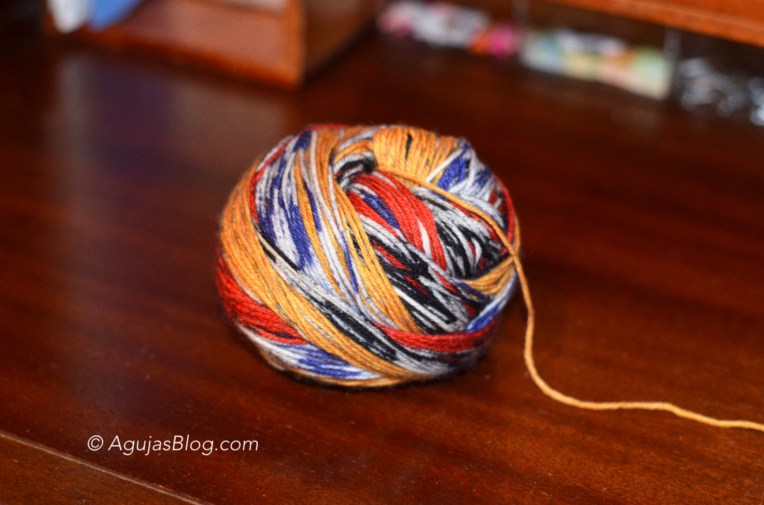
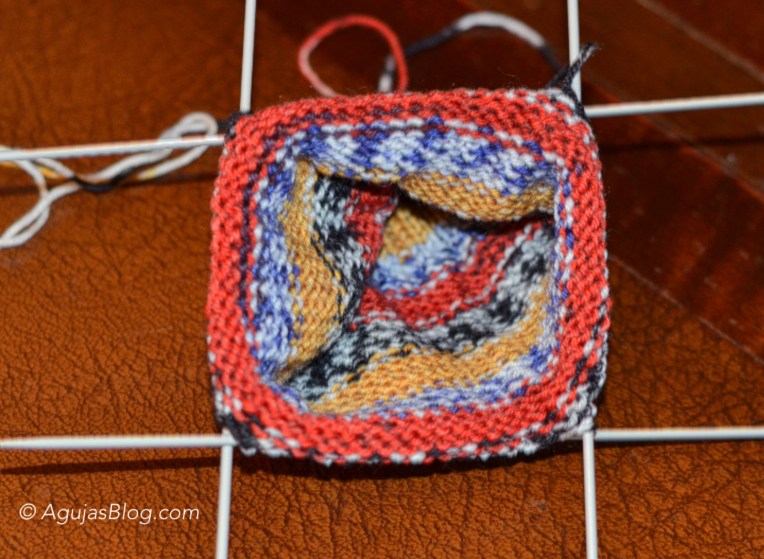
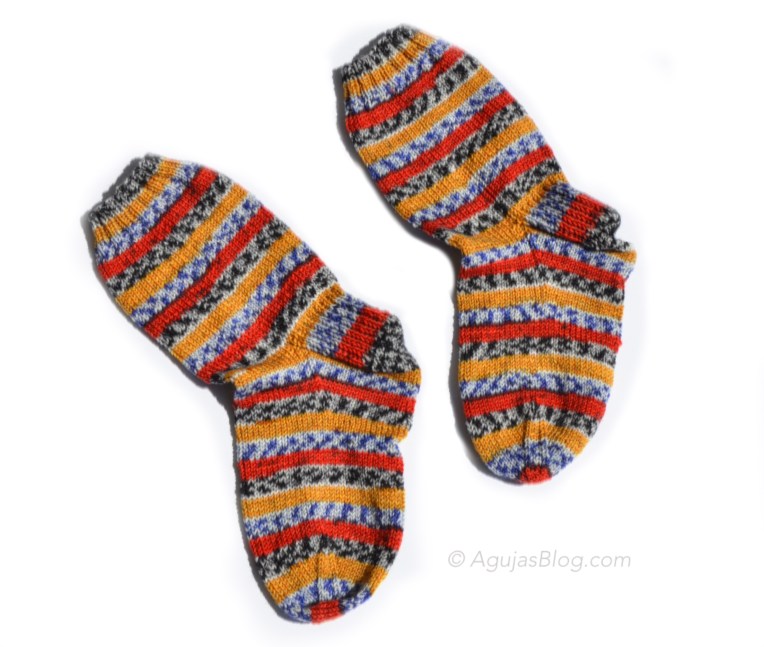
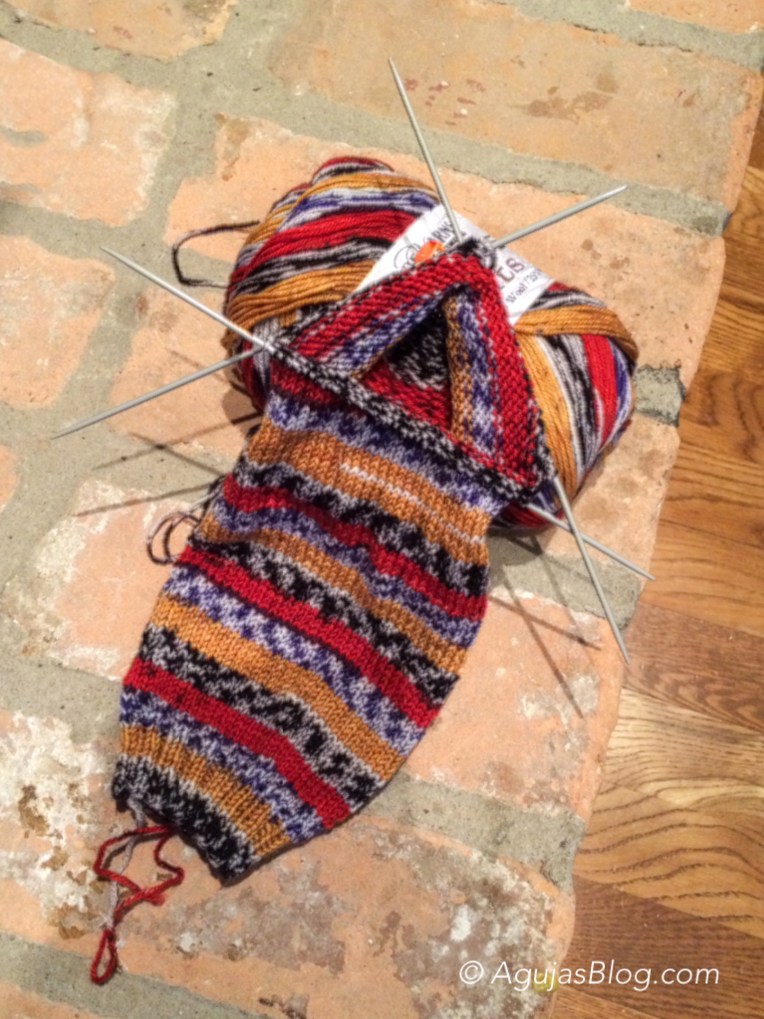
For the next pair, I wanted to use a self-striping yarn. This bright red, yellow and black yarn is from the Yarn Barn, which I posted about recently.
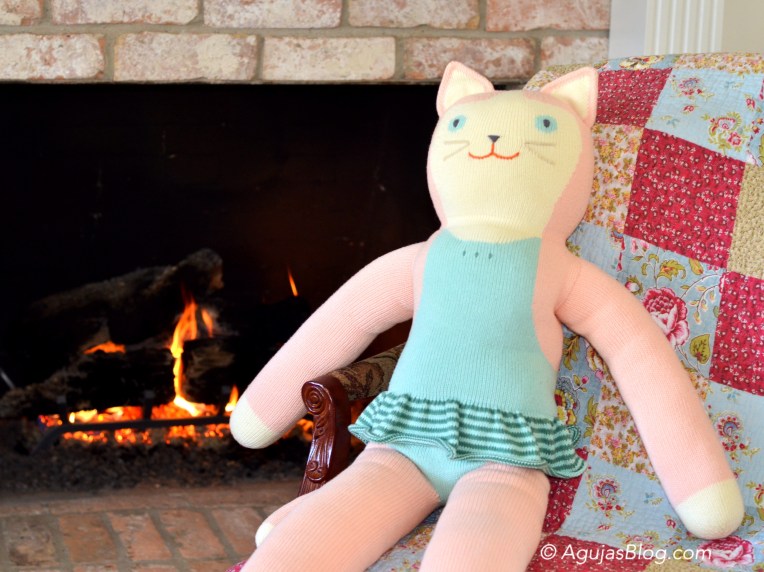
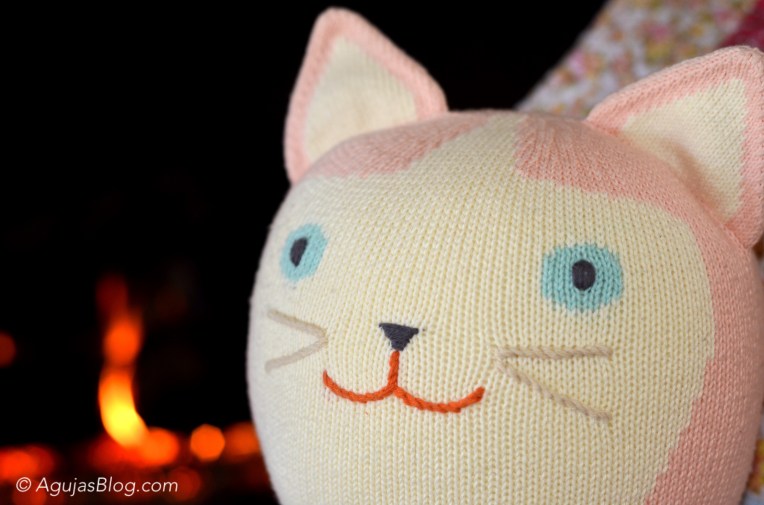
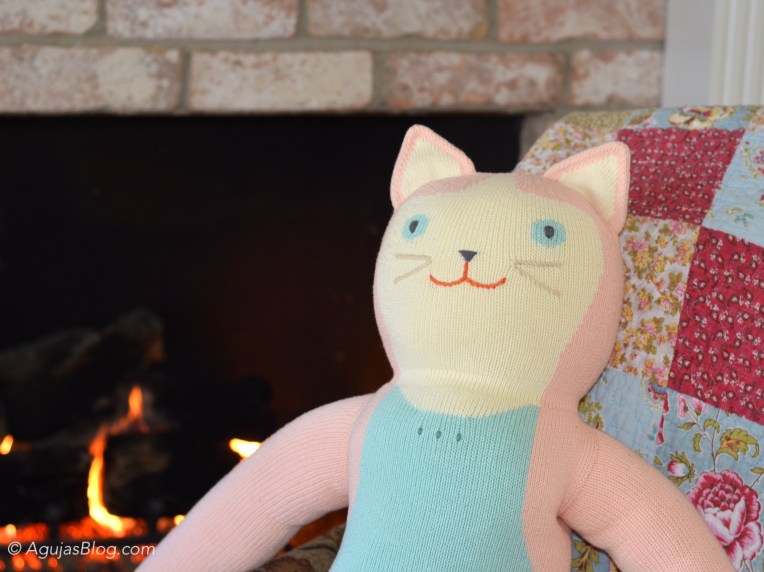
Always on the lookout for knitted and unique, we discovered this GIANT adorable knit cat. Her official name is Splash the Cat, but we call her Gatita (little kitten). Gatita is three feet tall and 100% lovable. She is so fun to hug and curl up with for a nap. And how can one resist the cute ballet outfit?
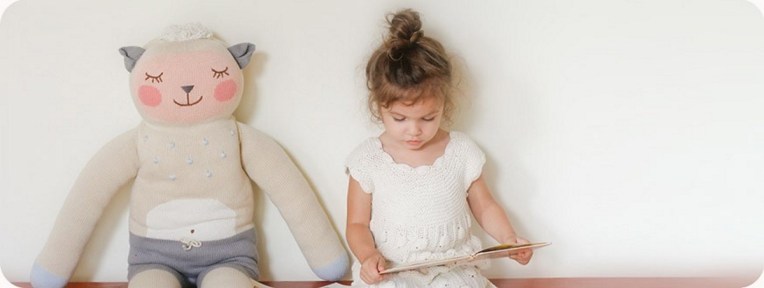
Gatita came to us from blabla which is owned by two women entrepreneurs. Blabla has a flagship store in Atlanta but I found Gatita online. Gatita comes in several sizes – a 12-inch mini, 18-inch regular, and giant 3-foot version. Her friends include Harmony (a mermaid), Pierre (a floppy eared rabbit), and Socks (the fox), among others. Blabla also carries knit blankets, knit finger puppets, knit rattles and pretty cotton sheets. The dolls are knitted and handmade by women in Peru in 100% of the softest cotton.
While researching for this post, I discovered another small business with a similar product. Cuddle + Kind also sells fair trade dolls handcrafted in Peru. This small business run by a family in Ontario pitched their concept on Indiegogo and raised over $445,000 USD to launch their venture. Part of Cuddle + Kind’s value proposition is that they donate 10 meals per doll sold to feed children in need.
I’ve been furiously knitting socks lately. As soon as I weave in the ends of one, I immediately cast on another.
I have always found knitting to be soothing. As I knit, I can feel worries and angst slowly evaporate. Mostly, focusing on knitting helps me drown everything else out. For those moments, I am in a state of calm.
Lately, a sadness has enveloped me. Nothing has happened. On the contrary, I am living a blessed life surrounded by people whom I love and who love me. I want for little. I am very fortunate. But I am sad. Often.
It comes and goes. At this moment, all is joyous and warm. But some days, just getting out of bed and dressing seems like an insurmountable challenge. Maybe it was a case of the holiday blues. Maybe it’s hormones. Maybe it’s just life.
The one activity that helped me through the holidays was knitting. Knits, purls, yarn overs and slipped stitches forced me to focus. The rhythmic motions of my hands on the needles soothed me. I was creating something and in that process of creation I found peace.
I have read articles (like this one and this one) where experts share results of research studies on the positive effects that crafts like knitting have. They serve to reinforce what I already knew – knitting is like “chicken soup for the soul.” Knitting to me is comforting. And it snaps me out of my doldrums. A simple pair of socks is a victory to celebrate.
There is something incredibly special and satisfying about making something with my own hands. I am reminded of a few lines from one of my favorite poems:
And in time, I plant geraniums
I tie up my hair into loose braids,
And trust only what I have built
with my own hands.
From Beneath the Shadow of the Freeway by Lorna Dee Cervantes
The last sock that I knit fit perfectly. Now to cast on the second. A warmth fills my heart and a smile lights up my face as I reach for the yarn and needles.
For our holiday in Stockholm, we found the most adorable apartment through Airbnb. Monica’s apartment had everything we could possibly need – a comfy living room, narrow but incredibly well-organized and stocked kitchen, and a fold-down bed that didn’t take up much space. The lift to the third floor was one of those old-fashioned ones that just fit two people and had a metal accordion door. The apartment was located only one long block from the metro. The SoFo (South of Folkungagatan) neighborhood was very eclectic and bohemian with antique stores and fab pubs nearby. My husband and I wanted to just take up residence in Monica’s apartment forever, but we figured she needed it back eventually.
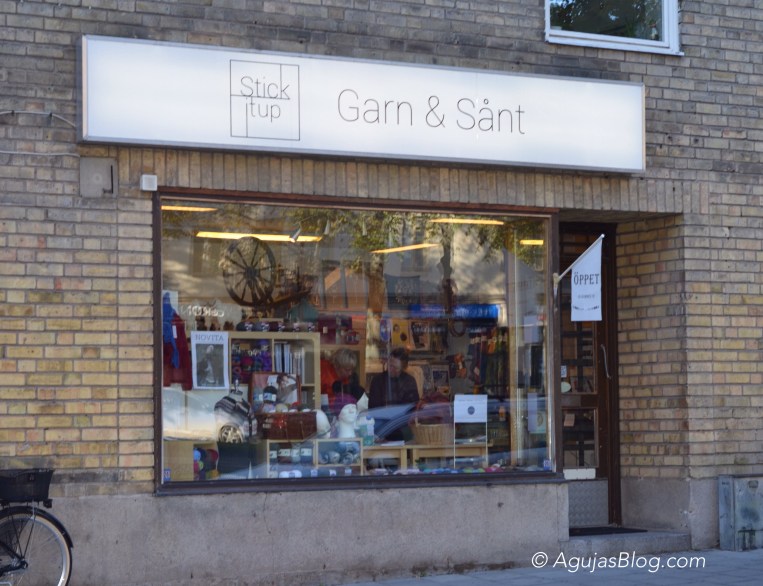
It’s impossible to visit Sweden and not run across yarn shops. Yet another reason why I ❤️ Sweden. I had a list on the ready for our forays around town. Our first stop was Stick it Up, located in SoFo only a brisk 15 minute walk from Monica’s apartment.
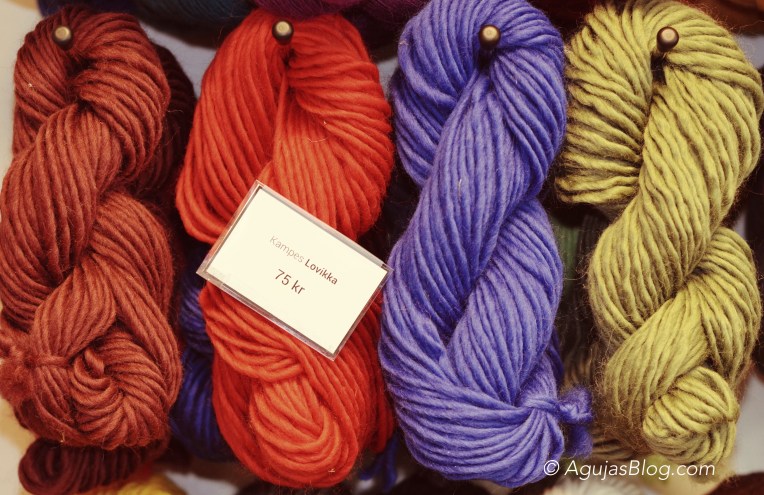
Stick it Up is a small shop with a nice selection of yarn in natural and man-made fibers. The owner was kind and friendly and explained the sources of the various yarns. I narrowed my selection to these 100% wool skeins intended for Lovikka mittens, which the owner explained were traditional in Sweden. Once home, I looked up the history and found a nice summary about the origin of the mittens on the Heart of Lovikka website. I brought home two skeins of a lovely green (not pictured here). Stick it Up is located at Ringvägen 64, 118 61 Stockholm, tel. 08-642 00 13.
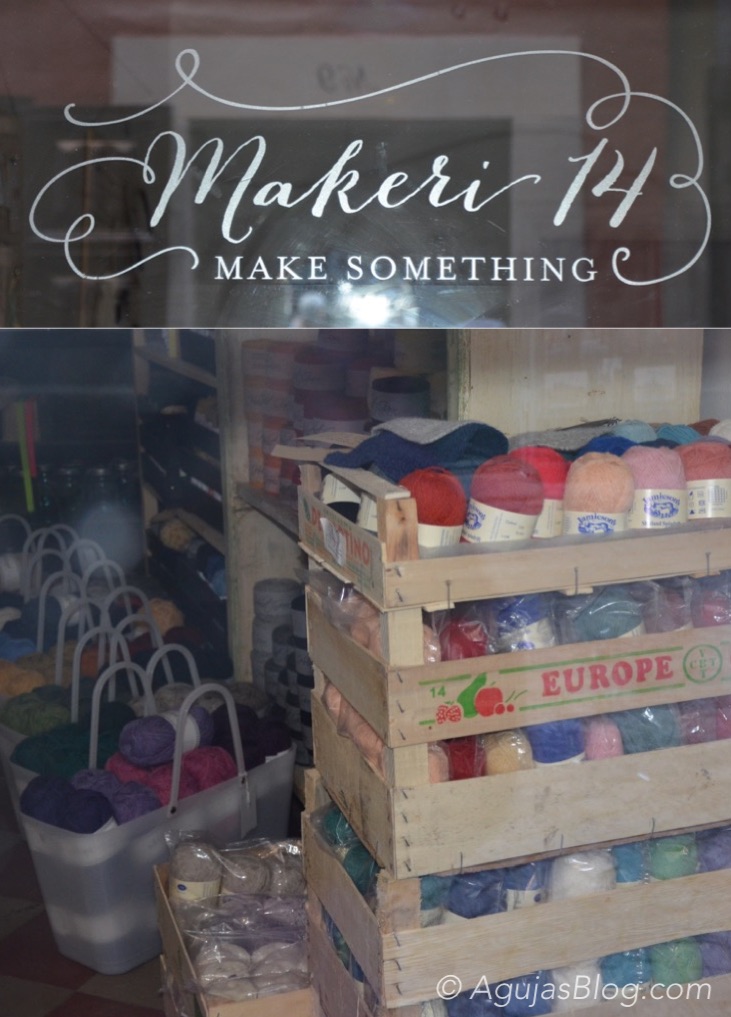
Content with my purchases, we headed over to Gamla Stan to explore the old town center. As we meandered through the cobblestone streets, I spotted this in a dark window – yarn!
Alas, as I got closer, the shop was closed. All I could do was cup my hands against the window and look longingly at the baskets full of yarn. The shop was tiny, meant only to walk in, buy and leave. Makeri 14 is located at Köpmangatan 14, 111 31 Stockholm.
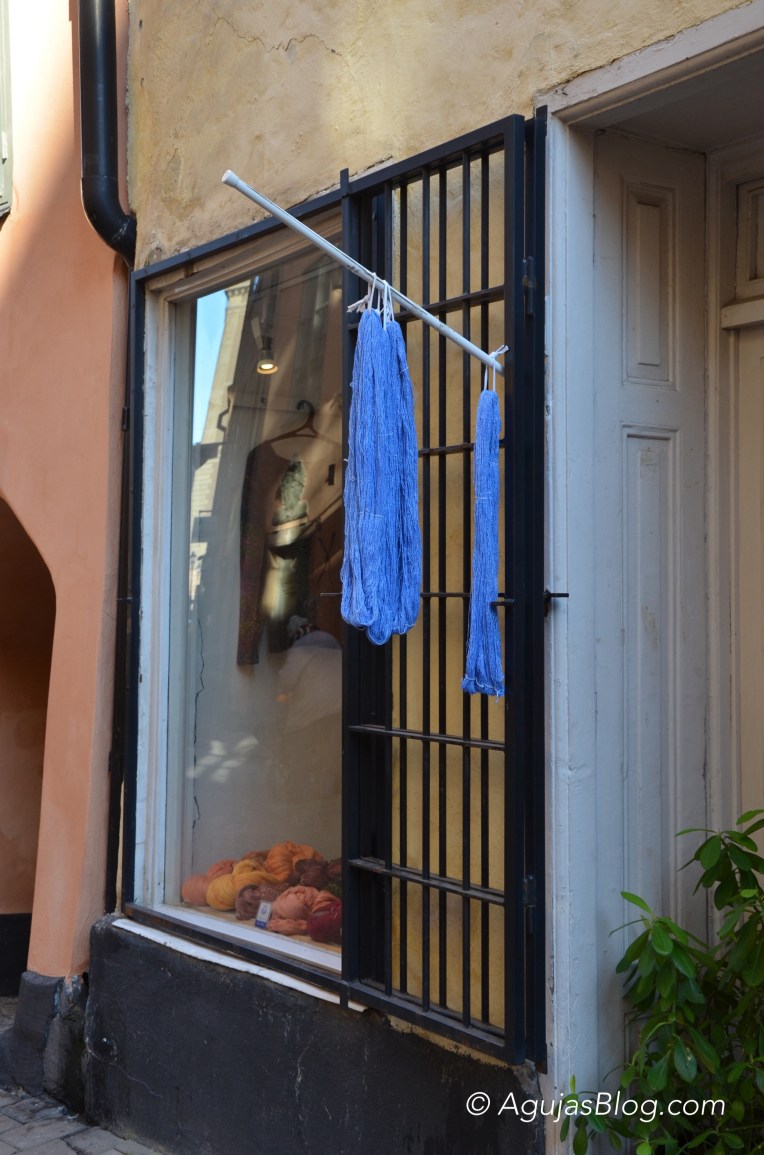
The next yarn shop was located near a statue of St. George slaying the dragon. I easily spotted it because this was hanging outside the door.
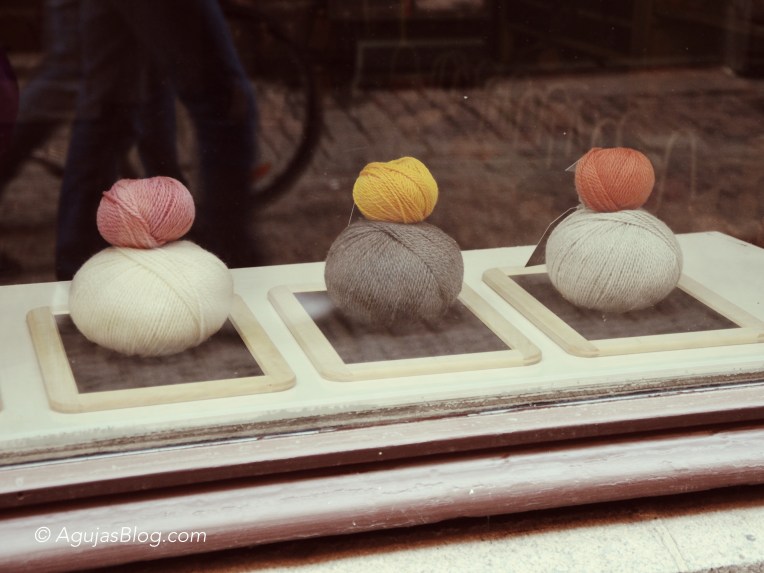
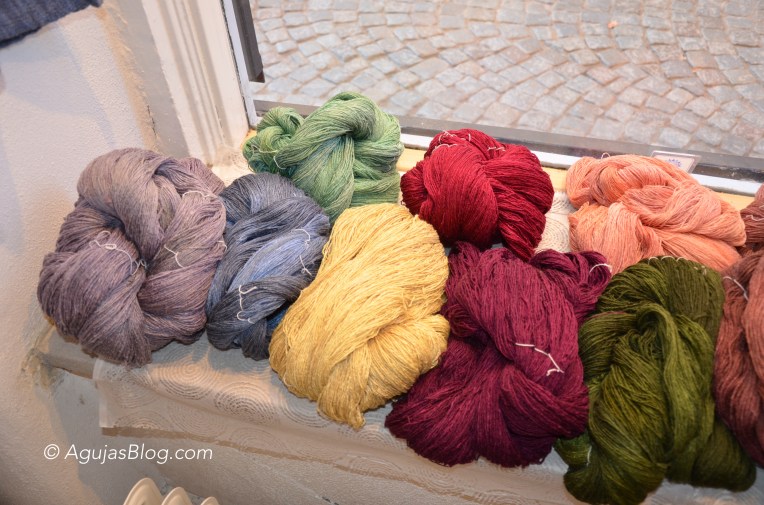
Anntorps Väv was also somewhat small but had a luscious collection of yarn in natural fibers. Just look at these 100% silk beauties in the window! The proprietress spoke a little bit of English and I spoke not a bit of Swedish but we managed to point and understand each other perfectly. The silk is spun for the store and she hand dyes it in these jewel-tones.
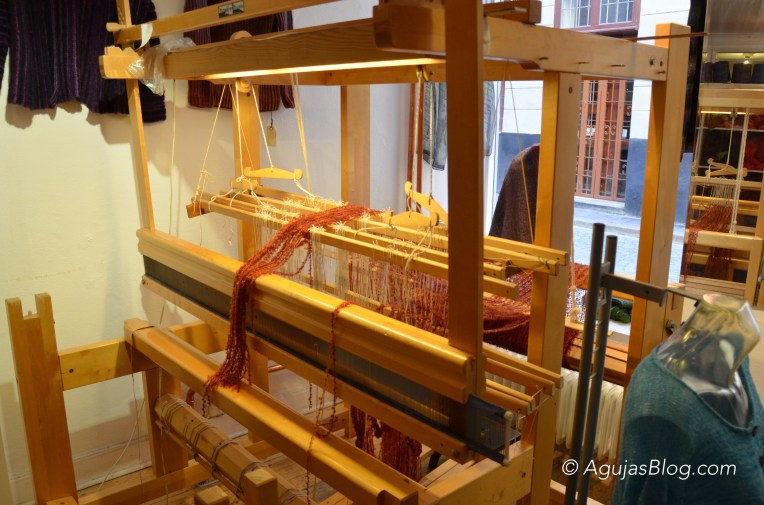
The other reason the shop is small is because this large loom takes up most of the space. When we walked in, the proprietress was weaving on it. In the store were large fluffy blankets she had woven on the loom. Anntorps Väv is located at Österlånggatan 11, 111 31 Stockholm, tel. 0046(0)8 676 00 23. It’s a few doors down from Stockholms Gästabud Bar and Bistro where we had those fabulous Swedish meatballs (pictured in previous post).
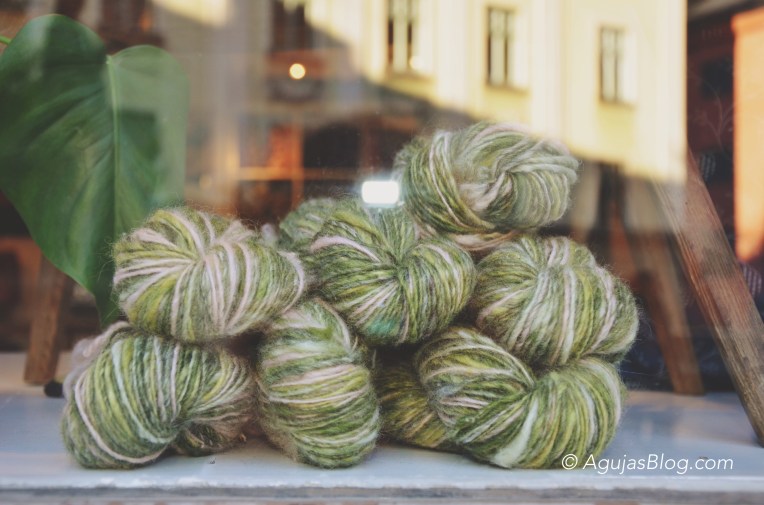
Window shopping in Gamla Stan is heavenly when you spot things like these skeins.
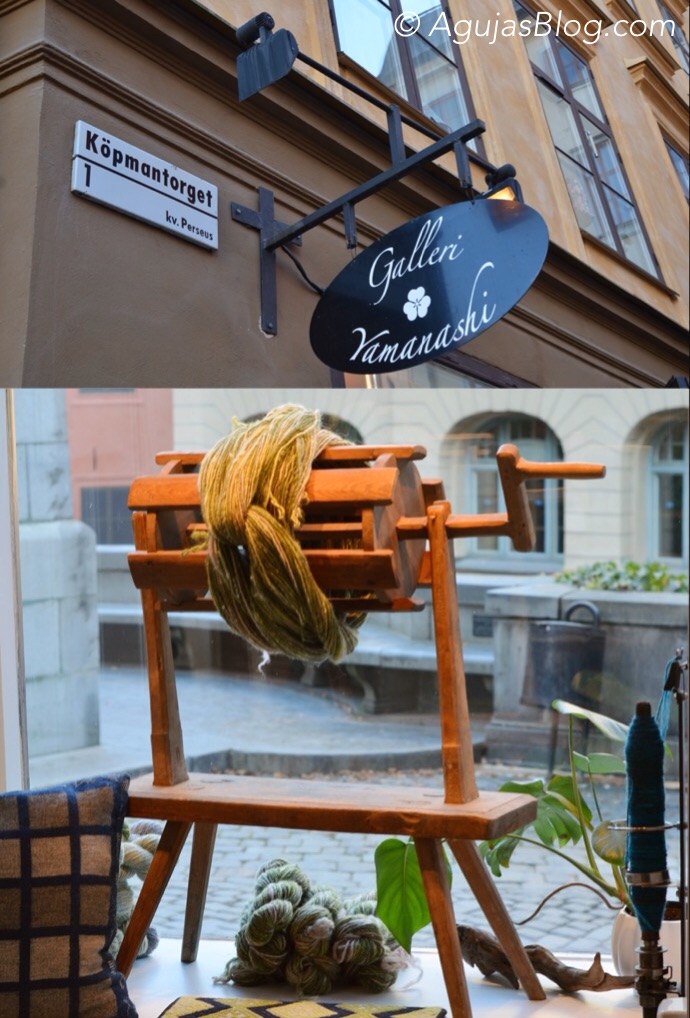
Galleri Yamanashi is located in a largish space in a busy corner with large windows facing the street. The gallery is very nicely laid out inside with plenty of room to look around. Throughout the space, there are examples of tools used in the spinning of yarn.
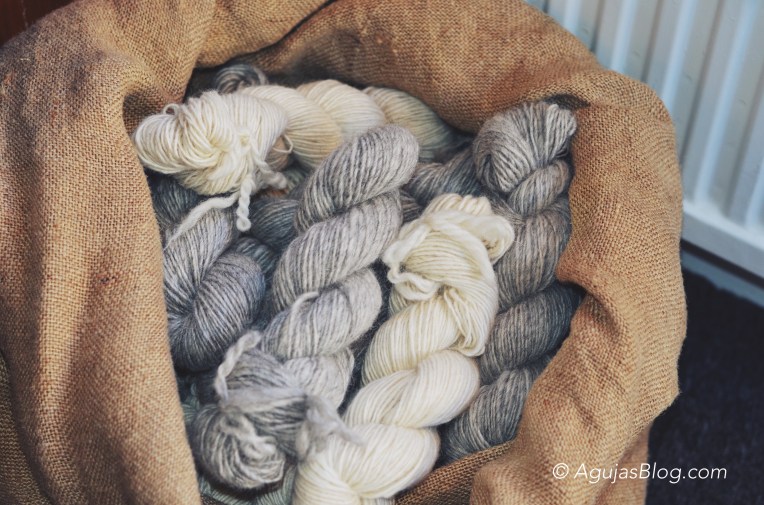
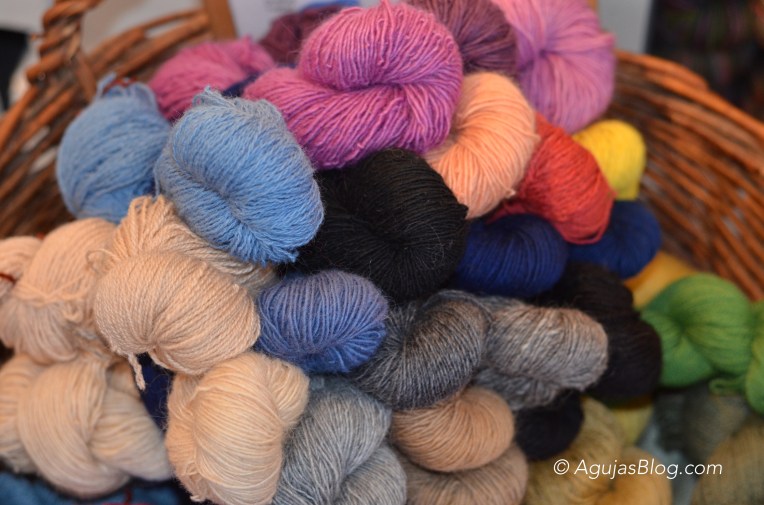
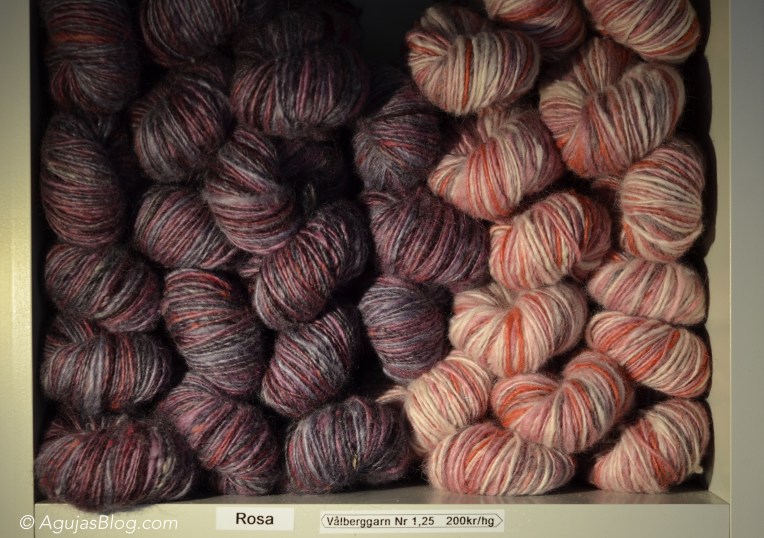
Their selection of yarns was nicely curated and presented. There were natural skeins of wool in burlap sacks and dyed skeins in large baskets. A large wall cubby housed skeins in various weights and colors.
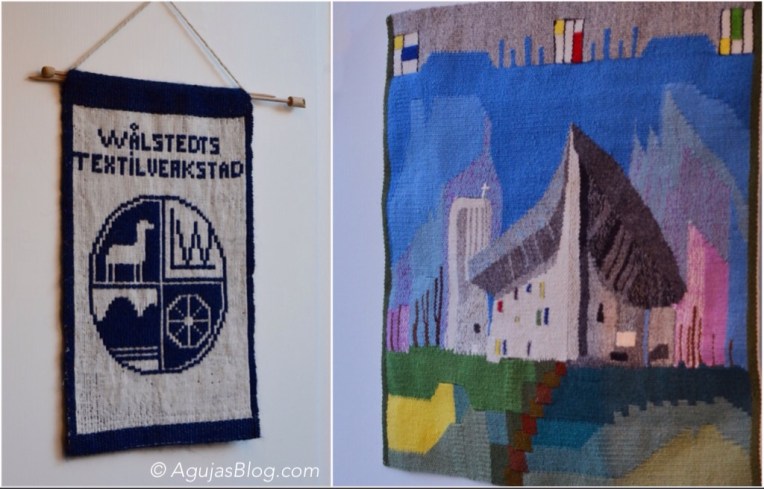
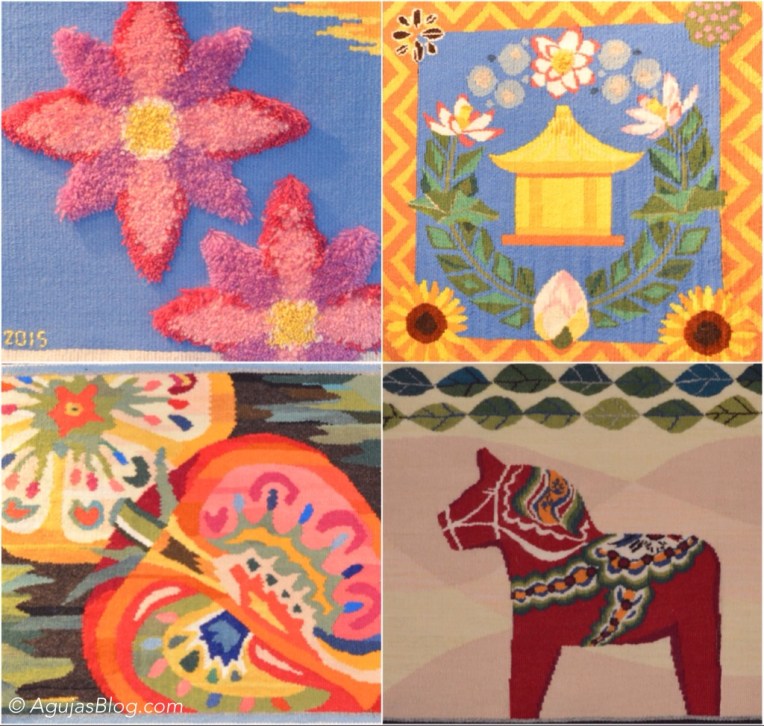
During my visit, the shop had a special exhibition showcasing entries from the 2015 Wålstedts Textile Art Contest. The contest is a knitting and weaving competition between Sweden and Japan using Wålstedts yarns. To see the other winning entries in both weaving and knitting categories, go to galleri-yamanashi.se.
Left: Wålstedts Textile Art banner. Right: The chapell Notre-du-Haut by Ayako Murota.Top Left: Weaver-Jyuri Nagayo. Top Right: Praying reconstruction and rebirth of eastern Japan by Mieko Sano. Bottom Left: Received Excellence Award, tomato by Weaver-Kaoru Yoneda. Bottom Right: Weaver-Maki Kimimori.
I was curious about Wålstedts yarns. According to the gallery’s website, the Wålstedts spinneri is one of the oldest spinning mills in Sweden dating back to 1934. Their fibers are sourced from Swedish sheep and have been cleaned, spun and dyed by four generations of the Wålstedts family. The following video from the Wålstedts Textilverkstad website depicts gorgeous Swedish country landscapes and the process the family uses to make this beautiful yarn.
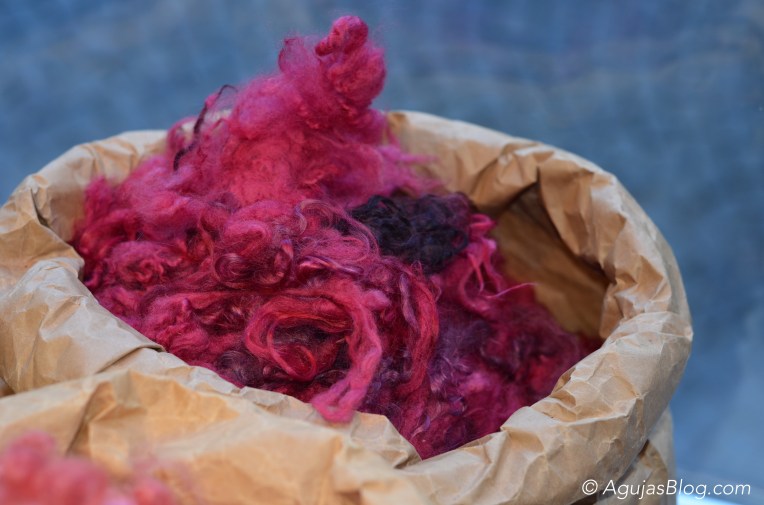
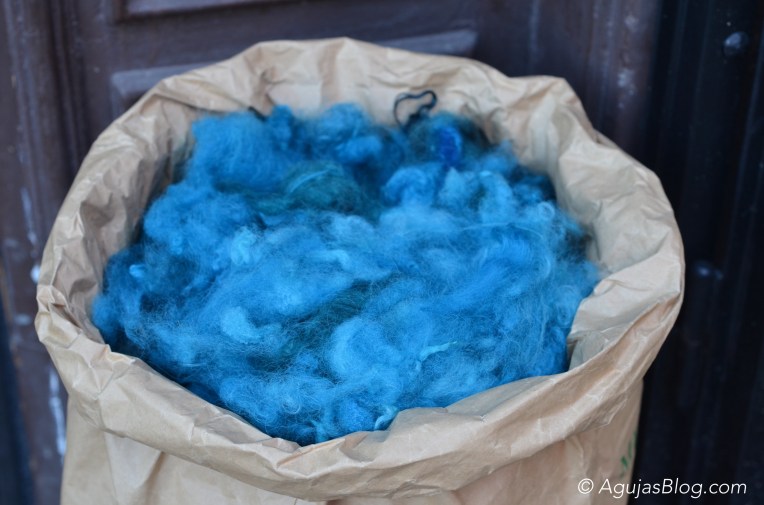
There were several bags full of wool fibers from the Wålstedts factory dyed in rich colors around the gallery. Galleri Yamanashi is located at Köpmantorget 1, 111 31 Stockholm.
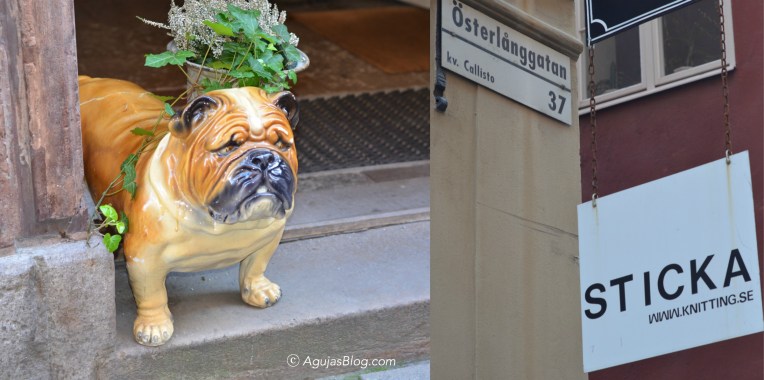
The final yarn shop I visited was Sticka, also located in Gamla Stan. At the entry, I was greeted by this ferocious ceramic bulldog – too cute!
The interior of Sticka looks more like a clothing shop than a yarn store. Displayed on racks throughout the space were beautiful, airy knitted items for purchase, such as shawls and sweaters. They had a small but nice selection of yarns from various countries but not too many local yarns. Sticka is located at Österlånggatan 37, 111 31 Stockholm, tel. +46 8 23 37 37. For some reason, the website will not display but here is a link to their Facebook page.
That concludes my Swedish yarn crawl. I know there were many more yarn shops that I could not possibly visit during my stay. Good enough reason to return one day!
Visiting an island with such a rich history and with its very own breed of sheep, yarn was unquestionably on the itinerary. Everywhere we walked in the old town of Visby, there were statues of sheep in recognition of the role that sheep have played in the island’s history. Farmers kept sheep and used their fleece to make clothing to keep warm during the snow-covered winters.
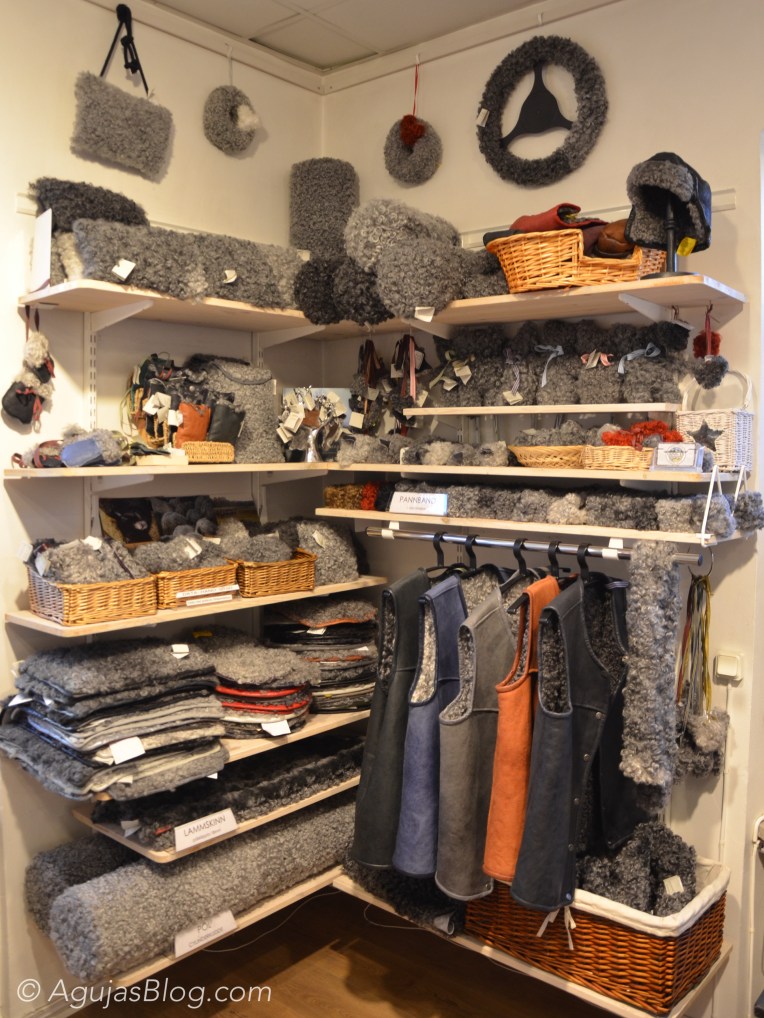
Nothing was wasted. The curly fleece could be found on bags, pillows, clothing, seat cushions and phone cases.
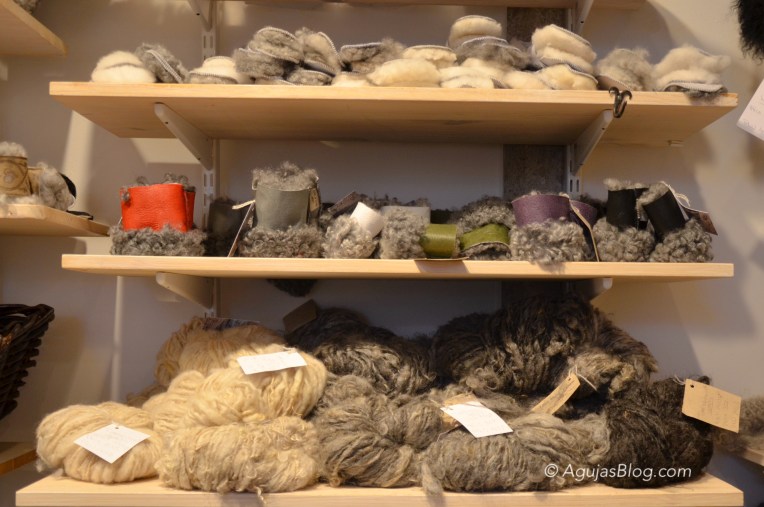
One place to get all sorts of sheepish goodies was at Kvinnfolki. The items at Kvinnfolki are the handiwork of a women’s collective. They make everything by hand in their homes or studios, such as casting pottery and spinning their own yarn. They are located on Donners Plats, Visby’s town square.
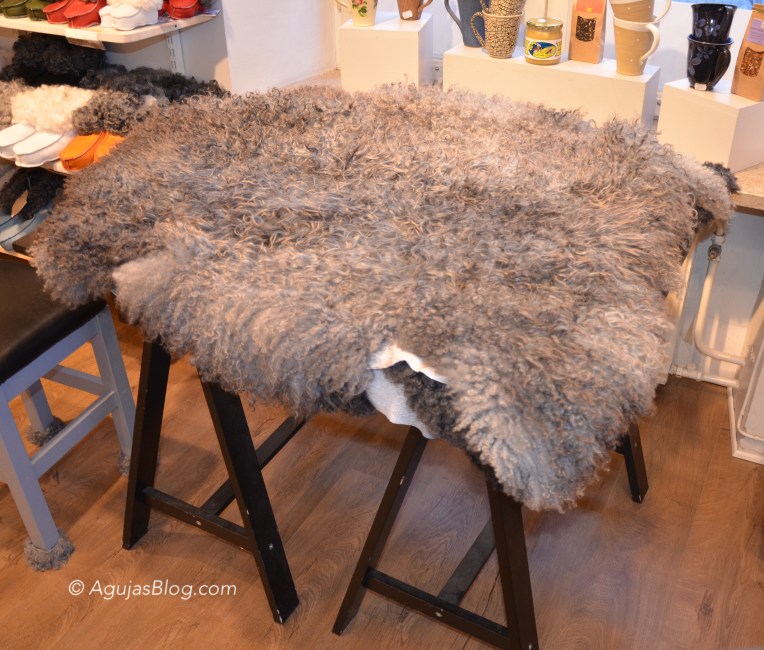
These sheep pelts were oh-so-soft to touch and so warm! They even smelled sheepish. And see those fluffy slippers to the left? I brought Mom a pair. She says she puts them on as soon as she gets home every day and loves how they keep her feet warm and cozy.
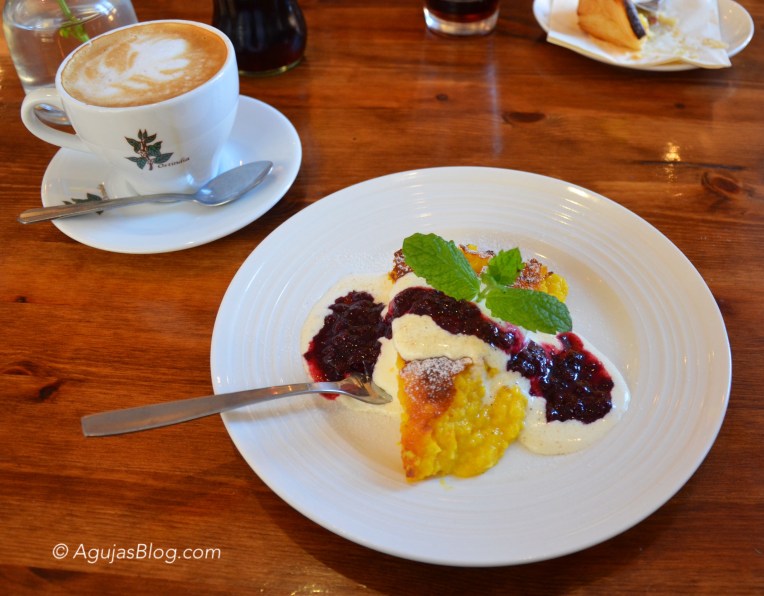
Before moving on to the next shop, we required sustenance. At an adorable little place called Ett Rum För Resande Café (Room for Traveler’s Café), I had the Gotland island specialty – saffranspannkaka, a saffron pancake with red berries and cream. Paired with a cappuccino to warm up my bones, it was the perfect afternoon snack. The chef/owner of the tiny café was so down to earth. Customers of all ages would come in and catch up on the latest news. He must know everyone in town! We spent a while talking with him – he prepares and cooks everything himself using fresh ingredients. He always had some very cool music on and he made a killer pasta dish when we returned the next day for lunch.
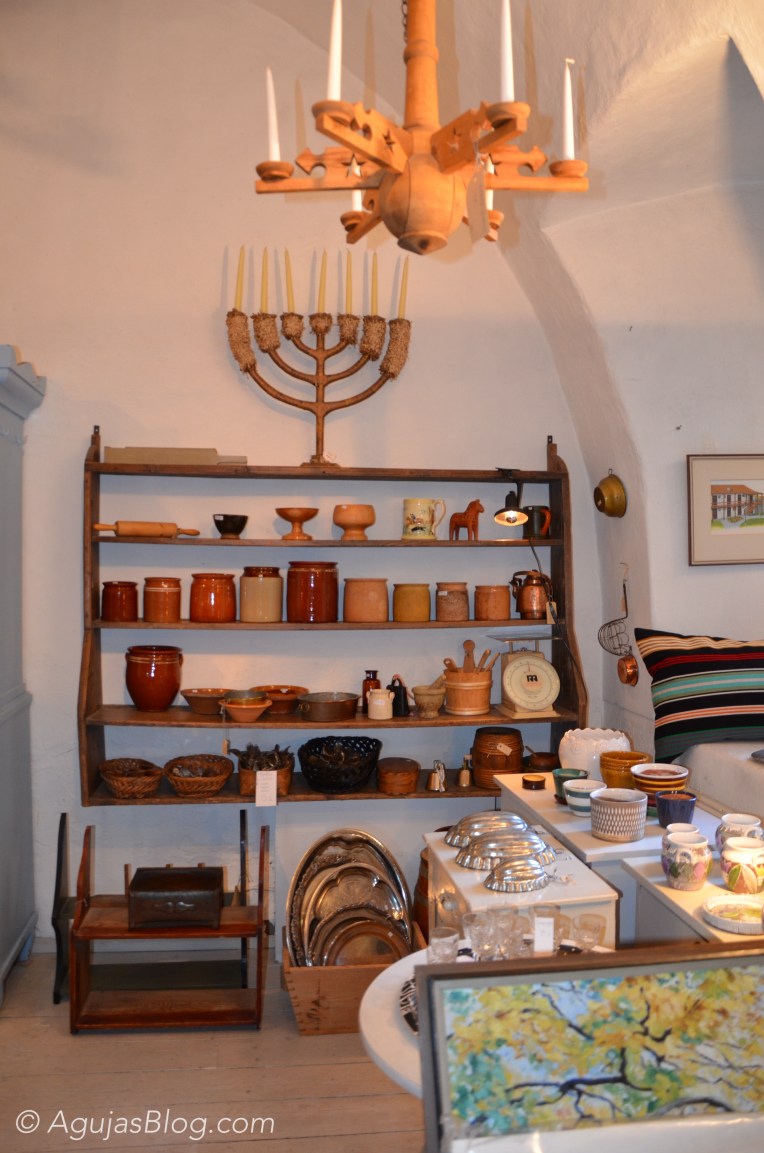
Right across the cobblestone street from the café is an antiques store named Akantus. The middle and back rooms of Akantus are filled with wonderful antiques that included furniture, glassware, pottery, paintings and other decorative items.
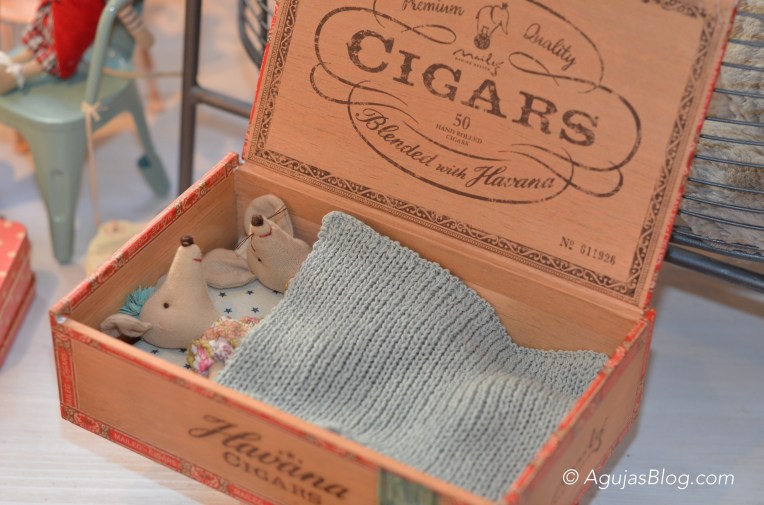
In the front room, they stock all sorts of whimsical pretty things, like these mice in their cigar box bed – complete with knitted blanket!
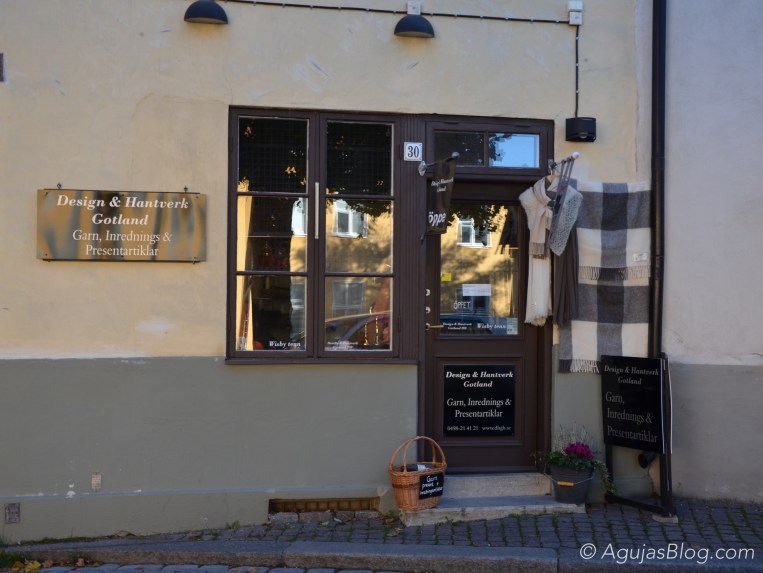
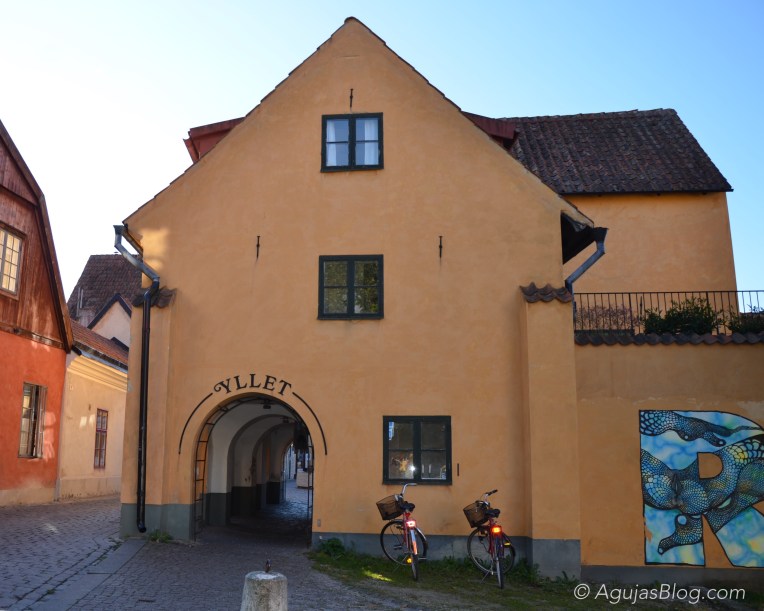
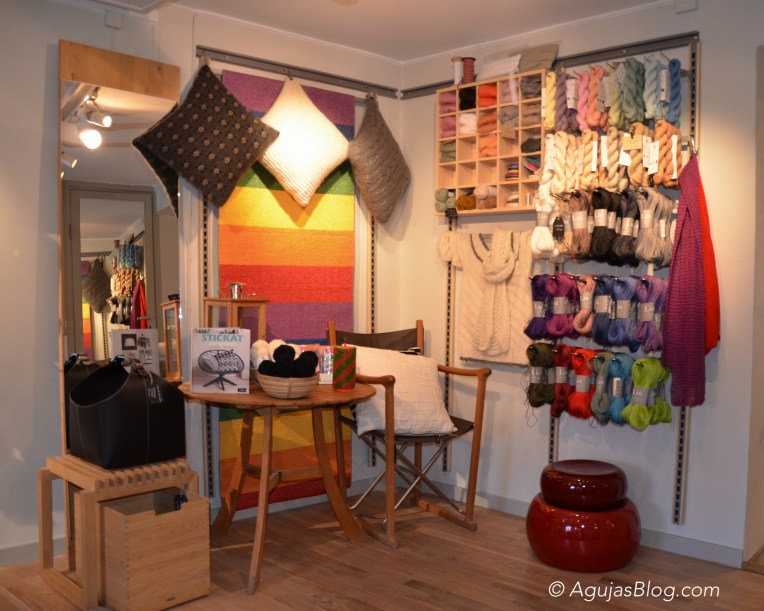
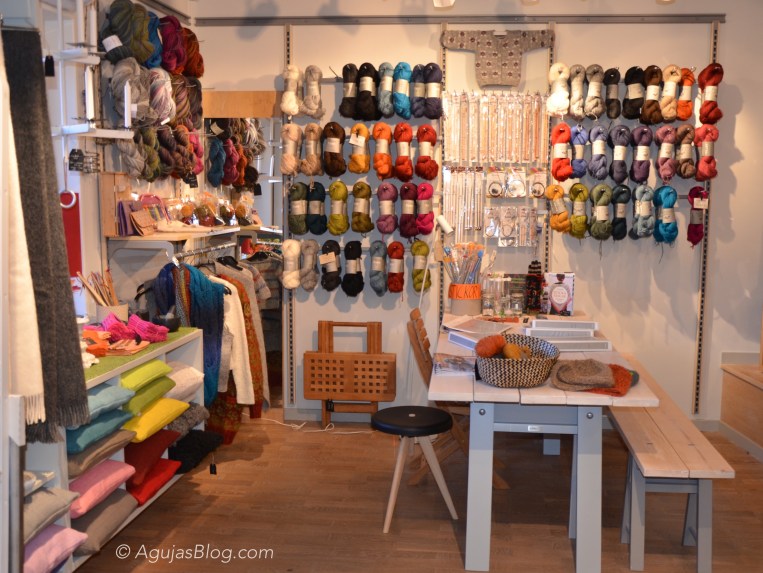
Further down the street, there are no less than three yarn shops next to each other. One of them was closed for the season but fear not because the other two were open for business. The first stop was at Design & Hantverk Gotland which features yarn and many other hand crafted items from local artisans such as ceramics and glassware. The owners themselves design and make items in pewter, iron and wood.
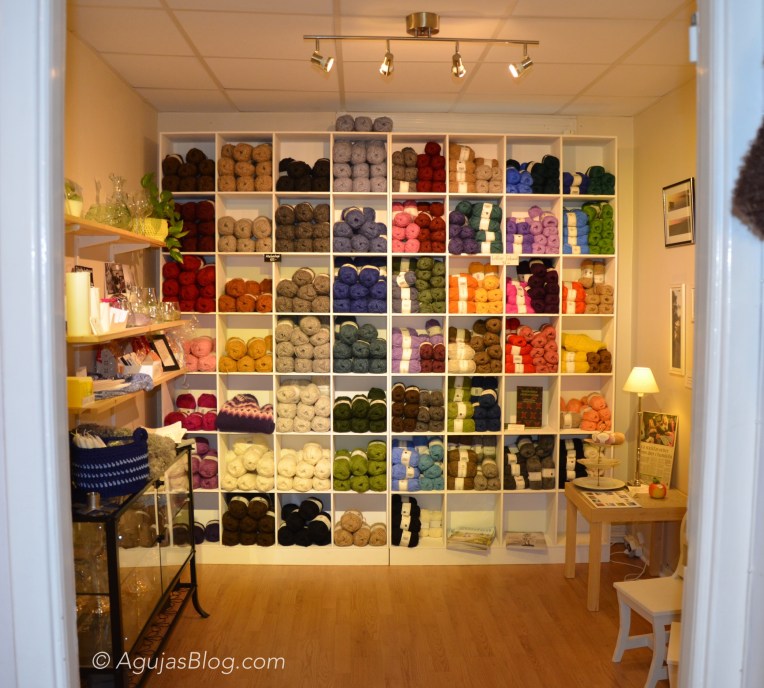
Of course, my attention went straight to the beautiful yarn displays.
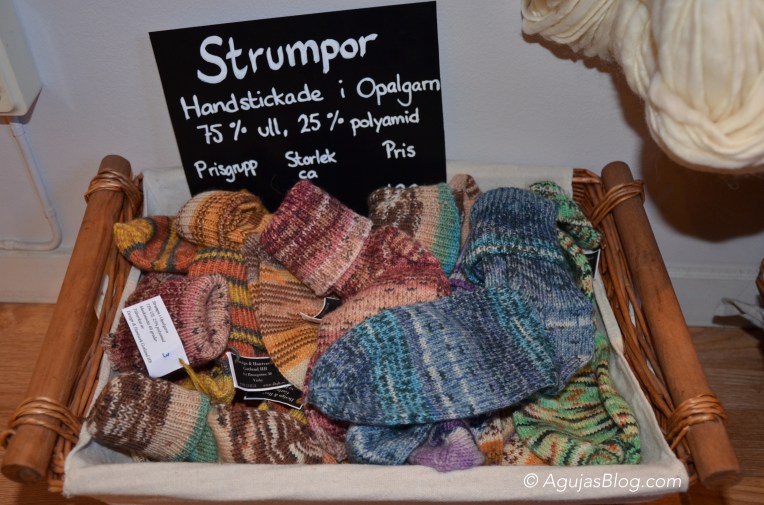
The owner told me that she hand knit all of these socks! They were thick and colorful and showcased the sock yarn in her shop.
The owner, Frida, is a lovely young woman who inherited her love of yarn from her mother. Her mother used to export yarn spun from Gotland sheep. Now Frida is at the helm. She sources the fleece locally on the island and has it spun in Finland. She explained that the fleece of the Gotland sheep is very fine, more similar to mohair than wool. She found a spinnery in Finland with the right equipment for spinning the long, delicate fleece. She personally selects the dyes and sells the yarn under her own Yllet label. She is living the life I imagine!!
In addition to fabulous yarn for hand knitting, she has the yarn machine-knit into sweaters and other clothing. Local women assemble the machine-knit pieces. My husband liked a simple sweater with clean lines but they did not have his size available in the dark gray color he preferred. Frida made a phone call and a local seamstress assembled the sweater in his size and color of choice. It was ready the following day.
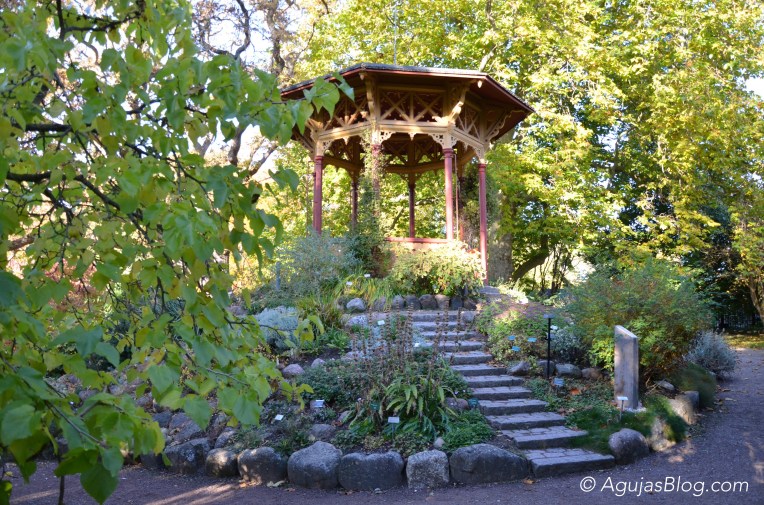
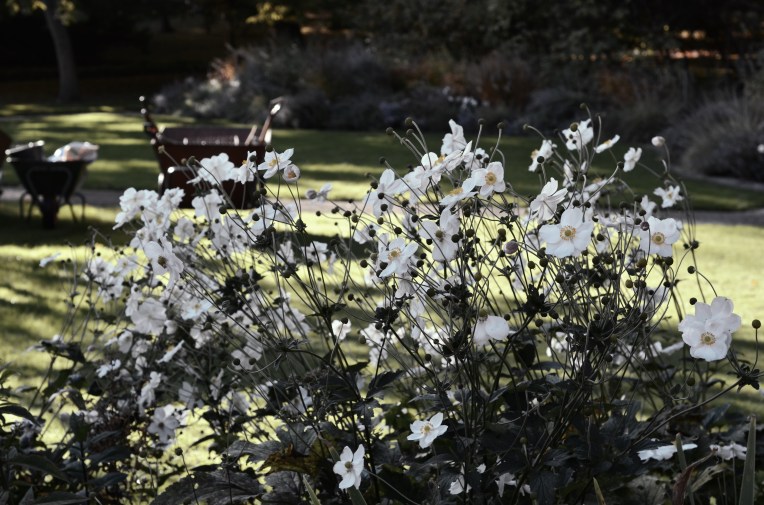
Toward the end of our stay, I decided to photograph my purchases in Gotland rather than waiting until I got home. Across the street from our hotel were the Botanical Gardens. Even in the Fall, the gardens were lush and verdant.
Gazebo built in 1863.
The gardens had their own particular history.
In 1814 a few young men gathered to bathe in the sea, drink punch and socialize. They decided to form the Society of the Bathing Friends (DBW). After a short time they wanted to combine pleasure with usefulness… (Sign posted by the Friends of the Botanic Garden)
Among its contributions, the Society established a school for poor boys in 1815, a savings bank in 1830, and the Botanic Garden in 1855.
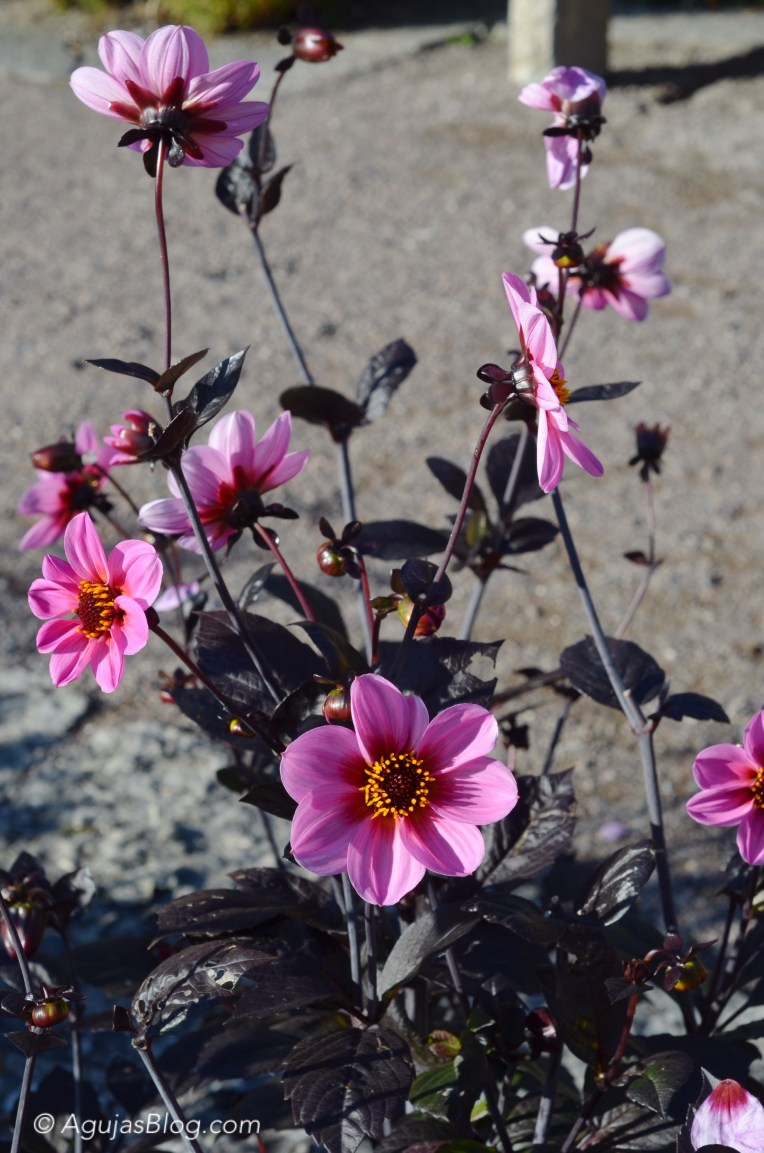
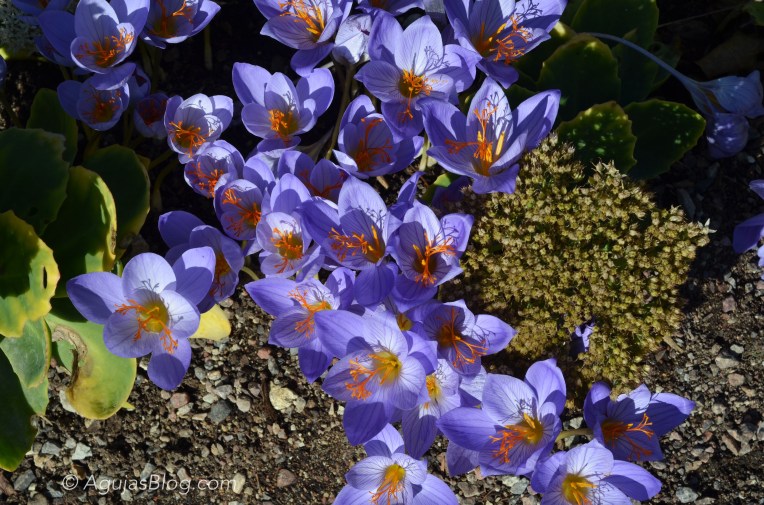
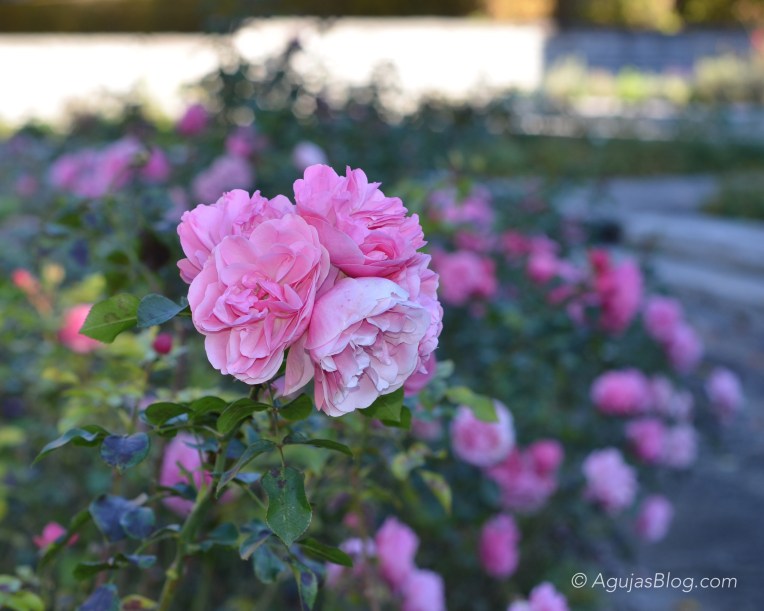
Dáhlia – Happy Single WinkCrócus – Oxonian.Rósa – Leonardo da vinci.
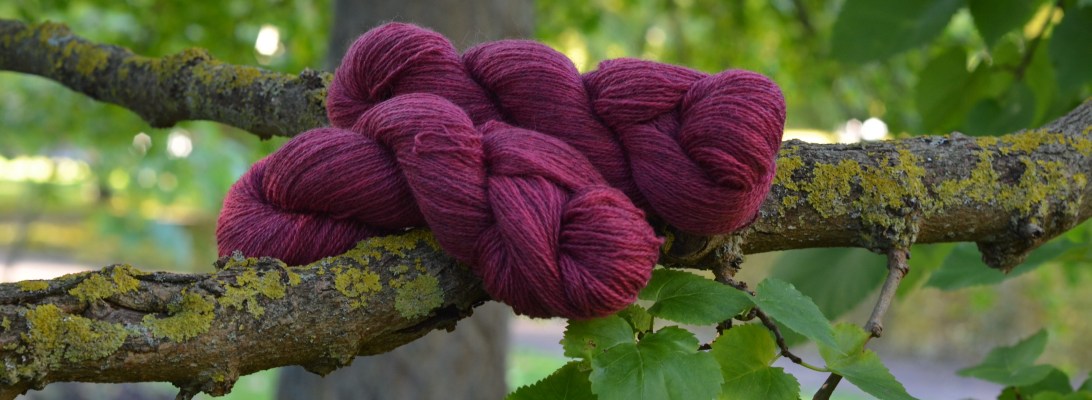
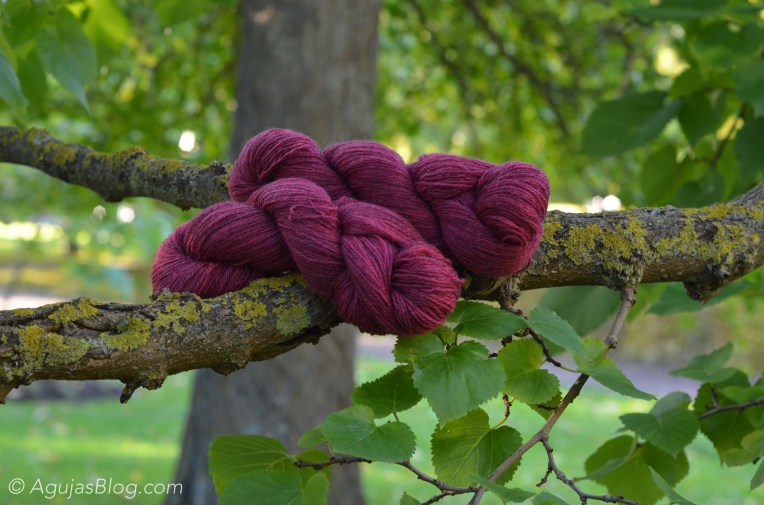
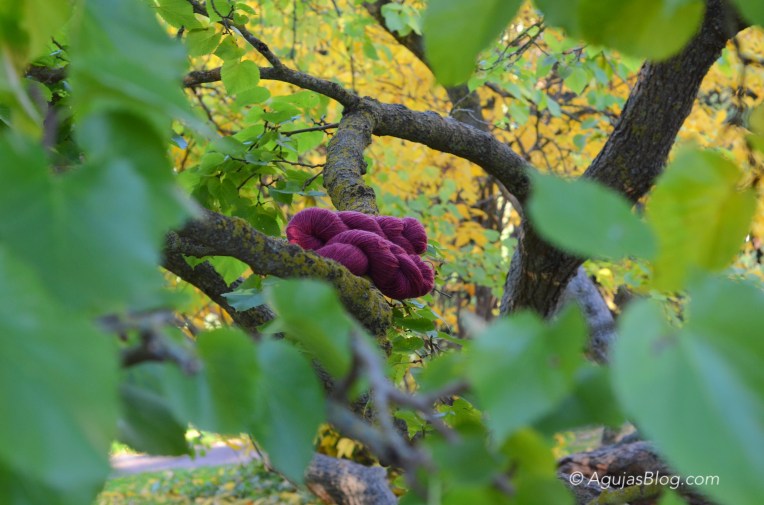
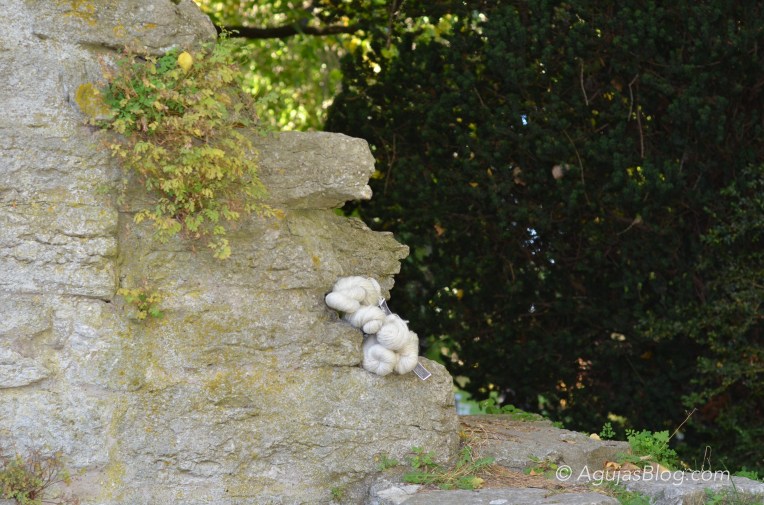
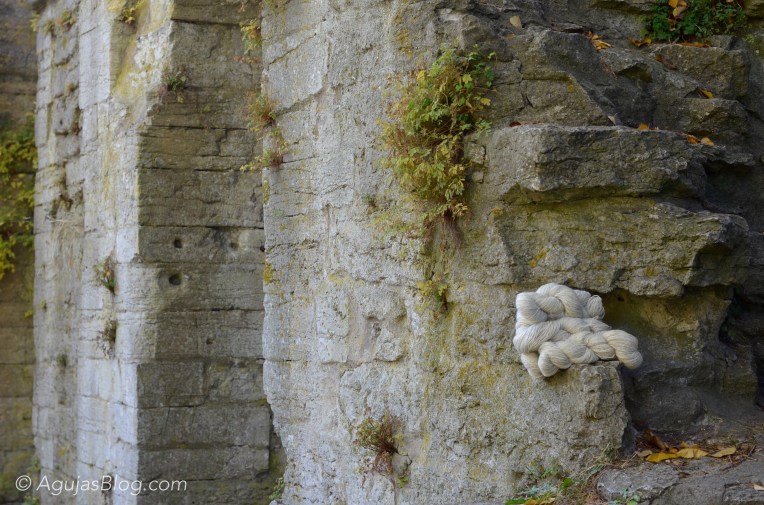
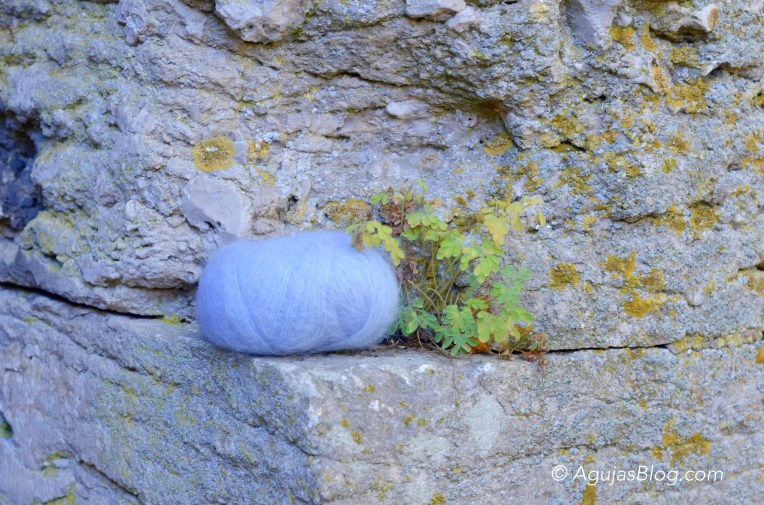
What better place than the botanical gardens for a photo shoot? I took my yarn lovelies to the gardens and arranged them in various poses for the camera. We had so much fun!
I call this one, “yarn among the leaves.”
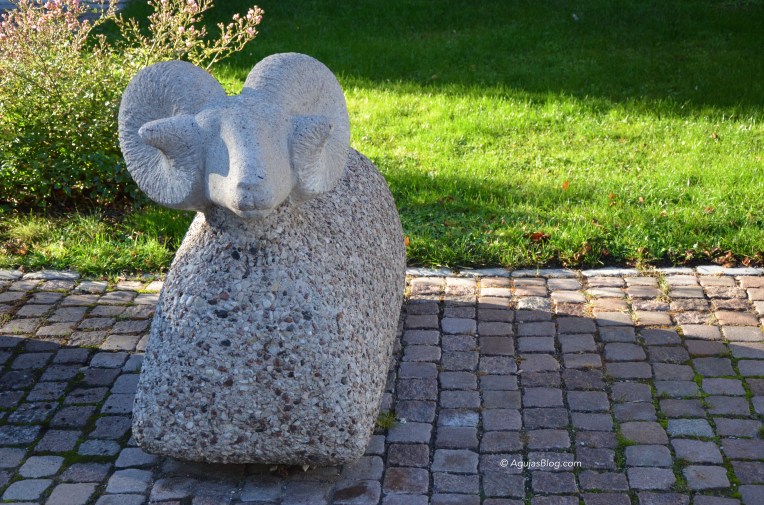
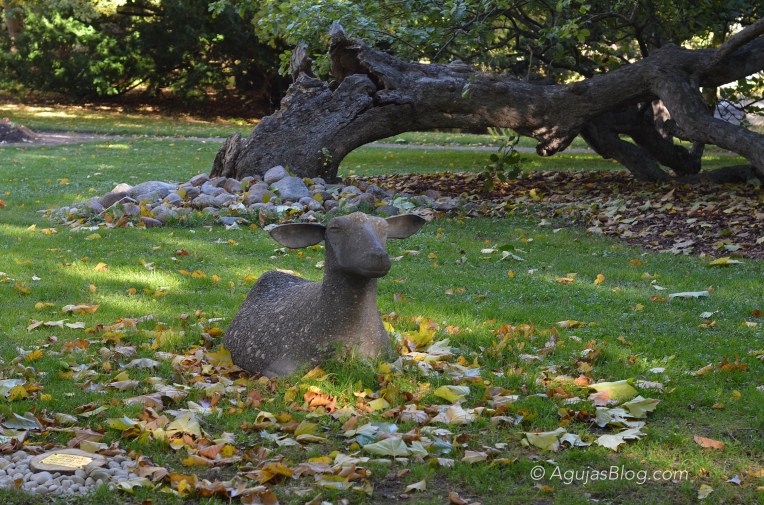
Walking around the gardens scouting good places for the photo shoot, there was this lovely sheep statue next to a fallen tree.
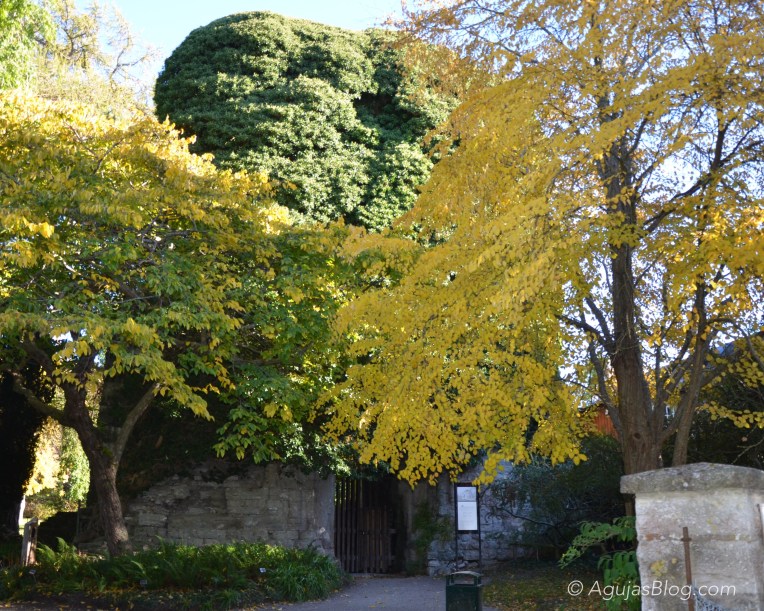
Also on the grounds are the ruins of S:t Olaf’s Kyrka.
In its day, St. Olof’s Church was among the biggest and most sumptuous churches in Visby. It dates from the early years of the 13th century. The church was named after the canonised king of Norway, Olof Haraldsson.
This church was a basilica, i.e. had a tall nave and lower north and south aisles. Parts of the west tower are all that now remains. The walls of the church were demolished after the Middle Ages and the stone was used for buildings in Visby.
Behind the church, the sun was filtering in through the trees.
I call this series, “yarn among the ruins.” (LOL)
Just a few meters outside the medieval wall surrounding the gardens was the icy Baltic Sea. Even though the air was cool, the sun was shining on a magnificent day.