Knitting Portraits

Ever since I started knitting, I have a tendency to look for artwork featuring either women knitting or spinning on old-fashioned wheels when visiting museums. I have been fortunate to visit both the Louvre in Paris and the Metropolitan Museum of Art (the Met) in New York. It was there that I discovered these first two paintings.

The first is called “By the Seashore” by Auguste Renoir on display at the Met. The woman is beautiful with her ruddy cheeks and penetrating eyes. According to the museum catalog, Renoir most likely painted this portrait in his studio and rendered the images of the sea and cliffs from memory. There is a distinct difference between the clear outlines of the woman (his mistress and later his wife) and the looser brushstrokes of the landscape behind her. After her gaze, I noticed the items in her hands – a knitting needle and something she is working on.
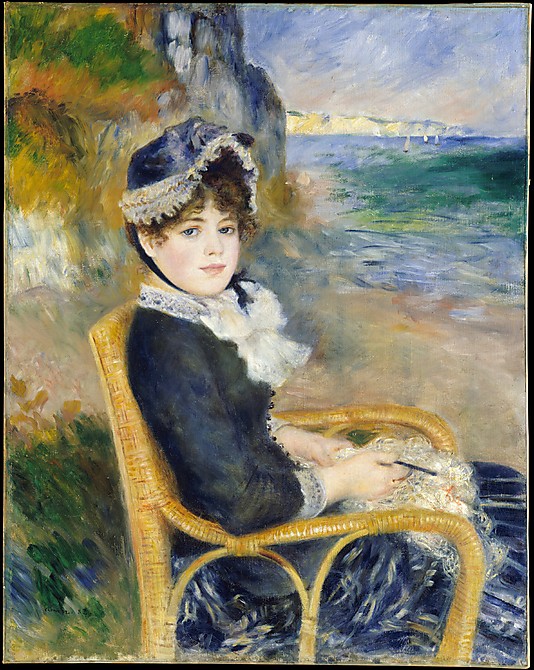
By the Seashore by Auguste Renoir
1883 – Oil on canvas

{source}

This next painting, “The Lacemaker” by Johannes Vermeer, is at the Louvre. Her face is so intently focused on her craft that it draws my eyes to her hands. My eyes then rest on the pillow with the loose threads spilling over.
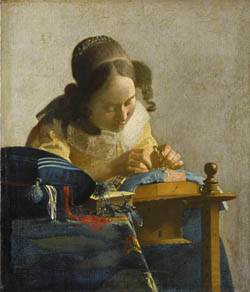
The Lacemaker by Johannes Vermeer
c. 1669-70 – Oil on canvas

{source}

I wish I could see this next one in person but it is in a private collection. The painting is “Young Woman Knitting” by Vincent Van Gogh. The girl stands out against the barren room. I am immediately entranced by the deep blues of her apron. The colors are in direct contrast to the browns of the floor and walls. You can just see her yarn trailing along her skirt to the ball on the floor. The scene feels so familiar.
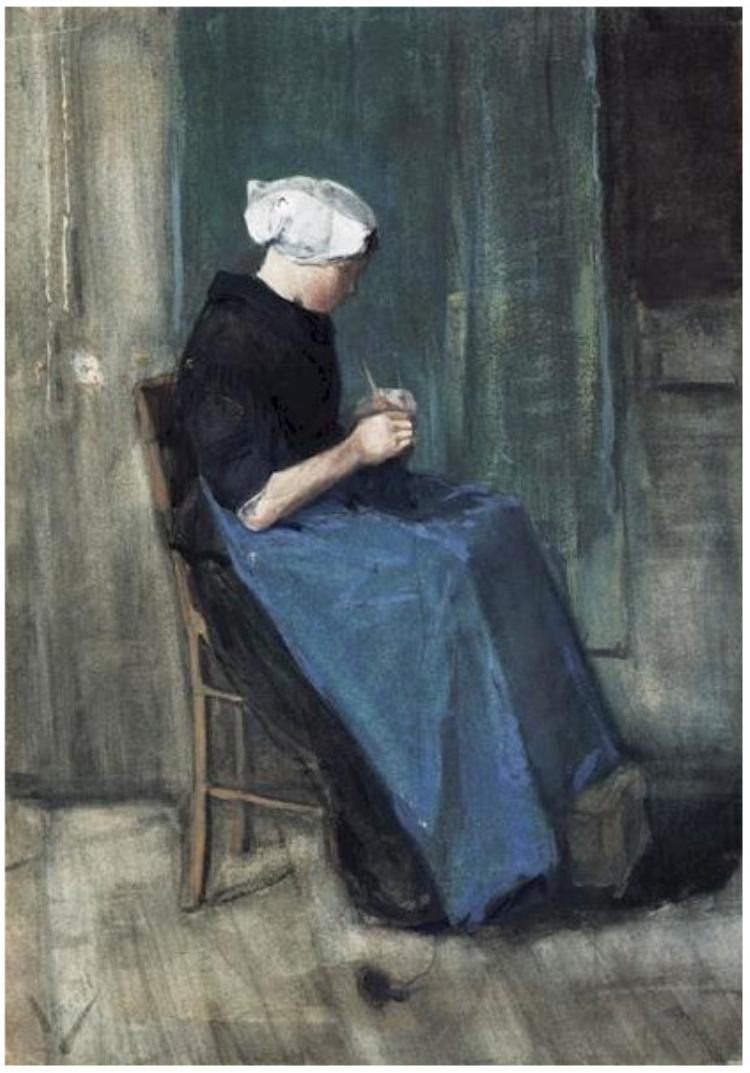
Young Woman Knitting by Vincent Van Gogh
1881 – Watercolor

{source}

This last painting is “Girl Sitting in the Garden” by Edouard Manet, also in a private collection. You can hardly see the girl’s face hidden under her hat as she watches her knitting. Even the knitting is loosely implied against the gray of her dress accented by that blue bow and the greenery in the garden.
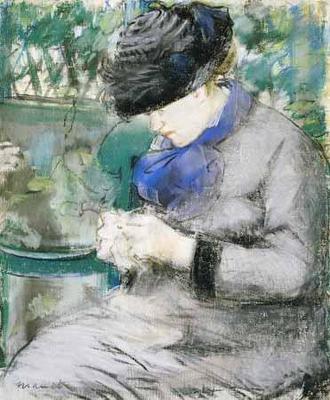
Girl Sitting in the Garden by Edouard Manet
1879 – Pastel on paper

{source}

If you were to google “paintings woman knitting,” many other options will present themselves. I like these and hope one day to see them again or for the first time in person.
Knitting On The Go

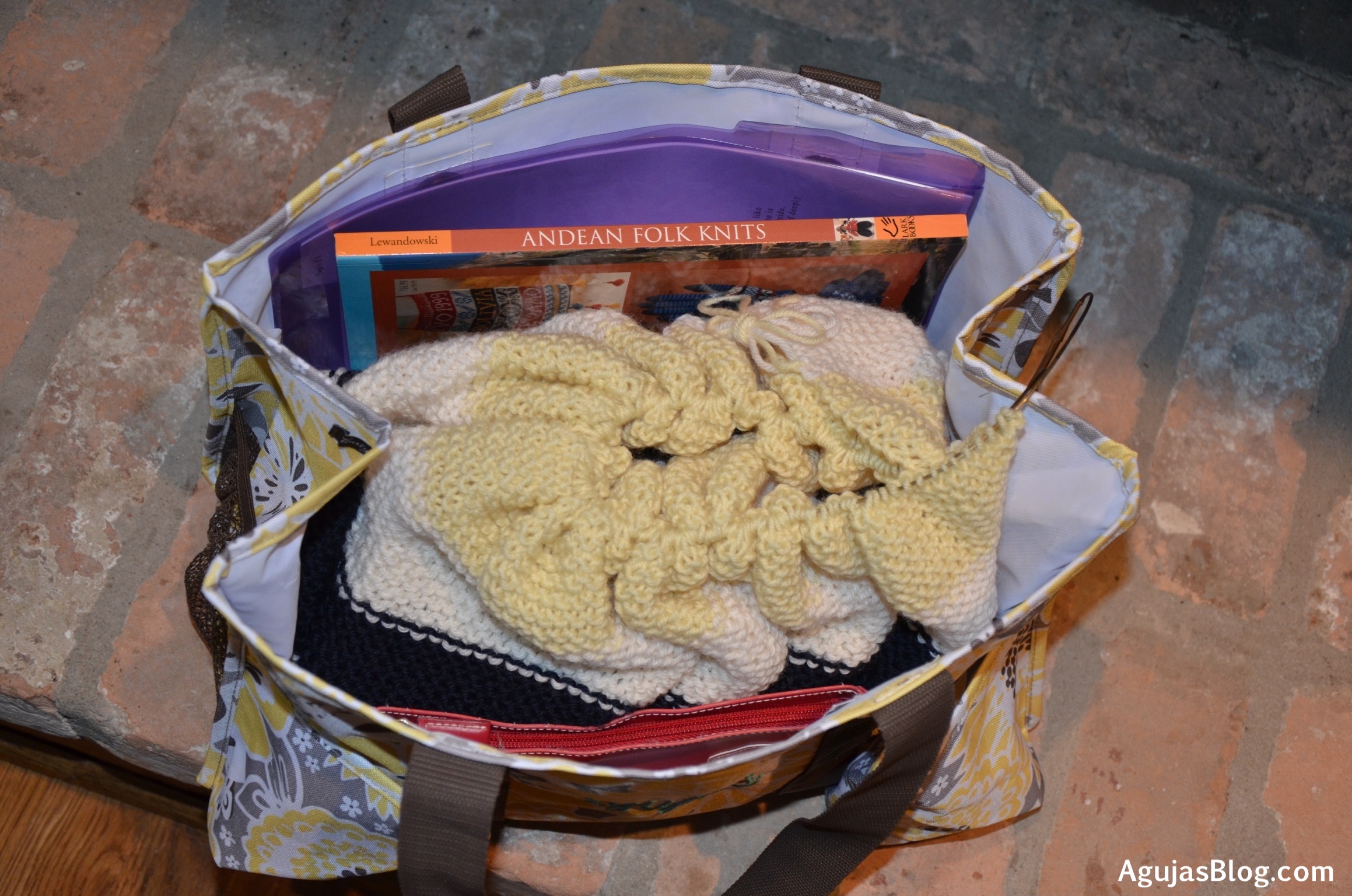
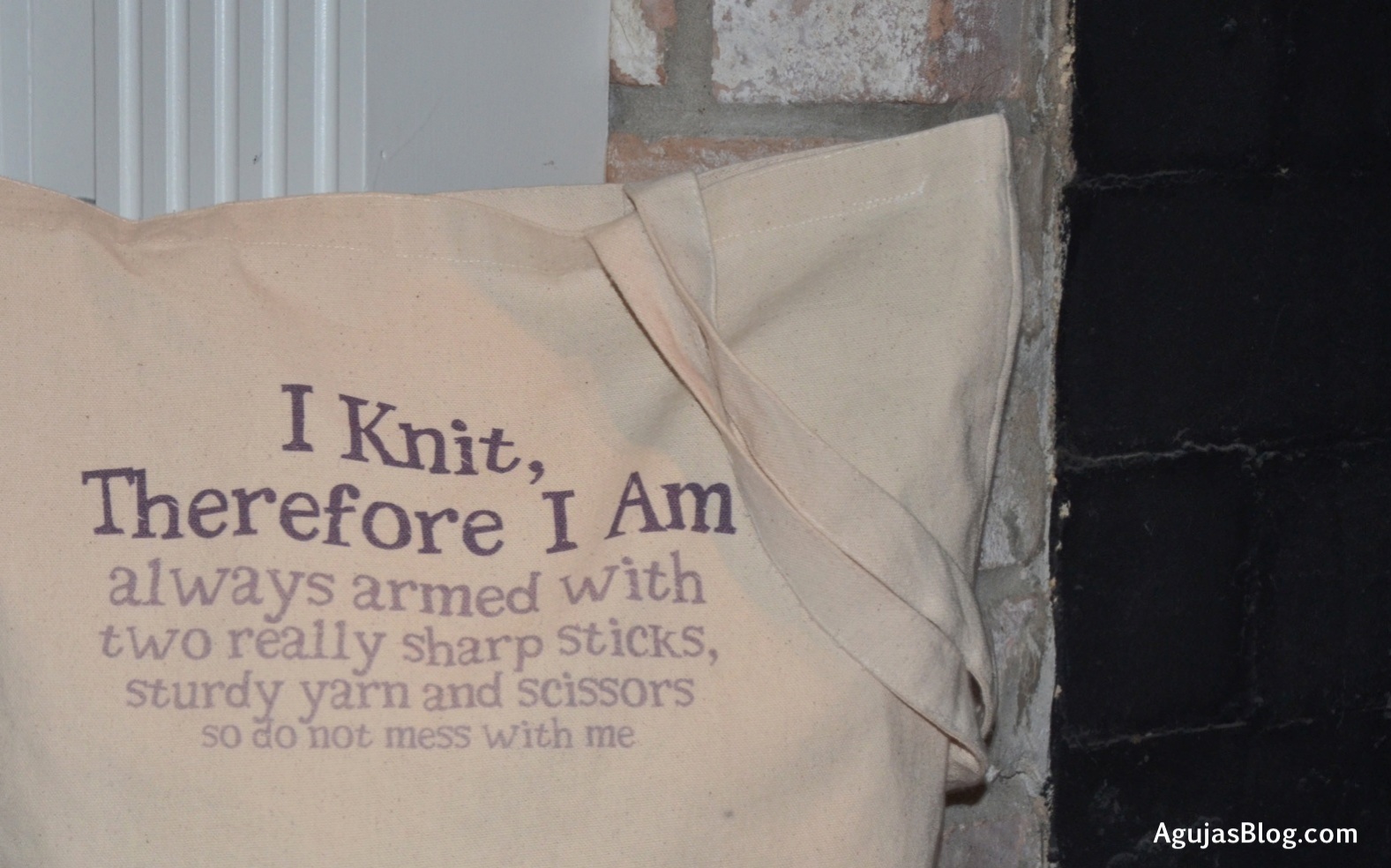
Like many knitters, I try to take a project along when I’m on the go. I sometimes tote my WIPs around in this bag by Crazy Aunt Purl available at CafePress. It’s roomy with long handles and it’s darn funny.

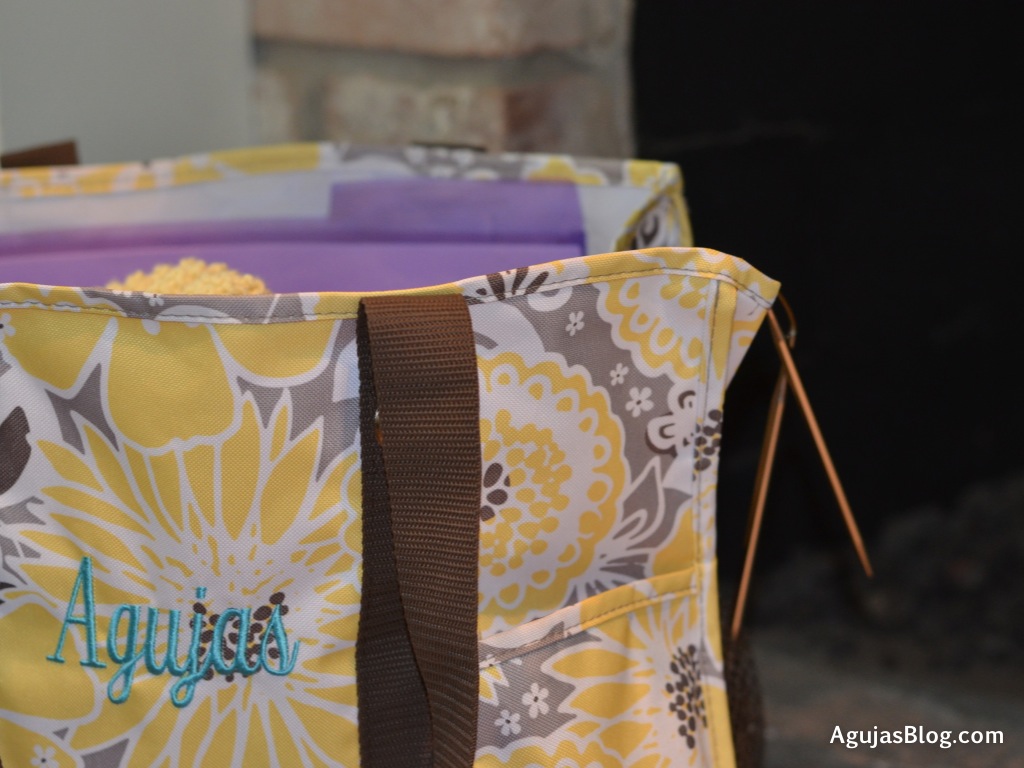
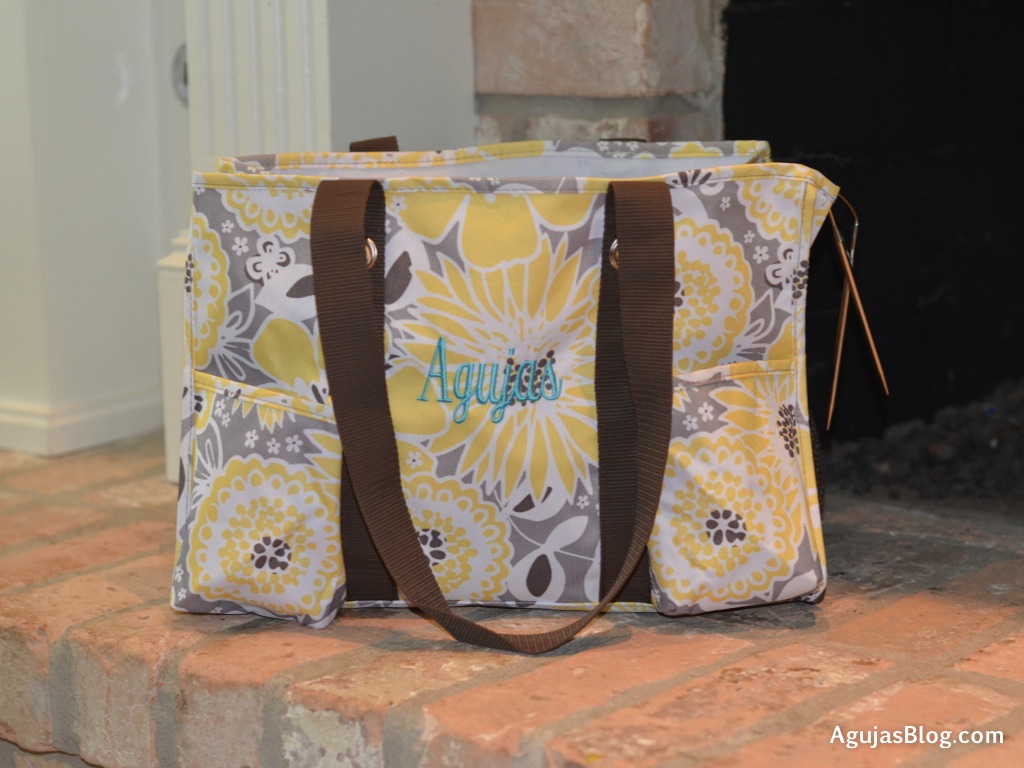
I recently received this bag and it is now one of my favorites. It was a gift from my sister who also sells them (full disclosure). It’s from a line called Thirty-One Gifts which specializes in home-based sales of monogrammed baskets, bags and other organizational items.

I like:

  • the colors – there are several patterns to choose from
  • the fabric – just wipe it down with a damp cloth
  • the size – just right for most WIPs plus a pattern, book or iPad
  • the shape – it stands upright on its rectangular base
  • the pockets – to store balls of yarn or tools or a water bottle
  • the personalization – have your name (or your blog’s) embroidered on it
  • the price – mine was a gift but they go for about $30

Here’s a look inside with my current work in progress. You can even spot my red tool bag tucked in there.

I’ve tried many other bags and was never quite satisfied with them – yarn catches on zippers, lack of extra pockets, easily tips over, or not very attractive. So far, these two are my favorites.

Travel Tools and Notions

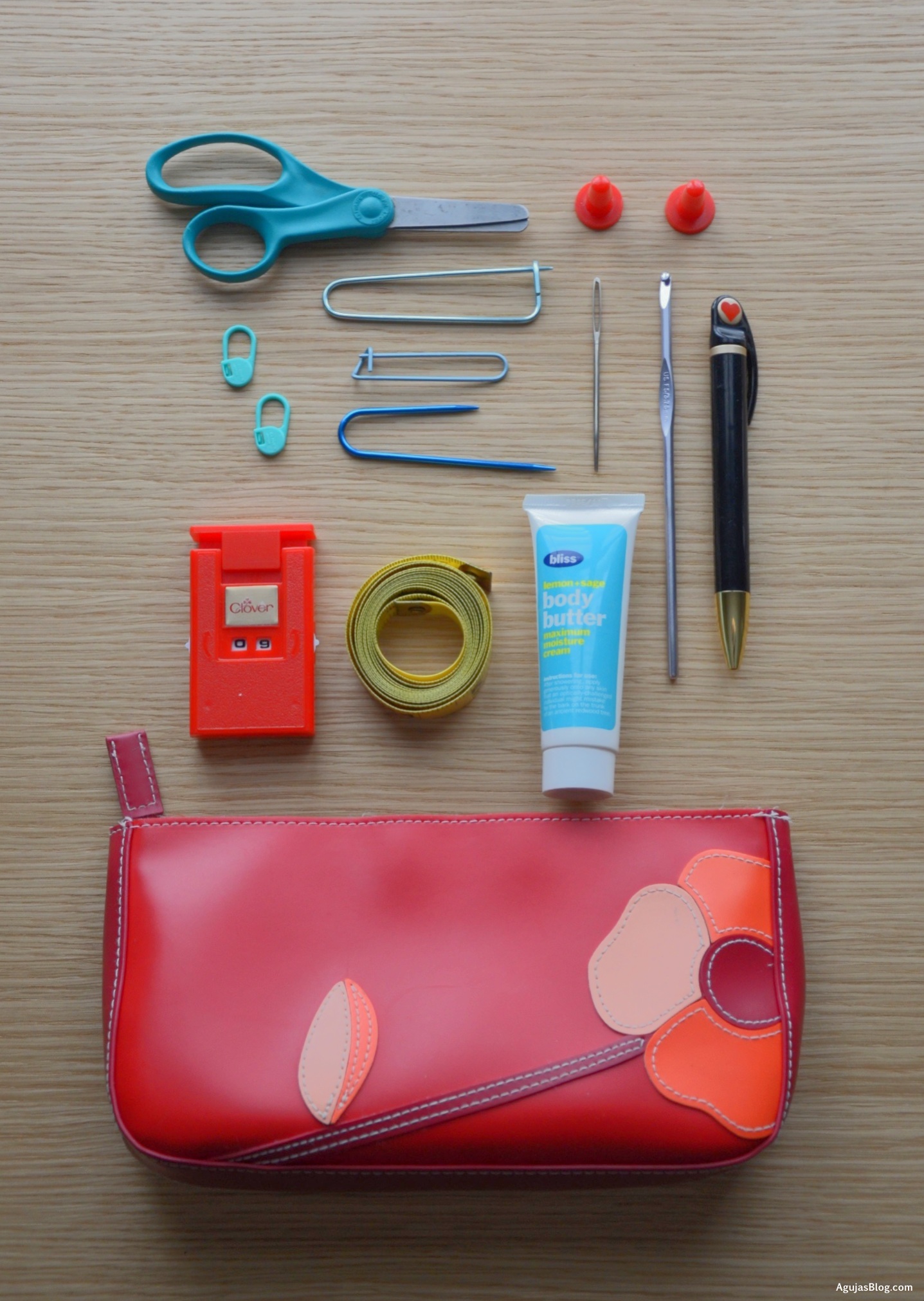
These are the tools and notions that always go with me in my knitting bag.

From top left to right: (1) Blunt scissors (can’t get through airport security otherwise); (2) Pair of needle point protectors; (3) Stitch markers; (4) Stitch holders in two sizes; (5) Cable needle; (6) Yarn needle for weaving in ends;  (7) Crochet hook for saving dropped stitches; (8) A pen; (9) Stitch counter; (10) Measuring tape; (11) Travel-sized hand lotion; (12) Small cosmetic bag (one of those free gifts with purchase at the cosmetic counter).

What’s in your bag?

I dare you to go to a yarn store and not buy anything

I went to the yarn store to pick up some fiber for the ladybug. Mom went with me.

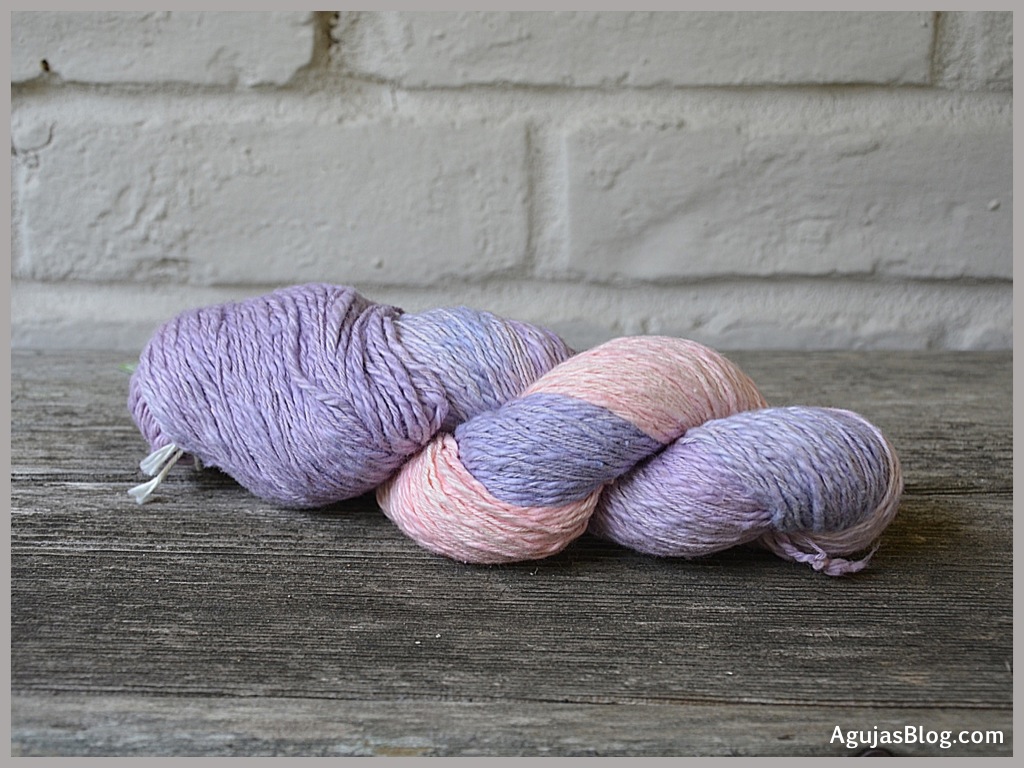
While I was perusing the fiber options, Mom saw a ruffled knit collar on display and decided I should knit it for her. She picked this yarn for it. It is called Sakkie by Plymouth Yarn. It’s a fingering weight sock yarn made in South Africa. Fiber contents: 40% wool, 40% mohair, 20% nylon.

I found this in the sales bin. My aunt, my mother’s little sister, will also soon be having surgery. Once Mom shows her the wash cloths I made for her after her surgery, my aunt will also want some. So I’m preparing. This is Pichasca by Ester Bitran. It’s a sport weight 100% cotton yarn hand-dyed in Chile.

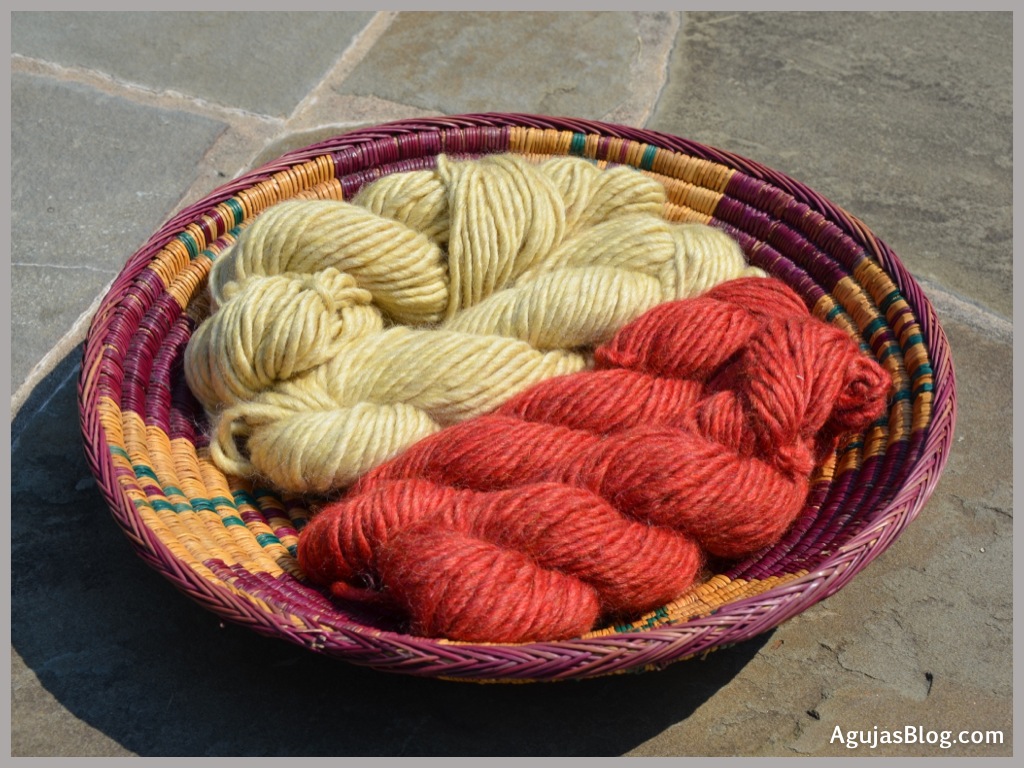
I picked these up because they were on sale and they were pretty and you never know when you’re going to need some yellow and red yarn for something. These are Sulka by Mirasol, a worsted weight yarn made of 60% wool, 20% silk, and 20% alpaca.

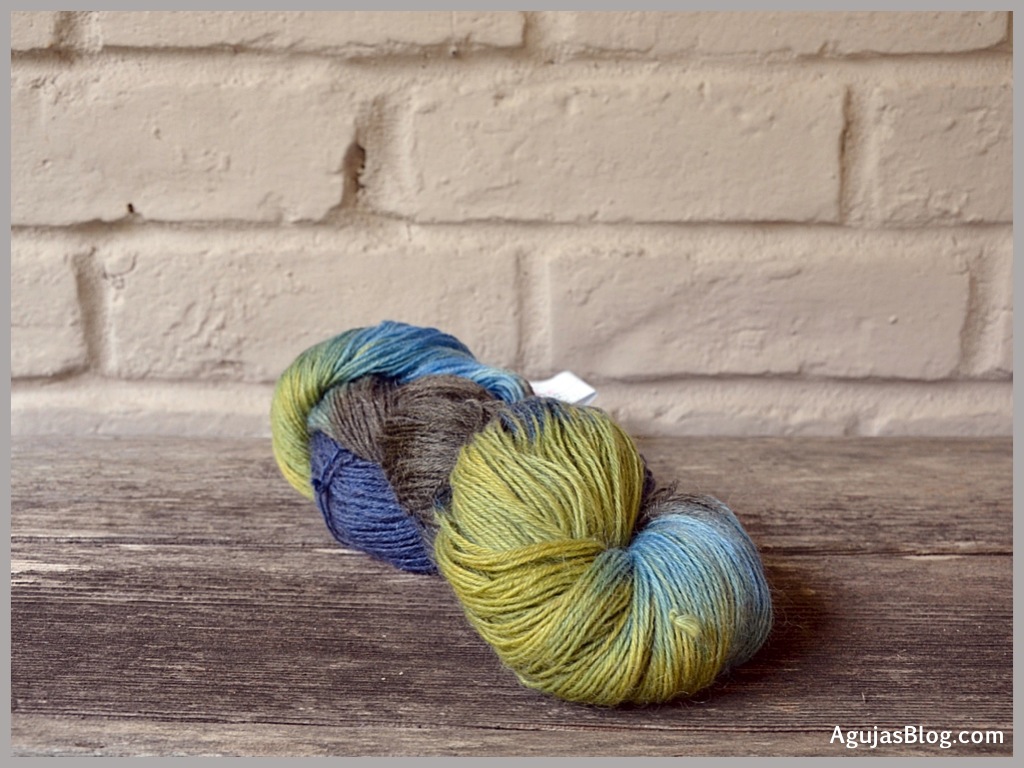
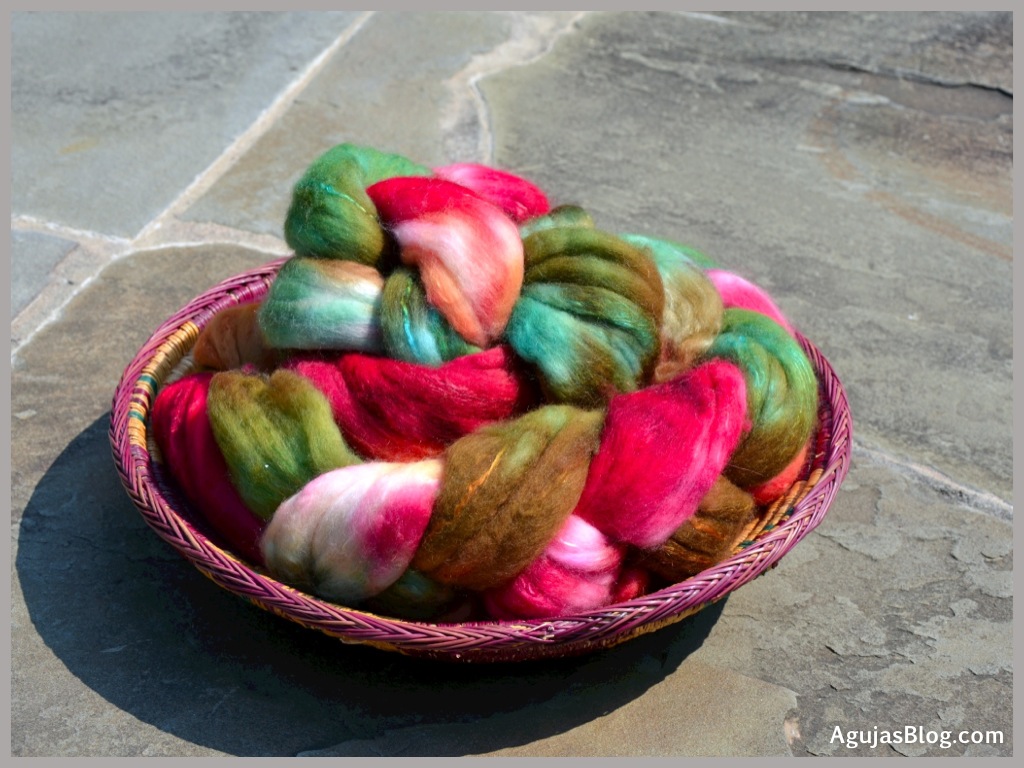
This is what I went to the yarn store for in the first place. It’s a hand-dyed silky cashmerino by Frabjous Fibers. The colourway is #8 Cottage Garden and each top is 4 oz.

Go ahead. I dare you.

My Very Own Ladybug

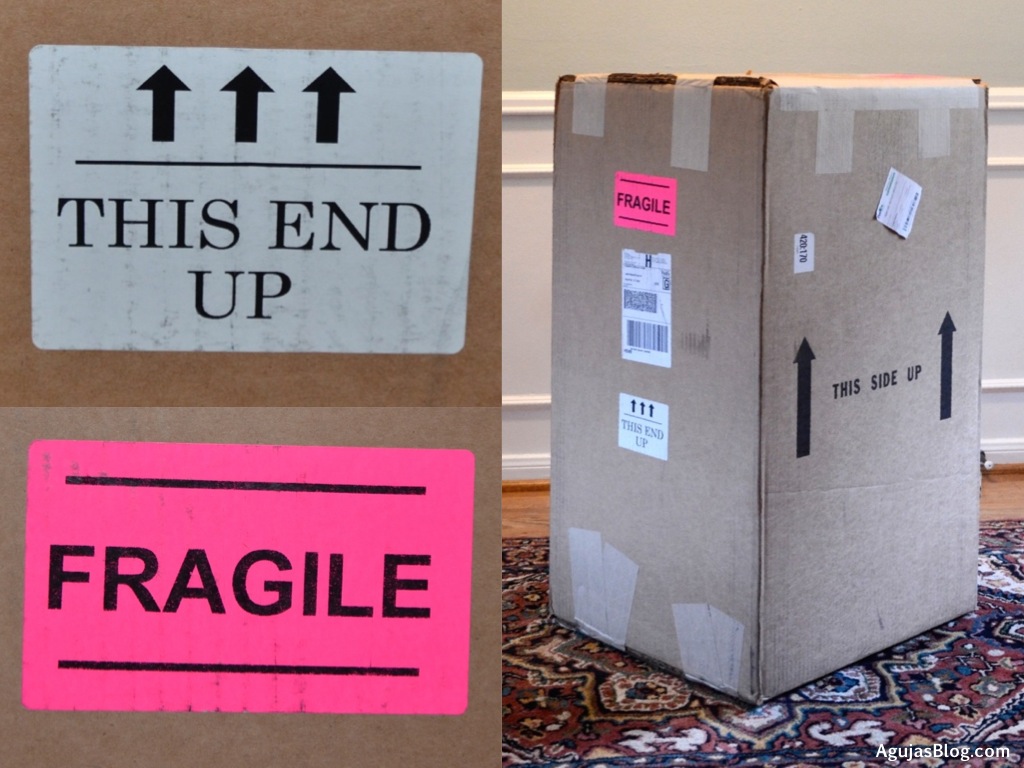
A very large box arrived at my doorstep the other day.

After much angst and deliberation, I ordered my very own spinning wheel. (Actually, I placed the order but it was a Mother’s Day gift from my husband extraordinaire).

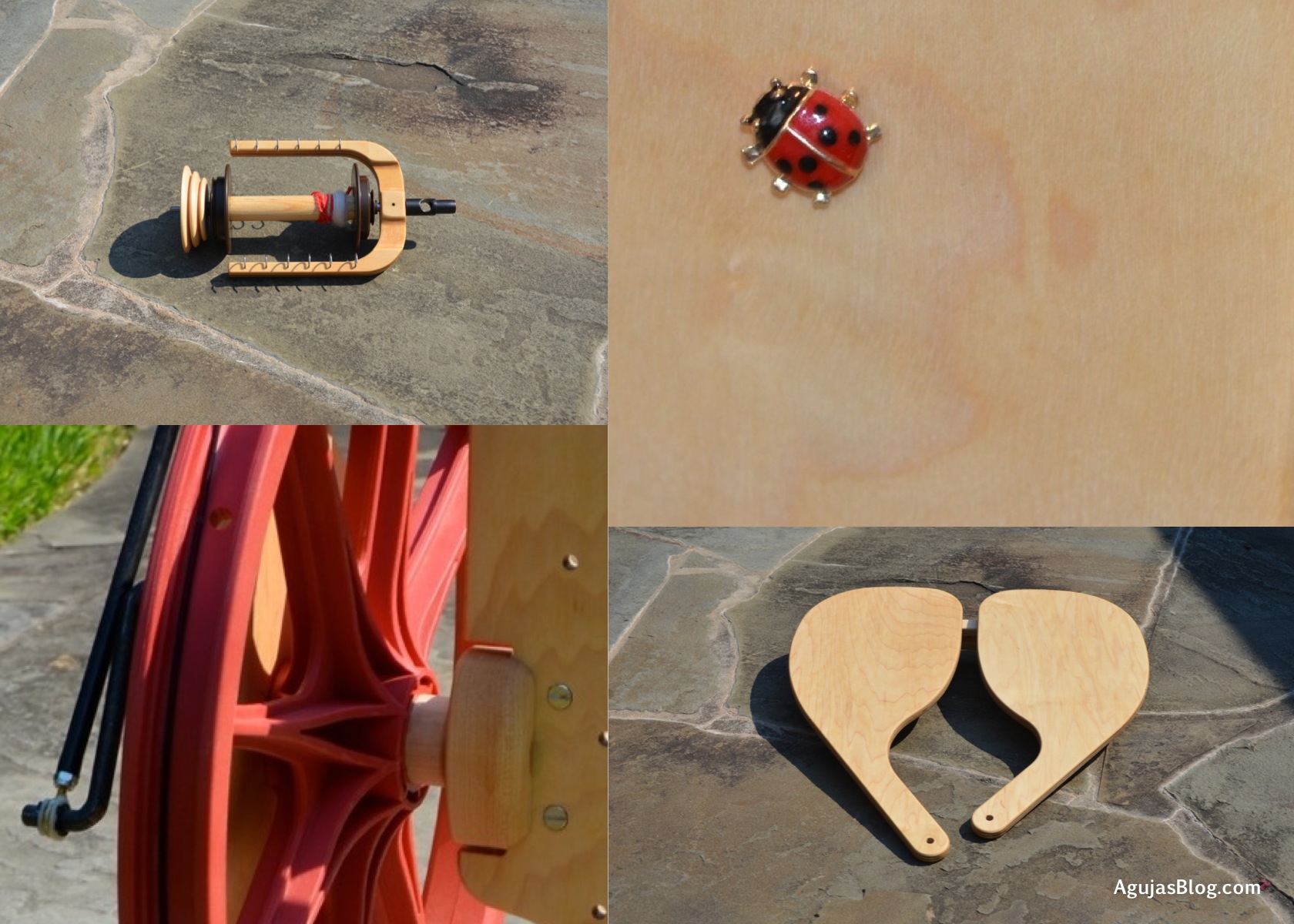
I carefully laid out the parts.

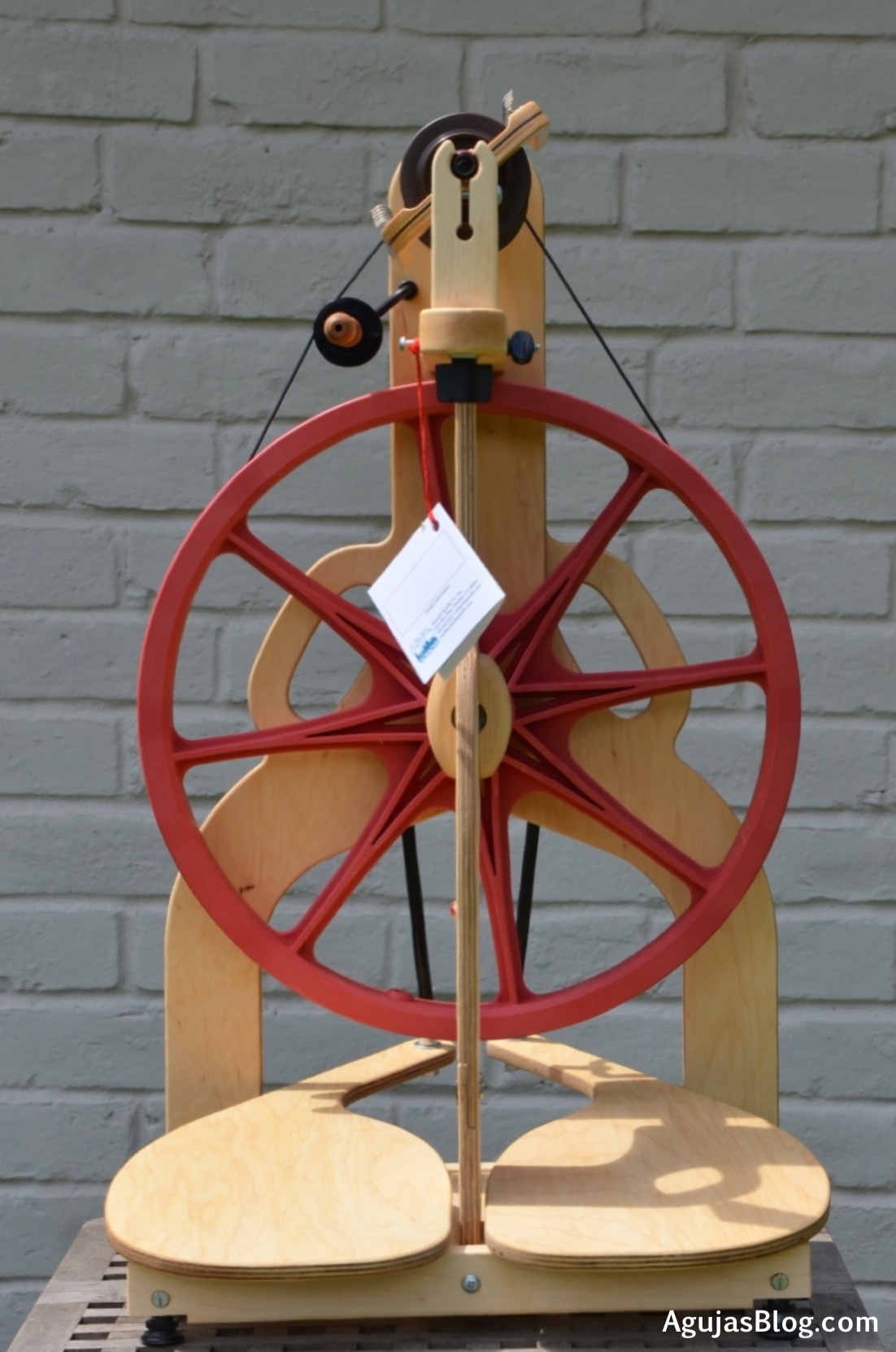
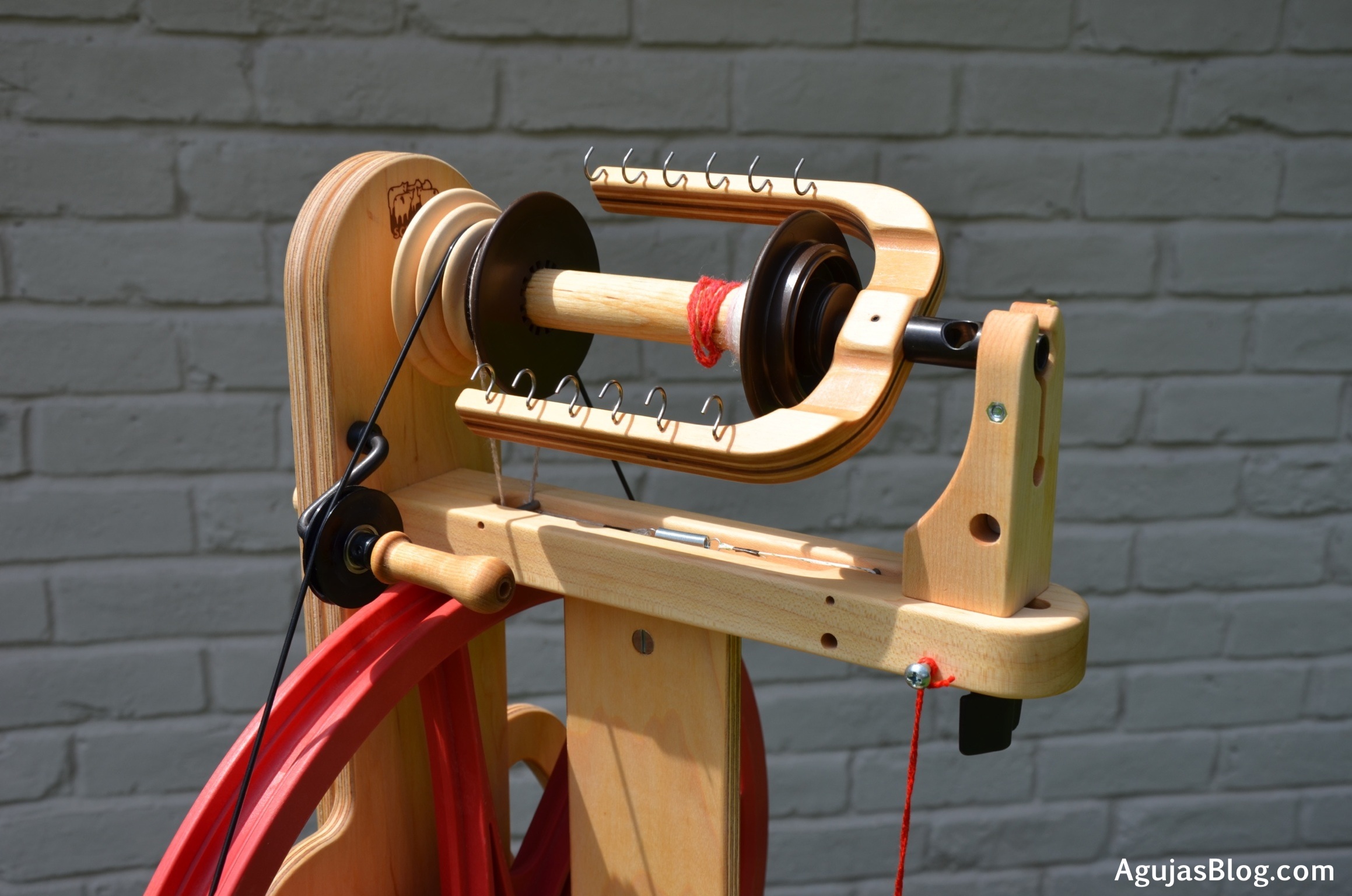
There was a little assembly required. I wish I could say it was easy but not so. Not all the parts are labelled on the assembly diagram. This could have been simpler but the husband extraordinaire figured it out. Isn’t she beautiful?

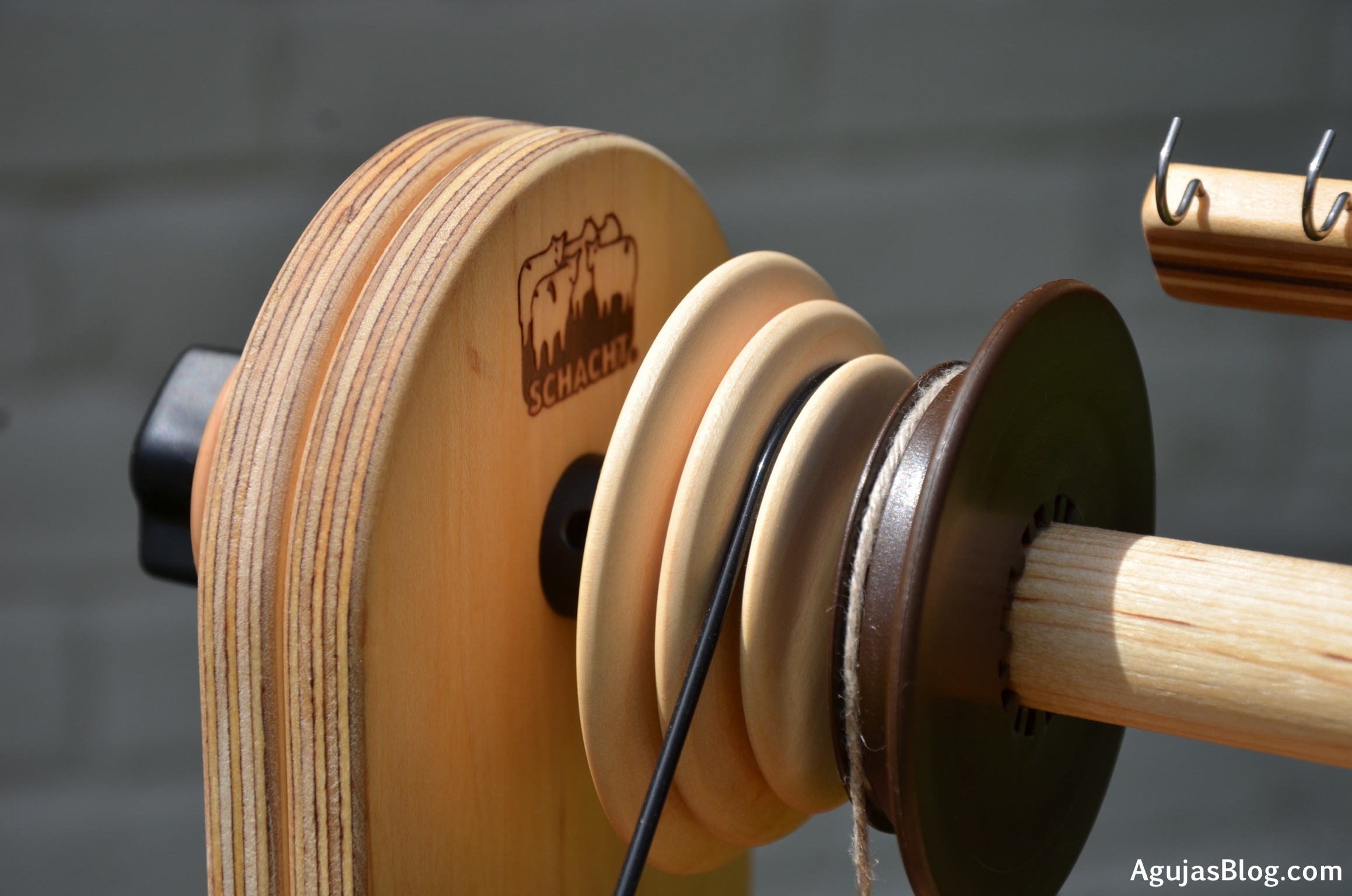
Why I chose the Schacht Ladybug: The modern look appealed to me. It’s portable with built-in handles. The weight – neither too light or heavy – keeps it sturdy. It’s a good size – I can easily store it in a corner. The breadth of spinning ratios ranged from 7:1 to 12.5:1 (with the included fast and medium whorls) and can be expanded to slow (5:1 & 6:1) and high speeds (14:1 & 16:1) with additional flyer whorls.

I went with a double treadle (personal preference). Schacht is one of several reputable makers of spinning wheels. Each wheel is hand crafted in Colorado.

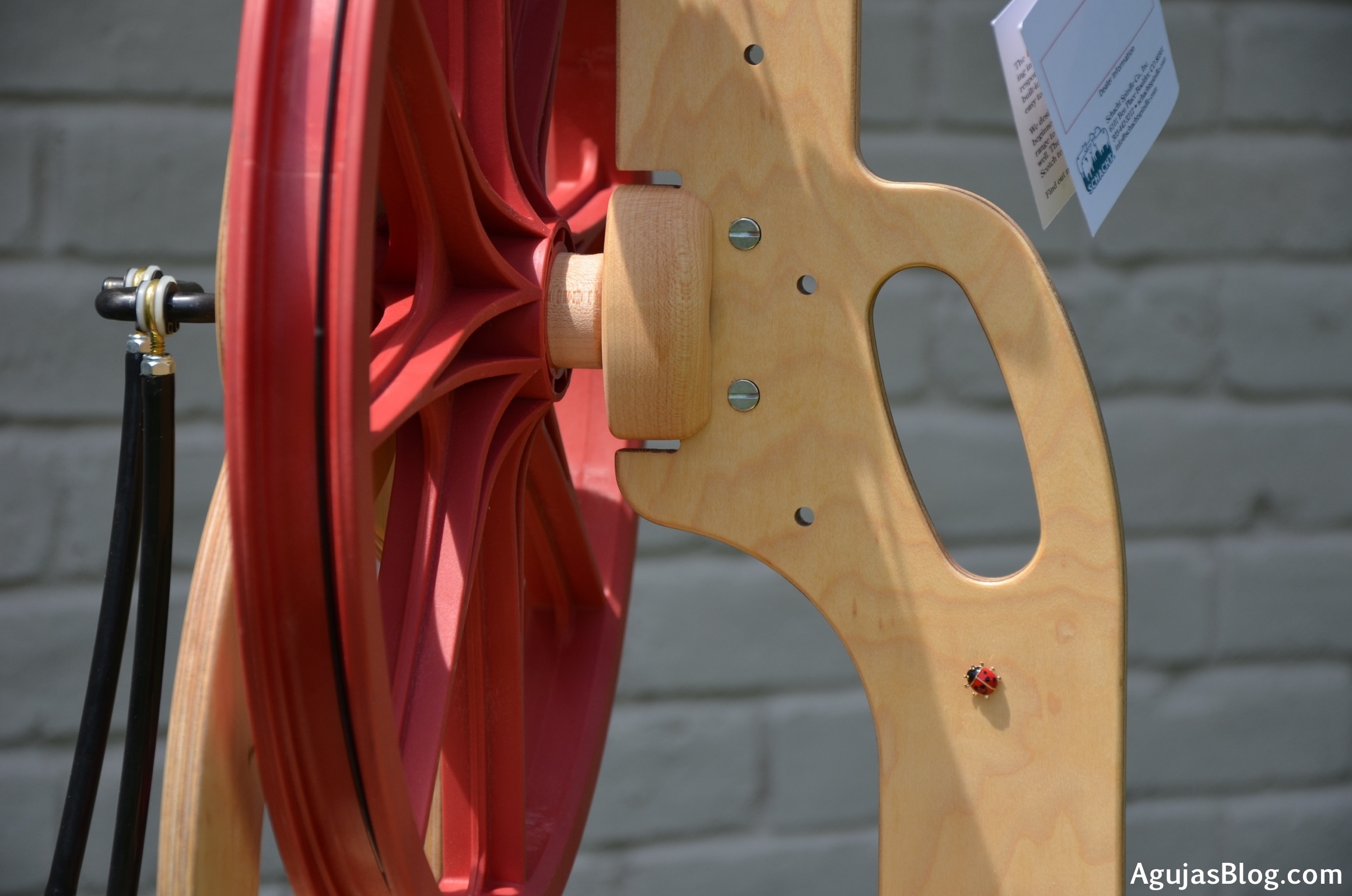
Plus it came with my very own ladybug.

The cost was in the mid-range of the wheels I researched – not cheap but didn’t break the bank either.

Now, I need to stop ogling her and actually take her out for a spin. (Yes, pun intended).